



Dr. DY Zheng
@zhengdy.bsky.social
Bioinformatics & Genomics scientist, https://github.com/bioinfoDZ. Professor at Albert Einstein College of Medicine, study brain / heart development & diseases, and cancers
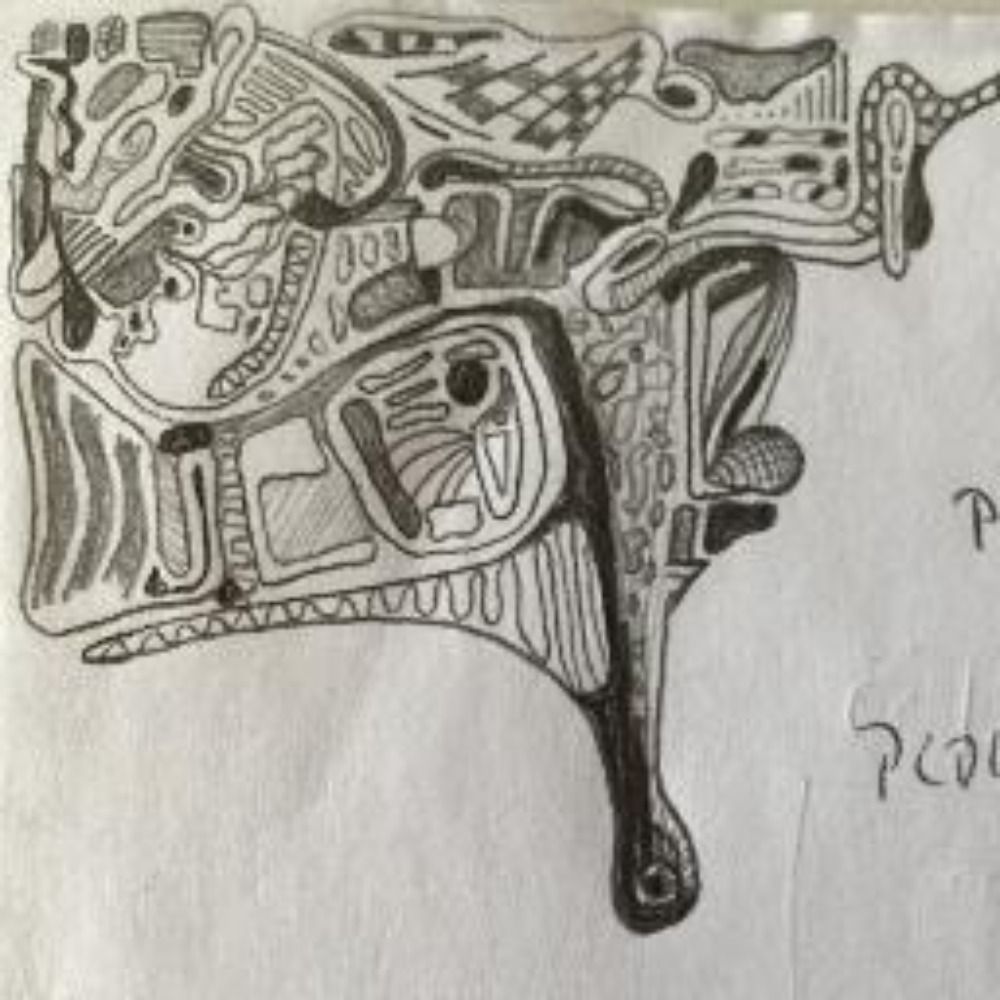
In prep for a talk, I asked DALL•E to make an image of “mouse developing heart”. It became more creative than I expected and got me this 😂

November 10, 2025 at 1:00 AM
In prep for a talk, I asked DALL•E to make an image of “mouse developing heart”. It became more creative than I expected and got me this 😂
Reposted by Dr. DY Zheng

This week, we published in @science.org an article outlining the current ethical and societal implications of research involving human neural #organoids and #assembloids, their transplantation, and highlighted potential next steps.
November 7, 2025 at 12:12 PM
This week, we published in @science.org an article outlining the current ethical and societal implications of research involving human neural #organoids and #assembloids, their transplantation, and highlighted potential next steps.
Reposted by Dr. DY Zheng

New work by @gleesonlab.bsky.social & colleagues in @cp-cellstemcell.bsky.social
“A phenotypic brain organoid atlas and biobank for neurodevelopmental disorders” 🧪🧠🧫🧬
www.cell.com/cell-stem-ce...
“A phenotypic brain organoid atlas and biobank for neurodevelopmental disorders” 🧪🧠🧫🧬
www.cell.com/cell-stem-ce...

A phenotypic brain organoid atlas and biobank for neurodevelopmental disorders
Wang and colleagues present a phenotypic brain organoid atlas for neurodevelopmental
disorders, revealing disease-specific cellular and molecular alterations that illuminate
NDD pathogenesis. Integrat...
www.cell.com
November 3, 2025 at 8:26 PM
New work by @gleesonlab.bsky.social & colleagues in @cp-cellstemcell.bsky.social
“A phenotypic brain organoid atlas and biobank for neurodevelopmental disorders” 🧪🧠🧫🧬
www.cell.com/cell-stem-ce...
“A phenotypic brain organoid atlas and biobank for neurodevelopmental disorders” 🧪🧠🧫🧬
www.cell.com/cell-stem-ce...
Reposted by Dr. DY Zheng

🚨To celebrate #WorldMentalHealthDay, our October issue includes a Focus that examines the advances in computational psychiatry and the challenges of developing computational models to address mental health disorders. #mentalhealthresearch #Psychiatry
➡️ nature.com/collections/...
🧵(1/8)
➡️ nature.com/collections/...
🧵(1/8)

October 10, 2025 at 6:57 PM
🚨To celebrate #WorldMentalHealthDay, our October issue includes a Focus that examines the advances in computational psychiatry and the challenges of developing computational models to address mental health disorders. #mentalhealthresearch #Psychiatry
➡️ nature.com/collections/...
🧵(1/8)
➡️ nature.com/collections/...
🧵(1/8)
Excited to have Mark from Yale visit us and speak in our AI seminar series tomorrow, co-sponsored by the new Data Science Institute at @einsteinmededu.bsky.social lots of to learn and catch up

Posting my talk tomorrow on AI in Biomedicine at
Einstein Med (hosted by @zhengdy.bsky.social)
lectures.gersteinlab.org/summary/AI-t... Using AI for brain genomics & thinking about how it can do this research autonomously. Lots of new slides on AI coding & risks
Einstein Med (hosted by @zhengdy.bsky.social)
lectures.gersteinlab.org/summary/AI-t... Using AI for brain genomics & thinking about how it can do this research autonomously. Lots of new slides on AI coding & risks


October 9, 2025 at 2:53 AM
Excited to have Mark from Yale visit us and speak in our AI seminar series tomorrow, co-sponsored by the new Data Science Institute at @einsteinmededu.bsky.social lots of to learn and catch up

Reposted by Dr. DY Zheng

🚀 NY-CURES Launch — Championing State-Wide Investment in Science! 🚀
Our new coalition advocates for sustained public support of New York’s vibrant biomedical research ecosystem — creating cures, economic gains & strengthening communities.
Sign up. Stay informed. Join the movement: www.nycures.org/
Our new coalition advocates for sustained public support of New York’s vibrant biomedical research ecosystem — creating cures, economic gains & strengthening communities.
Sign up. Stay informed. Join the movement: www.nycures.org/

September 4, 2025 at 4:32 PM
🚀 NY-CURES Launch — Championing State-Wide Investment in Science! 🚀
Our new coalition advocates for sustained public support of New York’s vibrant biomedical research ecosystem — creating cures, economic gains & strengthening communities.
Sign up. Stay informed. Join the movement: www.nycures.org/
Our new coalition advocates for sustained public support of New York’s vibrant biomedical research ecosystem — creating cures, economic gains & strengthening communities.
Sign up. Stay informed. Join the movement: www.nycures.org/
Reposted by Dr. DY Zheng
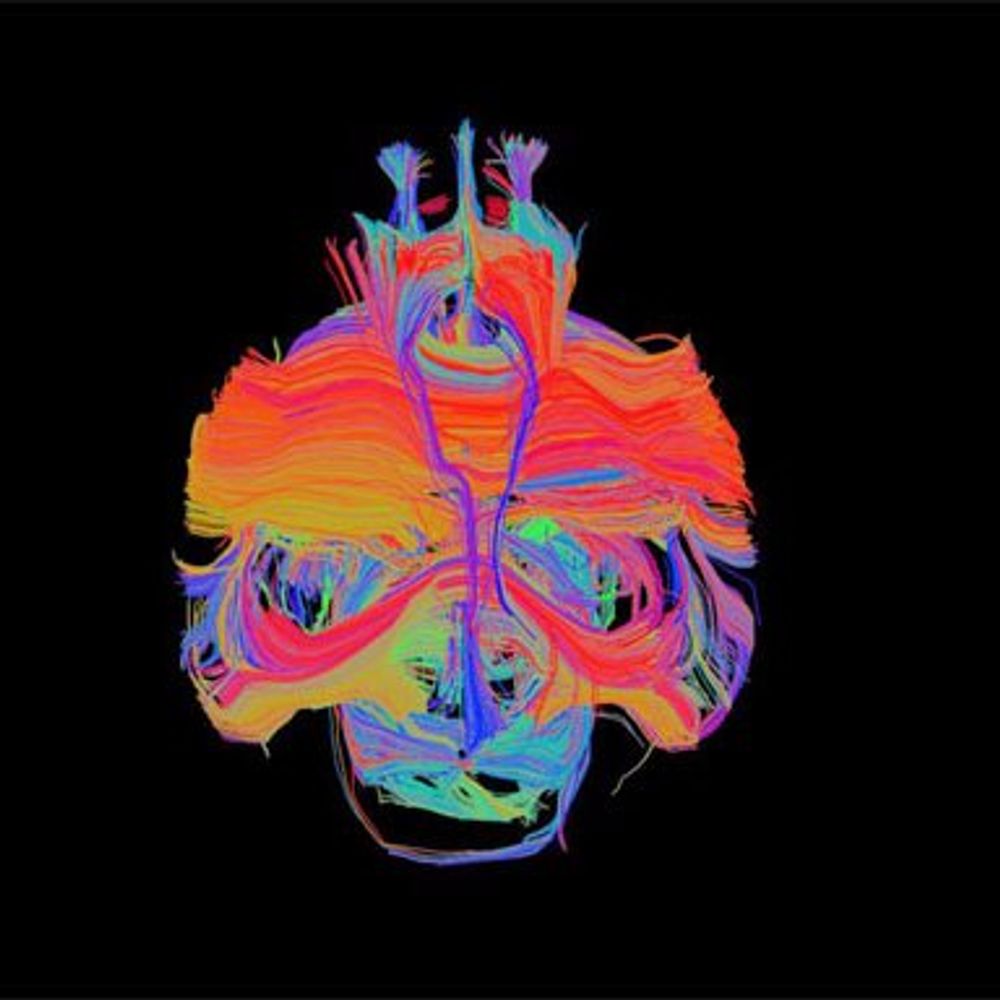
🚨 Excited to share the latest preprint form the lab ➡️https://tinyurl.com/32d3be9f
Here we tackle a long-standing chicken-or-egg 🐣🥚question in #autism and developmental neuroscience
➡️ Is excitation–inhibition (E:I) imbalance a "cause" or a "consequence" of #autism?
Check out what we found!
🧵1/n
Here we tackle a long-standing chicken-or-egg 🐣🥚question in #autism and developmental neuroscience
➡️ Is excitation–inhibition (E:I) imbalance a "cause" or a "consequence" of #autism?
Check out what we found!
🧵1/n

September 10, 2025 at 3:08 PM
Still like UMAP? Why stop at one when you can make lots of them. Then you may learn something new from them and if they represent your data well.

shinyUMAP: an online tool for promoting understanding of single cell omics data visualization https://www.biorxiv.org/content/10.1101/2025.08.27.672621v1
September 2, 2025 at 12:16 PM
Still like UMAP? Why stop at one when you can make lots of them. Then you may learn something new from them and if they represent your data well.
Reposted by Dr. DY Zheng

PSA:
if you're not a mouse person you may enjoy knowing that mouse Sca1 (the hematopoiesis marker) is not encoded by Sca1 (spinocerebellar ataxia 1) but rather Ly6a.
I mean, OF COURSE it is. What else could it be?
I'm an hg38 person and below is a self-portrait while I was figuring this out.
if you're not a mouse person you may enjoy knowing that mouse Sca1 (the hematopoiesis marker) is not encoded by Sca1 (spinocerebellar ataxia 1) but rather Ly6a.
I mean, OF COURSE it is. What else could it be?
I'm an hg38 person and below is a self-portrait while I was figuring this out.

August 22, 2025 at 12:13 PM
PSA:
if you're not a mouse person you may enjoy knowing that mouse Sca1 (the hematopoiesis marker) is not encoded by Sca1 (spinocerebellar ataxia 1) but rather Ly6a.
I mean, OF COURSE it is. What else could it be?
I'm an hg38 person and below is a self-portrait while I was figuring this out.
if you're not a mouse person you may enjoy knowing that mouse Sca1 (the hematopoiesis marker) is not encoded by Sca1 (spinocerebellar ataxia 1) but rather Ly6a.
I mean, OF COURSE it is. What else could it be?
I'm an hg38 person and below is a self-portrait while I was figuring this out.
Reposted by Dr. DY Zheng

“With these considerations, we expect to fund through the 4th percentile.”
There it is, in black and white, the destruction of cancer research in the US.
There it is, in black and white, the destruction of cancer research in the US.

Funding policy for 2025 from NCI. Was just released: 4 percentile…maybe!
www.cancer.gov/grants-train...
www.cancer.gov/grants-train...
Funding Policy - Research Grants
NCI funding policy for research project grant (RPG) awards reflects the funding goals of the institute, NIH, and HHS.
www.cancer.gov
July 23, 2025 at 10:21 PM
“With these considerations, we expect to fund through the 4th percentile.”
There it is, in black and white, the destruction of cancer research in the US.
There it is, in black and white, the destruction of cancer research in the US.
Reposted by Dr. DY Zheng
As we have learned, genes have dose-dependent effects on psychiatric traits. DOSAGE, it turns out, is a key element that helps unravel mechanisms of gene → pathway → cell type → brain region → diagnosis. Here we developed a framework to characterize cellular processes that mediate genetic effects.

Psychiatric disorders converge on common pathways but diverge in cellular context, spatial distribution, and directionality of genetic effects https://www.medrxiv.org/content/10.1101/2025.07.11.25331381v1
July 16, 2025 at 9:23 PM
As we have learned, genes have dose-dependent effects on psychiatric traits. DOSAGE, it turns out, is a key element that helps unravel mechanisms of gene → pathway → cell type → brain region → diagnosis. Here we developed a framework to characterize cellular processes that mediate genetic effects.
Reposted by Dr. DY Zheng
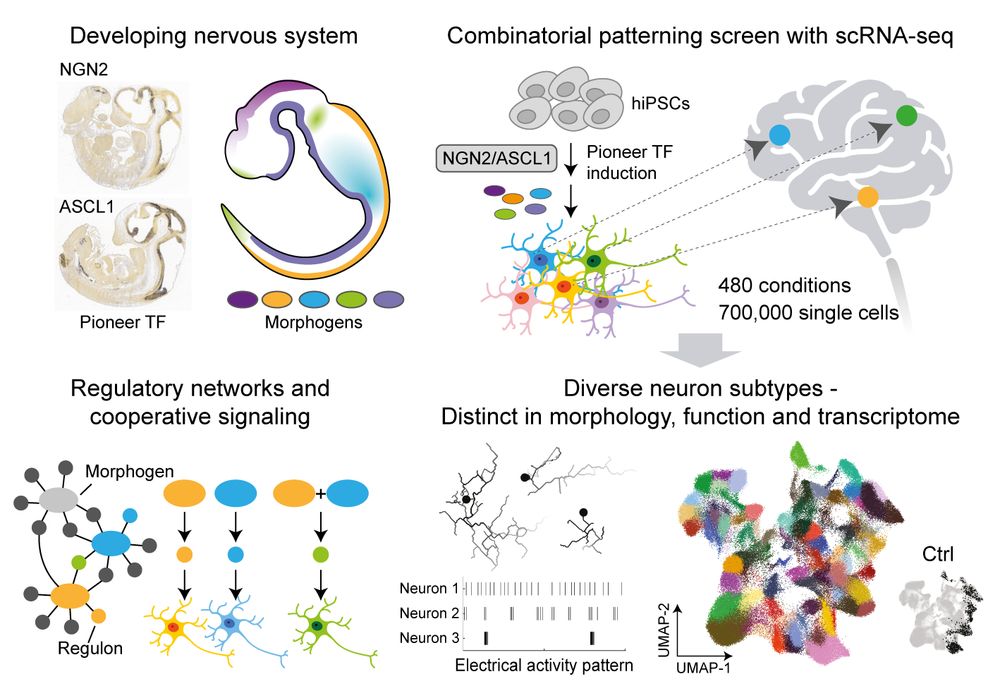
Neuron programming! Pro-neural TFs + 480 morphogen conditions + scRNA-seq --> Diverse iN subtypes of forebrain, midbrain, hindbrain, spinal cord, and PNS. @hsiuchuanlin.bsky.social @jasperjanssens.bsky.social and Treutlein Lab! @science.org www.science.org/doi/10.1126/... #NGN2 #ASCL1
July 11, 2025 at 8:59 PM
Neuron programming! Pro-neural TFs + 480 morphogen conditions + scRNA-seq --> Diverse iN subtypes of forebrain, midbrain, hindbrain, spinal cord, and PNS. @hsiuchuanlin.bsky.social @jasperjanssens.bsky.social and Treutlein Lab! @science.org www.science.org/doi/10.1126/... #NGN2 #ASCL1
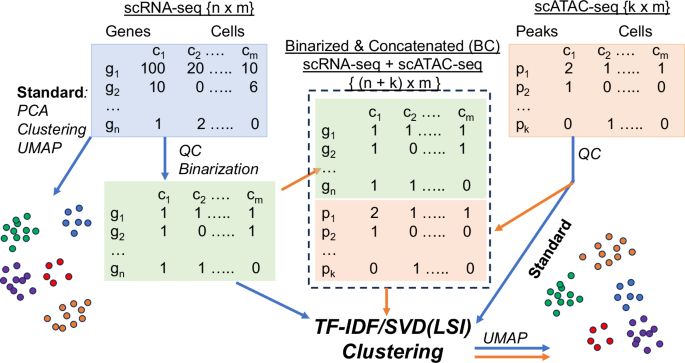
Since reading the first scATAC-seq paper, I had been wondering if the reported difference from scRNA-seq results is due to bioinformatic algorithms or biology. Finally we got a chance to look into this, by applying the same algorithm to both data types and their direct integration.

Binarized gene expression data can be concatenated with chromatin accessibility data for effective and integrated cell clustering @zhengdy.bsky.social @einsteinmededu.bsky.social #BiotechNatureComms
doi.org/10.1038/s414...
doi.org/10.1038/s414...
Facilitate integrated analysis of single cell multiomic data by binarizing gene expression values - Nature Communications
Individual data types in a single cell multi-omic assay are often processed and clustered independently before combined for further analysis. Here, authors showed that binarized gene expression d...
doi.org
July 7, 2025 at 6:47 PM
Since reading the first scATAC-seq paper, I had been wondering if the reported difference from scRNA-seq results is due to bioinformatic algorithms or biology. Finally we got a chance to look into this, by applying the same algorithm to both data types and their direct integration.
Great to see this collaboration work finally out. Congratulations to Wong, Chi and all authors!

✨OUT TODAY @natgenet.nature.com
📰Disruption of TAD hierarchy promotes LTR co-option in #cancer.
By Elissa W. P. Wong, Ping Chi and colleagues.
⬇️
www.nature.com/articles/s41...
📰Disruption of TAD hierarchy promotes LTR co-option in #cancer.
By Elissa W. P. Wong, Ping Chi and colleagues.
⬇️
www.nature.com/articles/s41...

Disruption of TAD hierarchy promotes LTR co-option in cancer - Nature Genetics
NIPBL perturbation activates long terminal repeat (LTR)-derived alternative promoters due to reorganization of chromatin’s hierarchical structure, leading to LTR co-option and oncogene activation in m...
www.nature.com
June 30, 2025 at 9:26 PM
Great to see this collaboration work finally out. Congratulations to Wong, Chi and all authors!
Reposted by Dr. DY Zheng

Now online! Digital reconstruction of full embryos during early mouse organogenesis

Digital reconstruction of full embryos during early mouse organogenesis
Single-cell digital embryo reconstruction during early organogenesis creates spatiotemporal atlases for mesoderm and endoderm lineages and captures the primordium determination zone (PDZ) at the E7.75 embryonic-extraembryonic interface, where cross-germ-layer signaling communication drives organogenesis.
dlvr.it
June 18, 2025 at 10:38 PM
Now online! Digital reconstruction of full embryos during early mouse organogenesis
Reposted by Dr. DY Zheng

Persistent cortical excitatory neuron dysregulation in adult Chd8 haploinsufficient mice. https://www.biorxiv.org/content/10.1101/2025.06.04.657776v1
June 5, 2025 at 6:36 AM
Persistent cortical excitatory neuron dysregulation in adult Chd8 haploinsufficient mice. https://www.biorxiv.org/content/10.1101/2025.06.04.657776v1
Reposted by Dr. DY Zheng

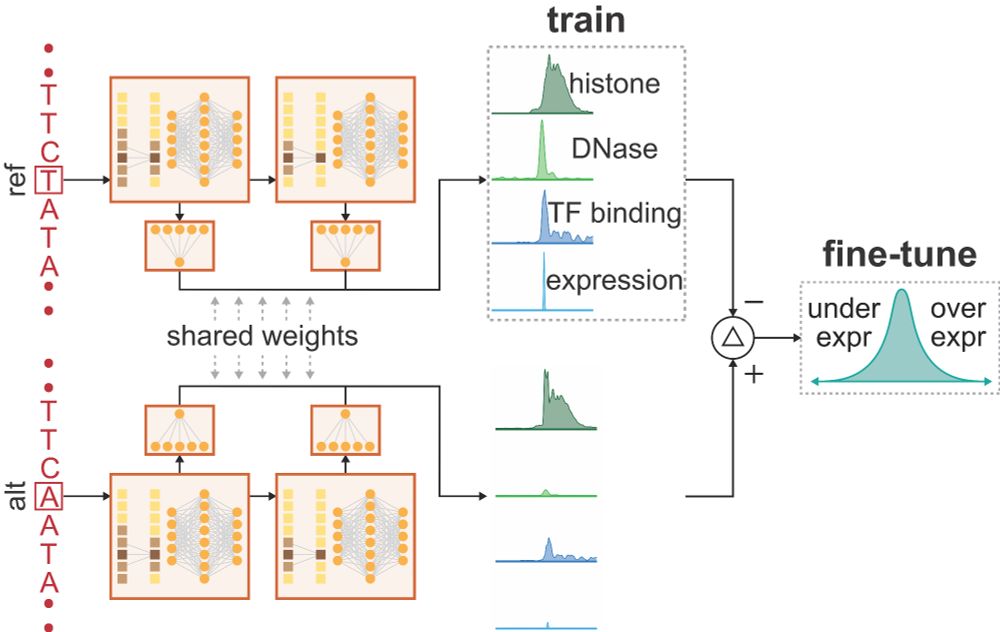
We're thrilled to introduce PromoterAI — a tool for accurately identifying promoter variants that impact gene expression. 🧵 (1/)
May 29, 2025 at 6:29 PM
We're thrilled to introduce PromoterAI — a tool for accurately identifying promoter variants that impact gene expression. 🧵 (1/)
Reposted by Dr. DY Zheng

Yesterday we cheered the #EinsteinClassof2025 at David Geffen Hall at Lincoln Center as they marked the start of their careers and their contributions to medicine, science, and human health!
And congratulations to the families and loved ones who have supported these students!
And congratulations to the families and loved ones who have supported these students!


May 22, 2025 at 5:53 PM
Yesterday we cheered the #EinsteinClassof2025 at David Geffen Hall at Lincoln Center as they marked the start of their careers and their contributions to medicine, science, and human health!
And congratulations to the families and loved ones who have supported these students!
And congratulations to the families and loved ones who have supported these students!
Reposted by Dr. DY Zheng
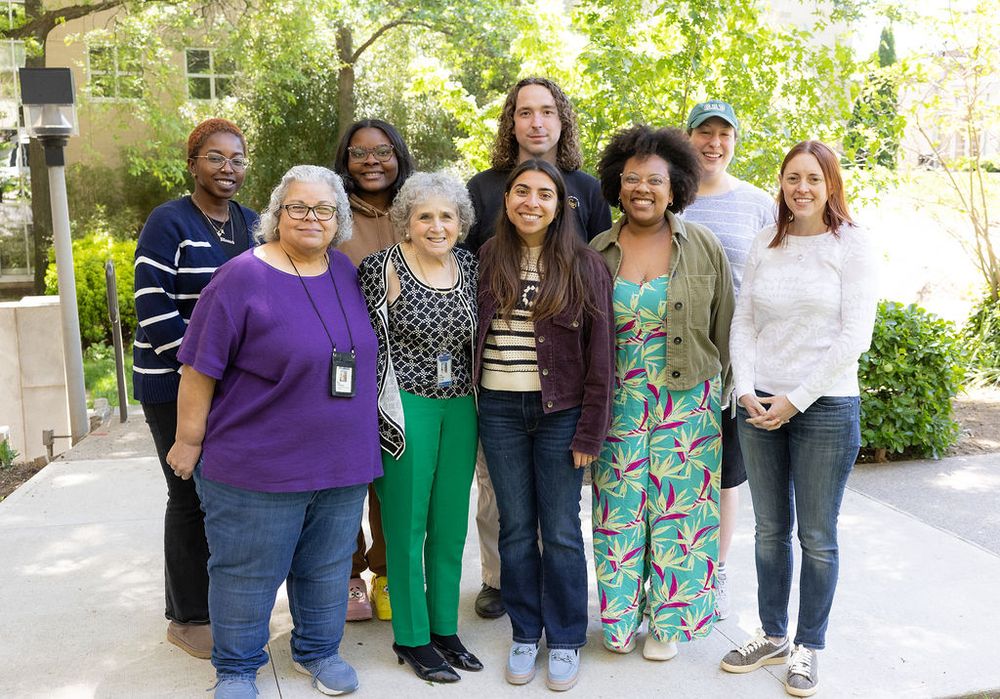
Yesterday, the Graduate Programs in the Biomedical Sciences honored the connection between graduating Ph.D. students and their mentors during its 6th annual Ph.D. Convocation. The event featured a video in which mentors and students shared reflections and paid tribute to each other. #Classof2025


May 21, 2025 at 6:13 PM
Yesterday, the Graduate Programs in the Biomedical Sciences honored the connection between graduating Ph.D. students and their mentors during its 6th annual Ph.D. Convocation. The event featured a video in which mentors and students shared reflections and paid tribute to each other. #Classof2025
Very nice new work to advance our understanding of the link between CHD8 mutations and ASD. Add to weekend reading
New preprint alert 📣
#Cerebellum, organoid, autism & brain evolution 🧪 🧫🧠🧬
Collaboration with G. Testa; fruit of years of work by smart students, led by postdoc Davide Aprile. Organoids to understand better the developmental basis of autism (focus: CHD8) & sapiens brain evolution (focus: CADPS2) 🧵
#Cerebellum, organoid, autism & brain evolution 🧪 🧫🧠🧬
Collaboration with G. Testa; fruit of years of work by smart students, led by postdoc Davide Aprile. Organoids to understand better the developmental basis of autism (focus: CHD8) & sapiens brain evolution (focus: CADPS2) 🧵
Benchmarking cerebellar organoids to model autism spectrum disorder and human brain evolution
While cortical organoids have been used to model different facets of neurodevelopmental conditions and human brain evolution, cerebellar organoids have not yet featured so prominently in the same cont...
www.biorxiv.org
May 16, 2025 at 12:22 PM
Very nice new work to advance our understanding of the link between CHD8 mutations and ASD. Add to weekend reading
Reposted by Dr. DY Zheng
Today in @nature.com , we report a spatial single-cell atlas of human cortical development, revealing surprisingly early specification of human cortical layers and areas.
We built an interactive browser to explore the spatial data: walshlab.org/research/cor...
Paper link below 👇
We built an interactive browser to explore the spatial data: walshlab.org/research/cor...
Paper link below 👇
May 14, 2025 at 5:24 PM
Today in @nature.com , we report a spatial single-cell atlas of human cortical development, revealing surprisingly early specification of human cortical layers and areas.
We built an interactive browser to explore the spatial data: walshlab.org/research/cor...
Paper link below 👇
We built an interactive browser to explore the spatial data: walshlab.org/research/cor...
Paper link below 👇
Reposted by Dr. DY Zheng
We introduce POPARI -- an interpretable, spatially-aware factor-based model for multi-sample spatial transcriptomics, capturing spatial patterns of gene programs and how they vary across samples and conditions.
POPARI: Modeling multisample variation in spatial transcriptomics https://www.biorxiv.org/content/10.1101/2025.05.08.652741v1
May 14, 2025 at 6:13 AM
We introduce POPARI -- an interpretable, spatially-aware factor-based model for multi-sample spatial transcriptomics, capturing spatial patterns of gene programs and how they vary across samples and conditions.
Reposted by Dr. DY Zheng
Here it is! Bonsai. Now there is really no more excuse for using t-SNE/UMAP. Bonsai not only makes cool pictures of your data. It actually rigorously preserves its structure. No tunable parameters. Incredible work by @dhdegroot.bsky.social.
I'm so excited about this!
www.biorxiv.org/content/10.1...
I'm so excited about this!
www.biorxiv.org/content/10.1...
Bonsai: Tree representations for distortion-free visualization and exploratory analysis of single-cell omics data
Single-cell omics methods promise to revolutionize our understanding of gene regulatory processes during cell differentiation, but analysis of such data continues to pose a major challenge. Apart from...
www.biorxiv.org
May 9, 2025 at 10:49 AM
Here it is! Bonsai. Now there is really no more excuse for using t-SNE/UMAP. Bonsai not only makes cool pictures of your data. It actually rigorously preserves its structure. No tunable parameters. Incredible work by @dhdegroot.bsky.social.
I'm so excited about this!
www.biorxiv.org/content/10.1...
I'm so excited about this!
www.biorxiv.org/content/10.1...
Reposted by Dr. DY Zheng
Today, Einstein announced the launch of its new Data Science Institute. The dynamic, state-of-the-art resource will strengthen researchers’ ability to harness vast amounts of data for biomedical breakthroughs and innovations in scientific discovery and patient care. #datascience #research #MedSky

Albert Einstein College of Medicine Launches Data Science Institute
bit.ly
May 6, 2025 at 7:12 PM
Today, Einstein announced the launch of its new Data Science Institute. The dynamic, state-of-the-art resource will strengthen researchers’ ability to harness vast amounts of data for biomedical breakthroughs and innovations in scientific discovery and patient care. #datascience #research #MedSky