




Quentin Sabbagh
@q-sa2b.bsky.social
MD in Medical Genetics, PhD Candidate in Genomic Technologies at Radboudumc 🇫🇷🇳🇱
Reposted by Quentin Sabbagh

Introducing JAMA’s Research of the Year. #JAMAROTY25
Chosen by JAMA editors, the inaugural roundup highlights 9 of the most impactful, newsworthy, and novel studies published in the journal over the past year:
Learn more: ja.ma/4rN3jM1
Chosen by JAMA editors, the inaugural roundup highlights 9 of the most impactful, newsworthy, and novel studies published in the journal over the past year:
Learn more: ja.ma/4rN3jM1

December 12, 2025 at 6:00 PM
Introducing JAMA’s Research of the Year. #JAMAROTY25
Chosen by JAMA editors, the inaugural roundup highlights 9 of the most impactful, newsworthy, and novel studies published in the journal over the past year:
Learn more: ja.ma/4rN3jM1
Chosen by JAMA editors, the inaugural roundup highlights 9 of the most impactful, newsworthy, and novel studies published in the journal over the past year:
Learn more: ja.ma/4rN3jM1
Reposted by Quentin Sabbagh

Great delivery of his #nvhg2025 presentation by @wolfram-hops.bsky.social!
…the future of germline testing is clear now: generic first tier testing by long-read genome sequencing!
…the future of germline testing is clear now: generic first tier testing by long-read genome sequencing!

September 15, 2025 at 1:40 PM
Great delivery of his #nvhg2025 presentation by @wolfram-hops.bsky.social!
…the future of germline testing is clear now: generic first tier testing by long-read genome sequencing!
…the future of germline testing is clear now: generic first tier testing by long-read genome sequencing!
Reposted by Quentin Sabbagh

Reposted by Quentin Sabbagh

EpiSci - 🧪 - 🧬 Computational methods for analysing multiscale 3D genome organization
www.nature.com/articles/s41...
www.nature.com/articles/s41...

Computational methods for analysing multiscale 3D genome organization - Nature Reviews Genetics
In this Review, Zhang et al. discuss how recent advances in computational methods are helping to reveal the multiscale features involved in genome folding within the nucleus and how the resulting 3D g...
www.nature.com
December 4, 2024 at 4:12 PM
EpiSci - 🧪 - 🧬 Computational methods for analysing multiscale 3D genome organization
www.nature.com/articles/s41...
www.nature.com/articles/s41...
Reposted by Quentin Sabbagh

Activity of most genes is controlled by multiple enhancers, but is there activation coordinated? We leveraged Nanopore to identify a specific set of elements that are simultaneously accessible on the same DNA molecules and are coordinated in their activation. www.biorxiv.org/content/10.1...

August 18, 2025 at 12:23 PM
Activity of most genes is controlled by multiple enhancers, but is there activation coordinated? We leveraged Nanopore to identify a specific set of elements that are simultaneously accessible on the same DNA molecules and are coordinated in their activation. www.biorxiv.org/content/10.1...
Reposted by Quentin Sabbagh

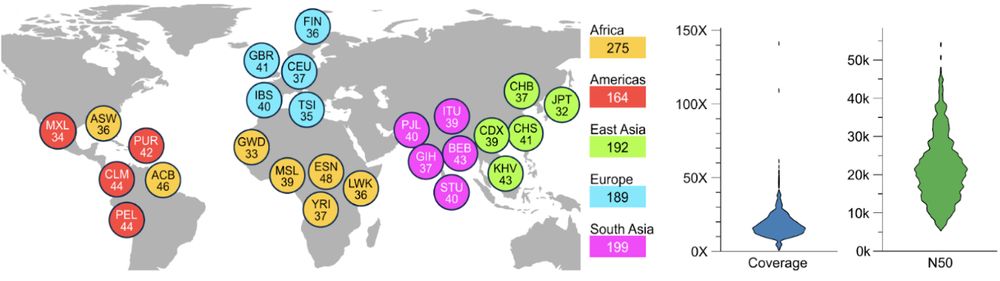
[1/8] *New Open-Access Long Read Resource*. We sequenced 1,019 genomes from the 1000 Genomes Project sample cohort using @nanoporetech.com long-read sequencing (LRS) to median 17x coverage. Publication at go.nature.com/4ffPb8f.
@hhu.de @crg.eu @embl.org @impvienna.bsky.social
@hhu.de @crg.eu @embl.org @impvienna.bsky.social
July 24, 2025 at 9:26 AM
[1/8] *New Open-Access Long Read Resource*. We sequenced 1,019 genomes from the 1000 Genomes Project sample cohort using @nanoporetech.com long-read sequencing (LRS) to median 17x coverage. Publication at go.nature.com/4ffPb8f.
@hhu.de @crg.eu @embl.org @impvienna.bsky.social
@hhu.de @crg.eu @embl.org @impvienna.bsky.social
Reposted by Quentin Sabbagh

The Platinum Pedigree: a long-read benchmark for genetic variants www.nature.com/articles/s41... (read free: rdcu.be/ezlrh) 🧬🖥️🧪
Code: github.com/Platinum-Ped...
Data: github.com/Platinum-Ped...
Code: github.com/Platinum-Ped...
Data: github.com/Platinum-Ped...


August 6, 2025 at 3:30 PM
The Platinum Pedigree: a long-read benchmark for genetic variants www.nature.com/articles/s41... (read free: rdcu.be/ezlrh) 🧬🖥️🧪
Code: github.com/Platinum-Ped...
Data: github.com/Platinum-Ped...
Code: github.com/Platinum-Ped...
Data: github.com/Platinum-Ped...
Reposted by Quentin Sabbagh

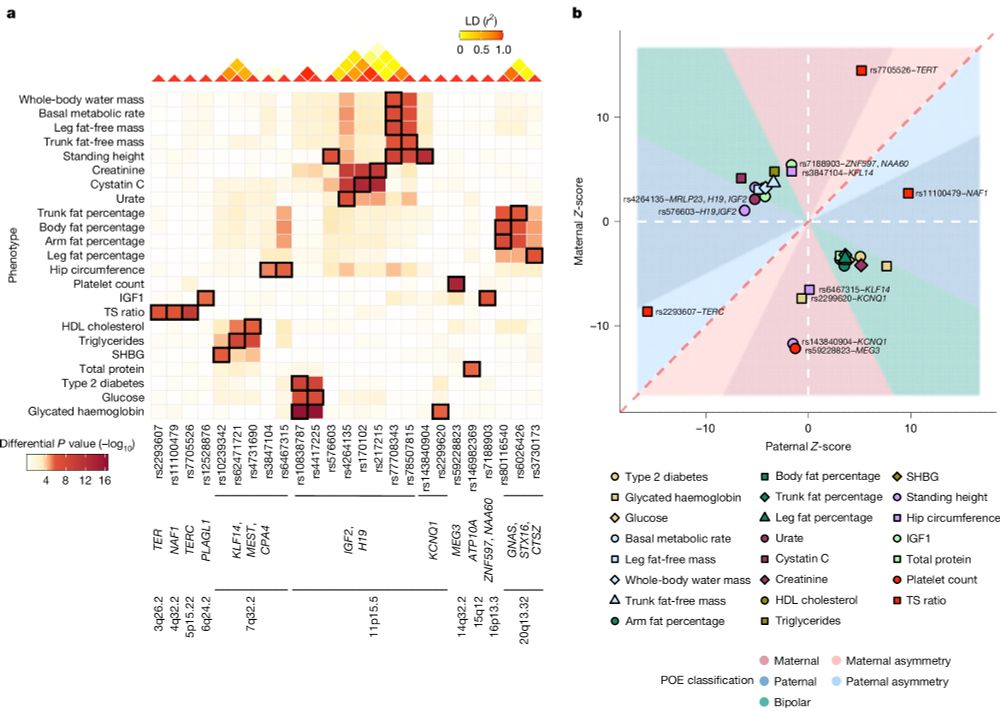
🚨 Our parent-of-origin study is out in Nature! 🧬
Maternal and paternal alleles can have distinct — even opposite — effects on human traits, revealing a hidden layer of genetic architecture that standard GWAS miss.
🔗 www.nature.com/articles/s41...
Highlights below!
Maternal and paternal alleles can have distinct — even opposite — effects on human traits, revealing a hidden layer of genetic architecture that standard GWAS miss.
🔗 www.nature.com/articles/s41...
Highlights below!
August 6, 2025 at 6:27 PM
🚨 Our parent-of-origin study is out in Nature! 🧬
Maternal and paternal alleles can have distinct — even opposite — effects on human traits, revealing a hidden layer of genetic architecture that standard GWAS miss.
🔗 www.nature.com/articles/s41...
Highlights below!
Maternal and paternal alleles can have distinct — even opposite — effects on human traits, revealing a hidden layer of genetic architecture that standard GWAS miss.
🔗 www.nature.com/articles/s41...
Highlights below!
Reposted by Quentin Sabbagh

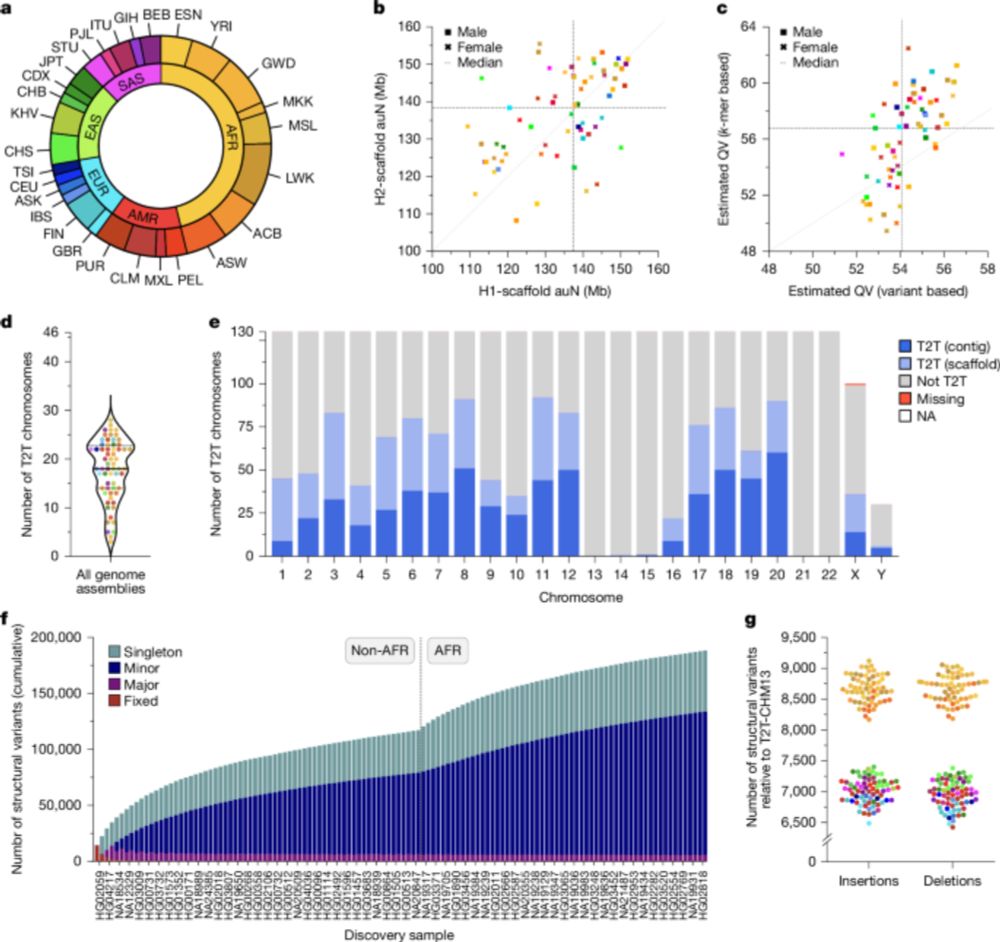
Two papers in today's issue of @nature.com : 1) we assemble 65 genomes to near completion, including centromeres and the MHC. tinyurl.com/3huhax6w. 2) we sequence 1,019 genomes from the 1kGP with long reads, revealing SVs down to low allele frequencies tinyurl.com/wbx3we9x.
Complex genetic variation in nearly complete human genomes - Nature
Using sequencing and haplotype-resolved assembly of 65 diverse human genomes, complex regions including the major histocompatibility complex and centromeres are analysed.
tinyurl.com
July 23, 2025 at 3:12 PM
Two papers in today's issue of @nature.com : 1) we assemble 65 genomes to near completion, including centromeres and the MHC. tinyurl.com/3huhax6w. 2) we sequence 1,019 genomes from the 1kGP with long reads, revealing SVs down to low allele frequencies tinyurl.com/wbx3we9x.
Reposted by Quentin Sabbagh

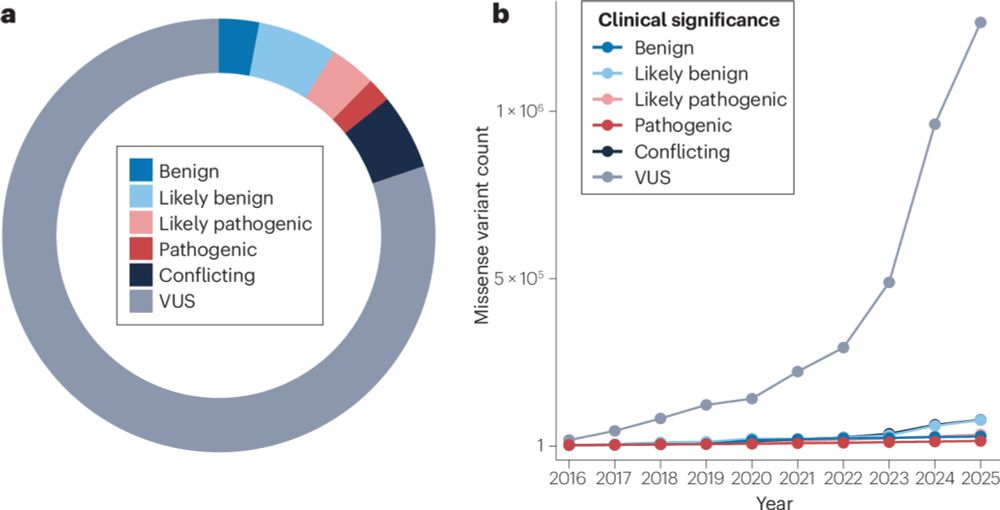
Interested in using functional data to understand clinical variants? Been hunting for a good review of the topic? We just wrote one! rdcu.be/exaEU
Multiplexed assays of variant effect for clinical variant interpretation
Nature Reviews Genetics - Multiplexed assays of variant effect (MAVEs) are highly scalable experimental approaches used to generate functional data for genetic variants. In this Review, McEwen et...
www.nature.com
July 21, 2025 at 7:34 PM
Interested in using functional data to understand clinical variants? Been hunting for a good review of the topic? We just wrote one! rdcu.be/exaEU
Reposted by Quentin Sabbagh

Super happy that our paper phenotypes in carriers of pathogenic variants in recessive genes is finally out!!
www.nature.com/articles/s41...
www.nature.com/articles/s41...
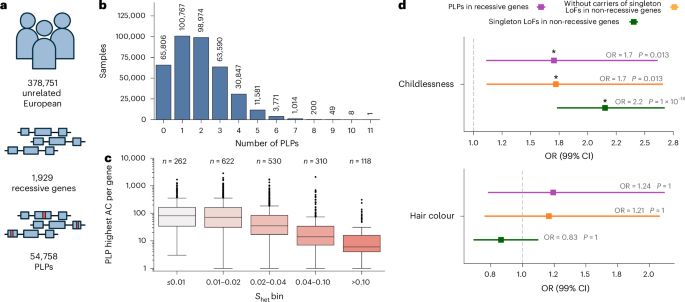
Reproductive and cognitive phenotypes in carriers of recessive pathogenic variants - Nature Human Behaviour
Fridman, Khazeeva et al. show associations of reproductive phenotypes and educational attainment in heterozygotic carriers of pathogenic variants associated with recessive conditions.
www.nature.com
May 15, 2025 at 9:29 AM
Super happy that our paper phenotypes in carriers of pathogenic variants in recessive genes is finally out!!
www.nature.com/articles/s41...
www.nature.com/articles/s41...
Reposted by Quentin Sabbagh
Started the first day of our pre-ESHG meeting on clinical NGS variant interpretation with 60 participants from all over the world! #ESHG2025

May 22, 2025 at 12:22 PM
Started the first day of our pre-ESHG meeting on clinical NGS variant interpretation with 60 participants from all over the world! #ESHG2025
Reposted by Quentin Sabbagh

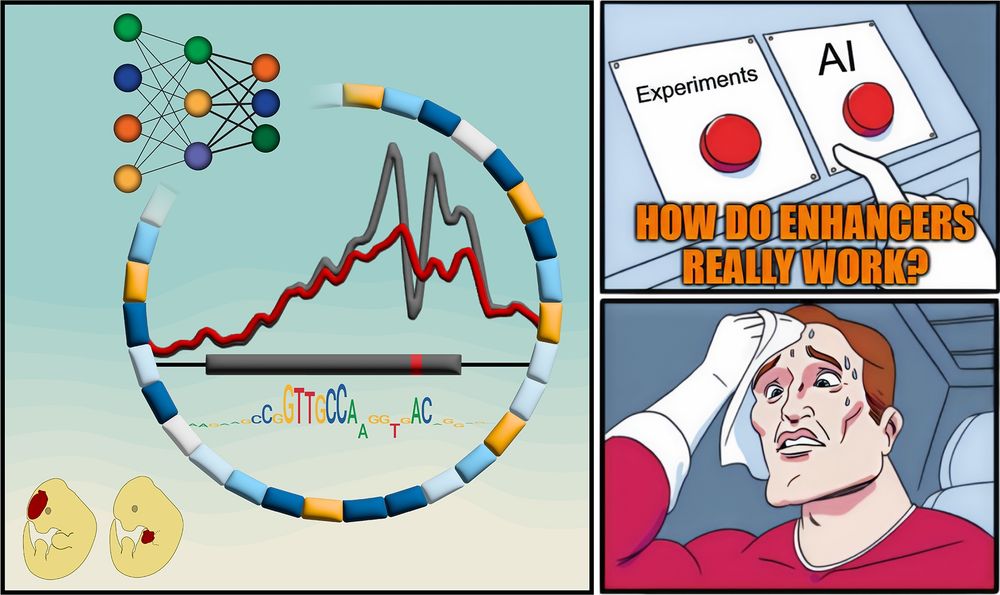
Textbooks: “Enhancers are just a bunch of TFBSs”
But how do they REALLY work?
New paper with many contributors here @berkeleylab.lbl.gov, @anshulkundaje.bsky.social, @anusri.bsky.social
A 🧵 (1/n)
Free access link: rdcu.be/erD22
But how do they REALLY work?
New paper with many contributors here @berkeleylab.lbl.gov, @anshulkundaje.bsky.social, @anusri.bsky.social
A 🧵 (1/n)
Free access link: rdcu.be/erD22
June 18, 2025 at 5:56 PM
Textbooks: “Enhancers are just a bunch of TFBSs”
But how do they REALLY work?
New paper with many contributors here @berkeleylab.lbl.gov, @anshulkundaje.bsky.social, @anusri.bsky.social
A 🧵 (1/n)
Free access link: rdcu.be/erD22
But how do they REALLY work?
New paper with many contributors here @berkeleylab.lbl.gov, @anshulkundaje.bsky.social, @anusri.bsky.social
A 🧵 (1/n)
Free access link: rdcu.be/erD22
Reposted by Quentin Sabbagh

Our paper describing the Range Extender element which is required and sufficient for long-range enhancer activation at the Shh locus is now available at @nature.com. Congrats to @gracebower.bsky.social who led the study. Below is a brief summary of the main findings www.nature.com/articles/s41... 1/
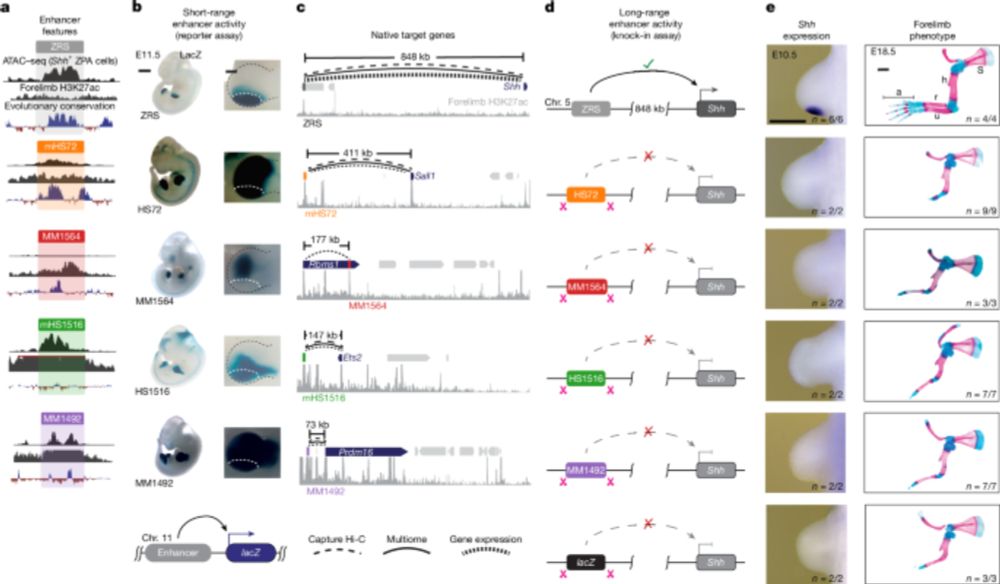
Range extender mediates long-distance enhancer activity - Nature
The REX element is associated with long-range enhancer–promoter interactions.
www.nature.com
July 2, 2025 at 4:17 PM
Our paper describing the Range Extender element which is required and sufficient for long-range enhancer activation at the Shh locus is now available at @nature.com. Congrats to @gracebower.bsky.social who led the study. Below is a brief summary of the main findings www.nature.com/articles/s41... 1/
Reposted by Quentin Sabbagh
Getting ready for #eshg2025 …and our postdoc @lydiasagath.bsky.social made a nice BINGO card again.
Paying a lot of attention to the entire event will pay off!
Paying a lot of attention to the entire event will pay off!

May 23, 2025 at 4:26 PM
Getting ready for #eshg2025 …and our postdoc @lydiasagath.bsky.social made a nice BINGO card again.
Paying a lot of attention to the entire event will pay off!
Paying a lot of attention to the entire event will pay off!
Reposted by Quentin Sabbagh

He’s lost none of his sparkle!
And as another „cherry on the cake“ we have once again the wonderful Sir John Burn - to teach us important genetic lessons on „cancer and therapy“ by humor and storytelling. Brilliant!

May 6, 2025 at 10:20 AM
He’s lost none of his sparkle!
Reposted by Quentin Sabbagh
Exciting to kick-of day2.
…I could talk for hours about the evolution and tremendous progress made for sequence and genomics!
@eshg.bsky.social @eshgyoung.bsky.social #bertinoro2025 #eshg2025
…I could talk for hours about the evolution and tremendous progress made for sequence and genomics!
@eshg.bsky.social @eshgyoung.bsky.social #bertinoro2025 #eshg2025
May 5, 2025 at 7:57 AM
Exciting to kick-of day2.
…I could talk for hours about the evolution and tremendous progress made for sequence and genomics!
@eshg.bsky.social @eshgyoung.bsky.social #bertinoro2025 #eshg2025
…I could talk for hours about the evolution and tremendous progress made for sequence and genomics!
@eshg.bsky.social @eshgyoung.bsky.social #bertinoro2025 #eshg2025
Reposted by Quentin Sabbagh
Thanks @genomeresearch.bsky.social with it’s great team. Also many thanks to the other two guest editors! So much fun to doing this LRS special with you @sedlazeck.bsky.social @anaconesa.bsky.social! Also many thanks to all authors contributing to all manuscripts - great work!

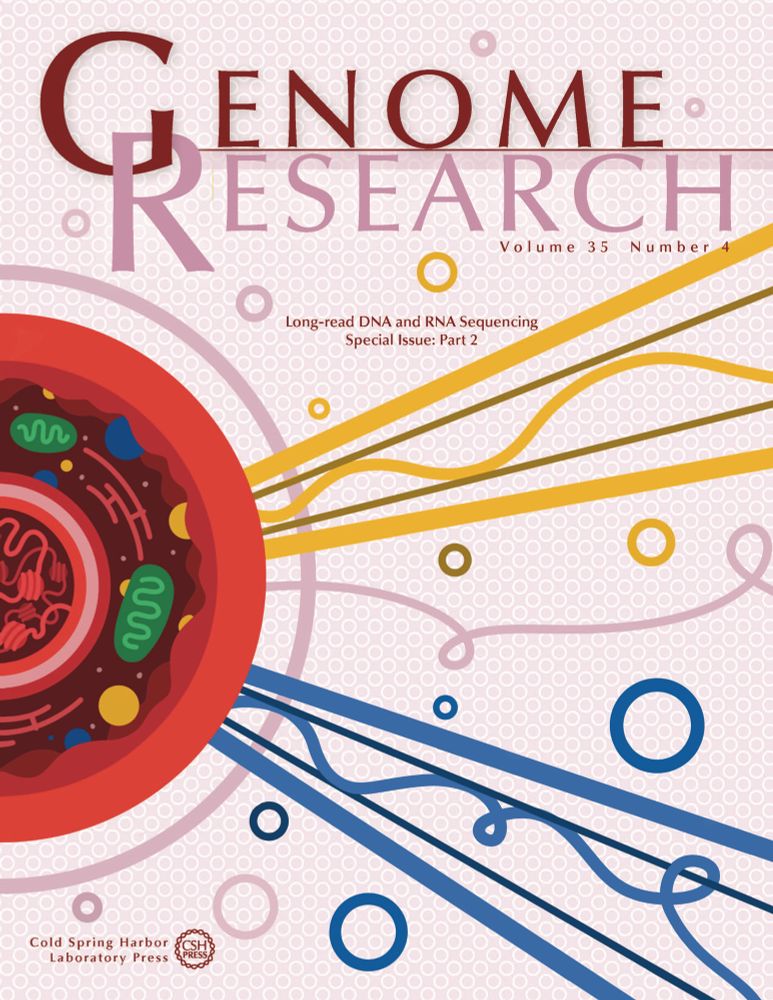
SPECIAL ISSUE Part 2! This month @genomeresearch.bsky.social publishes a diverse collection of articles offering novel biological and clinical insights gained using long-read DNA and RNA sequencing technologies and other long molecule approaches.
tinyurl.com/Genome-Res-3...
tinyurl.com/Genome-Res-3...
April 14, 2025 at 7:59 PM
Thanks @genomeresearch.bsky.social with it’s great team. Also many thanks to the other two guest editors! So much fun to doing this LRS special with you @sedlazeck.bsky.social @anaconesa.bsky.social! Also many thanks to all authors contributing to all manuscripts - great work!
Reposted by Quentin Sabbagh

📝ESHG Trainees – It’s time to vote for representative on the @eshgyoung.bsky.social Committee! Help to shape our community.🙌
🗳️Voting opens 28 April and runs until 11 May
🧬Your voice matters – take part!
@eshg.bsky.social #elections
🗳️Voting opens 28 April and runs until 11 May
🧬Your voice matters – take part!
@eshg.bsky.social #elections

April 22, 2025 at 10:57 AM
📝ESHG Trainees – It’s time to vote for representative on the @eshgyoung.bsky.social Committee! Help to shape our community.🙌
🗳️Voting opens 28 April and runs until 11 May
🧬Your voice matters – take part!
@eshg.bsky.social #elections
🗳️Voting opens 28 April and runs until 11 May
🧬Your voice matters – take part!
@eshg.bsky.social #elections
Reposted by Quentin Sabbagh

Long-read sequencing of large pedigrees is an ideal way to map all classes of denovo mutations! A collaboration between University of Utah, University of Washington, and PacBio. Glad to be a part of this project 👏
www.nature.com/articles/s41...
www.nature.com/articles/s41...

Human de novo mutation rates from a four-generation pedigree reference - Nature
Analysis of more than 95% of each diploid human genome of a four-generation, twenty-eight-member family using five complementary short-read and long-read sequencing technologies provides a truth set t...
www.nature.com
April 23, 2025 at 4:11 PM
Long-read sequencing of large pedigrees is an ideal way to map all classes of denovo mutations! A collaboration between University of Utah, University of Washington, and PacBio. Glad to be a part of this project 👏
www.nature.com/articles/s41...
www.nature.com/articles/s41...
Reposted by Quentin Sabbagh
New genomic & genetic insights into Mendel’s pea genes, including previously uncharacterised alleles
159 years after Mendel published his work, this is a real delight (especially for a geneticist)
🧪
@nature.com
www.nature.com/articles/s41...
159 years after Mendel published his work, this is a real delight (especially for a geneticist)
🧪
@nature.com
www.nature.com/articles/s41...
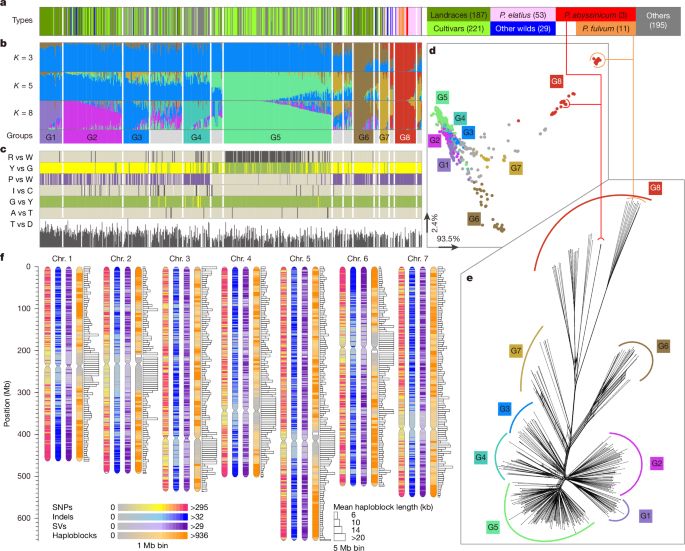
Genomic and genetic insights into Mendel’s pea genes - Nature
Characterization of the genetic architecture underlying the 7 pairs of contrasting traits studied by Mendel and the over 70 additional agronomic traits in pea (Pisum sativum) reveals their m...
www.nature.com
April 24, 2025 at 5:38 AM
New genomic & genetic insights into Mendel’s pea genes, including previously uncharacterised alleles
159 years after Mendel published his work, this is a real delight (especially for a geneticist)
🧪
@nature.com
www.nature.com/articles/s41...
159 years after Mendel published his work, this is a real delight (especially for a geneticist)
🧪
@nature.com
www.nature.com/articles/s41...
Reposted by Quentin Sabbagh

HiFi long-read genomes for difficult-to-detect, clinically relevant variants www.cell.com/ajhg/fulltex...

HiFi long-read genomes for difficult-to-detect, clinically relevant variants
Detecting pathogenic germline variants in the clinic remains technically challenging.
We analyzed 145 previously identified, hard-to-detect variants in 100 samples using
HiFi long-read sequencing (LRS...
www.cell.com
January 14, 2025 at 6:09 PM
HiFi long-read genomes for difficult-to-detect, clinically relevant variants www.cell.com/ajhg/fulltex...
Reposted by Quentin Sabbagh

Check out our new preprint describing CiFi - a method that couples 3C and PacBio HiFi sequencing with low input requirements. We apply it to human GM12878 to better characterize chromatin across repetitive regions, as well as single insect samples (a mosquito and a Mediterranean fruit fly).

CiFi: Accurate long-read chromatin conformation capture with low-input requirements https://www.biorxiv.org/content/10.1101/2025.01.31.635566v1
February 5, 2025 at 11:49 PM
Check out our new preprint describing CiFi - a method that couples 3C and PacBio HiFi sequencing with low input requirements. We apply it to human GM12878 to better characterize chromatin across repetitive regions, as well as single insect samples (a mosquito and a Mediterranean fruit fly).
Reposted by Quentin Sabbagh
It’s a privilege to announce Solve-RD’s latest manuscript based on years of work: “Genomic reanalysis of a pan-European rare-disease resource yields new diagnoses”
www.nature.com/articles/s41...
A thread (1/n)
www.nature.com/articles/s41...
A thread (1/n)

Genomic reanalysis of a pan-European rare-disease resource yields new diagnoses - Nature Medicine
This flagship study from the European Solve-Rare Diseases Consortium presents a diagnostic framework including bioinformatic analysis of clinical, pedigree and genomic data coupled with expert panel r...
www.nature.com
January 17, 2025 at 10:33 AM
It’s a privilege to announce Solve-RD’s latest manuscript based on years of work: “Genomic reanalysis of a pan-European rare-disease resource yields new diagnoses”
www.nature.com/articles/s41...
A thread (1/n)
www.nature.com/articles/s41...
A thread (1/n)
Reposted by Quentin Sabbagh

BREAKING: A new study from @radboudumc demonstrates the advantage of #PacBio technology in identifying genetic causes of #RareDiease. The key outcomes showcase the potential for broader adoption of HiFi long-read #sequencing into clinical practice.
www.pacb.com/press_releas...
www.pacb.com/press_releas...

January 14, 2025 at 2:58 PM
BREAKING: A new study from @radboudumc demonstrates the advantage of #PacBio technology in identifying genetic causes of #RareDiease. The key outcomes showcase the potential for broader adoption of HiFi long-read #sequencing into clinical practice.
www.pacb.com/press_releas...
www.pacb.com/press_releas...