



Evgeny Kvon
@evgenykvon.bsky.social
Asst Prof at University of California, Irvine.
Genetics, Genomics, Gene Regulation, Development. Views are my own.
https://www.kvonlab.org/
Genetics, Genomics, Gene Regulation, Development. Views are my own.
https://www.kvonlab.org/
Pinned
Evgeny Kvon
@evgenykvon.bsky.social
· Jun 23
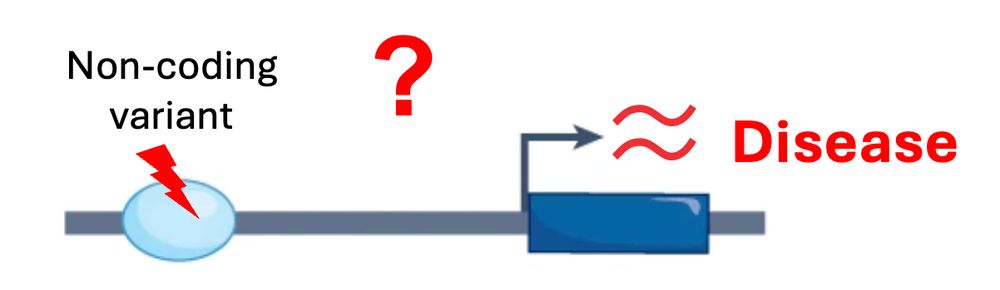
How do non-coding variants in enhancers lead to disease? Happy to share our recent work, led by @ewholling.bsky.social, in which we discovered that poised chromatin sensitizes enhancers to aberrant activation by non-coding mutations, contributing to disease. www.biorxiv.org/content/10.1... 1/
Reposted by Evgeny Kvon
Very sad news. Gail Martin (1944-2026) was a figure in developmental biology. She pioneered the field of ES cells.
A great colleague, a friend and a lovely person.
A great colleague, a friend and a lovely person.

February 15, 2026 at 8:56 AM
Very sad news. Gail Martin (1944-2026) was a figure in developmental biology. She pioneered the field of ES cells.
A great colleague, a friend and a lovely person.
A great colleague, a friend and a lovely person.
Reposted by Evgeny Kvon
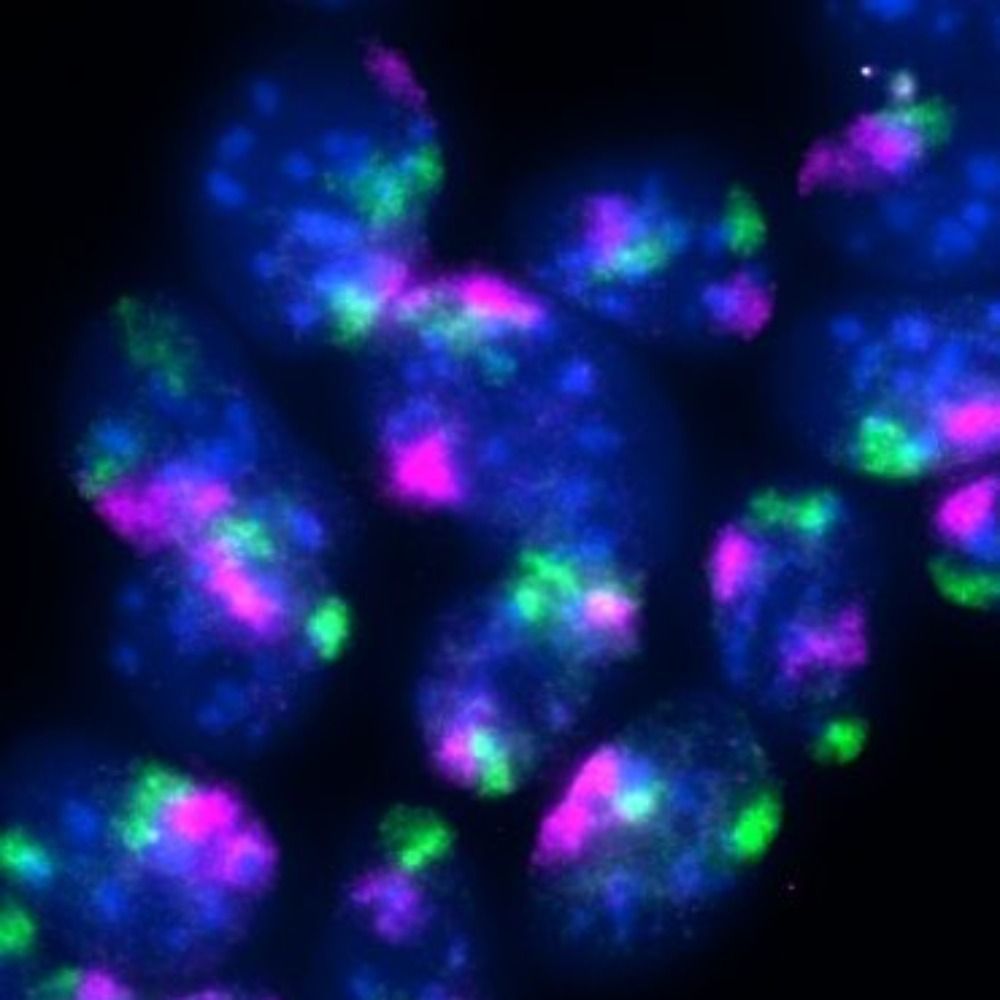
Interested in transcriptional regulation, enhancers and 3D genome folding?
In this new study we wondered about the role of cohesin loading at enhancers for long-range transcriptional control
www.biorxiv.org/content/10.6...
detailed 🧵👇
In this new study we wondered about the role of cohesin loading at enhancers for long-range transcriptional control
www.biorxiv.org/content/10.6...
detailed 🧵👇
www.biorxiv.org
February 12, 2026 at 9:39 PM
Interested in transcriptional regulation, enhancers and 3D genome folding?
In this new study we wondered about the role of cohesin loading at enhancers for long-range transcriptional control
www.biorxiv.org/content/10.6...
detailed 🧵👇
In this new study we wondered about the role of cohesin loading at enhancers for long-range transcriptional control
www.biorxiv.org/content/10.6...
detailed 🧵👇
Reposted by Evgeny Kvon
New preprint from the lab! We identify the ZnF protein Mulberry as a condensation-dependent structural regulator of genome topology that organizes “multi-way regulatory hubs” in early Drosophila embryos.
www.biorxiv.org/content/10.6...
www.biorxiv.org/content/10.6...

February 5, 2026 at 10:56 AM
New preprint from the lab! We identify the ZnF protein Mulberry as a condensation-dependent structural regulator of genome topology that organizes “multi-way regulatory hubs” in early Drosophila embryos.
www.biorxiv.org/content/10.6...
www.biorxiv.org/content/10.6...
Reposted by Evgeny Kvon

Neil H. Shubin has been elected as the next NAS President! A leading evolutionary biologist and science communicator, Shubin will succeed Marcia McNutt on July 1. The Academy also named Cherry Murray as International Secretary and elected new councilors. Read more: www.nasonline.org/news/2026_pr...

February 4, 2026 at 5:35 PM
Neil H. Shubin has been elected as the next NAS President! A leading evolutionary biologist and science communicator, Shubin will succeed Marcia McNutt on July 1. The Academy also named Cherry Murray as International Secretary and elected new councilors. Read more: www.nasonline.org/news/2026_pr...
Reposted by Evgeny Kvon

Join us this week for the next exciting VGZT session! 🎉
🗓️ Thursday, February 5th
⏰ 9:30 PST / 12:30 EST / 17:30 UTC / 17:30 GMT / 18:30 CET
Our speakers are
👉 Evgeny Kvon (@evgenykvon.bsky.social)
👉 Silas Boye Nissen (on X: @SilasBoyeNissen)
See you on Thursday! 👋
🗓️ Thursday, February 5th
⏰ 9:30 PST / 12:30 EST / 17:30 UTC / 17:30 GMT / 18:30 CET
Our speakers are
👉 Evgeny Kvon (@evgenykvon.bsky.social)
👉 Silas Boye Nissen (on X: @SilasBoyeNissen)
See you on Thursday! 👋

February 2, 2026 at 8:08 AM
Join us this week for the next exciting VGZT session! 🎉
🗓️ Thursday, February 5th
⏰ 9:30 PST / 12:30 EST / 17:30 UTC / 17:30 GMT / 18:30 CET
Our speakers are
👉 Evgeny Kvon (@evgenykvon.bsky.social)
👉 Silas Boye Nissen (on X: @SilasBoyeNissen)
See you on Thursday! 👋
🗓️ Thursday, February 5th
⏰ 9:30 PST / 12:30 EST / 17:30 UTC / 17:30 GMT / 18:30 CET
Our speakers are
👉 Evgeny Kvon (@evgenykvon.bsky.social)
👉 Silas Boye Nissen (on X: @SilasBoyeNissen)
See you on Thursday! 👋
Reposted by Evgeny Kvon
excellent thread
I had intended to post something about this new Google DeepMind paper that appeared yesterday in Nature, but the press coverage has added to what there is to say. So this is a long 🧵
www.nature.com/articles/s41...
www.nature.com/articles/s41...

Advancing regulatory variant effect prediction with AlphaGenome - Nature
AlphaGenome, a deep learning model that inputs 1-Mb DNA sequence to predict functional genomic tracks at single-base resolution across diverse modalities, outperforms existing models in variant effect...
www.nature.com
January 30, 2026 at 1:01 PM
excellent thread
Reposted by Evgeny Kvon
I had intended to post something about this new Google DeepMind paper that appeared yesterday in Nature, but the press coverage has added to what there is to say. So this is a long 🧵
www.nature.com/articles/s41...
www.nature.com/articles/s41...
Advancing regulatory variant effect prediction with AlphaGenome - Nature
AlphaGenome, a deep learning model that inputs 1-Mb DNA sequence to predict functional genomic tracks at single-base resolution across diverse modalities, outperforms existing models in variant effect...
www.nature.com
January 30, 2026 at 9:47 AM
I had intended to post something about this new Google DeepMind paper that appeared yesterday in Nature, but the press coverage has added to what there is to say. So this is a long 🧵
www.nature.com/articles/s41...
www.nature.com/articles/s41...
Reposted by Evgeny Kvon

📣 I'm excited to share our latest preprint!
We adapt and characterise a neurosphere-based CNCC differentiation protocol, and demonstrate utility for quantitative phenotyping and craniofacial disease modelling! 🧫
Read about Array-CNCC here:
www.biorxiv.org/content/10.6...
@uoe-igc.bsky.social
We adapt and characterise a neurosphere-based CNCC differentiation protocol, and demonstrate utility for quantitative phenotyping and craniofacial disease modelling! 🧫
Read about Array-CNCC here:
www.biorxiv.org/content/10.6...
@uoe-igc.bsky.social

January 28, 2026 at 2:37 PM
📣 I'm excited to share our latest preprint!
We adapt and characterise a neurosphere-based CNCC differentiation protocol, and demonstrate utility for quantitative phenotyping and craniofacial disease modelling! 🧫
Read about Array-CNCC here:
www.biorxiv.org/content/10.6...
@uoe-igc.bsky.social
We adapt and characterise a neurosphere-based CNCC differentiation protocol, and demonstrate utility for quantitative phenotyping and craniofacial disease modelling! 🧫
Read about Array-CNCC here:
www.biorxiv.org/content/10.6...
@uoe-igc.bsky.social
Finally had a chance to read this beautiful paper from Susan Mackem's lab. It's interesting that even well-established paradigms, like Sonic Hedgehog's role as a traditional morphogen in limb development, can be proven wrong over time.
www.sciencedirect.com/science/arti...
www.sciencedirect.com/science/arti...

Sonic hedgehog is not a limb morphogen but acts as a trigger to specify all digits in mice
Limb patterning by Sonic hedgehog (Shh), via either graded spatial or temporal signal integration, is a paradigm for “morphogen” function, yet how Shh…
www.sciencedirect.com
January 26, 2026 at 10:39 PM
Finally had a chance to read this beautiful paper from Susan Mackem's lab. It's interesting that even well-established paradigms, like Sonic Hedgehog's role as a traditional morphogen in limb development, can be proven wrong over time.
www.sciencedirect.com/science/arti...
www.sciencedirect.com/science/arti...
Reposted by Evgeny Kvon

And it's out indeed! Huge congrats to @josanesousa.bsky.social, @gabrielalima19.bsky.social, @perezlouise.bsky.social & Hannah Schof! A true tour-de-force that highlights how emerging model systems can shed new light on long-standing macro-evolutionary questions. Go #axolotl, #polypterus #zebrafish!
It’s out! 🐟 We compared three regeneration superstars—axolotl, zebrafish, and Polypterus—to ask how animals regrow limbs and fins. We find shared core processes, and other programs fine-tuned by evolution in surprising, lineage-specific ways. tinyurl.com/mpftkn7y

January 22, 2026 at 5:59 PM
And it's out indeed! Huge congrats to @josanesousa.bsky.social, @gabrielalima19.bsky.social, @perezlouise.bsky.social & Hannah Schof! A true tour-de-force that highlights how emerging model systems can shed new light on long-standing macro-evolutionary questions. Go #axolotl, #polypterus #zebrafish!
Reposted by Evgeny Kvon
Now for the money...
Overall, the budget is essentially flat.
The biggest winner is NINDS with a 5.9% increase. The biggest losers are NIEHS and NIDDK.
4/5
Overall, the budget is essentially flat.
The biggest winner is NINDS with a 5.9% increase. The biggest losers are NIEHS and NIDDK.
4/5

January 20, 2026 at 3:55 PM
Now for the money...
Overall, the budget is essentially flat.
The biggest winner is NINDS with a 5.9% increase. The biggest losers are NIEHS and NIDDK.
4/5
Overall, the budget is essentially flat.
The biggest winner is NINDS with a 5.9% increase. The biggest losers are NIEHS and NIDDK.
4/5
Reposted by Evgeny Kvon
I am still going through the materials, but it seems to be mostly good news.
The language in the bill about indirect costs following the historical process seems very strong.
2/5
The language in the bill about indirect costs following the historical process seems very strong.
2/5

January 20, 2026 at 3:55 PM
I am still going through the materials, but it seems to be mostly good news.
The language in the bill about indirect costs following the historical process seems very strong.
2/5
The language in the bill about indirect costs following the historical process seems very strong.
2/5
Reposted by Evgeny Kvon
Our work on #RegulatoryTrajectories is out today in Nat. Comms: www.nature.com/articles/s41...
Led by @raquelrouco.bsky.social, this study establishes a new framework to study how enhancer landscapes act sequentially at developmental loci and are silenced to shape gene expression patterns. (1/n)
Led by @raquelrouco.bsky.social, this study establishes a new framework to study how enhancer landscapes act sequentially at developmental loci and are silenced to shape gene expression patterns. (1/n)
Client Challenge
www.nature.com
January 12, 2026 at 11:48 AM
Our work on #RegulatoryTrajectories is out today in Nat. Comms: www.nature.com/articles/s41...
Led by @raquelrouco.bsky.social, this study establishes a new framework to study how enhancer landscapes act sequentially at developmental loci and are silenced to shape gene expression patterns. (1/n)
Led by @raquelrouco.bsky.social, this study establishes a new framework to study how enhancer landscapes act sequentially at developmental loci and are silenced to shape gene expression patterns. (1/n)
Reposted by Evgeny Kvon
Gratitutde to all NIH study section participants who are participating in rescheduled meetings now and in January. Thank you for your service and thanks also to the hard working NIH staff who are making these happen. 🥰🧪
December 5, 2025 at 8:46 PM
Gratitutde to all NIH study section participants who are participating in rescheduled meetings now and in January. Thank you for your service and thanks also to the hard working NIH staff who are making these happen. 🥰🧪
Reposted by Evgeny Kvon

Now out: The new ENCODE registry of candidate cis-regulatory elements (🐭/👶)
Major consortium effort, led by @moorejille.bsky.social - stay tuned for her "meme-torial"
www.nature.com/articles/s41...
@berkeleylab.lbl.gov @biosci.lbl.gov
Major consortium effort, led by @moorejille.bsky.social - stay tuned for her "meme-torial"
www.nature.com/articles/s41...
@berkeleylab.lbl.gov @biosci.lbl.gov

January 7, 2026 at 9:45 PM
Now out: The new ENCODE registry of candidate cis-regulatory elements (🐭/👶)
Major consortium effort, led by @moorejille.bsky.social - stay tuned for her "meme-torial"
www.nature.com/articles/s41...
@berkeleylab.lbl.gov @biosci.lbl.gov
Major consortium effort, led by @moorejille.bsky.social - stay tuned for her "meme-torial"
www.nature.com/articles/s41...
@berkeleylab.lbl.gov @biosci.lbl.gov
Reposted by Evgeny Kvon

Finally out! We studied the retinas of the longest-living vertebrate, the Greenland shark, and found that the retinas remain remarkably healthy in animals around 150 years old. What is the mechanism? It may be a highly efficient DNA repair system. Enjoy!
www.nature.com/articles/s41...
www.nature.com/articles/s41...

January 6, 2026 at 1:40 AM
Finally out! We studied the retinas of the longest-living vertebrate, the Greenland shark, and found that the retinas remain remarkably healthy in animals around 150 years old. What is the mechanism? It may be a highly efficient DNA repair system. Enjoy!
www.nature.com/articles/s41...
www.nature.com/articles/s41...
Reposted by Evgeny Kvon

I have always been fascinated by transcriptional activators that display intrinsic specificity towards some but not other promoter types as this implies alternative mechanisms! Hcfc1 directly bridges TFs to TFIID to overcome a CGI-specific rate-limiting step and activate CGI transcription. (2/2)
December 30, 2025 at 8:02 AM
I have always been fascinated by transcriptional activators that display intrinsic specificity towards some but not other promoter types as this implies alternative mechanisms! Hcfc1 directly bridges TFs to TFIID to overcome a CGI-specific rate-limiting step and activate CGI transcription. (2/2)
Reposted by Evgeny Kvon
Activator-promoter compatibility in mammals - Hcfc1 is a key and intrinsically CGI-promoter-specific co-activator that cannot activate non-CGI promoters. Lead by @nemcko.bsky.social & Kevin Sabath in collab. with @plaschkalab.bsky.social @impvienna.bsky.social www.biorxiv.org/content/10.6... (1/2)

Activator-promoter compatibility in mammals: a CpG-Island-specific co-activator directly bridges transcription factors to TFIID
Transcription from CpG island (CGI) promoters controls the expression of two-thirds of mammalian genes, yet despite their prevalence, it remains unknown whether CGI-specific co-activators with intrins...
www.biorxiv.org
December 30, 2025 at 8:02 AM
Activator-promoter compatibility in mammals - Hcfc1 is a key and intrinsically CGI-promoter-specific co-activator that cannot activate non-CGI promoters. Lead by @nemcko.bsky.social & Kevin Sabath in collab. with @plaschkalab.bsky.social @impvienna.bsky.social www.biorxiv.org/content/10.6... (1/2)
Reposted by Evgeny Kvon
Join @stirlingchurchman.bsky.social,
@moffittlab.bsky.social, @saramostafavi.bsky.social, me and all speakers for the 2026 CSHL meeting Systems Biology: Global Regulation of Gene Expression, March 11-14. Abstract deadline January 9! More infos and registration at meetings.cshl.edu/meetings.asp...
@moffittlab.bsky.social, @saramostafavi.bsky.social, me and all speakers for the 2026 CSHL meeting Systems Biology: Global Regulation of Gene Expression, March 11-14. Abstract deadline January 9! More infos and registration at meetings.cshl.edu/meetings.asp...

December 29, 2025 at 9:01 AM
Join @stirlingchurchman.bsky.social,
@moffittlab.bsky.social, @saramostafavi.bsky.social, me and all speakers for the 2026 CSHL meeting Systems Biology: Global Regulation of Gene Expression, March 11-14. Abstract deadline January 9! More infos and registration at meetings.cshl.edu/meetings.asp...
@moffittlab.bsky.social, @saramostafavi.bsky.social, me and all speakers for the 2026 CSHL meeting Systems Biology: Global Regulation of Gene Expression, March 11-14. Abstract deadline January 9! More infos and registration at meetings.cshl.edu/meetings.asp...
Not that long ago, in vivo mouse enhancer design was a dream. Today, it's a reality! Using transfer deep learning to design de novo synthetic embryonic enhancers active in the heart, limb, and CNS. Great collab with @alex-stark.bsky.social lab! @ucibiosci.bsky.social @impvienna.bsky.social

December 24, 2025 at 3:51 PM
Not that long ago, in vivo mouse enhancer design was a dream. Today, it's a reality! Using transfer deep learning to design de novo synthetic embryonic enhancers active in the heart, limb, and CNS. Great collab with @alex-stark.bsky.social lab! @ucibiosci.bsky.social @impvienna.bsky.social
Reposted by Evgeny Kvon
Our preprint "Predictive design of tissue-specific mammalian enhancers that function in vivo in the mouse embryo" is on bioRxiv: www.biorxiv.org/content/10.6... . Amazing collaboration by @shenzhichen1999.bsky.social, Vincent Loubiere (@impvienna.bsky.social,@viennabiocenter.bsky.social),... (1/2)
Predictive design of tissue-specific mammalian enhancers that function in vivo in the mouse embryo
Enhancers control tissue-specific gene expression across metazoans. Although deep learning has enabled enhancer prediction and design in mammalian cell lines and invertebrate systems, it remains uncle...
www.biorxiv.org
December 24, 2025 at 3:06 PM
Our preprint "Predictive design of tissue-specific mammalian enhancers that function in vivo in the mouse embryo" is on bioRxiv: www.biorxiv.org/content/10.6... . Amazing collaboration by @shenzhichen1999.bsky.social, Vincent Loubiere (@impvienna.bsky.social,@viennabiocenter.bsky.social),... (1/2)
Reposted by Evgeny Kvon

I am happy to share that my postdoctoral work in the @gerlichlab.bsky.social at @imbavienna.bsky.social is finally out 🎉!
Our study reveals how cohesin guides focused and accurate homology search.
Read more 👉 www.science.org/doi/10.1126/...
Follow along for key insights and updates! 🧵
Our study reveals how cohesin guides focused and accurate homology search.
Read more 👉 www.science.org/doi/10.1126/...
Follow along for key insights and updates! 🧵

Cohesin guides homology search during DNA repair using loops and sister chromatid linkages
Accurate repair of DNA double-strand breaks (DSBs) is essential for genome stability, and defective repair underlies diseases such as cancer. Homologous recombination uses an intact homologous sequenc...
www.science.org
December 4, 2025 at 8:18 PM
I am happy to share that my postdoctoral work in the @gerlichlab.bsky.social at @imbavienna.bsky.social is finally out 🎉!
Our study reveals how cohesin guides focused and accurate homology search.
Read more 👉 www.science.org/doi/10.1126/...
Follow along for key insights and updates! 🧵
Our study reveals how cohesin guides focused and accurate homology search.
Read more 👉 www.science.org/doi/10.1126/...
Follow along for key insights and updates! 🧵
Reposted by Evgeny Kvon
Here is a copy of last year's Twitter thread explaining our preprint - jump to (21) for the new stuff 👀
Synergy between cis-regulatory elements can render cohesin dispensable for distal enhancer function
now revised and journal accepted at www.science.org/doi/10.1126/...
🧵👇
Synergy between cis-regulatory elements can render cohesin dispensable for distal enhancer function
now revised and journal accepted at www.science.org/doi/10.1126/...
🧵👇
November 27, 2025 at 9:59 PM
Here is a copy of last year's Twitter thread explaining our preprint - jump to (21) for the new stuff 👀
Synergy between cis-regulatory elements can render cohesin dispensable for distal enhancer function
now revised and journal accepted at www.science.org/doi/10.1126/...
🧵👇
Synergy between cis-regulatory elements can render cohesin dispensable for distal enhancer function
now revised and journal accepted at www.science.org/doi/10.1126/...
🧵👇
Reposted by Evgeny Kvon

Register now for the EMBO Workshop "Limb development and regeneration: Quantitative, ecological, and diversification studies" in #Tokyo, Japan, 23–27 March 2026.
Abstract submission/Registration deadline:
12/15 December 2025
https://meetings.embo.org/event/26-limb-dev
#EMBOLimbDev #EMBOevents 🧪
Abstract submission/Registration deadline:
12/15 December 2025
https://meetings.embo.org/event/26-limb-dev
#EMBOLimbDev #EMBOevents 🧪

November 25, 2025 at 4:10 PM
Register now for the EMBO Workshop "Limb development and regeneration: Quantitative, ecological, and diversification studies" in #Tokyo, Japan, 23–27 March 2026.
Abstract submission/Registration deadline:
12/15 December 2025
https://meetings.embo.org/event/26-limb-dev
#EMBOLimbDev #EMBOevents 🧪
Abstract submission/Registration deadline:
12/15 December 2025
https://meetings.embo.org/event/26-limb-dev
#EMBOLimbDev #EMBOevents 🧪
Reposted by Evgeny Kvon

I'm guest-editing a collection on "Enhancer-promoter interactions" at Genome Biology. Please send us your exciting stories!
link.springer.com/collections/...
link.springer.com/collections/...
Enhancer-promoter interactions
Genome Biology is calling for submissions to our Collection on enhancer-promoter interactions.
Enhancer–promoter interactions are central to the regulation ...
link.springer.com
November 25, 2025 at 10:55 AM
I'm guest-editing a collection on "Enhancer-promoter interactions" at Genome Biology. Please send us your exciting stories!
link.springer.com/collections/...
link.springer.com/collections/...
