




Evgeny Kvon
@evgenykvon.bsky.social
Asst Prof at University of California, Irvine.
Genetics, Genomics, Gene Regulation, Development. Views are my own.
https://www.kvonlab.org/
Genetics, Genomics, Gene Regulation, Development. Views are my own.
https://www.kvonlab.org/
The Kvon lab won departmental Pumpkin Decorating Contest! Featuring a transgenic mouse with retinal enhancer driving GFP reporter. Mice have green fluorescent eyes. Spooky!

November 12, 2025 at 7:01 PM
The Kvon lab won departmental Pumpkin Decorating Contest! Featuring a transgenic mouse with retinal enhancer driving GFP reporter. Mice have green fluorescent eyes. Spooky!
Abstract deadline for CSH Asia meeting on Systems Biology of Gene Regulation and Genome Editing is extended to September 5th.

August 19, 2025 at 3:51 PM
Abstract deadline for CSH Asia meeting on Systems Biology of Gene Regulation and Genome Editing is extended to September 5th.
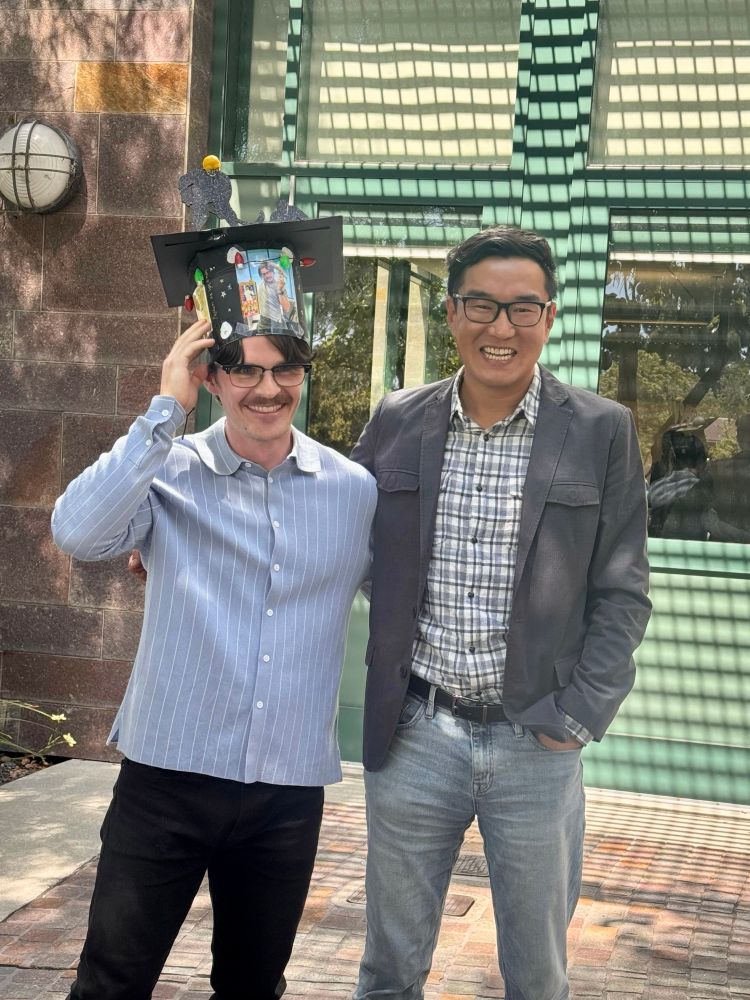
Huge congratulations to Dr. Ethan Hollingsworth @ewholling.bsky.social for successfully defending his PhD thesis. Well done!
July 23, 2025 at 12:46 AM
Huge congratulations to Dr. Ethan Hollingsworth @ewholling.bsky.social for successfully defending his PhD thesis. Well done!
Attend the CSH Asia meeting on Systems Biology of Gene Regulation and Genome Editing, organized by Len Pennacchio, Alex Stark, Zhiping Weng, and Wei Xie (all blueskyless), featuring a great lineup of speakers and a beautiful location in Suzhou. Abstract submission deadline: August 18th.

July 10, 2025 at 6:36 PM
Attend the CSH Asia meeting on Systems Biology of Gene Regulation and Genome Editing, organized by Len Pennacchio, Alex Stark, Zhiping Weng, and Wei Xie (all blueskyless), featuring a great lineup of speakers and a beautiful location in Suzhou. Abstract submission deadline: August 18th.
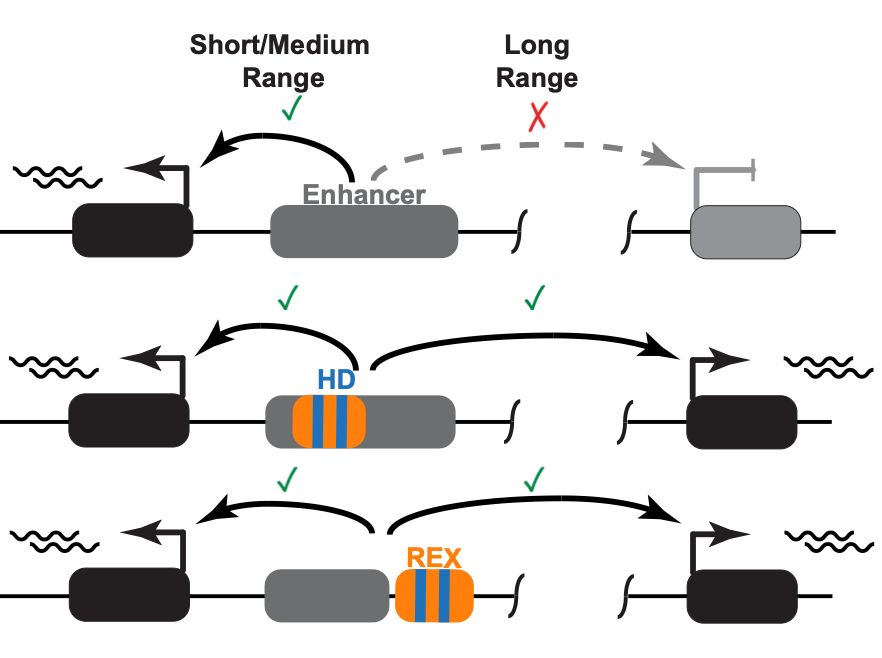
Our work shows that spatial specificity and long-distance activity are two separate and separable aspects of enhancer function. It also offers a plausible mechanistic explanation for why some enhancers are highly distance-dependent while others don’t seem to care. 7/
July 2, 2025 at 4:17 PM
Our work shows that spatial specificity and long-distance activity are two separate and separable aspects of enhancer function. It also offers a plausible mechanistic explanation for why some enhancers are highly distance-dependent while others don’t seem to care. 7/
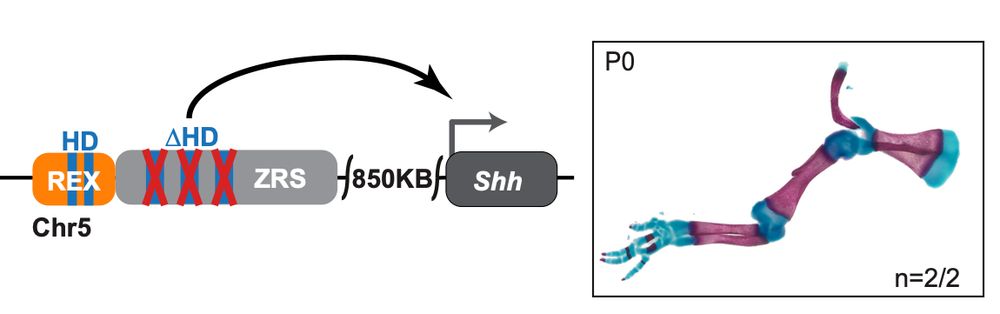
Importantly, we can rescue LHX-less ZRS by adding a REX element to it. Mice with LHX-less ZRS fused to REX develop nearly normal limbs! 6/
July 2, 2025 at 4:17 PM
Importantly, we can rescue LHX-less ZRS by adding a REX element to it. Mice with LHX-less ZRS fused to REX develop nearly normal limbs! 6/
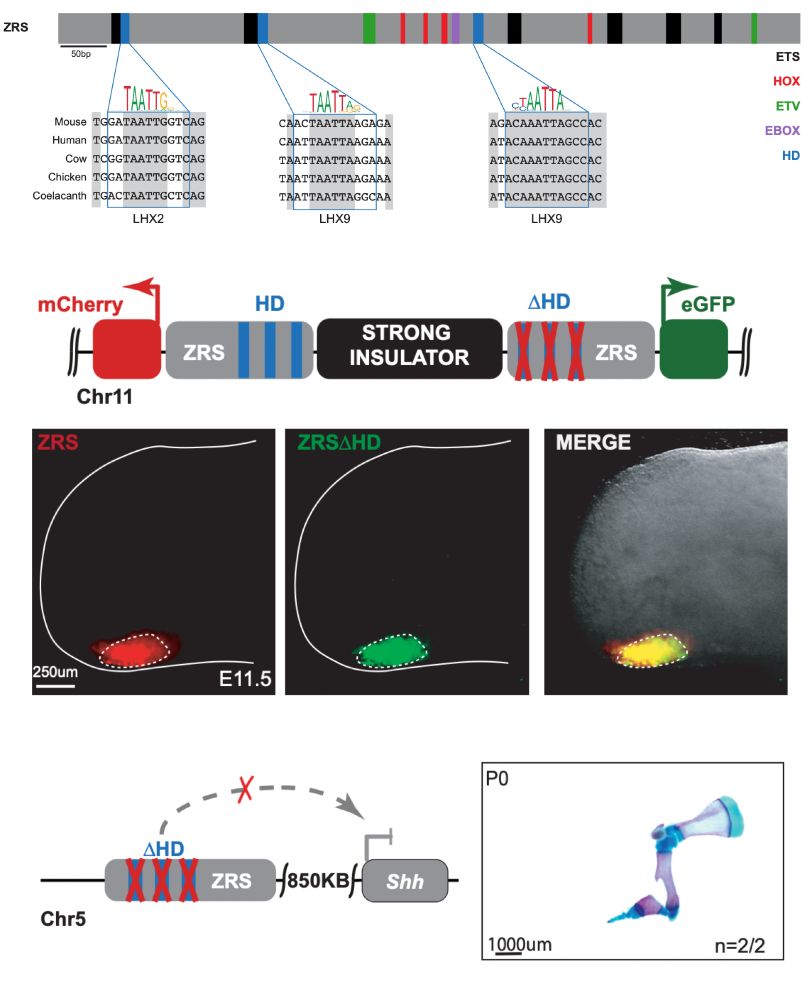
What about ZRS itself? It turns out it also has three LHX motifs. Without these motifs, ZRS only functions at short range but completely loses its long-range ability, as we demonstrate in KI mice. 5/
July 2, 2025 at 4:17 PM
What about ZRS itself? It turns out it also has three LHX motifs. Without these motifs, ZRS only functions at short range but completely loses its long-range ability, as we demonstrate in KI mice. 5/
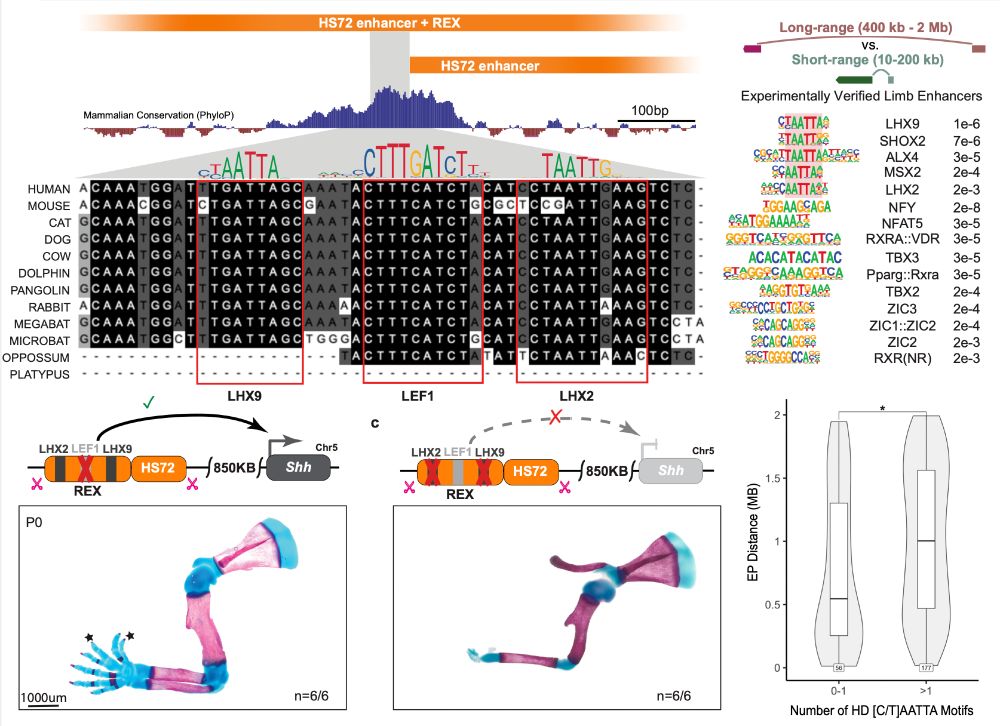
REX lacks CTCF or YY1 sites but contains two motifs for LIM-homeodomain TFs LHX2/9, which are essential for its function and are enriched in long-range limb enhancers throughout the genome. 4/
July 2, 2025 at 4:17 PM
REX lacks CTCF or YY1 sites but contains two motifs for LIM-homeodomain TFs LHX2/9, which are essential for its function and are enriched in long-range limb enhancers throughout the genome. 4/
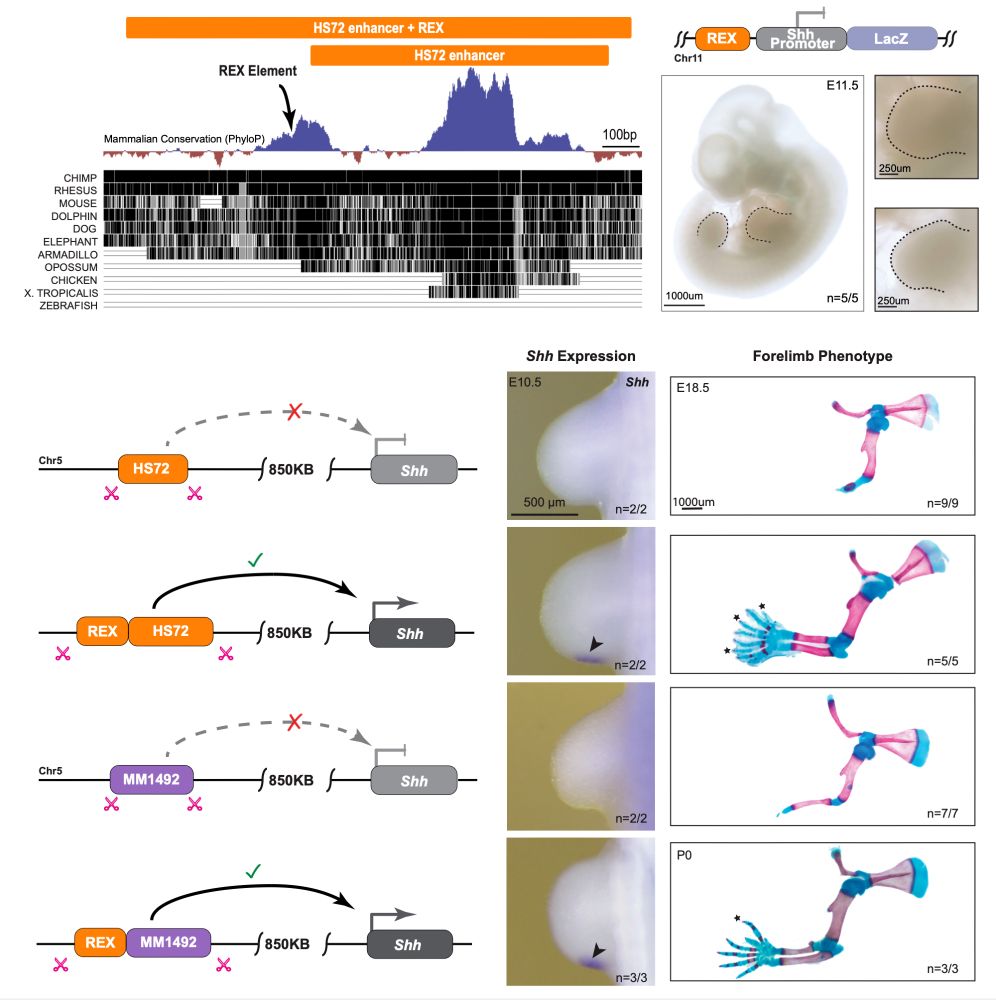
We describe a prototypical element, called the Range Extender (REX), located next to the long-range limb enhancer of Sall1. REX lacks enhancer activity by itself, but when combined with short- and medium-range enhancers, it allows them to function over more than 850 kb of genomic space! 3/
July 2, 2025 at 4:17 PM
We describe a prototypical element, called the Range Extender (REX), located next to the long-range limb enhancer of Sall1. REX lacks enhancer activity by itself, but when combined with short- and medium-range enhancers, it allows them to function over more than 850 kb of genomic space! 3/
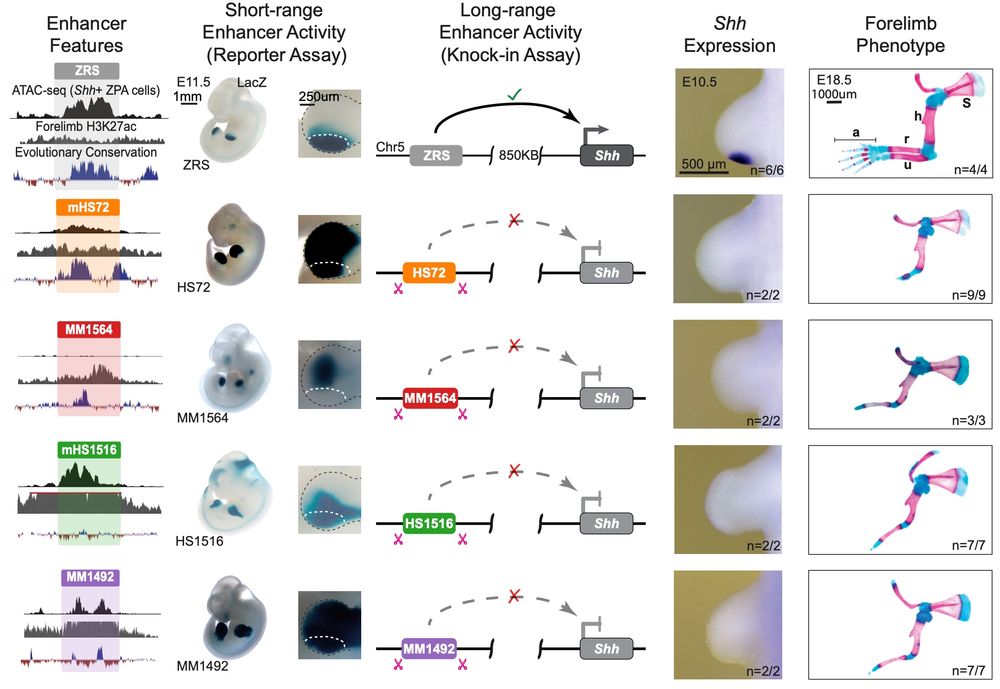
We show that medium- and short-range limb enhancers cannot operate over long genomic distance when transplanted in place of the long-range ZRS enhancer of Shh. 2/
July 2, 2025 at 4:17 PM
We show that medium- and short-range limb enhancers cannot operate over long genomic distance when transplanted in place of the long-range ZRS enhancer of Shh. 2/
See more details in the preprint: www.biorxiv.org/content/10.1.... I want to thank my fabulous lab @UCIBioSci and in particular @ewholling.bsky.social who spearheaded the project from its inception 17/

June 23, 2025 at 12:57 PM
See more details in the preprint: www.biorxiv.org/content/10.1.... I want to thank my fabulous lab @UCIBioSci and in particular @ewholling.bsky.social who spearheaded the project from its inception 17/
This has implications for the interpretation of the hundreds of thousands of non-coding variants associated with disease. One can leverage the rapidly growing wealth of single-cell ATAC-seq datasets, to predict in which cells the variant will alter gene expression at a putative disease locus 16/

June 23, 2025 at 12:57 PM
This has implications for the interpretation of the hundreds of thousands of non-coding variants associated with disease. One can leverage the rapidly growing wealth of single-cell ATAC-seq datasets, to predict in which cells the variant will alter gene expression at a putative disease locus 16/
Our findings provide a plausible mechanistic explanation for the excess of GOF enhancer variants linked to disease. While LOF mutations are tolerated due to redundancy, GOF mutations, though rarer, are more likely to impact expression because open chromatin sensitizes them to ectopic activation. 15/

June 23, 2025 at 12:57 PM
Our findings provide a plausible mechanistic explanation for the excess of GOF enhancer variants linked to disease. While LOF mutations are tolerated due to redundancy, GOF mutations, though rarer, are more likely to impact expression because open chromatin sensitizes them to ectopic activation. 15/
What are the implications of our study? It suggests that the expression of pioneer factors, rather than activators or repressors, dictates the location and timing of aberrant gene activation by non-coding variants in congenital disease. 14/

June 23, 2025 at 12:57 PM
What are the implications of our study? It suggests that the expression of pioneer factors, rather than activators or repressors, dictates the location and timing of aberrant gene activation by non-coding variants in congenital disease. 14/
To sum up: 1. Enhancer poising explains how >20 independent rare variants in the ZRS cause polydactyly; 2. ZIC3 mediates anterior poising – without ZIC3 binding mice are resistant to GOF mutations; 3. Enhancer poising enables pathogenic gene activation by noncoding variants at other loci. 13/n

June 23, 2025 at 12:57 PM
To sum up: 1. Enhancer poising explains how >20 independent rare variants in the ZRS cause polydactyly; 2. ZIC3 mediates anterior poising – without ZIC3 binding mice are resistant to GOF mutations; 3. Enhancer poising enables pathogenic gene activation by noncoding variants at other loci. 13/n
Can we use this unique posing signature to predict the in vivo activity of new variants? It turns out, yes. In this example, we predict and validate in vivo ectopic forebrain activity of previously uncharacterized non-coding variants from patients with autism, providing a potential mechanism. 12/n

June 23, 2025 at 12:57 PM
Can we use this unique posing signature to predict the in vivo activity of new variants? It turns out, yes. In this example, we predict and validate in vivo ectopic forebrain activity of previously uncharacterized non-coding variants from patients with autism, providing a potential mechanism. 12/n
Here are some examples. A famous autism variant in the enhancer of EBF3 causes ectopic activity in the forebrain, where EBF3 is not active, but its enhancer is poised. In another example, Snai2 enhancer is broadly poised. A synthetic GOF mutation causes ectopic activity across all tissues. 11/

June 23, 2025 at 12:57 PM
Here are some examples. A famous autism variant in the enhancer of EBF3 causes ectopic activity in the forebrain, where EBF3 is not active, but its enhancer is poised. In another example, Snai2 enhancer is broadly poised. A synthetic GOF mutation causes ectopic activity across all tissues. 11/
What about other disease loci? Interestingly, every locus with known GOF variants or artificial GOF mutations followed the same pattern: in their normal state, enhancers were poised in tissues of ectopic activity. Enhancer poising generally creates a susceptibility to GOF non-coding mutations! 10/n

June 23, 2025 at 12:57 PM
What about other disease loci? Interestingly, every locus with known GOF variants or artificial GOF mutations followed the same pattern: in their normal state, enhancers were poised in tissues of ectopic activity. Enhancer poising generally creates a susceptibility to GOF non-coding mutations! 10/n
Furthermore, disabling anterior poising prevents abnormal activation of the ZRS by rare variants, fully rescuing limb malformations in variant knock-in mice. Essentially, these knock-in mice are resistant to polydactyly caused by non-coding variants! 9/

June 23, 2025 at 12:57 PM
Furthermore, disabling anterior poising prevents abnormal activation of the ZRS by rare variants, fully rescuing limb malformations in variant knock-in mice. Essentially, these knock-in mice are resistant to polydactyly caused by non-coding variants! 9/
What happens if you remove ZIC3 binding? Strikingly, disabling ZIC3 binding to the ZRS suppresses its poised state in anterior cells, leading to chromatin closure, confirming ZIC3’s role in chromatin opening. 8/

June 23, 2025 at 12:57 PM
What happens if you remove ZIC3 binding? Strikingly, disabling ZIC3 binding to the ZRS suppresses its poised state in anterior cells, leading to chromatin closure, confirming ZIC3’s role in chromatin opening. 8/
What mediates this poised state? Using expression profiling from sorted anterior cells, we identified pioneer transcription factor ZIC3 as the main suspect. ZIC3 binds ZRS in anterior limb bud cells via a highly conserved motif. 7/

June 23, 2025 at 12:57 PM
What mediates this poised state? Using expression profiling from sorted anterior cells, we identified pioneer transcription factor ZIC3 as the main suspect. ZIC3 binds ZRS in anterior limb bud cells via a highly conserved motif. 7/
To our surprise, ZRS is highly accessible, marked by H3K4me1 and H3K27ac in anterior limb cells, despite Shh being inactive in these cells in normal mice. We hypothesized that this poised signature (i.e., accessible but inactive) sensitizes Shh to aberrant activation, leading to polydactyly. 6/

June 23, 2025 at 12:57 PM
To our surprise, ZRS is highly accessible, marked by H3K4me1 and H3K27ac in anterior limb cells, despite Shh being inactive in these cells in normal mice. We hypothesized that this poised signature (i.e., accessible but inactive) sensitizes Shh to aberrant activation, leading to polydactyly. 6/
What is special about this anterior cell population? To address this question, Ethan used FACS from transgenic embryos to isolate a pure population of these anterior limb bud cells, along with control posterior and central cell populations, followed by epigenomic and transcriptomic profiling. 5/

June 23, 2025 at 12:57 PM
What is special about this anterior cell population? To address this question, Ethan used FACS from transgenic embryos to isolate a pure population of these anterior limb bud cells, along with control posterior and central cell populations, followed by epigenomic and transcriptomic profiling. 5/
For a long time, we and others have been puzzled by the observation that variants in the ZRS cause similar ectopic activities despite affecting binding sites for different broadly expressed repressors and activators. We confirmed this for 10 independent variants using a dual-fluorescent reporter. 4/

June 23, 2025 at 12:57 PM
For a long time, we and others have been puzzled by the observation that variants in the ZRS cause similar ectopic activities despite affecting binding sites for different broadly expressed repressors and activators. We confirmed this for 10 independent variants using a dual-fluorescent reporter. 4/
To gain insights into the mechanism of ectopic gene activation by non-coding variants we focused on the ZRS, a benchmark disease-associated enhancer of Sonic Hedgehog (Shh). Variants in the ZRS cause expansion of Shh activity into the anterior domain of the limb buds resulting in polydactyly. 3/

June 23, 2025 at 12:57 PM
To gain insights into the mechanism of ectopic gene activation by non-coding variants we focused on the ZRS, a benchmark disease-associated enhancer of Sonic Hedgehog (Shh). Variants in the ZRS cause expansion of Shh activity into the anterior domain of the limb buds resulting in polydactyly. 3/