


Michael Giolai
@michaelgiolai.bsky.social
Studying plant immunity, its natural variation and consequences · lainelab.net || Custom, reproducible bioinformatics analyses · omiks.it || Google Scholar · scholar.google.com/citations?user=KrJkCqoAAAAJ
Reposted by Michael Giolai

⏰ Reminder! Applications for the International Undergraduate Summer School at Earlham Institute, @johninnescentre.bsky.social and @thesainsburylab.bsky.social close January 16!
Spend eight weeks working with expert scientists and technologies in plant, microbial, and data science.
Spend eight weeks working with expert scientists and technologies in plant, microbial, and data science.

International Undergraduate Summer School | John Innes Centre
The Undergraduate Summer School is a unique opportunity for undergraduates from all corners of the world to spend eight weeks at our internationally renowned research centre, partnering with fellow…
buff.ly
December 27, 2025 at 12:01 PM
⏰ Reminder! Applications for the International Undergraduate Summer School at Earlham Institute, @johninnescentre.bsky.social and @thesainsburylab.bsky.social close January 16!
Spend eight weeks working with expert scientists and technologies in plant, microbial, and data science.
Spend eight weeks working with expert scientists and technologies in plant, microbial, and data science.
Reposted by Michael Giolai

I am interested in working with an artist on a graphic novel on soil and/ or global environmental change. The lab would have money to fund this.
Do you know of any graphic artists that would be interested?
Do you know of any graphic artists that would be interested?

December 28, 2025 at 9:35 AM
I am interested in working with an artist on a graphic novel on soil and/ or global environmental change. The lab would have money to fund this.
Do you know of any graphic artists that would be interested?
Do you know of any graphic artists that would be interested?
Reposted by Michael Giolai

🌱 2x David Sainsbury Career Development Fellowships at @slcuplants.bsky.social
Launch your first independent research group in quantitative plant development, with generous support & world-class facilities.
Deadline extended to 30 Jan 2026
www.cam.ac.uk/jobs/david-s...
#plantscijobs
1/4🧵
Launch your first independent research group in quantitative plant development, with generous support & world-class facilities.
Deadline extended to 30 Jan 2026
www.cam.ac.uk/jobs/david-s...
#plantscijobs
1/4🧵

December 23, 2025 at 3:09 PM
🌱 2x David Sainsbury Career Development Fellowships at @slcuplants.bsky.social
Launch your first independent research group in quantitative plant development, with generous support & world-class facilities.
Deadline extended to 30 Jan 2026
www.cam.ac.uk/jobs/david-s...
#plantscijobs
1/4🧵
Launch your first independent research group in quantitative plant development, with generous support & world-class facilities.
Deadline extended to 30 Jan 2026
www.cam.ac.uk/jobs/david-s...
#plantscijobs
1/4🧵
Reposted by Michael Giolai
We wrote a review on the mᴏdular properties of plant cell-surface receptors, and how this knowledge can be used to reprogram and engineer them:
www.sciencedirect.com/science/arti...
www.sciencedirect.com/science/arti...

A guide to designing cell-surface receptors in plants
Cell-surface receptors perceive environmental cues and trigger appropriate responses. In plants, these receptors comprise ectodomain, juxta-membrane, …
www.sciencedirect.com
December 22, 2025 at 2:24 AM
We wrote a review on the mᴏdular properties of plant cell-surface receptors, and how this knowledge can be used to reprogram and engineer them:
www.sciencedirect.com/science/arti...
www.sciencedirect.com/science/arti...
Reposted by Michael Giolai

From lab benches to farmyard 🌱🐑 Meet Anita Bollmann-Giolai, a postdoc studying plant–microbe interactions—and living them daily on her farm. A dedicated scientist and seasoned farmer, she bridges research and real-world biology
tinyurl.com/5n6henhx
#wearebio #wearefml
tinyurl.com/5n6henhx
#wearebio #wearefml

December 18, 2025 at 10:30 AM
From lab benches to farmyard 🌱🐑 Meet Anita Bollmann-Giolai, a postdoc studying plant–microbe interactions—and living them daily on her farm. A dedicated scientist and seasoned farmer, she bridges research and real-world biology
tinyurl.com/5n6henhx
#wearebio #wearefml
tinyurl.com/5n6henhx
#wearebio #wearefml
Reposted by Michael Giolai

New preprint on pop #genomics of #spittlebug—the main insect vector of Xylella, the bacterium that has ravaged olive groves in southern Italy 🇮🇹 🫒
Take-home: problematic insect vector may be less widespread than initially thought—important implications for disease control 💥
👇
Take-home: problematic insect vector may be less widespread than initially thought—important implications for disease control 💥
👇
We have a new preprint!
In this study, we use #genomic data to uncover population structure and adaptive potential in the meadow #spittlebug, the main European #vector of #Xylella fastidiosa.
In this study, we use #genomic data to uncover population structure and adaptive potential in the meadow #spittlebug, the main European #vector of #Xylella fastidiosa.

Whole-Genome Population Genomics Reveals Lineage Structure and Adaptive Potential of Philaenus spumarius, the Principal Vector of Xylella fastidiosa in Europe https://www.biorxiv.org/content/10.64898/2025.12.12.693891v1
December 16, 2025 at 2:49 PM
New preprint on pop #genomics of #spittlebug—the main insect vector of Xylella, the bacterium that has ravaged olive groves in southern Italy 🇮🇹 🫒
Take-home: problematic insect vector may be less widespread than initially thought—important implications for disease control 💥
👇
Take-home: problematic insect vector may be less widespread than initially thought—important implications for disease control 💥
👇
Reposted by Michael Giolai
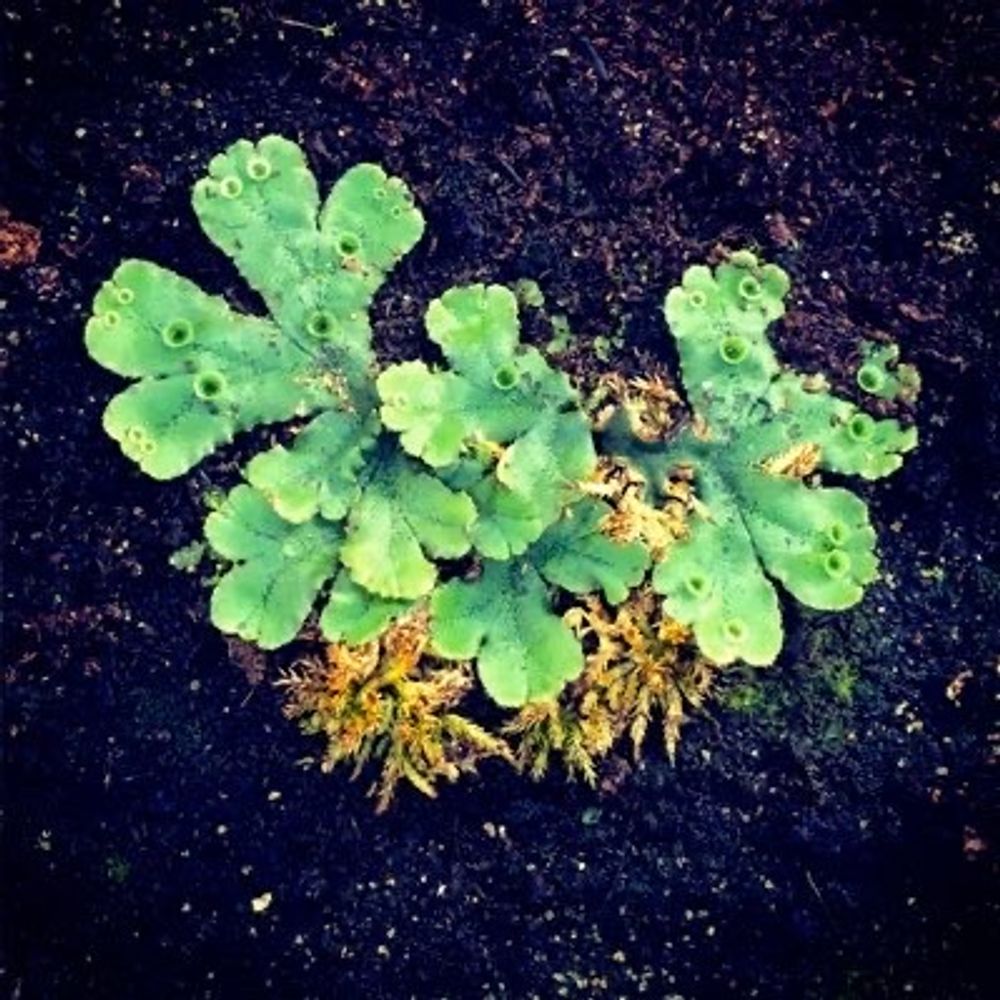
New opportunity to join our #EvoMPMI group @johninnescentre.bsky.social as a Postdoctoral Researcher working on the mechanistic basis of immunity in diverse plants. Please spread the word, reach out by email, and/or apply if interested! More details here: www.jic.ac.uk/vacancies/po...

December 16, 2025 at 11:32 AM
New opportunity to join our #EvoMPMI group @johninnescentre.bsky.social as a Postdoctoral Researcher working on the mechanistic basis of immunity in diverse plants. Please spread the word, reach out by email, and/or apply if interested! More details here: www.jic.ac.uk/vacancies/po...
Reposted by Michael Giolai

✨Call open for a fully-funded PhD position✨
Looking for an enthusiastic student to join my upcoming Ambizione research group (🌱 Epigenome Diversity Lab 🌱, www.epidiversitylab.org) at ETH Zürich, starting August 2026! Apply here ↘️
jobs.ethz.ch/job/view/JOP...
Application deadline: January 31st, 2026
Looking for an enthusiastic student to join my upcoming Ambizione research group (🌱 Epigenome Diversity Lab 🌱, www.epidiversitylab.org) at ETH Zürich, starting August 2026! Apply here ↘️
jobs.ethz.ch/job/view/JOP...
Application deadline: January 31st, 2026

PhD position to study epigenomic diversity and altitude adaptation in Arabis alpina
jobs.ethz.ch
December 15, 2025 at 5:35 PM
✨Call open for a fully-funded PhD position✨
Looking for an enthusiastic student to join my upcoming Ambizione research group (🌱 Epigenome Diversity Lab 🌱, www.epidiversitylab.org) at ETH Zürich, starting August 2026! Apply here ↘️
jobs.ethz.ch/job/view/JOP...
Application deadline: January 31st, 2026
Looking for an enthusiastic student to join my upcoming Ambizione research group (🌱 Epigenome Diversity Lab 🌱, www.epidiversitylab.org) at ETH Zürich, starting August 2026! Apply here ↘️
jobs.ethz.ch/job/view/JOP...
Application deadline: January 31st, 2026
Reposted by Michael Giolai

Strengthen your #fungal genome analysis using genomics tools and databases! #Fungal26
Join our experts online for Fungal Pathogen Genomics 2026.
🗓️ Dates: 1-5 June 2026, UK time zone
Financial assistance is available 💰
📩 Apply by 16 March to be considered
📎 bit.ly/4oucSxq
🖥️🧬🧫 #Genomics
Join our experts online for Fungal Pathogen Genomics 2026.
🗓️ Dates: 1-5 June 2026, UK time zone
Financial assistance is available 💰
📩 Apply by 16 March to be considered
📎 bit.ly/4oucSxq
🖥️🧬🧫 #Genomics

December 8, 2025 at 8:00 AM
Strengthen your #fungal genome analysis using genomics tools and databases! #Fungal26
Join our experts online for Fungal Pathogen Genomics 2026.
🗓️ Dates: 1-5 June 2026, UK time zone
Financial assistance is available 💰
📩 Apply by 16 March to be considered
📎 bit.ly/4oucSxq
🖥️🧬🧫 #Genomics
Join our experts online for Fungal Pathogen Genomics 2026.
🗓️ Dates: 1-5 June 2026, UK time zone
Financial assistance is available 💰
📩 Apply by 16 March to be considered
📎 bit.ly/4oucSxq
🖥️🧬🧫 #Genomics
Reposted by Michael Giolai
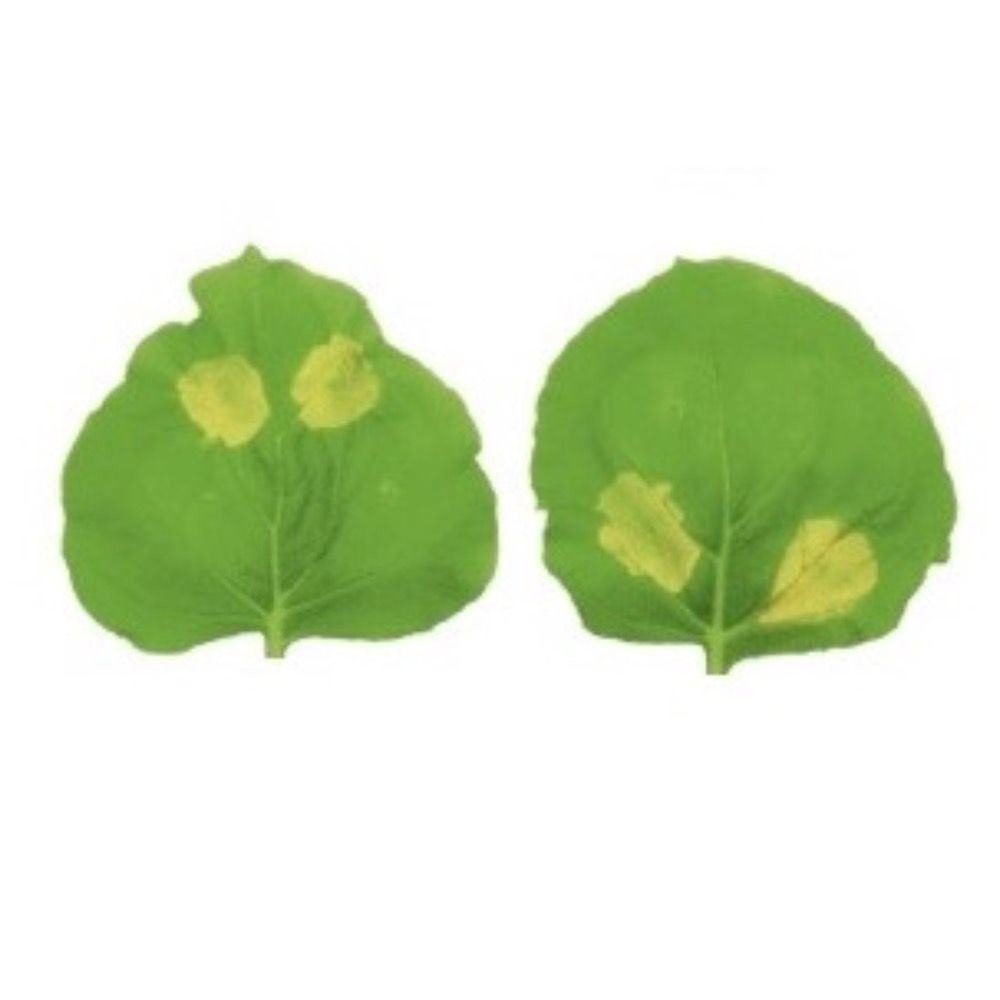
I just published: On the diversity of resting states of NLR immune receptors
New story on rice Pik NLR immune receptor pair — turns out it sits as a 1 MDa membrane-bound beast before activation 🤯. Another wild twist in the ever-expanding universe of NLR resting states!
medium.com/p/on-the-div...
New story on rice Pik NLR immune receptor pair — turns out it sits as a 1 MDa membrane-bound beast before activation 🤯. Another wild twist in the ever-expanding universe of NLR resting states!
medium.com/p/on-the-div...

On the diversity of resting states of NLR immune receptors
New story on the rice Pik NLR immune receptor pair — turns out it sits as a 1 MDa membrane-bound beast before activation 🤯. Another wild…
medium.com
December 4, 2025 at 11:51 AM
I just published: On the diversity of resting states of NLR immune receptors
New story on rice Pik NLR immune receptor pair — turns out it sits as a 1 MDa membrane-bound beast before activation 🤯. Another wild twist in the ever-expanding universe of NLR resting states!
medium.com/p/on-the-div...
New story on rice Pik NLR immune receptor pair — turns out it sits as a 1 MDa membrane-bound beast before activation 🤯. Another wild twist in the ever-expanding universe of NLR resting states!
medium.com/p/on-the-div...
Reposted by Michael Giolai

Know metagenomics and could spare 2 mins? I'm applying for funding to build a visual repository for metagenomic classification data (not sequence data). To support the application, I have a short 2 minute survey and it would be a big help if you could fill it in: docs.google.com/forms/d/e/1F...

November 12, 2025 at 12:01 PM
Know metagenomics and could spare 2 mins? I'm applying for funding to build a visual repository for metagenomic classification data (not sequence data). To support the application, I have a short 2 minute survey and it would be a big help if you could fill it in: docs.google.com/forms/d/e/1F...
Reposted by Michael Giolai
AI model Helixer predicts eukaryotic genes ab initio, directly from a plain text FASTA file.
No RNA-seq.
No protein homology.
No repeats, hints, or curated evidence.
Raw genome → accurate gene models.
Deep learning + HMM, published in @natmethods.nature.com
www.nature.com/articles/s41...
No RNA-seq.
No protein homology.
No repeats, hints, or curated evidence.
Raw genome → accurate gene models.
Deep learning + HMM, published in @natmethods.nature.com
www.nature.com/articles/s41...

Helixer: ab initio prediction of primary eukaryotic gene models combining deep learning and a hidden Markov model - Nature Methods
By leveraging both deep learning and hidden Markov models, Helixer achieves broad taxonomic coverage for ab initio gene annotation of eukaryotic genomes from fungi, plants, vertebrates and invertebrat...
www.nature.com
November 26, 2025 at 6:00 AM
AI model Helixer predicts eukaryotic genes ab initio, directly from a plain text FASTA file.
No RNA-seq.
No protein homology.
No repeats, hints, or curated evidence.
Raw genome → accurate gene models.
Deep learning + HMM, published in @natmethods.nature.com
www.nature.com/articles/s41...
No RNA-seq.
No protein homology.
No repeats, hints, or curated evidence.
Raw genome → accurate gene models.
Deep learning + HMM, published in @natmethods.nature.com
www.nature.com/articles/s41...
Reposted by Michael Giolai
New study out in Ecology Letters 🌱🐑!
Using long-term Åland monitoring data, we found that herbivory increases plant diversity across scales and flips the diversity–area relationship: a positive relationship is found in grazed sites while a negative one in ungrazed sites.
🔗 doi.org/10.1111/ele....
Using long-term Åland monitoring data, we found that herbivory increases plant diversity across scales and flips the diversity–area relationship: a positive relationship is found in grazed sites while a negative one in ungrazed sites.
🔗 doi.org/10.1111/ele....

Herbivory Modifies the Role of Spatial Processes in a Grassland Plant Metacommunity
We empirically examined how mammalian herbivory interacts with habitat size and connectivity to affect plant diversity in a natural grassland metacommunity. We found that herbivory increased plant di...
doi.org
November 24, 2025 at 8:30 AM
New study out in Ecology Letters 🌱🐑!
Using long-term Åland monitoring data, we found that herbivory increases plant diversity across scales and flips the diversity–area relationship: a positive relationship is found in grazed sites while a negative one in ungrazed sites.
🔗 doi.org/10.1111/ele....
Using long-term Åland monitoring data, we found that herbivory increases plant diversity across scales and flips the diversity–area relationship: a positive relationship is found in grazed sites while a negative one in ungrazed sites.
🔗 doi.org/10.1111/ele....
Reposted by Michael Giolai

New #BIEN collaboration paper out in @pnas.org🍃
We show, using data for ~250,000 #plant species, that broader climatic niches consistently predict larger geographic ranges and higher dominance - a key insight for #biodiversity under #climatechange🌍🌱👉https://www.pnas.org/doi/10.1073/pnas.2517585122
We show, using data for ~250,000 #plant species, that broader climatic niches consistently predict larger geographic ranges and higher dominance - a key insight for #biodiversity under #climatechange🌍🌱👉https://www.pnas.org/doi/10.1073/pnas.2517585122

November 19, 2025 at 3:33 PM
New #BIEN collaboration paper out in @pnas.org🍃
We show, using data for ~250,000 #plant species, that broader climatic niches consistently predict larger geographic ranges and higher dominance - a key insight for #biodiversity under #climatechange🌍🌱👉https://www.pnas.org/doi/10.1073/pnas.2517585122
We show, using data for ~250,000 #plant species, that broader climatic niches consistently predict larger geographic ranges and higher dominance - a key insight for #biodiversity under #climatechange🌍🌱👉https://www.pnas.org/doi/10.1073/pnas.2517585122
Reposted by Michael Giolai

1/ Preprint alert:
🌾 The developing leaf of the wild grass Brachypodium distachyon at single-cell resolution
👉 doi.org/10.1101/2025...
A 70k-cell single-cell RNA-seq atlas of the developing grass leaf—from the shoot meristem to mature leaf tissues. @cerealcell.bsky.social @lbmountain.bsky.social
🌾 The developing leaf of the wild grass Brachypodium distachyon at single-cell resolution
👉 doi.org/10.1101/2025...
A 70k-cell single-cell RNA-seq atlas of the developing grass leaf—from the shoot meristem to mature leaf tissues. @cerealcell.bsky.social @lbmountain.bsky.social

November 5, 2025 at 12:32 PM
1/ Preprint alert:
🌾 The developing leaf of the wild grass Brachypodium distachyon at single-cell resolution
👉 doi.org/10.1101/2025...
A 70k-cell single-cell RNA-seq atlas of the developing grass leaf—from the shoot meristem to mature leaf tissues. @cerealcell.bsky.social @lbmountain.bsky.social
🌾 The developing leaf of the wild grass Brachypodium distachyon at single-cell resolution
👉 doi.org/10.1101/2025...
A 70k-cell single-cell RNA-seq atlas of the developing grass leaf—from the shoot meristem to mature leaf tissues. @cerealcell.bsky.social @lbmountain.bsky.social
Reposted by Michael Giolai

Lifestyles shape genome size and gene content in fungal pathogens.
buff.ly/tec1Tds
buff.ly/tec1Tds

November 2, 2025 at 11:01 AM
Lifestyles shape genome size and gene content in fungal pathogens.
buff.ly/tec1Tds
buff.ly/tec1Tds
Reposted by Michael Giolai

Postdoc position in my lab in Cologne starting early next year or latest in spring to get this exciting project started.
jobportal.uni-koeln.de/ausschreibun...
jobportal.uni-koeln.de/ausschreibun...
jobportal.uni-koeln.de
November 2, 2025 at 10:27 AM
Postdoc position in my lab in Cologne starting early next year or latest in spring to get this exciting project started.
jobportal.uni-koeln.de/ausschreibun...
jobportal.uni-koeln.de/ausschreibun...
Reposted by Michael Giolai

A wheat NLR conferring broad-spectrum resistance against powdery mildew by recognizing two structurally diverse AVR effectors. Interested? Check out our newest preprint: www.biorxiv.org/content/10.1...

Dual recognition of structurally unrelated mildew effectors underlies the broad-spectrum resistance of Pm3e in wheat
Broad-spectrum resistance genes are highly valuable for sustainable crop protection, yet the molecular basis of their activity is often unknown. The Pm3 allelic series in wheat encodes NLR receptors t...
www.biorxiv.org
November 2, 2025 at 1:29 PM
A wheat NLR conferring broad-spectrum resistance against powdery mildew by recognizing two structurally diverse AVR effectors. Interested? Check out our newest preprint: www.biorxiv.org/content/10.1...
Reposted by Michael Giolai

Despite recent rain, soils in many areas remain drier than normal for the time of year. UKCEH uses cosmic ray neutrons to monitor soil moisture to depths of 20–30 cm at @cosmosuk.bsky.social sites across the UK.
📻 Hear Jonathan Evans on BBC R4’s Farming Today: www.bbc.co.uk/sounds/play/...
🧪 1/
📻 Hear Jonathan Evans on BBC R4’s Farming Today: www.bbc.co.uk/sounds/play/...
🧪 1/

Farming Today - 30/10/25: An uncomfortable transition? The buzz about Asian hornets. Cosmic ray neutrons and soil moisture - BBC Sounds
The boss of one of the UK's biggest farming companies says a painful transition is ahead.
www.bbc.co.uk
October 30, 2025 at 11:34 AM
Despite recent rain, soils in many areas remain drier than normal for the time of year. UKCEH uses cosmic ray neutrons to monitor soil moisture to depths of 20–30 cm at @cosmosuk.bsky.social sites across the UK.
📻 Hear Jonathan Evans on BBC R4’s Farming Today: www.bbc.co.uk/sounds/play/...
🧪 1/
📻 Hear Jonathan Evans on BBC R4’s Farming Today: www.bbc.co.uk/sounds/play/...
🧪 1/
Reposted by Michael Giolai
Our MARTi @nanoporetech.com paper is now out in @genomeresearch.bsky.social after several years of development (particularly Ned Peel and Sam Martin). We'd love to hear from users about how you're using it, or suggestions for new features. @earlhaminst.bsky.social
genome.cshlp.org/content/earl...
genome.cshlp.org/content/earl...
Real-time analysis and visualization of nanopore metagenomic samples with MARTi
An international, peer-reviewed genome sciences journal featuring outstanding original research that offers novel insights into the biology of all organisms
genome.cshlp.org
October 28, 2025 at 9:36 AM
Our MARTi @nanoporetech.com paper is now out in @genomeresearch.bsky.social after several years of development (particularly Ned Peel and Sam Martin). We'd love to hear from users about how you're using it, or suggestions for new features. @earlhaminst.bsky.social
genome.cshlp.org/content/earl...
genome.cshlp.org/content/earl...
Reposted by Michael Giolai

Only few days left to apply for the full professorship in Functional Ecology at @unituebingen.bsky.social. We are looking for a female colleague to join our institute. Come and join us! Lots of opportunities for collaboration in a beautiful work place!
Job Alert! The University of Tübingen is hiring a FULL PROFESSOR (W3) in FUNCTIONAL ECOLOGY! Come and join our institute, and maybe our new excellence clusters @terra-cluster.org and @greenrobust.de. @gfoesoc.bsky.social @britishecologicalsociety.org @ecologicalsociety.bsky.social Please repost!


October 28, 2025 at 6:16 AM
Only few days left to apply for the full professorship in Functional Ecology at @unituebingen.bsky.social. We are looking for a female colleague to join our institute. Come and join us! Lots of opportunities for collaboration in a beautiful work place!
Reposted by Michael Giolai

Although many ecosystems can weather several years of moderate drought, consecutive years of extreme dryness push them past a tipping point, resulting in dramatic declines in plant growth, researchers report in Science. https://scim.ag/4ogN9I8

Drought intensity and duration interact to magnify losses in primary productivity
As droughts become longer and more intense, impacts on terrestrial primary productivity are expected to increase progressively. Yet, some ecosystems appear to acclimate to multiyear drought, with cons...
scim.ag
October 21, 2025 at 7:17 PM
Although many ecosystems can weather several years of moderate drought, consecutive years of extreme dryness push them past a tipping point, resulting in dramatic declines in plant growth, researchers report in Science. https://scim.ag/4ogN9I8
Reposted by Michael Giolai

One of the most exciting works of my career, years in the making. We used high-throughput precision genome editing to test the fitness effects of thousands of natural variants. Our findings challenge the long-held assumption that common variants are inconsequential.
www.biorxiv.org/content/10.1...
www.biorxiv.org/content/10.1...

Massively parallel interrogation of the fitness of natural variants in ancient signaling pathways reveals pervasive local adaptation
The nature of standing genetic variation remains a central debate in population genetics, with differing perspectives on whether common variants are almost always neutral as suggested by neutral and n...
www.biorxiv.org
October 22, 2025 at 5:46 PM
One of the most exciting works of my career, years in the making. We used high-throughput precision genome editing to test the fitness effects of thousands of natural variants. Our findings challenge the long-held assumption that common variants are inconsequential.
www.biorxiv.org/content/10.1...
www.biorxiv.org/content/10.1...
Reposted by Michael Giolai

PhD studentship
Come help us understand the wheat rhizosphere at the Earlham Institute 🦠
Working at the interface of fungal antagonists & pathogens (@rowenahill.bsky.social @neilhall.bsky.social ), host genetic diversity (Simon Griffiths -JIC) and bacterial community diversity (Jacob Malone -JIC)
Come help us understand the wheat rhizosphere at the Earlham Institute 🦠
Working at the interface of fungal antagonists & pathogens (@rowenahill.bsky.social @neilhall.bsky.social ), host genetic diversity (Simon Griffiths -JIC) and bacterial community diversity (Jacob Malone -JIC)

Combatting wheat take-all disease with in-field and synthetic microbial communities
www.earlham.ac.uk
October 13, 2025 at 10:09 AM
PhD studentship
Come help us understand the wheat rhizosphere at the Earlham Institute 🦠
Working at the interface of fungal antagonists & pathogens (@rowenahill.bsky.social @neilhall.bsky.social ), host genetic diversity (Simon Griffiths -JIC) and bacterial community diversity (Jacob Malone -JIC)
Come help us understand the wheat rhizosphere at the Earlham Institute 🦠
Working at the interface of fungal antagonists & pathogens (@rowenahill.bsky.social @neilhall.bsky.social ), host genetic diversity (Simon Griffiths -JIC) and bacterial community diversity (Jacob Malone -JIC)
Very happy to share our newest preprint! We show that plant genotype drives microbiome recruitment under extreme abiotic stress (serpentines vs. non-serpentines) and identify key microbial taxa that explain how microbiomes can enable stress (serpentine) adaptation. www.biorxiv.org/content/10.1...

Arabidopsis arenosa influences its microbiome as a serpentine soil adaptation strategy
There is growing evidence that microbes can facilitate plant growth in metal-rich soils. However, our current understanding of how plants recruit their microbiomes under abiotic stress remains incompl...
www.biorxiv.org
September 27, 2025 at 6:11 PM
Very happy to share our newest preprint! We show that plant genotype drives microbiome recruitment under extreme abiotic stress (serpentines vs. non-serpentines) and identify key microbial taxa that explain how microbiomes can enable stress (serpentine) adaptation. www.biorxiv.org/content/10.1...