




Isabel saur
@izzysaurlab.bsky.social
Molecular Plant Microbe Interactions @ University of Cologne. Immunity, AVR, receptors, mildews, cereals .....terrible with typos 🤷♀️
@izzysaur
@izzysaur
Reposted by Isabel saur

This week we will hear @federicalocci.bsky.social (from @parkergroup.bsky.social, @mpipz.bsky.social) talk about "How not to die", workings of TIR-networks in damage and systemic resistance.
📅 Jan 16 | 🕥 10:15 |📍KS 00.009
#PlantScience
If you want to know more, check out their review below. 👇🏼
📅 Jan 16 | 🕥 10:15 |📍KS 00.009
#PlantScience
If you want to know more, check out their review below. 👇🏼

ICYMI #OpenBiology review - Plant NLR immunity activation and execution: a biochemical perspective: royalsocietypublishing.org/doi/10.1098/... #biochemistry #immunology

January 12, 2026 at 1:38 PM
This week we will hear @federicalocci.bsky.social (from @parkergroup.bsky.social, @mpipz.bsky.social) talk about "How not to die", workings of TIR-networks in damage and systemic resistance.
📅 Jan 16 | 🕥 10:15 |📍KS 00.009
#PlantScience
If you want to know more, check out their review below. 👇🏼
📅 Jan 16 | 🕥 10:15 |📍KS 00.009
#PlantScience
If you want to know more, check out their review below. 👇🏼
Whop! Work from Wei & Merle & great collaborators @ceplas.bsky.social and the @sfb1403.bsky.social at @unicologne.bsky.social
Targeting of the barley cell-surface receptor SRF3 by the Blumeria hordei effector AVRA13 overlaps with AVRA13 recognition by MLA and the induction of NLR-mediated cell death. https://www.biorxiv.org/content/10.64898/2026.01.08.698370v1
January 16, 2026 at 9:49 AM
Whop! Work from Wei & Merle & great collaborators @ceplas.bsky.social and the @sfb1403.bsky.social at @unicologne.bsky.social
Reposted by Isabel saur

Now online: Effector biology and immunometabolic (re)programming: microbial strategies for compatibility: Molecular Plant www.cell.com/molecular-pl...

Effector biology and immunometabolic (re)programming: microbial strategies for compatibility
Root immunometabolism: balancing defense and accommodationPlant health depends on
balanced immune defense and microbial accommodation. As constant contact zones, roots
must exclude pathogens while fos...
www.cell.com
January 14, 2026 at 10:48 AM
Now online: Effector biology and immunometabolic (re)programming: microbial strategies for compatibility: Molecular Plant www.cell.com/molecular-pl...
Reposted by Isabel saur
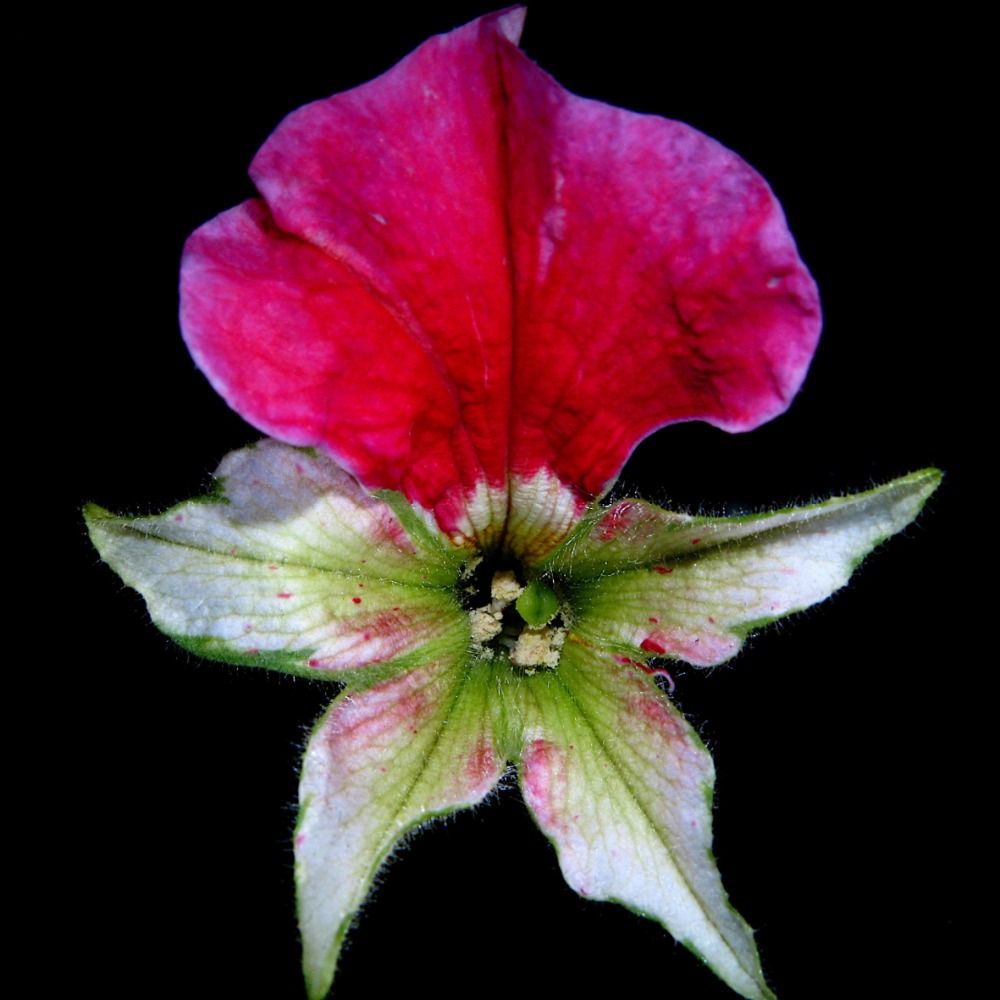
Have you ever heard that women have more chances than men of getting grants or positions in academia? Of course you have, and here are my personal views on this. With the shocking revelation that no, it is NOT TRUE ! (1/n)
January 13, 2026 at 6:36 PM
Have you ever heard that women have more chances than men of getting grants or positions in academia? Of course you have, and here are my personal views on this. With the shocking revelation that no, it is NOT TRUE ! (1/n)
Reposted by Isabel saur

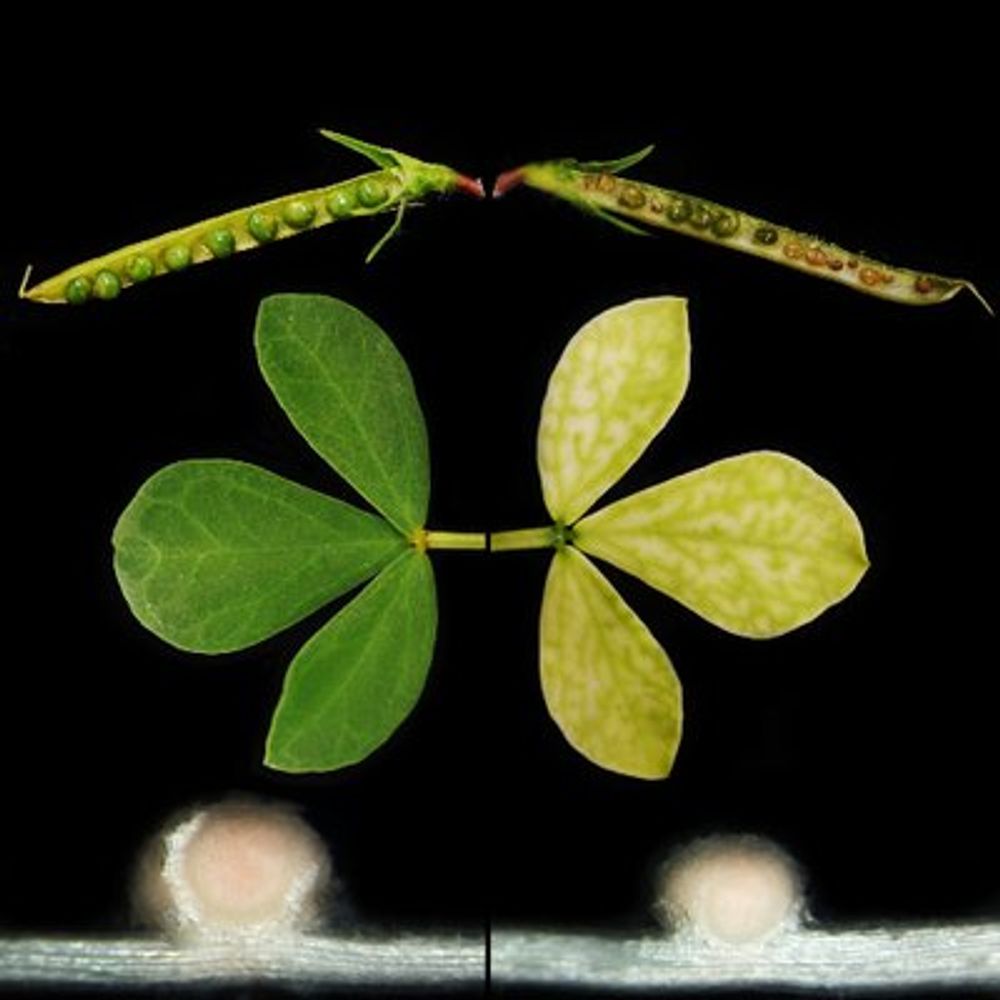
NO-dependent H2O2 signaling regulates melatonin-induced resistance to Fusarium oxysporum f. sp. niveum race 1 in watermelon (Zhongyuan Wang , Shiyu Li , Tongshu Zhao , et al) doi.org/10.1093/plph... #PlantScience @aspbofficial

NO-dependent H2O2 signaling regulates melatonin-induced resistance to Fusarium oxysporum f. sp. niveum race 1 in watermelon
Melatonin induces resistance to Fusarium oxysporum f. sp. niveum race 1 in watermelon via the NO-H₂O₂ signaling module, with great potential for the sustai
doi.org
January 12, 2026 at 8:29 PM
Lovely study!
Our new article is now online on @natplants.nature.com! ✨
We identified and characterised AvrPm4 and SvrPm4, a pair of powdery mildew effectors controlling avirulence on the wheat kinase fusion resistance protein Pm4 🌾 check it out ➡️ www.nature.com/articles/s41...
We identified and characterised AvrPm4 and SvrPm4, a pair of powdery mildew effectors controlling avirulence on the wheat kinase fusion resistance protein Pm4 🌾 check it out ➡️ www.nature.com/articles/s41...

January 12, 2026 at 6:49 PM
Lovely study!
Reposted by Isabel saur
Our new article is now online on @natplants.nature.com! ✨
We identified and characterised AvrPm4 and SvrPm4, a pair of powdery mildew effectors controlling avirulence on the wheat kinase fusion resistance protein Pm4 🌾 check it out ➡️ www.nature.com/articles/s41...
We identified and characterised AvrPm4 and SvrPm4, a pair of powdery mildew effectors controlling avirulence on the wheat kinase fusion resistance protein Pm4 🌾 check it out ➡️ www.nature.com/articles/s41...
January 12, 2026 at 3:27 PM
Our new article is now online on @natplants.nature.com! ✨
We identified and characterised AvrPm4 and SvrPm4, a pair of powdery mildew effectors controlling avirulence on the wheat kinase fusion resistance protein Pm4 🌾 check it out ➡️ www.nature.com/articles/s41...
We identified and characterised AvrPm4 and SvrPm4, a pair of powdery mildew effectors controlling avirulence on the wheat kinase fusion resistance protein Pm4 🌾 check it out ➡️ www.nature.com/articles/s41...
Reposted by Isabel saur
Huge thanks to my amazing co-authors, to AG Saur and AG Döhlemann, and to all our collaborators for their fantastic contributions @Merle Bilstein-Schloemer@izzysaurlab.bsky.social @grandpahiro.bsky.social @sara-stolze.bsky.social@Gunther Döhlemann@Matthieu Pierre Platre ! 🙏
Wei Shi @wshisky.bsky.social & Merle‘s work is online. Wei really pushed this work from scratch and Merle linked it to MLA diversification…3rd (co-)first author paper in her PhD. Very proud PI!
And only possible through collaboration with G. Döhlemann, @grandpahiro.bsky.social &, Matt Platre. (1/x)
And only possible through collaboration with G. Döhlemann, @grandpahiro.bsky.social &, Matt Platre. (1/x)

Targeting of the barley cell-surface receptor SRF3 by the Blumeria hordei effector AVRA13 overlaps with AVRA13 recognition by MLA and the induction of NLR-mediated cell death.
Pathogens secrete effector proteins to promote virulence. Despite their recognition by barley Mla resistance genes, the structurally-related Blumeria hordei ( Bh ) AVRA effectors are maintained in the...
doi.org
January 10, 2026 at 11:37 AM
Huge thanks to my amazing co-authors, to AG Saur and AG Döhlemann, and to all our collaborators for their fantastic contributions @Merle Bilstein-Schloemer@izzysaurlab.bsky.social @grandpahiro.bsky.social @sara-stolze.bsky.social@Gunther Döhlemann@Matthieu Pierre Platre ! 🙏
Wei Shi @wshisky.bsky.social & Merle‘s work is online. Wei really pushed this work from scratch and Merle linked it to MLA diversification…3rd (co-)first author paper in her PhD. Very proud PI!
And only possible through collaboration with G. Döhlemann, @grandpahiro.bsky.social &, Matt Platre. (1/x)
And only possible through collaboration with G. Döhlemann, @grandpahiro.bsky.social &, Matt Platre. (1/x)
Targeting of the barley cell-surface receptor SRF3 by the Blumeria hordei effector AVRA13 overlaps with AVRA13 recognition by MLA and the induction of NLR-mediated cell death.
Pathogens secrete effector proteins to promote virulence. Despite their recognition by barley Mla resistance genes, the structurally-related Blumeria hordei ( Bh ) AVRA effectors are maintained in the...
doi.org
January 10, 2026 at 6:31 AM
Wei Shi @wshisky.bsky.social & Merle‘s work is online. Wei really pushed this work from scratch and Merle linked it to MLA diversification…3rd (co-)first author paper in her PhD. Very proud PI!
And only possible through collaboration with G. Döhlemann, @grandpahiro.bsky.social &, Matt Platre. (1/x)
And only possible through collaboration with G. Döhlemann, @grandpahiro.bsky.social &, Matt Platre. (1/x)
Reposted by Isabel saur

Exploring the genetic diversity of the IPK Medicago germplasm collection using genotyping-by-sequencing (GBS).
Team around M. Kavka from @leibnizipk.bsky.social reports #OpenAccess in our Journal #PlantBiology #PlantSci
doi.org/10.1111/plb....
Team around M. Kavka from @leibnizipk.bsky.social reports #OpenAccess in our Journal #PlantBiology #PlantSci
doi.org/10.1111/plb....

Exploring the genetic diversity of the IPK Medicago germplasm collection using GBS
Genotyping-by-sequencing of 1234 accessions from the Medicago collection of the Leibniz Institute of Plant Genetics and Crop Plant Research (IPK) revealed broad genetic diversity across 40 species, p...
doi.org
January 7, 2026 at 2:16 PM
Exploring the genetic diversity of the IPK Medicago germplasm collection using genotyping-by-sequencing (GBS).
Team around M. Kavka from @leibnizipk.bsky.social reports #OpenAccess in our Journal #PlantBiology #PlantSci
doi.org/10.1111/plb....
Team around M. Kavka from @leibnizipk.bsky.social reports #OpenAccess in our Journal #PlantBiology #PlantSci
doi.org/10.1111/plb....
Reposted by Isabel saur

Now out in its final version: 'Domestication shaped the chromatin landscape of grain amaranth'
www.nature.com/articles/s41...
www.nature.com/articles/s41...

Domestication shaped the chromatin landscape of grain amaranth - Nature Communications
The interplay between the chromatin landscape and plant domestication remains unclear. Here, the authors report the genome assembly and chromatin landscape map of amaranth and reveal the association b...
www.nature.com
November 25, 2025 at 6:57 AM
Now out in its final version: 'Domestication shaped the chromatin landscape of grain amaranth'
www.nature.com/articles/s41...
www.nature.com/articles/s41...
Reposted by Isabel saur

I’m excited to share with you the first @rececochange.bsky.social newsletter, highlighting recent research on biodiversity change, policy-relevant insights and news from across the REC community 💚🌍
Read it here 👉 mailchi.mp/97ed6942f5b8...
Read it here 👉 mailchi.mp/97ed6942f5b8...
REC Newsletter 1/2026
mailchi.mp
January 7, 2026 at 10:54 AM
I’m excited to share with you the first @rececochange.bsky.social newsletter, highlighting recent research on biodiversity change, policy-relevant insights and news from across the REC community 💚🌍
Read it here 👉 mailchi.mp/97ed6942f5b8...
Read it here 👉 mailchi.mp/97ed6942f5b8...
Have a purrfect holiday everyone
December 23, 2025 at 12:11 PM
Have a purrfect holiday everyone
Very nice work Rune et al! Great job
Rune Hansen et al. reported that the substomatal cavity is a crucial check point where the devastating Septoria blotch (Zymoseptoria tritici) infection is stopped. Understanding this mechanism is key to future wheat immunity. Learn more: https://doi.org/10.1094/MPMI-11-24-0147-R

December 22, 2025 at 5:50 PM
Very nice work Rune et al! Great job
Reposted by Isabel saur
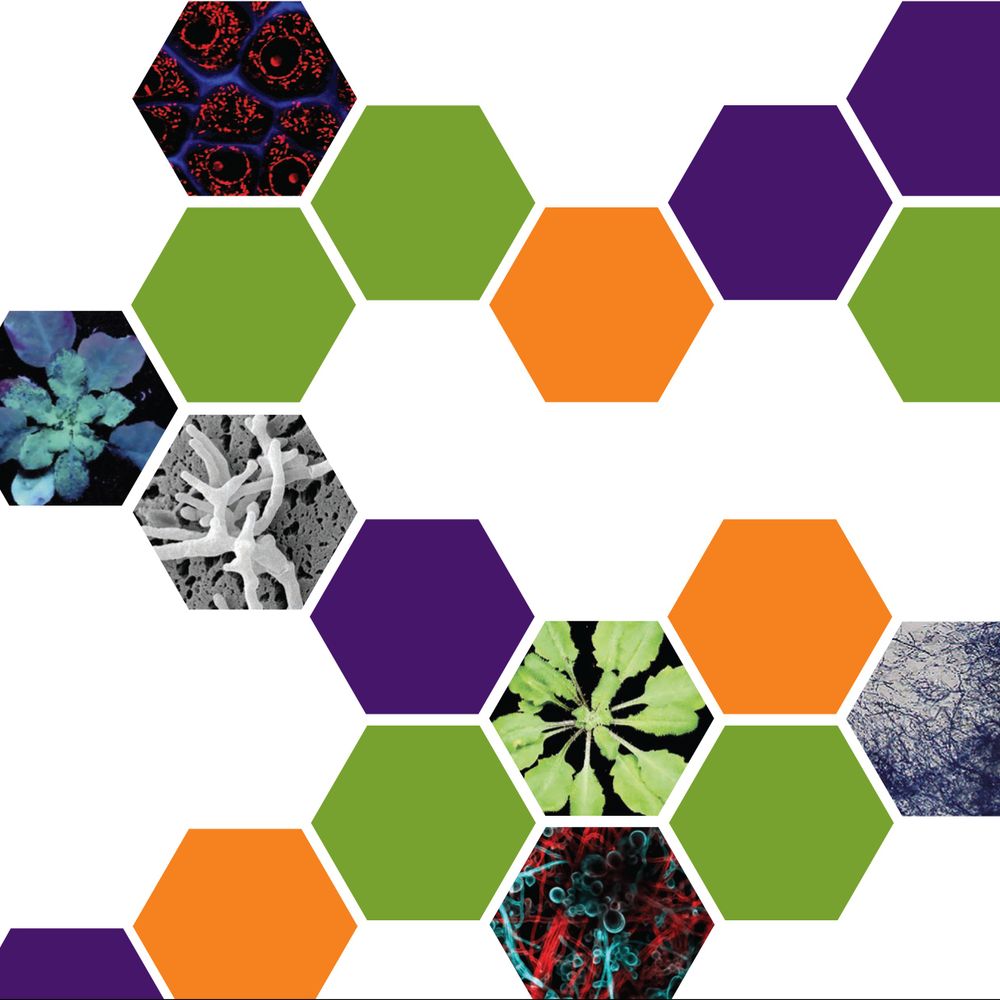
Rune Hansen et al. reported that the substomatal cavity is a crucial check point where the devastating Septoria blotch (Zymoseptoria tritici) infection is stopped. Understanding this mechanism is key to future wheat immunity. Learn more: https://doi.org/10.1094/MPMI-11-24-0147-R
December 22, 2025 at 4:55 PM
Rune Hansen et al. reported that the substomatal cavity is a crucial check point where the devastating Septoria blotch (Zymoseptoria tritici) infection is stopped. Understanding this mechanism is key to future wheat immunity. Learn more: https://doi.org/10.1094/MPMI-11-24-0147-R
Reposted by Isabel saur

CONGRATS to team @effectomics.bsky.social and @steidele.bsky.social . Transcriptional Response of Magnaporthe oryzae Towards Barley-Microbiome Derived Bacteria | Molecular Plant-Microbe Interactions® apsjournals.apsnet.org/doi/10.1094/...

Transcriptional Response of Magnaporthe oryzae Towards Barley-Microbiome Derived Bacteria | Molecular Plant-Microbe Interactions®
The composition of the plant microbiome is shaped not only by the host plant and abiotic environmental factors, but also by inter-microbial cooperation and competition. Plant pathogens, therefore must...
apsjournals.apsnet.org
December 20, 2025 at 2:19 PM
CONGRATS to team @effectomics.bsky.social and @steidele.bsky.social . Transcriptional Response of Magnaporthe oryzae Towards Barley-Microbiome Derived Bacteria | Molecular Plant-Microbe Interactions® apsjournals.apsnet.org/doi/10.1094/...
Reposted by Isabel saur
Dear Plant ECRs, don't miss this wonderful opportunity!
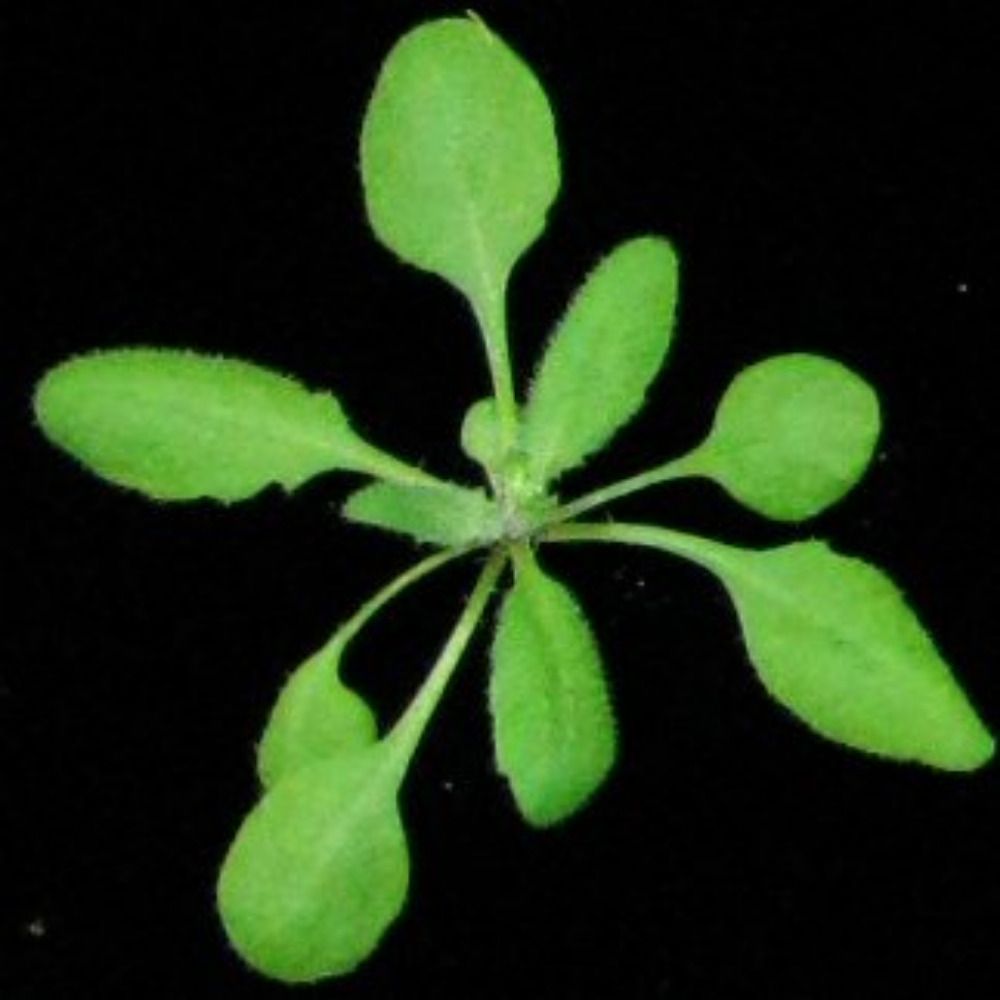
Are you an experienced PhD student or postdoc in plant science looking to connect, present your work, and discuss career paths?
Join us at the 3rd Early Career Plant Researchers Network Meeting, Halle (Saale), 20–21 April 2026
Deadline: 23 January 2026
plant-ecr-networking.eu
Join us at the 3rd Early Career Plant Researchers Network Meeting, Halle (Saale), 20–21 April 2026
Deadline: 23 January 2026
plant-ecr-networking.eu

December 19, 2025 at 3:04 PM
Dear Plant ECRs, don't miss this wonderful opportunity!
Reposted by Isabel saur

Structural basis for heat tolerance in plant NLR immune receptors. https://www.biorxiv.org/content/10.64898/2025.12.17.694812v1
December 18, 2025 at 4:04 AM
Structural basis for heat tolerance in plant NLR immune receptors. https://www.biorxiv.org/content/10.64898/2025.12.17.694812v1
Reposted by Isabel saur

WTK4 HMA-TKP recognizes an RNase like pathogen effector. www.biorxiv.org/content/10.1...

An HMA-like integrated domain in the wheat tandem kinase WTK4 recognises an RNase-like pathogen effector
Proteins with a tandem kinase structure have recently emerged as new players in race-specific resistance in cereal crops. However, the molecular understanding of these novel immune receptors’ resistan...
www.biorxiv.org
December 17, 2025 at 6:25 PM
WTK4 HMA-TKP recognizes an RNase like pathogen effector. www.biorxiv.org/content/10.1...
Reposted by Isabel saur
Congratulations to @steidele.bsky.social who unscrambled complex transcriptional networks in barley double stress responses. Thanks to @itisalist.bsky.social and @daisybio.de for the support: doi: doi.org/10.64898/202...

Network Inference Reveals Distinct Transcriptional Regulation in Barley against Drought and Fusarium Head Blight
We analyzed transcriptional networks in barley under single and combined Fusarium head blight (FHB) and drought stress. We applied complementary Weighted Gene Correlation Network Analysis (WGCNA) to identify stress-associated gene co-expression modules and GENIE3 to infer gene regulatory networks (GRNs). Integration of these frameworks revealed strong overlaps between co-expression modules and GRN clusters, highlighting robust regulatory patterns. Key transcription factors (TFs) were identified based on their weighted node degrees, reflecting their connectivity within the network. Independent analysis of paired transcription factor binding sites in promoter regions further supported predicted regulatory interactions. Notably, WRKY TFs emerged as central regulators of FHB response, consistent with their known roles in defense and secondary metabolite biosynthesis, but did not appear in drought-associated contexts. For bHLH or NAC TFs, individual family members steered FHB or drought responses but not both. Our findings demonstrate the power of combining network inference and motif enrichment to identify candidate TFs controlling stress responses, providing a solid foundation for targeted functional validation. ### Competing Interest Statement The authors have declared no competing interest.
doi.org
December 10, 2025 at 6:51 AM
Congratulations to @steidele.bsky.social who unscrambled complex transcriptional networks in barley double stress responses. Thanks to @itisalist.bsky.social and @daisybio.de for the support: doi: doi.org/10.64898/202...
Reposted by Isabel saur

‼️Please RT: The CEPLAS Graduate School call for 2026 is now open! Detailed info on our website: bit.ly/4q19JWk
@hhu.de @unicologne.bsky.social @mpipz.bsky.social @fz-juelich.de @leibnizipk.bsky.social @plantsciencedbg.bsky.social
@hhu.de @unicologne.bsky.social @mpipz.bsky.social @fz-juelich.de @leibnizipk.bsky.social @plantsciencedbg.bsky.social

December 9, 2025 at 2:42 PM
‼️Please RT: The CEPLAS Graduate School call for 2026 is now open! Detailed info on our website: bit.ly/4q19JWk
@hhu.de @unicologne.bsky.social @mpipz.bsky.social @fz-juelich.de @leibnizipk.bsky.social @plantsciencedbg.bsky.social
@hhu.de @unicologne.bsky.social @mpipz.bsky.social @fz-juelich.de @leibnizipk.bsky.social @plantsciencedbg.bsky.social
Reposted by Isabel saur
Check out the new preprint from the Hückelhoven lab @huckelhovenr.bsky.social. Includes beautiful microcroscopy images of powdery mildew haustoria from my former colleague Mariem Bradai.
Barley C2-Domain Abscisic Acid-Related protein CARa supports susceptibility to Blumeria hordei and localizes to the extrahaustorial membrane https://www.biorxiv.org/content/10.64898/2025.12.04.692366v1
December 8, 2025 at 10:07 PM
Check out the new preprint from the Hückelhoven lab @huckelhovenr.bsky.social. Includes beautiful microcroscopy images of powdery mildew haustoria from my former colleague Mariem Bradai.
Reposted by Isabel saur

New call for PhD students to join CEPLAS

December 9, 2025 at 1:25 PM
New call for PhD students to join CEPLAS
Reposted by Isabel saur

For all #ubiquitin aficionados out there: Our new study, where we used an #alphafold based screen and found a new class of plant-specific DUBs, which cleave K63 chains and interfere with endocytosis at the plasma membrane. www.biorxiv.org/content/10.6...

DUCs are C2 domain containing plant-specific deubiquitinases stabilizing endocytic cargo at the plasma membrane
Deubiquitinases (DUBs) remove ubiquitin modifications from proteins in a substrate- or linkage-selective manner and regulate numerous cell-biological processes, including endocytosis. By performing ho...
www.biorxiv.org
December 5, 2025 at 3:36 PM
For all #ubiquitin aficionados out there: Our new study, where we used an #alphafold based screen and found a new class of plant-specific DUBs, which cleave K63 chains and interfere with endocytosis at the plasma membrane. www.biorxiv.org/content/10.6...
Reposted by Isabel saur
Excited to share our latest work on plant immune receptor biochemistry! @kamounlab.bsky.social @hsuanpai.bsky.social @mpcontreras.bsky.social Jose Salguero Linares @danielluedke.bsky.social @adnroide.bsky.social @jiorgoskourelis.bsky.social
www.biorxiv.org/content/10.6...
www.biorxiv.org/content/10.6...

December 3, 2025 at 9:20 AM
Excited to share our latest work on plant immune receptor biochemistry! @kamounlab.bsky.social @hsuanpai.bsky.social @mpcontreras.bsky.social Jose Salguero Linares @danielluedke.bsky.social @adnroide.bsky.social @jiorgoskourelis.bsky.social
www.biorxiv.org/content/10.6...
www.biorxiv.org/content/10.6...