


Gilberto Alvarez
@gilb-alvarez.bsky.social
Computational biologist at the Gompel Lab, Uni Bonn
PhD EMBL
My interests: Evo Devo, Gene regulation and Quantitative biology
PhD EMBL
My interests: Evo Devo, Gene regulation and Quantitative biology
Reposted by Gilberto Alvarez

Verrückter Fakt des Tages: #vfdt
Das größte Tier, das jemals auf der Erde flog, war vermutlich Quetzacoatlus, der in der Endphase der Dinosaurier-Ära im heutigen Nordamerika lebte. Das Tier war ungefähr so groß wie eine Giraffe, mit einer Flügelspannweite von ca. 10m. Und so etwas konnte fliegen!
Das größte Tier, das jemals auf der Erde flog, war vermutlich Quetzacoatlus, der in der Endphase der Dinosaurier-Ära im heutigen Nordamerika lebte. Das Tier war ungefähr so groß wie eine Giraffe, mit einer Flügelspannweite von ca. 10m. Und so etwas konnte fliegen!

November 18, 2025 at 7:05 PM
Verrückter Fakt des Tages: #vfdt
Das größte Tier, das jemals auf der Erde flog, war vermutlich Quetzacoatlus, der in der Endphase der Dinosaurier-Ära im heutigen Nordamerika lebte. Das Tier war ungefähr so groß wie eine Giraffe, mit einer Flügelspannweite von ca. 10m. Und so etwas konnte fliegen!
Das größte Tier, das jemals auf der Erde flog, war vermutlich Quetzacoatlus, der in der Endphase der Dinosaurier-Ära im heutigen Nordamerika lebte. Das Tier war ungefähr so groß wie eine Giraffe, mit einer Flügelspannweite von ca. 10m. Und so etwas konnte fliegen!
Reposted by Gilberto Alvarez
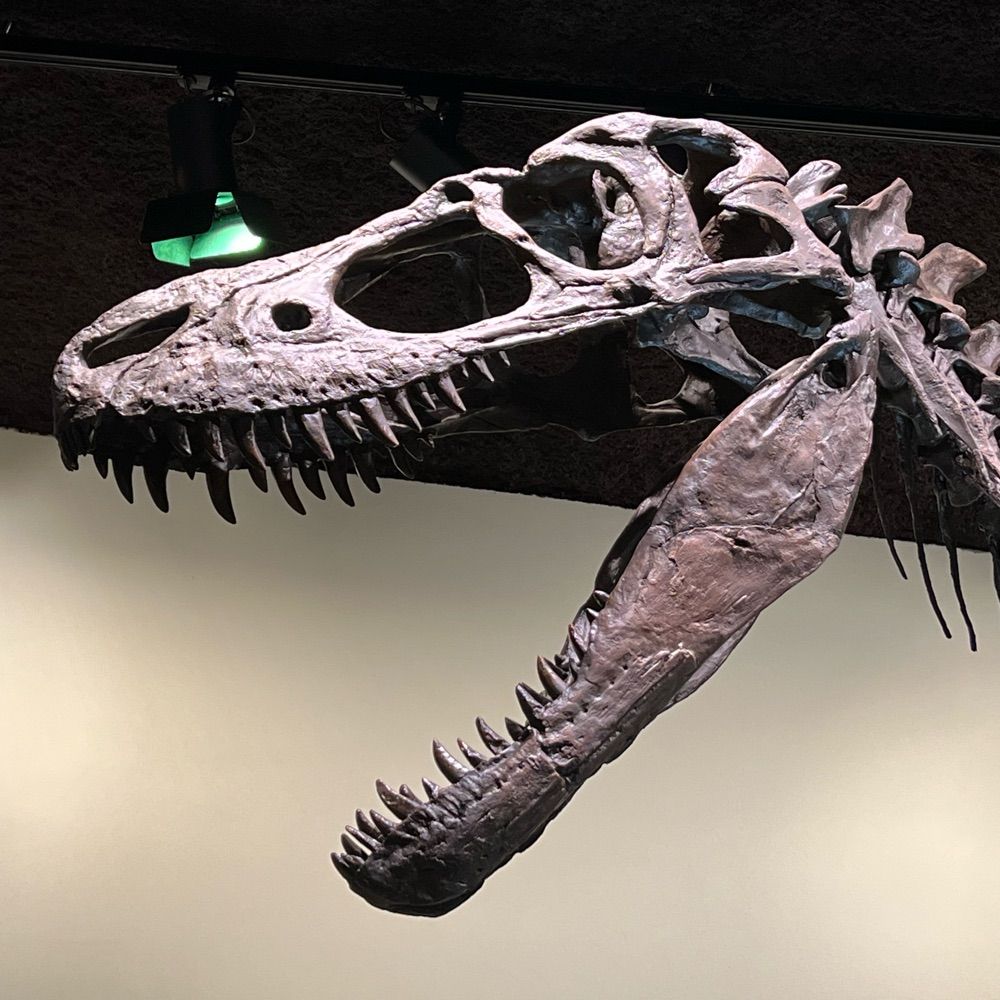
Really old illustrations, but Megatherium looks nice in black with a white stripe.

November 15, 2025 at 10:43 AM
Really old illustrations, but Megatherium looks nice in black with a white stripe.
Reposted by Gilberto Alvarez

This week's #FluorescenceFriday, we'll be treated with one of the classical models of #devbio, the neural crest cells. Here is a beautiful video of neural crest cells with GFP-tagged focal adhesion kinase (🔵) and LifeAct-RFP (🟣) migrating on a Fibronectin matrix.
📹: Adam Shellard
📹: Adam Shellard
November 14, 2025 at 5:45 PM
This week's #FluorescenceFriday, we'll be treated with one of the classical models of #devbio, the neural crest cells. Here is a beautiful video of neural crest cells with GFP-tagged focal adhesion kinase (🔵) and LifeAct-RFP (🟣) migrating on a Fibronectin matrix.
📹: Adam Shellard
📹: Adam Shellard
Reposted by Gilberto Alvarez
Mechanical constraints disrupt gastruloid polarisation without changing gene expression - uncouples morphogenesis & patterning
Gregor & co use tunable hydrogels to show cell motility, not gene expression, drives axis formation in gastruloids
journals.biologists.com/dev/article/...
Gregor & co use tunable hydrogels to show cell motility, not gene expression, drives axis formation in gastruloids
journals.biologists.com/dev/article/...
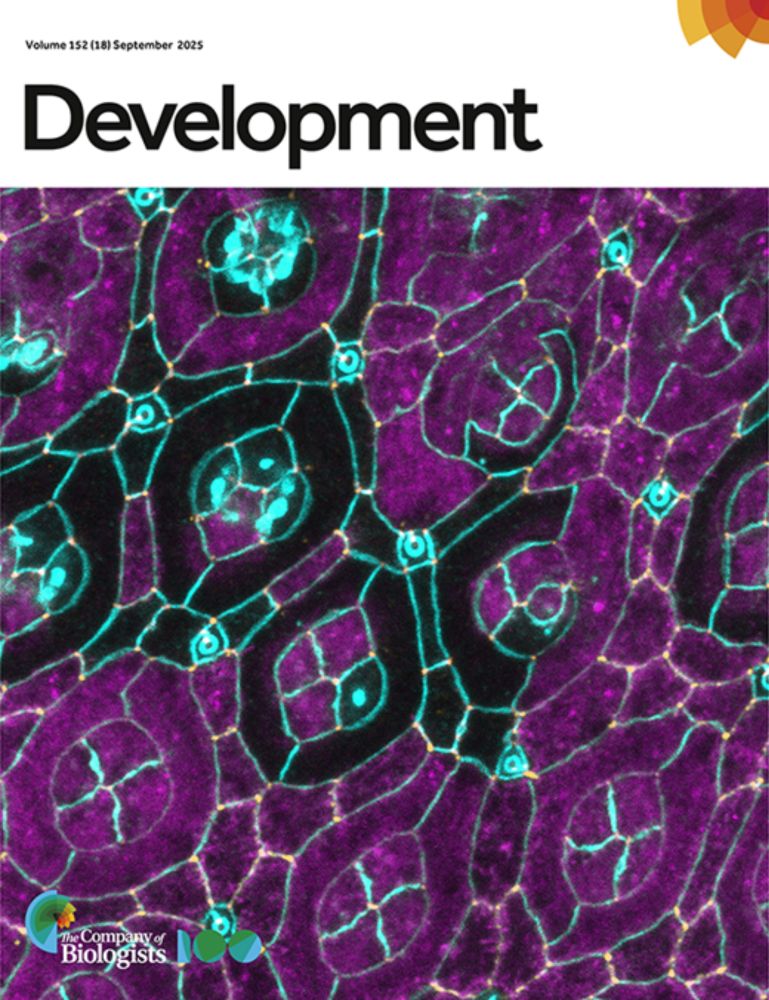
Fine-tuning mechanical constraints reveals uncoupled patterning and gene expression programs in murine gastruloids
Highlighted Article: A bioinert confinement system enables dissection of how stiffness and timing shape gastruloid development, revealing uncoupling between polarization and transcriptional programs.
journals.biologists.com
October 3, 2025 at 9:54 AM
Mechanical constraints disrupt gastruloid polarisation without changing gene expression - uncouples morphogenesis & patterning
Gregor & co use tunable hydrogels to show cell motility, not gene expression, drives axis formation in gastruloids
journals.biologists.com/dev/article/...
Gregor & co use tunable hydrogels to show cell motility, not gene expression, drives axis formation in gastruloids
journals.biologists.com/dev/article/...
Reposted by Gilberto Alvarez

Love #protists? Then you'd love this! Beautiful collection of hand-drawn critters represented here at the Oxford-Japan symposium on ethological dynamics in diorama environments sites.google.com/view/oxford-... #ciliates #testateamoeba #diatoms


September 24, 2025 at 3:14 PM
Love #protists? Then you'd love this! Beautiful collection of hand-drawn critters represented here at the Oxford-Japan symposium on ethological dynamics in diorama environments sites.google.com/view/oxford-... #ciliates #testateamoeba #diatoms
Reposted by Gilberto Alvarez
@niklaskemp.bsky.social will present our new CREsted framework at the next scverse community meeting!
CREsted allows you to train sequence-to-function models tailored to cell type-specific enhancers (including synthetic enhancer design) www.biorxiv.org/content/10.1... github.com/aertslab/cre...
CREsted allows you to train sequence-to-function models tailored to cell type-specific enhancers (including synthetic enhancer design) www.biorxiv.org/content/10.1... github.com/aertslab/cre...

We will have our next community meeting on Tuesday, 2025-09-16 at 18:00 CEST! Niklas Kempynck will be presenting on CREsted, a package for training enhancer models on scATAC-seq data.
(Zoom registration link and more information in thread!)
🧵
(Zoom registration link and more information in thread!)
🧵
September 11, 2025 at 2:34 PM
@niklaskemp.bsky.social will present our new CREsted framework at the next scverse community meeting!
CREsted allows you to train sequence-to-function models tailored to cell type-specific enhancers (including synthetic enhancer design) www.biorxiv.org/content/10.1... github.com/aertslab/cre...
CREsted allows you to train sequence-to-function models tailored to cell type-specific enhancers (including synthetic enhancer design) www.biorxiv.org/content/10.1... github.com/aertslab/cre...
Reposted by Gilberto Alvarez
For anyone wanting to follow up on my brief mention at the Helgoland meeting of how spacetime might be an emergent property of quantum entanglement, here's a nice but pretty high-level essay on it.
journals.aps.org/prl/abstract...
journals.aps.org/prl/abstract...

Essay: Emergent Holographic Spacetime from Quantum Information
In a new forward-looking PRL Essay, Tadashi Takayanagi explores the intersection of quantum information theory with quantum gravity within the framework of holographic duality, and its potential to he...
journals.aps.org
June 23, 2025 at 9:54 AM
For anyone wanting to follow up on my brief mention at the Helgoland meeting of how spacetime might be an emergent property of quantum entanglement, here's a nice but pretty high-level essay on it.
journals.aps.org/prl/abstract...
journals.aps.org/prl/abstract...
Reposted by Gilberto Alvarez
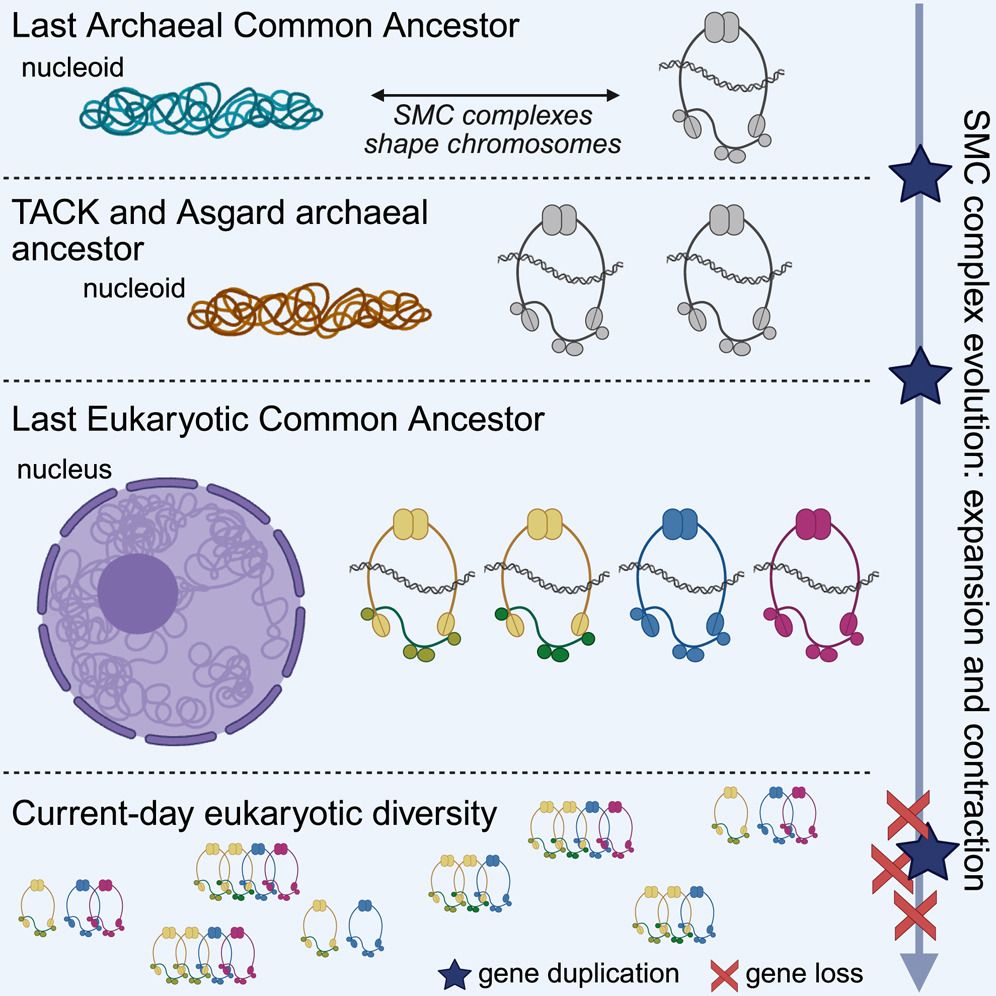
Excited to share our new paper in @cellreports.bsky.social that reshapes our understanding of chromosome organization's deep evolutionary roots! Our work dives into the origins of the machinery that structures our very genomes.
🔗: doi.org/10.1016/j.ce...
#Genomics #Evolution #CellBiology #LECA
🔗: doi.org/10.1016/j.ce...
#Genomics #Evolution #CellBiology #LECA
June 22, 2025 at 12:15 AM
Excited to share our new paper in @cellreports.bsky.social that reshapes our understanding of chromosome organization's deep evolutionary roots! Our work dives into the origins of the machinery that structures our very genomes.
🔗: doi.org/10.1016/j.ce...
#Genomics #Evolution #CellBiology #LECA
🔗: doi.org/10.1016/j.ce...
#Genomics #Evolution #CellBiology #LECA
Reposted by Gilberto Alvarez
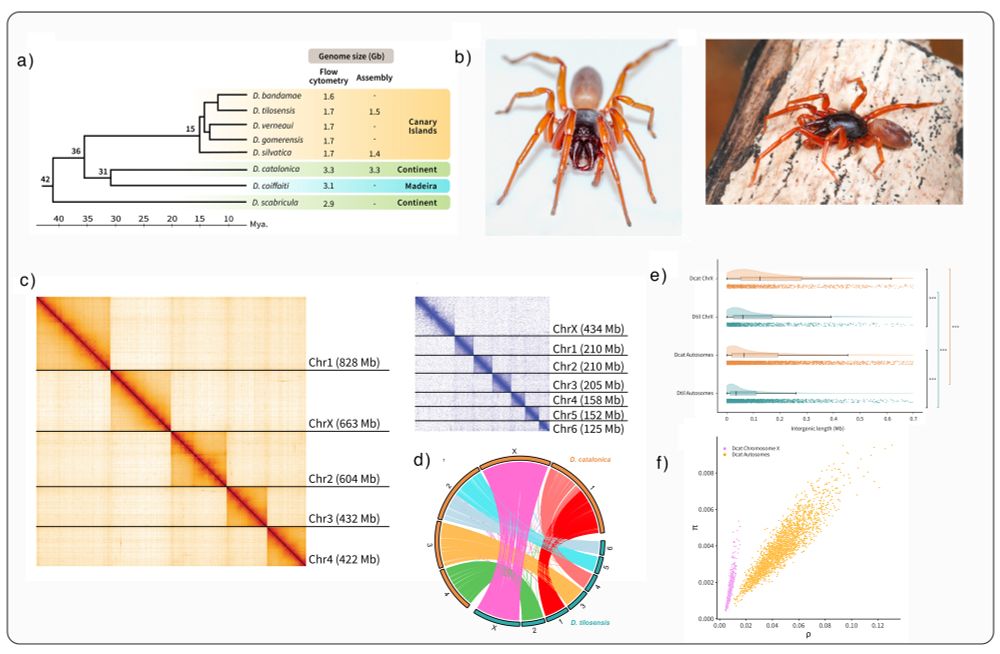
How did evolution drive massive genome contraction during oceanic island colonization? A new paper from our lab.
www.biorxiv.org/content/10.1...
www.biorxiv.org/content/10.1...
June 19, 2025 at 4:58 PM
How did evolution drive massive genome contraction during oceanic island colonization? A new paper from our lab.
www.biorxiv.org/content/10.1...
www.biorxiv.org/content/10.1...
Reposted by Gilberto Alvarez

Wow - one of the largest coronal holes of solar cycle 25! This coronal hole has survived for over NINE MONTHS, one of the most persistent coronal holes I have ever seen. We are seeing the high speed solar wind at Earth now which may intensify in the coming days.
#heliophysics
#heliophysics

June 15, 2025 at 2:33 AM
Wow - one of the largest coronal holes of solar cycle 25! This coronal hole has survived for over NINE MONTHS, one of the most persistent coronal holes I have ever seen. We are seeing the high speed solar wind at Earth now which may intensify in the coming days.
#heliophysics
#heliophysics
Reposted by Gilberto Alvarez
Of course there's also the answer that Twitter/X got shit and is run by a neo-Nazi ket-head but this is still genuinely interesting.

Happy to share this paper. Full thread coming soon!
June 2, 2025 at 1:37 PM
Of course there's also the answer that Twitter/X got shit and is run by a neo-Nazi ket-head but this is still genuinely interesting.
Reposted by Gilberto Alvarez
In 1984, Francis Crick described a biological conundrum: Memories last years, while most molecules degrade in days or weeks. “How then is memory stored in the brain so that its trace is relatively immune to molecular turnover?” he wrote in Nature. www.quantamagazine.org/the-molecula...

May 11, 2025 at 8:04 PM
In 1984, Francis Crick described a biological conundrum: Memories last years, while most molecules degrade in days or weeks. “How then is memory stored in the brain so that its trace is relatively immune to molecular turnover?” he wrote in Nature. www.quantamagazine.org/the-molecula...
Reposted by Gilberto Alvarez

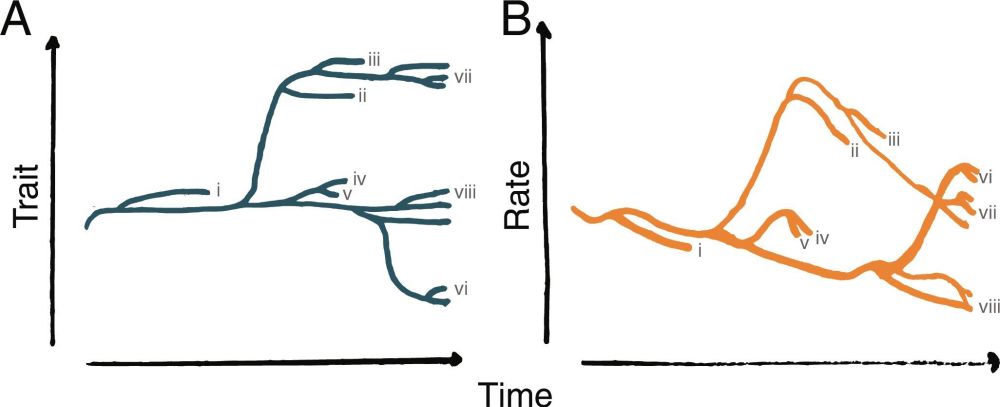
Happy to share my new article on how morphological diversification proceeds during evolutionary radiations: "The diffused evolutionary dynamics of morphological novelty" www.pnas.org/doi/10.1073/... 🧵 1/12
The diffused evolutionary dynamics of morphological novelty | PNAS
Rates of evolution are fundamental to understand the processes that shaped the history
of life. The predominant view holds that high rates of pheno...
www.pnas.org
May 2, 2025 at 8:46 AM
Happy to share my new article on how morphological diversification proceeds during evolutionary radiations: "The diffused evolutionary dynamics of morphological novelty" www.pnas.org/doi/10.1073/... 🧵 1/12
Reposted by Gilberto Alvarez
Our BAT paper is accepted in Nature Ecology & Evolution! Single cell, gene regulation, TADs and key TFs that shape the bat wing. Genomics goes Evodevo 😍

May 6, 2025 at 8:34 AM
Our BAT paper is accepted in Nature Ecology & Evolution! Single cell, gene regulation, TADs and key TFs that shape the bat wing. Genomics goes Evodevo 😍
Reposted by Gilberto Alvarez

ICYMI: Modelling and design of transcriptional enhancers

Modelling and design of transcriptional enhancers
Nature Reviews Bioengineering, Published online: 28 February 2025; doi:10.1038/s44222-025-00280-yEnhancers are genomic elements critical for regulating gene expression. In this Review, the authors discuss how sequence-to-function models can be used to…
www.nature.com
March 1, 2025 at 6:54 PM
ICYMI: Modelling and design of transcriptional enhancers
Reposted by Gilberto Alvarez

🚨New paper published in @nature.com! Using pan-genetics across the Solanum genus🍅🥔🍆we reveal why gene duplications🧬are major contingencies in crop engineering. My postdoc work in the Lippman lab @CSHL, collab. with @katiejenike.bsky.social @mikeschatz.bsky.social chatz.bsky.social and many others!
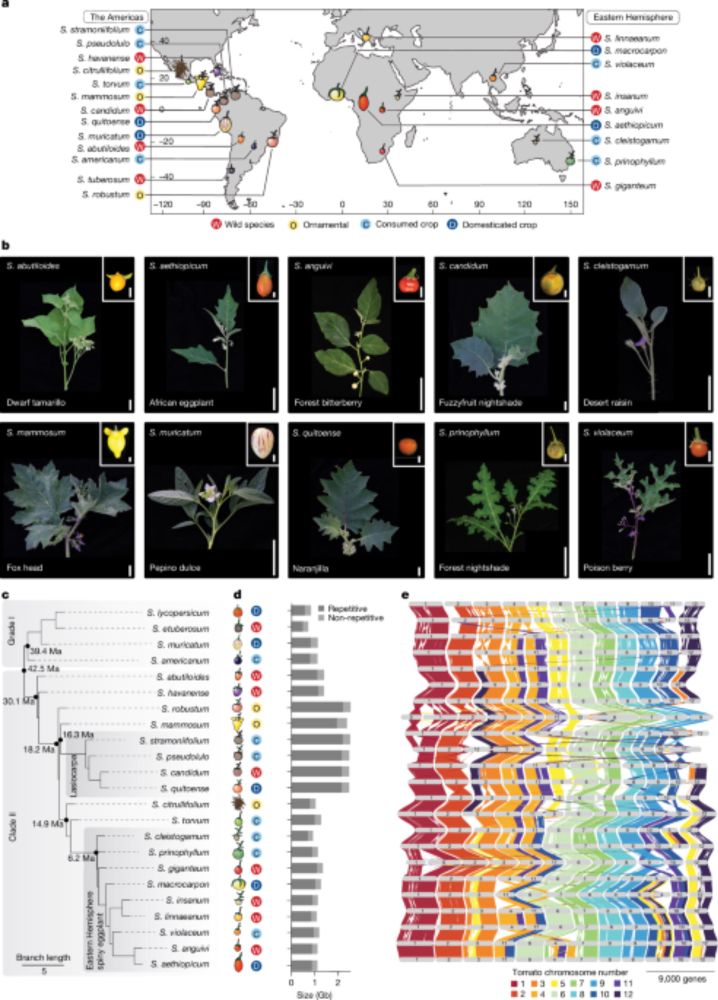
Solanum pan-genetics reveals paralogues as contingencies in crop engineering - Nature
Gene duplication and subsequent paralogue diversification are major obstacles to genotype-to-phenotype predictability.
nature.com
March 5, 2025 at 4:43 PM
🚨New paper published in @nature.com! Using pan-genetics across the Solanum genus🍅🥔🍆we reveal why gene duplications🧬are major contingencies in crop engineering. My postdoc work in the Lippman lab @CSHL, collab. with @katiejenike.bsky.social @mikeschatz.bsky.social chatz.bsky.social and many others!
Reposted by Gilberto Alvarez
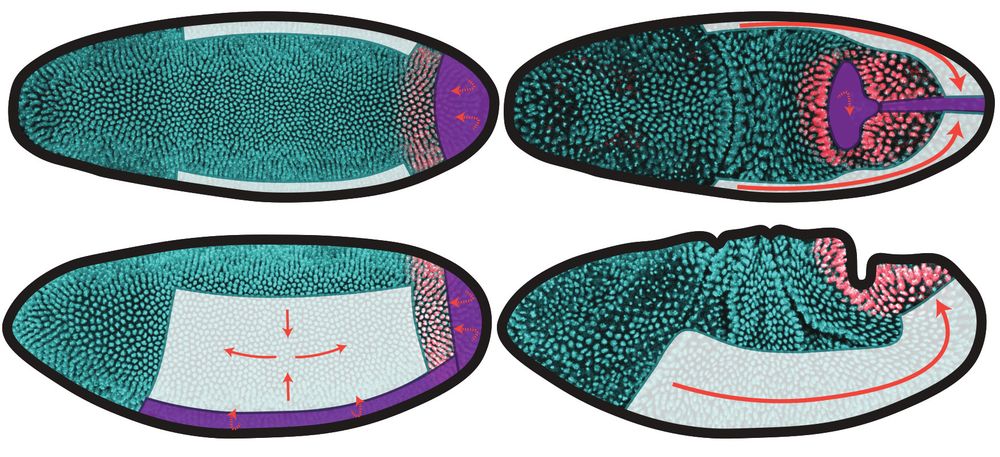
New #preprint: "A model for boundary-driven tissue morphogenesis" arxiv.org/abs/2503.03688.
A great collaboration with @danielalber.bsky.social @zhaoshh.bsky.social, Alexandre Jacinto, Eric Wieschaus, Stas Shvartsman.
@flatironinstitute.org @mpipks.bsky.social @mpi-cbg.de @csbdresden.bsky.social
A great collaboration with @danielalber.bsky.social @zhaoshh.bsky.social, Alexandre Jacinto, Eric Wieschaus, Stas Shvartsman.
@flatironinstitute.org @mpipks.bsky.social @mpi-cbg.de @csbdresden.bsky.social
March 6, 2025 at 9:52 AM
New #preprint: "A model for boundary-driven tissue morphogenesis" arxiv.org/abs/2503.03688.
A great collaboration with @danielalber.bsky.social @zhaoshh.bsky.social, Alexandre Jacinto, Eric Wieschaus, Stas Shvartsman.
@flatironinstitute.org @mpipks.bsky.social @mpi-cbg.de @csbdresden.bsky.social
A great collaboration with @danielalber.bsky.social @zhaoshh.bsky.social, Alexandre Jacinto, Eric Wieschaus, Stas Shvartsman.
@flatironinstitute.org @mpipks.bsky.social @mpi-cbg.de @csbdresden.bsky.social
A must read :D
Should biology put complexity first?
Thought it might be worth sending this round again, as it seems to be resonating with some. This link should give free access until 1 April.
authors.elsevier.com/a/1karS8YyDfuZ5m
Thought it might be worth sending this round again, as it seems to be resonating with some. This link should give free access until 1 April.
authors.elsevier.com/a/1karS8YyDfuZ5m
authors.elsevier.com
February 21, 2025 at 10:34 PM
A must read :D
Reposted by Gilberto Alvarez

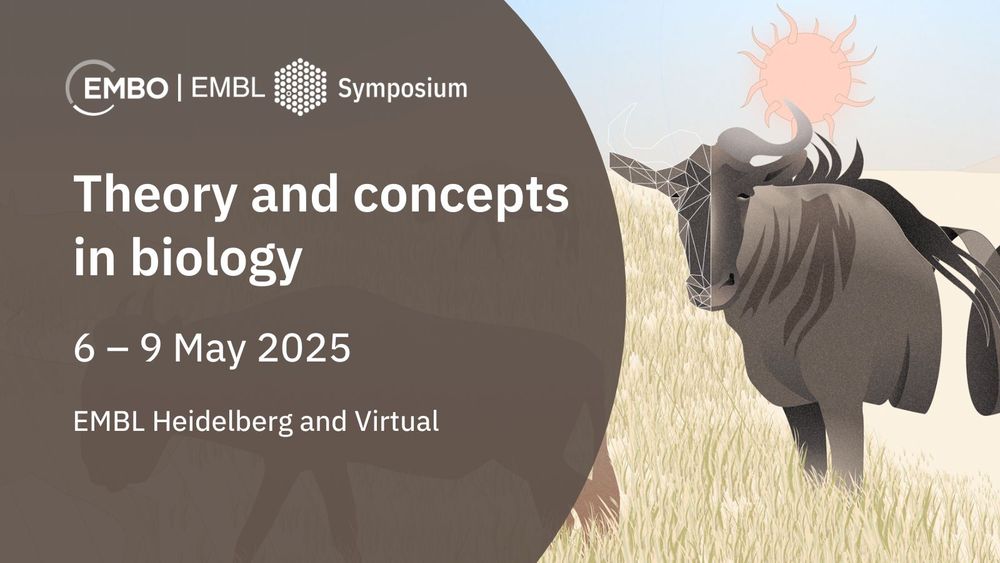
The living world offers discoveries from bacteria to ecosystems, but how do we turn vast data into meaningful concepts? 🧬🌍
Join the 2nd edition of #EESTCBio to explore the interplay between theory and biology!
📥 Abstract deadline: 11 Feb
💻 s.embl.org/ees25-03-bl
Join the 2nd edition of #EESTCBio to explore the interplay between theory and biology!
📥 Abstract deadline: 11 Feb
💻 s.embl.org/ees25-03-bl
January 13, 2025 at 2:01 PM
The living world offers discoveries from bacteria to ecosystems, but how do we turn vast data into meaningful concepts? 🧬🌍
Join the 2nd edition of #EESTCBio to explore the interplay between theory and biology!
📥 Abstract deadline: 11 Feb
💻 s.embl.org/ees25-03-bl
Join the 2nd edition of #EESTCBio to explore the interplay between theory and biology!
📥 Abstract deadline: 11 Feb
💻 s.embl.org/ees25-03-bl
Reposted by Gilberto Alvarez
Very much looking forward to this conference @embl.org in May! Abstract deadline coming up soon!
The living world offers discoveries from bacteria to ecosystems, but how do we turn vast data into meaningful concepts? 🧬🌍
Join the 2nd edition of #EESTCBio to explore the interplay between theory and biology!
📥 Abstract deadline: 11 Feb
💻 s.embl.org/ees25-03-bl
Join the 2nd edition of #EESTCBio to explore the interplay between theory and biology!
📥 Abstract deadline: 11 Feb
💻 s.embl.org/ees25-03-bl
February 2, 2025 at 2:08 PM
Very much looking forward to this conference @embl.org in May! Abstract deadline coming up soon!
Reposted by Gilberto Alvarez

How do systems—biological or technological—maximize energy harvested from their environments? A new study explores how the initial state of a system impacts free energy gain and extractable work and illustrates the findings through a simple information-engine model. https://doi.org/10.3390/e27

Maximizing Free Energy Gain
Maximizing the amount of work harvested from an environment is important for a wide variety of biological and technological processes, from energy-harvesting processes such as photosynthesis to energy storage systems such as fuels and batteries. Here, we consider the maximization of free energy—and by extension, the maximum extractable work—that can be gained by a classical or quantum system that undergoes driving by its environment. We consider how the free energy gain depends on the initial state of the system while also accounting for the cost of preparing the system. We provide simple necessary and sufficient conditions for increasing the gain of free energy by varying the initial state. We also derive simple formulae that relate the free energy gained using the optimal initial state rather than another suboptimal initial state. Finally, we demonstrate that the problem of finding the optimal initial state may have two distinct regimes, one easy and...
doi.org
January 28, 2025 at 6:28 PM
How do systems—biological or technological—maximize energy harvested from their environments? A new study explores how the initial state of a system impacts free energy gain and extractable work and illustrates the findings through a simple information-engine model. https://doi.org/10.3390/e27
Reposted by Gilberto Alvarez
When Kurt Gödel was applying for US citizenship, he had to attend a hearing and so he studied the Constitution carefully - and was worried. According to Oskar Morgenstern, "To his distress, he had found some inner contradictions and [thought] he could show how in a perfectly legal manner...
January 28, 2025 at 11:42 PM
When Kurt Gödel was applying for US citizenship, he had to attend a hearing and so he studied the Constitution carefully - and was worried. According to Oskar Morgenstern, "To his distress, he had found some inner contradictions and [thought] he could show how in a perfectly legal manner...
Reposted by Gilberto Alvarez

Nice write-up about our work from Philip Batterham. Agrochemicals: Insect declines in a warming world: Current Biology www.cell.com/current-biol...

Agrochemicals: Insect declines in a warming world
Worldwide declines in the abundance of non-pest insects threaten ecosystems, food
production and human wellbeing. A large-scale study has systematically examined field
and environmental levels of 1,02...
www.cell.com
January 21, 2025 at 9:57 AM
Nice write-up about our work from Philip Batterham. Agrochemicals: Insect declines in a warming world: Current Biology www.cell.com/current-biol...
Reposted by Gilberto Alvarez
🪰 🧬 Do you want to enhance your knowledge of Drosophila as a model organism? Then 'Drosophila genetics and genomics' might be the right course for you!
Apply now and join us in Heidelberg for lectures and practical sessions delivered by renowned experts 👉 s.embl.org/drg25-01-bl
#EMBODrosophila
Apply now and join us in Heidelberg for lectures and practical sessions delivered by renowned experts 👉 s.embl.org/drg25-01-bl
#EMBODrosophila

January 16, 2025 at 2:19 PM
🪰 🧬 Do you want to enhance your knowledge of Drosophila as a model organism? Then 'Drosophila genetics and genomics' might be the right course for you!
Apply now and join us in Heidelberg for lectures and practical sessions delivered by renowned experts 👉 s.embl.org/drg25-01-bl
#EMBODrosophila
Apply now and join us in Heidelberg for lectures and practical sessions delivered by renowned experts 👉 s.embl.org/drg25-01-bl
#EMBODrosophila
Reposted by Gilberto Alvarez
Back in 1943 Schrödinger argued that "present-day physics and chemistry could not possibly account for what happens in space and time within a living organism." I wrote up why he said that and how thermodynamics + new single-fiber sequencing tech answer him.
open.substack.com/pub/thisgeno...
open.substack.com/pub/thisgeno...

January 7, 2025 at 8:18 PM
Back in 1943 Schrödinger argued that "present-day physics and chemistry could not possibly account for what happens in space and time within a living organism." I wrote up why he said that and how thermodynamics + new single-fiber sequencing tech answer him.
open.substack.com/pub/thisgeno...
open.substack.com/pub/thisgeno...