@calvarez-martinez.bsky.social
Microbiologist, interested in the life of bacteria, secretion systems
Reposted

🚨Our new article is out in #PLOS Pathogens!
What drives nestedness in phages–bacteria interactions network in an agro-ecosystem? 🌱
📖 journals.plos.org/plospathogen...
#Phagesky @inrae-pv.bsky.social @phimresearch.bsky.social @phagedirectory.bsky.social
(Yes, that's a phage in those kinetics!)
What drives nestedness in phages–bacteria interactions network in an agro-ecosystem? 🌱
📖 journals.plos.org/plospathogen...
#Phagesky @inrae-pv.bsky.social @phimresearch.bsky.social @phagedirectory.bsky.social
(Yes, that's a phage in those kinetics!)

January 12, 2026 at 4:40 PM
🚨Our new article is out in #PLOS Pathogens!
What drives nestedness in phages–bacteria interactions network in an agro-ecosystem? 🌱
📖 journals.plos.org/plospathogen...
#Phagesky @inrae-pv.bsky.social @phimresearch.bsky.social @phagedirectory.bsky.social
(Yes, that's a phage in those kinetics!)
What drives nestedness in phages–bacteria interactions network in an agro-ecosystem? 🌱
📖 journals.plos.org/plospathogen...
#Phagesky @inrae-pv.bsky.social @phimresearch.bsky.social @phagedirectory.bsky.social
(Yes, that's a phage in those kinetics!)
Reposted

What if even the core of bacterial nanomachines wasn’t static?
We found that the T3SS core protein SctD in Yersinia dynamically exchanges subunits — and this flexibility is essential for proper assembly & function.
🔗 www.nature.com/articles/s41...
@kit.edu @t3sss.bsky.social
We found that the T3SS core protein SctD in Yersinia dynamically exchanges subunits — and this flexibility is essential for proper assembly & function.
🔗 www.nature.com/articles/s41...
@kit.edu @t3sss.bsky.social

November 12, 2025 at 4:21 PM
What if even the core of bacterial nanomachines wasn’t static?
We found that the T3SS core protein SctD in Yersinia dynamically exchanges subunits — and this flexibility is essential for proper assembly & function.
🔗 www.nature.com/articles/s41...
@kit.edu @t3sss.bsky.social
We found that the T3SS core protein SctD in Yersinia dynamically exchanges subunits — and this flexibility is essential for proper assembly & function.
🔗 www.nature.com/articles/s41...
@kit.edu @t3sss.bsky.social
Reposted

🦠 Phages (bacteria-killing viruses) aren't as picky as we thought.
5-10% can infect multiple bacterial species, even genetically distant ones.
Potential implications for phage therapy against antibiotic-resistant infections 💊
@rkoszul.bsky.social study in Nature Microbiology
#Phages
5-10% can infect multiple bacterial species, even genetically distant ones.
Potential implications for phage therapy against antibiotic-resistant infections 💊
@rkoszul.bsky.social study in Nature Microbiology
#Phages

Ecology and health – phages interact with many bacteria in ecosystems
Phages (bacteriophages), viruses that infect bacteria, are the most abundant genetic entities in our environment. A study published in Nature Microbiology challenges the common preconception that they...
www.pasteur.fr
November 13, 2025 at 9:00 AM
🦠 Phages (bacteria-killing viruses) aren't as picky as we thought.
5-10% can infect multiple bacterial species, even genetically distant ones.
Potential implications for phage therapy against antibiotic-resistant infections 💊
@rkoszul.bsky.social study in Nature Microbiology
#Phages
5-10% can infect multiple bacterial species, even genetically distant ones.
Potential implications for phage therapy against antibiotic-resistant infections 💊
@rkoszul.bsky.social study in Nature Microbiology
#Phages
Reposted

Extracellular ATP is an environmental cue in bacteria
@cp-cellreports.bsky.social
www.cell.com/cell-reports...
@cp-cellreports.bsky.social
www.cell.com/cell-reports...

Extracellular ATP is an environmental cue in bacteria
Extracellular ATP acts as a signal regulating physiology and immunity in eukaryotes
and is elevated during intestinal infection or damage. Tronnet et al. show that extracellular
ATP reprograms the tra...
www.cell.com
October 11, 2025 at 11:59 AM
Extracellular ATP is an environmental cue in bacteria
@cp-cellreports.bsky.social
www.cell.com/cell-reports...
@cp-cellreports.bsky.social
www.cell.com/cell-reports...
Reposted

Type IV secretion systems: from structures to mechanisms
Kévin Macé and colleagues summarize recent structural insights into the assembly and function of bacterial type IV secretion systems
www.embopress.org/doi/full/10....
Kévin Macé and colleagues summarize recent structural insights into the assembly and function of bacterial type IV secretion systems
www.embopress.org/doi/full/10....

October 9, 2025 at 10:44 AM
Type IV secretion systems: from structures to mechanisms
Kévin Macé and colleagues summarize recent structural insights into the assembly and function of bacterial type IV secretion systems
www.embopress.org/doi/full/10....
Kévin Macé and colleagues summarize recent structural insights into the assembly and function of bacterial type IV secretion systems
www.embopress.org/doi/full/10....
Reposted
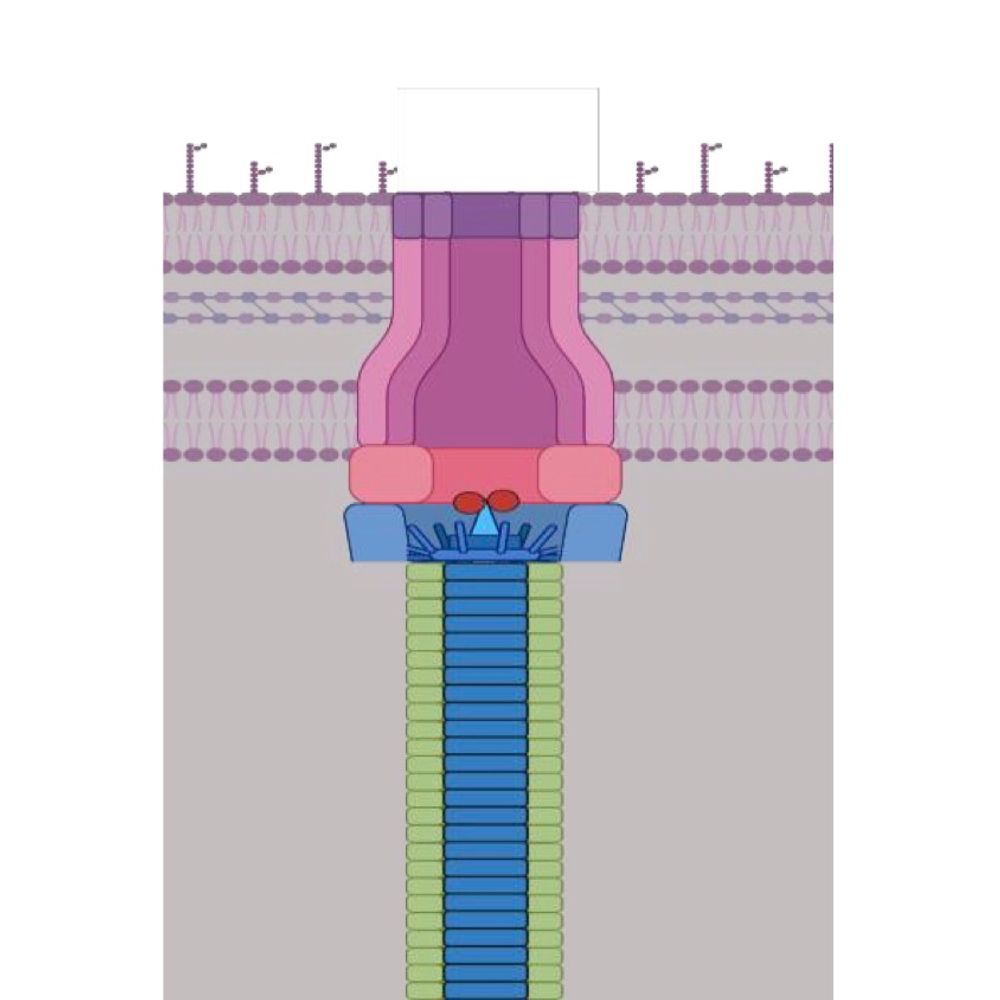
Open position to work on Type IX secretion (#T9SS) in our lab, in collaboration withe the group of Eric Reynolds at the Dental School of the University of Melbourne. Please spread the word, and forward to anyone potentially interested ! Apply here:
emploi.cnrs.fr/Offres/Docto...
emploi.cnrs.fr/Offres/Docto...
Portail Emploi CNRS - Offre d'emploi - Thèse en Microbiologie-Biochimie (H/F)
emploi.cnrs.fr
October 9, 2025 at 12:18 PM
Open position to work on Type IX secretion (#T9SS) in our lab, in collaboration withe the group of Eric Reynolds at the Dental School of the University of Melbourne. Please spread the word, and forward to anyone potentially interested ! Apply here:
emploi.cnrs.fr/Offres/Docto...
emploi.cnrs.fr/Offres/Docto...
We have an open posdoc position to work on Type VI secretion system in a collaboration with Leonardo Talachia lab, at Unicamp, Brazil.
jobrxiv.org/job/institut...
jobrxiv.org/job/institut...

Post-doc Position in Molecular Microbiology
Post a job in 3min, or find thousands of job offers like this one at jobRxiv!
jobrxiv.org
October 9, 2025 at 2:36 PM
We have an open posdoc position to work on Type VI secretion system in a collaboration with Leonardo Talachia lab, at Unicamp, Brazil.
jobrxiv.org/job/institut...
jobrxiv.org/job/institut...
Reposted

Imagine we could travel back in time ⏪⌛️to explore the world of bacterial pathogens before humans discovered and industrialised antibiotics
We just did that to study the history of #AMR spread @science.org
doi.org/10.1126/scie...
If you like time travel & biology, this 🧵is for you👇
We just did that to study the history of #AMR spread @science.org
doi.org/10.1126/scie...
If you like time travel & biology, this 🧵is for you👇

Pre- and postantibiotic epoch: The historical spread of antimicrobial resistance
Plasmids are now the primary vectors of antimicrobial resistance, but our understanding of how human industrialisation of antibiotics influenced their evolution is limited by a paucity of data predati...
doi.org
October 6, 2025 at 10:42 AM
Imagine we could travel back in time ⏪⌛️to explore the world of bacterial pathogens before humans discovered and industrialised antibiotics
We just did that to study the history of #AMR spread @science.org
doi.org/10.1126/scie...
If you like time travel & biology, this 🧵is for you👇
We just did that to study the history of #AMR spread @science.org
doi.org/10.1126/scie...
If you like time travel & biology, this 🧵is for you👇
Reposted

Here is the published version of Manca's #NNF_INTERACT project in #ISMEcommunications from Scott Jarmusch and @neftalyl.bsky.social
academic.oup.com/ismecommun/a...
academic.oup.com/ismecommun/a...
September 28, 2025 at 3:59 PM
Reposted
Check out the first preprint from our lab describing a direct molecular cross-talk between (p)ppGpp and c-di-GMP nucleotide messengers! Great work from first-author Corentin Jaboulay who was a postdoc in our lab, and great collaborations! @mmsb-lyon.bsky.social @cnrsbiologie.bsky.social

Cross-regulation of (p)ppGpp and c-di-GMP pathways controls a cell-cycle transition https://www.biorxiv.org/content/10.1101/2025.08.22.671821v1
August 24, 2025 at 7:48 AM
Check out the first preprint from our lab describing a direct molecular cross-talk between (p)ppGpp and c-di-GMP nucleotide messengers! Great work from first-author Corentin Jaboulay who was a postdoc in our lab, and great collaborations! @mmsb-lyon.bsky.social @cnrsbiologie.bsky.social
Reposted

Since the late 19th century, microbiologists have relied on agar and its derivatives for growing and separating microbes. However, how many of us really know the story of how this ingredient changed science? The remarkable story of Fanny Angelina Hesse youtu.be/qyTjqIKTQLo

Fanny Angelina Hesse and the Discovery of Agar
YouTube video by American Society for Microbiology
youtu.be
September 25, 2025 at 7:07 PM
Since the late 19th century, microbiologists have relied on agar and its derivatives for growing and separating microbes. However, how many of us really know the story of how this ingredient changed science? The remarkable story of Fanny Angelina Hesse youtu.be/qyTjqIKTQLo
Reposted


Reposted
Microbes know no borders, nor should efforts to harness their potential for climate solutions. ASM & 9 other partners have launched a global strategy to position microbial science as a pillar of climate action.
🔗Read the press release & #mbio editorial: asm.org/climatestrat...
#ClimateAction
🔗Read the press release & #mbio editorial: asm.org/climatestrat...
#ClimateAction

September 23, 2025 at 7:07 PM
Microbes know no borders, nor should efforts to harness their potential for climate solutions. ASM & 9 other partners have launched a global strategy to position microbial science as a pillar of climate action.
🔗Read the press release & #mbio editorial: asm.org/climatestrat...
#ClimateAction
🔗Read the press release & #mbio editorial: asm.org/climatestrat...
#ClimateAction
Reposted

Welcome to the social media account of the International Microbiology Literacy Initiative (IMiLI). Nearly 1,000 researchers freely contribute to the IMiLI project integrating microbiology into education providing downloadable resources for all. Explore at imili.org

September 23, 2025 at 6:45 PM
Welcome to the social media account of the International Microbiology Literacy Initiative (IMiLI). Nearly 1,000 researchers freely contribute to the IMiLI project integrating microbiology into education providing downloadable resources for all. Explore at imili.org
Reposted

A recent cool preprint by John Whitney's lab on a new family of antibacterial proteins secreted by Gram-positive bacteria that enter and kill a broad spectrum of bacteria. Cell entry is receptor-independent and relies on cleavage by a co-secreted protease and the PMF.
www.biorxiv.org/content/10.1...
www.biorxiv.org/content/10.1...

Proteolytically activated antibacterial toxins inhibit the growth of diverse Gram-positive bacteria
Many species of bacteria produce small-molecule antibiotics that enter and kill a wide range of competitor microbes. However, diffusible antibacterial proteins that share this broad-spectrum activity ...
www.biorxiv.org
September 23, 2025 at 8:28 PM
A recent cool preprint by John Whitney's lab on a new family of antibacterial proteins secreted by Gram-positive bacteria that enter and kill a broad spectrum of bacteria. Cell entry is receptor-independent and relies on cleavage by a co-secreted protease and the PMF.
www.biorxiv.org/content/10.1...
www.biorxiv.org/content/10.1...
Reposted

The outer membrane of Gram-negative bacteria blocks many antibiotics. Our latest work reveals that L-type pyocins bypass this barrier by inactivating the BAM complex, killing Pseudomonas aeruginosa without entering the cell, providing a new blueprint for beating antibiotic resistance.

A Protein Antibiotic Inhibits the BAM Complex to Kill Without Cell Entry
Many antibiotics are ineffective against Gram-negative pathogens such as Pseudomonas aeruginosa because they cannot penetrate the bacterial outer membrane. Here, we show that protein antibiotics calle...
www.biorxiv.org
September 20, 2025 at 9:29 AM
The outer membrane of Gram-negative bacteria blocks many antibiotics. Our latest work reveals that L-type pyocins bypass this barrier by inactivating the BAM complex, killing Pseudomonas aeruginosa without entering the cell, providing a new blueprint for beating antibiotic resistance.
Reposted
I wrote a Preview in @cp-cellhostmicrobe.bsky.social !
A new study suggests that #curli may protect prey from bacterial predators like #Bdellovibrio.
Really looking forward to seeing this model confirmed with live-cell imaging and specific reporters!
www.cell.com/cell-host-mi...
A new study suggests that #curli may protect prey from bacterial predators like #Bdellovibrio.
Really looking forward to seeing this model confirmed with live-cell imaging and specific reporters!
www.cell.com/cell-host-mi...

When predators meet the matrix: Natural resistance via amyloid fibers
How do bacteria protect themselves against predators? In a recent issue of Nature,
Ledvina et al. reveal curli fibers as a genetically encoded defense against Bdellovibrio
predation in wild E. coli st...
www.cell.com
September 11, 2025 at 9:18 AM
I wrote a Preview in @cp-cellhostmicrobe.bsky.social !
A new study suggests that #curli may protect prey from bacterial predators like #Bdellovibrio.
Really looking forward to seeing this model confirmed with live-cell imaging and specific reporters!
www.cell.com/cell-host-mi...
A new study suggests that #curli may protect prey from bacterial predators like #Bdellovibrio.
Really looking forward to seeing this model confirmed with live-cell imaging and specific reporters!
www.cell.com/cell-host-mi...
Reposted

#NewResearch
Opposing forces generated by exopolysaccharide trail binding versus type IV pilus retraction generate a high cyclic diGMP–high cyclic AMP state in Pseudomonas aeruginosa that promotes social motility.
#MicroSky 🦠
www.nature.com/articles/s41...
Opposing forces generated by exopolysaccharide trail binding versus type IV pilus retraction generate a high cyclic diGMP–high cyclic AMP state in Pseudomonas aeruginosa that promotes social motility.
#MicroSky 🦠
www.nature.com/articles/s41...

Pseudomonas aeruginosa senses exopolysaccharide trails using type IV pili and adhesins during biofilm formation - Nature Microbiology
Opposing forces generated by exopolysaccharide trail binding versus type IV pilus retraction generate a high cyclic diGMP–high cyclic AMP state in Pseudomonas aeruginosa that promotes social motility.
www.nature.com
September 12, 2025 at 3:41 PM
#NewResearch
Opposing forces generated by exopolysaccharide trail binding versus type IV pilus retraction generate a high cyclic diGMP–high cyclic AMP state in Pseudomonas aeruginosa that promotes social motility.
#MicroSky 🦠
www.nature.com/articles/s41...
Opposing forces generated by exopolysaccharide trail binding versus type IV pilus retraction generate a high cyclic diGMP–high cyclic AMP state in Pseudomonas aeruginosa that promotes social motility.
#MicroSky 🦠
www.nature.com/articles/s41...
Reposted
How complex functions, with important physiological and evolutionary impacts get repeatedly and efficiently transferred across genomes?
That’s what we explored using one of the fastest-evolving loci in Bacteria: the capsule locus.
The paper: www.biorxiv.org/content/10.1...
Thread👇
That’s what we explored using one of the fastest-evolving loci in Bacteria: the capsule locus.
The paper: www.biorxiv.org/content/10.1...
Thread👇

Serotype swapping in Klebsiella spp. by plug-and-play
Understanding how complex, multi-gene systems evolve and function across genetic backgrounds is a central question in molecular evolution. While such systems often impose costs through epistatic inter...
www.biorxiv.org
September 10, 2025 at 8:17 AM
How complex functions, with important physiological and evolutionary impacts get repeatedly and efficiently transferred across genomes?
That’s what we explored using one of the fastest-evolving loci in Bacteria: the capsule locus.
The paper: www.biorxiv.org/content/10.1...
Thread👇
That’s what we explored using one of the fastest-evolving loci in Bacteria: the capsule locus.
The paper: www.biorxiv.org/content/10.1...
Thread👇
Reposted

The 2024 rankings of bacterial threats

August 27, 2025 at 4:19 PM
The 2024 rankings of bacterial threats
Reposted
bacteria? humble, by no means 'simple', still relevant...
the legacy of the luria-delbrück experiment revisited. great read!
the legacy of the luria-delbrück experiment revisited. great read!

August 25, 2025 at 11:53 PM
bacteria? humble, by no means 'simple', still relevant...
the legacy of the luria-delbrück experiment revisited. great read!
the legacy of the luria-delbrück experiment revisited. great read!
Reposted
#NatMicroPicks
AI Designs Next-Gen Antibiotics! 💊🤖
Generative deep learning and genetic algorithms created structurally novel antibiotics that effectively target drug-resistant bacteria, offering a powerful new tool to combat drug resistance.
#MicroSky #AMR
www.cell.com/cell/abstrac...
AI Designs Next-Gen Antibiotics! 💊🤖
Generative deep learning and genetic algorithms created structurally novel antibiotics that effectively target drug-resistant bacteria, offering a powerful new tool to combat drug resistance.
#MicroSky #AMR
www.cell.com/cell/abstrac...

A generative deep learning approach to de novo antibiotic design
A generative AI platform is developed for de novo antibiotic design, yielding lead
compounds with selective antibacterial activity, distinct mechanisms of action, and
in vivo efficacy against multidru...
www.cell.com
August 22, 2025 at 1:41 PM
#NatMicroPicks
AI Designs Next-Gen Antibiotics! 💊🤖
Generative deep learning and genetic algorithms created structurally novel antibiotics that effectively target drug-resistant bacteria, offering a powerful new tool to combat drug resistance.
#MicroSky #AMR
www.cell.com/cell/abstrac...
AI Designs Next-Gen Antibiotics! 💊🤖
Generative deep learning and genetic algorithms created structurally novel antibiotics that effectively target drug-resistant bacteria, offering a powerful new tool to combat drug resistance.
#MicroSky #AMR
www.cell.com/cell/abstrac...
Reposted
For those who love bacterial replicons, The ultimate review, from our lab, signed by the master of their evolution.
@val-meve.bsky.social www.sciencedirect.com/science/arti...
@val-meve.bsky.social www.sciencedirect.com/science/arti...

Taming wild replicons: evolution and domestication of large extrachromosomal replicons
Bacterial genomes often contain extrachromosomal replicons (ERs), ranging from small, mobile plasmids to large, stably inherited elements, such as meg…
www.sciencedirect.com
August 20, 2025 at 10:28 AM
For those who love bacterial replicons, The ultimate review, from our lab, signed by the master of their evolution.
@val-meve.bsky.social www.sciencedirect.com/science/arti...
@val-meve.bsky.social www.sciencedirect.com/science/arti...
Reposted
Many spores from the Firmicutes group are decorated with hair-like structures. Since the 60s, they remained a mystery. @remaut-lab.bsky.social named these fibres ENdospore Appendages (ENAs). Using Cryo-ID, we report the identity, structure and function of F-ENA.
www.nature.com/articles/s41...
www.nature.com/articles/s41...

Cryo-EM identifies F-ENA of Bacillus thuringiensis as a widespread family of endospore appendages across Firmicutes - Nature Communications
B. thuringiensis spores contain uncharacterized protein filaments that extend from the surface of the exosporium. Here, the authors show that these filaments feature conserved β-barrel neck domains an...
www.nature.com
August 17, 2025 at 12:17 PM
Reposted