



Reposted by Bill Podlaski
1/6 New preprint 🚀 How does the cortex learn to represent things and how they move without reconstructing sensory stimuli? We developed a circuit-centric recurrent predictive learning (RPL) model based on JEPAs.
🔗 doi.org/10.1101/2025...
Led by @atenagm.bsky.social @mshalvagal.bsky.social
🔗 doi.org/10.1101/2025...
Led by @atenagm.bsky.social @mshalvagal.bsky.social

November 27, 2025 at 8:24 AM
1/6 New preprint 🚀 How does the cortex learn to represent things and how they move without reconstructing sensory stimuli? We developed a circuit-centric recurrent predictive learning (RPL) model based on JEPAs.
🔗 doi.org/10.1101/2025...
Led by @atenagm.bsky.social @mshalvagal.bsky.social
🔗 doi.org/10.1101/2025...
Led by @atenagm.bsky.social @mshalvagal.bsky.social
Reposted by Bill Podlaski
The hippocampus is not a library, it is a simulation engine.
HPC is known for storing maps of the environment but not so known for generating planned trajectories.
This paper proposes that recurrence in CA3 is crucial for planning.
A🧵with my toy model and notes:
#neuroskyence #compneuro #NeuroAI
HPC is known for storing maps of the environment but not so known for generating planned trajectories.
This paper proposes that recurrence in CA3 is crucial for planning.
A🧵with my toy model and notes:
#neuroskyence #compneuro #NeuroAI


November 28, 2025 at 3:02 AM
The hippocampus is not a library, it is a simulation engine.
HPC is known for storing maps of the environment but not so known for generating planned trajectories.
This paper proposes that recurrence in CA3 is crucial for planning.
A🧵with my toy model and notes:
#neuroskyence #compneuro #NeuroAI
HPC is known for storing maps of the environment but not so known for generating planned trajectories.
This paper proposes that recurrence in CA3 is crucial for planning.
A🧵with my toy model and notes:
#neuroskyence #compneuro #NeuroAI
Reposted by Bill Podlaski
Interested in the neurobiological basis of social behaviour and its dysfunction? Join the Ferreira and @wolfhuette.bsky.social groups at Northumbria University for a fully funded PhD opportunity studying group behaviour in flies. Further details are available here: www.findaphd.com/phds/project...

Neuronal circuit-level action of genes underlying social behaviour dysfunction in Drosophila melanogaster (Ref: RDF26/SE/GNS/FERREIRA) at Northumbria University on FindAPhD.com
PhD Project - Neuronal circuit-level action of genes underlying social behaviour dysfunction in Drosophila melanogaster (Ref: RDF26/SE/GNS/FERREIRA) at Northumbria University, listed on FindAPhD.com
www.findaphd.com
November 22, 2025 at 9:56 AM
Interested in the neurobiological basis of social behaviour and its dysfunction? Join the Ferreira and @wolfhuette.bsky.social groups at Northumbria University for a fully funded PhD opportunity studying group behaviour in flies. Further details are available here: www.findaphd.com/phds/project...
Reposted by Bill Podlaski

Reminder if you missed #SNUFA spiking neural network and neuromorphic workshop earlier this month, all our talks were recorded and are now available to watch. 🤖🧠🧪
www.youtube.com/playlist?lis...
www.youtube.com/playlist?lis...

SNUFA 2025 Workshop - YouTube
Spiking neural networks as universal function approximators (SNUFA) online workshop 2025. For more see http://snufa.net/2025/
www.youtube.com
November 20, 2025 at 2:11 PM
Reminder if you missed #SNUFA spiking neural network and neuromorphic workshop earlier this month, all our talks were recorded and are now available to watch. 🤖🧠🧪
www.youtube.com/playlist?lis...
www.youtube.com/playlist?lis...
Reposted by Bill Podlaski

@braininspired.bsky.social talks with Henk de Regt about what it means for both humans and artificial-intelligence agents to “understand,” and how to assess this understanding.
www.thetransmitter.org/brain-inspir...
#neuroskyence
www.thetransmitter.org/brain-inspir...
#neuroskyence

Does AI understand what it produces? Henk de Regt explores how we might assess understanding in machines and humans
Building on his philosophy of how scientists understand what they work on, de Regt is extending his approach to test understanding in machines.
www.thetransmitter.org
November 19, 2025 at 3:04 PM
@braininspired.bsky.social talks with Henk de Regt about what it means for both humans and artificial-intelligence agents to “understand,” and how to assess this understanding.
www.thetransmitter.org/brain-inspir...
#neuroskyence
www.thetransmitter.org/brain-inspir...
#neuroskyence
Reposted by Bill Podlaski
Psst - neuromorphic folks. Did you know that you can solve the SHD dataset with 90% accuracy using only 22 kb of parameter memory by quantising weights and delays? Check out our preprint with @pengfei-sun.bsky.social and @danakarca.bsky.social, or read the TLDR below. 👇🤖🧠🧪 arxiv.org/abs/2510.27434

Exploiting heterogeneous delays for efficient computation in low-bit neural networks
Neural networks rely on learning synaptic weights. However, this overlooks other neural parameters that can also be learned and may be utilized by the brain. One such parameter is the delay: the brain...
arxiv.org
November 13, 2025 at 5:40 PM
Psst - neuromorphic folks. Did you know that you can solve the SHD dataset with 90% accuracy using only 22 kb of parameter memory by quantising weights and delays? Check out our preprint with @pengfei-sun.bsky.social and @danakarca.bsky.social, or read the TLDR below. 👇🤖🧠🧪 arxiv.org/abs/2510.27434
Reposted by Bill Podlaski

I am super happy to share that our project on training biophysical models with Jaxley is now published in Nature Methods: www.nature.com/articles/s41...

Jaxley: differentiable simulation enables large-scale training of detailed biophysical models of neural dynamics - Nature Methods
Jaxley is a versatile platform for biophysical modeling in neuroscience. It allows efficiently simulating large-scale biophysical models on CPUs, GPUs and TPUs. Model parameters can be optimized with ...
www.nature.com
November 13, 2025 at 12:38 PM
I am super happy to share that our project on training biophysical models with Jaxley is now published in Nature Methods: www.nature.com/articles/s41...
Reposted by Bill Podlaski
My prediction is that LLM peer review will slow down science. It will do this for precisely the same reasons that contemporary peer review does and some extra ones. Start by reading @hansonmark.bsky.social thread below, then read on. 🧵
Just tried q.e.d. by @odedrechavi.bsky.social et al. with a few papers including by myself & others where I knew a claim within was flawed based on a misunderstanding of the signal.
1) it was impressive. I see what the hype is about.
2) it hallucinated.
www.qedscience.com
Overly long #SciPub🧵 1/n
1) it was impressive. I see what the hype is about.
2) it hallucinated.
www.qedscience.com
Overly long #SciPub🧵 1/n

q.e.d Science
Critical Thinking AI for constructive criticism and science evaluation
www.qedscience.com
November 6, 2025 at 9:30 PM
My prediction is that LLM peer review will slow down science. It will do this for precisely the same reasons that contemporary peer review does and some extra ones. Start by reading @hansonmark.bsky.social thread below, then read on. 🧵
Reposted by Bill Podlaski
Many of our big insights into brain function come from trying to mimic it, writes @timothyoleary.bsky.social. This lesson should guide how we organize research programs.
www.thetransmitter.org/systems-neur...
#neuroskyence
www.thetransmitter.org/systems-neur...
#neuroskyence

Neuroscience needs engineers—for more reasons than you think
Adopting an engineering mindset will help the field focus its research priorities.
www.thetransmitter.org
November 3, 2025 at 2:22 PM
Many of our big insights into brain function come from trying to mimic it, writes @timothyoleary.bsky.social. This lesson should guide how we organize research programs.
www.thetransmitter.org/systems-neur...
#neuroskyence
www.thetransmitter.org/systems-neur...
#neuroskyence
Reposted by Bill Podlaski
How does the brain find its way in realistic environments? 🧠 Using deep RL and neural data, we show that hippocampal-like networks support navigation, learning, and generalisation in partially observable environments—mirroring real animal behaviour. Now out:
www.nature.com/articles/s41...
#neuroAI
www.nature.com/articles/s41...
#neuroAI

Hippocampus supports multi-task reinforcement learning under partial observability - Nature Communications
Neural mechanisms underlying reinforcement learning in naturalistic environments are not fully understood. Here authors show that reinforcement learning (RL) agents with hippocampal-like recurrence, u...
www.nature.com
November 3, 2025 at 10:20 AM
How does the brain find its way in realistic environments? 🧠 Using deep RL and neural data, we show that hippocampal-like networks support navigation, learning, and generalisation in partially observable environments—mirroring real animal behaviour. Now out:
www.nature.com/articles/s41...
#neuroAI
www.nature.com/articles/s41...
#neuroAI
Reposted by Bill Podlaski
Bifurcations—an underexplored concept in neuroscience—can help explain how small differences in neural circuits give rise to entirely novel functions, writes Xiao-Jing Wang.
#neuroskyence
www.thetransmitter.org/neural-dynam...
#neuroskyence
www.thetransmitter.org/neural-dynam...

The missing half of the neurodynamical systems theory
Bifurcations—an underexplored concept in neuroscience—can help explain how small differences in neural circuits give rise to entirely novel functions.
www.thetransmitter.org
October 27, 2025 at 1:51 PM
Bifurcations—an underexplored concept in neuroscience—can help explain how small differences in neural circuits give rise to entirely novel functions, writes Xiao-Jing Wang.
#neuroskyence
www.thetransmitter.org/neural-dynam...
#neuroskyence
www.thetransmitter.org/neural-dynam...
Reposted by Bill Podlaski

Thrilled that our paper is out today in Nature!
www.nature.com/articles/s4...
www.nature.com/articles/s4...

Sensory expectations shape neural population dynamics in motor circuits
Nature - Experiments with human volunteers and macaques show that expectations produced by probabilistic cueing of future sensory inputs shape motor circuit dynamics in order to increase the...
www.nature.com
October 29, 2025 at 4:11 PM
Thrilled that our paper is out today in Nature!
www.nature.com/articles/s4...
www.nature.com/articles/s4...
Reposted by Bill Podlaski

Want the freedom of a fancy fellowship, but not the year-long wait or arduous application?
Come join my lab! Work on neuroscience and AI, explore your creativity, be independent or work closely with me, collaborate widely, and have a lot of fun!
my.corehr.com/pls/uoxrecru...
Come join my lab! Work on neuroscience and AI, explore your creativity, be independent or work closely with me, collaborate widely, and have a lot of fun!
my.corehr.com/pls/uoxrecru...
October 23, 2025 at 10:46 AM
Want the freedom of a fancy fellowship, but not the year-long wait or arduous application?
Come join my lab! Work on neuroscience and AI, explore your creativity, be independent or work closely with me, collaborate widely, and have a lot of fun!
my.corehr.com/pls/uoxrecru...
Come join my lab! Work on neuroscience and AI, explore your creativity, be independent or work closely with me, collaborate widely, and have a lot of fun!
my.corehr.com/pls/uoxrecru...
Reposted by Bill Podlaski
A study led by Cina Aghamohammadi is now out in @natcomms.nature.com! We developed a mathematical framework for partitioning spiking variability, which revealed that spiking irregularity is nearly invariant for each neuron and decreases along the cortical hierarchy.
www.nature.com/articles/s41...
www.nature.com/articles/s41...

October 12, 2025 at 12:42 AM
A study led by Cina Aghamohammadi is now out in @natcomms.nature.com! We developed a mathematical framework for partitioning spiking variability, which revealed that spiking irregularity is nearly invariant for each neuron and decreases along the cortical hierarchy.
www.nature.com/articles/s41...
www.nature.com/articles/s41...
Reposted by Bill Podlaski
Finally out: our recent work with Nick Betley is a view into how the brain reshapes its behavior in the face of competing survival needs- and also a potential angle on treatment targets for enduring pain.
A brief rundown...
www.nature.com/articles/s41...
A brief rundown...
www.nature.com/articles/s41...

A parabrachial hub for need-state control of enduring pain - Nature
Activity in a set of parabranchial neurons in the mouse brain is increased during chronic pain, predicts coping behaviour, and can be modulated by circuits activated by survival threats.
www.nature.com
October 9, 2025 at 1:15 PM
Finally out: our recent work with Nick Betley is a view into how the brain reshapes its behavior in the face of competing survival needs- and also a potential angle on treatment targets for enduring pain.
A brief rundown...
www.nature.com/articles/s41...
A brief rundown...
www.nature.com/articles/s41...
Reposted by Bill Podlaski
“Mapping ion channel function” doi.org/10.7554/eLif... isn’t exactly a citation slayer, but it’s still one of my favourites (& my first independent project). Today we push pt 2, where we trace code origin & unite almost all channel models in a common expression. Boom! www.biorxiv.org/content/10.1...

An ion channel omnimodel for standardized biophysical neuron modelling
Biophysical neuron modeling is an indispensable tool in neuroscience research, with the combination of diverse ion channel kinetics and morphologies being used to explain various single-neuron propert...
www.biorxiv.org
October 6, 2025 at 6:25 PM
“Mapping ion channel function” doi.org/10.7554/eLif... isn’t exactly a citation slayer, but it’s still one of my favourites (& my first independent project). Today we push pt 2, where we trace code origin & unite almost all channel models in a common expression. Boom! www.biorxiv.org/content/10.1...
Reposted by Bill Podlaski

Travel awards are available for undergraduate students looking to attend #Cosyne25! The application is short, and the deadline is Nov 12. @cosynemeeting.bsky.social
Application: shorturl.at/6NEyk
More info: www.cosyne.org/travel-grants
(1/2)
Application: shorturl.at/6NEyk
More info: www.cosyne.org/travel-grants
(1/2)
Travel Grants — COSYNE
Apply for COSYNE 2026 Travel Grants to support your participation in Lisbon and Cascais, Portugal. Grants are available for students, postdocs, and PIs, including programs for Childcare, Presenters, N...
www.cosyne.org
October 3, 2025 at 3:10 PM
Travel awards are available for undergraduate students looking to attend #Cosyne25! The application is short, and the deadline is Nov 12. @cosynemeeting.bsky.social
Application: shorturl.at/6NEyk
More info: www.cosyne.org/travel-grants
(1/2)
Application: shorturl.at/6NEyk
More info: www.cosyne.org/travel-grants
(1/2)
Reposted by Bill Podlaski
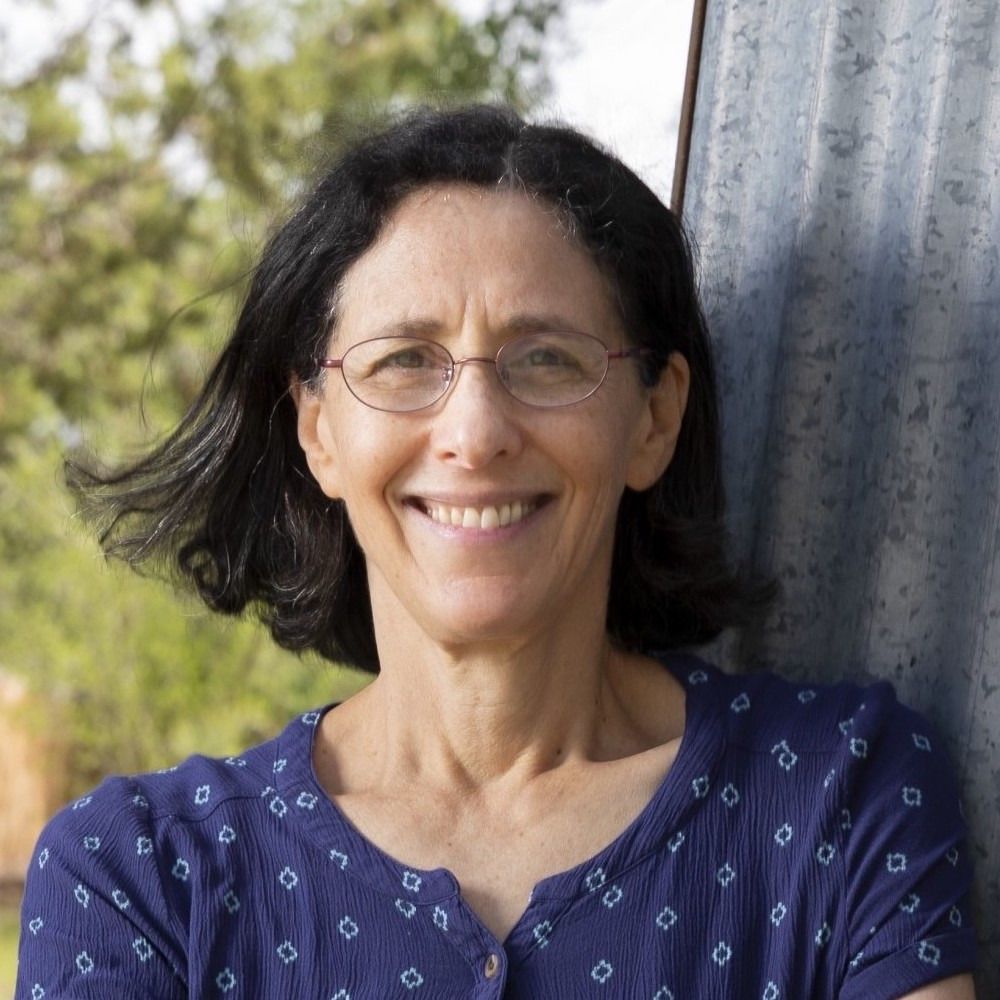
In honor of the 75th anniversary of the Turing test, I'm re-upping my short essay, "The Turing Test and our shifting conceptions of intelligence".
www.science.org/doi/10.1126/...
www.science.org/doi/10.1126/...

The Turing Test and our shifting conceptions of intelligence
“Can machines think?” So asked Alan Turing in his 1950 paper, “Computing Machinery and Intelligence.” Turing quickly noted that, given the difficulty of defining thinking, the question is “too meaning...
www.science.org
October 2, 2025 at 2:50 PM
In honor of the 75th anniversary of the Turing test, I'm re-upping my short essay, "The Turing Test and our shifting conceptions of intelligence".
www.science.org/doi/10.1126/...
www.science.org/doi/10.1126/...
Reposted by Bill Podlaski

Interested in doing a Ph.D. to work on building models of the brain/behavior? Consider applying to graduate schools at CU Anschutz:
1. Neuroscience www.cuanschutz.edu/graduate-pro...
2. Bioengineering engineering.ucdenver.edu/bioengineeri...
You could work with several comp neuro PIs, including me.
1. Neuroscience www.cuanschutz.edu/graduate-pro...
2. Bioengineering engineering.ucdenver.edu/bioengineeri...
You could work with several comp neuro PIs, including me.

September 27, 2025 at 8:30 PM
Interested in doing a Ph.D. to work on building models of the brain/behavior? Consider applying to graduate schools at CU Anschutz:
1. Neuroscience www.cuanschutz.edu/graduate-pro...
2. Bioengineering engineering.ucdenver.edu/bioengineeri...
You could work with several comp neuro PIs, including me.
1. Neuroscience www.cuanschutz.edu/graduate-pro...
2. Bioengineering engineering.ucdenver.edu/bioengineeri...
You could work with several comp neuro PIs, including me.
Reposted by Bill Podlaski
Today is the last day for submissions to the free online SNUFA spiking neural network workshop! This is a great opportunity to present your work (hundreds of participants and sometimes thousands of YouTube views per talk), and abstract submission is easy (300 words). Do it now! 🤖🧠🧪
snufa.net/2025/
snufa.net/2025/
SNUFA 2025
Spiking Neural networks as Universal Function Approximators
snufa.net
September 26, 2025 at 12:41 PM
Today is the last day for submissions to the free online SNUFA spiking neural network workshop! This is a great opportunity to present your work (hundreds of participants and sometimes thousands of YouTube views per talk), and abstract submission is easy (300 words). Do it now! 🤖🧠🧪
snufa.net/2025/
snufa.net/2025/
Reposted by Bill Podlaski

The brain is incredibly densely connected. Human cerebral cortex may have as many as *one trillion* connections.
Most of those cortical connections are recurrent, inside each area. What do they do?
New paper from me in Annual Reviews: 🧪 🧠📈 1/
www.annualreviews.org/content/jour...
Most of those cortical connections are recurrent, inside each area. What do they do?
New paper from me in Annual Reviews: 🧪 🧠📈 1/
www.annualreviews.org/content/jour...
Active Filtering: A Predictive Function of Recurrent Circuits of Sensory Cortex | Annual Reviews
Our brains encode many features of the sensory world into memories: We can sing along with songs we have heard before, interpret spoken and written language composed of words we have learned, and reco...
www.annualreviews.org
September 25, 2025 at 7:35 PM
The brain is incredibly densely connected. Human cerebral cortex may have as many as *one trillion* connections.
Most of those cortical connections are recurrent, inside each area. What do they do?
New paper from me in Annual Reviews: 🧪 🧠📈 1/
www.annualreviews.org/content/jour...
Most of those cortical connections are recurrent, inside each area. What do they do?
New paper from me in Annual Reviews: 🧪 🧠📈 1/
www.annualreviews.org/content/jour...
Reposted by Bill Podlaski
1/8
How can the brain create countless unique memories using a single, universal metric of space? We’ve been waiting for the answer to this for two decades!
Read it here:
www.biorxiv.org/content/10.1...
How can the brain create countless unique memories using a single, universal metric of space? We’ve been waiting for the answer to this for two decades!
Read it here:
www.biorxiv.org/content/10.1...
September 25, 2025 at 4:15 AM
1/8
How can the brain create countless unique memories using a single, universal metric of space? We’ve been waiting for the answer to this for two decades!
Read it here:
www.biorxiv.org/content/10.1...
How can the brain create countless unique memories using a single, universal metric of space? We’ve been waiting for the answer to this for two decades!
Read it here:
www.biorxiv.org/content/10.1...
Reposted by Bill Podlaski

Does predictive coding work in SPACE or in TIME? Most neuroscientists assume TIME, i.e. neurons predict their future sensory inputs. We show that in visual cortex predictive coding actually works across SPACE, just like the original Rao+Ballard theory #neuroscience
www.biorxiv.org/cgi/content/...
www.biorxiv.org/cgi/content/...

September 22, 2025 at 7:09 PM
Does predictive coding work in SPACE or in TIME? Most neuroscientists assume TIME, i.e. neurons predict their future sensory inputs. We show that in visual cortex predictive coding actually works across SPACE, just like the original Rao+Ballard theory #neuroscience
www.biorxiv.org/cgi/content/...
www.biorxiv.org/cgi/content/...
Reposted by Bill Podlaski

1/
🚨 New preprint! 🚨
Excited and proud (& a little nervous 😅) to share our latest work on the importance of #theta-timescale spiking during #locomotion in #learning. If you care about how organisms learn, buckle up. 🧵👇
📄 www.biorxiv.org/content/10.1...
💻 code + data 🔗 below 🤩
#neuroskyence
🚨 New preprint! 🚨
Excited and proud (& a little nervous 😅) to share our latest work on the importance of #theta-timescale spiking during #locomotion in #learning. If you care about how organisms learn, buckle up. 🧵👇
📄 www.biorxiv.org/content/10.1...
💻 code + data 🔗 below 🤩
#neuroskyence
September 17, 2025 at 7:33 PM
1/
🚨 New preprint! 🚨
Excited and proud (& a little nervous 😅) to share our latest work on the importance of #theta-timescale spiking during #locomotion in #learning. If you care about how organisms learn, buckle up. 🧵👇
📄 www.biorxiv.org/content/10.1...
💻 code + data 🔗 below 🤩
#neuroskyence
🚨 New preprint! 🚨
Excited and proud (& a little nervous 😅) to share our latest work on the importance of #theta-timescale spiking during #locomotion in #learning. If you care about how organisms learn, buckle up. 🧵👇
📄 www.biorxiv.org/content/10.1...
💻 code + data 🔗 below 🤩
#neuroskyence
Reposted by Bill Podlaski
How does the brain decide? 🧠
Our new @nature.com paper shows that neural activity switches from an 'evidence gathering' to a 'commitment' state at a precise moment we call nTc.
After nTc, new evidence is ignored, revealing a neural marker for the instant when the mind is made up.
rdcu.be/eGUrv
Our new @nature.com paper shows that neural activity switches from an 'evidence gathering' to a 'commitment' state at a precise moment we call nTc.
After nTc, new evidence is ignored, revealing a neural marker for the instant when the mind is made up.
rdcu.be/eGUrv

Transitions in dynamical regime and neural mode during perceptual decisions - Nature
Simultaneous recordings were made of hundreds of neurons in the rat frontal cortex and striatum, showing that decision commitment involves a rapid, coordinated transition in dynamical regime and neura...
www.nature.com
September 17, 2025 at 8:12 PM
How does the brain decide? 🧠
Our new @nature.com paper shows that neural activity switches from an 'evidence gathering' to a 'commitment' state at a precise moment we call nTc.
After nTc, new evidence is ignored, revealing a neural marker for the instant when the mind is made up.
rdcu.be/eGUrv
Our new @nature.com paper shows that neural activity switches from an 'evidence gathering' to a 'commitment' state at a precise moment we call nTc.
After nTc, new evidence is ignored, revealing a neural marker for the instant when the mind is made up.
rdcu.be/eGUrv