



Yun Deng
@yundeng.bsky.social
Postdoc in Pritchard lab at Stanford University. Previous PhD co-advised by Yun Song and Rasmus Nielsen at UC Berkeley.
Reposted by Yun Deng

Our work on understanding how common genetic variants contribute to recombination and aneuploidy risk is published!

Pregnancy loss is common in humans, and chromosomal abnormalities are the leading cause. Using genetic data from ~140,000 IVF embryos, we show that maternal variation in meiosis genes influences recombination and aneuploidy risk.
First authors: @saracarioscia.bsky.social & @aabiddanda.github.io
First authors: @saracarioscia.bsky.social & @aabiddanda.github.io

Common variation in meiosis genes shapes human recombination and aneuploidy - Nature
Analysis of data from pre-implantation genetic testing sheds light on the genetic basis of meiotic-origin aneuploidy, the leading cause of human pregnancy loss, identifying common genetic variants ass...
www.nature.com
January 22, 2026 at 1:02 AM
Our work on understanding how common genetic variants contribute to recombination and aneuploidy risk is published!
Reposted by Yun Deng

Interested in using aDNA time-series datasets to estimate selection?
Our study "Assessing Ancient DNA Sampling Strategies for Natural Selection Inference in Humans Using Allele Frequency Time Series Data" is now out in GBE! doi.org/10.1093/gbe/... @genomebiolevol.bsky.social @cegamorim.bsky.social
Our study "Assessing Ancient DNA Sampling Strategies for Natural Selection Inference in Humans Using Allele Frequency Time Series Data" is now out in GBE! doi.org/10.1093/gbe/... @genomebiolevol.bsky.social @cegamorim.bsky.social

Assessing Ancient DNA Sampling Strategies for Natural Selection Inference in Humans Using Allele Frequency Time Series Data
Abstract. The increased availability of genomic data from ancient humans allows estimating the strength of natural selection at a given locus using time se
doi.org
February 3, 2026 at 9:17 AM
Interested in using aDNA time-series datasets to estimate selection?
Our study "Assessing Ancient DNA Sampling Strategies for Natural Selection Inference in Humans Using Allele Frequency Time Series Data" is now out in GBE! doi.org/10.1093/gbe/... @genomebiolevol.bsky.social @cegamorim.bsky.social
Our study "Assessing Ancient DNA Sampling Strategies for Natural Selection Inference in Humans Using Allele Frequency Time Series Data" is now out in GBE! doi.org/10.1093/gbe/... @genomebiolevol.bsky.social @cegamorim.bsky.social
Reposted by Yun Deng
Pacific Biosciences Sells Short-Read Sequencing Assets to Illumina for $48.1M
www.pacb.com/press_releas...
www.pacb.com/press_releas...

PacBio Completes Sale of Short-Read Sequencing Assets - PacBio
MENLO PARK, Calif., Feb. 02, 2026 (GLOBE NEWSWIRE) — PacBio (NASDAQ: PACB), a leading developer of high-quality, highly accurate sequencing solutions, today announced the completion of the sale of sel...
www.pacb.com
February 2, 2026 at 4:49 PM
Pacific Biosciences Sells Short-Read Sequencing Assets to Illumina for $48.1M
www.pacb.com/press_releas...
www.pacb.com/press_releas...
Reposted by Yun Deng

Our work on the generalizability of polygenic scores (PGS) from the @arbelharpak.bsky.social Lab is now officially out!
We examine the accuracy of PGS predictions at the individual level. We make 3 observations that expose gaps in our understanding of PGS “portability.”
rdcu.be/e0LAr
(1/27)
We examine the accuracy of PGS predictions at the individual level. We make 3 observations that expose gaps in our understanding of PGS “portability.”
rdcu.be/e0LAr
(1/27)

Three open questions in polygenic score portability
Nature Communications - Genetic predictors of health outcomes often drop in accuracy when applied to people dissimilar to participants of large genetic studies. Here, the authors investigate the...
rdcu.be
January 26, 2026 at 11:20 PM
Our work on the generalizability of polygenic scores (PGS) from the @arbelharpak.bsky.social Lab is now officially out!
We examine the accuracy of PGS predictions at the individual level. We make 3 observations that expose gaps in our understanding of PGS “portability.”
rdcu.be/e0LAr
(1/27)
We examine the accuracy of PGS predictions at the individual level. We make 3 observations that expose gaps in our understanding of PGS “portability.”
rdcu.be/e0LAr
(1/27)
Reposted by Yun Deng

The evolution of genetic drift over 50,000 generations https://www.biorxiv.org/content/10.64898/2026.01.25.701616v1
January 27, 2026 at 9:31 PM
The evolution of genetic drift over 50,000 generations https://www.biorxiv.org/content/10.64898/2026.01.25.701616v1
Reposted by Yun Deng
Balancing selection maintains some remarkable biological diversity, but detecting it from genomic data alone can be tricky. This may bias our view of its true prevalence. We investigated what makes balancing selection more or less detectable in genomic scans. + in thread & preprint!

A new preprint from the lab, with postdoc @deboraycb.bsky.social and collaborators @aidaandres.bsky.social and Tim Connallon:
“Characterising the detectable and invisible fractions of genomic loci under balancing selection”
www.biorxiv.org/content/10.6...
“Characterising the detectable and invisible fractions of genomic loci under balancing selection”
www.biorxiv.org/content/10.6...
www.biorxiv.org
January 21, 2026 at 4:10 PM
Balancing selection maintains some remarkable biological diversity, but detecting it from genomic data alone can be tricky. This may bias our view of its true prevalence. We investigated what makes balancing selection more or less detectable in genomic scans. + in thread & preprint!
Reposted by Yun Deng

General moment closure for the neutral two-locus Wright-Fisher dynamics https://www.biorxiv.org/content/10.64898/2026.01.16.700021v1
January 21, 2026 at 2:32 AM
General moment closure for the neutral two-locus Wright-Fisher dynamics https://www.biorxiv.org/content/10.64898/2026.01.16.700021v1
Reposted by Yun Deng

If you want to distract yourself while the world falls apart, this is a really cool paper from Amy that simultaneously solves many puzzling observations about malaria parasite genetics by positing the importance of multiple merges

New preprint! and my first single-author paper, so bear with me.
www.biorxiv.org/content/10.6...
Malaria population genetic studies have found some puzzling patterns: Ne estimates spanning orders of magnitude, genome-wide negative Tajima's D, and over a quarter of genes with πN/πS >1
1/n
www.biorxiv.org/content/10.6...
Malaria population genetic studies have found some puzzling patterns: Ne estimates spanning orders of magnitude, genome-wide negative Tajima's D, and over a quarter of genes with πN/πS >1
1/n

Rare variation in malaria parasites biases population-genetic inference
Understanding how pathogens evolve is fundamental to disease control and is a basic question in evolutionary biology, yet pathogens with complex life cycles violate assumptions of classic evolutionary...
www.biorxiv.org
January 15, 2026 at 12:04 AM
If you want to distract yourself while the world falls apart, this is a really cool paper from Amy that simultaneously solves many puzzling observations about malaria parasite genetics by positing the importance of multiple merges
Reposted by Yun Deng

Post-Doctoral Opportunity in Evolutionary and Conservation Genomics!
If you are curious and passionate about ecology, evolution and the natural world come work with me in the Department of Biology at NYU!
More details here!
apply.interfolio.com/180051
If you are curious and passionate about ecology, evolution and the natural world come work with me in the Department of Biology at NYU!
More details here!
apply.interfolio.com/180051
Apply - Interfolio
{{$ctrl.$state.data.pageTitle}} - Apply - Interfolio
apply.interfolio.com
January 14, 2026 at 8:47 PM
Post-Doctoral Opportunity in Evolutionary and Conservation Genomics!
If you are curious and passionate about ecology, evolution and the natural world come work with me in the Department of Biology at NYU!
More details here!
apply.interfolio.com/180051
If you are curious and passionate about ecology, evolution and the natural world come work with me in the Department of Biology at NYU!
More details here!
apply.interfolio.com/180051
Reposted by Yun Deng
Tracing the evolutionary histories of ultra-rare variants using variational dating of large ancestral recombination graphs https://www.biorxiv.org/content/10.64898/2026.01.07.698223v1
January 12, 2026 at 10:32 PM
Tracing the evolutionary histories of ultra-rare variants using variational dating of large ancestral recombination graphs https://www.biorxiv.org/content/10.64898/2026.01.07.698223v1
Reposted by Yun Deng

Global patterns of natural selection inferred using ancient DNA https://www.biorxiv.org/content/10.64898/2026.01.07.697984v1
January 8, 2026 at 10:32 AM
Global patterns of natural selection inferred using ancient DNA https://www.biorxiv.org/content/10.64898/2026.01.07.697984v1
Reposted by Yun Deng

Together with @ronghuizhu.bsky.social, we are thrilled to present our new perturb-seq study of 22M primary CD4+ T cells, across donors and timepoints – the result of a decade-long collaboration between the Marson @marsonlab.bsky.social and Pritchard @jkpritch.bsky.social labs 🧵 tinyurl.com/gwt2025

Genome-scale perturb-seq in primary human CD4+ T cells maps context-specific regulators of T cell programs and human immune traits
Gene regulatory networks encode the fundamental logic of cellular functions, but systematic network mapping remains challenging, especially in cell states relevant to human biology and disease. Here, ...
tinyurl.com
January 5, 2026 at 6:42 PM
Together with @ronghuizhu.bsky.social, we are thrilled to present our new perturb-seq study of 22M primary CD4+ T cells, across donors and timepoints – the result of a decade-long collaboration between the Marson @marsonlab.bsky.social and Pritchard @jkpritch.bsky.social labs 🧵 tinyurl.com/gwt2025
Reposted by Yun Deng

I'm just delighted to announce our new preprint on genome-scale perturb-seq in CD4+ T cells. We learned both general lessons about the power of perturb-seq, and specific lessons about T cell biology.
Led by amazing postdocs Emma Dann and Ronghui Zhu, with my wonderful collaborator Alex Marson.
Led by amazing postdocs Emma Dann and Ronghui Zhu, with my wonderful collaborator Alex Marson.
Together with @ronghuizhu.bsky.social, we are thrilled to present our new perturb-seq study of 22M primary CD4+ T cells, across donors and timepoints – the result of a decade-long collaboration between the Marson @marsonlab.bsky.social and Pritchard @jkpritch.bsky.social labs 🧵 tinyurl.com/gwt2025
Genome-scale perturb-seq in primary human CD4+ T cells maps context-specific regulators of T cell programs and human immune traits
Gene regulatory networks encode the fundamental logic of cellular functions, but systematic network mapping remains challenging, especially in cell states relevant to human biology and disease. Here, ...
tinyurl.com
January 5, 2026 at 7:27 PM
I'm just delighted to announce our new preprint on genome-scale perturb-seq in CD4+ T cells. We learned both general lessons about the power of perturb-seq, and specific lessons about T cell biology.
Led by amazing postdocs Emma Dann and Ronghui Zhu, with my wonderful collaborator Alex Marson.
Led by amazing postdocs Emma Dann and Ronghui Zhu, with my wonderful collaborator Alex Marson.
Reposted by Yun Deng
New preprint alert: we use sign errors as a test of how well TWAS works.
Very worryingly we find that TWAS gets the sign wrong around 1/3 of the time (compared to 50% for pure guessing). You can read more about our analysis here, and what we think is going on 👇
Very worryingly we find that TWAS gets the sign wrong around 1/3 of the time (compared to 50% for pure guessing). You can read more about our analysis here, and what we think is going on 👇
How well does TWAS estimate a gene’s direction of effect on a trait? We think of this as an important stress-test for the accuracy of TWAS.
In a new pre-print, we find that TWAS gets the sign wrong around 20-30% of the time!
doi.org/10.64898/202...
1/n
In a new pre-print, we find that TWAS gets the sign wrong around 20-30% of the time!
doi.org/10.64898/202...
1/n

High false sign rates in transcriptome-wide association studies
Transcriptome-wide association studies (TWAS) are widely used to identify genes involved in complex traits and to infer the direction of gene effects on traits. However, despite their popularity, it r...
doi.org
January 6, 2026 at 2:48 AM
New preprint alert: we use sign errors as a test of how well TWAS works.
Very worryingly we find that TWAS gets the sign wrong around 1/3 of the time (compared to 50% for pure guessing). You can read more about our analysis here, and what we think is going on 👇
Very worryingly we find that TWAS gets the sign wrong around 1/3 of the time (compared to 50% for pure guessing). You can read more about our analysis here, and what we think is going on 👇
Reposted by Yun Deng

How well does TWAS estimate a gene’s direction of effect on a trait? We think of this as an important stress-test for the accuracy of TWAS.
In a new pre-print, we find that TWAS gets the sign wrong around 20-30% of the time!
doi.org/10.64898/202...
1/n
In a new pre-print, we find that TWAS gets the sign wrong around 20-30% of the time!
doi.org/10.64898/202...
1/n
High false sign rates in transcriptome-wide association studies
Transcriptome-wide association studies (TWAS) are widely used to identify genes involved in complex traits and to infer the direction of gene effects on traits. However, despite their popularity, it r...
doi.org
January 6, 2026 at 2:30 AM
How well does TWAS estimate a gene’s direction of effect on a trait? We think of this as an important stress-test for the accuracy of TWAS.
In a new pre-print, we find that TWAS gets the sign wrong around 20-30% of the time!
doi.org/10.64898/202...
1/n
In a new pre-print, we find that TWAS gets the sign wrong around 20-30% of the time!
doi.org/10.64898/202...
1/n
Reposted by Yun Deng
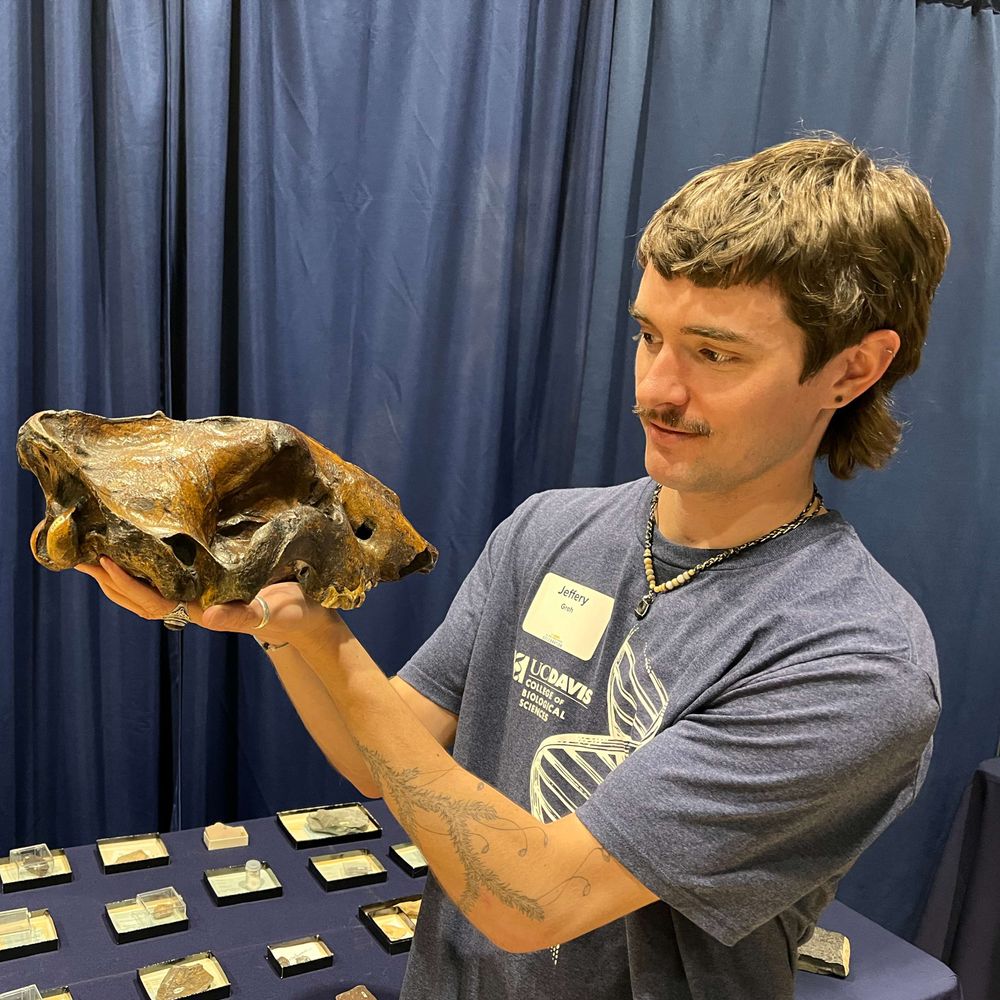
Did you know there are 2 types of avocado varieties? A-types switch from female to male, B-types male to female, within a single day. This reciprocal sex alternation promotes cross-pollination and has a simple genetic basis. Read more in this recent preprint from the final chapter of my PhD thesis 🥑

Balanced polymorphism in a floral transcription factor underlies an ancient rhythm of daily sex alternation in avocado
In avocado and certain wild relatives in Lauraceae, pollination occurs via a synchronized rhythm of floral sex timing between two hermaphroditic flowering types. A-type plants present female-phase flo...
www.biorxiv.org
December 29, 2025 at 7:13 PM
Did you know there are 2 types of avocado varieties? A-types switch from female to male, B-types male to female, within a single day. This reciprocal sex alternation promotes cross-pollination and has a simple genetic basis. Read more in this recent preprint from the final chapter of my PhD thesis 🥑
Reposted by Yun Deng

Congrats @jeffgroh.bsky.social et al. Some avocado trees open female-phase flowers in the morning & then male in afternoon. Others show complementary pattern (m->f), to synchronize pollination of two types. Jeff show this to be a >45Mya polymorphism at a transcription factor across 100s of species.
Balanced polymorphism in a floral transcription factor underlies an ancient rhythm of daily sex alternation in avocado https://www.biorxiv.org/content/10.64898/2025.12.22.695989v1
December 25, 2025 at 6:47 PM
Congrats @jeffgroh.bsky.social et al. Some avocado trees open female-phase flowers in the morning & then male in afternoon. Others show complementary pattern (m->f), to synchronize pollination of two types. Jeff show this to be a >45Mya polymorphism at a transcription factor across 100s of species.
Reposted by Yun Deng

How much better is an ancestral recombination graph (ARG) than a site frequency spectrum (SFS)? For recovering mutation rate history, we can answer fairly precisely because both ARG and SFS are linear transforms of mutation rate history. This blog post uses spectral analysis to clarify the picture.
Observability of mutation rate histories from ancestral recombination graphs
This post explores mathematical aspects of recovering mutation rate histories from an ancestral recombination graph (ARG) Vs a sample frequency spectrum (SFS), expanding on a recent collaborative pape...
dewitt-lab.github.io
December 22, 2025 at 6:19 PM
How much better is an ancestral recombination graph (ARG) than a site frequency spectrum (SFS)? For recovering mutation rate history, we can answer fairly precisely because both ARG and SFS are linear transforms of mutation rate history. This blog post uses spectral analysis to clarify the picture.
Reposted by Yun Deng

Happy to highlight an essay I wrote together with @marcdemanuel.bsky.social,
@natanaels.bsky.social and Anastasia Stolyarova, trying to think through what sets the mutation rate of a cell type in an animal species: www.biorxiv.org/content/10.6... 1/n
@natanaels.bsky.social and Anastasia Stolyarova, trying to think through what sets the mutation rate of a cell type in an animal species: www.biorxiv.org/content/10.6... 1/n

What sets the mutation rate of a cell type in an animal species?
Germline mutation rates per generation are strikingly similar across animals, despite vast differences in life histories. Analogously, in at least one somatic cell type, mutation rates at the end of l...
www.biorxiv.org
December 22, 2025 at 3:09 PM
Happy to highlight an essay I wrote together with @marcdemanuel.bsky.social,
@natanaels.bsky.social and Anastasia Stolyarova, trying to think through what sets the mutation rate of a cell type in an animal species: www.biorxiv.org/content/10.6... 1/n
@natanaels.bsky.social and Anastasia Stolyarova, trying to think through what sets the mutation rate of a cell type in an animal species: www.biorxiv.org/content/10.6... 1/n
Reposted by Yun Deng

Grateful to share our paper on gene-specific selective sweeps in human gut microbiomes, now out in Nature! It has been a joy to work with @rwolff.bsky.social, whose insights and hard work made this possible.
www.nature.com/articles/s41...
www.nature.com/articles/s41...

Gene-specific selective sweeps are pervasive across human gut microbiomes - Nature
Development and application of the integrated linkage disequilibrium score (iLDS) reveals both selective pressures impacting the human gut microbiome and the mechanisms by which gut bacteria adapt to ...
www.nature.com
December 17, 2025 at 6:53 PM
Grateful to share our paper on gene-specific selective sweeps in human gut microbiomes, now out in Nature! It has been a joy to work with @rwolff.bsky.social, whose insights and hard work made this possible.
www.nature.com/articles/s41...
www.nature.com/articles/s41...
Reposted by Yun Deng

Preprint online right before the holidays! Excited to share the first piece of work from the Zhang Lab, led by my absolutely stellar postdoc Michelle Kim! In this work, we ask how admixture, selection and demography shape complex trait genetics and GWAS performance www.biorxiv.org/content/10.6...

Determining the driving factors shaping genetic architecture of complex traits in recently admixed populations
Understanding the genetic architecture of complex traits in admixed populations remains challenging due to heterogeneous genetic backgrounds and demographic histories. Mischaracterizing admixture can ...
www.biorxiv.org
December 16, 2025 at 1:47 PM
Preprint online right before the holidays! Excited to share the first piece of work from the Zhang Lab, led by my absolutely stellar postdoc Michelle Kim! In this work, we ask how admixture, selection and demography shape complex trait genetics and GWAS performance www.biorxiv.org/content/10.6...
Reposted by Yun Deng
Our latest preprint revisits the classic model of mutation-selection balance.
Do human recessive genes fit Haldane's 100-year old model?
This work is by the wonderful @jonj-udd.bsky.social, and co-mentored by @jeffspence.github.io
www.biorxiv.org/content/10.6...
Do human recessive genes fit Haldane's 100-year old model?
This work is by the wonderful @jonj-udd.bsky.social, and co-mentored by @jeffspence.github.io
www.biorxiv.org/content/10.6...

Allele Frequencies at Recessive Disease Genes are Mainly Determined by Pleiotropic Effects in Heterozygotes
The classic theory of mutation-selection balance predicts the equilibrium frequency of genetic variation under negative selection. The model predicts a simple relationship between the total frequency ...
www.biorxiv.org
December 13, 2025 at 4:45 PM
Our latest preprint revisits the classic model of mutation-selection balance.
Do human recessive genes fit Haldane's 100-year old model?
This work is by the wonderful @jonj-udd.bsky.social, and co-mentored by @jeffspence.github.io
www.biorxiv.org/content/10.6...
Do human recessive genes fit Haldane's 100-year old model?
This work is by the wonderful @jonj-udd.bsky.social, and co-mentored by @jeffspence.github.io
www.biorxiv.org/content/10.6...
Reposted by Yun Deng

As a (to me very enjoyable) part of this paper, we worked out what mutation-selection balance looks like in finite populations with varying degrees of inbreeding.
Our latest preprint revisits the classic model of mutation-selection balance.
Do human recessive genes fit Haldane's 100-year old model?
This work is by the wonderful @jonj-udd.bsky.social, and co-mentored by @jeffspence.github.io
www.biorxiv.org/content/10.6...
Do human recessive genes fit Haldane's 100-year old model?
This work is by the wonderful @jonj-udd.bsky.social, and co-mentored by @jeffspence.github.io
www.biorxiv.org/content/10.6...
Allele Frequencies at Recessive Disease Genes are Mainly Determined by Pleiotropic Effects in Heterozygotes
The classic theory of mutation-selection balance predicts the equilibrium frequency of genetic variation under negative selection. The model predicts a simple relationship between the total frequency ...
www.biorxiv.org
December 13, 2025 at 10:43 PM
As a (to me very enjoyable) part of this paper, we worked out what mutation-selection balance looks like in finite populations with varying degrees of inbreeding.
Reposted by Yun Deng
GWAS has been an incredible discovery tool for human genetics: it regularly identifies *causal* links from 1000s of SNPs to any given trait. But mechanistic interpretation is usually difficult.
Our latest work on causal models for this is out yesterday:
www.nature.com/articles/s41...
A short🧵:
Our latest work on causal models for this is out yesterday:
www.nature.com/articles/s41...
A short🧵:

Causal modelling of gene effects from regulators to programs to traits - Nature
Approaches combining genetic association and Perturb-seq data that link genetic variants to functional programs to traits are described.
www.nature.com
December 11, 2025 at 5:54 PM
GWAS has been an incredible discovery tool for human genetics: it regularly identifies *causal* links from 1000s of SNPs to any given trait. But mechanistic interpretation is usually difficult.
Our latest work on causal models for this is out yesterday:
www.nature.com/articles/s41...
A short🧵:
Our latest work on causal models for this is out yesterday:
www.nature.com/articles/s41...
A short🧵:
With @szhan.bsky.social, @yulinzhang.bsky.social, Chao Zhang and Bingjie Chen, we wrote a Perspective about unifying the tree-based method across phylogenetics, population genetics and cell biology: arxiv.org/abs/2512.05499.
Reposts are greatly appreciated!
Reposts are greatly appreciated!

Tree Thinking in the Genomic Era: Unifying Models Across Cells, Populations, and Species
The ongoing explosion of genome sequence data is transforming how we reconstruct and understand the histories of biological systems. Across biological scales, from individual cells to populations and ...
arxiv.org
December 9, 2025 at 3:26 AM
With @szhan.bsky.social, @yulinzhang.bsky.social, Chao Zhang and Bingjie Chen, we wrote a Perspective about unifying the tree-based method across phylogenetics, population genetics and cell biology: arxiv.org/abs/2512.05499.
Reposts are greatly appreciated!
Reposts are greatly appreciated!