


Jonathan Pritchard
@jkpritch.bsky.social
My lab at Stanford studies human population genetics and complex traits.
Pinned
Jonathan Pritchard
@jkpritch.bsky.social
· Sep 23
Two new chapters from my free online book in human genetics out this weekend!
These complete Part 3 of the book, on human population structure and history:
3.3: Human prehistory [separate thread]
3.4: Ancient DNA: a genetic time capsule [this thread]
web.stanford.edu/group/pritch...
These complete Part 3 of the book, on human population structure and history:
3.3: Human prehistory [separate thread]
3.4: Ancient DNA: a genetic time capsule [this thread]
web.stanford.edu/group/pritch...
Reposted by Jonathan Pritchard

There is a lot of talk lately about multi-year funding (MYF) at NIH. This is mostly a paperwork issue, but it can have a dramatic impact on the number of grants that get funded. I was curious how this would impact grant numbers over time, so I did some simple modeling. 1/n

January 22, 2026 at 7:19 PM
There is a lot of talk lately about multi-year funding (MYF) at NIH. This is mostly a paperwork issue, but it can have a dramatic impact on the number of grants that get funded. I was curious how this would impact grant numbers over time, so I did some simple modeling. 1/n
Reposted by Jonathan Pritchard

Three years ago, we showed ~70% of lifespan variation in yeast traces to rDNA copy number. Ribosomal DNA, encoded as 5S and 45S subunits in hundreds of copies, vary substantially across humans. Does this copy number variation, and sequence variation within these paralogs, matter for humans?
January 22, 2026 at 5:39 PM
Three years ago, we showed ~70% of lifespan variation in yeast traces to rDNA copy number. Ribosomal DNA, encoded as 5S and 45S subunits in hundreds of copies, vary substantially across humans. Does this copy number variation, and sequence variation within these paralogs, matter for humans?
Reposted by Jonathan Pritchard

New preprint on technologies to scale up CRISPR screens.
We use them to map 665,856 pairwise genetic perturbations and outline a path to comprehensive interaction mapping in human cells.
We also introduce an approach for cloning lentiviral libraries with billions of elements.
We use them to map 665,856 pairwise genetic perturbations and outline a path to comprehensive interaction mapping in human cells.
We also introduce an approach for cloning lentiviral libraries with billions of elements.

January 20, 2026 at 1:42 PM
New preprint on technologies to scale up CRISPR screens.
We use them to map 665,856 pairwise genetic perturbations and outline a path to comprehensive interaction mapping in human cells.
We also introduce an approach for cloning lentiviral libraries with billions of elements.
We use them to map 665,856 pairwise genetic perturbations and outline a path to comprehensive interaction mapping in human cells.
We also introduce an approach for cloning lentiviral libraries with billions of elements.
Reposted by Jonathan Pritchard
Registration for the 2026 NY Area Population Genetics meeting is now open, at events.simonsfoundation.org/e0mEoL?rt=8k.... Registration is free but required; if you are submitting an abstract, note that the deadline is *January 30th*.
January 14, 2026 at 9:37 PM
Registration for the 2026 NY Area Population Genetics meeting is now open, at events.simonsfoundation.org/e0mEoL?rt=8k.... Registration is free but required; if you are submitting an abstract, note that the deadline is *January 30th*.
Reposted by Jonathan Pritchard
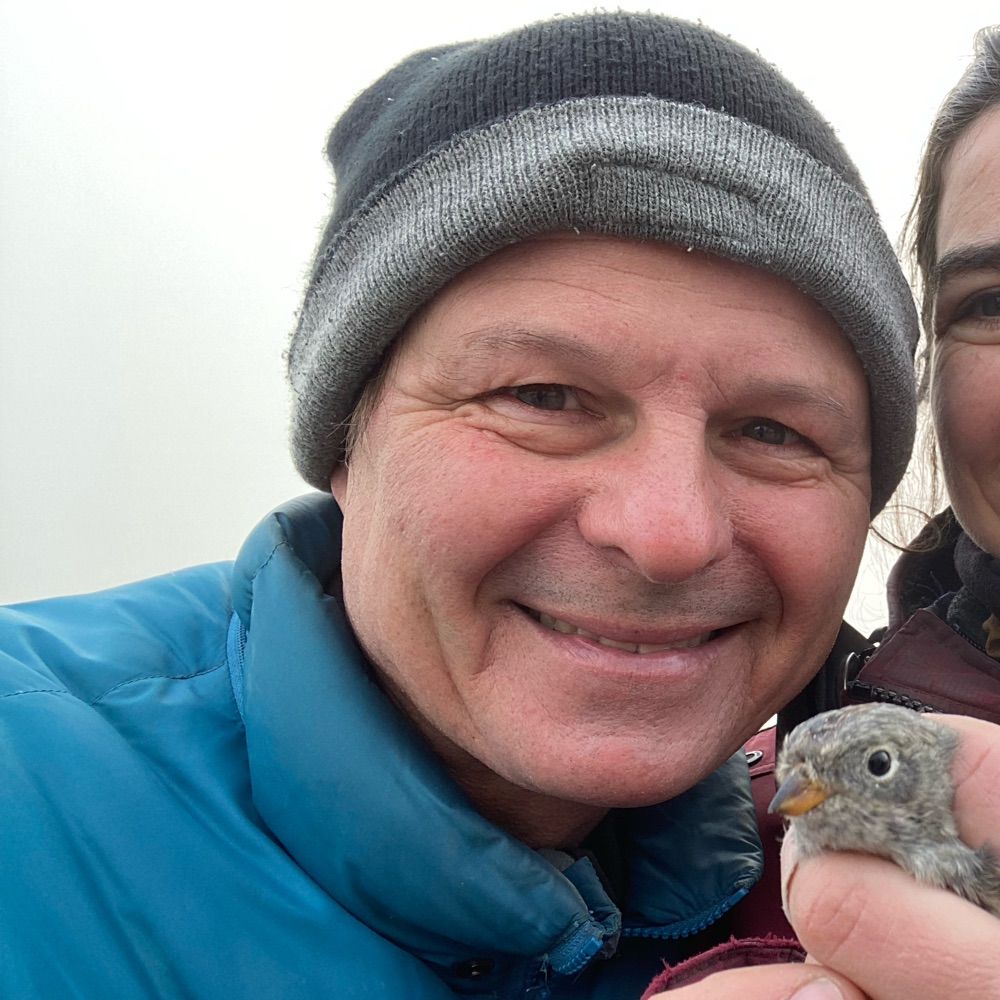
Chu et al. (urls.fr/Yeo6-K) estimate that cats kill ~60 million birds per year in Canada (possibly up to 197 M). Outdoor cats pose a serious risk to native birds. Potential responses include bylaws, education, social engagement, and trap-neuter-release programs. Think about it if you own a cat 🧪🌿🌎🦉🦊

January 7, 2026 at 8:46 PM
Chu et al. (urls.fr/Yeo6-K) estimate that cats kill ~60 million birds per year in Canada (possibly up to 197 M). Outdoor cats pose a serious risk to native birds. Potential responses include bylaws, education, social engagement, and trap-neuter-release programs. Think about it if you own a cat 🧪🌿🌎🦉🦊
Reposted by Jonathan Pritchard

Clever use of proteomic data to stress-test TWAS and QTL colocalization methods, revealing a high false sign rate. This hypothesis about high-LD and cross-tissue confounding is particularly interesting:

January 6, 2026 at 5:52 PM
Clever use of proteomic data to stress-test TWAS and QTL colocalization methods, revealing a high false sign rate. This hypothesis about high-LD and cross-tissue confounding is particularly interesting:
New preprint alert: we use sign errors as a test of how well TWAS works.
Very worryingly we find that TWAS gets the sign wrong around 1/3 of the time (compared to 50% for pure guessing). You can read more about our analysis here, and what we think is going on 👇
Very worryingly we find that TWAS gets the sign wrong around 1/3 of the time (compared to 50% for pure guessing). You can read more about our analysis here, and what we think is going on 👇
How well does TWAS estimate a gene’s direction of effect on a trait? We think of this as an important stress-test for the accuracy of TWAS.
In a new pre-print, we find that TWAS gets the sign wrong around 20-30% of the time!
doi.org/10.64898/202...
1/n
In a new pre-print, we find that TWAS gets the sign wrong around 20-30% of the time!
doi.org/10.64898/202...
1/n

High false sign rates in transcriptome-wide association studies
Transcriptome-wide association studies (TWAS) are widely used to identify genes involved in complex traits and to infer the direction of gene effects on traits. However, despite their popularity, it r...
doi.org
January 6, 2026 at 2:48 AM
New preprint alert: we use sign errors as a test of how well TWAS works.
Very worryingly we find that TWAS gets the sign wrong around 1/3 of the time (compared to 50% for pure guessing). You can read more about our analysis here, and what we think is going on 👇
Very worryingly we find that TWAS gets the sign wrong around 1/3 of the time (compared to 50% for pure guessing). You can read more about our analysis here, and what we think is going on 👇
Reposted by Jonathan Pritchard

Together with @ronghuizhu.bsky.social, we are thrilled to present our new perturb-seq study of 22M primary CD4+ T cells, across donors and timepoints – the result of a decade-long collaboration between the Marson @marsonlab.bsky.social and Pritchard @jkpritch.bsky.social labs 🧵 tinyurl.com/gwt2025

Genome-scale perturb-seq in primary human CD4+ T cells maps context-specific regulators of T cell programs and human immune traits
Gene regulatory networks encode the fundamental logic of cellular functions, but systematic network mapping remains challenging, especially in cell states relevant to human biology and disease. Here, ...
tinyurl.com
January 5, 2026 at 6:42 PM
Together with @ronghuizhu.bsky.social, we are thrilled to present our new perturb-seq study of 22M primary CD4+ T cells, across donors and timepoints – the result of a decade-long collaboration between the Marson @marsonlab.bsky.social and Pritchard @jkpritch.bsky.social labs 🧵 tinyurl.com/gwt2025
I'm just delighted to announce our new preprint on genome-scale perturb-seq in CD4+ T cells. We learned both general lessons about the power of perturb-seq, and specific lessons about T cell biology.
Led by amazing postdocs Emma Dann and Ronghui Zhu, with my wonderful collaborator Alex Marson.
Led by amazing postdocs Emma Dann and Ronghui Zhu, with my wonderful collaborator Alex Marson.
Together with @ronghuizhu.bsky.social, we are thrilled to present our new perturb-seq study of 22M primary CD4+ T cells, across donors and timepoints – the result of a decade-long collaboration between the Marson @marsonlab.bsky.social and Pritchard @jkpritch.bsky.social labs 🧵 tinyurl.com/gwt2025
Genome-scale perturb-seq in primary human CD4+ T cells maps context-specific regulators of T cell programs and human immune traits
Gene regulatory networks encode the fundamental logic of cellular functions, but systematic network mapping remains challenging, especially in cell states relevant to human biology and disease. Here, ...
tinyurl.com
January 5, 2026 at 7:27 PM
I'm just delighted to announce our new preprint on genome-scale perturb-seq in CD4+ T cells. We learned both general lessons about the power of perturb-seq, and specific lessons about T cell biology.
Led by amazing postdocs Emma Dann and Ronghui Zhu, with my wonderful collaborator Alex Marson.
Led by amazing postdocs Emma Dann and Ronghui Zhu, with my wonderful collaborator Alex Marson.
Reposted by Jonathan Pritchard

Delighted to have our work on 🧬 resilience to 🩸cancer led by @g-agarwal.bsky.social & amazing collaborators, including @kharaslab.bsky.social, published in @science.org: www.science.org/doi/10.1126/... 🧵

January 2, 2026 at 2:01 PM
Delighted to have our work on 🧬 resilience to 🩸cancer led by @g-agarwal.bsky.social & amazing collaborators, including @kharaslab.bsky.social, published in @science.org: www.science.org/doi/10.1126/... 🧵
Sunset on 2025. Wishing my Bluesky friends all the very best in the new year.

January 1, 2026 at 2:33 AM
Sunset on 2025. Wishing my Bluesky friends all the very best in the new year.
Reposted by Jonathan Pritchard

One of the most pleasant surprises of the past 20 years was the transformation of Wikipedia into arguably the most reliable general information source freely accessible to the public. It’s not perfect — I’ve certainly seen errors — but it’s kind of shockingly good.
One might consider a donation.
One might consider a donation.
December 23, 2025 at 1:55 PM
One of the most pleasant surprises of the past 20 years was the transformation of Wikipedia into arguably the most reliable general information source freely accessible to the public. It’s not perfect — I’ve certainly seen errors — but it’s kind of shockingly good.
One might consider a donation.
One might consider a donation.
I love this plot illustrating the famous generation-time effect on mutation rates with modern data!
In fact, they appear to be eerily similar. The per generation mutation rate seems to lay between 10-9 and 10-8 per bp in all animal taxa surveyed to date–despite vast differences in environments, life histories, and three orders of magnitude variation in the generation time: 4/n

December 22, 2025 at 4:18 PM
I love this plot illustrating the famous generation-time effect on mutation rates with modern data!
Reposted by Jonathan Pritchard
Happy to highlight an essay I wrote together with @marcdemanuel.bsky.social,
@natanaels.bsky.social and Anastasia Stolyarova, trying to think through what sets the mutation rate of a cell type in an animal species: www.biorxiv.org/content/10.6... 1/n
@natanaels.bsky.social and Anastasia Stolyarova, trying to think through what sets the mutation rate of a cell type in an animal species: www.biorxiv.org/content/10.6... 1/n

What sets the mutation rate of a cell type in an animal species?
Germline mutation rates per generation are strikingly similar across animals, despite vast differences in life histories. Analogously, in at least one somatic cell type, mutation rates at the end of l...
www.biorxiv.org
December 22, 2025 at 3:09 PM
Happy to highlight an essay I wrote together with @marcdemanuel.bsky.social,
@natanaels.bsky.social and Anastasia Stolyarova, trying to think through what sets the mutation rate of a cell type in an animal species: www.biorxiv.org/content/10.6... 1/n
@natanaels.bsky.social and Anastasia Stolyarova, trying to think through what sets the mutation rate of a cell type in an animal species: www.biorxiv.org/content/10.6... 1/n
Reposted by Jonathan Pritchard

www.cell.com/cell/fulltex...
On how ~neutrally evolving CAG repeats over the lifespan eventually exerts neurodegenerative phenotype in Huntington’s disease.
On how ~neutrally evolving CAG repeats over the lifespan eventually exerts neurodegenerative phenotype in Huntington’s disease.
December 21, 2025 at 10:05 PM
www.cell.com/cell/fulltex...
On how ~neutrally evolving CAG repeats over the lifespan eventually exerts neurodegenerative phenotype in Huntington’s disease.
On how ~neutrally evolving CAG repeats over the lifespan eventually exerts neurodegenerative phenotype in Huntington’s disease.
Reposted by Jonathan Pritchard
All right it’s time for the annual “please tell us about one (or a few if you are ambitious) paper from 2025 that really impressed you and why we should all read it“! Go! If you tell us how it changed your view of the world and what makes it so powerful and consequential It would be excellent.
December 21, 2025 at 3:10 AM
All right it’s time for the annual “please tell us about one (or a few if you are ambitious) paper from 2025 that really impressed you and why we should all read it“! Go! If you tell us how it changed your view of the world and what makes it so powerful and consequential It would be excellent.
Reposted by Jonathan Pritchard

I guess the preprint came out in 2024 but it was published this year so I'll say this paper from @jeffspence.github.io and @hakha.bsky.social which is probably the paper that pleiotropy-pilled me the most. Really got me to think about what GWAS means www.nature.com/articles/s41...
December 21, 2025 at 6:07 AM
I guess the preprint came out in 2024 but it was published this year so I'll say this paper from @jeffspence.github.io and @hakha.bsky.social which is probably the paper that pleiotropy-pilled me the most. Really got me to think about what GWAS means www.nature.com/articles/s41...
Reposted by Jonathan Pritchard

Reposted by Jonathan Pritchard

As a (to me very enjoyable) part of this paper, we worked out what mutation-selection balance looks like in finite populations with varying degrees of inbreeding.
Our latest preprint revisits the classic model of mutation-selection balance.
Do human recessive genes fit Haldane's 100-year old model?
This work is by the wonderful @jonj-udd.bsky.social, and co-mentored by @jeffspence.github.io
www.biorxiv.org/content/10.6...
Do human recessive genes fit Haldane's 100-year old model?
This work is by the wonderful @jonj-udd.bsky.social, and co-mentored by @jeffspence.github.io
www.biorxiv.org/content/10.6...

Allele Frequencies at Recessive Disease Genes are Mainly Determined by Pleiotropic Effects in Heterozygotes
The classic theory of mutation-selection balance predicts the equilibrium frequency of genetic variation under negative selection. The model predicts a simple relationship between the total frequency ...
www.biorxiv.org
December 13, 2025 at 10:43 PM
As a (to me very enjoyable) part of this paper, we worked out what mutation-selection balance looks like in finite populations with varying degrees of inbreeding.
Reposted by Jonathan Pritchard

Now TWO great new papers on why frequencies of disease genes rarely match expectations
Here was the first: www.nature.com/articles/s41...
Here was the first: www.nature.com/articles/s41...
December 13, 2025 at 5:44 PM
Now TWO great new papers on why frequencies of disease genes rarely match expectations
Here was the first: www.nature.com/articles/s41...
Here was the first: www.nature.com/articles/s41...
Our latest preprint revisits the classic model of mutation-selection balance.
Do human recessive genes fit Haldane's 100-year old model?
This work is by the wonderful @jonj-udd.bsky.social, and co-mentored by @jeffspence.github.io
www.biorxiv.org/content/10.6...
Do human recessive genes fit Haldane's 100-year old model?
This work is by the wonderful @jonj-udd.bsky.social, and co-mentored by @jeffspence.github.io
www.biorxiv.org/content/10.6...
Allele Frequencies at Recessive Disease Genes are Mainly Determined by Pleiotropic Effects in Heterozygotes
The classic theory of mutation-selection balance predicts the equilibrium frequency of genetic variation under negative selection. The model predicts a simple relationship between the total frequency ...
www.biorxiv.org
December 13, 2025 at 4:45 PM
Our latest preprint revisits the classic model of mutation-selection balance.
Do human recessive genes fit Haldane's 100-year old model?
This work is by the wonderful @jonj-udd.bsky.social, and co-mentored by @jeffspence.github.io
www.biorxiv.org/content/10.6...
Do human recessive genes fit Haldane's 100-year old model?
This work is by the wonderful @jonj-udd.bsky.social, and co-mentored by @jeffspence.github.io
www.biorxiv.org/content/10.6...
Reposted by Jonathan Pritchard

“Brilliance wrapped in modesty, decency, and good humor.” So true. 😭 May his memory be a blessing.

We learned today that Paul Rathouz of UT-Austin (previously Chicago and UW-Madison) died on Dec. 10.
Few people I've known have enwrapped their brilliance with such modesty, decency, and good humor.
A mensch's mensch. RIP.
Few people I've known have enwrapped their brilliance with such modesty, decency, and good humor.
A mensch's mensch. RIP.
December 12, 2025 at 12:10 AM
“Brilliance wrapped in modesty, decency, and good humor.” So true. 😭 May his memory be a blessing.
GWAS has been an incredible discovery tool for human genetics: it regularly identifies *causal* links from 1000s of SNPs to any given trait. But mechanistic interpretation is usually difficult.
Our latest work on causal models for this is out yesterday:
www.nature.com/articles/s41...
A short🧵:
Our latest work on causal models for this is out yesterday:
www.nature.com/articles/s41...
A short🧵:

Causal modelling of gene effects from regulators to programs to traits - Nature
Approaches combining genetic association and Perturb-seq data that link genetic variants to functional programs to traits are described.
www.nature.com
December 11, 2025 at 5:54 PM
GWAS has been an incredible discovery tool for human genetics: it regularly identifies *causal* links from 1000s of SNPs to any given trait. But mechanistic interpretation is usually difficult.
Our latest work on causal models for this is out yesterday:
www.nature.com/articles/s41...
A short🧵:
Our latest work on causal models for this is out yesterday:
www.nature.com/articles/s41...
A short🧵:
Reposted by Jonathan Pritchard

After time in the Bay Area, I’ve started a new role as Lecturer in the Department of Allergy and Rheumatology at the University of Tokyo. We’re the group of clinicians who see patients with autoimmune diseases, while researching new treatments and patient stratification. (continued)
December 11, 2025 at 3:15 AM
After time in the Bay Area, I’ve started a new role as Lecturer in the Department of Allergy and Rheumatology at the University of Tokyo. We’re the group of clinicians who see patients with autoimmune diseases, while researching new treatments and patient stratification. (continued)
Reposted by Jonathan Pritchard

Our latest collaboration with @jkpritch.bsky.social – led by joint post-doc Mineto Ota – is in @nature.com today: www.nature.com/articles/s41...
December 10, 2025 at 10:57 PM
Our latest collaboration with @jkpritch.bsky.social – led by joint post-doc Mineto Ota – is in @nature.com today: www.nature.com/articles/s41...