



Arjun Biddanda
@aabiddanda.github.io
Statistical and population geneticist | Postdoc @ JHU Biology | COYS | Costco enthusiast | aabiddanda.github.io
Pinned
Pregnancy loss is common in humans, and chromosomal abnormalities are the leading cause. Using genetic data from ~140,000 IVF embryos, we show that maternal variation in meiosis genes influences recombination and aneuploidy risk.
First authors: @saracarioscia.bsky.social & @aabiddanda.github.io
First authors: @saracarioscia.bsky.social & @aabiddanda.github.io

Common variation in meiosis genes shapes human recombination and aneuploidy - Nature
Analysis of data from pre-implantation genetic testing sheds light on the genetic basis of meiotic-origin aneuploidy, the leading cause of human pregnancy loss, identifying common genetic variants ass...
www.nature.com
Our work on understanding how common genetic variants contribute to recombination and aneuploidy risk is published!
Reposted by Arjun Biddanda
Time for a thread on our Christmas preprint “Origin and evolution of acrocentric chromosomes in human and great apes”. I had so much fun with this project and paper. It will be hard to summarize in a thread, but I’ll try www.biorxiv.org/content/10.6... [1/21]

February 2, 2026 at 2:58 PM
Time for a thread on our Christmas preprint “Origin and evolution of acrocentric chromosomes in human and great apes”. I had so much fun with this project and paper. It will be hard to summarize in a thread, but I’ll try www.biorxiv.org/content/10.6... [1/21]
Reposted by Arjun Biddanda

A new preprint from Peter Mchale and Michael Goldberg in my group on the latent biases inherent to current models of non-coding constraint.
www.biorxiv.org/content/10.6...
www.biorxiv.org/content/10.6...
The performance of genetic-constraint metrics varies significantly across the human noncoding genome
A longstanding goal in human genetics is to prioritize noncoding loci that, when disrupted, lead to developmental disorders and other Mendelian traits. In pursuit of this goal, multiple metrics have been developed to distinguish neutrally evolving sequences from those subjected to purifying selection. These metrics are commonly evaluated genome-wide, e.g., by computing a precision-recall curve on windows tiling the entire noncoding genome. Here, we identify parts of the noncoding genome where these metrics significantly underperform relative to their genome-wide performance due to "bias" in the underlying models of neutral genetic variation and/or a low "signal-to-noise ratio" in the genetic data. The most extreme effects are found for Gnocchi (Chen et al. 2024), the performance of which declines as GC content increases. We suggest annotating constraint scores of noncoding genomic intervals with robust measures of the bias of the corresponding model, allowing users to gauge confidence in those scores. ### Competing Interest Statement The authors have declared no competing interest. National Institutes of Health, R01HG012252
www.biorxiv.org
January 29, 2026 at 3:28 PM
A new preprint from Peter Mchale and Michael Goldberg in my group on the latent biases inherent to current models of non-coding constraint.
www.biorxiv.org/content/10.6...
www.biorxiv.org/content/10.6...
Reposted by Arjun Biddanda
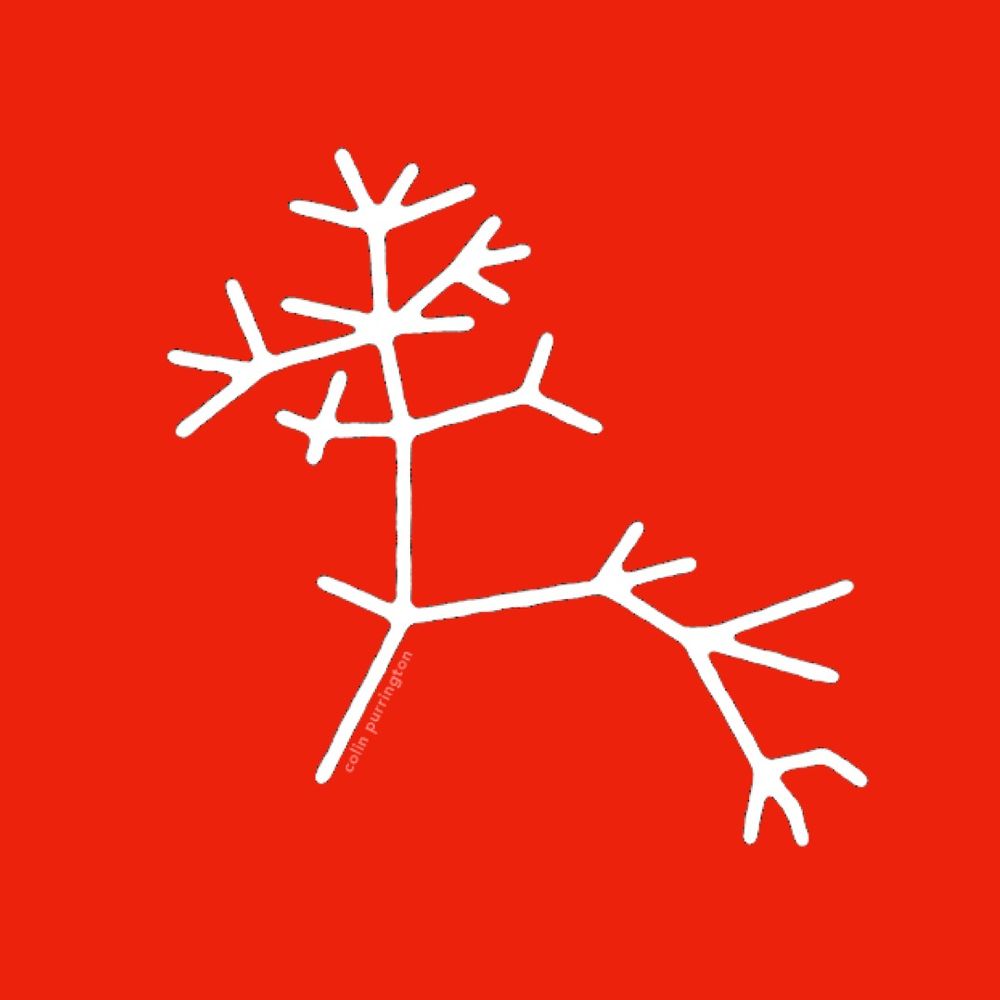
LvD: A New Algorithm for Computing the Likelihood of a Phylogeny https://arxiv.org/abs/2601.19064v1
January 29, 2026 at 8:00 PM
LvD: A New Algorithm for Computing the Likelihood of a Phylogeny https://arxiv.org/abs/2601.19064v1
Reposted by Arjun Biddanda

The evolution of genetic drift over 50,000 generations https://www.biorxiv.org/content/10.64898/2026.01.25.701616v1
January 27, 2026 at 9:31 PM
The evolution of genetic drift over 50,000 generations https://www.biorxiv.org/content/10.64898/2026.01.25.701616v1
Reposted by Arjun Biddanda

Meiotic drive has long been considered as a genetic curiosity. Genomic "footprints" suggest otherwise.
Check out our new review doi.org/10.1093/molb..., a cross-taxa synthesis arguing that recurrent drive is a pervasive and underappreciated force in genome evolution.
Check out our new review doi.org/10.1093/molb..., a cross-taxa synthesis arguing that recurrent drive is a pervasive and underappreciated force in genome evolution.

The Evolutionary Genomics of Meiotic Drive
Abstract. Meiotic drivers are selfish genetic elements that gain transmission advantages by distorting equal, Mendelian segregation. For decades, biologist
doi.org
January 27, 2026 at 2:14 PM
Meiotic drive has long been considered as a genetic curiosity. Genomic "footprints" suggest otherwise.
Check out our new review doi.org/10.1093/molb..., a cross-taxa synthesis arguing that recurrent drive is a pervasive and underappreciated force in genome evolution.
Check out our new review doi.org/10.1093/molb..., a cross-taxa synthesis arguing that recurrent drive is a pervasive and underappreciated force in genome evolution.
Reposted by Arjun Biddanda
A new extreme of meiotic evolution:
✔️ 𝗻𝗼 crossovers
✔️ 𝗻𝗼 gene conversion
✔️ 𝗻𝗼𝗿𝗺𝗮𝗹 meiosis & fertility
Sex mimics clonality without becoming asexual, in the holocentric multicellular eukaryote 𝘙𝘩𝘺𝘯𝘤𝘩𝘰𝘴𝘱𝘰𝘳𝘢 𝘵𝘦𝘯𝘶𝘪𝘴.
more about it:
www.biorxiv.org/content/10.6...
✔️ 𝗻𝗼 crossovers
✔️ 𝗻𝗼 gene conversion
✔️ 𝗻𝗼𝗿𝗺𝗮𝗹 meiosis & fertility
Sex mimics clonality without becoming asexual, in the holocentric multicellular eukaryote 𝘙𝘩𝘺𝘯𝘤𝘩𝘰𝘴𝘱𝘰𝘳𝘢 𝘵𝘦𝘯𝘶𝘪𝘴.
more about it:
www.biorxiv.org/content/10.6...

January 27, 2026 at 10:57 AM
A new extreme of meiotic evolution:
✔️ 𝗻𝗼 crossovers
✔️ 𝗻𝗼 gene conversion
✔️ 𝗻𝗼𝗿𝗺𝗮𝗹 meiosis & fertility
Sex mimics clonality without becoming asexual, in the holocentric multicellular eukaryote 𝘙𝘩𝘺𝘯𝘤𝘩𝘰𝘴𝘱𝘰𝘳𝘢 𝘵𝘦𝘯𝘶𝘪𝘴.
more about it:
www.biorxiv.org/content/10.6...
✔️ 𝗻𝗼 crossovers
✔️ 𝗻𝗼 gene conversion
✔️ 𝗻𝗼𝗿𝗺𝗮𝗹 meiosis & fertility
Sex mimics clonality without becoming asexual, in the holocentric multicellular eukaryote 𝘙𝘩𝘺𝘯𝘤𝘩𝘰𝘴𝘱𝘰𝘳𝘢 𝘵𝘦𝘯𝘶𝘪𝘴.
more about it:
www.biorxiv.org/content/10.6...
Reposted by Arjun Biddanda

Incredibly important story that everyone should read.
These are not disorganized lone actors, but well-funded and powerful networks to be treated as serious threats.
They are using our work to push a eugenicist and racist agenda that is scientifically invalid and morally reprehensible.
These are not disorganized lone actors, but well-funded and powerful networks to be treated as serious threats.
They are using our work to push a eugenicist and racist agenda that is scientifically invalid and morally reprehensible.

Genetic Data From Over 20,000 U.S. Children Misused for ‘Race Science’
www.nytimes.com
January 24, 2026 at 5:05 PM
Incredibly important story that everyone should read.
These are not disorganized lone actors, but well-funded and powerful networks to be treated as serious threats.
They are using our work to push a eugenicist and racist agenda that is scientifically invalid and morally reprehensible.
These are not disorganized lone actors, but well-funded and powerful networks to be treated as serious threats.
They are using our work to push a eugenicist and racist agenda that is scientifically invalid and morally reprehensible.
Reposted by Arjun Biddanda
An excellent, bone-chilling story about a cadre of online racists who stole genetic data from studies on children so they could make specious arguments for the innate inferiority of non-white people, it's embrace by Elon Musk/twitter & how the Trump administration might make it easier to do again.

Genetic Data From Over 20,000 U.S. Children Misused for ‘Race Science’
www.nytimes.com
January 24, 2026 at 3:03 PM
An excellent, bone-chilling story about a cadre of online racists who stole genetic data from studies on children so they could make specious arguments for the innate inferiority of non-white people, it's embrace by Elon Musk/twitter & how the Trump administration might make it easier to do again.
Reposted by Arjun Biddanda
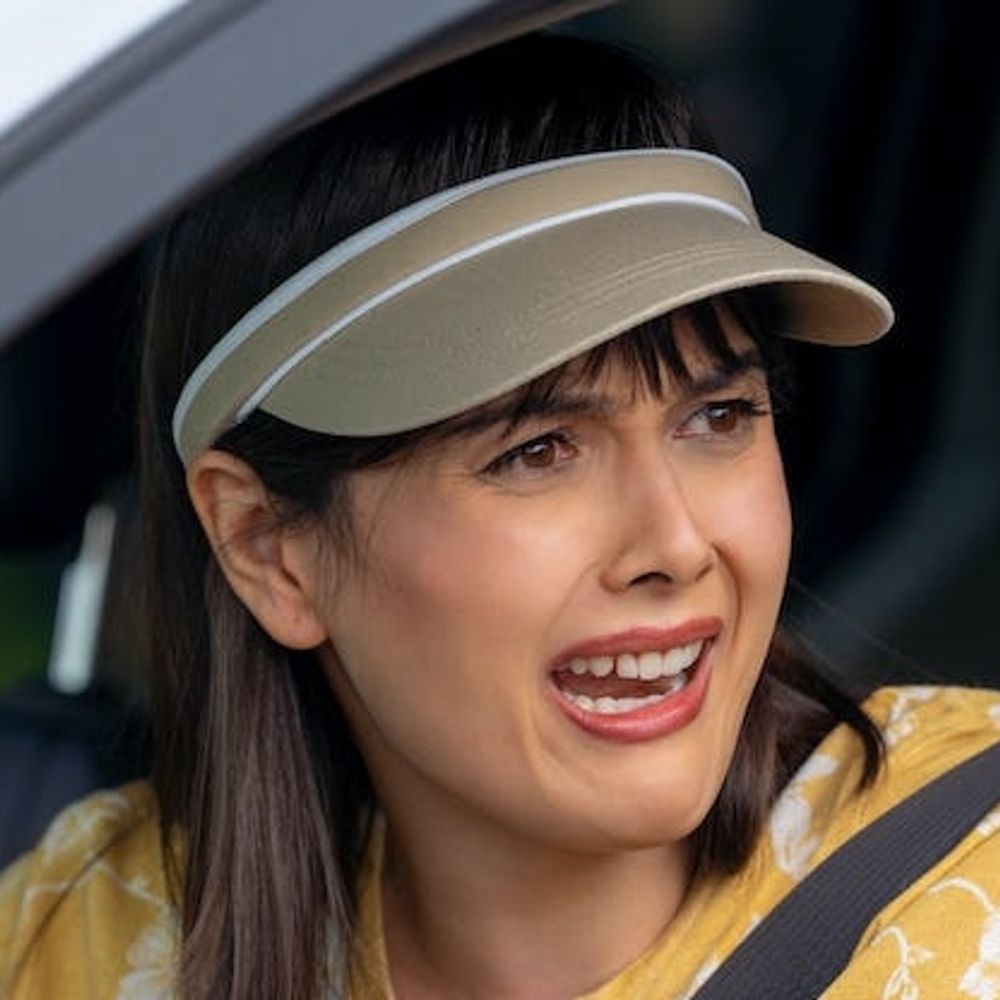
oof, i hope they don't kill him off in the first season

January 23, 2026 at 7:55 PM
oof, i hope they don't kill him off in the first season
Reposted by Arjun Biddanda

Pregnancy loss is common in humans, and chromosomal abnormalities are the leading cause. Using genetic data from ~140,000 IVF embryos, we show that maternal variation in meiosis genes influences recombination and aneuploidy risk.
First authors: @saracarioscia.bsky.social & @aabiddanda.github.io
First authors: @saracarioscia.bsky.social & @aabiddanda.github.io
Common variation in meiosis genes shapes human recombination and aneuploidy - Nature
Analysis of data from pre-implantation genetic testing sheds light on the genetic basis of meiotic-origin aneuploidy, the leading cause of human pregnancy loss, identifying common genetic variants ass...
www.nature.com
January 21, 2026 at 9:14 PM
Pregnancy loss is common in humans, and chromosomal abnormalities are the leading cause. Using genetic data from ~140,000 IVF embryos, we show that maternal variation in meiosis genes influences recombination and aneuploidy risk.
First authors: @saracarioscia.bsky.social & @aabiddanda.github.io
First authors: @saracarioscia.bsky.social & @aabiddanda.github.io
Our work on understanding how common genetic variants contribute to recombination and aneuploidy risk is published!
Pregnancy loss is common in humans, and chromosomal abnormalities are the leading cause. Using genetic data from ~140,000 IVF embryos, we show that maternal variation in meiosis genes influences recombination and aneuploidy risk.
First authors: @saracarioscia.bsky.social & @aabiddanda.github.io
First authors: @saracarioscia.bsky.social & @aabiddanda.github.io
Common variation in meiosis genes shapes human recombination and aneuploidy - Nature
Analysis of data from pre-implantation genetic testing sheds light on the genetic basis of meiotic-origin aneuploidy, the leading cause of human pregnancy loss, identifying common genetic variants ass...
www.nature.com
January 22, 2026 at 1:02 AM
Our work on understanding how common genetic variants contribute to recombination and aneuploidy risk is published!
Reposted by Arjun Biddanda
📢 Three new #bioRxiv preprints from our team on holocentric chromosomes.
Together, they connect centromere repeat evolution, karyotype dynamics, and meiotic recombination outcomes, revealing how holocentric genomes evolve and function. 🧬👇
Together, they connect centromere repeat evolution, karyotype dynamics, and meiotic recombination outcomes, revealing how holocentric genomes evolve and function. 🧬👇

January 21, 2026 at 2:45 PM
📢 Three new #bioRxiv preprints from our team on holocentric chromosomes.
Together, they connect centromere repeat evolution, karyotype dynamics, and meiotic recombination outcomes, revealing how holocentric genomes evolve and function. 🧬👇
Together, they connect centromere repeat evolution, karyotype dynamics, and meiotic recombination outcomes, revealing how holocentric genomes evolve and function. 🧬👇
Reposted by Arjun Biddanda

Excited to share our new preprint from the @arbelharpak.bsky.social Lab!
How do recruitment into genetic studies and study characteristics impact what we infer about the genetic bases of traits, and what are the consequences? (1/21)
www.biorxiv.org/content/10.6...
How do recruitment into genetic studies and study characteristics impact what we infer about the genetic bases of traits, and what are the consequences? (1/21)
www.biorxiv.org/content/10.6...

Representation in genetic studies affects inference about genetic architecture
Knowledge of a trait's "genetic architecture," namely the joint distribution of allele frequencies of causal variants and the direction and magnitude of their effects, is essential to understanding it...
www.biorxiv.org
January 14, 2026 at 7:07 PM
Excited to share our new preprint from the @arbelharpak.bsky.social Lab!
How do recruitment into genetic studies and study characteristics impact what we infer about the genetic bases of traits, and what are the consequences? (1/21)
www.biorxiv.org/content/10.6...
How do recruitment into genetic studies and study characteristics impact what we infer about the genetic bases of traits, and what are the consequences? (1/21)
www.biorxiv.org/content/10.6...
Reposted by Arjun Biddanda

Are you a recombination researcher heading to #SMBE2026? Submit your abstract to our Symposium, organised by Marie Raynaud, Laurent Duret, and myself. We're excited to have Aurora Ruiz-Herrera from UAB Barcelona as our invited speaker.
🧬🦄🦠🌿🐝🐟🍄🪱
@aruizherrera.bsky.social @duret-lbbe.bsky.social
🧬🦄🦠🌿🐝🐟🍄🪱
@aruizherrera.bsky.social @duret-lbbe.bsky.social

SMBE2026 Symposium 11 | The evolution of recombination landscapes
📨 Abstract submission
smbe2026.org/abstracts
📋 Programme details
smbe2026.org/programme
#SMBE2026
📨 Abstract submission
smbe2026.org/abstracts
📋 Programme details
smbe2026.org/programme
#SMBE2026

December 9, 2025 at 2:54 PM
Are you a recombination researcher heading to #SMBE2026? Submit your abstract to our Symposium, organised by Marie Raynaud, Laurent Duret, and myself. We're excited to have Aurora Ruiz-Herrera from UAB Barcelona as our invited speaker.
🧬🦄🦠🌿🐝🐟🍄🪱
@aruizherrera.bsky.social @duret-lbbe.bsky.social
🧬🦄🦠🌿🐝🐟🍄🪱
@aruizherrera.bsky.social @duret-lbbe.bsky.social
Reposted by Arjun Biddanda

Nature research paper: Insights into DNA repeat expansions among 900,000 biobank participants
go.nature.com/49mB0f6
go.nature.com/49mB0f6

Insights into DNA repeat expansions among 900,000 biobank participants - Nature
Human genetic variation influences instability of DNA repeats that commonly expand as we age.
go.nature.com
January 8, 2026 at 10:33 AM
Nature research paper: Insights into DNA repeat expansions among 900,000 biobank participants
go.nature.com/49mB0f6
go.nature.com/49mB0f6
Reposted by Arjun Biddanda

New in #G3journal: Andrew Morgan shows that #crossover interference is stronger in male than in female meiosis in house #mice (Mus musculus), providing the first estimate of the proportion of non-interfering crossovers in female mice. buff.ly/zCPIbrV

January 8, 2026 at 2:01 PM
New in #G3journal: Andrew Morgan shows that #crossover interference is stronger in male than in female meiosis in house #mice (Mus musculus), providing the first estimate of the proportion of non-interfering crossovers in female mice. buff.ly/zCPIbrV
Reposted by Arjun Biddanda

How well does TWAS estimate a gene’s direction of effect on a trait? We think of this as an important stress-test for the accuracy of TWAS.
In a new pre-print, we find that TWAS gets the sign wrong around 20-30% of the time!
doi.org/10.64898/202...
1/n
In a new pre-print, we find that TWAS gets the sign wrong around 20-30% of the time!
doi.org/10.64898/202...
1/n

High false sign rates in transcriptome-wide association studies
Transcriptome-wide association studies (TWAS) are widely used to identify genes involved in complex traits and to infer the direction of gene effects on traits. However, despite their popularity, it r...
doi.org
January 6, 2026 at 2:30 AM
How well does TWAS estimate a gene’s direction of effect on a trait? We think of this as an important stress-test for the accuracy of TWAS.
In a new pre-print, we find that TWAS gets the sign wrong around 20-30% of the time!
doi.org/10.64898/202...
1/n
In a new pre-print, we find that TWAS gets the sign wrong around 20-30% of the time!
doi.org/10.64898/202...
1/n
Reposted by Arjun Biddanda

Delighted to have our work on 🧬 resilience to 🩸cancer led by @g-agarwal.bsky.social & amazing collaborators, including @kharaslab.bsky.social, published in @science.org: www.science.org/doi/10.1126/... 🧵

January 2, 2026 at 2:01 PM
Delighted to have our work on 🧬 resilience to 🩸cancer led by @g-agarwal.bsky.social & amazing collaborators, including @kharaslab.bsky.social, published in @science.org: www.science.org/doi/10.1126/... 🧵
Reposted by Arjun Biddanda

📢 We're hiring a postdoc (33 months) in human evolutionary genomics / paleogenomics / statistical genetics, Paris 🇫🇷
Project on selection on disease-associated variants, integrating ancient genomes, GWAS, and Ancestral Rec. Graphs.
Start May 2026 (flexible).
Apply here: emploi.cnrs.fr/Offres/CDD/U...
Project on selection on disease-associated variants, integrating ancient genomes, GWAS, and Ancestral Rec. Graphs.
Start May 2026 (flexible).
Apply here: emploi.cnrs.fr/Offres/CDD/U...
Portail Emploi CNRS - Offre d'emploi - Postdoc in human evolutionary genetics and bioinformatics (M/F)
Assurez-vous que votre profil candidat soit correctement renseigné avant de postuler
emploi.cnrs.fr
December 31, 2025 at 10:26 AM
📢 We're hiring a postdoc (33 months) in human evolutionary genomics / paleogenomics / statistical genetics, Paris 🇫🇷
Project on selection on disease-associated variants, integrating ancient genomes, GWAS, and Ancestral Rec. Graphs.
Start May 2026 (flexible).
Apply here: emploi.cnrs.fr/Offres/CDD/U...
Project on selection on disease-associated variants, integrating ancient genomes, GWAS, and Ancestral Rec. Graphs.
Start May 2026 (flexible).
Apply here: emploi.cnrs.fr/Offres/CDD/U...
Reposted by Arjun Biddanda
Balanced polymorphism in a floral transcription factor underlies an ancient rhythm of daily sex alternation in avocado https://www.biorxiv.org/content/10.64898/2025.12.22.695989v1
December 25, 2025 at 12:31 AM
Balanced polymorphism in a floral transcription factor underlies an ancient rhythm of daily sex alternation in avocado https://www.biorxiv.org/content/10.64898/2025.12.22.695989v1
Reposted by Arjun Biddanda

So excited to finally share my recent work on sex differences in crossing over using mice from diverse genetic backgrounds!
www.biorxiv.org/content/10.6...
www.biorxiv.org/content/10.6...

Chromosome length is not the sole determinant of sexually dimorphic crossover rates during mammalian meiosis: Insights from genetically diverse mouse strains
Meiotic recombination generates crossovers (COs), reciprocal exchanges between homologous chromosomes critical for accurate chromosome segregation. Inappropriate CO frequency and distribution drive an...
www.biorxiv.org
December 23, 2025 at 3:02 AM
So excited to finally share my recent work on sex differences in crossing over using mice from diverse genetic backgrounds!
www.biorxiv.org/content/10.6...
www.biorxiv.org/content/10.6...
Reposted by Arjun Biddanda

Happy to highlight an essay I wrote together with @marcdemanuel.bsky.social,
@natanaels.bsky.social and Anastasia Stolyarova, trying to think through what sets the mutation rate of a cell type in an animal species: www.biorxiv.org/content/10.6... 1/n
@natanaels.bsky.social and Anastasia Stolyarova, trying to think through what sets the mutation rate of a cell type in an animal species: www.biorxiv.org/content/10.6... 1/n

What sets the mutation rate of a cell type in an animal species?
Germline mutation rates per generation are strikingly similar across animals, despite vast differences in life histories. Analogously, in at least one somatic cell type, mutation rates at the end of l...
www.biorxiv.org
December 22, 2025 at 3:09 PM
Happy to highlight an essay I wrote together with @marcdemanuel.bsky.social,
@natanaels.bsky.social and Anastasia Stolyarova, trying to think through what sets the mutation rate of a cell type in an animal species: www.biorxiv.org/content/10.6... 1/n
@natanaels.bsky.social and Anastasia Stolyarova, trying to think through what sets the mutation rate of a cell type in an animal species: www.biorxiv.org/content/10.6... 1/n
Reposted by Arjun Biddanda

Human acrocentric chromosome short arm de novo mutation and recombination https://www.biorxiv.org/content/10.64898/2025.12.16.694519v1
December 18, 2025 at 7:32 AM
Human acrocentric chromosome short arm de novo mutation and recombination https://www.biorxiv.org/content/10.64898/2025.12.16.694519v1
Reposted by Arjun Biddanda

Grateful to share our paper on gene-specific selective sweeps in human gut microbiomes, now out in Nature! It has been a joy to work with @rwolff.bsky.social, whose insights and hard work made this possible.
www.nature.com/articles/s41...
www.nature.com/articles/s41...

Gene-specific selective sweeps are pervasive across human gut microbiomes - Nature
Development and application of the integrated linkage disequilibrium score (iLDS) reveals both selective pressures impacting the human gut microbiome and the mechanisms by which gut bacteria adapt to ...
www.nature.com
December 17, 2025 at 6:53 PM
Grateful to share our paper on gene-specific selective sweeps in human gut microbiomes, now out in Nature! It has been a joy to work with @rwolff.bsky.social, whose insights and hard work made this possible.
www.nature.com/articles/s41...
www.nature.com/articles/s41...
Reposted by Arjun Biddanda
Recombination between strains fuels pervasive adaptive evolution among human gut commensal bacteria, and strongly implicate host diet and lifestyle as critical selection pressures @nature.com @nanditagarud.bsky.social
www.nature.com/articles/s41...
www.nature.com/articles/s41...

December 17, 2025 at 5:31 PM
Recombination between strains fuels pervasive adaptive evolution among human gut commensal bacteria, and strongly implicate host diet and lifestyle as critical selection pressures @nature.com @nanditagarud.bsky.social
www.nature.com/articles/s41...
www.nature.com/articles/s41...