




Susan Johnston
@susanjohnston.bsky.social
Senior Lecturer at the University of Edinburgh. Quantitative genomics of meiotic recombination, sex differences, and immunity in 🐦🐟🦄🌾. Shy Glaswegian. Mum of two. Fluent in franglais.
Reposted by Susan Johnston
Are you a recombination researcher heading to #SMBE2026? Submit your abstract to our Symposium, organised by Marie Raynaud, Laurent Duret, and myself. We're excited to have Aurora Ruiz-Herrera from UAB Barcelona as our invited speaker.
🧬🦄🦠🌿🐝🐟🍄🪱
@aruizherrera.bsky.social @duret-lbbe.bsky.social
🧬🦄🦠🌿🐝🐟🍄🪱
@aruizherrera.bsky.social @duret-lbbe.bsky.social

SMBE2026 Symposium 11 | The evolution of recombination landscapes
📨 Abstract submission
smbe2026.org/abstracts
📋 Programme details
smbe2026.org/programme
#SMBE2026
📨 Abstract submission
smbe2026.org/abstracts
📋 Programme details
smbe2026.org/programme
#SMBE2026

December 9, 2025 at 2:54 PM
Are you a recombination researcher heading to #SMBE2026? Submit your abstract to our Symposium, organised by Marie Raynaud, Laurent Duret, and myself. We're excited to have Aurora Ruiz-Herrera from UAB Barcelona as our invited speaker.
🧬🦄🦠🌿🐝🐟🍄🪱
@aruizherrera.bsky.social @duret-lbbe.bsky.social
🧬🦄🦠🌿🐝🐟🍄🪱
@aruizherrera.bsky.social @duret-lbbe.bsky.social
Reposted by Susan Johnston

I'm excited to share that our preprint is now available on bioRxiv! Our study challenges the widespread use of molecular genetic diversity as a predictor adaptive potential, with important implications for how genetic data is used to inform conservation decisions.
www.biorxiv.org/content/10.6...
www.biorxiv.org/content/10.6...

Nucleotide diversity is a poor predictor of short-term adaptive potential
A capacity to adapt is essential for a population to avoid extinction in a changing world and is recognised as a global conservation priority. Adaptation requires additive (heritable) genetic variatio...
www.biorxiv.org
January 6, 2026 at 8:26 AM
I'm excited to share that our preprint is now available on bioRxiv! Our study challenges the widespread use of molecular genetic diversity as a predictor adaptive potential, with important implications for how genetic data is used to inform conservation decisions.
www.biorxiv.org/content/10.6...
www.biorxiv.org/content/10.6...
A must read for conservation geneticists on the utility (or not??) of using molecular diversity to predict adaptive potential 👇🏻
I'm excited to share that our preprint is now available on bioRxiv! Our study challenges the widespread use of molecular genetic diversity as a predictor adaptive potential, with important implications for how genetic data is used to inform conservation decisions.
www.biorxiv.org/content/10.6...
www.biorxiv.org/content/10.6...
Nucleotide diversity is a poor predictor of short-term adaptive potential
A capacity to adapt is essential for a population to avoid extinction in a changing world and is recognised as a global conservation priority. Adaptation requires additive (heritable) genetic variatio...
www.biorxiv.org
January 6, 2026 at 9:14 AM
A must read for conservation geneticists on the utility (or not??) of using molecular diversity to predict adaptive potential 👇🏻
Reposted by Susan Johnston

Honored to be part of this exciting symposium at #SMBE2026! Huge thanks to Marie Raynaud, @duret-lbbe.bsky.social, and @susanjohnston.bsky.social for the invitation. Looking forward to sharing insights on recombination and evolution with such an amazing community. See you in Copenhagen!!!
Are you a recombination researcher heading to #SMBE2026? Submit your abstract to our Symposium, organised by Marie Raynaud, Laurent Duret, and myself. We're excited to have Aurora Ruiz-Herrera from UAB Barcelona as our invited speaker.
🧬🦄🦠🌿🐝🐟🍄🪱
@aruizherrera.bsky.social @duret-lbbe.bsky.social
🧬🦄🦠🌿🐝🐟🍄🪱
@aruizherrera.bsky.social @duret-lbbe.bsky.social
SMBE2026 Symposium 11 | The evolution of recombination landscapes
📨 Abstract submission
smbe2026.org/abstracts
📋 Programme details
smbe2026.org/programme
#SMBE2026
📨 Abstract submission
smbe2026.org/abstracts
📋 Programme details
smbe2026.org/programme
#SMBE2026
December 17, 2025 at 9:33 AM
Honored to be part of this exciting symposium at #SMBE2026! Huge thanks to Marie Raynaud, @duret-lbbe.bsky.social, and @susanjohnston.bsky.social for the invitation. Looking forward to sharing insights on recombination and evolution with such an amazing community. See you in Copenhagen!!!
Reposted by Susan Johnston
And here is the working link: jobs.helsinki.fi/job/Helsinki...
December 12, 2025 at 3:07 PM
And here is the working link: jobs.helsinki.fi/job/Helsinki...
Reposted by Susan Johnston

📣Plant Meiosis Meeting is back for its second edition‼️
Save the date: 9–11 September 2026, Poznań, Poland🌱
More details coming soon🤩
Save the date: 9–11 September 2026, Poznań, Poland🌱
More details coming soon🤩

December 6, 2025 at 8:42 PM
📣Plant Meiosis Meeting is back for its second edition‼️
Save the date: 9–11 September 2026, Poznań, Poland🌱
More details coming soon🤩
Save the date: 9–11 September 2026, Poznań, Poland🌱
More details coming soon🤩
Are you a recombination researcher heading to #SMBE2026? Submit your abstract to our Symposium, organised by Marie Raynaud, Laurent Duret, and myself. We're excited to have Aurora Ruiz-Herrera from UAB Barcelona as our invited speaker.
🧬🦄🦠🌿🐝🐟🍄🪱
@aruizherrera.bsky.social @duret-lbbe.bsky.social
🧬🦄🦠🌿🐝🐟🍄🪱
@aruizherrera.bsky.social @duret-lbbe.bsky.social
SMBE2026 Symposium 11 | The evolution of recombination landscapes
📨 Abstract submission
smbe2026.org/abstracts
📋 Programme details
smbe2026.org/programme
#SMBE2026
📨 Abstract submission
smbe2026.org/abstracts
📋 Programme details
smbe2026.org/programme
#SMBE2026
December 9, 2025 at 2:54 PM
Are you a recombination researcher heading to #SMBE2026? Submit your abstract to our Symposium, organised by Marie Raynaud, Laurent Duret, and myself. We're excited to have Aurora Ruiz-Herrera from UAB Barcelona as our invited speaker.
🧬🦄🦠🌿🐝🐟🍄🪱
@aruizherrera.bsky.social @duret-lbbe.bsky.social
🧬🦄🦠🌿🐝🐟🍄🪱
@aruizherrera.bsky.social @duret-lbbe.bsky.social
Happy to have been awarded an @erc.europa.eu grant RECOSEX to investigate molecular causes and evolutionary consequences of sex differences in recombination, using the wonderful Helgeland house sparrows as a model 🧬🐦 #ERCCoG 1/2
(Photos: Peter S. Ranke & Hamish Burnett)
(Photos: Peter S. Ranke & Hamish Burnett)


December 9, 2025 at 12:14 PM
Happy to have been awarded an @erc.europa.eu grant RECOSEX to investigate molecular causes and evolutionary consequences of sex differences in recombination, using the wonderful Helgeland house sparrows as a model 🧬🐦 #ERCCoG 1/2
(Photos: Peter S. Ranke & Hamish Burnett)
(Photos: Peter S. Ranke & Hamish Burnett)
Reposted by Susan Johnston

Population-wide single-pollen nuclei genotyping in #rye 🌾
Christina Waesch, et al.
📖 nph.onlinelibrary.wiley.com/doi/10.1111/...
#PlantScience #genomics
Christina Waesch, et al.
📖 nph.onlinelibrary.wiley.com/doi/10.1111/...
#PlantScience #genomics

November 4, 2025 at 2:45 AM
Population-wide single-pollen nuclei genotyping in #rye 🌾
Christina Waesch, et al.
📖 nph.onlinelibrary.wiley.com/doi/10.1111/...
#PlantScience #genomics
Christina Waesch, et al.
📖 nph.onlinelibrary.wiley.com/doi/10.1111/...
#PlantScience #genomics
Reposted by Susan Johnston
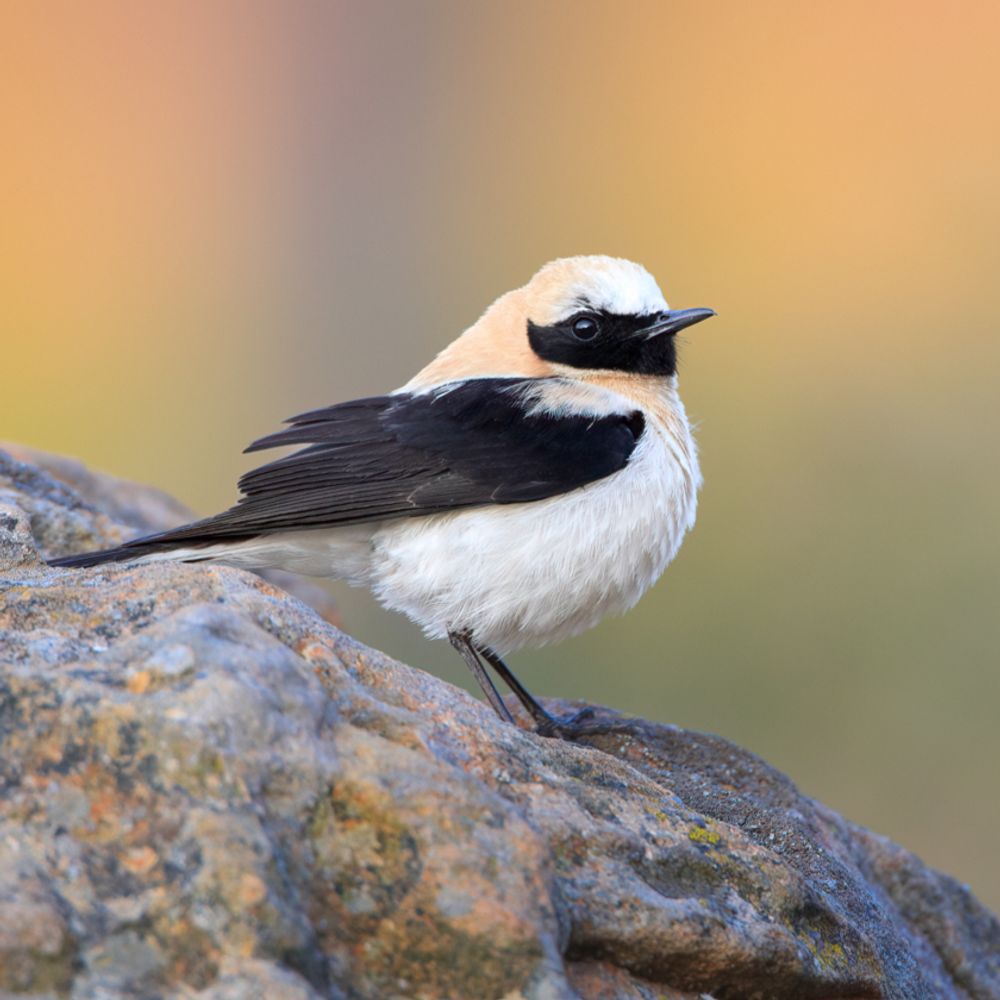
1/9 New in @science.org www.science.org/doi/10.1126/science.ado8005
How does genetic architecture constrain evolutionary trajectories? To address this question, we inferred the genetic architecture of convergent plumage coloration and its evolutionary history in wheatears.
How does genetic architecture constrain evolutionary trajectories? To address this question, we inferred the genetic architecture of convergent plumage coloration and its evolutionary history in wheatears.

A mosaic of modular variation at a single gene underpins convergent plumage coloration
The reshuffling of genomic variation from multiple origins is an important contributor to phenotypic diversification, yet insights into the evolutionary trajectories of this combinatorial process and ...
www.science.org
October 17, 2025 at 5:50 AM
1/9 New in @science.org www.science.org/doi/10.1126/science.ado8005
How does genetic architecture constrain evolutionary trajectories? To address this question, we inferred the genetic architecture of convergent plumage coloration and its evolutionary history in wheatears.
How does genetic architecture constrain evolutionary trajectories? To address this question, we inferred the genetic architecture of convergent plumage coloration and its evolutionary history in wheatears.
Reposted by Susan Johnston

PhD OPPORTUNITY! 🔬🔖
Still one more day to apply for our fully-funded PhD position in Norway!
Please share widely 🙏
Still one more day to apply for our fully-funded PhD position in Norway!
Please share widely 🙏
How do regulatory genes control alternative life histories? We have an open PhD position to answer this question using functional genomics in Atlantic salmon.
Apply by October 15th through www.jobbnorge.no/en/available...
Please share widely! 🧬🦑🖥️
Apply by October 15th through www.jobbnorge.no/en/available...
Please share widely! 🧬🦑🖥️

October 14, 2025 at 3:30 PM
PhD OPPORTUNITY! 🔬🔖
Still one more day to apply for our fully-funded PhD position in Norway!
Please share widely 🙏
Still one more day to apply for our fully-funded PhD position in Norway!
Please share widely 🙏
Reposted by Susan Johnston
Surprise 🤗 So many uncharacterized transcripts in Atlantic salmon, including super interesting long non-coding RNAs!
Proud to share the 1st publication of Xindi Huang:
link.springer.com/article/10.1...
With @fishcongen.bsky.social
🖥️🧬🦑
Proud to share the 1st publication of Xindi Huang:
link.springer.com/article/10.1...
With @fishcongen.bsky.social
🖥️🧬🦑

A comprehensive analysis of Atlantic salmon gonad and pituitary transcriptomes identifies novel players in sexual maturation - BMC Genomics
Sexual maturation is a key developmental process important for reproductive success. Understanding the molecular mechanisms behind variation in sexual maturation can provide insights into reproductive biology and how life history variation is encoded in the genome. Atlantic salmon (Salmo salar) has become an excellent sexual maturation research model due to its diversity of life history strategies and its ecological and economic importance. A major challenge has been the lack of a comprehensive transcriptional investigation of reproductive tissues that captures the dynamic transcriptional changes across individuals, tissues, and developmental stages. Long non-coding RNAs (lncRNAs) also play crucial roles in maturation, yet their functions in salmon maturation remain underexplored. In this study, we sequenced 98 transcriptomes and found substantial transcriptomic complexity in the gonad and pituitary tissues of Atlantic salmon. We identified transcripts corresponding to 2,364 putative newly characterized protein-coding genes and 4,421 putative long intergenic non-coding RNAs (lincRNAs), many with tissue-specific expression. Gene co-expression network analysis (WGCNA) revealed tissue-specific gene network modules, linked to GO terms including Wnt signaling in immature testis, lipid metabolism, and cilia assembly in mature testis, ribosome biogenesis and DNA repair in the ovary, and hormone activity in pituitary. We identified new copies of known genes, such as gh1, pou3f2, and ier5 associated with the regulation of gonadal and pituitary functions. Some lncRNAs and their nearest genes showed correlated expression within modules, suggesting potential regulatory roles. Candidate lincRNAs indicated cis-acting regulatory potential on genes like tnfrsf11b and fgl1, which are implicated in immune privilege during gonadal development and sperm quality control. Our study provides a comprehensive transcriptomic analysis of Atlantic salmon gonad and pituitary tissues, significantly improving the functional annotation of the Atlantic salmon genome. These findings reveal key regulatory pathways and novel molecular players involved in sexual maturation, particularly in the testis. Importantly, our study highlights the regulatory potential of lncRNAs in reproductive biology and maturation age variation, advancing our understanding of the molecular mechanisms governing sexual maturation. They further unlock future gene expression analyses and regulatory network reconstruction for dissecting the roles of lncRNAs in Atlantic salmon life history variation.
link.springer.com
September 26, 2025 at 1:52 PM
Surprise 🤗 So many uncharacterized transcripts in Atlantic salmon, including super interesting long non-coding RNAs!
Proud to share the 1st publication of Xindi Huang:
link.springer.com/article/10.1...
With @fishcongen.bsky.social
🖥️🧬🦑
Proud to share the 1st publication of Xindi Huang:
link.springer.com/article/10.1...
With @fishcongen.bsky.social
🖥️🧬🦑
Reposted by Susan Johnston
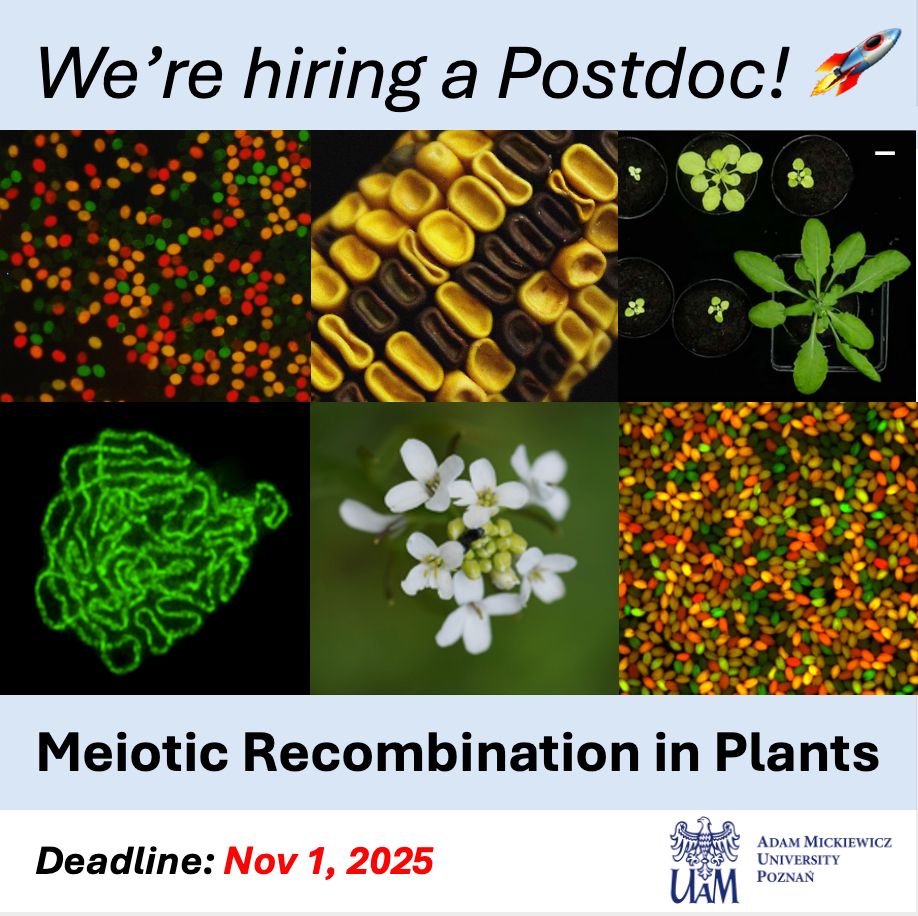
🚀 We’re hiring a Postdoc!
Join our group in Poznan, Poland to study meiotic crossover recombination in plants 🌱 Highly motivated & enthusiastic candidates are welcome!
📅 Deadline: Nov 1, 2025
🔗 ibmib.web.amu.edu.pl/wp-content/uploads/2025/09/Postdoc_position-2025-Ziolkowskis-Lab.pdf
Join our group in Poznan, Poland to study meiotic crossover recombination in plants 🌱 Highly motivated & enthusiastic candidates are welcome!
📅 Deadline: Nov 1, 2025
🔗 ibmib.web.amu.edu.pl/wp-content/uploads/2025/09/Postdoc_position-2025-Ziolkowskis-Lab.pdf
September 27, 2025 at 5:03 AM
🚀 We’re hiring a Postdoc!
Join our group in Poznan, Poland to study meiotic crossover recombination in plants 🌱 Highly motivated & enthusiastic candidates are welcome!
📅 Deadline: Nov 1, 2025
🔗 ibmib.web.amu.edu.pl/wp-content/uploads/2025/09/Postdoc_position-2025-Ziolkowskis-Lab.pdf
Join our group in Poznan, Poland to study meiotic crossover recombination in plants 🌱 Highly motivated & enthusiastic candidates are welcome!
📅 Deadline: Nov 1, 2025
🔗 ibmib.web.amu.edu.pl/wp-content/uploads/2025/09/Postdoc_position-2025-Ziolkowskis-Lab.pdf
Reposted by Susan Johnston

Now published in Cell! We found that ~15% of SNPs from divergent refs did not liftover as SNPs in the gray fox ref—half mapped to monomorphic sites, half failed to map. Co-authored with Matthew Genchev, @elliecat.bsky.social, and @jazlynmooney.bsky.social
www.sciencedirect.com/science/arti...
www.sciencedirect.com/science/arti...
September 22, 2025 at 5:41 PM
Now published in Cell! We found that ~15% of SNPs from divergent refs did not liftover as SNPs in the gray fox ref—half mapped to monomorphic sites, half failed to map. Co-authored with Matthew Genchev, @elliecat.bsky.social, and @jazlynmooney.bsky.social
www.sciencedirect.com/science/arti...
www.sciencedirect.com/science/arti...
Reposted by Susan Johnston

Interested in simulating the kind of data that you might commonly find in evolutionary and ecological studies?
Then we have the R package for you - squidSim!!
Check our new preprint:
ecoevorxiv.org/repository/v...
Then we have the R package for you - squidSim!!
Check our new preprint:
ecoevorxiv.org/repository/v...
squidSim: a flexible R package for structured and reproducible simulations in Ecology and Evolutionary Biology
ecoevorxiv.org
September 15, 2025 at 2:51 PM
Interested in simulating the kind of data that you might commonly find in evolutionary and ecological studies?
Then we have the R package for you - squidSim!!
Check our new preprint:
ecoevorxiv.org/repository/v...
Then we have the R package for you - squidSim!!
Check our new preprint:
ecoevorxiv.org/repository/v...
Reposted by Susan Johnston

Thrilled to share our Perspective published in 𝘕𝘢𝘵𝘶𝘳𝘦 𝘊𝘪𝘵𝘪𝘦𝘴: 𝗟𝗲𝗴𝗮𝗰𝘆 𝗲𝗳𝗳𝗲𝗰𝘁𝘀 𝗼𝗳 𝗿𝗲𝗹𝗶𝗴𝗶𝗼𝗻, #𝗽𝗼𝗹𝗶𝘁𝗶𝗰𝘀 𝗮𝗻𝗱 #𝘄𝗮𝗿 𝗼𝗻 #𝘂𝗿𝗯𝗮𝗻 𝗲𝘃𝗼𝗹𝘂𝘁𝗶𝗼𝗻𝗮𝗿𝘆 𝗯𝗶𝗼𝗹𝗼𝗴𝘆.
It also elevates Eastern European perspectives - underrepresented in #urban #evolution narratives.
www.nature.com/articles/s44...
It also elevates Eastern European perspectives - underrepresented in #urban #evolution narratives.
www.nature.com/articles/s44...

Legacy effects of religion, politics and war on urban evolutionary biology - Nature Cities
Cities affect biological evolution, but traditionally researchers focus on the biophysical influence of urban environments. Instead, this Review explores how the social processes of religion, politics...
www.nature.com
September 12, 2025 at 11:46 AM
Thrilled to share our Perspective published in 𝘕𝘢𝘵𝘶𝘳𝘦 𝘊𝘪𝘵𝘪𝘦𝘴: 𝗟𝗲𝗴𝗮𝗰𝘆 𝗲𝗳𝗳𝗲𝗰𝘁𝘀 𝗼𝗳 𝗿𝗲𝗹𝗶𝗴𝗶𝗼𝗻, #𝗽𝗼𝗹𝗶𝘁𝗶𝗰𝘀 𝗮𝗻𝗱 #𝘄𝗮𝗿 𝗼𝗻 #𝘂𝗿𝗯𝗮𝗻 𝗲𝘃𝗼𝗹𝘂𝘁𝗶𝗼𝗻𝗮𝗿𝘆 𝗯𝗶𝗼𝗹𝗼𝗴𝘆.
It also elevates Eastern European perspectives - underrepresented in #urban #evolution narratives.
www.nature.com/articles/s44...
It also elevates Eastern European perspectives - underrepresented in #urban #evolution narratives.
www.nature.com/articles/s44...
Reposted by Susan Johnston

Today's @ucuedinburgh.bsky.social rally to defend jobs and oppose cuts at Edinburgh university #SaveHE #NoCompulsoryRedundancies #StopTheCuts


September 8, 2025 at 2:35 PM
Today's @ucuedinburgh.bsky.social rally to defend jobs and oppose cuts at Edinburgh university #SaveHE #NoCompulsoryRedundancies #StopTheCuts
Reposted by Susan Johnston
🔖Last review from the lab👇
'Male meiosis at the helm: shaping genomes and sex chromosomes in emerging vertebrate models'
academic.oup.com/biolreprod/a...
'Male meiosis at the helm: shaping genomes and sex chromosomes in emerging vertebrate models'
academic.oup.com/biolreprod/a...

Male meiosis at the helm: shaping genomes and sex chromosomes in emerging vertebrate models†
Abstract. The generation of haploid gametes is a hallmark of sexual reproduction achieved through a complex, albeit tightly regulated, reductional cell div
academic.oup.com
September 7, 2025 at 10:19 AM
🔖Last review from the lab👇
'Male meiosis at the helm: shaping genomes and sex chromosomes in emerging vertebrate models'
academic.oup.com/biolreprod/a...
'Male meiosis at the helm: shaping genomes and sex chromosomes in emerging vertebrate models'
academic.oup.com/biolreprod/a...
Reposted by Susan Johnston

Size matters—but maybe not how we thought. Most chromosomal inversions are just a few hundred bp. Ignoring these “small players” could mean we’ve misunderstood how genomes evolve -out in TREE authors.elsevier.com/a/1ljL1cZ3X3...

September 5, 2025 at 9:11 AM
Size matters—but maybe not how we thought. Most chromosomal inversions are just a few hundred bp. Ignoring these “small players” could mean we’ve misunderstood how genomes evolve -out in TREE authors.elsevier.com/a/1ljL1cZ3X3...
Reposted by Susan Johnston

Why do males and females often differ in traits?
The expected answer: selection.
But our new paper in GENETICS shows that genetic drift alone can generate sexual dimorphism — even when male & female optima are the same
The expected answer: selection.
But our new paper in GENETICS shows that genetic drift alone can generate sexual dimorphism — even when male & female optima are the same
August 23, 2025 at 11:12 PM
Why do males and females often differ in traits?
The expected answer: selection.
But our new paper in GENETICS shows that genetic drift alone can generate sexual dimorphism — even when male & female optima are the same
The expected answer: selection.
But our new paper in GENETICS shows that genetic drift alone can generate sexual dimorphism — even when male & female optima are the same
Reposted by Susan Johnston

Pre-print now out on bioRxiv! If you saw my talk at #eseb and want more info, here it is:

Growth effects and the underlying genetic architecture of inbreeding depression in a wild raptor https://www.biorxiv.org/content/10.1101/2025.08.17.670740v1
August 25, 2025 at 7:42 AM
Pre-print now out on bioRxiv! If you saw my talk at #eseb and want more info, here it is:
Reposted by Susan Johnston

Unfortunately I cannot be at #ESEB2025, one of my favourite conferences, but the lab is well represented with @aleksandra-marconi.bsky.social presenting her work today on S29 @3.45pm on Transposable elements and nervous and sensory system diversification in cichlid fishes.
@eseb2025.bsky.social
@eseb2025.bsky.social

August 19, 2025 at 8:11 AM
Unfortunately I cannot be at #ESEB2025, one of my favourite conferences, but the lab is well represented with @aleksandra-marconi.bsky.social presenting her work today on S29 @3.45pm on Transposable elements and nervous and sensory system diversification in cichlid fishes.
@eseb2025.bsky.social
@eseb2025.bsky.social
I'm missing #eseb2025 but the lab is well-represented 🤩
📊 Kenneth Aase: genomic prediction of crossover rates (Mon S03)
🎤 Lisa Ammer: sex-differences in CO landscape (Thu 11.30am S28)
📊 Gina Henderson: (no) selection on immunity (Thu S48)
📊 Marie Raynaud: recombination hotspot variation (Thu S02)
📊 Kenneth Aase: genomic prediction of crossover rates (Mon S03)
🎤 Lisa Ammer: sex-differences in CO landscape (Thu 11.30am S28)
📊 Gina Henderson: (no) selection on immunity (Thu S48)
📊 Marie Raynaud: recombination hotspot variation (Thu S02)
August 18, 2025 at 1:45 PM
I'm missing #eseb2025 but the lab is well-represented 🤩
📊 Kenneth Aase: genomic prediction of crossover rates (Mon S03)
🎤 Lisa Ammer: sex-differences in CO landscape (Thu 11.30am S28)
📊 Gina Henderson: (no) selection on immunity (Thu S48)
📊 Marie Raynaud: recombination hotspot variation (Thu S02)
📊 Kenneth Aase: genomic prediction of crossover rates (Mon S03)
🎤 Lisa Ammer: sex-differences in CO landscape (Thu 11.30am S28)
📊 Gina Henderson: (no) selection on immunity (Thu S48)
📊 Marie Raynaud: recombination hotspot variation (Thu S02)
Reposted by Susan Johnston
🚨Introducing the @sortee.bsky.social Guidelines for Data and Code Quality Control in Ecology and Evolutionary Biology🚨 doi.org/10.32942/X24...
Increasingly E&E journals are recruiting data editors. We provide standardised guidelines for journals with data editors and those wanting to recruit them 🧵
Increasingly E&E journals are recruiting data editors. We provide standardised guidelines for journals with data editors and those wanting to recruit them 🧵
The SORTEE Guidelines for Data and Code Quality Control in Ecology and Evolutionary Biology
doi.org
August 15, 2025 at 12:57 PM
🚨Introducing the @sortee.bsky.social Guidelines for Data and Code Quality Control in Ecology and Evolutionary Biology🚨 doi.org/10.32942/X24...
Increasingly E&E journals are recruiting data editors. We provide standardised guidelines for journals with data editors and those wanting to recruit them 🧵
Increasingly E&E journals are recruiting data editors. We provide standardised guidelines for journals with data editors and those wanting to recruit them 🧵
Reposted by Susan Johnston

Folks going to #ESEB2025 : To help people connect on Bluesky, I've started making starter packs. Here is a first one with the names that were available when I started.
Ping me if you want to be included in the next one!
Ping me if you want to be included in the next one!
August 14, 2025 at 1:54 PM
Folks going to #ESEB2025 : To help people connect on Bluesky, I've started making starter packs. Here is a first one with the names that were available when I started.
Ping me if you want to be included in the next one!
Ping me if you want to be included in the next one!