



@xiuqichen.bsky.social
Postdoctoral researcher at TU Delft.
Trying to sequence proteins with #nanopore
Trying to sequence proteins with #nanopore
Reposted

This is who runs this account

February 4, 2026 at 5:12 PM
This is who runs this account
Reposted

pdb101.rcsb.org/motm/314 histones outside of the eukaryotic domain are the 'molecule of the month'! nice!

PDB101: Molecule of the Month: Histones Across the Tree of Life
Uncovering the evolutionary diversity of histones
pdb101.rcsb.org
February 3, 2026 at 7:14 AM
pdb101.rcsb.org/motm/314 histones outside of the eukaryotic domain are the 'molecule of the month'! nice!
Reposted
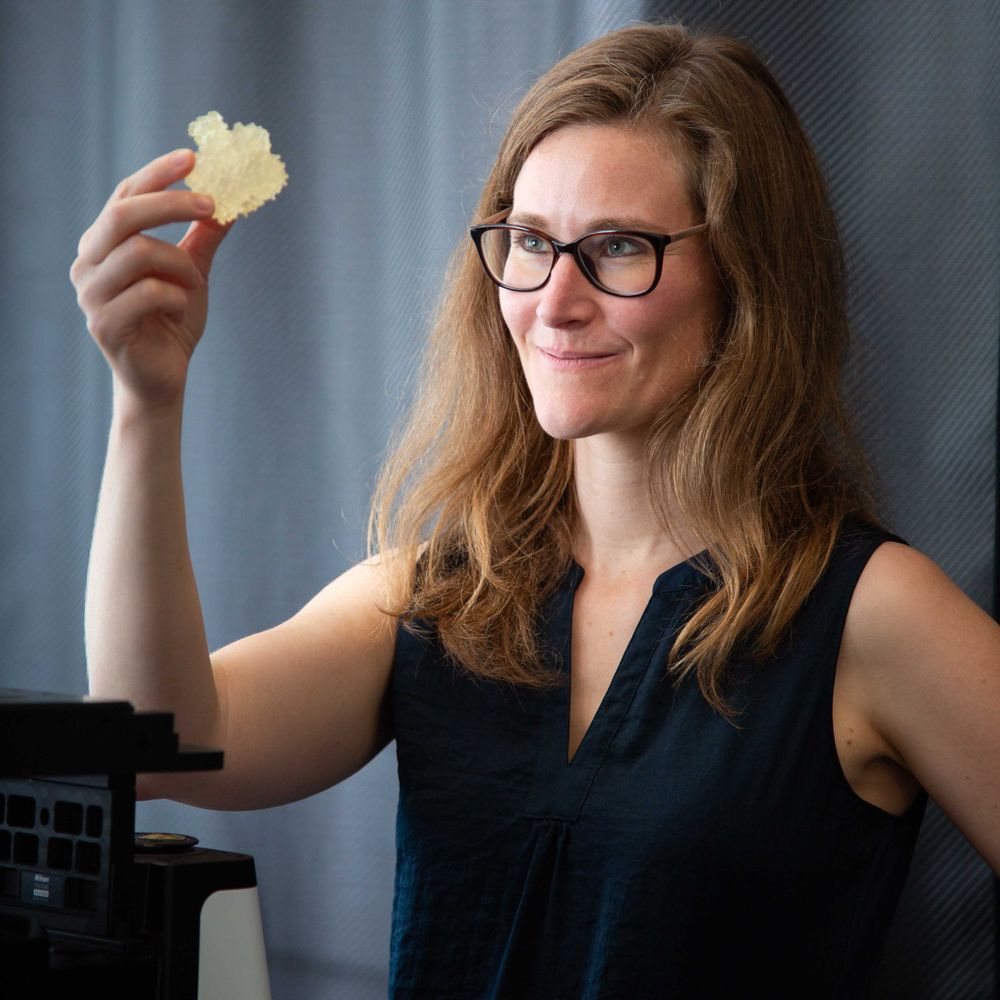
WE ARE #HIRING: [reposting=👌 🙏 ]
2 funded positions for #nanopore related projects @unibas.ch 🇨🇭:
1️⃣ #PhD Candidate in Single-Molecule Biophysics using Nanopore Trapping.
2️⃣ #PhD Candidate in Microplastic Detection Using Micropores and Microfluidics.
More info: schmid.chemie.unibas.ch/en/join-us-1/
2 funded positions for #nanopore related projects @unibas.ch 🇨🇭:
1️⃣ #PhD Candidate in Single-Molecule Biophysics using Nanopore Trapping.
2️⃣ #PhD Candidate in Microplastic Detection Using Micropores and Microfluidics.
More info: schmid.chemie.unibas.ch/en/join-us-1/


January 23, 2026 at 7:23 PM
WE ARE #HIRING: [reposting=👌 🙏 ]
2 funded positions for #nanopore related projects @unibas.ch 🇨🇭:
1️⃣ #PhD Candidate in Single-Molecule Biophysics using Nanopore Trapping.
2️⃣ #PhD Candidate in Microplastic Detection Using Micropores and Microfluidics.
More info: schmid.chemie.unibas.ch/en/join-us-1/
2 funded positions for #nanopore related projects @unibas.ch 🇨🇭:
1️⃣ #PhD Candidate in Single-Molecule Biophysics using Nanopore Trapping.
2️⃣ #PhD Candidate in Microplastic Detection Using Micropores and Microfluidics.
More info: schmid.chemie.unibas.ch/en/join-us-1/
Reposted

Our latest cotranslational folding story is now published @cp-molcell.bsky.social. Really cool (I think) new ideas about how exactly the ribosome directs folding and assembly to make sure complicated proteins mature efficiently in cells.
www.cell.com/molecular-ce...
www.cell.com/molecular-ce...

The ribosome synchronizes folding and assembly to promote oligomeric protein biogenesis
Large oligomeric proteins constitute a major fraction of proteomes, but are difficult
to refold in vitro, raising the question of how cells direct their biogenesis. Roeselová
and Shivakumaraswamy et a...
www.cell.com
January 19, 2026 at 5:14 PM
Our latest cotranslational folding story is now published @cp-molcell.bsky.social. Really cool (I think) new ideas about how exactly the ribosome directs folding and assembly to make sure complicated proteins mature efficiently in cells.
www.cell.com/molecular-ce...
www.cell.com/molecular-ce...
Perceptions can be often misleading

✍️ New article: "How have crime rates in the United States changed over the last 50 years?"
Crime is clearly a concern for many people. Nearly 60% of Americans, for example, say that reducing crime should be a top priority for the US president and Congress.
Crime is clearly a concern for many people. Nearly 60% of Americans, for example, say that reducing crime should be a top priority for the US president and Congress.

January 19, 2026 at 4:38 PM
Perceptions can be often misleading
Reposted

Latest #CDlab paper on nanopore protein sequencing now published in JACS: pubs.acs.org/doi/full/10....
Here, Justas Ritmejeris, Xiuqi Chen, collaborator Bauke Albada, and me developed a conjugation chemistry strategy for nanopore sequencing of natural peptides!
Here, Justas Ritmejeris, Xiuqi Chen, collaborator Bauke Albada, and me developed a conjugation chemistry strategy for nanopore sequencing of natural peptides!


January 9, 2026 at 8:53 AM
Latest #CDlab paper on nanopore protein sequencing now published in JACS: pubs.acs.org/doi/full/10....
Here, Justas Ritmejeris, Xiuqi Chen, collaborator Bauke Albada, and me developed a conjugation chemistry strategy for nanopore sequencing of natural peptides!
Here, Justas Ritmejeris, Xiuqi Chen, collaborator Bauke Albada, and me developed a conjugation chemistry strategy for nanopore sequencing of natural peptides!
Reposted
Can we design mutations that bias proteins towards desired conformational states?
Today in @science.org, we introduce Conformational Biasing (CB), a simple and scalable computational method that uses contrastive scoring by inverse folding models to identify conformation-biasing mutations.
Today in @science.org, we introduce Conformational Biasing (CB), a simple and scalable computational method that uses contrastive scoring by inverse folding models to identify conformation-biasing mutations.

Computational design of conformation-biasing mutations to alter protein functions
Conformational biasing (CB) is a rapid and streamlined computational method that uses contrastive scoring by inverse folding models to predict protein variants biased toward desired conformational sta...
www.science.org
January 8, 2026 at 7:08 PM
Can we design mutations that bias proteins towards desired conformational states?
Today in @science.org, we introduce Conformational Biasing (CB), a simple and scalable computational method that uses contrastive scoring by inverse folding models to identify conformation-biasing mutations.
Today in @science.org, we introduce Conformational Biasing (CB), a simple and scalable computational method that uses contrastive scoring by inverse folding models to identify conformation-biasing mutations.
Reposted

Giving the gift of negative data 🥰
Since I joined @lsajournal.org I have handled several stellar manuscripts that report null results. These papers do very well and reviewers almost always appreciate them!
Thanks @rockefeller.edu news team for the article!
www.rockefeller.edu/news/38829-t...
Since I joined @lsajournal.org I have handled several stellar manuscripts that report null results. These papers do very well and reviewers almost always appreciate them!
Thanks @rockefeller.edu news team for the article!
www.rockefeller.edu/news/38829-t...

The value of publishing negative data - News
Scientific journals love news-worthy results. Editors want to publish studies with novel data that scientists will eagerly read and cite in their own work. Because of this desire for novelty, studies ...
www.rockefeller.edu
December 23, 2025 at 1:26 PM
Giving the gift of negative data 🥰
Since I joined @lsajournal.org I have handled several stellar manuscripts that report null results. These papers do very well and reviewers almost always appreciate them!
Thanks @rockefeller.edu news team for the article!
www.rockefeller.edu/news/38829-t...
Since I joined @lsajournal.org I have handled several stellar manuscripts that report null results. These papers do very well and reviewers almost always appreciate them!
Thanks @rockefeller.edu news team for the article!
www.rockefeller.edu/news/38829-t...
Each Friday, we’re sharing highlights from our Top of the Charts, a look back at our most popular charts, articles, and more in 2025.
Today we give you our top 5 most-popular social media posts. 🧵
1. Does the news reflect what we die from? (Instagram)
→ www.instagram.com/p/DQY7zhcAgoW
Today we give you our top 5 most-popular social media posts. 🧵
1. Does the news reflect what we die from? (Instagram)
→ www.instagram.com/p/DQY7zhcAgoW

January 3, 2026 at 5:52 AM
Quite unhinged format 🤯

Wow this is a seriously serious supplementary figure from @cellpress.bsky.social today. Panels A through UU.
I get that Cell likes to minimize the number of supplementary figures. But is this really what is happening here?
www.cell.com/cell/fulltex...
I get that Cell likes to minimize the number of supplementary figures. But is this really what is happening here?
www.cell.com/cell/fulltex...

December 18, 2025 at 1:59 PM
Quite unhinged format 🤯
Reposted

A major output of the 4D Nucleome project appeared today. This is the joint effort of many scientists working together and (publicly) sharing data and results for several years. We hope this is of interest to many genome biologists!
www.nature.com/articles/s41...
www.nature.com/articles/s41...

An integrated view of the structure and function of the human 4D nucleome - Nature
The 4D Nucleome Project demonstrates the use of genomic assays and computational methods to measure genome folding and then predict genomic structure from DNA sequence, facilitatin...
www.nature.com
December 17, 2025 at 8:59 PM
A major output of the 4D Nucleome project appeared today. This is the joint effort of many scientists working together and (publicly) sharing data and results for several years. We hope this is of interest to many genome biologists!
www.nature.com/articles/s41...
www.nature.com/articles/s41...
Reposted
Confused by all the histones that are cropping up in organisms that are decidedly NOT eukaryotes? check out our review - fantastic work by team NucEvo in the #Lugerlab
The Expanding Histone Universe: Histone-Based DNA Organization in Noneukaryotic Organisms - www.annualreviews.org/content/jour...
The Expanding Histone Universe: Histone-Based DNA Organization in Noneukaryotic Organisms - www.annualreviews.org/content/jour...

December 9, 2025 at 3:14 PM
Confused by all the histones that are cropping up in organisms that are decidedly NOT eukaryotes? check out our review - fantastic work by team NucEvo in the #Lugerlab
The Expanding Histone Universe: Histone-Based DNA Organization in Noneukaryotic Organisms - www.annualreviews.org/content/jour...
The Expanding Histone Universe: Histone-Based DNA Organization in Noneukaryotic Organisms - www.annualreviews.org/content/jour...
Reposted
Latest #CDlab paper on nanopore protein sequencing on @biorxivpreprint.bsky.social: www.biorxiv.org/cgi/content/...
Here, Justas Ritmejeris, @xiuqichen.bsky.social, collaborator @albadalab.bsky.social and me developed a conjugation chemistry strategy for nanopore sequencing of natural peptides!
Here, Justas Ritmejeris, @xiuqichen.bsky.social, collaborator @albadalab.bsky.social and me developed a conjugation chemistry strategy for nanopore sequencing of natural peptides!


November 13, 2025 at 7:16 PM
Latest #CDlab paper on nanopore protein sequencing on @biorxivpreprint.bsky.social: www.biorxiv.org/cgi/content/...
Here, Justas Ritmejeris, @xiuqichen.bsky.social, collaborator @albadalab.bsky.social and me developed a conjugation chemistry strategy for nanopore sequencing of natural peptides!
Here, Justas Ritmejeris, @xiuqichen.bsky.social, collaborator @albadalab.bsky.social and me developed a conjugation chemistry strategy for nanopore sequencing of natural peptides!
Reposted
I recently wrote a 1page "Highlight" article for the Swiss Journal @chimiajournal.bsky.social about the #single-molecule perspective on biomolecular dynamics and experiments:
Beyond 3D Structures: New Ways to Study Biomolecular Gymnastics
www.chimia.ch/chimia/artic...
Beyond 3D Structures: New Ways to Study Biomolecular Gymnastics
www.chimia.ch/chimia/artic...

November 10, 2025 at 5:13 PM
I recently wrote a 1page "Highlight" article for the Swiss Journal @chimiajournal.bsky.social about the #single-molecule perspective on biomolecular dynamics and experiments:
Beyond 3D Structures: New Ways to Study Biomolecular Gymnastics
www.chimia.ch/chimia/artic...
Beyond 3D Structures: New Ways to Study Biomolecular Gymnastics
www.chimia.ch/chimia/artic...
Reposted

#paperalert
Very happy to share our new paper in Chemical Science @chemicalscience.rsc.org
Great work by Yuri Damen (now at BioChem in Oss), @joresfu.bsky.social, Judith Firet, and Han Zuilhof @w-u-r.bsky.social
Especially for those of you who use strained alkynes in their click reactions!
Very happy to share our new paper in Chemical Science @chemicalscience.rsc.org
Great work by Yuri Damen (now at BioChem in Oss), @joresfu.bsky.social, Judith Firet, and Han Zuilhof @w-u-r.bsky.social
Especially for those of you who use strained alkynes in their click reactions!

Temperature–dependent reaction rates of quinone-alkene cycloaddition reveal that only entropy determines the rate of SPOCQ reactions
Second-order rate constants and thermodynamic activation parameters for the strain-promoted oxidation-controlled quinone (SPOCQ) click reaction of an ortho-quinone with various trans-cyclooctene and c...
pubs.rsc.org
November 10, 2025 at 12:19 PM
#paperalert
Very happy to share our new paper in Chemical Science @chemicalscience.rsc.org
Great work by Yuri Damen (now at BioChem in Oss), @joresfu.bsky.social, Judith Firet, and Han Zuilhof @w-u-r.bsky.social
Especially for those of you who use strained alkynes in their click reactions!
Very happy to share our new paper in Chemical Science @chemicalscience.rsc.org
Great work by Yuri Damen (now at BioChem in Oss), @joresfu.bsky.social, Judith Firet, and Han Zuilhof @w-u-r.bsky.social
Especially for those of you who use strained alkynes in their click reactions!
Reposted
I am thrilled with the news that our ERC Synergy proposal GeneMotors was granted!!
This prestigious grant allows Leonid Mirny (MIT), Wendy Bickmore (Edinburgh), Benjamin Rowland (NKI) and me to study the DNA-looping SMC motors proteins that control our chromosomes in the next 6 years
This prestigious grant allows Leonid Mirny (MIT), Wendy Bickmore (Edinburgh), Benjamin Rowland (NKI) and me to study the DNA-looping SMC motors proteins that control our chromosomes in the next 6 years

📣 Meet the new ERC Synergy Grant awardees!
Sixty-six research teams have been selected for funding, bringing together 239 scientists. Congratulations to all!
➡️ buff.ly/PSn3bi9
#EUfunded #HorizonEurope #ERCSyG
Sixty-six research teams have been selected for funding, bringing together 239 scientists. Congratulations to all!
➡️ buff.ly/PSn3bi9
#EUfunded #HorizonEurope #ERCSyG
November 6, 2025 at 11:57 AM
I am thrilled with the news that our ERC Synergy proposal GeneMotors was granted!!
This prestigious grant allows Leonid Mirny (MIT), Wendy Bickmore (Edinburgh), Benjamin Rowland (NKI) and me to study the DNA-looping SMC motors proteins that control our chromosomes in the next 6 years
This prestigious grant allows Leonid Mirny (MIT), Wendy Bickmore (Edinburgh), Benjamin Rowland (NKI) and me to study the DNA-looping SMC motors proteins that control our chromosomes in the next 6 years
Reposted
Lab’s first paper is out!! We show the first structures of #Asgard #chromatin by #cryo-EM 🧬❄️
Asgard histones form closed and open hypernucleosomes. Closed are conserved across #Archaea, while open resemble eukaryotic H3–H4 octasomes and are Asgard-specific. More here: www.cell.com/molecular-ce...
Asgard histones form closed and open hypernucleosomes. Closed are conserved across #Archaea, while open resemble eukaryotic H3–H4 octasomes and are Asgard-specific. More here: www.cell.com/molecular-ce...

October 28, 2025 at 3:07 PM
Lab’s first paper is out!! We show the first structures of #Asgard #chromatin by #cryo-EM 🧬❄️
Asgard histones form closed and open hypernucleosomes. Closed are conserved across #Archaea, while open resemble eukaryotic H3–H4 octasomes and are Asgard-specific. More here: www.cell.com/molecular-ce...
Asgard histones form closed and open hypernucleosomes. Closed are conserved across #Archaea, while open resemble eukaryotic H3–H4 octasomes and are Asgard-specific. More here: www.cell.com/molecular-ce...
🤯

Talk about an in-flight meal.
For the first time, researchers have captured rats hunting bats by grabbing them from the sky. Learn more: https://scim.ag/3Jqldmn
For the first time, researchers have captured rats hunting bats by grabbing them from the sky. Learn more: https://scim.ag/3Jqldmn
October 28, 2025 at 12:15 PM
🤯
Results from Nature’s 2025 global survey of more than 3,700 doctoral students:
Supervisors who make a conscious effort to support and mentor their PhD candidates have more-satisfied students
www.nature.com/articles/d41...
Supervisors who make a conscious effort to support and mentor their PhD candidates have more-satisfied students
www.nature.com/articles/d41...

What makes PhD students happy? Good supervision
Supervisors who invest in positive mentoring relationships with their PhD candidates also reap the benefits for their own research.
www.nature.com
October 27, 2025 at 12:53 PM
Results from Nature’s 2025 global survey of more than 3,700 doctoral students:
Supervisors who make a conscious effort to support and mentor their PhD candidates have more-satisfied students
www.nature.com/articles/d41...
Supervisors who make a conscious effort to support and mentor their PhD candidates have more-satisfied students
www.nature.com/articles/d41...
Reposted

Check out our paper from @christ3na.bsky.social in G+D. DIO3, which degrades thyroid hormone/TH, is expressed in progenitors and turns off in neurons. As the progenitor:neuron ratio decreases, DIO3 decreases and TH increases, triggering photoreceptor generation.
genesdev.cshlp.org/content/earl...
genesdev.cshlp.org/content/earl...
DIO3 coordinates photoreceptor development timing and fate stability in human retinal organoids
A biweekly scientific journal publishing high-quality research in molecular biology and genetics, cancer biology, biochemistry, and related fields
genesdev.cshlp.org
October 21, 2025 at 1:10 PM
Check out our paper from @christ3na.bsky.social in G+D. DIO3, which degrades thyroid hormone/TH, is expressed in progenitors and turns off in neurons. As the progenitor:neuron ratio decreases, DIO3 decreases and TH increases, triggering photoreceptor generation.
genesdev.cshlp.org/content/earl...
genesdev.cshlp.org/content/earl...
Reposted
How do SMC complexes load onto DNA to get ready for loop extrusion?
@roisnehamelinf.bsky.social & co discovered that Wadjet, an SMC complex involved in bacterial DNA immunity, performs some impressive molecular gymnastics 🤸♂️🤸♂️🤸♂️.
Check out the new paper: www.cell.com/molecular-ce...
@roisnehamelinf.bsky.social & co discovered that Wadjet, an SMC complex involved in bacterial DNA immunity, performs some impressive molecular gymnastics 🤸♂️🤸♂️🤸♂️.
Check out the new paper: www.cell.com/molecular-ce...

October 9, 2025 at 2:43 PM
How do SMC complexes load onto DNA to get ready for loop extrusion?
@roisnehamelinf.bsky.social & co discovered that Wadjet, an SMC complex involved in bacterial DNA immunity, performs some impressive molecular gymnastics 🤸♂️🤸♂️🤸♂️.
Check out the new paper: www.cell.com/molecular-ce...
@roisnehamelinf.bsky.social & co discovered that Wadjet, an SMC complex involved in bacterial DNA immunity, performs some impressive molecular gymnastics 🤸♂️🤸♂️🤸♂️.
Check out the new paper: www.cell.com/molecular-ce...
Reposted

Next week GIIN webinar will feature @fmattiroli.bsky.social and Marco Tigano. Join us on Tuesday, October 7th at 5 PM Rome / 11 AM NYC via zoom: uniroma1.zoom.us/j/95149984403
Register here to become part of our community: docs.google.com/forms/d/e/1F...
Register here to become part of our community: docs.google.com/forms/d/e/1F...

September 30, 2025 at 5:24 PM
Next week GIIN webinar will feature @fmattiroli.bsky.social and Marco Tigano. Join us on Tuesday, October 7th at 5 PM Rome / 11 AM NYC via zoom: uniroma1.zoom.us/j/95149984403
Register here to become part of our community: docs.google.com/forms/d/e/1F...
Register here to become part of our community: docs.google.com/forms/d/e/1F...
Reposted

Join us at the Hubrecht Institute in Utrecht to start your research group! Fantastic scientific environment, strong support, and nice colleagues :) Apply and please share broadly in your network.

Ready to establish your own research group at the Hubrecht Institute for Molecular and Developmental Biology? We’re seeking a tenure-track group leader to develop an innovative research line within our vibrant scientific community. Learn more & apply! https://f.mtr.cool/jncxfqkuds


September 28, 2025 at 9:43 AM
Join us at the Hubrecht Institute in Utrecht to start your research group! Fantastic scientific environment, strong support, and nice colleagues :) Apply and please share broadly in your network.
Reposted
Now published! Phosphorylation patterns modulate transient secondary structures of the intrinsically disordered CTD of RNA polymerase II www.sciencedirect.com/science/arti...

Phosphorylation modulates secondary structure of intrinsically disorder regions in RNA polymerase II
The intrinsically disordered C-terminal domain (CTD) of RNA polymerase II contains tandem repeats with the consensus sequence YSPTSPS and coordinates …
www.sciencedirect.com
May 27, 2025 at 4:16 PM
Now published! Phosphorylation patterns modulate transient secondary structures of the intrinsically disordered CTD of RNA polymerase II www.sciencedirect.com/science/arti...
Reposted

ICYMI: New online: The human ribosome modulates multidomain protein biogenesis by delaying cotranslational domain docking

The human ribosome modulates multidomain protein biogenesis by delaying cotranslational domain docking
Nature Structural & Molecular Biology, Published online: 19 September 2025; doi:10.1038/s41594-025-01676-5By studying dynamic folding intermediates on the human ribosome, Pellowe et al. show that newly made domains help each other to fold but do not stably interact until synthesis is complete, avoiding interdomain misfolding.
go.nature.com
September 20, 2025 at 10:13 AM
ICYMI: New online: The human ribosome modulates multidomain protein biogenesis by delaying cotranslational domain docking