



Tue Sparholt Jørgensen
@tuesparholt.bsky.social
Pinned

Bacterial telomeres are common, just not so much in RefSeq 'complete' genomes. But they can be added by the new tool David Faurdal wrote. I am thrilled to see this out as a preprint here: www.biorxiv.org/content/10.1... @tilmweber.bsky.social @thombooth.bsky.social
Reposted by Tue Sparholt Jørgensen

Research into filamentous actinomycetes, the antibiotic producers, is in steep decline. Loads of natural products chemistry research worldwide but not much aimed at understanding their biology and ecology. The latter is key to unlocking their specialised metabolism
link.springer.com/article/10.1...
link.springer.com/article/10.1...

Revitalizing actinobacteria research: an urgent response to the antimicrobial resistance crisis - Natural Products and Bioprospecting
Abstract The crisis of antimicrobial resistance (AMR) is escalating while the antibiotic pipeline remains stagnant. Our bibliometric analysis of eight decades of literature reveals a critical imbalanc...
link.springer.com
February 16, 2026 at 1:32 PM
Research into filamentous actinomycetes, the antibiotic producers, is in steep decline. Loads of natural products chemistry research worldwide but not much aimed at understanding their biology and ecology. The latter is key to unlocking their specialised metabolism
link.springer.com/article/10.1...
link.springer.com/article/10.1...
Reposted by Tue Sparholt Jørgensen

Another example of a custom-made 3D-printed 96-well magnet bead purification device, triggered by a "pipette eject" event on the OpenTrons.
Essentially, if the OpenTrons is thought as a flexible pipetter, then @plasmidsaurus.bsky.social turn pipette events into other MolBio tasks.
Essentially, if the OpenTrons is thought as a flexible pipetter, then @plasmidsaurus.bsky.social turn pipette events into other MolBio tasks.

February 13, 2026 at 7:57 AM
Another example of a custom-made 3D-printed 96-well magnet bead purification device, triggered by a "pipette eject" event on the OpenTrons.
Essentially, if the OpenTrons is thought as a flexible pipetter, then @plasmidsaurus.bsky.social turn pipette events into other MolBio tasks.
Essentially, if the OpenTrons is thought as a flexible pipetter, then @plasmidsaurus.bsky.social turn pipette events into other MolBio tasks.
Reposted by Tue Sparholt Jørgensen
Another interesting use of 3D printed plastic adapters, in this case to turn the OpenTrons bays into racks of Oxford @nanoporetech.com PromethION flowcells.

February 13, 2026 at 7:57 AM
Another interesting use of 3D printed plastic adapters, in this case to turn the OpenTrons bays into racks of Oxford @nanoporetech.com PromethION flowcells.
Reposted by Tue Sparholt Jørgensen

Time for a thread on our Christmas preprint “Origin and evolution of acrocentric chromosomes in human and great apes”. I had so much fun with this project and paper. It will be hard to summarize in a thread, but I’ll try www.biorxiv.org/content/10.6... [1/21]

February 2, 2026 at 2:58 PM
Time for a thread on our Christmas preprint “Origin and evolution of acrocentric chromosomes in human and great apes”. I had so much fun with this project and paper. It will be hard to summarize in a thread, but I’ll try www.biorxiv.org/content/10.6... [1/21]
Reposted by Tue Sparholt Jørgensen

🦠🧬🖥️ Bakta v1.12.0 is out
with tons of tiny improvements and bug fixes, too many to list all:
- partial genes on linear seqs
- improved errror handlings & runtimes
- support Python 3.12 & 3.13
- ...
A huge shout out and thank you to all bug reporters and contributors!
github.com/oschwengers/...
with tons of tiny improvements and bug fixes, too many to list all:
- partial genes on linear seqs
- improved errror handlings & runtimes
- support Python 3.12 & 3.13
- ...
A huge shout out and thank you to all bug reporters and contributors!
github.com/oschwengers/...

Release v1.12 - Just do it, but don't crash · oschwengers/bakta
This is the twelfth minor release (v1.12) providing more than 10 minor improvements and many bug fixes improving runtime stability, IO compatibility, and last but not least user experience.
Compati...
github.com
February 2, 2026 at 8:05 AM
🦠🧬🖥️ Bakta v1.12.0 is out
with tons of tiny improvements and bug fixes, too many to list all:
- partial genes on linear seqs
- improved errror handlings & runtimes
- support Python 3.12 & 3.13
- ...
A huge shout out and thank you to all bug reporters and contributors!
github.com/oschwengers/...
with tons of tiny improvements and bug fixes, too many to list all:
- partial genes on linear seqs
- improved errror handlings & runtimes
- support Python 3.12 & 3.13
- ...
A huge shout out and thank you to all bug reporters and contributors!
github.com/oschwengers/...
Reposted by Tue Sparholt Jørgensen

First fully phased reference genome for the Yarrowia liploytica type-strain is out! academic.oup.com/jimb/advance... Super fun project in collaboration with James Crill at Syracuse University as well. Important platform organism for industrial microbiology and biomanufacturing as well. #genomics

Complete Diploid Genome of the Type Strain Yarrowia lipolytica YB-423 (ATCC 18942™)
Abstract. Here, we present the first complete, fully phased diploid genome of type strain Yarrowia lipolytica YB-423 (=ATCC 18942™), constructed using a co
academic.oup.com
January 27, 2026 at 5:22 PM
First fully phased reference genome for the Yarrowia liploytica type-strain is out! academic.oup.com/jimb/advance... Super fun project in collaboration with James Crill at Syracuse University as well. Important platform organism for industrial microbiology and biomanufacturing as well. #genomics
Reposted by Tue Sparholt Jørgensen
New tool from @alexsweeten.bsky.social to find and classify all your satellites: "AniAnn's: alignment-free annotation of tandem repeat arrays using fast average nucleotide identity estimates"
📄 www.biorxiv.org/content/10.6...
📦 github.com/marbl/anianns
📄 www.biorxiv.org/content/10.6...
📦 github.com/marbl/anianns

January 29, 2026 at 1:05 PM
New tool from @alexsweeten.bsky.social to find and classify all your satellites: "AniAnn's: alignment-free annotation of tandem repeat arrays using fast average nucleotide identity estimates"
📄 www.biorxiv.org/content/10.6...
📦 github.com/marbl/anianns
📄 www.biorxiv.org/content/10.6...
📦 github.com/marbl/anianns
Reposted by Tue Sparholt Jørgensen

Exploring #microbiome data? MetaTree makes statistically based hierarchical tree comparisons easy and accessible.

January 28, 2026 at 6:54 AM
Exploring #microbiome data? MetaTree makes statistically based hierarchical tree comparisons easy and accessible.
My understanding of MDPI as the biggest polluter of science gets some quantitative basis in this cool study. How about we as researchers stop publishing there and stop reading it leaving the special issues with another issue: absence of honest science.

For anyone interested, thread here 🙂
bsky.app/profile/hans...
bsky.app/profile/hans...
We've got ISSUES. Literally.
We scraped >100k special issues & over 1 million articles to bring you a PISS-poor paper. We quantify just how many excess papers are published by guest editors abusing special issues to boost their CVs. How bad is it & what can we do?
arxiv.org/abs/2601.07563
A 🧵 1/n
We scraped >100k special issues & over 1 million articles to bring you a PISS-poor paper. We quantify just how many excess papers are published by guest editors abusing special issues to boost their CVs. How bad is it & what can we do?
arxiv.org/abs/2601.07563
A 🧵 1/n
January 26, 2026 at 11:54 AM
My understanding of MDPI as the biggest polluter of science gets some quantitative basis in this cool study. How about we as researchers stop publishing there and stop reading it leaving the special issues with another issue: absence of honest science.
Reposted by Tue Sparholt Jørgensen

Reposted by Tue Sparholt Jørgensen

New blog post with some thoughts on @nanoporetech.com and their recent announcement that the P2 Solo will be discontinued:
rrwick.github.io/2026/01/21/p...
rrwick.github.io/2026/01/21/p...
P2 Solo announcement and the trade-offs of a more stable ONT
a blog for miscellaneous bioinformatics stuff
rrwick.github.io
January 21, 2026 at 3:38 AM
New blog post with some thoughts on @nanoporetech.com and their recent announcement that the P2 Solo will be discontinued:
rrwick.github.io/2026/01/21/p...
rrwick.github.io/2026/01/21/p...
Reposted by Tue Sparholt Jørgensen

Ultra-high-throughput mapping of genetic design space www.nature.com/articles/s41... (read free: rdcu.be/eY6E2) 🧬🖥️🧪 github.com/cbashorlab/C...

January 15, 2026 at 5:03 PM
Ultra-high-throughput mapping of genetic design space www.nature.com/articles/s41... (read free: rdcu.be/eY6E2) 🧬🖥️🧪 github.com/cbashorlab/C...
Unpacking my stuff in my new @ssi-dk.bsky.social office, I came across this post which resonated enough that I printed it out and hung it up on my wall. It's going back up now. I think from @danpsimpson.bsky.social ?

January 15, 2026 at 9:50 AM
Unpacking my stuff in my new @ssi-dk.bsky.social office, I came across this post which resonated enough that I printed it out and hung it up on my wall. It's going back up now. I think from @danpsimpson.bsky.social ?
Reposted by Tue Sparholt Jørgensen

Been doing a lot of @nanoporetech.com sequencing for soil and sediment lately and it appears that no matter how much DNA or how little we still get decent yields. So pretty robust performance. Yield clearly depends on pore count.


January 13, 2026 at 2:40 PM
Been doing a lot of @nanoporetech.com sequencing for soil and sediment lately and it appears that no matter how much DNA or how little we still get decent yields. So pretty robust performance. Yield clearly depends on pore count.
Reposted by Tue Sparholt Jørgensen

Bacteria chromosomes contain Genomic Islands that provide virulence, antibiotic resistance, MGE-defence,... They transfer between cells, but the mechanism of most remains elusive.
Here we explore the conjugative capacity of these mysterious Genomic Islands.
www.biorxiv.org/content/10.6...
Here we explore the conjugative capacity of these mysterious Genomic Islands.
www.biorxiv.org/content/10.6...
www.biorxiv.org
January 14, 2026 at 10:14 AM
Bacteria chromosomes contain Genomic Islands that provide virulence, antibiotic resistance, MGE-defence,... They transfer between cells, but the mechanism of most remains elusive.
Here we explore the conjugative capacity of these mysterious Genomic Islands.
www.biorxiv.org/content/10.6...
Here we explore the conjugative capacity of these mysterious Genomic Islands.
www.biorxiv.org/content/10.6...
Reposted by Tue Sparholt Jørgensen
I am looking for a postdoc to develop high-performance algorithms in computational genomics. Email or DM me if interested. For more information, see hlilab.github.io/vacancies. RTs appreciated!
HLi Lab - Vacancies
Openings
hlilab.github.io
January 14, 2026 at 3:44 PM
I am looking for a postdoc to develop high-performance algorithms in computational genomics. Email or DM me if interested. For more information, see hlilab.github.io/vacancies. RTs appreciated!
How delightful to start the year with a neat overview of the sequencing field from the most capable watcher of the space.
Sequencing Instrumrnt Outlook 2026
My observations & predictions on sequencing instrument companies
🧬🖥️
omicsomics.blogspot.com/2026/01/sequ...
My observations & predictions on sequencing instrument companies
🧬🖥️
omicsomics.blogspot.com/2026/01/sequ...
Sequencing Instrument Outlook 2026
A computational biologist's personal views on new technologies & publications on genomics & proteomics and their impact on drug discovery
omicsomics.blogspot.com
January 7, 2026 at 8:54 AM
How delightful to start the year with a neat overview of the sequencing field from the most capable watcher of the space.
Reposted by Tue Sparholt Jørgensen

Sequencing Instrumrnt Outlook 2026
My observations & predictions on sequencing instrument companies
🧬🖥️
omicsomics.blogspot.com/2026/01/sequ...
My observations & predictions on sequencing instrument companies
🧬🖥️
omicsomics.blogspot.com/2026/01/sequ...
Sequencing Instrument Outlook 2026
A computational biologist's personal views on new technologies & publications on genomics & proteomics and their impact on drug discovery
omicsomics.blogspot.com
January 5, 2026 at 3:23 AM
Sequencing Instrumrnt Outlook 2026
My observations & predictions on sequencing instrument companies
🧬🖥️
omicsomics.blogspot.com/2026/01/sequ...
My observations & predictions on sequencing instrument companies
🧬🖥️
omicsomics.blogspot.com/2026/01/sequ...
Reposted by Tue Sparholt Jørgensen
Staying Current in Data Science and Computational Biology: 2026 Edition. Part 3 in a series of posts going back 14 years. doi.org/10.59350/2na...

Staying Current in Data Science and Computational Biology: 2026 Edition
Part 3 in a series of posts going back 14 years
doi.org
January 1, 2026 at 10:15 AM
Staying Current in Data Science and Computational Biology: 2026 Edition. Part 3 in a series of posts going back 14 years. doi.org/10.59350/2na...
Reposted by Tue Sparholt Jørgensen
New preprint. Work led by @ainsley-beaton.bsky.social & Rebecca Devine.
They show the highly conserved Streptomyces MtrAB two component system activates ectoine production and triggers sporulation in response to osmotic stress in Streptomyces venezuelae
www.biorxiv.org/content/10.6...
They show the highly conserved Streptomyces MtrAB two component system activates ectoine production and triggers sporulation in response to osmotic stress in Streptomyces venezuelae
www.biorxiv.org/content/10.6...

MtrAB activates ectoine production and triggers sporulation in response to osmotic stress in Streptomyces venezuelae
The MtrAB two-component system is a master regulator of antibiotic biosynthesis in Streptomyces species. MtrA is also required for sporulation under certain growth conditions, which means that on some...
www.biorxiv.org
December 22, 2025 at 7:19 AM
New preprint. Work led by @ainsley-beaton.bsky.social & Rebecca Devine.
They show the highly conserved Streptomyces MtrAB two component system activates ectoine production and triggers sporulation in response to osmotic stress in Streptomyces venezuelae
www.biorxiv.org/content/10.6...
They show the highly conserved Streptomyces MtrAB two component system activates ectoine production and triggers sporulation in response to osmotic stress in Streptomyces venezuelae
www.biorxiv.org/content/10.6...
Reposted by Tue Sparholt Jørgensen

Born #OnThisDay in 1922, Esther Lederberg was the first to isolate the lambda phage in 1951. She characterised the lysogenic phase, whereby the phage are able to integrate into the bacterial genome, staying dormant. This discovery made them a model tool of study, leading to many more breakthroughs.

December 18, 2025 at 10:21 AM
Born #OnThisDay in 1922, Esther Lederberg was the first to isolate the lambda phage in 1951. She characterised the lysogenic phase, whereby the phage are able to integrate into the bacterial genome, staying dormant. This discovery made them a model tool of study, leading to many more breakthroughs.
Reposted by Tue Sparholt Jørgensen

💾 Prokka 1.15.6 is released!
This is the last major release of Prokka. But don't be sad, because @oschwengers.bsky.social already has an excellent replacement called Bakta you can migrate to.
#bioinformatics #microbiology #genomics
github.com/tseemann/pro...
This is the last major release of Prokka. But don't be sad, because @oschwengers.bsky.social already has an excellent replacement called Bakta you can migrate to.
#bioinformatics #microbiology #genomics
github.com/tseemann/pro...
Release Heading into the sunset · tseemann/prokka
The future
This is probably the last release of Prokka. I won't be making any code changes except bug fixes. I will update the databases occasionally. I strongly recommend you use Bakta by @oschwen...
github.com
December 15, 2025 at 9:09 PM
💾 Prokka 1.15.6 is released!
This is the last major release of Prokka. But don't be sad, because @oschwengers.bsky.social already has an excellent replacement called Bakta you can migrate to.
#bioinformatics #microbiology #genomics
github.com/tseemann/pro...
This is the last major release of Prokka. But don't be sad, because @oschwengers.bsky.social already has an excellent replacement called Bakta you can migrate to.
#bioinformatics #microbiology #genomics
github.com/tseemann/pro...
Reposted by Tue Sparholt Jørgensen
DNA is the best kind of time machine - really feels like we’re in a golden age of big data studies like this. Can’t wait to read!

New preprint out! Using ~75k environmental OTUs + 77 fossil calibrations, we reconstructed a Proterozoic timeline of eukaryote evolution. Our results show crown eukaryotes were already diversifying >1.6 Ga, long before the first undisputed fossils (~1.05 Ga).
🔗 DOI: www.biorxiv.org/content/10.6...
🔗 DOI: www.biorxiv.org/content/10.6...

December 15, 2025 at 12:39 PM
DNA is the best kind of time machine - really feels like we’re in a golden age of big data studies like this. Can’t wait to read!
Reposted by Tue Sparholt Jørgensen
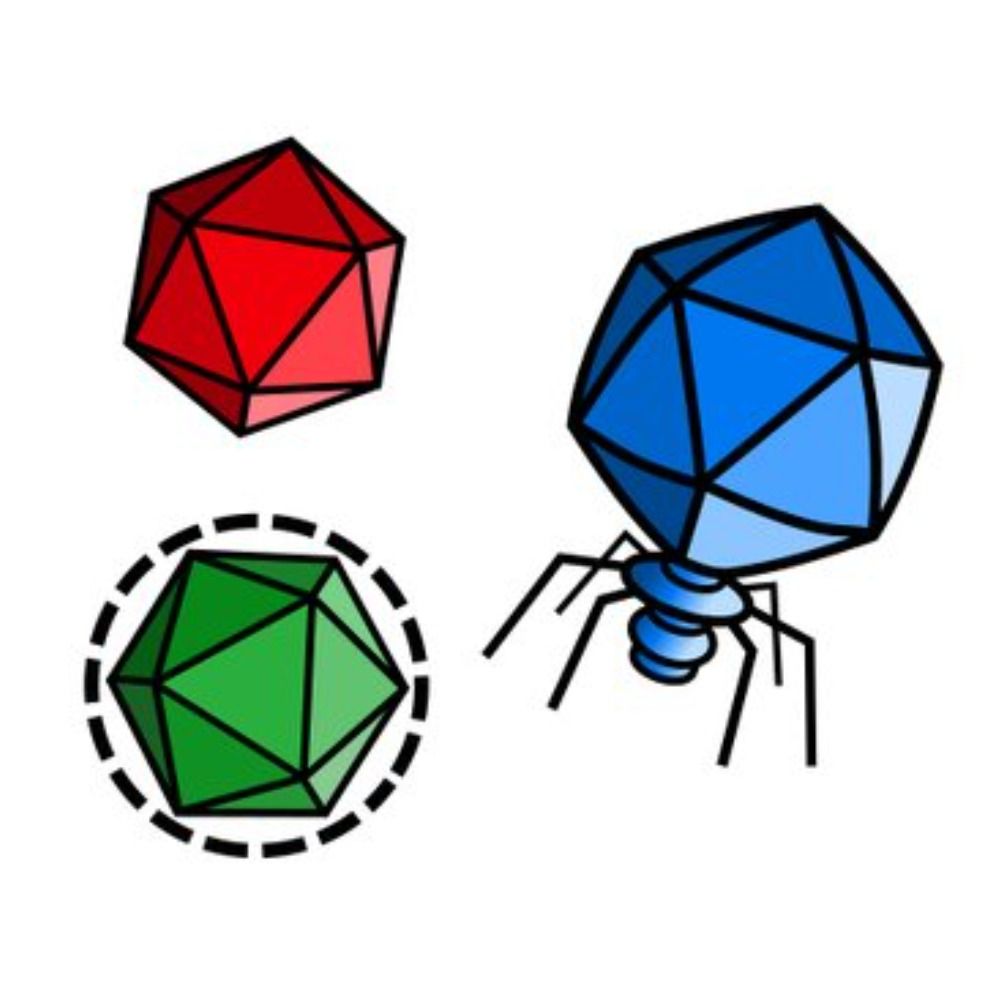
🧬🦠🚨 Another new paper alert, this time led by @maureenbug.bsky.social ! In collaboration with the Emerson lab and
@titus.idyll.org lab (@taylorreiter.bsky.social), both at UC Davis. Asking the question: what are we missing in short-read metagenome assembly, and why ?
doi.org/10.1093/narg...
@titus.idyll.org lab (@taylorreiter.bsky.social), both at UC Davis. Asking the question: what are we missing in short-read metagenome assembly, and why ?
doi.org/10.1093/narg...

Comparison of short-read and long-read metagenome assemblies in a natural soil community highlights systematic bias in recovery of high-diversity populations
Abstract. Comparisons of long-read and short-read (meta)genome assemblies typically show that short-read sequence assemblies are less error-prone, but stru
doi.org
December 9, 2025 at 3:25 AM
🧬🦠🚨 Another new paper alert, this time led by @maureenbug.bsky.social ! In collaboration with the Emerson lab and
@titus.idyll.org lab (@taylorreiter.bsky.social), both at UC Davis. Asking the question: what are we missing in short-read metagenome assembly, and why ?
doi.org/10.1093/narg...
@titus.idyll.org lab (@taylorreiter.bsky.social), both at UC Davis. Asking the question: what are we missing in short-read metagenome assembly, and why ?
doi.org/10.1093/narg...
Reposted by Tue Sparholt Jørgensen
579 high-quality human genomes from @humanpangenome.bsky.social, Arab Pangenome and individual papers (CHM13, CN1, KSA001, I002C, YAO and KOREF1). Sequences available in the AGC format (3.7GB) and FM-index in the ropebwt3 format (20.3GB). For details, see github.com/lh3/human-asm

GitHub - lh3/human-asm: A collection of high-quality human genomes
A collection of high-quality human genomes. Contribute to lh3/human-asm development by creating an account on GitHub.
github.com
December 3, 2025 at 3:44 AM
579 high-quality human genomes from @humanpangenome.bsky.social, Arab Pangenome and individual papers (CHM13, CN1, KSA001, I002C, YAO and KOREF1). Sequences available in the AGC format (3.7GB) and FM-index in the ropebwt3 format (20.3GB). For details, see github.com/lh3/human-asm