




Tommi Mäklin
@themaklin.bsky.social
I do statistics, bacterial (meta)genomics and bioinformatics software development.
Researcher @ University of Oslo
Researcher @ University of Oslo
Reposted by Tommi Mäklin

How does E. coli age? According to this #mBio study, the the decisive factor driving growth decline in E. coli is not the presence of protein aggregates, but the fraction of the intracellular space they occupy. Learn more: asm.social/2KZ

January 7, 2026 at 5:38 PM
How does E. coli age? According to this #mBio study, the the decisive factor driving growth decline in E. coli is not the presence of protein aggregates, but the fraction of the intracellular space they occupy. Learn more: asm.social/2KZ
Reposted by Tommi Mäklin

📣 preprint alert!
We sampled #klebsiella isolates from💩 patients when they entered the hospital & 🩸 after development of infection.
🎯 We tracked phenotypic changes & correlate them w genotypic changes.
@klebclub.bsky.social
-in collab with Clermont-Ferrand lab
#microsky
🧵
doi.org/10.64898/202...
We sampled #klebsiella isolates from💩 patients when they entered the hospital & 🩸 after development of infection.
🎯 We tracked phenotypic changes & correlate them w genotypic changes.
@klebclub.bsky.social
-in collab with Clermont-Ferrand lab
#microsky
🧵
doi.org/10.64898/202...

Within-host evolution of Klebsiella spp. from intestinal carriage to bacteremia
Gut colonization by the Gram-negative bacillus Klebsiella pneumoniae is a significant risk factor for extra-intestinal infections. However, the mechanisms by which this opportunistic pathogen causes d...
doi.org
January 6, 2026 at 10:29 AM
📣 preprint alert!
We sampled #klebsiella isolates from💩 patients when they entered the hospital & 🩸 after development of infection.
🎯 We tracked phenotypic changes & correlate them w genotypic changes.
@klebclub.bsky.social
-in collab with Clermont-Ferrand lab
#microsky
🧵
doi.org/10.64898/202...
We sampled #klebsiella isolates from💩 patients when they entered the hospital & 🩸 after development of infection.
🎯 We tracked phenotypic changes & correlate them w genotypic changes.
@klebclub.bsky.social
-in collab with Clermont-Ferrand lab
#microsky
🧵
doi.org/10.64898/202...
Reposted by Tommi Mäklin
The changing roles of Escherichia coli www.nature.com/articles/s41... #jcampubs

The changing roles of Escherichia coli - Nature Microbiology
Richard Lenski traces the legacy of Escherichia coli and how science is evolving to use this model organism in new ways.
www.nature.com
December 24, 2025 at 9:23 PM
The changing roles of Escherichia coli www.nature.com/articles/s41... #jcampubs
Reposted by Tommi Mäklin
"..based on a common wavefront design that can be adapted to support a variety of dynamic programming algorithms: local, global, and semi-global alignment of genomic and protein sequences with a variety of commonly used scoring schemes" from
@martinsteinegger.bsky.social andco
@martinsteinegger.bsky.social andco
Accelign: a GPU-based Library for Accelerating Pairwise Sequence Alignment https://www.biorxiv.org/content/10.64898/2025.12.17.694868v1
December 20, 2025 at 11:05 AM
"..based on a common wavefront design that can be adapted to support a variety of dynamic programming algorithms: local, global, and semi-global alignment of genomic and protein sequences with a variety of commonly used scoring schemes" from
@martinsteinegger.bsky.social andco
@martinsteinegger.bsky.social andco
Reposted by Tommi Mäklin

"Ethical standards do not become optional because the participants are African."
bktitanji.substack.com/p/how-unethi...
bktitanji.substack.com/p/how-unethi...

How Unethical Research Seeds Medical Mistrust
The absence of equipoise can turn research into harm
bktitanji.substack.com
December 19, 2025 at 9:55 AM
"Ethical standards do not become optional because the participants are African."
bktitanji.substack.com/p/how-unethi...
bktitanji.substack.com/p/how-unethi...
Reposted by Tommi Mäklin
Preprint Alert!
With @tmthrz.bsky.social and @rayanchikhi.bsky.social we aim to tackle practical unitigs compression!
A thread:
With @tmthrz.bsky.social and @rayanchikhi.bsky.social we aim to tackle practical unitigs compression!
A thread:
Inverted colored de Bruijn Graph for practical kmer sets storage https://www.biorxiv.org/content/10.64898/2025.12.08.692073v1
December 15, 2025 at 3:19 PM
Preprint Alert!
With @tmthrz.bsky.social and @rayanchikhi.bsky.social we aim to tackle practical unitigs compression!
A thread:
With @tmthrz.bsky.social and @rayanchikhi.bsky.social we aim to tackle practical unitigs compression!
A thread:
Reposted by Tommi Mäklin

If you ever need to fuzzy search some DNA, sassy is your tool.
Please spread the word; I think many people just outside my own circle could benefit from this :)
cc @rickbitloo.bsky.social
github.com/RagnarGrootK...
Please spread the word; I think many people just outside my own circle could benefit from this :)
cc @rickbitloo.bsky.social
github.com/RagnarGrootK...
December 10, 2025 at 3:50 PM
If you ever need to fuzzy search some DNA, sassy is your tool.
Please spread the word; I think many people just outside my own circle could benefit from this :)
cc @rickbitloo.bsky.social
github.com/RagnarGrootK...
Please spread the word; I think many people just outside my own circle could benefit from this :)
cc @rickbitloo.bsky.social
github.com/RagnarGrootK...
Reposted by Tommi Mäklin

Mapping the evolutionary path towards multi-drug resistance in the pandemic Escherichia coli ST131 lineage https://www.biorxiv.org/content/10.64898/2025.12.08.692488v1
December 10, 2025 at 2:31 PM
Mapping the evolutionary path towards multi-drug resistance in the pandemic Escherichia coli ST131 lineage https://www.biorxiv.org/content/10.64898/2025.12.08.692488v1
Reposted by Tommi Mäklin
Lovely to feature alongside the brilliant Birgit Sattler & Tom Battin in this story about life in Earth's dying ice.
www.the-scientist.com/the-ice-is-a...
www.the-scientist.com/the-ice-is-a...

The Ice is Alive: Uncovering the Vanishing World of Glacial Microbes
Glaciers are flush with microbial life. But, as climate change speeds glacial melting, scientists rush to establish microbial biobanks to preserve them.
www.the-scientist.com
December 8, 2025 at 11:28 AM
Lovely to feature alongside the brilliant Birgit Sattler & Tom Battin in this story about life in Earth's dying ice.
www.the-scientist.com/the-ice-is-a...
www.the-scientist.com/the-ice-is-a...
Reposted by Tommi Mäklin

Amazing dataset describing the metabolic profiles of 66 E. coli transporter knockouts by @sulheim.bsky.social with Peter Doubleday and @nzamboni.bsky.social. The tool, set up by @lambdapp.bsky.social and Eric Ulrich allows you to explore for yourself. Enjoy! Pre-print here: doi.org/10.1101/2025...
December 3, 2025 at 1:11 PM
Amazing dataset describing the metabolic profiles of 66 E. coli transporter knockouts by @sulheim.bsky.social with Peter Doubleday and @nzamboni.bsky.social. The tool, set up by @lambdapp.bsky.social and Eric Ulrich allows you to explore for yourself. Enjoy! Pre-print here: doi.org/10.1101/2025...
Reposted by Tommi Mäklin
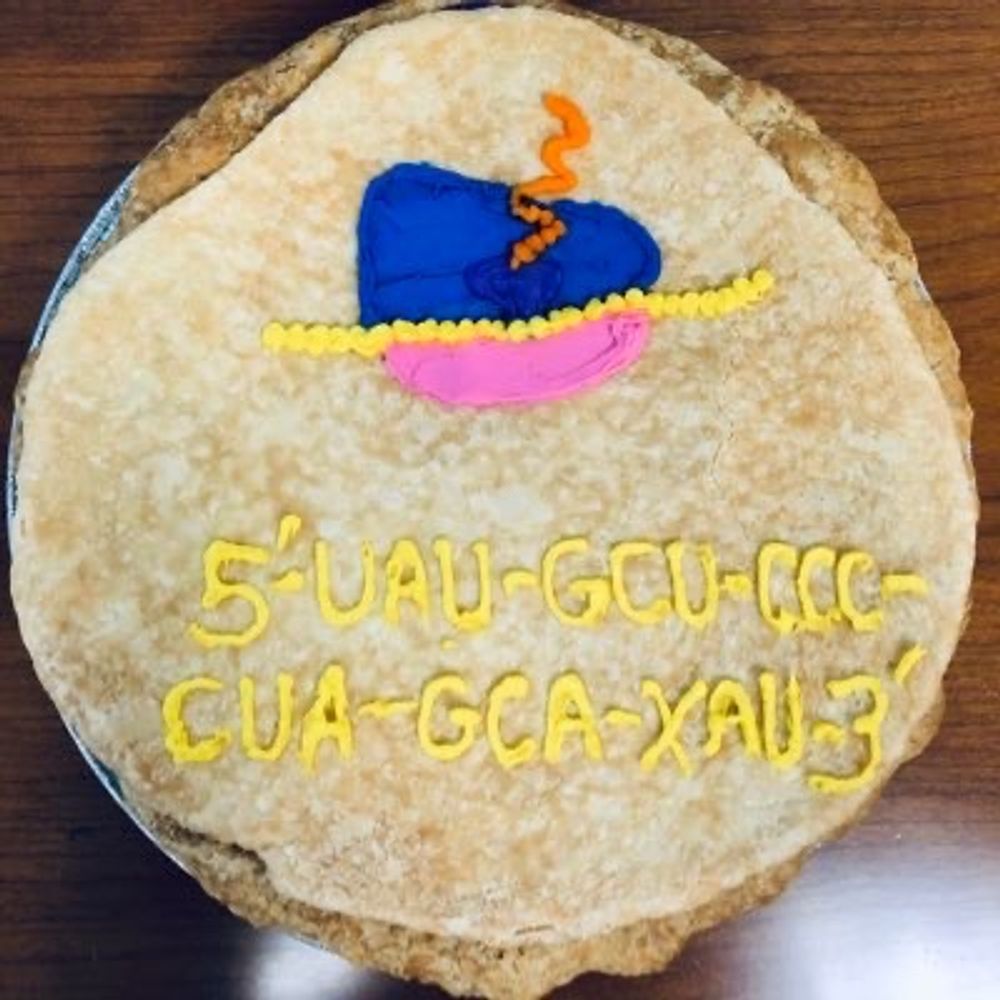
Colibactin-DNA interstrand crosslinks structure reveals DNA-damaging acitivity of colibactin that is linked to colorectal cancer #MicroSky www.science.org/doi/10.1126/...

The specificity and structure of DNA cross-linking by the gut bacterial genotoxin colibactin
Accumulating evidence has connected the chemically unstable, DNA-damaging gut bacterial natural product colibactin to colorectal cancer, including the identification of mutational signatures that are ...
www.science.org
December 4, 2025 at 10:07 PM
Colibactin-DNA interstrand crosslinks structure reveals DNA-damaging acitivity of colibactin that is linked to colorectal cancer #MicroSky www.science.org/doi/10.1126/...
Reposted by Tommi Mäklin

1/9 Just out:
k-mer indexes are the backbone of fast search in genomic data, but many degrade under small k, subsampling, or high diversity.
With Ondřej Sladký and @pavelvesely.bsky.social we asked: can we build one that works efficiently for any k-mer set?
k-mer indexes are the backbone of fast search in genomic data, but many degrade under small k, subsampling, or high diversity.
With Ondřej Sladký and @pavelvesely.bsky.social we asked: can we build one that works efficiently for any k-mer set?
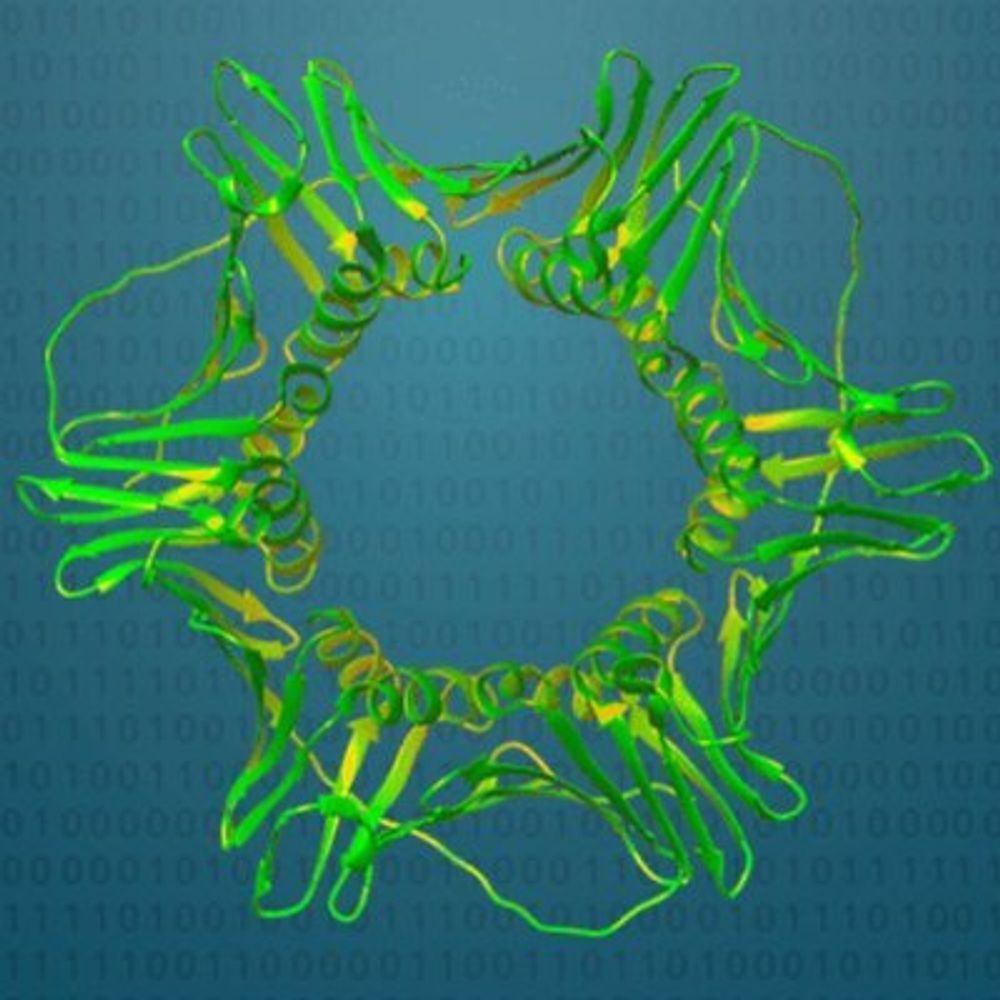
🧮 Just out in Bioinformatics Advances: “FroM Superstring to Indexing: A space-efficient index for unconstrained k-mer sets using the Masked Burrows-Wheeler Transform (MBWT)”
Full article available: https://doi.org/10.1093/bioadv/vbaf290
Authors include: @pavelvesely.bsky.social, @brinda.eu
Full article available: https://doi.org/10.1093/bioadv/vbaf290
Authors include: @pavelvesely.bsky.social, @brinda.eu

December 5, 2025 at 5:42 PM
1/9 Just out:
k-mer indexes are the backbone of fast search in genomic data, but many degrade under small k, subsampling, or high diversity.
With Ondřej Sladký and @pavelvesely.bsky.social we asked: can we build one that works efficiently for any k-mer set?
k-mer indexes are the backbone of fast search in genomic data, but many degrade under small k, subsampling, or high diversity.
With Ondřej Sladký and @pavelvesely.bsky.social we asked: can we build one that works efficiently for any k-mer set?
Reposted by Tommi Mäklin

Preprint out! Check out our new long-read metagenomic SNP-caller, SNooPy 😀. Work with Chris Quince. Thread 🧵
👉 www.biorxiv.org/content/10.6...
👉 www.biorxiv.org/content/10.6...

December 4, 2025 at 1:18 PM
Preprint out! Check out our new long-read metagenomic SNP-caller, SNooPy 😀. Work with Chris Quince. Thread 🧵
👉 www.biorxiv.org/content/10.6...
👉 www.biorxiv.org/content/10.6...
Reposted by Tommi Mäklin

🧬🛡️How are new immune mechanisms created?
We show how Lamassu antiphage system, originated from a DNA-repair complex and evolved into a compact and modular immune machine, wt Dinshaw Patel lab in @pnas.org.
👏 @matthieu-haudiquet.bsky.social, Arpita Chakravarti & all authors!
doi.org/10.1073/pnas...
We show how Lamassu antiphage system, originated from a DNA-repair complex and evolved into a compact and modular immune machine, wt Dinshaw Patel lab in @pnas.org.
👏 @matthieu-haudiquet.bsky.social, Arpita Chakravarti & all authors!
doi.org/10.1073/pnas...


November 27, 2025 at 9:35 AM
🧬🛡️How are new immune mechanisms created?
We show how Lamassu antiphage system, originated from a DNA-repair complex and evolved into a compact and modular immune machine, wt Dinshaw Patel lab in @pnas.org.
👏 @matthieu-haudiquet.bsky.social, Arpita Chakravarti & all authors!
doi.org/10.1073/pnas...
We show how Lamassu antiphage system, originated from a DNA-repair complex and evolved into a compact and modular immune machine, wt Dinshaw Patel lab in @pnas.org.
👏 @matthieu-haudiquet.bsky.social, Arpita Chakravarti & all authors!
doi.org/10.1073/pnas...
Reposted by Tommi Mäklin

Optimized k-mer search across millions of bacterial genomes on laptops https://www.biorxiv.org/content/10.1101/2025.11.23.690050v1
November 26, 2025 at 4:47 PM
Optimized k-mer search across millions of bacterial genomes on laptops https://www.biorxiv.org/content/10.1101/2025.11.23.690050v1
Reposted by Tommi Mäklin

If you're about to push these last manuscripts before wrapping up 2025, remider that our MGen Eukaryotic collection @microbiologysociety.org is open & growing; #Protists #Parasites #Fungi; friend or foe; all welcome 😊
#MicroSky #IDSky #Protistsonsky 🧬💻
www.microbiologyresearch.org/content/micr...
#MicroSky #IDSky #Protistsonsky 🧬💻
www.microbiologyresearch.org/content/micr...
Microbial Genomics of Eukaryotes | Microbiology Society
With technological advances like single-cell sequencing and long-read sequence techniques continually improving, allowing the full resolution of increasingly complex highly repetitive genomes, and wit...
www.microbiologyresearch.org
November 24, 2025 at 6:54 AM
If you're about to push these last manuscripts before wrapping up 2025, remider that our MGen Eukaryotic collection @microbiologysociety.org is open & growing; #Protists #Parasites #Fungi; friend or foe; all welcome 😊
#MicroSky #IDSky #Protistsonsky 🧬💻
www.microbiologyresearch.org/content/micr...
#MicroSky #IDSky #Protistsonsky 🧬💻
www.microbiologyresearch.org/content/micr...
Reposted by Tommi Mäklin
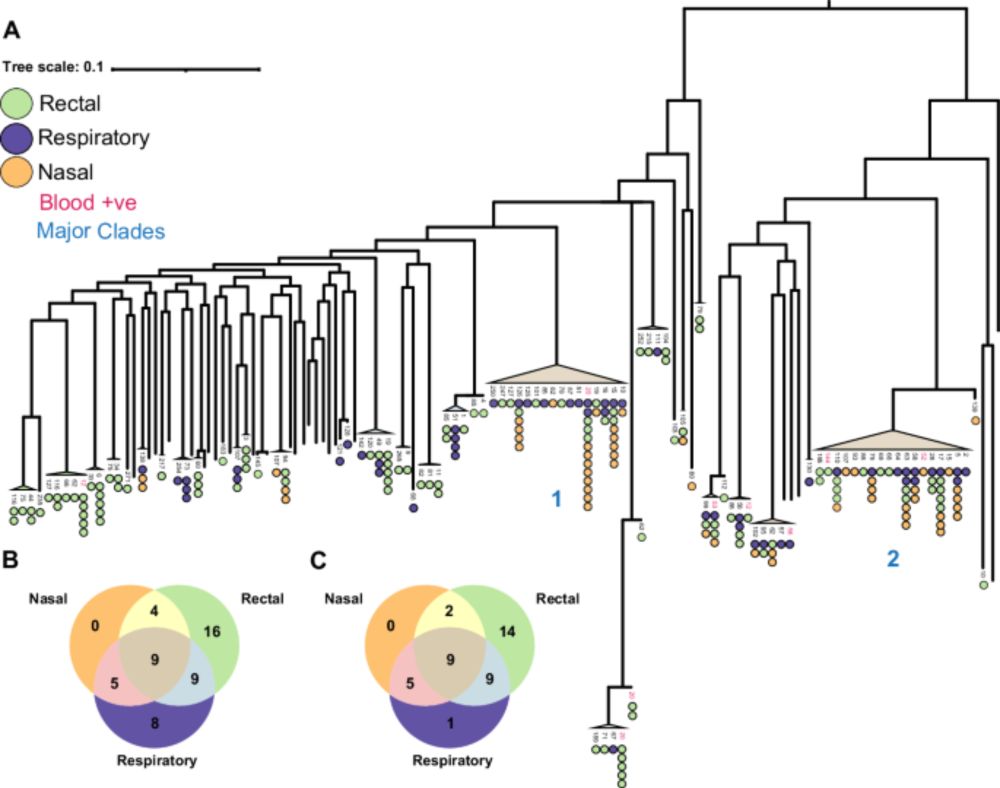
Really pleased to share the first paper to come out of the lab.
We found that hospital patients were frequently colonised with P. aeruginosa and that the same clone was shared between the gut and the lung.
The phylogenies indicate that the clones moved from lung->gut
www.nature.com/articles/s41...
We found that hospital patients were frequently colonised with P. aeruginosa and that the same clone was shared between the gut and the lung.
The phylogenies indicate that the clones moved from lung->gut
www.nature.com/articles/s41...
High frequency body site translocation of nosocomial Pseudomonas aeruginosa - Nature Communications
Here, the authors report within-host diversity and body site translocation dynamics in hospital samples of Pseudomonas aeruginosa and reveal that body site sharing was likely due to within-patient tra...
www.nature.com
November 25, 2025 at 10:40 AM
Really pleased to share the first paper to come out of the lab.
We found that hospital patients were frequently colonised with P. aeruginosa and that the same clone was shared between the gut and the lung.
The phylogenies indicate that the clones moved from lung->gut
www.nature.com/articles/s41...
We found that hospital patients were frequently colonised with P. aeruginosa and that the same clone was shared between the gut and the lung.
The phylogenies indicate that the clones moved from lung->gut
www.nature.com/articles/s41...
Reposted by Tommi Mäklin
#microsky #phagesky #phage
Anyone who’s tried deleting prophages in the lab by HR knows the difficulties of the task. Here we have an example of how HR-mediated natural transformation might hit the same hurdle in a more native context.
academic.oup.com/mbe/article/...
Anyone who’s tried deleting prophages in the lab by HR knows the difficulties of the task. Here we have an example of how HR-mediated natural transformation might hit the same hurdle in a more native context.
academic.oup.com/mbe/article/...

Chromosomal Curing Drives an Arms Race Between Bacterial Transformation and Prophage
Abstract. Transformation occurs when bacteria import exogenous DNA via the competence machinery and integrate it into their genome through homologous recom
academic.oup.com
November 23, 2025 at 4:39 PM
#microsky #phagesky #phage
Anyone who’s tried deleting prophages in the lab by HR knows the difficulties of the task. Here we have an example of how HR-mediated natural transformation might hit the same hurdle in a more native context.
academic.oup.com/mbe/article/...
Anyone who’s tried deleting prophages in the lab by HR knows the difficulties of the task. Here we have an example of how HR-mediated natural transformation might hit the same hurdle in a more native context.
academic.oup.com/mbe/article/...
Reposted by Tommi Mäklin

Hot off the press! Our latest paper led by @fernpizza.bsky.social, understanding how plasmids evolve inside cells. These small, self-replicating DNA circles live inside bacteria and carry antibiotic resistance genes, but also compete with one another to replicate. 1/
www.science.org/doi/10.1126/...
www.science.org/doi/10.1126/...

Intracellular competition shapes plasmid population dynamics
From populations of multicellular organisms to selfish genetic elements, conflicts between levels of biological organization are central to evolution. Plasmids are extrachromosomal, self-replicating g...
www.science.org
November 20, 2025 at 9:42 PM
Hot off the press! Our latest paper led by @fernpizza.bsky.social, understanding how plasmids evolve inside cells. These small, self-replicating DNA circles live inside bacteria and carry antibiotic resistance genes, but also compete with one another to replicate. 1/
www.science.org/doi/10.1126/...
www.science.org/doi/10.1126/...
Reposted by Tommi Mäklin
Very happy to see this piece out in @plosbiology.org, on the bacterial immune systems and microbial communities. It was a great team effort with Rafael Custodio, @brockhurstlab.bsky.social , @brownlab.bsky.social, and Edze Westra! 🦠🧫 #phagesky #mevosky
journals.plos.org/plosbiology/...
journals.plos.org/plosbiology/...

Bacterial immune systems as causes and consequences of microbiome structure
Bacterial immune systems have evolved in response to diverse molecular "parasites", yet their ecological roles remain poorly understood. This Essay explores how interactions between mobile genetic ele...
journals.plos.org
November 19, 2025 at 6:35 PM
Very happy to see this piece out in @plosbiology.org, on the bacterial immune systems and microbial communities. It was a great team effort with Rafael Custodio, @brockhurstlab.bsky.social , @brownlab.bsky.social, and Edze Westra! 🦠🧫 #phagesky #mevosky
journals.plos.org/plosbiology/...
journals.plos.org/plosbiology/...
Reposted by Tommi Mäklin

Happy to share our new AMR resource which has phenotypic AMR (usually MIC data) collected from publications and databases. This is paired with assemblies and annotations
We're excited for users who might train new models, find phenotype/genotype mismatches, or any other use
We're excited for users who might train new models, find phenotype/genotype mismatches, or any other use

Antimicrobial resistance (AMR) is a growing health threat, making infections harder to treat and complicating routine medical care.
EMBL-EBI’s new AMR portal brings together laboratory resistance data and bacterial genomes in one open platform.
#WAAW2025 #ActOnAMR
www.ebi.ac.uk/about/news/t...
🧬💻
EMBL-EBI’s new AMR portal brings together laboratory resistance data and bacterial genomes in one open platform.
#WAAW2025 #ActOnAMR
www.ebi.ac.uk/about/news/t...
🧬💻

A new gateway to global antimicrobial resistance data
New online portal connects bacterial genomes with experimental resistance data to support antimicrobial resistance research.
www.ebi.ac.uk
November 19, 2025 at 12:27 PM
Happy to share our new AMR resource which has phenotypic AMR (usually MIC data) collected from publications and databases. This is paired with assemblies and annotations
We're excited for users who might train new models, find phenotype/genotype mismatches, or any other use
We're excited for users who might train new models, find phenotype/genotype mismatches, or any other use
Reposted by Tommi Mäklin

@wytamma.bsky.social : so, it took a little bit of extra time (not the flight back from the CZI meeting), but I decided to just f#&$ing do it, and the basic code to build and parse with the auxiliary fastq index is working (github.com/COMBINE-lab/...). 1/2

GitHub - COMBINE-lab/mim: A small, auxiliary index to massively improve parallel fastq parsing
A small, auxiliary index to massively improve parallel fastq parsing - COMBINE-lab/mim
github.com
November 19, 2025 at 3:01 AM
@wytamma.bsky.social : so, it took a little bit of extra time (not the flight back from the CZI meeting), but I decided to just f#&$ing do it, and the basic code to build and parse with the auxiliary fastq index is working (github.com/COMBINE-lab/...). 1/2
Reposted by Tommi Mäklin
New preprint: we looked into production of the bacterial toxin colibactin and found that MDR E. coli from the global north have co-evolved with endemic colibactin producers, acquiring colibactin resistance genes before undergoing clonal expansions.
www.biorxiv.org/content/10.1...
www.biorxiv.org/content/10.1...

Co-evolution between colibactin production and resistance is linked to clonal expansions in Escherichia coli
Specific strains of Escherichia coli employ the polyketide synthase island to produce a metabolite called colibactin that is implicated in colorectal tumorigenesis via its genotoxic effect on human DN...
www.biorxiv.org
November 18, 2025 at 6:41 AM
New preprint: we looked into production of the bacterial toxin colibactin and found that MDR E. coli from the global north have co-evolved with endemic colibactin producers, acquiring colibactin resistance genes before undergoing clonal expansions.
www.biorxiv.org/content/10.1...
www.biorxiv.org/content/10.1...
New preprint: we looked into production of the bacterial toxin colibactin and found that MDR E. coli from the global north have co-evolved with endemic colibactin producers, acquiring colibactin resistance genes before undergoing clonal expansions.
www.biorxiv.org/content/10.1...
www.biorxiv.org/content/10.1...
Co-evolution between colibactin production and resistance is linked to clonal expansions in Escherichia coli
Specific strains of Escherichia coli employ the polyketide synthase island to produce a metabolite called colibactin that is implicated in colorectal tumorigenesis via its genotoxic effect on human DN...
www.biorxiv.org
November 18, 2025 at 6:41 AM
New preprint: we looked into production of the bacterial toxin colibactin and found that MDR E. coli from the global north have co-evolved with endemic colibactin producers, acquiring colibactin resistance genes before undergoing clonal expansions.
www.biorxiv.org/content/10.1...
www.biorxiv.org/content/10.1...