



Shubham Rathore Ph.D. MSc.
@shubhamtr.bsky.social
Neuroethologist interested in visual system development and sensory integration across time scales 🦟🪲🐜🕷️🐞🐁
Ph.D. : Buschbeck lab @ University of Cincinnati
Prev. at : Hattar lab @ NIMH / NIH
Postdoc : Reiser lab @ Janelia Research Campus
Ph.D. : Buschbeck lab @ University of Cincinnati
Prev. at : Hattar lab @ NIMH / NIH
Postdoc : Reiser lab @ Janelia Research Campus
Reposted by Shubham Rathore Ph.D. MSc.
Another one with our next door colleagues! @marianneroca.bsky.social in @jameslightfoot.bsky.social's group found the IL2 neurons detecting prey (this study) are also sensing octopamine, which we recently found plays an important role in predatory aggression! www.nature.com/articles/s41...
January 29, 2026 at 1:41 PM
Another one with our next door colleagues! @marianneroca.bsky.social in @jameslightfoot.bsky.social's group found the IL2 neurons detecting prey (this study) are also sensing octopamine, which we recently found plays an important role in predatory aggression! www.nature.com/articles/s41...
Reposted by Shubham Rathore Ph.D. MSc.

How does evolution turn a harmless bacterial feeder into an active predator?
Our new study led by @marianneroca.bsky.social and published in @pnas.org explores how sensory systems were rewired to enable prey detection and predatory behaviour in nematodes.
www.pnas.org/doi/10.1073/...
🧵below!
Our new study led by @marianneroca.bsky.social and published in @pnas.org explores how sensory systems were rewired to enable prey detection and predatory behaviour in nematodes.
www.pnas.org/doi/10.1073/...
🧵below!

Evolution of sensory systems underlies the emergence of predatory feeding behaviors in nematodes | PNAS
Understanding how animal behavior evolves remains a major challenge, with few studies
linking genetic changes to differences in neural function and...
www.pnas.org
January 29, 2026 at 12:30 PM
How does evolution turn a harmless bacterial feeder into an active predator?
Our new study led by @marianneroca.bsky.social and published in @pnas.org explores how sensory systems were rewired to enable prey detection and predatory behaviour in nematodes.
www.pnas.org/doi/10.1073/...
🧵below!
Our new study led by @marianneroca.bsky.social and published in @pnas.org explores how sensory systems were rewired to enable prey detection and predatory behaviour in nematodes.
www.pnas.org/doi/10.1073/...
🧵below!
A rigorous, enlightening and necessary study from @samerhattar.bsky.social ‘s lab! 🔥🎊👏🏽
Definitely give this a read to find out how the central circadian clock is regulated at the level of the retina.
Congratulations to all the entire team especially Dr. Ruchi Komal ! Miss this group of people 😄
Definitely give this a read to find out how the central circadian clock is regulated at the level of the retina.
Congratulations to all the entire team especially Dr. Ruchi Komal ! Miss this group of people 😄
A new paper from my lab. I will have a full description soon. rdcu.be/eX1Ld

ipRGC properties prevent light from shifting the SCN clock during daytime
Nature - The inability of intrinsically photosensitive retinal ganglion cells to shift the circadian clock in the suprachiasmatic nucleus during daytime is caused by light-dependent depolarization...
rdcu.be
January 11, 2026 at 3:04 AM
A rigorous, enlightening and necessary study from @samerhattar.bsky.social ‘s lab! 🔥🎊👏🏽
Definitely give this a read to find out how the central circadian clock is regulated at the level of the retina.
Congratulations to all the entire team especially Dr. Ruchi Komal ! Miss this group of people 😄
Definitely give this a read to find out how the central circadian clock is regulated at the level of the retina.
Congratulations to all the entire team especially Dr. Ruchi Komal ! Miss this group of people 😄
Reposted by Shubham Rathore Ph.D. MSc.

Felt a little festive at the microscope this morning for #FluorescenceFriday 🎄
Here’s the nervous system of a juvenile sea star ⭐️
Green = acetylated tubulin, red = nuclei
Happy holidays!
Here’s the nervous system of a juvenile sea star ⭐️
Green = acetylated tubulin, red = nuclei
Happy holidays!

December 19, 2025 at 5:32 PM
Felt a little festive at the microscope this morning for #FluorescenceFriday 🎄
Here’s the nervous system of a juvenile sea star ⭐️
Green = acetylated tubulin, red = nuclei
Happy holidays!
Here’s the nervous system of a juvenile sea star ⭐️
Green = acetylated tubulin, red = nuclei
Happy holidays!
Reposted by Shubham Rathore Ph.D. MSc.
Washington DC wildlife:
Belted kingfisher this morning at the Georgetown Reservoir. 🪶
Belted kingfisher this morning at the Georgetown Reservoir. 🪶

December 18, 2025 at 3:30 PM
Washington DC wildlife:
Belted kingfisher this morning at the Georgetown Reservoir. 🪶
Belted kingfisher this morning at the Georgetown Reservoir. 🪶
Reposted by Shubham Rathore Ph.D. MSc.

Immune memory isn’t unique to vertebrates. This Review Article connects trained immunity and immune priming across plants and invertebrates, exploring shared mechanisms and their potential applications.
The latest from our Trained Immunity Focus Issue: buff.ly/MOvKHBB
The latest from our Trained Immunity Focus Issue: buff.ly/MOvKHBB

December 16, 2025 at 11:01 AM
Immune memory isn’t unique to vertebrates. This Review Article connects trained immunity and immune priming across plants and invertebrates, exploring shared mechanisms and their potential applications.
The latest from our Trained Immunity Focus Issue: buff.ly/MOvKHBB
The latest from our Trained Immunity Focus Issue: buff.ly/MOvKHBB
Reposted by Shubham Rathore Ph.D. MSc.

This work shows how neuromodulation of presynaptic terminals can enable associative plasticity at inhibitory synapses — a mechanism that may generalize well beyond navigation.
Huge congrats to all the authors — I’m incredibly proud of this study.
Preprint: www.biorxiv.org/content/10.6...
Huge congrats to all the authors — I’m incredibly proud of this study.
Preprint: www.biorxiv.org/content/10.6...

Octopamine instructs head direction plasticity
Many plasticity rules rely on adjusting the strength of synapses between pairs of cells based on their coincident activity. We uncovered a new mechanism for coincidence detection in the Drosophila hea...
www.biorxiv.org
December 15, 2025 at 6:26 PM
This work shows how neuromodulation of presynaptic terminals can enable associative plasticity at inhibitory synapses — a mechanism that may generalize well beyond navigation.
Huge congrats to all the authors — I’m incredibly proud of this study.
Preprint: www.biorxiv.org/content/10.6...
Huge congrats to all the authors — I’m incredibly proud of this study.
Preprint: www.biorxiv.org/content/10.6...
Reposted by Shubham Rathore Ph.D. MSc.

A hippocampal ‘sharp-wave sleep’ state that is dissociable from cortical sleep
www.nature.com/articles/s41...
www.nature.com/articles/s41...

A hippocampal ‘sharp-wave sleep’ state that is dissociable from cortical sleep - Nature Neuroscience
Through continuous multiday recordings in rats, the authors reveal that hippocampal sharp waves reflect sleep need and define a homeostatically regulated sleep state that enables the hippocampus to di...
www.nature.com
December 14, 2025 at 9:07 PM
A hippocampal ‘sharp-wave sleep’ state that is dissociable from cortical sleep
www.nature.com/articles/s41...
www.nature.com/articles/s41...
Reposted by Shubham Rathore Ph.D. MSc.
We were delighted to welcome our most recent Pathway to Independence (PI) fellows to our offices at @biologists.bsky.social for leadership training.
Find out more about our PI fellows and how to apply here:
journals.biologists.com/dev/pages/pi...
Application deadline: 2 February 2026.
Find out more about our PI fellows and how to apply here:
journals.biologists.com/dev/pages/pi...
Application deadline: 2 February 2026.

December 11, 2025 at 10:50 AM
We were delighted to welcome our most recent Pathway to Independence (PI) fellows to our offices at @biologists.bsky.social for leadership training.
Find out more about our PI fellows and how to apply here:
journals.biologists.com/dev/pages/pi...
Application deadline: 2 February 2026.
Find out more about our PI fellows and how to apply here:
journals.biologists.com/dev/pages/pi...
Application deadline: 2 February 2026.
Reposted by Shubham Rathore Ph.D. MSc.
At first glance, looks like a Gray–Scott reaction-diffusion
But it’s a fertilized starfish 🥚: proteins self-organizing into spiral waves across the membrane
Same dynamics seen in ❤️/🧠/🌊, even quantum fluids. Universality in action!
#ComplexSystems
news.mit.edu/2020/growth-...
But it’s a fertilized starfish 🥚: proteins self-organizing into spiral waves across the membrane
Same dynamics seen in ❤️/🧠/🌊, even quantum fluids. Universality in action!
#ComplexSystems
news.mit.edu/2020/growth-...
December 9, 2025 at 9:03 PM
At first glance, looks like a Gray–Scott reaction-diffusion
But it’s a fertilized starfish 🥚: proteins self-organizing into spiral waves across the membrane
Same dynamics seen in ❤️/🧠/🌊, even quantum fluids. Universality in action!
#ComplexSystems
news.mit.edu/2020/growth-...
But it’s a fertilized starfish 🥚: proteins self-organizing into spiral waves across the membrane
Same dynamics seen in ❤️/🧠/🌊, even quantum fluids. Universality in action!
#ComplexSystems
news.mit.edu/2020/growth-...
Reposted by Shubham Rathore Ph.D. MSc.
Textbooks said neurons don’t burn fatty acids for energy🤔. Our study delivers the first in vivo demonstration that fatty acid oxidation in defined memory neurons fuels memory formation.
Closing chapter of my PhD 🥳, out today in Nature Metabolism💥 @natmetabolism.nature.com
Closing chapter of my PhD 🥳, out today in Nature Metabolism💥 @natmetabolism.nature.com

Neuronal fatty acid oxidation fuels memory after intensive learning in Drosophila - Nature Metabolism
Neurons are shown to use fatty acid β-oxidation as a fuel source for memory formation upon intensive learning in Drosophila, challenging the view that neurons are unable to use fatty acids for energy ...
www.nature.com
December 10, 2025 at 11:13 AM
Textbooks said neurons don’t burn fatty acids for energy🤔. Our study delivers the first in vivo demonstration that fatty acid oxidation in defined memory neurons fuels memory formation.
Closing chapter of my PhD 🥳, out today in Nature Metabolism💥 @natmetabolism.nature.com
Closing chapter of my PhD 🥳, out today in Nature Metabolism💥 @natmetabolism.nature.com
Reposted by Shubham Rathore Ph.D. MSc.

The final version of the clonal raider ant reference brain is now out OA in @currentbiology.bsky.social:
🐜 🧠 🐜 🧠 🐜 🧠 🐜 🧠 🐜 🧠 🐜
www.sciencedirect.com/science/arti...
🐜 🧠 🐜 🧠 🐜 🧠 🐜 🧠 🐜 🧠 🐜
www.sciencedirect.com/science/arti...
December 5, 2025 at 4:30 PM
The final version of the clonal raider ant reference brain is now out OA in @currentbiology.bsky.social:
🐜 🧠 🐜 🧠 🐜 🧠 🐜 🧠 🐜 🧠 🐜
www.sciencedirect.com/science/arti...
🐜 🧠 🐜 🧠 🐜 🧠 🐜 🧠 🐜 🧠 🐜
www.sciencedirect.com/science/arti...
Reposted by Shubham Rathore Ph.D. MSc.

Welcome back to #FossilFriday!
Here is a Petoskey Stone which is Michigan's state stone. It is a colonial rugose coral known as Hexagonaria percarinata. This comes from the Middle Devonian (Givitian) Gravel Point Formation (Traverse Group). Each corallite that you see would have housed a polyp.
Here is a Petoskey Stone which is Michigan's state stone. It is a colonial rugose coral known as Hexagonaria percarinata. This comes from the Middle Devonian (Givitian) Gravel Point Formation (Traverse Group). Each corallite that you see would have housed a polyp.

December 5, 2025 at 3:52 PM
Welcome back to #FossilFriday!
Here is a Petoskey Stone which is Michigan's state stone. It is a colonial rugose coral known as Hexagonaria percarinata. This comes from the Middle Devonian (Givitian) Gravel Point Formation (Traverse Group). Each corallite that you see would have housed a polyp.
Here is a Petoskey Stone which is Michigan's state stone. It is a colonial rugose coral known as Hexagonaria percarinata. This comes from the Middle Devonian (Givitian) Gravel Point Formation (Traverse Group). Each corallite that you see would have housed a polyp.
Reposted by Shubham Rathore Ph.D. MSc.
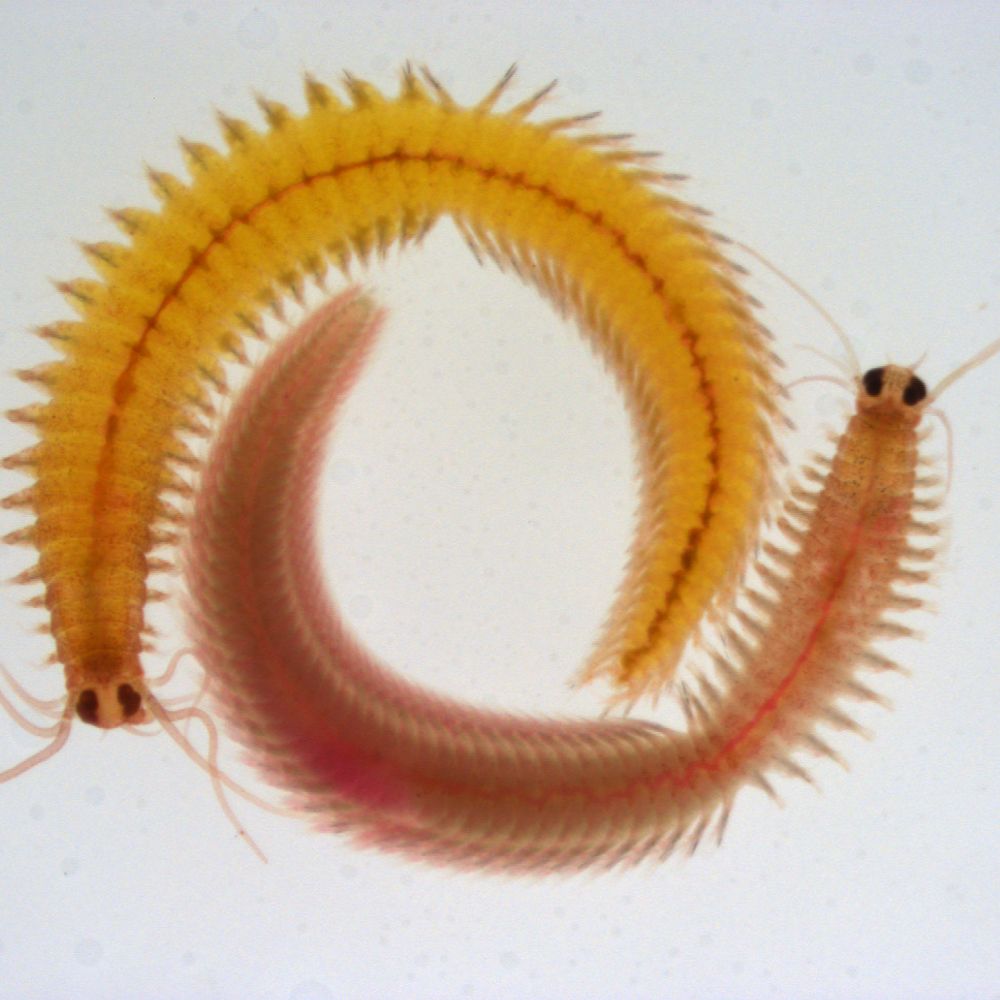
Freshly out at @natcomms.nature.com ! Our @univie.ac.at @awi.de @viennabiocenter.bsky.social @ercgrantees.bsky.social research into neurogenic plasticity of adult worm brains, and similarities in stem cells supporting growth of camera-type eyes. www.nature.com/articles/s41... [1/7]

December 1, 2025 at 10:51 AM
Freshly out at @natcomms.nature.com ! Our @univie.ac.at @awi.de @viennabiocenter.bsky.social @ercgrantees.bsky.social research into neurogenic plasticity of adult worm brains, and similarities in stem cells supporting growth of camera-type eyes. www.nature.com/articles/s41... [1/7]
Reposted by Shubham Rathore Ph.D. MSc.

Textbook neurons are usually spiking. However, there exist plenty of non-spiking neurons whose information transmission is less understood. Shirahata et al. studied Ca-dynamics of non-spiking mechanosensory neurons in crickets that are sensitive to air flow.
onlinelibrary.wiley.com/doi/10.1111/...
onlinelibrary.wiley.com/doi/10.1111/...

Subcellular Information Processing in Mechanosensory Non‐Spiking Interneurons
We measured membrane potential and Ca2+ responses to airflow from different angles in cricket mechanosensory local non-spiking interneurons (LNIs). LNIs exhibited spatially heterogeneous patterns of ...
onlinelibrary.wiley.com
November 29, 2025 at 3:43 PM
Textbook neurons are usually spiking. However, there exist plenty of non-spiking neurons whose information transmission is less understood. Shirahata et al. studied Ca-dynamics of non-spiking mechanosensory neurons in crickets that are sensitive to air flow.
onlinelibrary.wiley.com/doi/10.1111/...
onlinelibrary.wiley.com/doi/10.1111/...
Reposted by Shubham Rathore Ph.D. MSc.

New study from @michellebeyer.bsky.social published in Animal Behaviour: Silk of females performing maternal care elicits reduced courtship responses in male spiders.

November 26, 2025 at 9:46 PM
New study from @michellebeyer.bsky.social published in Animal Behaviour: Silk of females performing maternal care elicits reduced courtship responses in male spiders.
Reposted by Shubham Rathore Ph.D. MSc.
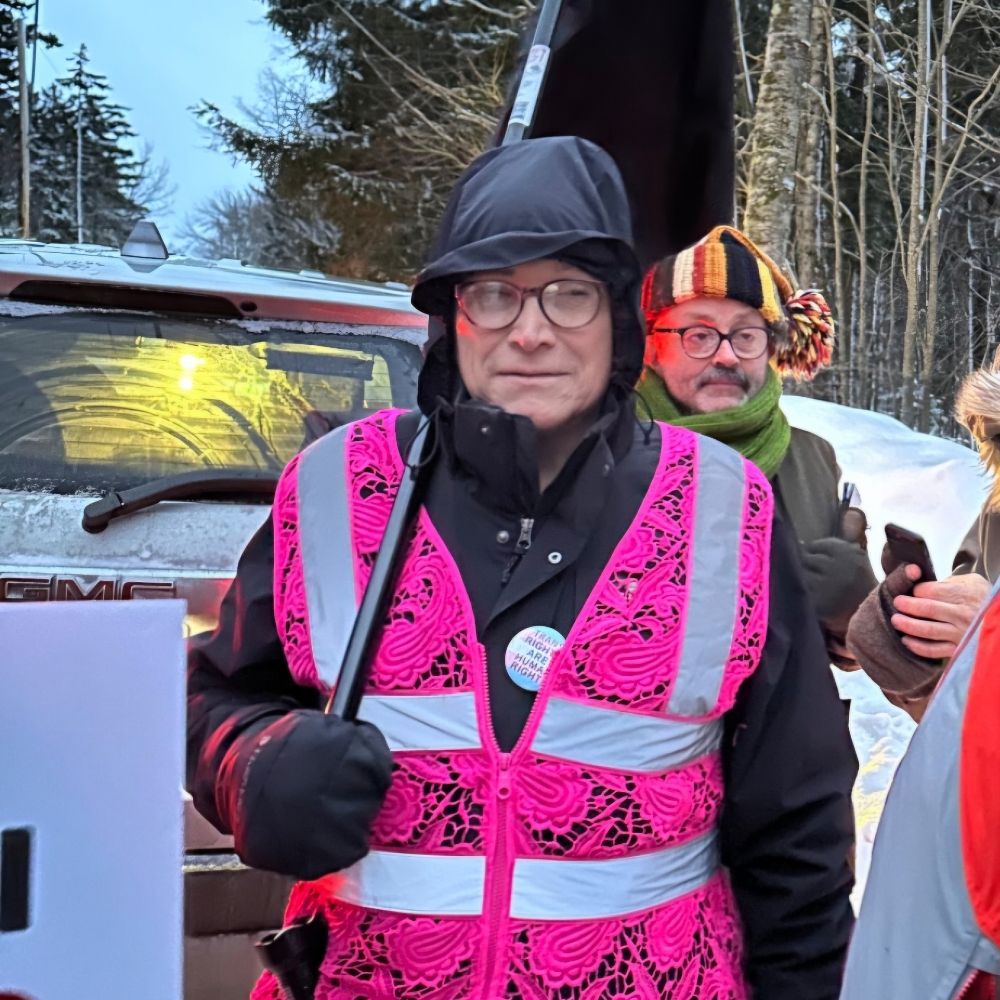
Church Street Burlington Vermont

November 25, 2025 at 10:10 AM
Church Street Burlington Vermont
Reposted by Shubham Rathore Ph.D. MSc.
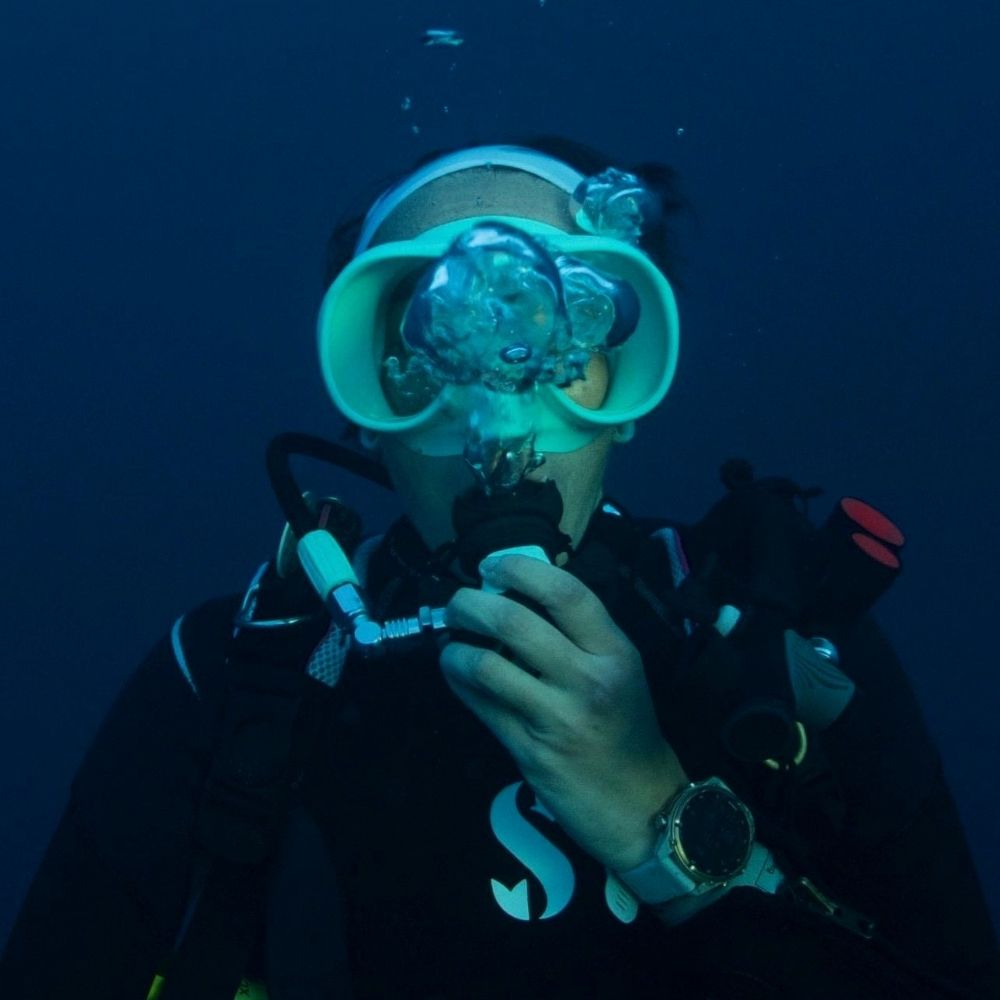
Stubby season is here in the Pacific Northwest and this chonker is showing some big feelings about being photographed by turning white and burying itself in the sand!
This color change is super hard to photograph, let alone light, but I'm pretty happy with how these turned out.
#marinelife
This color change is super hard to photograph, let alone light, but I'm pretty happy with how these turned out.
#marinelife


November 24, 2025 at 9:25 PM
Stubby season is here in the Pacific Northwest and this chonker is showing some big feelings about being photographed by turning white and burying itself in the sand!
This color change is super hard to photograph, let alone light, but I'm pretty happy with how these turned out.
#marinelife
This color change is super hard to photograph, let alone light, but I'm pretty happy with how these turned out.
#marinelife
Reposted by Shubham Rathore Ph.D. MSc.
the blank document heckling me

November 24, 2025 at 11:15 AM
the blank document heckling me
Reposted by Shubham Rathore Ph.D. MSc.
(1/n) We are excited to share our new paper in Nature Communications, by Hagar Lavian (@hlavian.bsky.social) and team, revealing how the zebrafish brain integrates visual navigation signals! www.nature.com/articles/s41...

Visual motion and landmark position align with heading direction in the zebrafish interpeduncular nucleus - Nature Communications
How are various visual signals integrated in the vertebrate brain for navigation? Here authors show that different spatial signals are topographically organized and align to one another in the zebrafi...
www.nature.com
November 24, 2025 at 4:17 PM
(1/n) We are excited to share our new paper in Nature Communications, by Hagar Lavian (@hlavian.bsky.social) and team, revealing how the zebrafish brain integrates visual navigation signals! www.nature.com/articles/s41...
Reposted by Shubham Rathore Ph.D. MSc.

Come and work with us in our new home @bristolbiosci.bsky.social ! This fully funded PhD opportunity is open to anyone interested in spiders/eyes/light pollution/evolution/development! 🕷️👀
⏰Deadline 15th December, online info event TODAY @2pm! Link in the PhD advert👉 www.findaphd.com/phds/project...
⏰Deadline 15th December, online info event TODAY @2pm! Link in the PhD advert👉 www.findaphd.com/phds/project...
November 24, 2025 at 9:27 AM
Come and work with us in our new home @bristolbiosci.bsky.social ! This fully funded PhD opportunity is open to anyone interested in spiders/eyes/light pollution/evolution/development! 🕷️👀
⏰Deadline 15th December, online info event TODAY @2pm! Link in the PhD advert👉 www.findaphd.com/phds/project...
⏰Deadline 15th December, online info event TODAY @2pm! Link in the PhD advert👉 www.findaphd.com/phds/project...
Reposted by Shubham Rathore Ph.D. MSc.
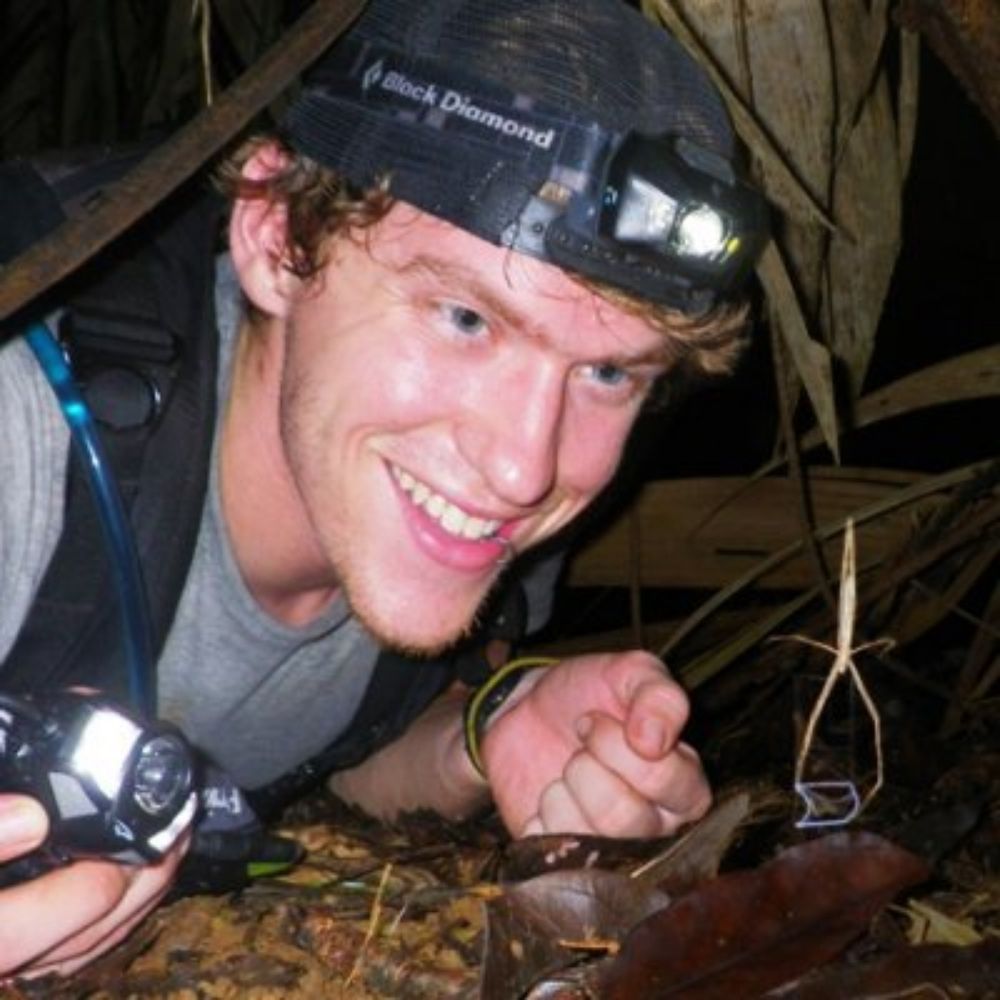
🚨Good news, everyone!
1) I'm thrilled to be joining the behavior powerhouse that is Indiana University!! So stoked, starting Jan 2026.
2) I'm recruiting grad students! Are you (or your trainee) interested in sensory ecology? behavior? evolution? fieldwork? spiders? Drop me a line Jstafstr(at)iu.edu
1) I'm thrilled to be joining the behavior powerhouse that is Indiana University!! So stoked, starting Jan 2026.
2) I'm recruiting grad students! Are you (or your trainee) interested in sensory ecology? behavior? evolution? fieldwork? spiders? Drop me a line Jstafstr(at)iu.edu


November 22, 2025 at 4:53 PM
🚨Good news, everyone!
1) I'm thrilled to be joining the behavior powerhouse that is Indiana University!! So stoked, starting Jan 2026.
2) I'm recruiting grad students! Are you (or your trainee) interested in sensory ecology? behavior? evolution? fieldwork? spiders? Drop me a line Jstafstr(at)iu.edu
1) I'm thrilled to be joining the behavior powerhouse that is Indiana University!! So stoked, starting Jan 2026.
2) I'm recruiting grad students! Are you (or your trainee) interested in sensory ecology? behavior? evolution? fieldwork? spiders? Drop me a line Jstafstr(at)iu.edu
Jumpers have so much to teach us
Jumping spiders can recognise one another. This ability to learn, remember and represent images is quite surprising for such a tiny-brained animal!
buff.ly/dCkwPr0
buff.ly/dCkwPr0

November 23, 2025 at 1:20 PM
Jumpers have so much to teach us
Reposted by Shubham Rathore Ph.D. MSc.
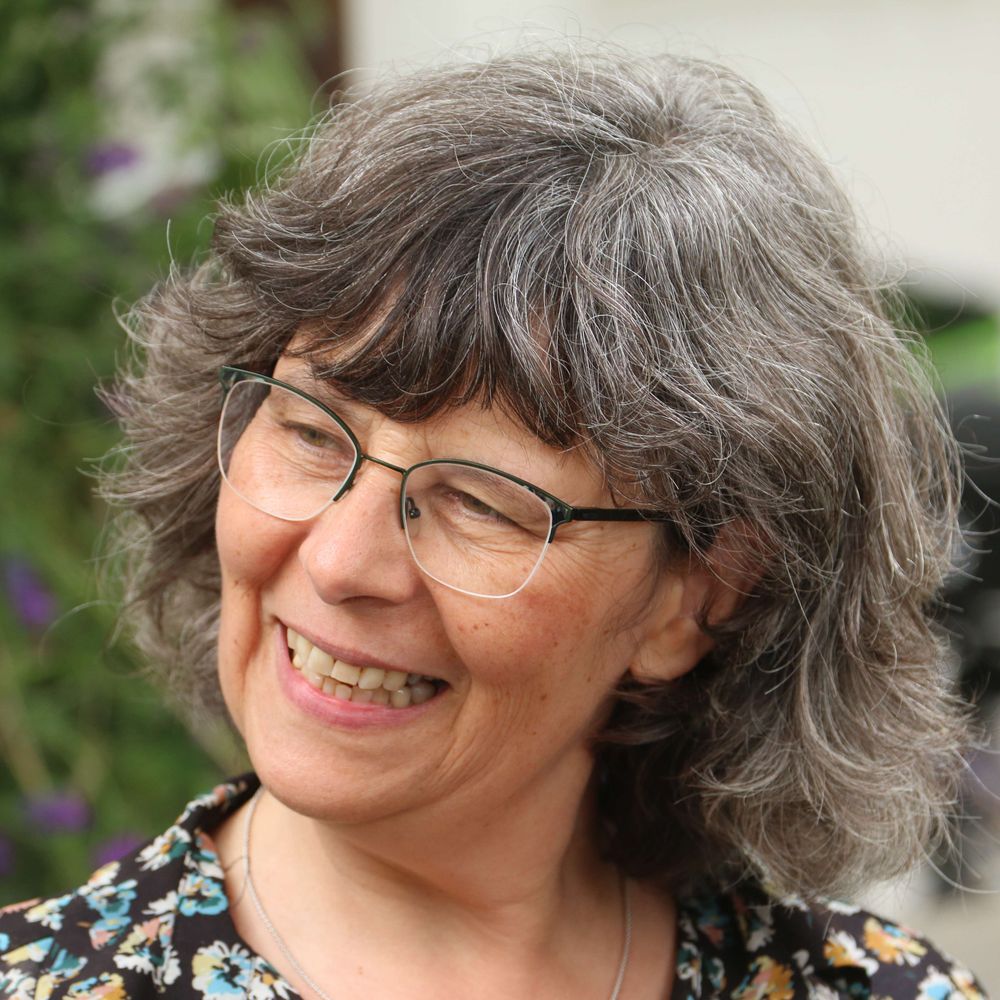
Spiders that experience vibrations, visual stimuli, both or none during development do not differ strongly in the size of their brain areas. This is a surprising finding. Even more surprising is that siblings react alike. See our new publication in the J. comp. Neurology.
doi.org/10.1002/cne....
🧪🕷
doi.org/10.1002/cne....
🧪🕷

November 22, 2025 at 9:01 PM
Spiders that experience vibrations, visual stimuli, both or none during development do not differ strongly in the size of their brain areas. This is a surprising finding. Even more surprising is that siblings react alike. See our new publication in the J. comp. Neurology.
doi.org/10.1002/cne....
🧪🕷
doi.org/10.1002/cne....
🧪🕷
Reposted by Shubham Rathore Ph.D. MSc.
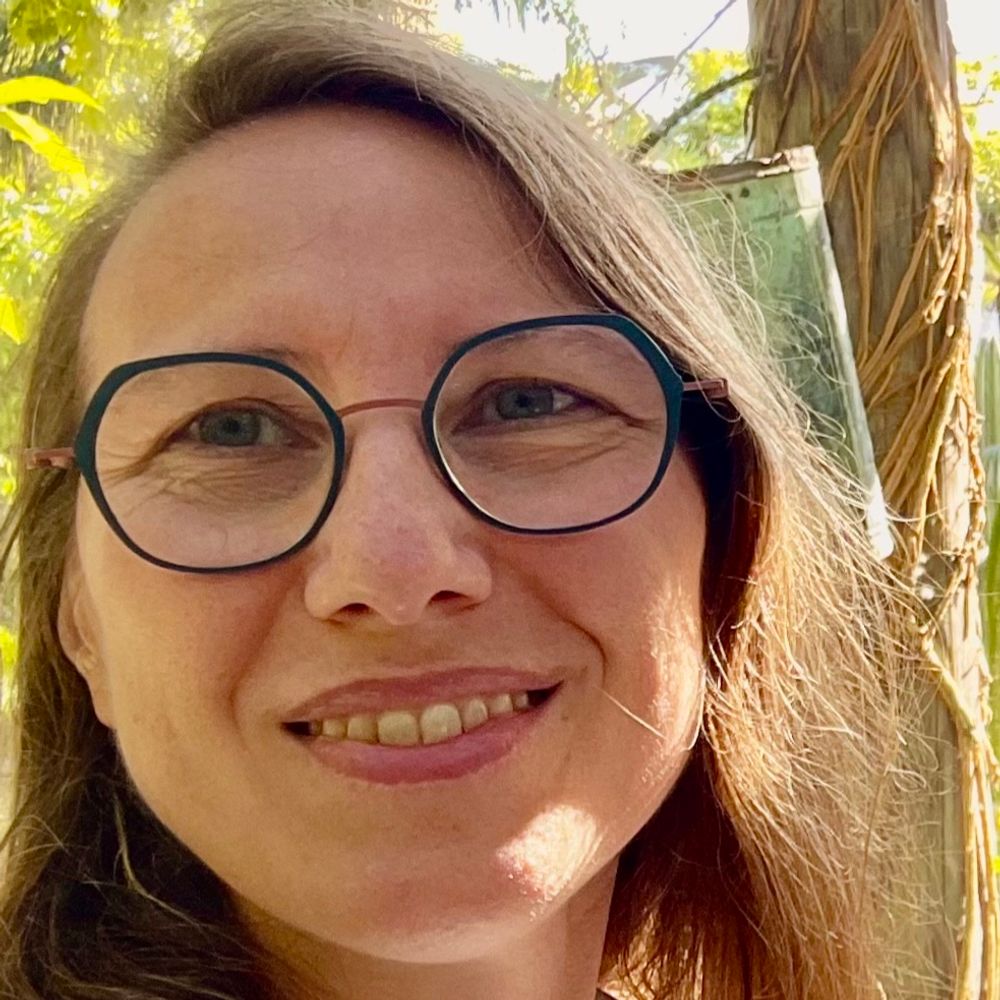
Our study of time processing in bumblebees 🐝 covered by @cnn.com here edition.cnn.com/2025/11/12/s... . Our summary is here youtu.be/hsGxU65OMQk and the original paper royalsocietypublishing.org/doi/full/10.... @royalsocietypublishing.org

Scientists now know that bees can process time, a first in insects | CNN
Bumblebees can process the duration of flashes of light and use the information to decide where to look for food, a new study has found.
edition.cnn.com
November 22, 2025 at 1:04 PM
Our study of time processing in bumblebees 🐝 covered by @cnn.com here edition.cnn.com/2025/11/12/s... . Our summary is here youtu.be/hsGxU65OMQk and the original paper royalsocietypublishing.org/doi/full/10.... @royalsocietypublishing.org