




Matthieu Boisgontier
@matthieuboisgontier.com
Associate Professor at @uOttawa.ca, Faculty of Health Sciences. all comments are my own. Contributing to @pci-hms.bsky.social & @cik.bsky.social. #OpenScience #Kin #PT 🇨🇦 www.linkedin.com/in/matthieuboisgontier
Reposted by Matthieu Boisgontier

We've officially launched! With our new #DiamondOpenAccess investment campaign to help libraries build a sustainable, community‑led future for scholarly publishing & support journals flipping away from costly subscription models. Read the Press release here drive.google.com/file/d/10Hgf...

January 29, 2026 at 3:38 PM
We've officially launched! With our new #DiamondOpenAccess investment campaign to help libraries build a sustainable, community‑led future for scholarly publishing & support journals flipping away from costly subscription models. Read the Press release here drive.google.com/file/d/10Hgf...
Reposted by Matthieu Boisgontier

Rejecting another Elsevier review request. Hoping my attempt at a dispassionate tone keeps my contempt for Elsevier from leaking through.

February 8, 2026 at 8:06 PM
Rejecting another Elsevier review request. Hoping my attempt at a dispassionate tone keeps my contempt for Elsevier from leaking through.
Reposted by Matthieu Boisgontier

feedback welcome (new section in my lab manual on use of AI tools)
github.com/paulgribble/...
github.com/paulgribble/...
github.com
January 31, 2026 at 10:45 PM
feedback welcome (new section in my lab manual on use of AI tools)
github.com/paulgribble/...
github.com/paulgribble/...
Reposted by Matthieu Boisgontier

Too many meta-analyses have findings equivalent to: “If you average the cost of a loaf of bread, car insurance for a year and a movie ticket, you get $752.36”
January 26, 2026 at 11:41 AM
Too many meta-analyses have findings equivalent to: “If you average the cost of a loaf of bread, car insurance for a year and a movie ticket, you get $752.36”
Reposted by Matthieu Boisgontier
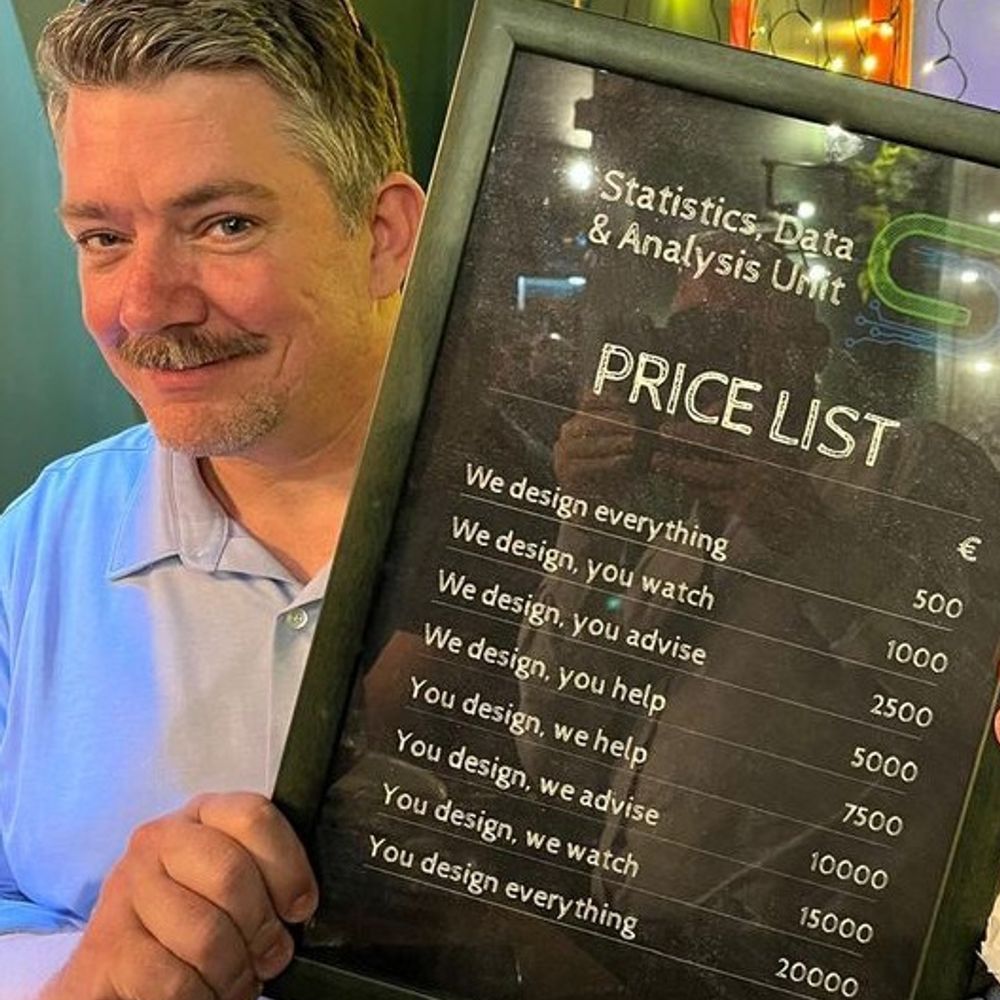
Everyone please red this and then vigorously attack @timpmorris.bsky.social 😜
tpmorris.substack.com/p/how-to-rea...
tpmorris.substack.com/p/how-to-rea...

How to read ‘evidence pyramids’
To get past the pointless bit of the arguments
tpmorris.substack.com
January 16, 2026 at 12:41 PM
Everyone please red this and then vigorously attack @timpmorris.bsky.social 😜
tpmorris.substack.com/p/how-to-rea...
tpmorris.substack.com/p/how-to-rea...
Reposted by Matthieu Boisgontier

We've got ISSUES. Literally.
We scraped >100k special issues & over 1 million articles to bring you a PISS-poor paper. We quantify just how many excess papers are published by guest editors abusing special issues to boost their CVs. How bad is it & what can we do?
arxiv.org/abs/2601.07563
A 🧵 1/n
We scraped >100k special issues & over 1 million articles to bring you a PISS-poor paper. We quantify just how many excess papers are published by guest editors abusing special issues to boost their CVs. How bad is it & what can we do?
arxiv.org/abs/2601.07563
A 🧵 1/n


January 13, 2026 at 8:27 AM
We've got ISSUES. Literally.
We scraped >100k special issues & over 1 million articles to bring you a PISS-poor paper. We quantify just how many excess papers are published by guest editors abusing special issues to boost their CVs. How bad is it & what can we do?
arxiv.org/abs/2601.07563
A 🧵 1/n
We scraped >100k special issues & over 1 million articles to bring you a PISS-poor paper. We quantify just how many excess papers are published by guest editors abusing special issues to boost their CVs. How bad is it & what can we do?
arxiv.org/abs/2601.07563
A 🧵 1/n


Reposted by Matthieu Boisgontier

New post!
There was a lot of innovation in medicine and biomedical research this year, and I've tried to summarize the biggest ones in this blogpost.
Medical breakthroughs in 2025. Plus a serious note at the end.
www.scientificdiscovery.dev/p/medical-br...
There was a lot of innovation in medicine and biomedical research this year, and I've tried to summarize the biggest ones in this blogpost.
Medical breakthroughs in 2025. Plus a serious note at the end.
www.scientificdiscovery.dev/p/medical-br...

Medical breakthroughs in 2025
... and a happy new year.
www.scientificdiscovery.dev
December 28, 2025 at 6:37 PM
New post!
There was a lot of innovation in medicine and biomedical research this year, and I've tried to summarize the biggest ones in this blogpost.
Medical breakthroughs in 2025. Plus a serious note at the end.
www.scientificdiscovery.dev/p/medical-br...
There was a lot of innovation in medicine and biomedical research this year, and I've tried to summarize the biggest ones in this blogpost.
Medical breakthroughs in 2025. Plus a serious note at the end.
www.scientificdiscovery.dev/p/medical-br...
Reposted by Matthieu Boisgontier

Blog post: Just quit
Quitting projects in science is hard, but we should be doing a lot more of it.
open.substack.com/pub/arjunraj...
Quitting projects in science is hard, but we should be doing a lot more of it.
open.substack.com/pub/arjunraj...

Just quit
Quitting projects in science is hard, but we should be doing a lot more of it.
open.substack.com
December 30, 2025 at 3:02 PM
Blog post: Just quit
Quitting projects in science is hard, but we should be doing a lot more of it.
open.substack.com/pub/arjunraj...
Quitting projects in science is hard, but we should be doing a lot more of it.
open.substack.com/pub/arjunraj...
Reposted by Matthieu Boisgontier
Just decline the peer review invitation.
What are you people even doing?
What are you people even doing?

More than half of researchers now use AI for peer review — often against guidance
A survey of 1,600 academics found that more than 50% have used artificial-intelligence tools while peer reviewing manuscripts.
www.nature.com
December 16, 2025 at 10:39 PM
Just decline the peer review invitation.
What are you people even doing?
What are you people even doing?
Reposted by Matthieu Boisgontier

Food for thought publishers! All of the major submission platforms support @orcid.org reviewer credit... #researchsky

I’m turning down journal reviews if the journal doesn’t update activities to ORCID. I get a lot of requests and I need to prioritize somehow. I ain’t collecting “reviewer certifications” from Genome biology and scientific reports, etc., when Nature Family and ACS give me credit for my time.
December 16, 2025 at 11:51 PM
Food for thought publishers! All of the major submission platforms support @orcid.org reviewer credit... #researchsky
Reposted by Matthieu Boisgontier

The point is that most papers we all write are incremental -- based on well established methods and ideas -- and have an audience of subfield experts. These are judged by expert colleagues when they read the work. These don't, in my view, need traditional peer review.
December 11, 2025 at 7:26 PM
The point is that most papers we all write are incremental -- based on well established methods and ideas -- and have an audience of subfield experts. These are judged by expert colleagues when they read the work. These don't, in my view, need traditional peer review.
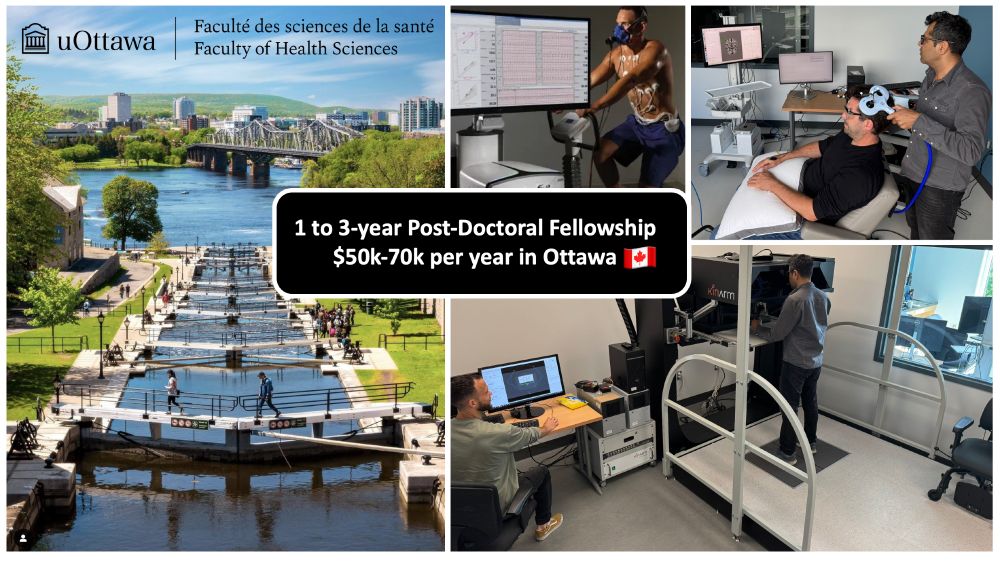
Postdoc (and PhD) opportunity in my lab. www.linkedin.com/posts/matthi...
November 23, 2025 at 5:33 PM
Postdoc (and PhD) opportunity in my lab. www.linkedin.com/posts/matthi...
Should we also require open raw data & code for preprints? This would improve protection against AI-generated manuscripts. There should of course be exceptions for sensitive data, with justifications required.
November 16, 2025 at 11:07 PM
Should we also require open raw data & code for preprints? This would improve protection against AI-generated manuscripts. There should of course be exceptions for sensitive data, with justifications required.
Reposted by Matthieu Boisgontier

A better approach is to build the capacity of presses in libraries, UPs, scholar-led pubs, overlays, etc. This will take money but will allow a better kind of publishing to flourish in places that need it, so you'll change the argument from being about cost-saving towards a more ethical ecosystem.
November 15, 2025 at 1:41 PM
A better approach is to build the capacity of presses in libraries, UPs, scholar-led pubs, overlays, etc. This will take money but will allow a better kind of publishing to flourish in places that need it, so you'll change the argument from being about cost-saving towards a more ethical ecosystem.
Reposted by Matthieu Boisgontier

I’m not sure who needs to hear this but RCTs are a tool in our scientific tool kit. It’s a powerful tool but things “go wrong” in RCTs with randomization, primary outcomes (yes you can do secondary analyses), intention to treat etc. RCTs, prospective, observational all have a role to play in science
November 15, 2025 at 3:15 PM
I’m not sure who needs to hear this but RCTs are a tool in our scientific tool kit. It’s a powerful tool but things “go wrong” in RCTs with randomization, primary outcomes (yes you can do secondary analyses), intention to treat etc. RCTs, prospective, observational all have a role to play in science
Reposted by Matthieu Boisgontier

A new ⭐ Editor's Choice ⭐ explores the complex relationships between depressive symptoms, pain, physical activity, and function in patients with arthritis.
academic.oup.com/ptj/advance-...
academic.oup.com/ptj/advance-...
Validate User
academic.oup.com
November 12, 2025 at 3:58 PM
A new ⭐ Editor's Choice ⭐ explores the complex relationships between depressive symptoms, pain, physical activity, and function in patients with arthritis.
academic.oup.com/ptj/advance-...
academic.oup.com/ptj/advance-...
Reposted by Matthieu Boisgontier

New diamond open access journal Replication Research welcomes reports of replication of previous works. #academicchatter
https://www.uni-muenster.de/Ejournals/index.php/replicationresearch/index
https://www.uni-muenster.de/Ejournals/index.php/replicationresearch/index
Replication Research
Replication Research is a diamond open-access and researcher-led journal that publishes reproductions, replications, and conceptual articles on repetitive research
www.uni-muenster.de
November 12, 2025 at 9:54 AM
New diamond open access journal Replication Research welcomes reports of replication of previous works. #academicchatter
https://www.uni-muenster.de/Ejournals/index.php/replicationresearch/index
https://www.uni-muenster.de/Ejournals/index.php/replicationresearch/index
Reposted by Matthieu Boisgontier

So stimulating & such a pleasure to work w/ these geniuses. Took only 11 versions to get us all aligned and agree on one call to action to stop the drain.
What we all agreed on right away: this push needs to happen via strong funder and institutional policies w/out for-profit publisher interference
What we all agreed on right away: this push needs to happen via strong funder and institutional policies w/out for-profit publisher interference

New preprint on the drain that for-profit publishers place on the scientific ecosystem. We also point out that, though it's often presented as a global problem, it's actually a Global North problem: there are parts of the world with strong diamond #OA non-profit alternatives arxiv.org/abs/2511.04820
November 11, 2025 at 5:21 PM
So stimulating & such a pleasure to work w/ these geniuses. Took only 11 versions to get us all aligned and agree on one call to action to stop the drain.
What we all agreed on right away: this push needs to happen via strong funder and institutional policies w/out for-profit publisher interference
What we all agreed on right away: this push needs to happen via strong funder and institutional policies w/out for-profit publisher interference
Reposted by Matthieu Boisgontier

What is the most profitable industry in the world, this side of the law? Not oil, not IT, not pharma.
It's *scientific publishing*.
We call this the Drain of Scientific Publishing.
Paper: arxiv.org/abs/2511.04820
Background: doi.org/10.1162/qss_...
Thread @markhanson.fediscience.org.ap.brid.gy 👇
It's *scientific publishing*.
We call this the Drain of Scientific Publishing.
Paper: arxiv.org/abs/2511.04820
Background: doi.org/10.1162/qss_...
Thread @markhanson.fediscience.org.ap.brid.gy 👇

November 12, 2025 at 10:31 AM
What is the most profitable industry in the world, this side of the law? Not oil, not IT, not pharma.
It's *scientific publishing*.
We call this the Drain of Scientific Publishing.
Paper: arxiv.org/abs/2511.04820
Background: doi.org/10.1162/qss_...
Thread @markhanson.fediscience.org.ap.brid.gy 👇
It's *scientific publishing*.
We call this the Drain of Scientific Publishing.
Paper: arxiv.org/abs/2511.04820
Background: doi.org/10.1162/qss_...
Thread @markhanson.fediscience.org.ap.brid.gy 👇
Reposted by Matthieu Boisgontier

Youyou Tu's work on anti-malarial compounds that saved millions of lives (w/Nobel+Lasker recognition) wins the low citation/huge impact cell. The original paper has 87 citations as of today: pubmed.ncbi.nlm.nih.gov/11721477/ Hopefully she can get to 100.
What for huge citations and moderate impact?
What for huge citations and moderate impact?

November 8, 2025 at 12:31 PM
Youyou Tu's work on anti-malarial compounds that saved millions of lives (w/Nobel+Lasker recognition) wins the low citation/huge impact cell. The original paper has 87 citations as of today: pubmed.ncbi.nlm.nih.gov/11721477/ Hopefully she can get to 100.
What for huge citations and moderate impact?
What for huge citations and moderate impact?
Reposted by Matthieu Boisgontier

New pre-print out on peer-review milling! Together with @deevybee.bsky.social and M. Angeles Oviedo Garcia.
Enjoy!
doi.org/10.1101/2025...
Enjoy!
doi.org/10.1101/2025...

Gaming the peer review system: a sophisticated review mill in medicine highlights the need to ensure reviewer integrity
Background A review mill is a network of researchers who game the peer review system to apparently boost their citations. Members write generic review reports containing suggestions for citations to t...
doi.org
November 7, 2025 at 10:22 AM
New pre-print out on peer-review milling! Together with @deevybee.bsky.social and M. Angeles Oviedo Garcia.
Enjoy!
doi.org/10.1101/2025...
Enjoy!
doi.org/10.1101/2025...
Reposted by Matthieu Boisgontier

«Pourquoi l'économie de l'édition scientifique a besoin d'une réforme urgente»
📚Ce texte de @stefhaustein.scholcommlab.ca souligne les travers du modèle économique de la publication savante et propose 13 mesures pour y remédier.
📌 shorturl.at/g5Zel
#ScholCommLab #ScholComm #ScholarlyPublishing
📚Ce texte de @stefhaustein.scholcommlab.ca souligne les travers du modèle économique de la publication savante et propose 13 mesures pour y remédier.
📌 shorturl.at/g5Zel
#ScholCommLab #ScholComm #ScholarlyPublishing


November 3, 2025 at 5:05 PM
«Pourquoi l'économie de l'édition scientifique a besoin d'une réforme urgente»
📚Ce texte de @stefhaustein.scholcommlab.ca souligne les travers du modèle économique de la publication savante et propose 13 mesures pour y remédier.
📌 shorturl.at/g5Zel
#ScholCommLab #ScholComm #ScholarlyPublishing
📚Ce texte de @stefhaustein.scholcommlab.ca souligne les travers du modèle économique de la publication savante et propose 13 mesures pour y remédier.
📌 shorturl.at/g5Zel
#ScholCommLab #ScholComm #ScholarlyPublishing
Reposted by Matthieu Boisgontier

i agree. Problem is that peer review is not geared up for detection of fabricated data. Sadly I think we need to be more alert to this. Inclusion of raw data v helpful in this case - and the discrepancies in age hit you as soon as you open the file. But deposited data should be .csv! @bmj.com
November 3, 2025 at 7:44 AM
i agree. Problem is that peer review is not geared up for detection of fabricated data. Sadly I think we need to be more alert to this. Inclusion of raw data v helpful in this case - and the discrepancies in age hit you as soon as you open the file. But deposited data should be .csv! @bmj.com
Reposted by Matthieu Boisgontier
"Sustaining openness in an age of industrial-scale extraction may require new economic and governance models...it may be useful to consider historical precedent [like] governance of biological resources [from] indigenous communities" sverhulst.medium.com/the-weaponis...

The Weaponisation of Openness? Toward a New Social Contract for Data in the AI Era
By Stefaan G. Verhulst
sverhulst.medium.com
November 3, 2025 at 3:26 PM
"Sustaining openness in an age of industrial-scale extraction may require new economic and governance models...it may be useful to consider historical precedent [like] governance of biological resources [from] indigenous communities" sverhulst.medium.com/the-weaponis...