




Meta-scientist and psychologist. Senior lecturer @unibe.ch. Chief recommender @error.reviews. "Jumped up punk who hasn't earned his stripes." All views a product of my learning history. If behaviorism did not exist, it would be necessary to invent it. .. more
Meta-scientist and psychologist. Senior lecturer @unibe.ch. Chief recommender @error.reviews. "Jumped up punk who hasn't earned his stripes." All views a product of my learning history. If behaviorism did not exist, it would be necessary to invent it.
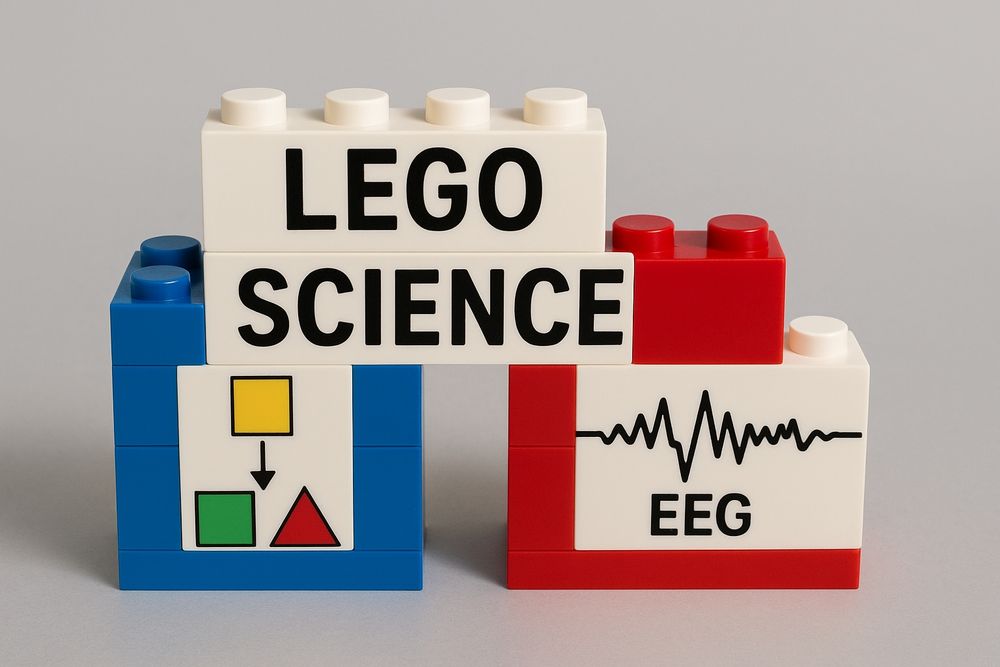
When researchers combine methods or concepts, more out of convenience than any deep curiosity in the resulting research question, to create publishable units.
"What role does {my favourite construct} play in {task}?"
Reposted by Dorothy Bishop, Ian Hussey


doi.org/10.1037/1082...


🧵
www.bps.org.uk/psychologist...
Reposted by Ian Hussey

It's called shinymcp. Drop-downs, plots, tables all inline in the chat.
github.com/jameshwade/shinymcp
Reposted by Ian Hussey


We discussed her work as a scientific sleuth, academic incentives for positive data, individual cases she has pursued, and why she loves being a sleuth.
Also on Spotify: open.spotify.com/episode/16R6...

github.com/ianhussey/ps...
Reposted by James E. Bartlett


Results from students in my class in data wrangling in tidyverse, who are good at wrangling but still have to make semi-subjective choices:
Reposted by Ian Hussey, Paul Goldsmith-Pinkham, Barrett


- `filter_out()` for dropping rows
- `recode_values()`, `replace_values()`, and `replace_when()` that join `case_when()` as a complete family of recoding/replacing tools
These are huge quality of life wins for #rstats!
tidyverse.org/blog/2026/02...
Reposted by Scott L. Greer, Calvin K. Lai, Cameron Brick , and 12 more Scott L. Greer, Calvin K. Lai, Cameron Brick, Ian Hussey, Max Nathan, Lauren Hersch Nicholas, Nazita Lajevardi, Margot C. Finn, Sofia Stathi, Patrick Präg, Marko Lindroos, Adele Perry, Simon Wiederhold, Claudia Landwehr, Richard Moorhead



These authors wanted to know whether gender shapes how scholars are treated when presenting research.
So they built a massive dataset of 2,000+ economics seminars, job talks, and conference presentations from 2019–2023...
If failure to supply data upon request after committing to do so resulted in a correction notice, researchers would comply immediately.
Reposted by Ingo Rohlfing, Ian Hussey, José Pina-Sánchez


or if you're conducting a systematic review/meta-analysis and want to ensure you're not including junk studies,
check out this Cochrane training session on Trustworthiness Assessment by @jdwilko.bsky.social
Reposted by Ian Hussey


Look at the two citations in the image. The years alone should give away they don't support the claim made in the paper.
www.sciencedirect.com/science/arti...
Reposted by Ian Hussey, Patrick S. Forscher, Jesper Wulff


https://open.substack.com/pub/tomstafford/p/gambling-with-research-quality

Reposted by Ian Hussey

Honestly, read our paper more
pubmed.ncbi.nlm.nih.gov/35623542/

E.g., the cited work makes the opposite claim or is unrelated to the claim in the citing article.
https://open.substack.com/pub/tomstafford/p/gambling-with-research-quality
This is the sentiment we were hoping people would come away with!
w/@anniria.bsky.social