



Jamie Cummins
@jamiecummins.bsky.social
Currently a visiting researcher at @bennettoxford.bsky.social. Normally at Uni of Bern.
Meta-scientist building tools to help other scientists. NLP, simulation, & LLMs.
Creator and developer of RegCheck (https://regcheck.app).
1/4 of @error.reviews.
🇮🇪
Meta-scientist building tools to help other scientists. NLP, simulation, & LLMs.
Creator and developer of RegCheck (https://regcheck.app).
1/4 of @error.reviews.
🇮🇪
Pinned
Jamie Cummins
@jamiecummins.bsky.social
· Jul 23

RegCheck.app
RegCheck is an AI tool to compare preregistrations with papers instantly.
regcheck.app
Introducing RegCheck: a tool which uses Large Language Models to automatically compare preregistered protocols with their corresponding published papers and highlights deviations.
@malte.the100.ci @ianhussey.bsky.social @ruben.the100.ci @bjoernhommel.bsky.social
regcheck.app
@malte.the100.ci @ianhussey.bsky.social @ruben.the100.ci @bjoernhommel.bsky.social
regcheck.app
Reposted by Jamie Cummins

so maybe @mdpiopenaccess.bsky.social could make a resolution to remove all editors and reviewers who have accepted nonsensical papers. It would be quite a cull

As a pioneer in Open Access scholarly publishing, MDPI upholds high ethical publishing standards across its journals.
Learn more about how MDPI continues to strengthen its publication ethics policies: buff.ly/nssdnLb
#MDPI #PublicationEthics #OpenAccess
Learn more about how MDPI continues to strengthen its publication ethics policies: buff.ly/nssdnLb
#MDPI #PublicationEthics #OpenAccess
January 2, 2026 at 7:29 AM
so maybe @mdpiopenaccess.bsky.social could make a resolution to remove all editors and reviewers who have accepted nonsensical papers. It would be quite a cull
Reposted by Jamie Cummins

Journal article: “the data are available on request”
The data:
The data:


December 20, 2025 at 11:33 AM
Journal article: “the data are available on request”
The data:
The data:
Reposted by Jamie Cummins
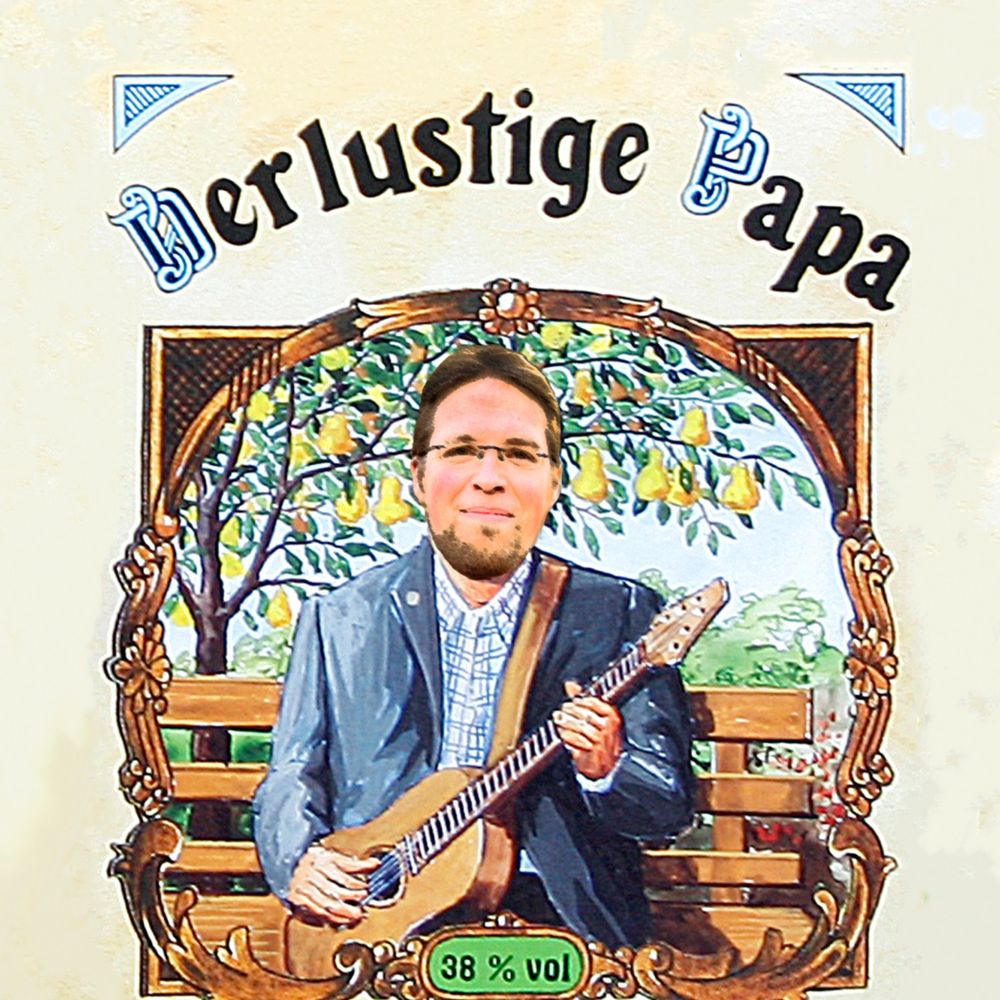
I regularly cite Prinz et al.(www.nature.com/articles/nrd...) as a ref for low replicability in (non-psych) preclinical research. Believe it or not: They've omitted which studies they attempted to replicate!
I'm guessing this isn't news to everyone, but it was to me. Bizarre.
I'm guessing this isn't news to everyone, but it was to me. Bizarre.

Believe it or not: how much can we rely on published data on potential drug targets? - Nature Reviews Drug Discovery
Nature Reviews Drug Discovery - Believe it or not: how much can we rely on published data on potential drug targets?
www.nature.com
December 19, 2025 at 1:19 PM
I regularly cite Prinz et al.(www.nature.com/articles/nrd...) as a ref for low replicability in (non-psych) preclinical research. Believe it or not: They've omitted which studies they attempted to replicate!
I'm guessing this isn't news to everyone, but it was to me. Bizarre.
I'm guessing this isn't news to everyone, but it was to me. Bizarre.
Reposted by Jamie Cummins

The package formerly known as papercheck has changed its name to metacheck! We're checking more than just papers, with functions to assess OSF projects, github repos, and AsPredicted pre-registrations, with more being developed all the time.
scienceverse.github.io/metacheck/
scienceverse.github.io/metacheck/

Check Research Outputs for Best Practices
A modular, extendable system for automatically checking research outputs for best practices using text search, R code, and/or (optional) LLM queries.
scienceverse.github.io
November 3, 2025 at 4:20 PM
The package formerly known as papercheck has changed its name to metacheck! We're checking more than just papers, with functions to assess OSF projects, github repos, and AsPredicted pre-registrations, with more being developed all the time.
scienceverse.github.io/metacheck/
scienceverse.github.io/metacheck/
Reposted by Jamie Cummins

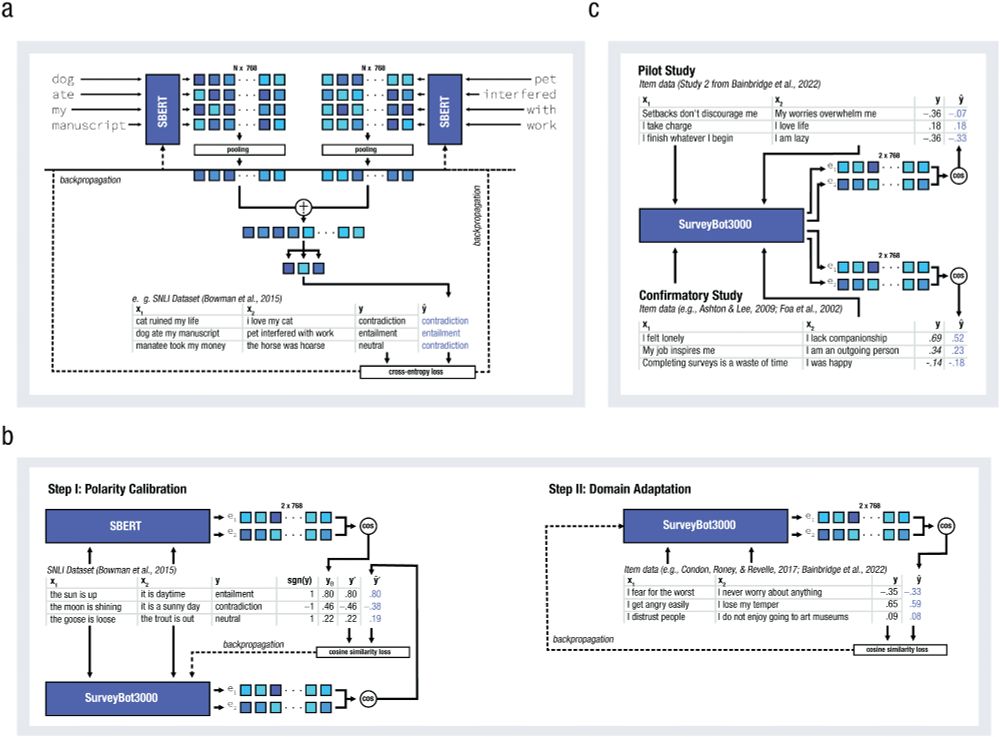
Finally, @bjoernhommel.bsky.social's and my paper introducing the SurveyBot3000 is officially out in AMPPS. It's a fine-tuned language model that guesstimates correlations between survey items from text alone. Not perfectly, but useful for search, for example.
journals.sagepub.com/doi/10.1177/...
journals.sagepub.com/doi/10.1177/...


December 18, 2025 at 8:21 PM
Finally, @bjoernhommel.bsky.social's and my paper introducing the SurveyBot3000 is officially out in AMPPS. It's a fine-tuned language model that guesstimates correlations between survey items from text alone. Not perfectly, but useful for search, for example.
journals.sagepub.com/doi/10.1177/...
journals.sagepub.com/doi/10.1177/...
Contrasting to silicon samples, this type of method based on text embeddings seems to be both more principled and more robust in making predictions about scale and item correlations. Super happy to see this great work out!
Finally, @bjoernhommel.bsky.social's and my paper introducing the SurveyBot3000 is officially out in AMPPS. It's a fine-tuned language model that guesstimates correlations between survey items from text alone. Not perfectly, but useful for search, for example.
journals.sagepub.com/doi/10.1177/...
journals.sagepub.com/doi/10.1177/...
December 18, 2025 at 8:33 PM
Contrasting to silicon samples, this type of method based on text embeddings seems to be both more principled and more robust in making predictions about scale and item correlations. Super happy to see this great work out!
Great thread about a very timely preprint. Couldn’t agree more with this point especially. When results from LLMs in “silicon samples” can vary substantially as a function of many analytic decisions, systematically making decisions erases much perceived efficiency.
arxiv.org/abs/2509.133...
arxiv.org/abs/2509.133...
December 18, 2025 at 6:16 PM
Great thread about a very timely preprint. Couldn’t agree more with this point especially. When results from LLMs in “silicon samples” can vary substantially as a function of many analytic decisions, systematically making decisions erases much perceived efficiency.
arxiv.org/abs/2509.133...
arxiv.org/abs/2509.133...
Reposted by Jamie Cummins

Many think LLM-simulated participants can transform behavioral science. But there's been a lack of accessible discussion of what it means to validate LLMs for behavioral scientists. Under what conditions can we trust LLMs to learn about human parameters? Our paper maps the validation landscape.
1/
1/

December 18, 2025 at 5:53 PM
Many think LLM-simulated participants can transform behavioral science. But there's been a lack of accessible discussion of what it means to validate LLMs for behavioral scientists. Under what conditions can we trust LLMs to learn about human parameters? Our paper maps the validation landscape.
1/
1/
Reposted by Jamie Cummins

At ERROR, we cannot compete with million-dollar bounties for whistleblowers. But it is great to see sleuthing work rewarded, and institutions admitting when their researchers engaged in misconduct.
Dana-Farber Cancer Institute Agrees to Pay $15 Million to Settle Fraud Allegations Related to Scientific Research Grants. The relator [Sholto David] will receive $2,625,000 under today’s settlement.
www.justice.gov/usao-ma/pr/d...
www.justice.gov/usao-ma/pr/d...

Dana-Farber Cancer Institute Agrees to Pay $15 Million to Settle Fraud Allegations Related to Scientific Research Grants
BOSTON – Dana-Farber Cancer Institute, Inc. (Dana-Farber) has agreed to pay $15 million to resolve allegations that, between 2014 and 2024, it made materially false statements and certifications relat...
www.justice.gov
December 18, 2025 at 12:31 PM
At ERROR, we cannot compete with million-dollar bounties for whistleblowers. But it is great to see sleuthing work rewarded, and institutions admitting when their researchers engaged in misconduct.
Reposted by Jamie Cummins
While we are unable to offer publication in Nature Aging, we believe your manuscript may be suitable for our Gold Open Access sister journal.

December 17, 2025 at 7:30 PM
While we are unable to offer publication in Nature Aging, we believe your manuscript may be suitable for our Gold Open Access sister journal.
Reposted by Jamie Cummins
Post-publication peer review is at it best when it's thoughtful, scrupulous, steeped in detail – and challenges key claims of the paper. @janhove.bsky.social's discussion of a recent paper on multilingualism exemplifies this.

A recent study purports to have found that multilingualism protects against accelerated ageing. I've taken a closer look at it, and it doesn't look good.
New blog post: "Does multilingualism really protect against accelerated ageing? Some critical comments"
janhove.github.io/posts/2025-1...
New blog post: "Does multilingualism really protect against accelerated ageing? Some critical comments"
janhove.github.io/posts/2025-1...


December 17, 2025 at 10:01 AM
Post-publication peer review is at it best when it's thoughtful, scrupulous, steeped in detail – and challenges key claims of the paper. @janhove.bsky.social's discussion of a recent paper on multilingualism exemplifies this.
Reposted by Jamie Cummins

Did you know that from tomorrow, Qualtrics is offering synthetic panels (AI-generated participants)?
Follow me down a rabbit hole I'm calling "doing science is tough and I'm so busy, can't we just make up participants?"
Follow me down a rabbit hole I'm calling "doing science is tough and I'm so busy, can't we just make up participants?"


December 16, 2025 at 5:38 PM
Did you know that from tomorrow, Qualtrics is offering synthetic panels (AI-generated participants)?
Follow me down a rabbit hole I'm calling "doing science is tough and I'm so busy, can't we just make up participants?"
Follow me down a rabbit hole I'm calling "doing science is tough and I'm so busy, can't we just make up participants?"
Reposted by Jamie Cummins
See @jamiecummins.bsky.social 's work

AI-generated ‘participants’ can lead social science experiments astray, study finds
Data produced by “silicon samples” depends on researchers’ exact choice of models, prompts, and settings
www.science.org
December 16, 2025 at 5:38 PM
See @jamiecummins.bsky.social 's work
Reposted by Jamie Cummins

Thanks for sharing!
You may be interested in this, which resonates, from @jamiecummins.bsky.social, on the fragility of silicon samples
doi.org/10.48550/arX...
You may be interested in this, which resonates, from @jamiecummins.bsky.social, on the fragility of silicon samples
doi.org/10.48550/arX...
The threat of analytic flexibility in using large language models to simulate human data: A call to attention
Social scientists are now using large language models to create "silicon samples" - synthetic datasets intended to stand in for human respondents, aimed at revolutionising human subjects research. How...
doi.org
December 16, 2025 at 11:43 AM
Thanks for sharing!
You may be interested in this, which resonates, from @jamiecummins.bsky.social, on the fragility of silicon samples
doi.org/10.48550/arX...
You may be interested in this, which resonates, from @jamiecummins.bsky.social, on the fragility of silicon samples
doi.org/10.48550/arX...
Reposted by Jamie Cummins

A new PNAS paper finds that polarization increased immediately after the release of Lady Gaga’s “Just Dance” and the advent of the late-2000s electro-pop era, which both appeared around the same year, 2008.

A new PNAS paper finds that polarization increased immediately after the invention of smartphones and the advent of social media, which both appeared around the same year, 2008.
www.pnas.org/doi/10.1073/...
www.pnas.org/doi/10.1073/...

December 15, 2025 at 8:21 AM
A new PNAS paper finds that polarization increased immediately after the release of Lady Gaga’s “Just Dance” and the advent of the late-2000s electro-pop era, which both appeared around the same year, 2008.
Reposted by Jamie Cummins
Critique argues post-publication peer review "often focuses on minor details" and "risks damaging trust in both the research itself and the peer review process" found to contain:
- Hallucinated references
- Undisclosed COIs (EiC is author)
- 8/9 authors have retractions or related scandals
- Hallucinated references
- Undisclosed COIs (EiC is author)
- 8/9 authors have retractions or related scandals

An expert criticism on post-publication peer review platforms: the case of pubpeer - DARU Journal of Pharmaceutical Sciences
While traditional peer review offers advantages in academic publishing, it is often hampered by significant weaknesses, leading to frustration among many authors. Scientific discoveries after publicat...
link.springer.com
December 13, 2025 at 12:12 PM
Critique argues post-publication peer review "often focuses on minor details" and "risks damaging trust in both the research itself and the peer review process" found to contain:
- Hallucinated references
- Undisclosed COIs (EiC is author)
- 8/9 authors have retractions or related scandals
- Hallucinated references
- Undisclosed COIs (EiC is author)
- 8/9 authors have retractions or related scandals
Reposted by Jamie Cummins
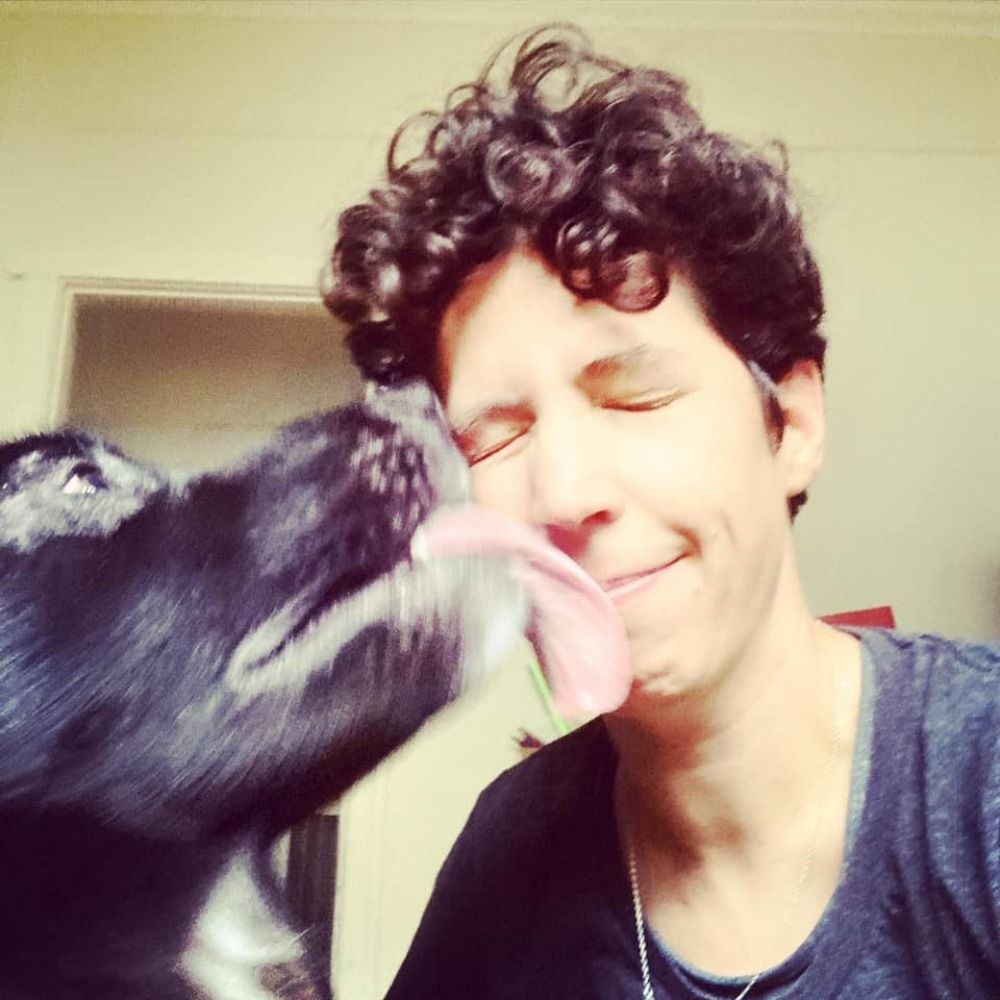
Congratulations to @bethclarke.bsky.social on her PhD graduation!! It’s been amazing watching you become the incredible scholar that you are, thanks for letting me come along for the ride!
You’re the best! 🎉🥂🌟
You’re the best! 🎉🥂🌟


December 13, 2025 at 10:55 AM
Congratulations to @bethclarke.bsky.social on her PhD graduation!! It’s been amazing watching you become the incredible scholar that you are, thanks for letting me come along for the ride!
You’re the best! 🎉🥂🌟
You’re the best! 🎉🥂🌟
Reposted by Jamie Cummins
Keeping this at hand in case I need to point to it and tap

December 12, 2025 at 4:39 PM
Keeping this at hand in case I need to point to it and tap
Reposted by Jamie Cummins
Many psychologists are treating LLMs as if they are the mind of god.
This study had chatGPT rate how central academic disciplines are to various constructs.
Why would chatGPT know this?
Where is the evidence its ratings are reliable or valid?
compass.onlinelibrary.wiley.com/doi/full/10....
This study had chatGPT rate how central academic disciplines are to various constructs.
Why would chatGPT know this?
Where is the evidence its ratings are reliable or valid?
compass.onlinelibrary.wiley.com/doi/full/10....

December 10, 2025 at 10:09 AM
Many psychologists are treating LLMs as if they are the mind of god.
This study had chatGPT rate how central academic disciplines are to various constructs.
Why would chatGPT know this?
Where is the evidence its ratings are reliable or valid?
compass.onlinelibrary.wiley.com/doi/full/10....
This study had chatGPT rate how central academic disciplines are to various constructs.
Why would chatGPT know this?
Where is the evidence its ratings are reliable or valid?
compass.onlinelibrary.wiley.com/doi/full/10....
As someone extremely non-aesthetically oriented, I needed this
Big new blogpost!
My guide to data visualization, which includes a very long table of contents, tons of charts, and more.
--> Why data visualization matters and how to make charts more effective, clear, transparent, and sometimes, beautiful.
www.scientificdiscovery.dev/p/salonis-gu...
My guide to data visualization, which includes a very long table of contents, tons of charts, and more.
--> Why data visualization matters and how to make charts more effective, clear, transparent, and sometimes, beautiful.
www.scientificdiscovery.dev/p/salonis-gu...

December 10, 2025 at 8:39 AM
As someone extremely non-aesthetically oriented, I needed this
Reposted by Jamie Cummins

Big new blogpost!
My guide to data visualization, which includes a very long table of contents, tons of charts, and more.
--> Why data visualization matters and how to make charts more effective, clear, transparent, and sometimes, beautiful.
www.scientificdiscovery.dev/p/salonis-gu...
My guide to data visualization, which includes a very long table of contents, tons of charts, and more.
--> Why data visualization matters and how to make charts more effective, clear, transparent, and sometimes, beautiful.
www.scientificdiscovery.dev/p/salonis-gu...
December 9, 2025 at 8:28 PM
Big new blogpost!
My guide to data visualization, which includes a very long table of contents, tons of charts, and more.
--> Why data visualization matters and how to make charts more effective, clear, transparent, and sometimes, beautiful.
www.scientificdiscovery.dev/p/salonis-gu...
My guide to data visualization, which includes a very long table of contents, tons of charts, and more.
--> Why data visualization matters and how to make charts more effective, clear, transparent, and sometimes, beautiful.
www.scientificdiscovery.dev/p/salonis-gu...
Reposted by Jamie Cummins

Tomorrow: sold-out Bennett Symposium at Jesus College www.bennett.ox.ac.uk/events/2025-.... Day 1 = presentations and panels. Day 2 = collaborative sessions and drop-ins with OpenPrescribing & OpenSAFELY teams. If you're attending, see you there 📊

2025 Bennett Institute Medicines Symposium | Bennett Institute for Applied Data Science
The two-day 2025 Bennett Institute Medicines Symposium will take place at Jesus College in Oxford on 10–11 December 2025.
www.bennett.ox.ac.uk
December 9, 2025 at 3:43 PM
Tomorrow: sold-out Bennett Symposium at Jesus College www.bennett.ox.ac.uk/events/2025-.... Day 1 = presentations and panels. Day 2 = collaborative sessions and drop-ins with OpenPrescribing & OpenSAFELY teams. If you're attending, see you there 📊
Reposted by Jamie Cummins
Project Implicit gives you feedback when you complete an IAT, and the IAT literature has aspired to individual level measurement since its inception.
In this article, we quantify the individual level uncertainty around these estimates and show that IAT effects can say very little about individuals.
In this article, we quantify the individual level uncertainty around these estimates and show that IAT effects can say very little about individuals.

December 9, 2025 at 12:11 PM
Project Implicit gives you feedback when you complete an IAT, and the IAT literature has aspired to individual level measurement since its inception.
In this article, we quantify the individual level uncertainty around these estimates and show that IAT effects can say very little about individuals.
In this article, we quantify the individual level uncertainty around these estimates and show that IAT effects can say very little about individuals.
Reposted by Jamie Cummins

More research like this on other psychometric scales is needed (although the IAT should just be abandoned regardless).
Researchers and practitioners should know the precision of their tools. If someone is 1pt over a cutoff how reliable is this for classification and treatment?
Researchers and practitioners should know the precision of their tools. If someone is 1pt over a cutoff how reliable is this for classification and treatment?
Just published in Behavior Research Methods:
The individual-level precision of implicit measures
w/ @ianhussey.mmmdata.io
🧵👇
link.springer.com/article/10.3...
The individual-level precision of implicit measures
w/ @ianhussey.mmmdata.io
🧵👇
link.springer.com/article/10.3...

The individual-level precision of implicit measures - Behavior Research Methods
Implicit measures are used extensively in psychological science. One fundamental goal of these measures is to provide information diagnostic of an individual’s attitudes or beliefs. After 25 years of ...
link.springer.com
December 9, 2025 at 12:18 PM
More research like this on other psychometric scales is needed (although the IAT should just be abandoned regardless).
Researchers and practitioners should know the precision of their tools. If someone is 1pt over a cutoff how reliable is this for classification and treatment?
Researchers and practitioners should know the precision of their tools. If someone is 1pt over a cutoff how reliable is this for classification and treatment?
Just published in Behavior Research Methods:
The individual-level precision of implicit measures
w/ @ianhussey.mmmdata.io
🧵👇
link.springer.com/article/10.3...
The individual-level precision of implicit measures
w/ @ianhussey.mmmdata.io
🧵👇
link.springer.com/article/10.3...
The individual-level precision of implicit measures - Behavior Research Methods
Implicit measures are used extensively in psychological science. One fundamental goal of these measures is to provide information diagnostic of an individual’s attitudes or beliefs. After 25 years of ...
link.springer.com
December 9, 2025 at 11:20 AM
Just published in Behavior Research Methods:
The individual-level precision of implicit measures
w/ @ianhussey.mmmdata.io
🧵👇
link.springer.com/article/10.3...
The individual-level precision of implicit measures
w/ @ianhussey.mmmdata.io
🧵👇
link.springer.com/article/10.3...