


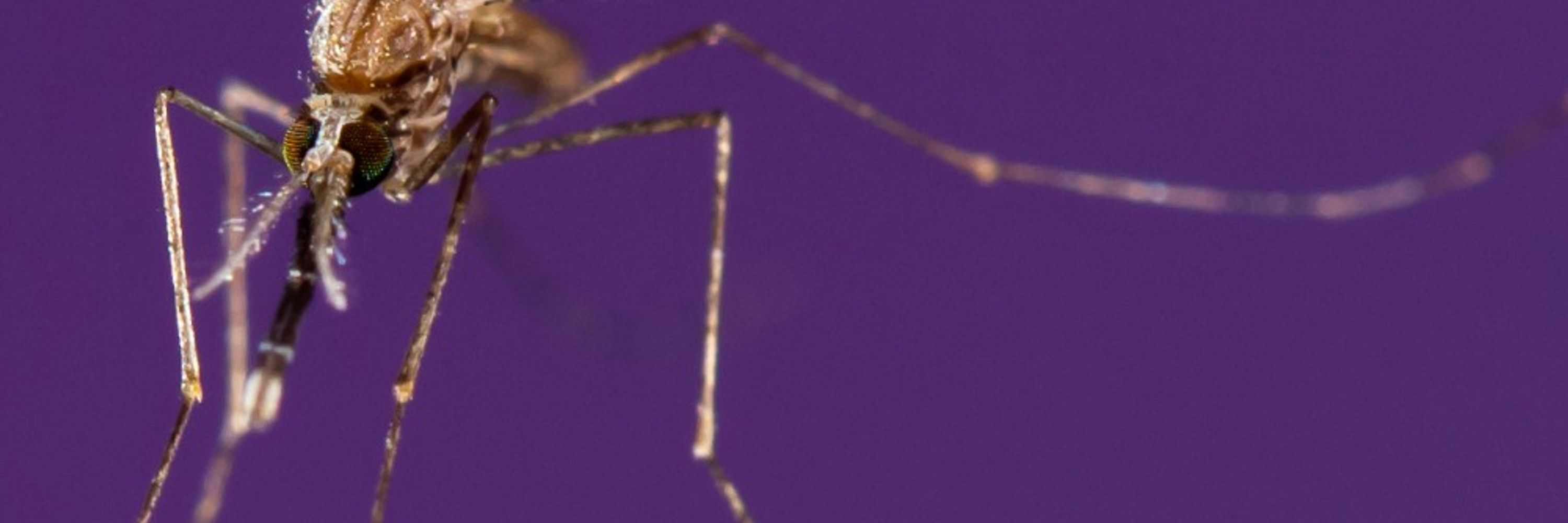

Kristin Michel
@kmichel.bsky.social
Host-pathogen interactions and Insect immunology. Scientist. Mother. Firstgen. Immigrant. Portrait by Petra Korlevic
Ok, let’s try this again! New research from the lab. @david-hayes.bsky.social shows that spores of the #fungus Clonostacys rosea kill #mosquito larvae. Clonostacys does not infect & conidia do not need to be alive to kill larvae. Collab with Patil Tawidian, Jen Phinney, Brandon Plattner.

The potential of Clonostachys rosea as a biolarvicide against Anopheles gambiae
Mosquitoes vector multiple disease-causing pathogens detrimental to humans, imposing a high public health and economic burden. Chemical and biological larvicides are used in some settings to reduce mo...
www.biorxiv.org
December 31, 2025 at 7:15 PM
Ok, let’s try this again! New research from the lab. @david-hayes.bsky.social shows that spores of the #fungus Clonostacys rosea kill #mosquito larvae. Clonostacys does not infect & conidia do not need to be alive to kill larvae. Collab with Patil Tawidian, Jen Phinney, Brandon Plattner.
Reposted by Kristin Michel

New genomics study points to the expansion of CAZymes (lignocellulose degradation) in wood-feeding termites, associated with genome enlargement and adaptive radiation during their divergence from wood-eating roaches.
🪳 🧪🌎🧬🖥️ #Genomics #EvoSky #Insects #ArthroSky
www.nature.com/articles/s41...
🪳 🧪🌎🧬🖥️ #Genomics #EvoSky #Insects #ArthroSky
www.nature.com/articles/s41...

Unravelling the evolution of wood-feeding in termites with 47 high-resolution genome assemblies - Nature Communications
Termites, the largest lineage of non-hymenopteran social insects, are important decomposers of plant organic matter in the tropics. Here, the authors sequence the genomes of 45 termites and two cockro...
www.nature.com
December 29, 2025 at 6:16 PM
New genomics study points to the expansion of CAZymes (lignocellulose degradation) in wood-feeding termites, associated with genome enlargement and adaptive radiation during their divergence from wood-eating roaches.
🪳 🧪🌎🧬🖥️ #Genomics #EvoSky #Insects #ArthroSky
www.nature.com/articles/s41...
🪳 🧪🌎🧬🖥️ #Genomics #EvoSky #Insects #ArthroSky
www.nature.com/articles/s41...
Reposted by Kristin Michel

Really pleased to share this website with you all for our Wellcome Trust funded TACTIC project developing tools, analyses, engagement, and communication around health impact assessment.
Check out our site, the team, and stay tuned for more!
www.tactic-tools.org
Check out our site, the team, and stay tuned for more!
www.tactic-tools.org

Tactic
www.tactic-tools.org
December 10, 2025 at 4:21 PM
Really pleased to share this website with you all for our Wellcome Trust funded TACTIC project developing tools, analyses, engagement, and communication around health impact assessment.
Check out our site, the team, and stay tuned for more!
www.tactic-tools.org
Check out our site, the team, and stay tuned for more!
www.tactic-tools.org
Reposted by Kristin Michel

To build the body plan of an animal, cells must adhere to one another via cell-cell junctions. We now know these assemble as punctate protein complexes containing thousands of proteins, but how this occurs remains mysterious. 1/n 🧪
www.molbiolcell.org/doi/full/10....
www.molbiolcell.org/doi/full/10....

December 14, 2025 at 2:59 PM
To build the body plan of an animal, cells must adhere to one another via cell-cell junctions. We now know these assemble as punctate protein complexes containing thousands of proteins, but how this occurs remains mysterious. 1/n 🧪
www.molbiolcell.org/doi/full/10....
www.molbiolcell.org/doi/full/10....
Reposted by Kristin Michel
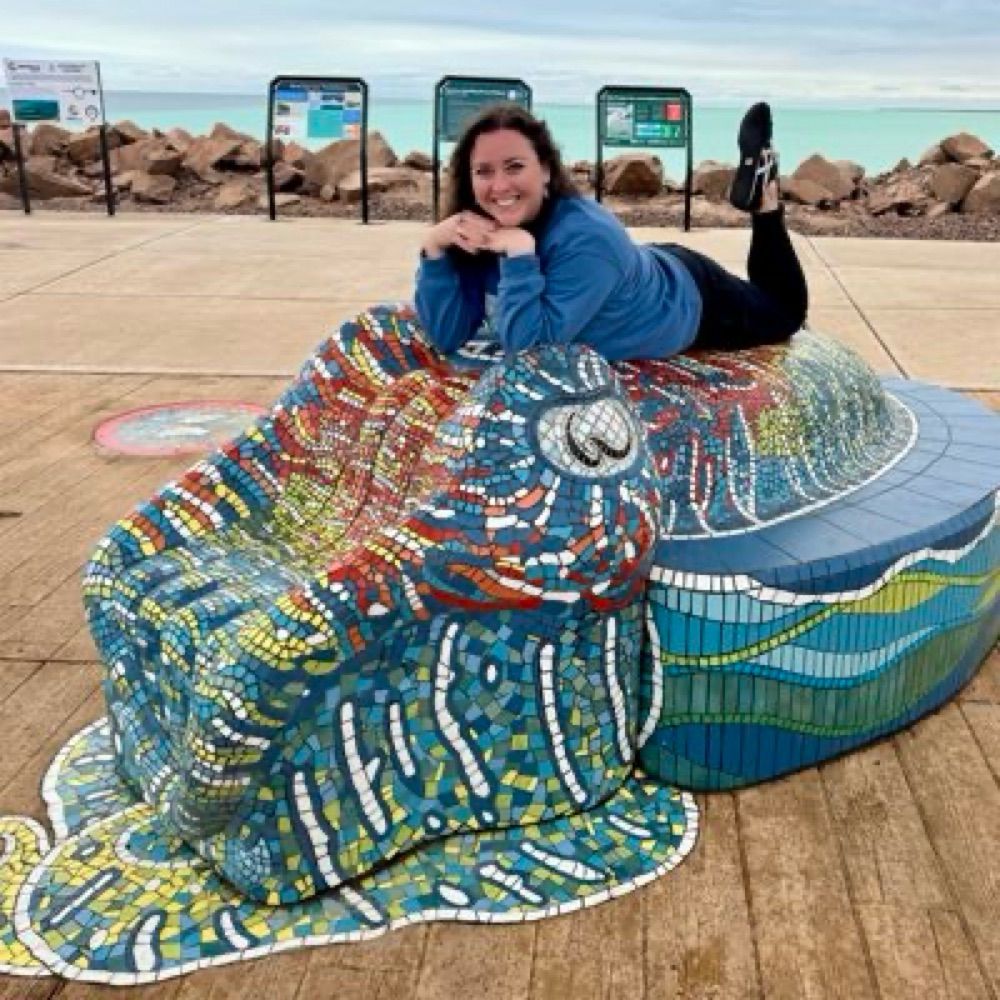
69 left now
(go ahead. say it)
(go ahead. say it)
Love Notes from Nature Calendars are how we're funding the 2026 Native Plant Project in Philly! We're planning to distribute 10,000 packets of native plant seeds in the city & doing a bar-level promo campaign w/local artists.
We have 72 calendars left. Reposts v helpful!
Get one at SquidFacts.Net
We have 72 calendars left. Reposts v helpful!
Get one at SquidFacts.Net

December 14, 2025 at 3:56 PM
69 left now
(go ahead. say it)
(go ahead. say it)
Reposted by Kristin Michel

📢 Today, @who.int published the #WorldMalariaReport 2025, which spotlights the growing threat of antimalarial #DrugResistance. 🦟 Key findings below ⬇️
www.who.int/teams/global...
www.who.int/teams/global...

December 4, 2025 at 10:32 PM
📢 Today, @who.int published the #WorldMalariaReport 2025, which spotlights the growing threat of antimalarial #DrugResistance. 🦟 Key findings below ⬇️
www.who.int/teams/global...
www.who.int/teams/global...
Reposted by Kristin Michel
🦟 #WNV: "Erstmals Mensch in der #Schweiz 🇨🇭 mit #WestNilVirus infiziert" via #SRF
#arbovirus #Switzerland
www.srf.ch/news/schweiz...
#arbovirus #Switzerland
www.srf.ch/news/schweiz...

Tessin meldet erste West-Nil-Virus-Infektion in der Schweiz
Das Tessin meldet die erste West-Nil-Virus-Infektion in der Schweiz. Ein Risiko für die Bevölkerung wird verneint.
www.srf.ch
December 4, 2025 at 9:46 PM
🦟 #WNV: "Erstmals Mensch in der #Schweiz 🇨🇭 mit #WestNilVirus infiziert" via #SRF
#arbovirus #Switzerland
www.srf.ch/news/schweiz...
#arbovirus #Switzerland
www.srf.ch/news/schweiz...
Reposted by Kristin Michel

my section was all about uterine tissues creating happy little "benign" tumors that make your life hell but since they are not cancerous it takes forever to diagnose and find a treatment that works for YOU!
#SciArt #endometriosis #fibroids #adenomyosis
#SciArt #endometriosis #fibroids #adenomyosis


November 27, 2025 at 10:47 PM
my section was all about uterine tissues creating happy little "benign" tumors that make your life hell but since they are not cancerous it takes forever to diagnose and find a treatment that works for YOU!
#SciArt #endometriosis #fibroids #adenomyosis
#SciArt #endometriosis #fibroids #adenomyosis
Reposted by Kristin Michel

Are you an early-stage graduate student (2nd or 3rd year) or early-stage postdoc based in the US or Canada, working primarily in Drosophila? Would you like to help improve the experience of all trainees working in Drosophila research? If so, read on.
(Please repost to reach a broad audience.)
(Please repost to reach a broad audience.)
November 12, 2025 at 4:49 AM
Are you an early-stage graduate student (2nd or 3rd year) or early-stage postdoc based in the US or Canada, working primarily in Drosophila? Would you like to help improve the experience of all trainees working in Drosophila research? If so, read on.
(Please repost to reach a broad audience.)
(Please repost to reach a broad audience.)
Reposted by Kristin Michel

Our new study is out in Cell Reports!
We show that the DNA repair pathway ATM-γH2Av is repurposed in the gut during infection, even without DNA breaks. Pathogens, not microbiota, trigger it via NOX to clear damaged cells and drive stem cell regeneration. www.cell.com/cell-reports...
We show that the DNA repair pathway ATM-γH2Av is repurposed in the gut during infection, even without DNA breaks. Pathogens, not microbiota, trigger it via NOX to clear damaged cells and drive stem cell regeneration. www.cell.com/cell-reports...

Infectious bacteria, but not the microbiota, induce a NOX-ATM-cytokine pathway that controls epithelial turnover
Nagy et al. identify a NOX-ATM-cytokine signaling axis in the Drosophila gut that
is activated by infection independently of DNA damage. This pathway promotes enterocyte
loss, cytokine production, and...
www.cell.com
September 19, 2025 at 12:47 PM
Our new study is out in Cell Reports!
We show that the DNA repair pathway ATM-γH2Av is repurposed in the gut during infection, even without DNA breaks. Pathogens, not microbiota, trigger it via NOX to clear damaged cells and drive stem cell regeneration. www.cell.com/cell-reports...
We show that the DNA repair pathway ATM-γH2Av is repurposed in the gut during infection, even without DNA breaks. Pathogens, not microbiota, trigger it via NOX to clear damaged cells and drive stem cell regeneration. www.cell.com/cell-reports...
Reposted by Kristin Michel

In the latest issue of #G3journal, @arunsethuraman.bsky.social et al. describe biases in summary statistics, such as genetic differentiation, Tajima’s D, and estimates of theta, migration rates, and divergence for understanding genomic signatures from extinct ghost populations. buff.ly/h6bjoQc

October 29, 2025 at 6:05 PM
In the latest issue of #G3journal, @arunsethuraman.bsky.social et al. describe biases in summary statistics, such as genetic differentiation, Tajima’s D, and estimates of theta, migration rates, and divergence for understanding genomic signatures from extinct ghost populations. buff.ly/h6bjoQc
Reposted by Kristin Michel

New England Journal of Medicine & Center for Infectious Disease Research & Policy (CIDRAP) to begin publishing “public health alerts”
“...will basically serve to be a way to convey the info. that once was shared in the MMWR,” to be published in new section of NEJM Evidence as needed w/ free access🛟
“...will basically serve to be a way to convey the info. that once was shared in the MMWR,” to be published in new section of NEJM Evidence as needed w/ free access🛟

NEJM and public health group are launching rival to CDC’s MMWR publication
Two institutions are coming together to create an alternative to the CDC’s vaunted Morbidity and Mortality Weekly Report
www.statnews.com
October 24, 2025 at 2:03 AM
New England Journal of Medicine & Center for Infectious Disease Research & Policy (CIDRAP) to begin publishing “public health alerts”
“...will basically serve to be a way to convey the info. that once was shared in the MMWR,” to be published in new section of NEJM Evidence as needed w/ free access🛟
“...will basically serve to be a way to convey the info. that once was shared in the MMWR,” to be published in new section of NEJM Evidence as needed w/ free access🛟
Reposted by Kristin Michel

I am hiring! - looking for a Staff Scientist to co-run my research group with me. Staff Scientist is a senior professional scientist role at EMBL. Please forward to people you might know who could be interested! embl.wd103.myworkdayjobs.com/en-US/EMBL/j...

Staff Scientist
About EMBL-EBI EMBL’s European Bioinformatics Institute is a data powerhouse, utilised on a global scale to advance scientific discovery through bioinformatics and solutions to some of the world’s mos...
embl.wd103.myworkdayjobs.com
October 10, 2025 at 7:30 AM
I am hiring! - looking for a Staff Scientist to co-run my research group with me. Staff Scientist is a senior professional scientist role at EMBL. Please forward to people you might know who could be interested! embl.wd103.myworkdayjobs.com/en-US/EMBL/j...
Reposted by Kristin Michel

TF-MAPS: fast high-resolution functional and allosteric mapping of DNA-binding proteins by @XianghuaLi2
Are Transcription Factors really 'undruggable'?
www.biorxiv.org/content/10.1...
Are Transcription Factors really 'undruggable'?
www.biorxiv.org/content/10.1...

TF-MAPS: fast high-resolution functional and allosteric mapping of DNA-binding proteins
Transcription factors (TFs) bind specific DNA sequences to control gene expression. Modulating TF activity is of considerable therapeutic interest but very few TFs have been successfully drugged. TF D...
www.biorxiv.org
October 23, 2025 at 12:50 PM
TF-MAPS: fast high-resolution functional and allosteric mapping of DNA-binding proteins by @XianghuaLi2
Are Transcription Factors really 'undruggable'?
www.biorxiv.org/content/10.1...
Are Transcription Factors really 'undruggable'?
www.biorxiv.org/content/10.1...
Reposted by Kristin Michel
New @vectorbyte.bsky.social preprint: Modeling asymmetric Thermal Performace Curves for proportion data - led by Prof Leah Johnson, with Paul Huxley @phuxley.bsky.social, Cat Lippi @lippikiyay.bsky.social, and Prof Sadie Ryan @sjryan3.bsky.social.
LINEX TPC: your next fit!
LINEX TPC: your next fit!

October 20, 2025 at 4:58 PM
New @vectorbyte.bsky.social preprint: Modeling asymmetric Thermal Performace Curves for proportion data - led by Prof Leah Johnson, with Paul Huxley @phuxley.bsky.social, Cat Lippi @lippikiyay.bsky.social, and Prof Sadie Ryan @sjryan3.bsky.social.
LINEX TPC: your next fit!
LINEX TPC: your next fit!
Oh, this changes things!
www.pnas.org/doi/10.1073/...
www.pnas.org/doi/10.1073/...

Phylogenomics redefines the evolutionary history of mosquitoes | PNAS
Mosquitoes have a substantial impact on human and animal health, but their deeper
evolutionary relationships have been difficult to resolve. We inf...
www.pnas.org
October 15, 2025 at 9:39 PM
Oh, this changes things!
www.pnas.org/doi/10.1073/...
www.pnas.org/doi/10.1073/...
‼️
Finally, someone has solved a real problem with AI! No more having to take a paper in the format for a journal that rejected you, and reformat it for a new journal. Well done!! formatmypaper.com

October 15, 2025 at 9:38 PM
‼️
Whaaattt?!?

October 5, 2025 at 3:22 AM
Whaaattt?!?
Reposted by Kristin Michel
Today in @nature.com , we highlight how a cousin of CRISPR-Cas10, mCpol, establishes an evolutionary trap in anti-phage immune systems.
Check out @erinedoherty.bsky.social and my work from @doudna-lab.bsky.social lab here:
www.nature.com/articles/s41...
Check out @erinedoherty.bsky.social and my work from @doudna-lab.bsky.social lab here:
www.nature.com/articles/s41...

A miniature CRISPR–Cas10 enzyme confers immunity by inhibitory signalling - Nature
Panoptes, an anti-phage defence system against virus-mediated immune suppression, is revealed.
www.nature.com
October 1, 2025 at 5:57 PM
Today in @nature.com , we highlight how a cousin of CRISPR-Cas10, mCpol, establishes an evolutionary trap in anti-phage immune systems.
Check out @erinedoherty.bsky.social and my work from @doudna-lab.bsky.social lab here:
www.nature.com/articles/s41...
Check out @erinedoherty.bsky.social and my work from @doudna-lab.bsky.social lab here:
www.nature.com/articles/s41...
Reposted by Kristin Michel

Great work by @ukhsa.bsky.social team on 4 yrs of invasive #mosquito surveillance in UK. Sporadic detection of Aedes albopictus on transport routes in England & one-off detection of aegypti at Heathrow don't confirm establishment, but show value of surveillance
journals.plos.org/globalpublic...
journals.plos.org/globalpublic...

Invasive mosquito surveillance in the United Kingdom 2020 to 2024: First detection of Aedes aegypti eggs in the UK and further detection of Aedes albopictus
Here, we provide an update on invasive mosquito surveillance activities coordinated by the UK Health Security Agency (UKHSA) between May 2020 and November 2024. Aedes albopictus and Aedes aegypti are ...
journals.plos.org
October 1, 2025 at 9:08 PM
Great work by @ukhsa.bsky.social team on 4 yrs of invasive #mosquito surveillance in UK. Sporadic detection of Aedes albopictus on transport routes in England & one-off detection of aegypti at Heathrow don't confirm establishment, but show value of surveillance
journals.plos.org/globalpublic...
journals.plos.org/globalpublic...
Reposted by Kristin Michel
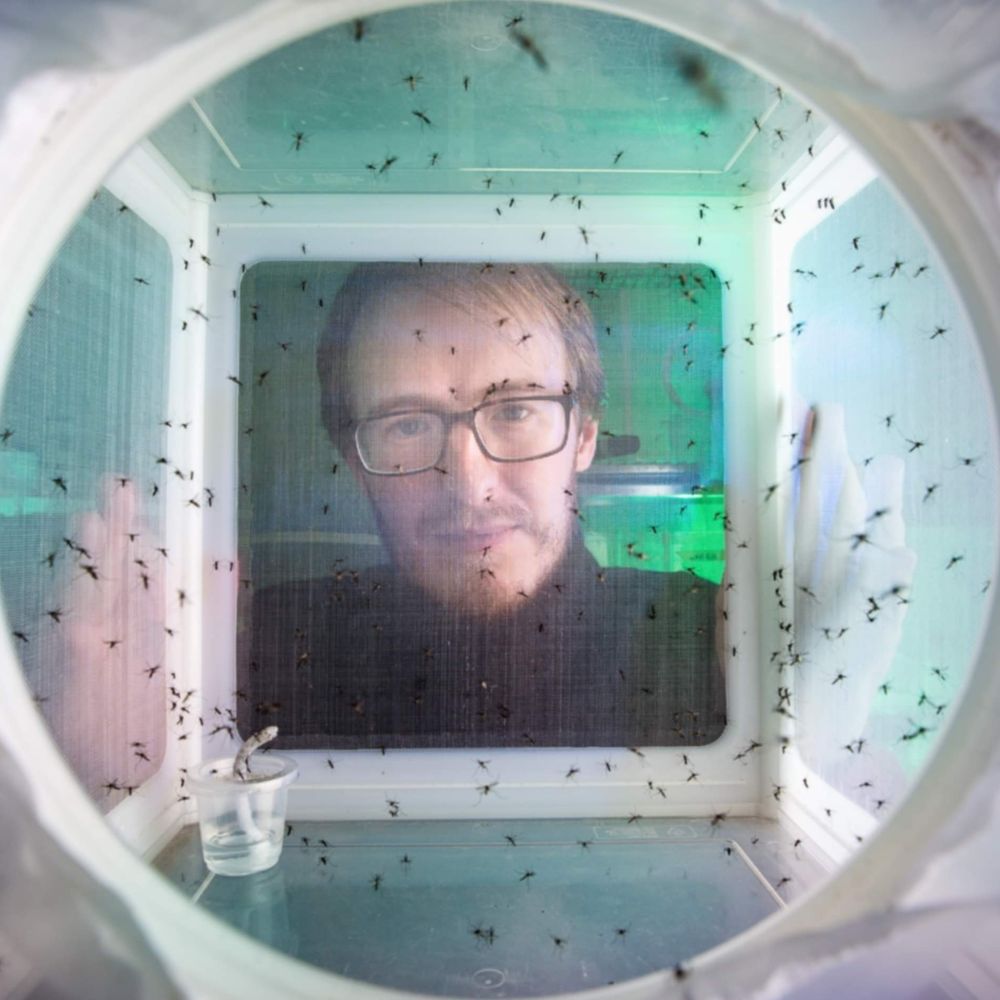
New paper on impacts of different larval diets on the fitness of Wolbachia mosquitoes
parasitesandvectors.biomedcentral.com/articles/10....
parasitesandvectors.biomedcentral.com/articles/10....

Impact of larval diet on fitness outcomes of Aedes aegypti mosquitoes infected with wAlbB and wMelM - Parasites & Vectors
Background Releases of Wolbachia-infected Aedes aegypti are being used to effectively control diseases caused by arboviruses, such as dengue. A well-balanced larval diet is essential for producing Wolbachia-infected mosquitoes with optimal fitness for release. Methods In this study, four diets with varying protein-to-carbohydrate ratios were tested with three Ae. aegypti lines (carrying the wAlbB, wMelM Wolbachia infections or uninfected) to identify optimal diets for larval rearing on the basis of diet allocations ranging from 0.4 to 3.2 mg/larva/day. The diets were selected on the basis of a review of existing literature and are characterized by progressively increasing protein and decreasing carbohydrate content: diet 1 (Pd) was based on plant-based protein (low protein and high carbohydrate), diet 2 (Kd) was based on animal-based protein (moderate protein and high carbohydrate), diet 3 (Fd) involved Hikari fish food (high protein and moderate carbohydrate), and diet 4 (IAEA) followed a widely used very-high-protein and low-carbohydrate diet developed by the International Atomic Energy Agency (IAEA). The optimal concentration for each diet was determined using a fitness index that incorporated pupation success, fecundity, hatch proportion and development time. Results The optimal dietary allocations for diets 1–4 were 1.6, 1.2, 1.2 and 0.8 mg/larva/day, respectively, regardless of Wolbachia status. There was a consistent significant positive relationship between female wing length and fecundity in wAlbB (r2 = 0.881), wMelM (r2 = 0.329), and uninfected (r2 = 0.886) mosquitoes. Diet 3 (Fd) at optimal food allocation reduced a fitness cost commonly associated with the wAlbB line compared with the uninfected line when provided at the optimal concentration. The wMelM line showed a persistently low fecundity regardless of diet and concentration. Conclusions These findings highlight the importance of an appropriate larval diet and dietary allocations in optimizing mosquito fitness for Wolbachia-based vector control programs. Further research into dietary composition, gut microbial interactions and Wolbachia associations could refine larval nutrition strategies, enhancing the effectiveness of mass-rearing for release programs. Graphical abstract
parasitesandvectors.biomedcentral.com
September 26, 2025 at 10:27 AM
New paper on impacts of different larval diets on the fitness of Wolbachia mosquitoes
parasitesandvectors.biomedcentral.com/articles/10....
parasitesandvectors.biomedcentral.com/articles/10....
Reposted by Kristin Michel
New paper led by @phiddlesticks.bsky.social shows how endosymbionts can affect aphid responses to predators
academic.oup.com/aesa/advance...
academic.oup.com/aesa/advance...

Changes in the behavior of Myzus persicae (Hemiptera: Aphididae) in response to predators after transinfection with Rickettsiella (Legionellales: Coxiellaceae) endosymbionts
Abstract. Infection with endosymbionts can cause changes in the phenotype of their insect hosts, particularly for life-history traits such as fecundity and
academic.oup.com
September 26, 2025 at 10:30 AM
New paper led by @phiddlesticks.bsky.social shows how endosymbionts can affect aphid responses to predators
academic.oup.com/aesa/advance...
academic.oup.com/aesa/advance...
Reposted by Kristin Michel

Compete in ESO’s Bug Eye Photo Contest! Submit up to 3 unique images of insects for a chance to win! All Ontario residents (and international students living in Ontario) can submit!
Deadline extended to September 30th, 2025!
Full contest details can be found on our website.
Deadline extended to September 30th, 2025!
Full contest details can be found on our website.

September 23, 2025 at 10:56 PM
Compete in ESO’s Bug Eye Photo Contest! Submit up to 3 unique images of insects for a chance to win! All Ontario residents (and international students living in Ontario) can submit!
Deadline extended to September 30th, 2025!
Full contest details can be found on our website.
Deadline extended to September 30th, 2025!
Full contest details can be found on our website.
Reposted by Kristin Michel

Portrait of a human bot fly. Belize. Friend? Maybe not. But cuter as an adult, I'd say.

September 19, 2025 at 3:24 PM
Portrait of a human bot fly. Belize. Friend? Maybe not. But cuter as an adult, I'd say.