



Kejia Li
@kejiali.bsky.social
Postdoc in Savitski lab, EMBL, Heidelberg. Interested in functional proteomics, microbiology, metabolism, and drug target discovery.
A Very comprehensive study! Some previous studies have used drug-induced changes in target abundance to identify targets; although it’s not always the case.

Excited to share our work on inhibitors turning degraders now out: doi.org/10.1038/s415...

Inhibitors supercharge kinase turnover through native proteolytic circuits - Nature
Inhibitor-induced kinase degradation is a common event that positions supercharging of endogenous degradation circuits as an alternative to classical proximity-inducing degraders.
doi.org
November 29, 2025 at 3:39 PM
A Very comprehensive study! Some previous studies have used drug-induced changes in target abundance to identify targets; although it’s not always the case.
Reposted by Kejia Li

popEVE is out in Nature Genetics! 🎉
We built a proteome-wide model that combines cross-species and human population variation to rank missense variants by disease severity and help diagnose rare genetic disorders.
rdcu.be/eRu7K
We built a proteome-wide model that combines cross-species and human population variation to rank missense variants by disease severity and help diagnose rare genetic disorders.
rdcu.be/eRu7K

Proteome-wide model for human disease genetics
Nature Genetics - popEVE is a proteome-wide deep generative model to identify and predict pathogenicity of missense mutations causing genetic disorders.
rdcu.be
November 24, 2025 at 1:35 PM
popEVE is out in Nature Genetics! 🎉
We built a proteome-wide model that combines cross-species and human population variation to rank missense variants by disease severity and help diagnose rare genetic disorders.
rdcu.be/eRu7K
We built a proteome-wide model that combines cross-species and human population variation to rank missense variants by disease severity and help diagnose rare genetic disorders.
rdcu.be/eRu7K
Joined a conference talk a week ago
in EMBL, which introduced how mammal cells detoxify m6A and how the accumulation influences metabolism. Was wondering how about bacteria. What’s the function of m6A or m6dA in Ecoli. Very in-time preprint 👋
in EMBL, which introduced how mammal cells detoxify m6A and how the accumulation influences metabolism. Was wondering how about bacteria. What’s the function of m6A or m6dA in Ecoli. Very in-time preprint 👋
Preprint: Bacteria sense virus-induced genome degradation via methylated mononucleotides
tinyurl.com/ch3damp
We show how molecular byproducts released during virus-induced cell exploitation are used as signals to trigger host immunity
Revealed by the amazing Ilya Osterman. See his thread below👇
tinyurl.com/ch3damp
We show how molecular byproducts released during virus-induced cell exploitation are used as signals to trigger host immunity
Revealed by the amazing Ilya Osterman. See his thread below👇
November 6, 2025 at 12:45 PM
Joined a conference talk a week ago
in EMBL, which introduced how mammal cells detoxify m6A and how the accumulation influences metabolism. Was wondering how about bacteria. What’s the function of m6A or m6dA in Ecoli. Very in-time preprint 👋
in EMBL, which introduced how mammal cells detoxify m6A and how the accumulation influences metabolism. Was wondering how about bacteria. What’s the function of m6A or m6dA in Ecoli. Very in-time preprint 👋
Finally out! 🤩 Check out our HT- PELSA for high throughput screening!
Happy to see our HT-PELSA paper now published in @natsmb.nature.com 🎊 Big thanks for the constructive review process! 📖Read the manuscript here (www.nature.com/articles/s41...) & check the thread for additional information ⬇️
November 5, 2025 at 4:28 PM
Finally out! 🤩 Check out our HT- PELSA for high throughput screening!
Reposted by Kejia Li

HT-PELSA, a new proteomics tool by EMBL researchers, processes samples 100x faster and works directly with complex crude cell, tissue, and bacterial lysates – developments which could accelerate drug discovery and basic biological research 💊
🔗 www.embl.org/news/science...
🔗 www.embl.org/news/science...

November 5, 2025 at 10:09 AM
HT-PELSA, a new proteomics tool by EMBL researchers, processes samples 100x faster and works directly with complex crude cell, tissue, and bacterial lysates – developments which could accelerate drug discovery and basic biological research 💊
🔗 www.embl.org/news/science...
🔗 www.embl.org/news/science...
Reposted by Kejia Li

NAD+ is a central molecule in bacterial immunity. An excellent and timely review by Hugo Vausset and Aude Bernheim

Many antiphage systems use NAD+, in many ways.
@hugovaysset.bsky.social reviewed them all!
Read to know more about all their molecular mechanisms, how phages counteract them, their distribution in bacteria and their conservation in eukaryotic immunity!
www.cell.com/molecular-ce...
@hugovaysset.bsky.social reviewed them all!
Read to know more about all their molecular mechanisms, how phages counteract them, their distribution in bacteria and their conservation in eukaryotic immunity!
www.cell.com/molecular-ce...

The multifaceted roles of NAD+ in bacterial immunity
In this review, Vaysset and Bernheim examine how nicotinamide adenine dinucleotide
(NAD+) is a key player in diverse and widespread bacterial antiphage defense systems
and phage counterdefense. The au...
www.cell.com
October 18, 2025 at 2:56 PM
NAD+ is a central molecule in bacterial immunity. An excellent and timely review by Hugo Vausset and Aude Bernheim
Cool!

Check out this thread from @haopengxiao.bsky.social on his recent paper! I’m happy I was able to help out on what has turned out to be a really cool story.

We developed a MS and machine learning approach to globally identify protein regulators of metabolism. We found protein LRRC58 controls cellular cysteine catabolism by mediating degradation of CDO1, the rate-limiting enzyme of the catabolic cysteine shunt to taurine. www.nature.com/articles/s41...
September 18, 2025 at 9:10 PM
Cool!
Congrats!
New preprint: We isolate peptide–RNA photo-crosslinks with tunable RNA chains from living cells for mass spec. This maps over 4,700 crosslinking sites across 744 proteins and offers the first glimpse into the RNA sequences in crosslinks by MS. Read here: doi.org/10.1101/2025...

Peptide-RNA photo-crosslinks with tunable RNA chain map protein-RNA interfaces
Photo-crosslinking mass spectrometry enables the identification of protein-RNA interactions in living cells, pinpointing interaction interfaces at single-amino acid resolution. However, current isolat...
doi.org
September 9, 2025 at 11:52 AM
Congrats!
Reposted by Kejia Li


Reposted by Kejia Li

A new paper reports a proximity labeling-based method termed TAPRIP for profiling RNA-protein interactions in living cells, enabling the identification of circular RNA regulators and RNA G-quadruplex-specific binding proteins
www.nature.com/articles/s41...
www.nature.com/articles/s41...

In situ proximity labeling of proteins associated with circRNA and RNA G-quadruplexes - Nature Chemical Biology
Mo, Chen, Cui and colleagues report a proximity-labeling-based method termed TAPRIP for profiling RNA–protein interactions in living cells, enabling the identification of circular RNA regulators and r...
www.nature.com
August 7, 2025 at 2:54 PM
A new paper reports a proximity labeling-based method termed TAPRIP for profiling RNA-protein interactions in living cells, enabling the identification of circular RNA regulators and RNA G-quadruplex-specific binding proteins
www.nature.com/articles/s41...
www.nature.com/articles/s41...
Wow!

Excited to share a new preprint from the lab. We show that PTMs like phosphorylation & glycosylation dynamically reshape proteome-wide ligandability in cells, including proteins like KRAS. Great collaboration with the Huang Lab, @forlilab.bsky.social and BMS. www.biorxiv.org/content/10.1...

Post-Translational Modifications Remodel Proteome-Wide Ligandability
Post-translational modifications (PTMs) vastly expand the diversity of human proteome, dynamically reshaping protein activity, interactions, and localization in response to environmental, pharmacologi...
www.biorxiv.org
August 3, 2025 at 7:33 PM
Wow!
Reposted by Kejia Li

‘Solar-powered’ sea slugs have specialized depots in their cells that store photosynthetic equipment looted from algae
https://go.nature.com/4l27lMN
https://go.nature.com/4l27lMN
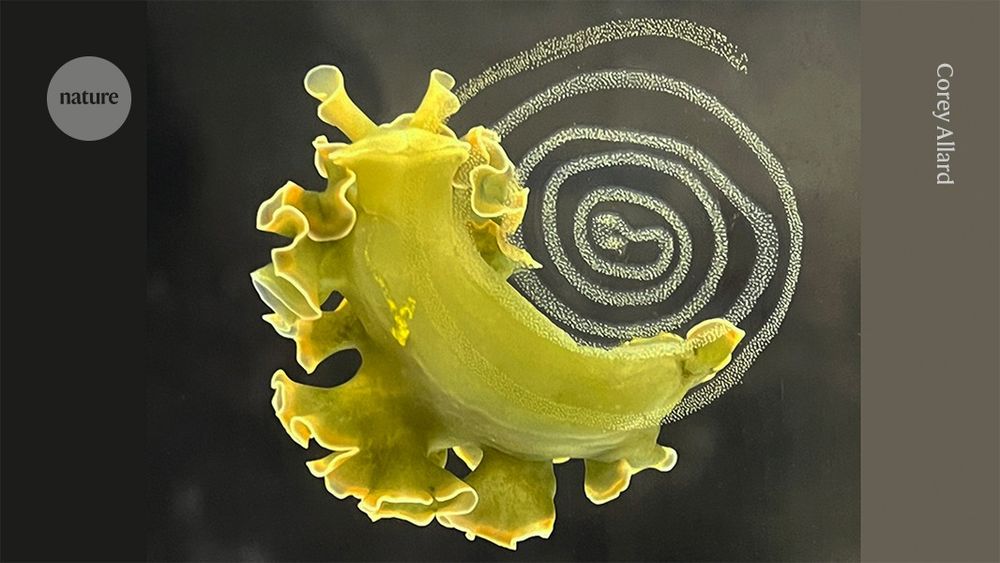
‘Wildest thing’: solar-powered slug steals chloroplasts and stores them for emergencies
Nature - Marine creatures house contraband structures in special organelles, which the animal raids for food in times of need.
go.nature.com
June 28, 2025 at 10:49 AM
‘Solar-powered’ sea slugs have specialized depots in their cells that store photosynthetic equipment looted from algae
https://go.nature.com/4l27lMN
https://go.nature.com/4l27lMN
Reposted by Kejia Li
A new Review highlights recent advances in understanding compartmentalized GPCR signaling using chemical biology approaches with a focus on tools for real-time monitoring, site-selective tuning of signaling protein networks and mechanistic screening
www.nature.com/articles/s41...
www.nature.com/articles/s41...

Chemical biology approaches to resolve the subcellular GPCR signaling landscape - Nature Chemical Biology
This Review highlights recent advances in understanding compartmentalized GPCR signaling using chemical biology approaches with a focus on tools for real-time monitoring, site-selective tuning of sign...
www.nature.com
June 3, 2025 at 8:16 PM
A new Review highlights recent advances in understanding compartmentalized GPCR signaling using chemical biology approaches with a focus on tools for real-time monitoring, site-selective tuning of signaling protein networks and mechanistic screening
www.nature.com/articles/s41...
www.nature.com/articles/s41...
Not directly relevant to the paper: pick up your chemistry as it will definitely help you to better understand many cellular biological processes.
A new paper used reactivity-based metabolomics to show that methylglyoxal and its main metabolite lactoylglutathione react rapidly with cysteines to generate L- and D-lactoylated thioesters suggesting an additional pathway to enable protein lactoylation
www.nature.com/articles/s41...
www.nature.com/articles/s41...

Reactivity-based metabolomics reveal cysteine has glyoxalase 1-like and glyoxalase 2-like activities - Nature Chemical Biology
Using reactivity-based metabolomics, methylglyoxal and its main metabolite lactoylglutathione were found to react rapidly with cysteines to generate l-lactoylated and d-lactoylated thioesters, suggest...
www.nature.com
June 2, 2025 at 5:31 PM
Not directly relevant to the paper: pick up your chemistry as it will definitely help you to better understand many cellular biological processes.
Good to know which metrics should be evaluated from a quantitative perspective

Evaluation of an Orbitrap Astral Zoom mass spectrometer prototype for quantitative proteomics - beyond identification lists www.biorxiv.org/cont...
---
#proteomics #prot-preprint
---
#proteomics #prot-preprint

June 2, 2025 at 5:00 PM
Good to know which metrics should be evaluated from a quantitative perspective
Good to learn how metabolites influence the protein complex formation and the multifaceted functions of metabolites in different processes!
Also check out the associated News & Views by Johannes Gibhardt and Fabian Commichau on the functions of c-di-AMP signaling, which was once thought to exist only in prokaryotes
www.nature.com/articles/s41...
www.nature.com/articles/s41...
May 29, 2025 at 2:27 PM
Good to learn how metabolites influence the protein complex formation and the multifaceted functions of metabolites in different processes!
Reposted by Kejia Li
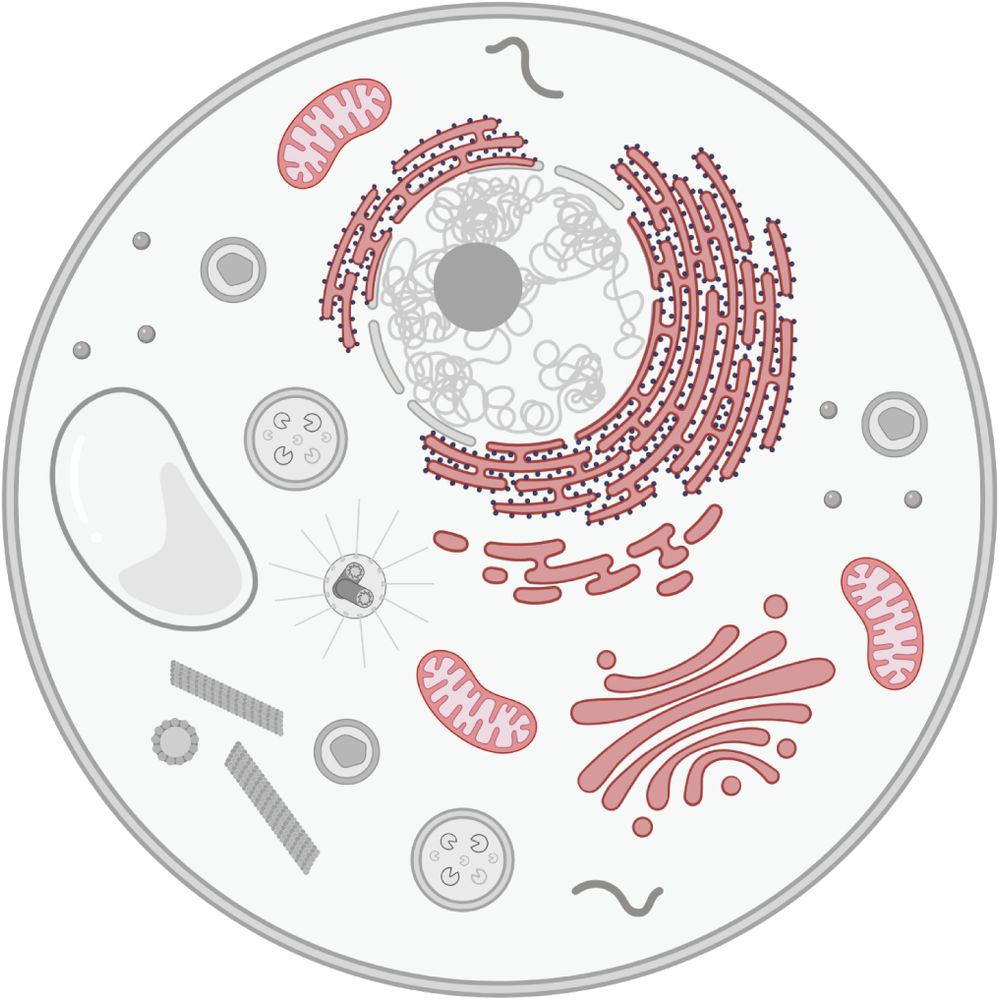
New work @harvard by Miguel Gonzalez-Lozano @harperlabhms.bsky.social & @ernstschmid.bsky.social in Johannes Walter lab charts structural interactome of endosomes. #XL-MS #Alphafold Funded by @asapresearch.parkinsonsroadmap.org & NIH. Science continues-despite attacks www.nature.com/articles/s41...
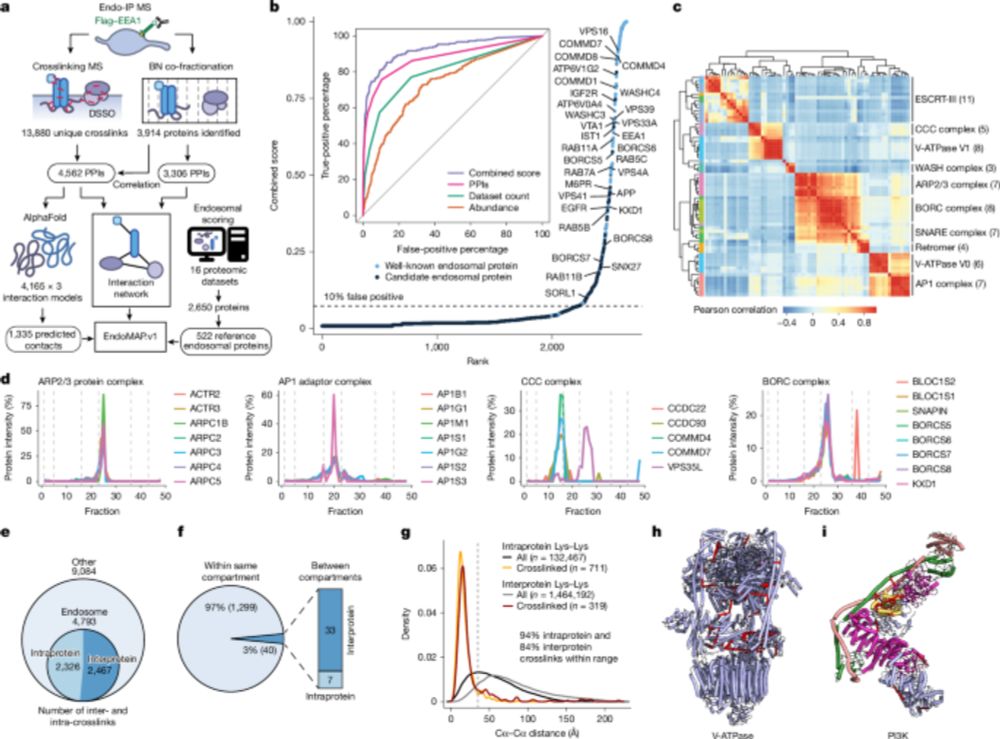
EndoMAP.v1 charts the structural landscape of human early endosome complexes - Nature
A study presents EndoMAP.v1, a resource that combines information on protein interactions and crosslink-supported structural predictions to map the interaction landscape of early endosomes.
www.nature.com
May 28, 2025 at 3:52 PM
New work @harvard by Miguel Gonzalez-Lozano @harperlabhms.bsky.social & @ernstschmid.bsky.social in Johannes Walter lab charts structural interactome of endosomes. #XL-MS #Alphafold Funded by @asapresearch.parkinsonsroadmap.org & NIH. Science continues-despite attacks www.nature.com/articles/s41...
Reposted by Kejia Li

🚨Our new paper is online🚨
We use zero-distance⚡photo-crosslinking⚡to reveal direct protein-DNA interactions in living cells, enabling quantitative analysis of the DNA-interacting proteome on a timescale of minutes. #DNA #Chromatin #Proteomics
www.cell.com/cell/fulltex...
We use zero-distance⚡photo-crosslinking⚡to reveal direct protein-DNA interactions in living cells, enabling quantitative analysis of the DNA-interacting proteome on a timescale of minutes. #DNA #Chromatin #Proteomics
www.cell.com/cell/fulltex...
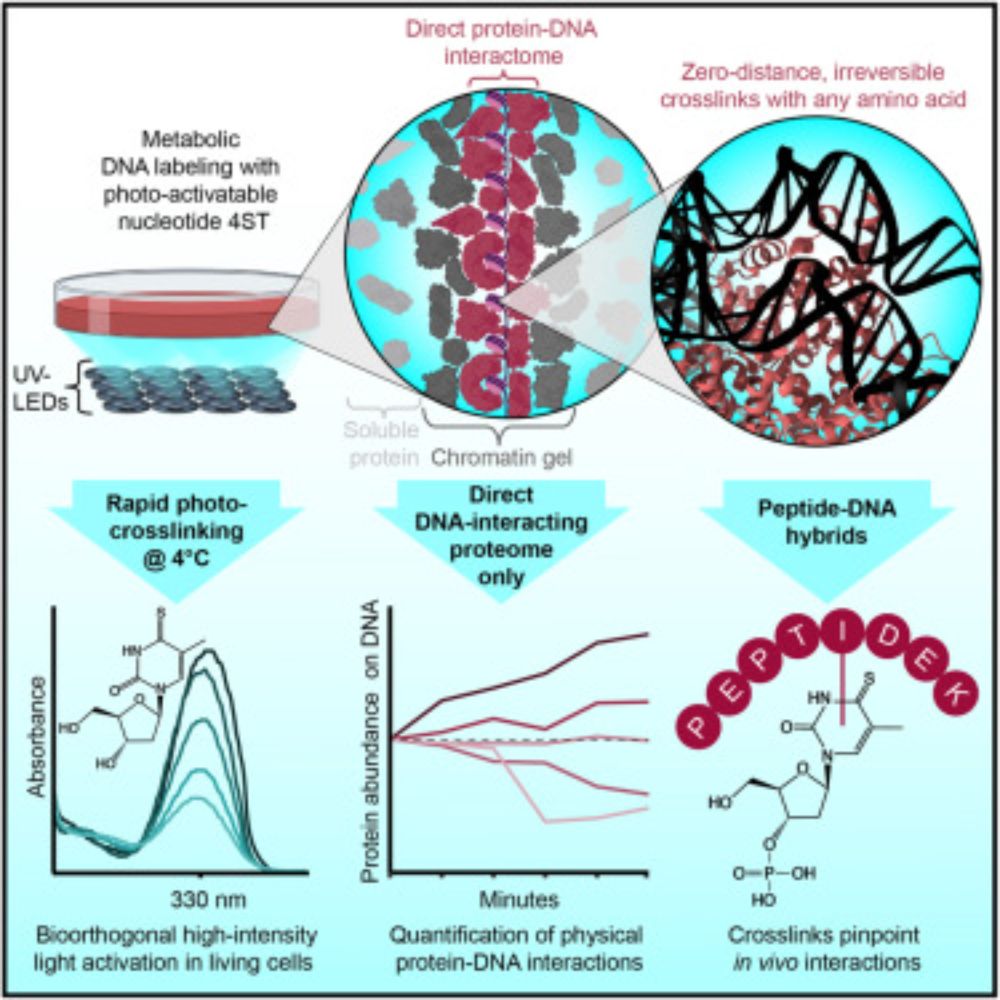
The human proteome with direct physical access to DNA
Zero-distance photo-crosslinking reveals direct protein-DNA interactions in living
cells, enabling quantitative analysis of the DNA-interacting proteome on a timescale
of minutes with single-amino-aci...
www.cell.com
May 22, 2025 at 6:44 PM
🚨Our new paper is online🚨
We use zero-distance⚡photo-crosslinking⚡to reveal direct protein-DNA interactions in living cells, enabling quantitative analysis of the DNA-interacting proteome on a timescale of minutes. #DNA #Chromatin #Proteomics
www.cell.com/cell/fulltex...
We use zero-distance⚡photo-crosslinking⚡to reveal direct protein-DNA interactions in living cells, enabling quantitative analysis of the DNA-interacting proteome on a timescale of minutes. #DNA #Chromatin #Proteomics
www.cell.com/cell/fulltex...
Reposted by Kejia Li

Want to know how the ligands interact with proteins beyond model cell lines, e.g., in tissues or bacteria? Interested in membrane targets? Check out our High-Throughput PELSA method which allows you do all these cool screenings for dozens of ligands within two hours! www.biorxiv.org/content/10.1...

High-throughput peptide-centric local stability assay extends protein-ligand identification to membrane proteins, tissues, and bacteria
Systematic mapping of protein-ligand interactions is essential for understanding biological processes and drug mechanisms. Peptide-centric local stability assay (PELSA) is a powerful tool for detectin...
www.biorxiv.org
April 29, 2025 at 6:13 PM
Want to know how the ligands interact with proteins beyond model cell lines, e.g., in tissues or bacteria? Interested in membrane targets? Check out our High-Throughput PELSA method which allows you do all these cool screenings for dozens of ligands within two hours! www.biorxiv.org/content/10.1...
Reposted by Kejia Li

A recent study constructed a protein and RNA distribution atlas from 21 tissues and 8 cell types to study plasma proteome dynamics. The atlas enables enhanced quantification of organ-enriched protein panels during disease. www.cell.com/cell/fulltex... 🧪

www.cell.com
April 11, 2025 at 7:00 PM
A recent study constructed a protein and RNA distribution atlas from 21 tissues and 8 cell types to study plasma proteome dynamics. The atlas enables enhanced quantification of organ-enriched protein panels during disease. www.cell.com/cell/fulltex... 🧪
Reposted by Kejia Li

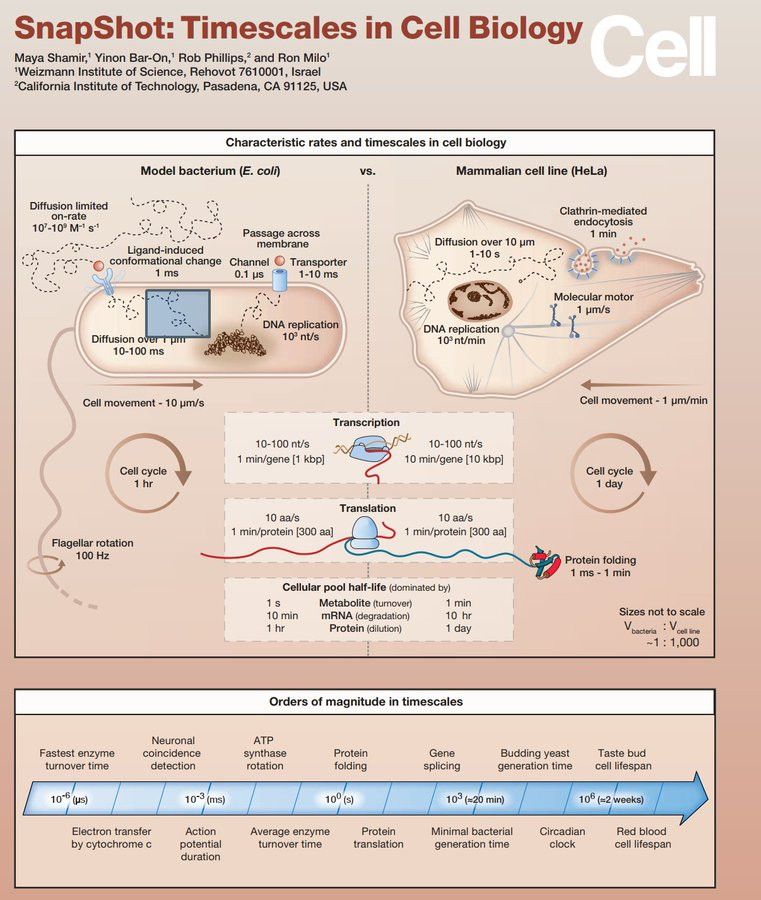
Timescales in Cell Biology
April 4, 2025 at 11:32 AM
Timescales in Cell Biology
So exciting!

🚀 Excited to share our latest article in #singlecell proteomics published in Cell!
We've developed SC-pSILAC to simultaneously measure protein turnover and abundance in single cells, unlocking the first large-scale, 2D proteomic insights at single-cell resolution!
www.cell.com/cell/fulltex...
We've developed SC-pSILAC to simultaneously measure protein turnover and abundance in single cells, unlocking the first large-scale, 2D proteomic insights at single-cell resolution!
www.cell.com/cell/fulltex...
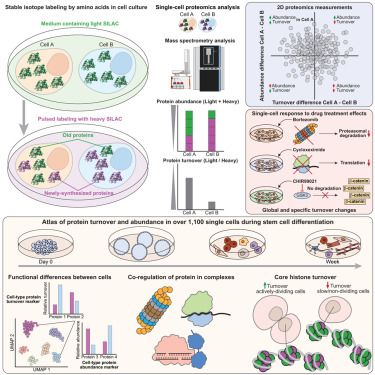
Global analysis of protein turnover dynamics in single cells
The SC-pSILAC method enables single-cell measurement of both protein abundance and
turnover, providing notable advances in the depth and versatility of proteomic technologies.
eur02.safelinks.protection.outlook.com
March 31, 2025 at 5:37 PM
So exciting!