



John Debes
@johndebes.bsky.social
ESA/AURA astronomer at STScI. Opinions my own. I study exoplanets and disks around stars.
Pinned
John Debes
@johndebes.bsky.social
· Jan 16
I cracked 1000 followers on Blusky recently and excited to talk to folks about astronomy, exoplanets, being kind to your community, and of course furbabies
Reposted by John Debes
📢New paper alert!
"IK Pegasi and the Double Merger Path to Type Ia Supernovae", co-led with S. Shahaf
How do you get a massive white dwarf paired with a Barium-rich companion? It started as a triple system!
A potential major pathway to SNe Ia.
ui.adsabs.harvard.edu/abs/2026arXi...
#astronomy #stars
"IK Pegasi and the Double Merger Path to Type Ia Supernovae", co-led with S. Shahaf
How do you get a massive white dwarf paired with a Barium-rich companion? It started as a triple system!
A potential major pathway to SNe Ia.
ui.adsabs.harvard.edu/abs/2026arXi...
#astronomy #stars

January 15, 2026 at 11:03 PM
📢New paper alert!
"IK Pegasi and the Double Merger Path to Type Ia Supernovae", co-led with S. Shahaf
How do you get a massive white dwarf paired with a Barium-rich companion? It started as a triple system!
A potential major pathway to SNe Ia.
ui.adsabs.harvard.edu/abs/2026arXi...
#astronomy #stars
"IK Pegasi and the Double Merger Path to Type Ia Supernovae", co-led with S. Shahaf
How do you get a massive white dwarf paired with a Barium-rich companion? It started as a triple system!
A potential major pathway to SNe Ia.
ui.adsabs.harvard.edu/abs/2026arXi...
#astronomy #stars
Reposted by John Debes
Researchers have studied the dusty ring of material surrounding the supermassive black hole in the Circinus galaxy in greater detail than ever before, using an innovative tool aboard #NASAWebb: https://news.stsci.edu/49aRB6H

January 13, 2026 at 11:26 AM
Researchers have studied the dusty ring of material surrounding the supermassive black hole in the Circinus galaxy in greater detail than ever before, using an innovative tool aboard #NASAWebb: https://news.stsci.edu/49aRB6H
Reposted by John Debes
Even after TikTok removed swastika jewelry from its online shop, I was algorithmically nudged toward a web of Nazi-related products during searches, like “double lightning bolt” and “ss” necklaces. www.wired.com/story/tiktok...

TikTok Shop Showed Me Search Suggestions for Products With Nazi Symbolism
Even after TikTok removed swastika jewelry from its online shop, I was algorithmically nudged toward a web of Nazi-related products during searches, like “double lightning bolt” and “ss” necklaces.
www.wired.com
January 14, 2026 at 11:36 AM
Even after TikTok removed swastika jewelry from its online shop, I was algorithmically nudged toward a web of Nazi-related products during searches, like “double lightning bolt” and “ss” necklaces. www.wired.com/story/tiktok...
Reposted by John Debes

Kavi Dey, @astrodan.bsky.social, and I have a new paper on the arXiv today!
We show that the precise coordinate system used in the Hamiltonian splitting matters when running long-term integrations of planetary systems.
arxiv.org/abs/2601.08019
We show that the precise coordinate system used in the Hamiltonian splitting matters when running long-term integrations of planetary systems.
arxiv.org/abs/2601.08019

Democratic heliocentric coordinates underestimate the rate of instabilities in long-term integrations of the Solar System
Wisdom-Holman (WH) integrators are symplectic operator-splitting methods widely used for long-term N-body simulations of planetary systems. Most implementations use either Jacobi coordinates or democr...
arxiv.org
January 14, 2026 at 12:11 PM
Kavi Dey, @astrodan.bsky.social, and I have a new paper on the arXiv today!
We show that the precise coordinate system used in the Hamiltonian splitting matters when running long-term integrations of planetary systems.
arxiv.org/abs/2601.08019
We show that the precise coordinate system used in the Hamiltonian splitting matters when running long-term integrations of planetary systems.
arxiv.org/abs/2601.08019
Reposted by John Debes

Mosaics of Titan's surface from DISR imager onboard Huygens probe 20 years ago (2005/01/14).
All of them have 2000×2000 pixels (maximum for Bluesky) and they cover areas 64×64, 16×16, 4×4 and 1×1 km.
Resolution is 32, 8, 2 and 0.5 meters/pixel.
Credit: ESA/NASA/University of Arizona/D. Machacek.
All of them have 2000×2000 pixels (maximum for Bluesky) and they cover areas 64×64, 16×16, 4×4 and 1×1 km.
Resolution is 32, 8, 2 and 0.5 meters/pixel.
Credit: ESA/NASA/University of Arizona/D. Machacek.


January 15, 2025 at 1:30 AM
Mosaics of Titan's surface from DISR imager onboard Huygens probe 20 years ago (2005/01/14).
All of them have 2000×2000 pixels (maximum for Bluesky) and they cover areas 64×64, 16×16, 4×4 and 1×1 km.
Resolution is 32, 8, 2 and 0.5 meters/pixel.
Credit: ESA/NASA/University of Arizona/D. Machacek.
All of them have 2000×2000 pixels (maximum for Bluesky) and they cover areas 64×64, 16×16, 4×4 and 1×1 km.
Resolution is 32, 8, 2 and 0.5 meters/pixel.
Credit: ESA/NASA/University of Arizona/D. Machacek.
Reposted by John Debes
New infrared observations from Webb are changing how we see the material near the Circinus Galaxy’s supermassive black hole!
Read more 👉 esawebb.org/images/circi...
🔭🧪
Read more 👉 esawebb.org/images/circi...
🔭🧪

January 13, 2026 at 1:00 PM
New infrared observations from Webb are changing how we see the material near the Circinus Galaxy’s supermassive black hole!
Read more 👉 esawebb.org/images/circi...
🔭🧪
Read more 👉 esawebb.org/images/circi...
🔭🧪
Reposted by John Debes
Enrique (lead author) and I met back in 2008 at a school in Mexida, Mexico! We finally have a paper together. Before exoplanets, my plan was to study active galactic nuclei with adaptive optics. 18 years later, I did it from space (unprecedented combination of sensitivity and spatial resolution).
January 13, 2026 at 7:27 PM
Enrique (lead author) and I met back in 2008 at a school in Mexida, Mexico! We finally have a paper together. Before exoplanets, my plan was to study active galactic nuclei with adaptive optics. 18 years later, I did it from space (unprecedented combination of sensitivity and spatial resolution).
🔭
Our "Unprecedented Look Into Heart of Circinus Galaxy", an AGN using JWST/NIRISS Aperture Masking Interferometry (AMI) mode.
NASA @stsci.edu Press Release: science.nasa.gov/missions/web...
Nature Comm. paper: www.nature.com/articles/s41...
Props to Anand Sivaramakrishnan who did so much for AMI!
NASA @stsci.edu Press Release: science.nasa.gov/missions/web...
Nature Comm. paper: www.nature.com/articles/s41...
Props to Anand Sivaramakrishnan who did so much for AMI!
January 14, 2026 at 12:19 AM
🔭
Reposted by John Debes

This is your chance to tell the NSF how to fix itself.
Say no to the grift of AI datacenters. Say no to putting "quantum" where it has no business. Say no to false metrics. Say no to biotech scams.
Say yes to sustained investments. To fundamental science. To flagship facilities. To STEM education.
Say no to the grift of AI datacenters. Say no to putting "quantum" where it has no business. Say no to false metrics. Say no to biotech scams.
Say yes to sustained investments. To fundamental science. To flagship facilities. To STEM education.
Do you care about the future of the US NSF and science in general? The agency is seeking feedback on the draft Strategic Plan. www.nsf.gov/od/updates/n...

NSF seeks public input on its Fiscal Year (FY) 2026–2030 NSF Strategic Plan
www.nsf.gov
January 13, 2026 at 9:00 PM
This is your chance to tell the NSF how to fix itself.
Say no to the grift of AI datacenters. Say no to putting "quantum" where it has no business. Say no to false metrics. Say no to biotech scams.
Say yes to sustained investments. To fundamental science. To flagship facilities. To STEM education.
Say no to the grift of AI datacenters. Say no to putting "quantum" where it has no business. Say no to false metrics. Say no to biotech scams.
Say yes to sustained investments. To fundamental science. To flagship facilities. To STEM education.
Reposted by John Debes

Awesome, Pandora lifted off this morning to help further our understanding of ExoPlanets. As amateurs we can help provide data on #ExoPlanet transits so professionals can better plan precious telescope time. Check out #NASA ExoPlanet Watch program.
-
#astronomy
science.nasa.gov/universe/exo...
-
#astronomy
science.nasa.gov/universe/exo...

NASA’s Pandora Satellite, CubeSats to Explore Exoplanets, Beyond - NASA Science
Editor's Note, Jan. 11, 2026: NASA’s Pandora and the NASA-sponsored BlackCAT and SPARCS missions lifted off at 8:44 a.m. EST (5:44 a.m. PST) Sunday, Jan. 11.
science.nasa.gov
January 11, 2026 at 5:35 PM
Awesome, Pandora lifted off this morning to help further our understanding of ExoPlanets. As amateurs we can help provide data on #ExoPlanet transits so professionals can better plan precious telescope time. Check out #NASA ExoPlanet Watch program.
-
#astronomy
science.nasa.gov/universe/exo...
-
#astronomy
science.nasa.gov/universe/exo...
Reposted by John Debes
For those astronomers who still use the International Ultraviolet Explorer (IUE) data, a NASA+ESA mission that flew for 19 years starting in 1978, there is a new IUE specific search form and API at @mast-news.bsky.social for you to find IUE data
archive.stsci.edu/contents/new...
#Astronomy #NASA
archive.stsci.edu/contents/new...
#Astronomy #NASA

Introducing a New IUE Search Form
archive.stsci.edu
January 12, 2026 at 2:34 PM
For those astronomers who still use the International Ultraviolet Explorer (IUE) data, a NASA+ESA mission that flew for 19 years starting in 1978, there is a new IUE specific search form and API at @mast-news.bsky.social for you to find IUE data
archive.stsci.edu/contents/new...
#Astronomy #NASA
archive.stsci.edu/contents/new...
#Astronomy #NASA
Reposted by John Debes
POST DOC HIRING: The Space Telescope Science Institute in Baltimore, MD, is searching for a Postdoctoral Researcher in Extragalactic Astronomy: https://bit.ly/4aTDGU0

January 12, 2026 at 5:54 PM
POST DOC HIRING: The Space Telescope Science Institute in Baltimore, MD, is searching for a Postdoctoral Researcher in Extragalactic Astronomy: https://bit.ly/4aTDGU0
Reposted by John Debes
There are so many exciting accomplishments by NASA’s Office of the Chief Science Data Officer last year from AI to Open Science to new compute capabilities!
#NASA
assets.science.nasa.gov/content/dam/...
#NASA
assets.science.nasa.gov/content/dam/...
assets.science.nasa.gov
January 12, 2026 at 1:27 PM
There are so many exciting accomplishments by NASA’s Office of the Chief Science Data Officer last year from AI to Open Science to new compute capabilities!
#NASA
assets.science.nasa.gov/content/dam/...
#NASA
assets.science.nasa.gov/content/dam/...
Reposted by John Debes
Now that I can take a breath, I'm SUPER EXCITED we can share that NASA's first Pioneer-class mission, Pandora, is launching this weekend, January 11, at 5:19am!!! I was the Mission Archive Scientist on the proposal, and the NASA Exoplanet Archive will host the mission data.
svs.gsfc.nasa.gov/14945/
svs.gsfc.nasa.gov/14945/

NASA Scientific Visualization Studio | NASA’s Pandora Satellite to Explore Exoplanets and Stars
Artist’s concept of NASA’s Pandora mission, which will help scientists untangle the signals from exoplanets’ atmospheres — worlds beyond our solar system — and their stars.Credit: NASA's Goddard Space...
svs.gsfc.nasa.gov
January 9, 2026 at 7:10 PM
Now that I can take a breath, I'm SUPER EXCITED we can share that NASA's first Pioneer-class mission, Pandora, is launching this weekend, January 11, at 5:19am!!! I was the Mission Archive Scientist on the proposal, and the NASA Exoplanet Archive will host the mission data.
svs.gsfc.nasa.gov/14945/
svs.gsfc.nasa.gov/14945/
Reposted by John Debes

NASA Discovers Distant Planet With Conditions That Could Sustain Rocks https://theonion.com/nasa-discovers-distant-planet-with-conditions-that-could-sustain-rocks/

January 6, 2026 at 9:15 PM
NASA Discovers Distant Planet With Conditions That Could Sustain Rocks https://theonion.com/nasa-discovers-distant-planet-with-conditions-that-could-sustain-rocks/

Reposted by John Debes
New paper day! arxiv.org/abs/2601.02556 🔭🧪

The Lazuli Space Observatory: Architecture & Capabilities
The Lazuli Space Observatory is a 3-meter aperture astronomical facility designed for rapid-response observations and precision astrophysics across visible to near-infrared wavelengths (400-1700 nm ba...
arxiv.org
January 7, 2026 at 3:38 AM
New paper day! arxiv.org/abs/2601.02556 🔭🧪

Reposted by John Debes

NPR built a visual archive of the Jan. 6, 2021, attack on the Capitol, showing exactly what happened through the lenses of the people who were there. In "Chapter 2: Stop the Steal," we look at how false claims of a stolen election mobilized Trump supporters.

Jan. 6, 2021: A visual archive of the Capitol attack
NPR’s Jan. 6 archive brings together reporting, video, documents and testimony to show what really happened during the Capitol riot. Explore the timeline, cases and evidence behind the attack.
n.pr
January 6, 2026 at 1:27 PM
NPR built a visual archive of the Jan. 6, 2021, attack on the Capitol, showing exactly what happened through the lenses of the people who were there. In "Chapter 2: Stop the Steal," we look at how false claims of a stolen election mobilized Trump supporters.
Reposted by John Debes
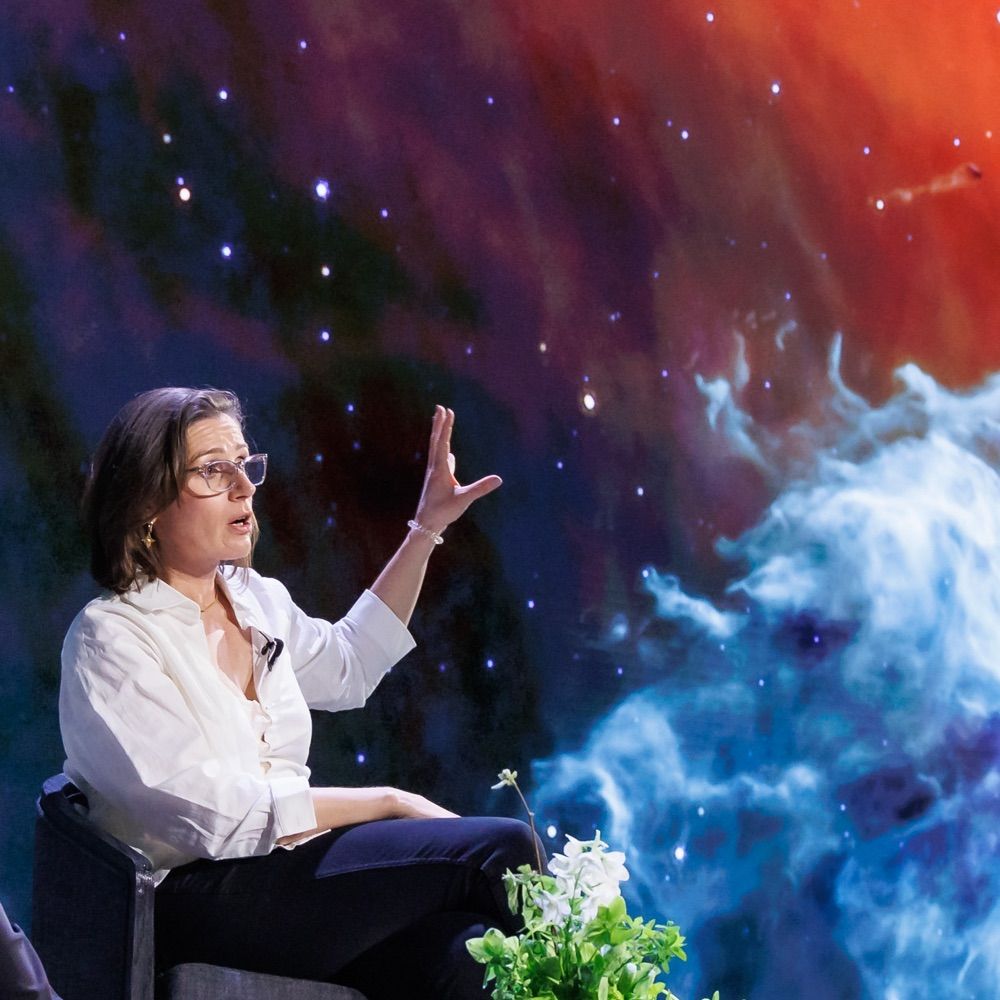
the IAU-Office of Astronomy for Development has been supporting research looking at the connection Between astronomy and mental health. Here’s an interview on results from one S African study 🔭https://www.ecr.co.za/news/news/listen-study-finds-stargazing-can-ease-depression/

LISTEN: Study finds stargazing can ease depression and boost mental wellbeing
Researchers are turning to the night sky for ways to improve mental health.
www.ecr.co.za
January 6, 2026 at 11:39 AM
the IAU-Office of Astronomy for Development has been supporting research looking at the connection Between astronomy and mental health. Here’s an interview on results from one S African study 🔭https://www.ecr.co.za/news/news/listen-study-finds-stargazing-can-ease-depression/
Reposted by John Debes
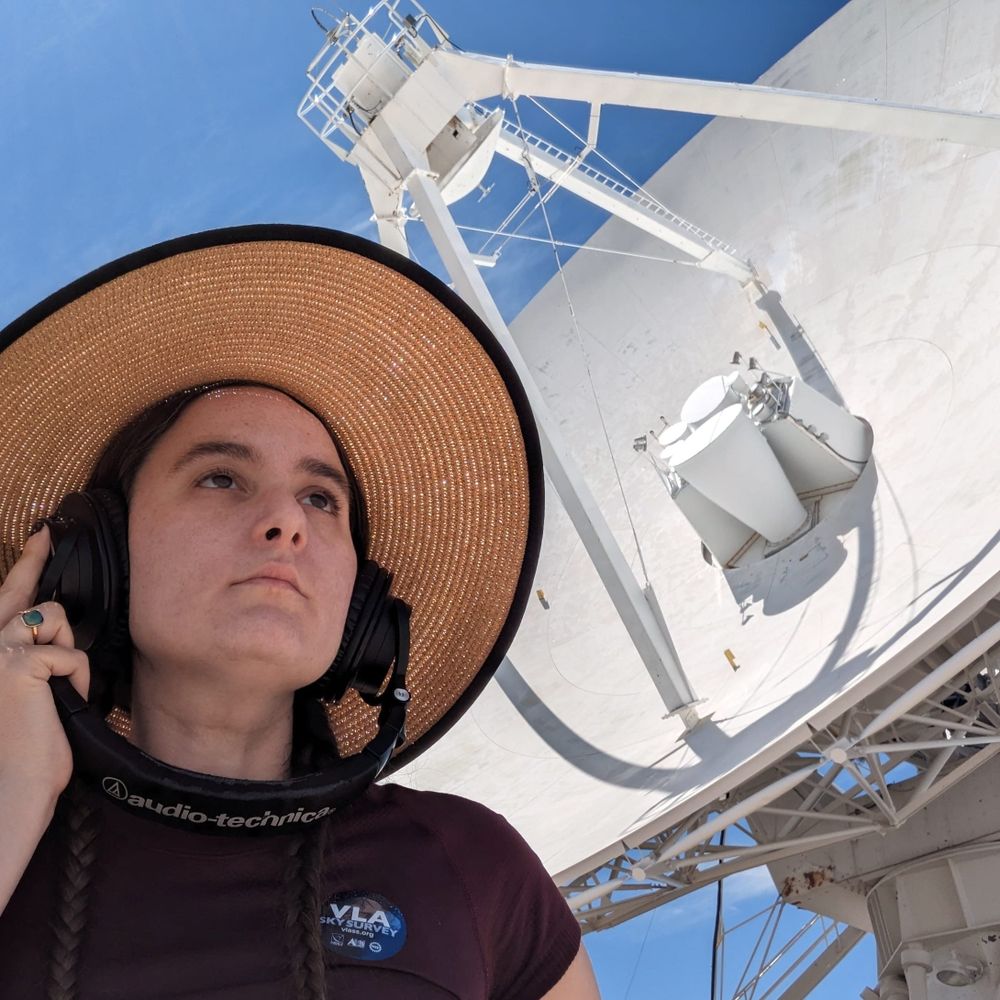
Life update:
December 31 was my last day at the Space Telescope Science Institute. The NASA's Universe of Learning grant that paid a large fraction of my salary was not renewed due to NASA budget cuts, so my contract was not renewed.
December 31 was my last day at the Space Telescope Science Institute. The NASA's Universe of Learning grant that paid a large fraction of my salary was not renewed due to NASA budget cuts, so my contract was not renewed.
January 5, 2026 at 9:10 PM
Life update:
December 31 was my last day at the Space Telescope Science Institute. The NASA's Universe of Learning grant that paid a large fraction of my salary was not renewed due to NASA budget cuts, so my contract was not renewed.
December 31 was my last day at the Space Telescope Science Institute. The NASA's Universe of Learning grant that paid a large fraction of my salary was not renewed due to NASA budget cuts, so my contract was not renewed.
Reposted by John Debes
↖️ The Space Telescope Science Institute is the Science Operations Center for NASA's Webb, Hubble, and the upcoming Roman space telescopes, and the Mission Operations Center for Webb. 🔭 We help humanity explore the universe with advanced space telescopes and a large data archive.
January 2, 2026 at 7:56 PM
↖️ The Space Telescope Science Institute is the Science Operations Center for NASA's Webb, Hubble, and the upcoming Roman space telescopes, and the Mission Operations Center for Webb. 🔭 We help humanity explore the universe with advanced space telescopes and a large data archive.
Reposted by John Debes
Happy new year everyone!

January 2, 2026 at 1:58 AM
Happy new year everyone!
Reposted by John Debes

Light echo of the #supernova Cassiopeia A with #JWST NIRCam. Latest image from 2024-12-30. 🔭
Filters: F300M, F360M, F444W from program: www.stsci.edu/jwst-program...
Filters: F300M, F360M, F444W from program: www.stsci.edu/jwst-program...

December 31, 2025 at 4:57 AM
Light echo of the #supernova Cassiopeia A with #JWST NIRCam. Latest image from 2024-12-30. 🔭
Filters: F300M, F360M, F444W from program: www.stsci.edu/jwst-program...
Filters: F300M, F360M, F444W from program: www.stsci.edu/jwst-program...
Reposted by John Debes

how it started vs. how it’s going


December 31, 2025 at 10:16 PM
how it started vs. how it’s going