



ewan douglas
@douglase.bsky.social
Professing on space telescopes of all sizes; Tucson, AZ.
why you need big telescopes for spectroscopy -- “You have to collect enough photons because you’re spreading them out,” said @chadfbender.bsky.social, an astronomer at the University of Arizona, which is in charge of LFAST. www.nytimes.com/2026/01/09/s...

Google’s Former C.E.O. Wants to Build a Cosmic Search Engine
www.nytimes.com
January 9, 2026 at 4:05 PM
why you need big telescopes for spectroscopy -- “You have to collect enough photons because you’re spreading them out,” said @chadfbender.bsky.social, an astronomer at the University of Arizona, which is in charge of LFAST. www.nytimes.com/2026/01/09/s...
Reposted by ewan douglas
Just spent the day doing a thing: www.science.org/content/arti...
Roger Angel and I are Co-PIing the LFAST telescope, which is being built at @stewardobservatory.bsky.social and provides the ground based spectroscopic component of this venture.
@schmidtsciences.bsky.social #AAS247 #Arizona #LFAST
Roger Angel and I are Co-PIing the LFAST telescope, which is being built at @stewardobservatory.bsky.social and provides the ground based spectroscopic component of this venture.
@schmidtsciences.bsky.social #AAS247 #Arizona #LFAST

Ex–Google CEO funds private space telescope bigger than Hubble
Schmidt Sciences announces investments in orbiting observatory and three ground-based instruments
www.science.org
January 8, 2026 at 5:53 AM
Just spent the day doing a thing: www.science.org/content/arti...
Roger Angel and I are Co-PIing the LFAST telescope, which is being built at @stewardobservatory.bsky.social and provides the ground based spectroscopic component of this venture.
@schmidtsciences.bsky.social #AAS247 #Arizona #LFAST
Roger Angel and I are Co-PIing the LFAST telescope, which is being built at @stewardobservatory.bsky.social and provides the ground based spectroscopic component of this venture.
@schmidtsciences.bsky.social #AAS247 #Arizona #LFAST
There is a great summary of the session from @astronomymag.bsky.social www.astronomy.com/science/eric...
January 8, 2026 at 8:01 AM
There is a great summary of the session from @astronomymag.bsky.social www.astronomy.com/science/eric...
More Astrophysics for More People ✨
Join us for a virtual #AAS247 session and a first look at The Schmidt Observatory System—a new network of ground and space-based initiatives designed to break the traditional limits of discovery.
📆 Jan 7 | 3-5:30pm MT / 5-7:30pm ET
Register here: buff.ly/kbbNFuB
Join us for a virtual #AAS247 session and a first look at The Schmidt Observatory System—a new network of ground and space-based initiatives designed to break the traditional limits of discovery.
📆 Jan 7 | 3-5:30pm MT / 5-7:30pm ET
Register here: buff.ly/kbbNFuB

January 7, 2026 at 5:07 PM
Reposted by ewan douglas
“The Habitable Worlds Observatory is exactly the kind of bold, forward-leaning science that only NASA can undertake...” said NASA Administrator Jared Isaacman...
🔭✨🧪🧵☄️
#exoplanets
#extragalactic
🔭✨🧪🧵☄️
#exoplanets
#extragalactic

NASA Selects Tech Proposals to Advance Search-for-Life Mission - NASA
NASA announced Monday the selection of industry proposals to advance technologies for the agency’s Habitable Worlds Observatory concept – the first mission
www.nasa.gov
January 5, 2026 at 11:32 PM
“The Habitable Worlds Observatory is exactly the kind of bold, forward-leaning science that only NASA can undertake...” said NASA Administrator Jared Isaacman...
🔭✨🧪🧵☄️
#exoplanets
#extragalactic
🔭✨🧪🧵☄️
#exoplanets
#extragalactic
New paper day! arxiv.org/abs/2601.02556 🔭🧪

The Lazuli Space Observatory: Architecture & Capabilities
The Lazuli Space Observatory is a 3-meter aperture astronomical facility designed for rapid-response observations and precision astrophysics across visible to near-infrared wavelengths (400-1700 nm ba...
arxiv.org
January 7, 2026 at 3:38 AM
New paper day! arxiv.org/abs/2601.02556 🔭🧪
Reposted by ewan douglas

More Astrophysics for More People ✨
Join us for a virtual #AAS247 session and a first look at The Schmidt Observatory System—a new network of ground and space-based initiatives designed to break the traditional limits of discovery.
📆 Jan 7 | 3-5:30pm MT / 5-7:30pm ET
Register here: buff.ly/kbbNFuB
Join us for a virtual #AAS247 session and a first look at The Schmidt Observatory System—a new network of ground and space-based initiatives designed to break the traditional limits of discovery.
📆 Jan 7 | 3-5:30pm MT / 5-7:30pm ET
Register here: buff.ly/kbbNFuB
January 5, 2026 at 8:10 PM
More Astrophysics for More People ✨
Join us for a virtual #AAS247 session and a first look at The Schmidt Observatory System—a new network of ground and space-based initiatives designed to break the traditional limits of discovery.
📆 Jan 7 | 3-5:30pm MT / 5-7:30pm ET
Register here: buff.ly/kbbNFuB
Join us for a virtual #AAS247 session and a first look at The Schmidt Observatory System—a new network of ground and space-based initiatives designed to break the traditional limits of discovery.
📆 Jan 7 | 3-5:30pm MT / 5-7:30pm ET
Register here: buff.ly/kbbNFuB
Reposted by ewan douglas

Christmas on the archive!
@ericmamajek.bsky.social leads a paper with his usual precision, asking us astronomers (especially exoplanet folks) to clean up their jargon.
Introducing the Solirad: the nominal average flux the Earth receives from the Sun = 1361 W/m^2
arxiv.org/abs/2512.20126
@ericmamajek.bsky.social leads a paper with his usual precision, asking us astronomers (especially exoplanet folks) to clean up their jargon.
Introducing the Solirad: the nominal average flux the Earth receives from the Sun = 1361 W/m^2
arxiv.org/abs/2512.20126

The Solirad (So) as a Convenient Unit for Quoting Astronomical Irradiances for Planetary Insolations and Exoplanetary Instellations
Measurements of physical parameters for stars and (exo)planets are often quoted in units normalized to the Sun and/or Earth. The nominal total solar irradiance, ${S}^{\rm N}_{\odot}$, while based on a...
arxiv.org
December 24, 2025 at 3:28 AM
Christmas on the archive!
@ericmamajek.bsky.social leads a paper with his usual precision, asking us astronomers (especially exoplanet folks) to clean up their jargon.
Introducing the Solirad: the nominal average flux the Earth receives from the Sun = 1361 W/m^2
arxiv.org/abs/2512.20126
@ericmamajek.bsky.social leads a paper with his usual precision, asking us astronomers (especially exoplanet folks) to clean up their jargon.
Introducing the Solirad: the nominal average flux the Earth receives from the Sun = 1361 W/m^2
arxiv.org/abs/2512.20126
Reposted by ewan douglas

We are hiring at the University of Arizona libraries for a Data Science Specialist/Librarian. Expertise/experience in Python is a must. Not on the search committee, will be your colleague. arizona.csod.com/ux/ats/caree...
Data Science Specialist/Librarian (Assistant or Associate)
CHARACTERISTIC DUTIESData
Science Outreach and ServicesDevelop and lead training opportunities in tools and
resources such as data visualization, data...
arizona.csod.com
December 1, 2025 at 5:15 PM
We are hiring at the University of Arizona libraries for a Data Science Specialist/Librarian. Expertise/experience in Python is a must. Not on the search committee, will be your colleague. arizona.csod.com/ux/ats/caree...
Time to repost this, hbr.org/2018/01/ndas...

NDAs Are Out of Control. Here’s What Needs to Change
New data shows that over one-third of the U.S. workforce is bound by an NDA. These contracts have grown not only in number but also in breadth. They not only appear in settlements after a victim of se...
hbr.org
October 13, 2025 at 3:58 PM
Time to repost this, hbr.org/2018/01/ndas...
Reposted by ewan douglas

The Habitable Worlds Observatory is early in its development as a large infrared/optical/ultraviolet space telescope. Many designs are under consideration, including this artist's concept animation. More about the planned observatory: go.nasa.gov/HWO #HWO2025 #HWO25 🔭 🧪 ☄️
July 29, 2025 at 1:23 PM
The Habitable Worlds Observatory is early in its development as a large infrared/optical/ultraviolet space telescope. Many designs are under consideration, including this artist's concept animation. More about the planned observatory: go.nasa.gov/HWO #HWO2025 #HWO25 🔭 🧪 ☄️
Reposted by ewan douglas

In a new paper this month from Carlos Vargas and the Aspera team, readers get updates and context for the Steward Observatory-based mission. Learn more about this bold mission that aims to study galaxy evolution through UV light: bit.ly/3INfG93

July 29, 2025 at 12:39 AM
In a new paper this month from Carlos Vargas and the Aspera team, readers get updates and context for the Steward Observatory-based mission. Learn more about this bold mission that aims to study galaxy evolution through UV light: bit.ly/3INfG93
Reposted by ewan douglas
new 🔭 paper day! Kian Milani and coauthors show how to save computing power and memory with an adjoint model to create high-contrast dark holes with a vortex coronagraph in simulation and reaching <1e-8 contrasts in the lab www.spiedigitallibrary.org/journals/Jou...

July 21, 2025 at 3:07 PM
new 🔭 paper day! Kian Milani and coauthors show how to save computing power and memory with an adjoint model to create high-contrast dark holes with a vortex coronagraph in simulation and reaching <1e-8 contrasts in the lab www.spiedigitallibrary.org/journals/Jou...
Reposted by ewan douglas
The first photos from the Vera Rubin Observatory are stunning — thanks in part to the University of Arizona, which helped build its mirror. Proud to see Arizona leading the way in space science.
July 17, 2025 at 11:35 PM
The first photos from the Vera Rubin Observatory are stunning — thanks in part to the University of Arizona, which helped build its mirror. Proud to see Arizona leading the way in space science.
New paper day from Carlos Vargas and the Aspera team! @stewardobservatory.bsky.social :
www.spiedigitallibrary.org/journals/Jou...
www.spiedigitallibrary.org/journals/Jou...

Pioneering far UV emission mapping of the circumgalactic medium with Aspera—motivation, mission status, and lessons learned
Aspera is a far ultraviolet (FUV) SmallSat mission in the NASA Astrophysics Pioneers Program with the science objectives surrounding detection and mapping of the warm-hot circumgalactic medium in emission for the first time in nearby galaxies. Aspera comprises a pair of identical long-slit FUV spectrographs optimized to detect faint extended source emission at ∼103 nm. The operations phase of the mission will include a commissioning phase, a primary science phase, and a closeout phase. Placed in a Sun-synchronous 500 to 600 km orbit, Aspera will operate in detection, mapping, and calibration modes during the primary science phase to achieve the mission’s science objectives. We note that minor damage outside of the clear aperture of the off-axis parabola mirrors was discovered during the application of high reflectance FUV coatings. It was determined that this damage was likely due to a cold welding effect when the Al optic holder came in contact with the contact point regions of the optic during the enhanced lithium fluoride coating process. These features do not affect the performance of the optic, nor do they pose any structural risk, and they can be avoided for future projects through material selection. The payload critical design is complete, and assembly of the payload began as of summer 2024.
www.spiedigitallibrary.org
July 17, 2025 at 5:22 PM
New paper day from Carlos Vargas and the Aspera team! @stewardobservatory.bsky.social :
www.spiedigitallibrary.org/journals/Jou...
www.spiedigitallibrary.org/journals/Jou...
Reposted by ewan douglas

HiRISE 3D: Jezero Crater
An updated batch of anaglyphs for our July PDS release starts with this wonder 3D image of a part of Jezero Crater.
www.uahirise.org/anaglyph/ESP...
NASA/JPL-Caltech/University of Arizona
#Mars #NASA #science
An updated batch of anaglyphs for our July PDS release starts with this wonder 3D image of a part of Jezero Crater.
www.uahirise.org/anaglyph/ESP...
NASA/JPL-Caltech/University of Arizona
#Mars #NASA #science

July 4, 2025 at 1:25 PM
HiRISE 3D: Jezero Crater
An updated batch of anaglyphs for our July PDS release starts with this wonder 3D image of a part of Jezero Crater.
www.uahirise.org/anaglyph/ESP...
NASA/JPL-Caltech/University of Arizona
#Mars #NASA #science
An updated batch of anaglyphs for our July PDS release starts with this wonder 3D image of a part of Jezero Crater.
www.uahirise.org/anaglyph/ESP...
NASA/JPL-Caltech/University of Arizona
#Mars #NASA #science
Reposted by ewan douglas
This is extremely worrying. The work done at IPAC is critical to the field of astronomy in the US and worldwide.
Like many NASA projects and missions, the NASA Exoplanet Science Institute was asked to submit a closeout budget this week. Hopefully just a drill! But very difficult just the same. 💔
Regardless of what happens, I’m *so proud* of the service we have performed for the community over the years. ✨🪐💾🔭👩🏻🔬
Regardless of what happens, I’m *so proud* of the service we have performed for the community over the years. ✨🪐💾🔭👩🏻🔬
July 3, 2025 at 3:52 PM
This is extremely worrying. The work done at IPAC is critical to the field of astronomy in the US and worldwide.
Reposted by ewan douglas
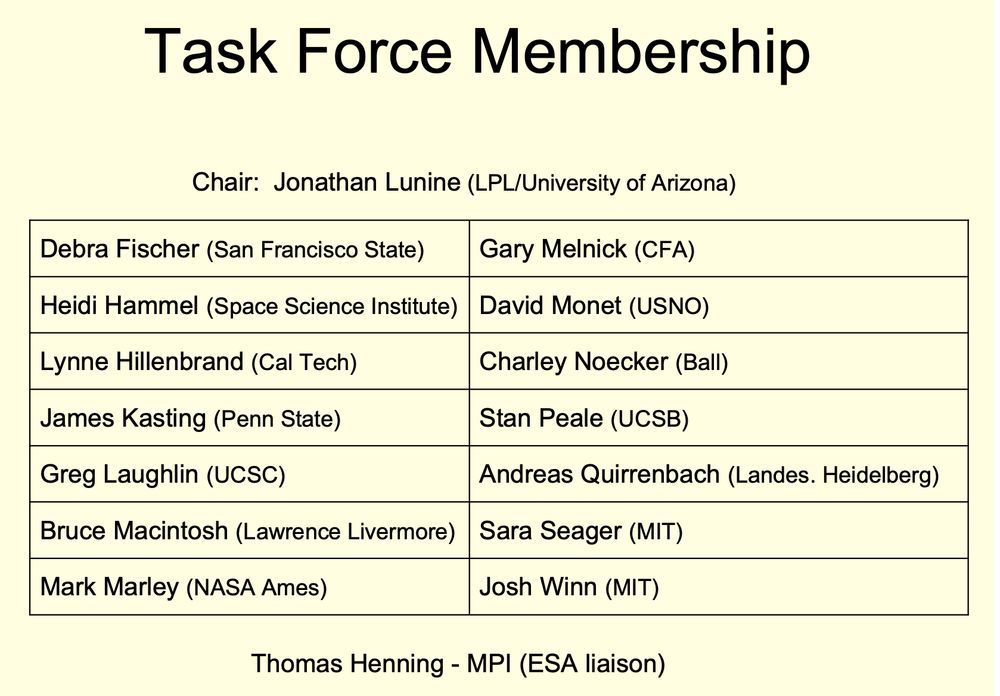
Today I remembered the NASA Exoplanet Task Force charged in 2006 with developing a 15-year strategy to "detect and characterize exo-planets". Still waiting on that space based direct imaging. 15 years out would have been 2022-ish...

July 2, 2025 at 1:55 AM
Today I remembered the NASA Exoplanet Task Force charged in 2006 with developing a 15-year strategy to "detect and characterize exo-planets". Still waiting on that space based direct imaging. 15 years out would have been 2022-ish...
Reposted by ewan douglas
There is an economic multiplier to every science dollar spent. Just from the University of Arizona, the proposed cuts to NASA/NSF could pull hundreds of millions of dollars out of the southern Arizona economy. We are a place that has "Space is Wildcat country" banners on poles.
May 30, 2025 at 10:01 PM
There is an economic multiplier to every science dollar spent. Just from the University of Arizona, the proposed cuts to NASA/NSF could pull hundreds of millions of dollars out of the southern Arizona economy. We are a place that has "Space is Wildcat country" banners on poles.
@stewardobservatory.bsky.social's Aspera Pioneer mission has a ride! www.nasa.gov/news-release...

NASA Awards Launch Service Task Order for Aspera’s Galaxy Mission - NASA
NASA has selected Rocket Lab USA Inc. of Long Beach, California, to launch the agency’s Aspera mission, a SmallSat to study galaxy formation and evolution,
www.nasa.gov
May 14, 2025 at 10:28 PM
@stewardobservatory.bsky.social's Aspera Pioneer mission has a ride! www.nasa.gov/news-release...
Reposted by ewan douglas

"These guidelines were written by almost-retired professors who never could have met these standards back in the 1980s, when all you needed for tenure was 1.5 publications and a bottle of scotch in your desk."
buff.ly/TOh3MUc
buff.ly/TOh3MUc
Introducing Our University’s New, Totally Reasonable Criteria for Promotion and Tenure
Since the founding of our august institution, we have awarded promotion and tenure based on how many pages of your research we could read before fa...
www.mcsweeneys.net
May 6, 2025 at 6:30 PM
"These guidelines were written by almost-retired professors who never could have met these standards back in the 1980s, when all you needed for tenure was 1.5 publications and a bottle of scotch in your desk."
buff.ly/TOh3MUc
buff.ly/TOh3MUc
Reposted by ewan douglas

We don’t make money running these labs. That isn’t the point. We are non-profits for a reason. When NSF and NASA want me to do a project in addition to paying for the project they basically pay to rent the space the project gets done in and all that that entails (utilities, custodian, maintenance)
February 8, 2025 at 2:50 PM
We don’t make money running these labs. That isn’t the point. We are non-profits for a reason. When NSF and NASA want me to do a project in addition to paying for the project they basically pay to rent the space the project gets done in and all that that entails (utilities, custodian, maintenance)