


Joaquín Valdés Bize
@joacovaldes.bsky.social
PhD(c) Neuroscience at PUC Chile. I study S+R associations, error-monitoring and neuromodulation in the visual cortex using EEG, fMRI, pupillometry. Guitar and bass at Winkas https://open.spotify.com/track/0cpwVzFqZX1YTdlESWrbWX?si=c77d42b1c521433a
Reposted by Joaquín Valdés Bize
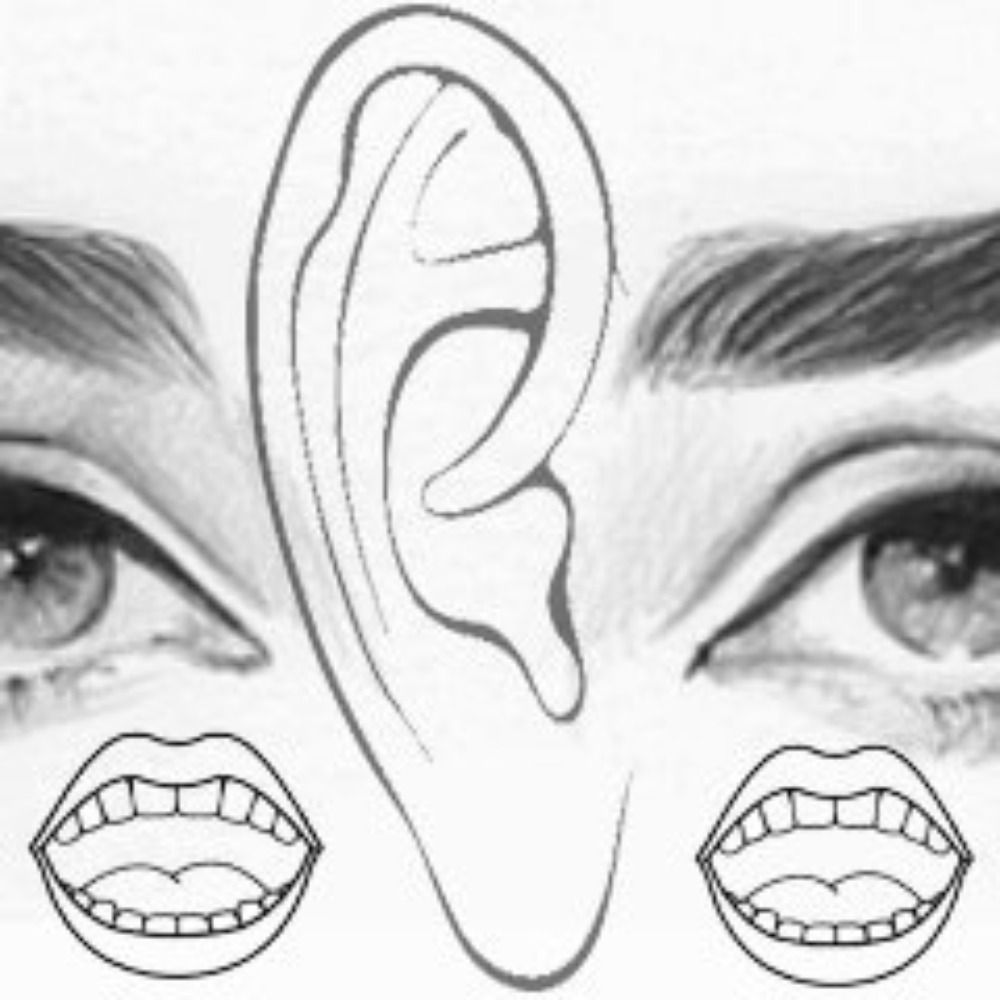
When brain talks back to the eye "The state of our brain shapes what we see, but how early in the visual system does this start? A new study in PLOS Biology shows that brain state-dependent release of histamine modulates the very first stage of vision in the retina" journals.plos.org/plosbiology/...

When the brain talks back to the eye
The state of our brain shapes what we see, but how early in the visual system does this start? This Primer explores a new PLOS Biology study which shows that brain state-dependent release of histamine...
journals.plos.org
November 5, 2025 at 9:30 PM
When brain talks back to the eye "The state of our brain shapes what we see, but how early in the visual system does this start? A new study in PLOS Biology shows that brain state-dependent release of histamine modulates the very first stage of vision in the retina" journals.plos.org/plosbiology/...
Reposted by Joaquín Valdés Bize

Meta used 36 of my published papers in their training data #science #neuroscience #neuroskyence #psychology #PsychSciSky
You can check for your papers, too
You can check for your papers, too

Just a reminder to check for your name in this list of books that OpenAI trained from. If your name is there, they probably owe you several thousand dollars.
OpenAI cried that if everyone eligible author files, the company will go bankrupt, so I'm alerting every author I have ever spoken to.
OpenAI cried that if everyone eligible author files, the company will go bankrupt, so I'm alerting every author I have ever spoken to.

Search LibGen, the Pirated-Books Database That Meta Used to Train AI
Millions of books and scientific papers are captured in the collection’s current iteration.
www.theatlantic.com
September 7, 2025 at 5:21 PM
Meta used 36 of my published papers in their training data #science #neuroscience #neuroskyence #psychology #PsychSciSky
You can check for your papers, too
You can check for your papers, too
Reposted by Joaquín Valdés Bize

“A game-changer for cognitive science." — @evanthompson.bsky.social
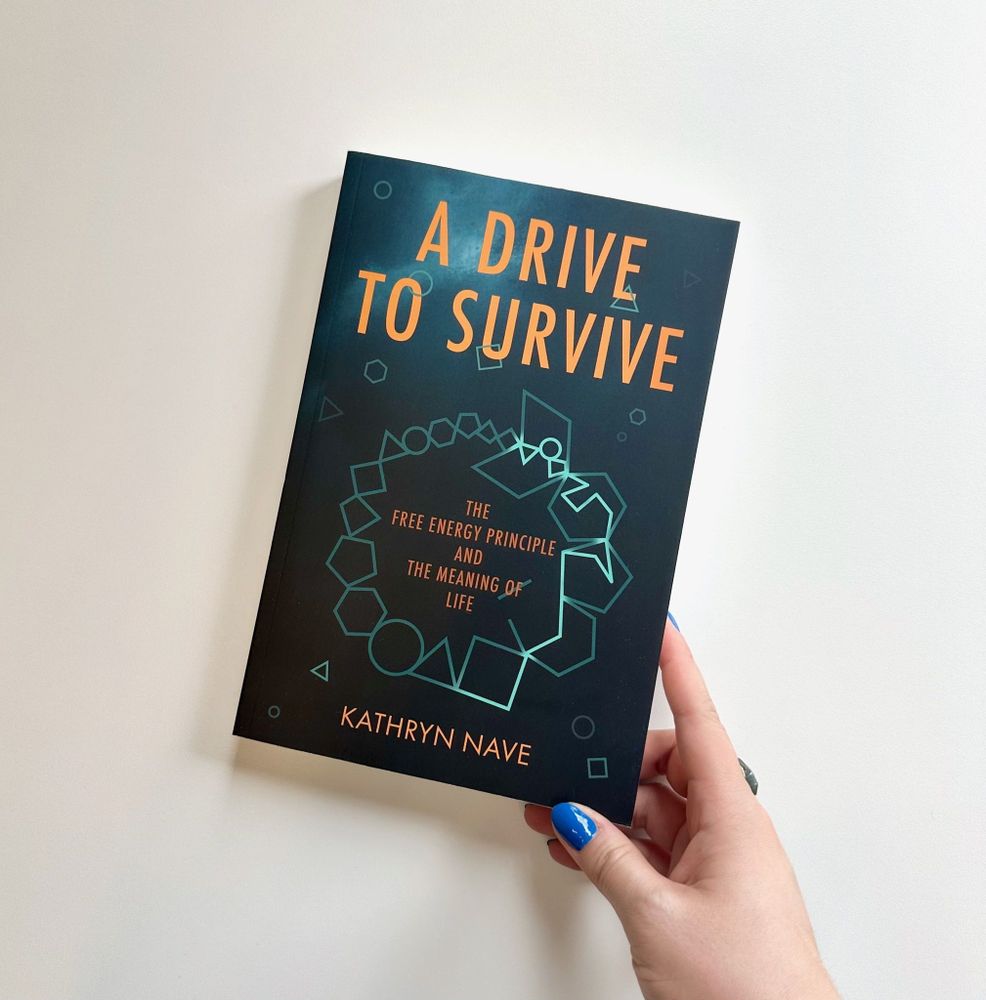
In "A Drive to Survive," @kathrynnave.bsky.social offers an extended critical analysis of the strengths and limitations of the free energy principle. Available #openaccess: mitpress.mit.edu/978026255132...
In "A Drive to Survive," @kathrynnave.bsky.social offers an extended critical analysis of the strengths and limitations of the free energy principle. Available #openaccess: mitpress.mit.edu/978026255132...
June 5, 2025 at 10:05 PM
“A game-changer for cognitive science." — @evanthompson.bsky.social
In "A Drive to Survive," @kathrynnave.bsky.social offers an extended critical analysis of the strengths and limitations of the free energy principle. Available #openaccess: mitpress.mit.edu/978026255132...
In "A Drive to Survive," @kathrynnave.bsky.social offers an extended critical analysis of the strengths and limitations of the free energy principle. Available #openaccess: mitpress.mit.edu/978026255132...
Reposted by Joaquín Valdés Bize

1
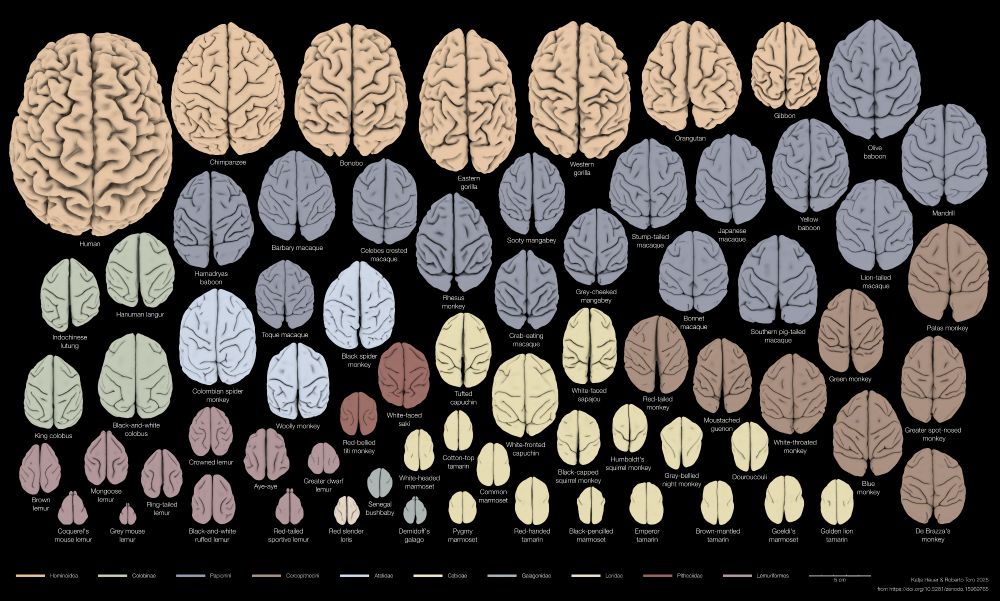
To predict the behaviour of a primate, would you rather base your guess on a closely related species or one with a similar brain shape? We looked at brains & behaviours of 70 species, you’ll be surprised!
🧵Thread on our new preprint with @r3rt0.bsky.social , doi.org/10.1101/2025...
To predict the behaviour of a primate, would you rather base your guess on a closely related species or one with a similar brain shape? We looked at brains & behaviours of 70 species, you’ll be surprised!
🧵Thread on our new preprint with @r3rt0.bsky.social , doi.org/10.1101/2025...
July 27, 2025 at 5:26 PM
1
To predict the behaviour of a primate, would you rather base your guess on a closely related species or one with a similar brain shape? We looked at brains & behaviours of 70 species, you’ll be surprised!
🧵Thread on our new preprint with @r3rt0.bsky.social , doi.org/10.1101/2025...
To predict the behaviour of a primate, would you rather base your guess on a closely related species or one with a similar brain shape? We looked at brains & behaviours of 70 species, you’ll be surprised!
🧵Thread on our new preprint with @r3rt0.bsky.social , doi.org/10.1101/2025...
Reposted by Joaquín Valdés Bize

Finally published:
“Top-down and bottom-up neuroscience: overcoming the clash of research cultures”
www.nature.com/articles/s41...
Looking for ways to better understand different neuroscientific perspectives and enable productive collaborations
“Top-down and bottom-up neuroscience: overcoming the clash of research cultures”
www.nature.com/articles/s41...
Looking for ways to better understand different neuroscientific perspectives and enable productive collaborations
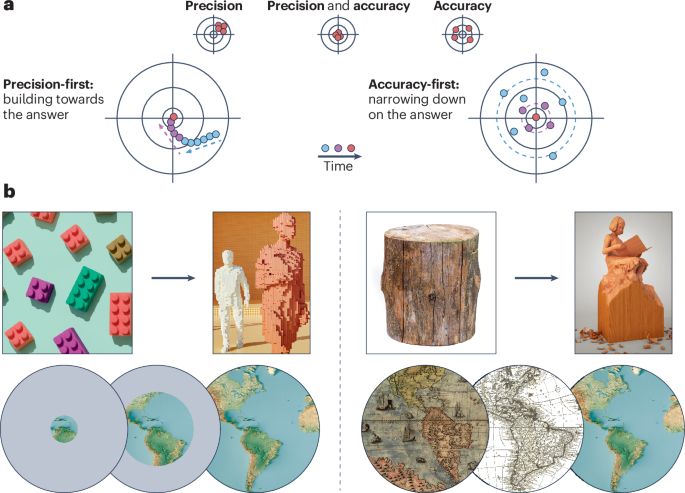
Top-down and bottom-up neuroscience: overcoming the clash of research cultures - Nature Reviews Neuroscience
As scientists, we want solid answers, but we also want to answer questions that matter. Yet, the brain’s complexity forces trade-offs between these desiderata, bringing about two distinct research app...
www.nature.com
July 22, 2025 at 11:02 AM
Finally published:
“Top-down and bottom-up neuroscience: overcoming the clash of research cultures”
www.nature.com/articles/s41...
Looking for ways to better understand different neuroscientific perspectives and enable productive collaborations
“Top-down and bottom-up neuroscience: overcoming the clash of research cultures”
www.nature.com/articles/s41...
Looking for ways to better understand different neuroscientific perspectives and enable productive collaborations
Reposted by Joaquín Valdés Bize

A large study in Sweden found levels of autism *symptoms* were constant over time, even as autism *diagnoses* increased (implying broadening diagnostic criteria rather than real underlying increase) www.bmj.com/content/350/...

Autism phenotype versus registered diagnosis in Swedish children: prevalence trends over 10 years in general population samples
Objective To compare the annual prevalence of the autism symptom phenotype and of registered diagnoses for autism spectrum disorder during a 10 year period in children.
Design Population based study....
www.bmj.com
April 11, 2025 at 1:14 PM
A large study in Sweden found levels of autism *symptoms* were constant over time, even as autism *diagnoses* increased (implying broadening diagnostic criteria rather than real underlying increase) www.bmj.com/content/350/...
Reposted by Joaquín Valdés Bize
Instead of having participants learn arbitrary distributions of features, we leveraged the fact that some feature distributions are already baked into our senses at some level. Our novel task reveals biases in subjective judgments that are very well predicted from natural image statistics.

The influence of natural image statistics on upright orientation judgements
Humans have well-documented priors for many features present in nature that guide visual perception. Despite being putatively grounded in the statisti…
www.sciencedirect.com
January 29, 2025 at 2:57 AM
Instead of having participants learn arbitrary distributions of features, we leveraged the fact that some feature distributions are already baked into our senses at some level. Our novel task reveals biases in subjective judgments that are very well predicted from natural image statistics.
Reposted by Joaquín Valdés Bize
We value things differently depending on the situation. A fascinating paper shows that the hippocampus feeds contextual information to the prefrontal cortex by altering theta wave phase alignment, enabling the PFC to adjust value judgments accordingly.
www.nature.com/articles/s41...
#neuroscience
www.nature.com/articles/s41...
#neuroscience

Context-dependent decision-making in the primate hippocampal–prefrontal circuit - Nature Neuroscience
The brain uses different valuation schemes across contexts. Elston and Wallis show this is supported by hippocampal encoding of context that is broadcast to prefrontal value subcircuits via theta sync...
www.nature.com
January 9, 2025 at 6:02 PM
We value things differently depending on the situation. A fascinating paper shows that the hippocampus feeds contextual information to the prefrontal cortex by altering theta wave phase alignment, enabling the PFC to adjust value judgments accordingly.
www.nature.com/articles/s41...
#neuroscience
www.nature.com/articles/s41...
#neuroscience
Reposted by Joaquín Valdés Bize
John Duncan always has something interesting to say.
Construction and use of mental models: Organizing principles for the science of brain and mind
doi.org/10.1016/j.ne...
#neuroscience
Construction and use of mental models: Organizing principles for the science of brain and mind
doi.org/10.1016/j.ne...
#neuroscience
Redirecting
doi.org
January 10, 2025 at 6:19 PM
John Duncan always has something interesting to say.
Construction and use of mental models: Organizing principles for the science of brain and mind
doi.org/10.1016/j.ne...
#neuroscience
Construction and use of mental models: Organizing principles for the science of brain and mind
doi.org/10.1016/j.ne...
#neuroscience
Reposted by Joaquín Valdés Bize
Effects of Ketamine on Frontoparietal Interactions in a Rule-Based Antisaccade Task in Macaque Monkeys
www.jneurosci.org/content/44/5...
#neuroscience
www.jneurosci.org/content/44/5...
#neuroscience

Effects of Ketamine on Frontoparietal Interactions in a Rule-Based Antisaccade Task in Macaque Monkeys
Cognitive control is engaged by working memory processes and high-demand situations like antisaccade, where one must suppress a prepotent response. While it is known to be supported by the frontoparie...
www.jneurosci.org
January 10, 2025 at 6:22 PM
Effects of Ketamine on Frontoparietal Interactions in a Rule-Based Antisaccade Task in Macaque Monkeys
www.jneurosci.org/content/44/5...
#neuroscience
www.jneurosci.org/content/44/5...
#neuroscience
Reposted by Joaquín Valdés Bize
The big mixup: Neural representation during natural modes of primate visual behavior
doi.org/10.1016/j.co...
#neuroscience
doi.org/10.1016/j.co...
#neuroscience
Redirecting
doi.org
January 10, 2025 at 6:23 PM
The big mixup: Neural representation during natural modes of primate visual behavior
doi.org/10.1016/j.co...
#neuroscience
doi.org/10.1016/j.co...
#neuroscience
Reposted by Joaquín Valdés Bize
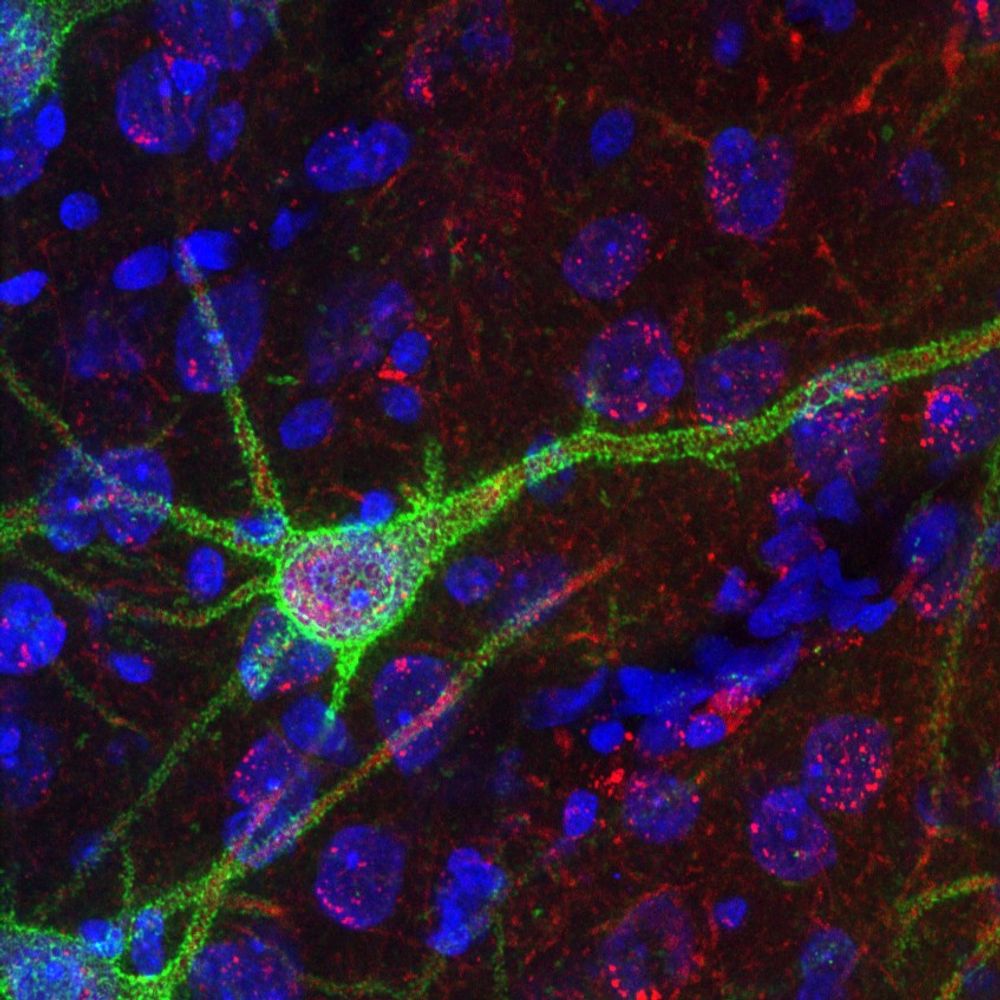
In this preprint we see how activity in entorhinal cortex change during learning a non-spatial visual association task. Neurons in the MEC initially exhibited weak responses to visual cues but gradually developed strong tuning toward the rewarded trials. doi.org/10.1101/2024...

Task and Behavior-Related Variables Are Encoded by the Postrhinal and Medial Entorhinal Cortex During Non-Spatial Associative Learning
The medial entorhinal cortex (MEC) is pivotal in spatial computations and episodic memory. In particular, an animal’s position can be decoded from the activity of entorhinal grid cells. However, it re...
doi.org
January 10, 2025 at 9:48 PM
In this preprint we see how activity in entorhinal cortex change during learning a non-spatial visual association task. Neurons in the MEC initially exhibited weak responses to visual cues but gradually developed strong tuning toward the rewarded trials. doi.org/10.1101/2024...
Reposted by Joaquín Valdés Bize
Specialized neurons are the exception, not the rule, in cortex. The brain is complex, go figure!
www.thetransmitter.org/neural-codin...
#neuroscience
www.thetransmitter.org/neural-codin...
#neuroscience

Most neurons in mouse cortex defy functional categories
The majority of cells in the cerebral cortex are unspecialized, according to an unpublished analysis—and scientists need to take care in naming neurons, the researchers warn.
www.thetransmitter.org
January 7, 2025 at 4:10 PM
Specialized neurons are the exception, not the rule, in cortex. The brain is complex, go figure!
www.thetransmitter.org/neural-codin...
#neuroscience
www.thetransmitter.org/neural-codin...
#neuroscience
Reposted by Joaquín Valdés Bize

More shenanigans for EuroImmun's founder Winfried Stöcker, who sold the company, bought an airport and a hotel, donated to the AfD, and then illegally vaccinated people with a COVID vaccine he developed himself.
bsky.app/profile/dies...
www.spiegel.de/panorama/afd...
de.wikipedia.org/wiki/Winfrie...
bsky.app/profile/dies...
www.spiegel.de/panorama/afd...
de.wikipedia.org/wiki/Winfrie...
December 30, 2024 at 2:21 AM
More shenanigans for EuroImmun's founder Winfried Stöcker, who sold the company, bought an airport and a hotel, donated to the AfD, and then illegally vaccinated people with a COVID vaccine he developed himself.
bsky.app/profile/dies...
www.spiegel.de/panorama/afd...
de.wikipedia.org/wiki/Winfrie...
bsky.app/profile/dies...
www.spiegel.de/panorama/afd...
de.wikipedia.org/wiki/Winfrie...
Reposted by Joaquín Valdés Bize
OpenAI, Google and Meta ignored corporate policies, altered their own rules and discussed skirting copyright law as they sought online information to train their newest artificial intelligence systems.
www.nytimes.com/2024/04/06/t...
www.nytimes.com/2024/04/06/t...

How Tech Giants Cut Corners to Harvest Data for A.I.
OpenAI, Google and Meta ignored corporate policies, altered their own rules and discussed skirting copyright law as they sought online information to train their newest artificial intelligence systems...
www.nytimes.com
December 26, 2024 at 11:33 PM
OpenAI, Google and Meta ignored corporate policies, altered their own rules and discussed skirting copyright law as they sought online information to train their newest artificial intelligence systems.
www.nytimes.com/2024/04/06/t...
www.nytimes.com/2024/04/06/t...
Reposted by Joaquín Valdés Bize
Short letter in TiCS where we (@matthiasmichel.bsky.social, @hakwan.bsky.social & @neddo.bsky.social) explore the possibility that aphantasia is unconscious mental imagery. Given aphantasics’ high performance, we propose thinking about it as blindsight of the mind’s eye. www.cell.com/trends/cogni...

Aphantasia as imagery blindsight
In a recent article in TiCS [1], Zeman provided a masterful and balanced review of aphantasia. However, in doing so, he might have been too generous to some accounts. Specifically, unlike Zeman, we consider the view that aphantasia involves nonconscious imagistic representations [2] to be clearly superior to other views. Here, we argue against these other views as they were described by Zeman. In addition, we address some additional arguments that have been raised to counter the idea that aphantasia involves nonconscious imagistic representations [3], which were not addressed by Zeman in his review.
www.cell.com
December 18, 2024 at 2:43 AM
Short letter in TiCS where we (@matthiasmichel.bsky.social, @hakwan.bsky.social & @neddo.bsky.social) explore the possibility that aphantasia is unconscious mental imagery. Given aphantasics’ high performance, we propose thinking about it as blindsight of the mind’s eye. www.cell.com/trends/cogni...
Reposted by Joaquín Valdés Bize
Spoiler alert: Yes
Can ephapticity contribute to brain complexity?
journals.plos.org/plosone/arti...
#neuroscience
Can ephapticity contribute to brain complexity?
journals.plos.org/plosone/arti...
#neuroscience

Can ephapticity contribute to brain complexity?
The inquiry into the origin of brain complexity remains a pivotal question in neuroscience. While synaptic stimuli are acknowledged as significant, their efficacy often falls short in elucidating the ...
journals.plos.org
December 9, 2024 at 12:06 PM
Spoiler alert: Yes
Can ephapticity contribute to brain complexity?
journals.plos.org/plosone/arti...
#neuroscience
Can ephapticity contribute to brain complexity?
journals.plos.org/plosone/arti...
#neuroscience
Reposted by Joaquín Valdés Bize

#Neuroimaging crowd, hear me out! 👀
Did you ever want to add #EyeTracking to your #fMRI study but found it too much hassle? Got existing data you’d love to add eye tracking to?
Consider trying out *MR-based eye tracking* (i.e. inferring gaze from eye voxels)!
Here is a 🧵 with a few options!👇 1/9
Did you ever want to add #EyeTracking to your #fMRI study but found it too much hassle? Got existing data you’d love to add eye tracking to?
Consider trying out *MR-based eye tracking* (i.e. inferring gaze from eye voxels)!
Here is a 🧵 with a few options!👇 1/9
December 2, 2024 at 4:52 PM
#Neuroimaging crowd, hear me out! 👀
Did you ever want to add #EyeTracking to your #fMRI study but found it too much hassle? Got existing data you’d love to add eye tracking to?
Consider trying out *MR-based eye tracking* (i.e. inferring gaze from eye voxels)!
Here is a 🧵 with a few options!👇 1/9
Did you ever want to add #EyeTracking to your #fMRI study but found it too much hassle? Got existing data you’d love to add eye tracking to?
Consider trying out *MR-based eye tracking* (i.e. inferring gaze from eye voxels)!
Here is a 🧵 with a few options!👇 1/9
Reposted by Joaquín Valdés Bize

Nature Human Behaviour
The effect of seeing scientists as intellectually humble on trust in scientists and their research
www.nature.com/articles/s41...
The effect of seeing scientists as intellectually humble on trust in scientists and their research
www.nature.com/articles/s41...

The effect of seeing scientists as intellectually humble on trust in scientists and their research - Nature Human Behaviour
Across five pre-registered studies, Koetke et al. find that perceptions of scientists’ intellectual humility positively affect the perceived trustworthiness of scientists and their research.
www.nature.com
November 19, 2024 at 1:33 PM
Nature Human Behaviour
The effect of seeing scientists as intellectually humble on trust in scientists and their research
www.nature.com/articles/s41...
The effect of seeing scientists as intellectually humble on trust in scientists and their research
www.nature.com/articles/s41...
Reposted by Joaquín Valdés Bize

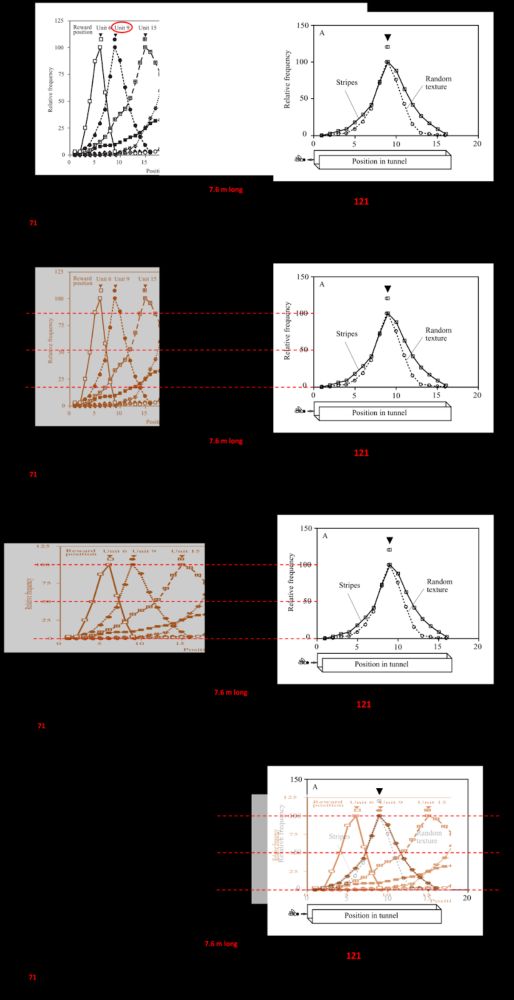
A friend mentioned honey bee waggle dance to me recently and I had to tell them the bad news about that literature: numerous key papers appear to be fraud. So here is me sharing the bad news with you too. Extensive blog post by the hero sleuth, Laura Luebbert, and @lpachter.bsky.social:
The Journal of Scientific Integrity
by Laura Luebbert and Lior Pachter Background (by LL) Four years ago, during the first year of my PhD at Caltech, I participated in a journal club organized by the lab I was rotating in. I was assi…
liorpachter.wordpress.com
November 19, 2024 at 8:28 AM
A friend mentioned honey bee waggle dance to me recently and I had to tell them the bad news about that literature: numerous key papers appear to be fraud. So here is me sharing the bad news with you too. Extensive blog post by the hero sleuth, Laura Luebbert, and @lpachter.bsky.social:
Reposted by Joaquín Valdés Bize

You can do both! For example, we recently had this paper peer-reviewed and recommended by @pci-regreports.bsky.social and then published in Science Advances:
www.science.org/doi/full/10....
PCI just gives you more power, flexibility, and options.
www.science.org/doi/full/10....
PCI just gives you more power, flexibility, and options.

Globally, songs and instrumental melodies are slower and higher and use more stable pitches than speech: A Registered Report
Global collaboration by 75 researchers finds acoustic relationships between speech, song, and instrumental music across cultures.
www.science.org
November 19, 2024 at 8:18 AM
You can do both! For example, we recently had this paper peer-reviewed and recommended by @pci-regreports.bsky.social and then published in Science Advances:
www.science.org/doi/full/10....
PCI just gives you more power, flexibility, and options.
www.science.org/doi/full/10....
PCI just gives you more power, flexibility, and options.
Reposted by Joaquín Valdés Bize

Interview with Andreas Sommer www.forbiddenhistories.com/2013/12/fink... #neuroscience #history #Germany #19thCentury

Emil du Bois-Reymond: Science, Progress and Superstition. An Interview with Gabriel Finkelstein
Gabriel Finkelstein is Associate Professor of History at the University of Colorado Denver, where he teaches courses on Modern Germany, Modern Europe, History of Science, and History of Exploration…
www.forbiddenhistories.com
November 17, 2024 at 2:20 PM
Interview with Andreas Sommer www.forbiddenhistories.com/2013/12/fink... #neuroscience #history #Germany #19thCentury
Reposted by Joaquín Valdés Bize

There are so many possible applications of cross-cultural research in psychiatry.
Globalization should aim to appreciate heterogeneity more than hegemony.
news.stanford.edu/stories/2014...
Globalization should aim to appreciate heterogeneity more than hegemony.
news.stanford.edu/stories/2014...

Stanford researcher: Hallucinatory 'voices' shaped by local culture
Stanford anthropologist Tanya Luhrmann found that voice-hearing experiences of people with serious psychotic disorders are shaped by local culture – in the United States, the voices are harsh and thre...
news.stanford.edu
November 17, 2024 at 5:06 PM
There are so many possible applications of cross-cultural research in psychiatry.
Globalization should aim to appreciate heterogeneity more than hegemony.
news.stanford.edu/stories/2014...
Globalization should aim to appreciate heterogeneity more than hegemony.
news.stanford.edu/stories/2014...
Reposted by Joaquín Valdés Bize

High-level visual prediction errors in early visual cortex!
In collaboration with @timkietzmann.bsky.social and @predictivebrain.bsky.social we explored what type of surprise drives the enhanced sensory response often observed for surprising inputs.
doi.org/10.1371/jour...
Summary 🧵 below
In collaboration with @timkietzmann.bsky.social and @predictivebrain.bsky.social we explored what type of surprise drives the enhanced sensory response often observed for surprising inputs.
doi.org/10.1371/jour...
Summary 🧵 below

High-level visual prediction errors in early visual cortex
Surprising sensory input triggers stronger neural activity than expected input, but at which level of the cortical hierarchy are these predictions made? This study shows that prediction errors are com...
doi.org
November 13, 2024 at 3:28 PM
High-level visual prediction errors in early visual cortex!
In collaboration with @timkietzmann.bsky.social and @predictivebrain.bsky.social we explored what type of surprise drives the enhanced sensory response often observed for surprising inputs.
doi.org/10.1371/jour...
Summary 🧵 below
In collaboration with @timkietzmann.bsky.social and @predictivebrain.bsky.social we explored what type of surprise drives the enhanced sensory response often observed for surprising inputs.
doi.org/10.1371/jour...
Summary 🧵 below