



Jean-Charles Lambert
@jclambert.bsky.social
Team leader, neuroscientist specialized in genetics and post-genomics of Alzheimer’s disease. in EN or/ou en FR 🇫🇷🇪🇺🏳️🌈
This indicates that assessing the sensitivity of results of GWAS (or GWAS secondary analyses, especially those based on genome-wide statistics) on clinically-diagnosed cases will become increasingly important as the proportion of proxy and biobank cases included in the GWAS increases.
October 24, 2025 at 12:30 AM
This indicates that assessing the sensitivity of results of GWAS (or GWAS secondary analyses, especially those based on genome-wide statistics) on clinically-diagnosed cases will become increasingly important as the proportion of proxy and biobank cases included in the GWAS increases.
In this preprint, the main consortia working on Alzheimer GWAS combined their efforts to validate an detect new loci associated with AD risk.
We observed 91 genome-wide significant signals (16 nove) . Among these 91 loci, 56 of them are specifically detected in clinically diagnosed AD cases.
We observed 91 genome-wide significant signals (16 nove) . Among these 91 loci, 56 of them are specifically detected in clinically diagnosed AD cases.

Consensus meta-analysis of genome-wide association studies for Alzheimer's disease and related dementia https://www.medrxiv.org/content/10.1101/2025.10.20.25338060v1
October 24, 2025 at 12:30 AM
In this preprint, the main consortia working on Alzheimer GWAS combined their efforts to validate an detect new loci associated with AD risk.
We observed 91 genome-wide significant signals (16 nove) . Among these 91 loci, 56 of them are specifically detected in clinically diagnosed AD cases.
We observed 91 genome-wide significant signals (16 nove) . Among these 91 loci, 56 of them are specifically detected in clinically diagnosed AD cases.
Reposted by Jean-Charles Lambert
🚨Join our next @DEMONNetworkUK #Genetics and #Omics meeting on THURSDAY 11th September at 2.30 PM (UK Time). Delighted to have @jclambert.bsky.social as invited speaker – “From #GWAS to polygenic risk scores in #Alzheimer's disease”
Join the network or DM for more info
Join the network or DM for more info
August 27, 2025 at 8:09 AM
🚨Join our next @DEMONNetworkUK #Genetics and #Omics meeting on THURSDAY 11th September at 2.30 PM (UK Time). Delighted to have @jclambert.bsky.social as invited speaker – “From #GWAS to polygenic risk scores in #Alzheimer's disease”
Join the network or DM for more info
Join the network or DM for more info
In this preprint led by Devrim Kilinc and Pierre Dourlen, we observed that differential expression of BIN1 isoforms in the presynaptic part leads to differential synaptotoxicity. BIN1 isoforms could contribute to the synaptic loss observed in Alzheimer's disease.
www.biorxiv.org/content/10.1...
www.biorxiv.org/content/10.1...

BIN1 expression in the presynaptic compartment leads to isoform-specific synaptotoxicity
Alzheimer’s disease (AD) is characterized by a strong genetic predisposition and by an early loss of synaptic connectivity that strongly correlates with cognitive deficit. Some genetic determinants co...
www.biorxiv.org
August 24, 2025 at 8:05 AM
In this preprint led by Devrim Kilinc and Pierre Dourlen, we observed that differential expression of BIN1 isoforms in the presynaptic part leads to differential synaptotoxicity. BIN1 isoforms could contribute to the synaptic loss observed in Alzheimer's disease.
www.biorxiv.org/content/10.1...
www.biorxiv.org/content/10.1...
In this preprint, primarily conducted by Dolores Siedlecki, we established a neuron-microglia co-culture model within the synaptic chamber of a microfluidic device. This compartmented approach enables us to study synapse phagocytosis in close proximity to microglia.
www.biorxiv.org/content/10.1...
www.biorxiv.org/content/10.1...
Inflammation-enhanced synapse-specific phagocytosis by adult APP microglia in a microfluidic neuron–microglia co-culture model
Microglia play a critical role in synapse remodeling and neuroinflammation, both of which are dysregulated in Alzheimer′s disease (AD). However, most in vitro models rely on neonatal or immortalized m...
www.biorxiv.org
August 24, 2025 at 7:48 AM
In this preprint, primarily conducted by Dolores Siedlecki, we established a neuron-microglia co-culture model within the synaptic chamber of a microfluidic device. This compartmented approach enables us to study synapse phagocytosis in close proximity to microglia.
www.biorxiv.org/content/10.1...
www.biorxiv.org/content/10.1...
Perhaps 😉
I am sure that this controversy over APOE4 did not last long. However, it's true that he insisted, despite the odds being stacked against him, that it was TOMM40, not APOE, that was ultimately responsible for the APOE locus signal.
I am sure that this controversy over APOE4 did not last long. However, it's true that he insisted, despite the odds being stacked against him, that it was TOMM40, not APOE, that was ultimately responsible for the APOE locus signal.
August 13, 2025 at 8:26 PM
Perhaps 😉
I am sure that this controversy over APOE4 did not last long. However, it's true that he insisted, despite the odds being stacked against him, that it was TOMM40, not APOE, that was ultimately responsible for the APOE locus signal.
I am sure that this controversy over APOE4 did not last long. However, it's true that he insisted, despite the odds being stacked against him, that it was TOMM40, not APOE, that was ultimately responsible for the APOE locus signal.
Why do you say that the research community was sceptical? In fact, it was one of the least controversial genetic results obtained through a gene candidate approach. It was very quickly accepted by the research community because it was systematically replicated.
August 13, 2025 at 5:27 PM
Why do you say that the research community was sceptical? In fact, it was one of the least controversial genetic results obtained through a gene candidate approach. It was very quickly accepted by the research community because it was systematically replicated.
Reposted by Jean-Charles Lambert
Today, our article "The entities enabling scientific fraud at scale are large, resilient, and growing rapidly" is finally published in PNAS. I hope that it proves to be a wake-up-call for the whole scientific community.
reeserichardson.blog/2025/08/04/a...
reeserichardson.blog/2025/08/04/a...
A do-or-die moment for the scientific enterprise
Reflecting on our paper “The entities enabling scientific fraud at scale are large, resilient, and growing rapidly”
reeserichardson.blog
August 4, 2025 at 8:47 PM
Today, our article "The entities enabling scientific fraud at scale are large, resilient, and growing rapidly" is finally published in PNAS. I hope that it proves to be a wake-up-call for the whole scientific community.
reeserichardson.blog/2025/08/04/a...
reeserichardson.blog/2025/08/04/a...
In this new EADB preprint led by Ole Andreassen, we present an improved polygenic hazard score model for AD that demonstrates enhanced predictive accuracy for age of onset in European populations compared to alternative models.
www.medrxiv.org/content/10.1...
www.medrxiv.org/content/10.1...

Polygenic Hazard Score for Predicting Age-associated Risk of Alzheimer’s Disease in European Populations: Development and Validation
Objectives Polygenic hazard score (PHS) models can be used to predict the age-associated risk for complex diseases, including Alzheimer’s disease (AD). In this study, we present an improved PHS model ...
www.medrxiv.org
August 2, 2025 at 9:28 AM
In this new EADB preprint led by Ole Andreassen, we present an improved polygenic hazard score model for AD that demonstrates enhanced predictive accuracy for age of onset in European populations compared to alternative models.
www.medrxiv.org/content/10.1...
www.medrxiv.org/content/10.1...
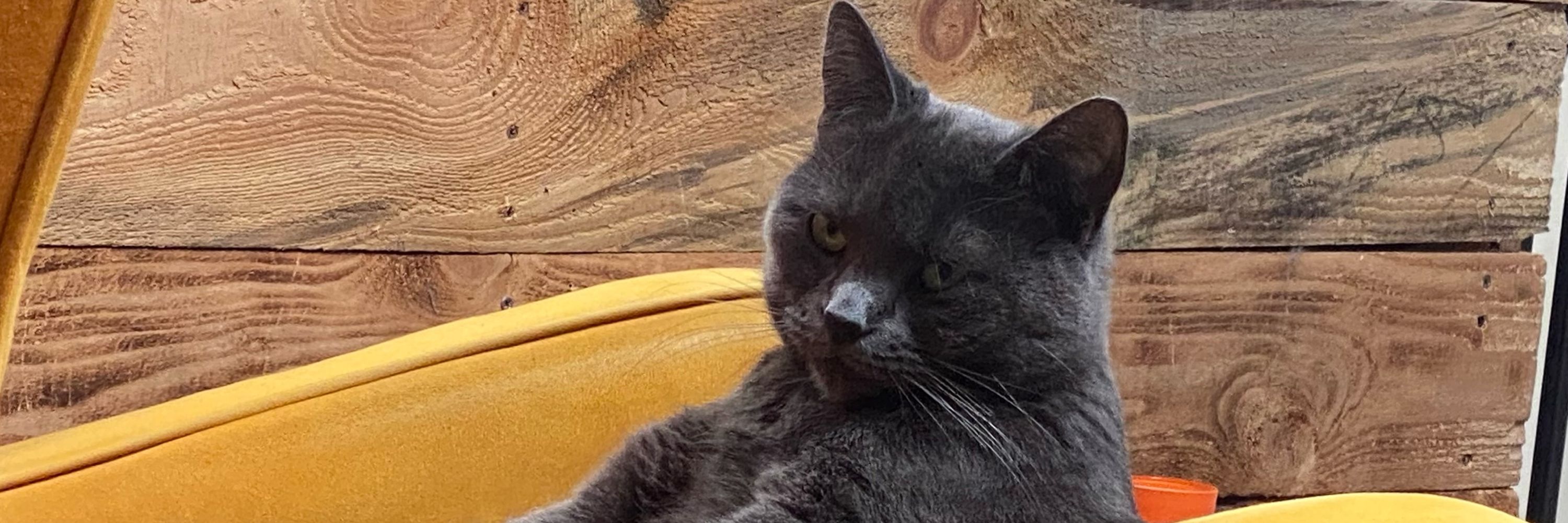
Happy cat on my belly

July 30, 2025 at 7:08 PM
Happy cat on my belly
A new EADB paper published in Nature Communications and led by Kristel Van Steen, Cornelia Van Duijn and Valentina Escott-Price.
We report that machine learning methods have the potential to uncover novel loci that remain undetected by traditional GWAS in Alzheimer.
www.nature.com/articles/s41...
We report that machine learning methods have the potential to uncover novel loci that remain undetected by traditional GWAS in Alzheimer.
www.nature.com/articles/s41...

Machine learning in Alzheimer’s disease genetics - Nature Communications
Here the authors apply machine learning approaches to Alzheimer’s genetics, confirm known associations and suggest novel risk loci. These methods demonstrate predictive power comparable to traditional...
www.nature.com
July 23, 2025 at 1:29 PM
A new EADB paper published in Nature Communications and led by Kristel Van Steen, Cornelia Van Duijn and Valentina Escott-Price.
We report that machine learning methods have the potential to uncover novel loci that remain undetected by traditional GWAS in Alzheimer.
www.nature.com/articles/s41...
We report that machine learning methods have the potential to uncover novel loci that remain undetected by traditional GWAS in Alzheimer.
www.nature.com/articles/s41...
Cette université est trop occupée à sauver la Science en accueillant des chercheurs américains
July 19, 2025 at 9:23 AM
Cette université est trop occupée à sauver la Science en accueillant des chercheurs américains
Reposted by Jean-Charles Lambert

5. The PGS/PRS associations mainly capture genetic information related to AD because they weakened as the diagnosis was broadened. The quality of the clinical diagnosis can interfere with the measurement of the association between the PGS/PRS and the AD risk in a given population.
June 18, 2025 at 10:38 AM
5. The PGS/PRS associations mainly capture genetic information related to AD because they weakened as the diagnosis was broadened. The quality of the clinical diagnosis can interfere with the measurement of the association between the PGS/PRS and the AD risk in a given population.
4. However, this is not the case when the PRS includes the APOE region. This indicates that the APOE region appears to contain additional multi-ancestry genetic variability.
June 18, 2025 at 10:38 AM
4. However, this is not the case when the PRS includes the APOE region. This indicates that the APOE region appears to contain additional multi-ancestry genetic variability.
3. In contrast to other multifactorial diseases, a cross-ancestry polygenic risk score (PRS) did not systematically outperform the simple PGS when the APOE locus was excluded. A high proportion of AD genetic risk could be already accounted for by the European-ancestry GWAS-defined loci.
June 18, 2025 at 10:37 AM
3. In contrast to other multifactorial diseases, a cross-ancestry polygenic risk score (PRS) did not systematically outperform the simple PGS when the APOE locus was excluded. A high proportion of AD genetic risk could be already accounted for by the European-ancestry GWAS-defined loci.
2. This simple PGS appears to be enough to detect an AD genetic risk in most ancestry populations, suggesting that most of the various ancestry populations are likely to be affected by shared pathophysiological processes that are driven in part by genetic risk factors.
June 18, 2025 at 10:36 AM
2. This simple PGS appears to be enough to detect an AD genetic risk in most ancestry populations, suggesting that most of the various ancestry populations are likely to be affected by shared pathophysiological processes that are driven in part by genetic risk factors.
Our work produced several important findings:
1. The associations between a simple polygenic score (PGS) based on the European GWAS-defined loci and AD risk in European populations is slightly influenced by the APOE genotype, suggesting existence of independent genetic entities for sporadic AD
1. The associations between a simple polygenic score (PGS) based on the European GWAS-defined loci and AD risk in European populations is slightly influenced by the APOE genotype, suggesting existence of independent genetic entities for sporadic AD
June 18, 2025 at 10:36 AM
Our work produced several important findings:
1. The associations between a simple polygenic score (PGS) based on the European GWAS-defined loci and AD risk in European populations is slightly influenced by the APOE genotype, suggesting existence of independent genetic entities for sporadic AD
1. The associations between a simple polygenic score (PGS) based on the European GWAS-defined loci and AD risk in European populations is slightly influenced by the APOE genotype, suggesting existence of independent genetic entities for sporadic AD
This work would not have been possible without this global and strongly collaborative effort (particularly Richard Sherva and Mark Logue of the Million Veteran Programme in the US, and Yoontae Kim and Jungsoo Gim of the GARD study in South Korea).
June 18, 2025 at 10:34 AM
This work would not have been possible without this global and strongly collaborative effort (particularly Richard Sherva and Mark Logue of the Million Veteran Programme in the US, and Yoontae Kim and Jungsoo Gim of the GARD study in South Korea).
Finally out in Nature genetics !
A long journey to have this paper published. Led by my team, under the EADB umbrella (eadb.eu), the project involved numerous partners worldwide in assessing the genetic complexity of Alzheimer in populations of diverse ancestries.
www.nature.com/articles/s41...
A long journey to have this paper published. Led by my team, under the EADB umbrella (eadb.eu), the project involved numerous partners worldwide in assessing the genetic complexity of Alzheimer in populations of diverse ancestries.
www.nature.com/articles/s41...

Transferability of European-derived Alzheimer’s disease polygenic risk scores across multiancestry populations - Nature Genetics
Polygenic risk scores for Alzheimer’s disease derived from individuals of European ancestry can show improved performance in multiancestry settings after incorporating genome-wide association summary ...
www.nature.com
June 18, 2025 at 10:33 AM
Finally out in Nature genetics !
A long journey to have this paper published. Led by my team, under the EADB umbrella (eadb.eu), the project involved numerous partners worldwide in assessing the genetic complexity of Alzheimer in populations of diverse ancestries.
www.nature.com/articles/s41...
A long journey to have this paper published. Led by my team, under the EADB umbrella (eadb.eu), the project involved numerous partners worldwide in assessing the genetic complexity of Alzheimer in populations of diverse ancestries.
www.nature.com/articles/s41...
Reposted by Jean-Charles Lambert

Trump’s cuts to more than 1700 #NIH grants get court hearing www.science.org/content/arti... by @sarareardon.bsky.social @science.org
#Alzheimers #dementia #neuroscience #science
#Alzheimers #dementia #neuroscience #science

Trump’s cuts to more than 1700 NIH grants get court hearing
District judge could declare terminations unlawful—or toss suit based on technicalities
www.science.org
June 15, 2025 at 1:21 PM
Trump’s cuts to more than 1700 #NIH grants get court hearing www.science.org/content/arti... by @sarareardon.bsky.social @science.org
#Alzheimers #dementia #neuroscience #science
#Alzheimers #dementia #neuroscience #science
Reposted by Jean-Charles Lambert

This is a cumulative maximum intensity projection movie of the endoplasmic reticulum labeled with the membrane marker mEmerald-Sec61B.
June 11, 2025 at 12:55 AM
This is a cumulative maximum intensity projection movie of the endoplasmic reticulum labeled with the membrane marker mEmerald-Sec61B.
Reposted by Jean-Charles Lambert

Announcing an official fundraising campaign to support my lab’s research on APOE4 and Alzheimer’s disease: joinus.cuimc.columbia.edu/participant/.... This campaign is itself an experiment of sorts. But mostly, it's an attempt to save my lab during an unprecedented time of turmoil in academia. 1/9
June 10, 2025 at 4:28 PM
Announcing an official fundraising campaign to support my lab’s research on APOE4 and Alzheimer’s disease: joinus.cuimc.columbia.edu/participant/.... This campaign is itself an experiment of sorts. But mostly, it's an attempt to save my lab during an unprecedented time of turmoil in academia. 1/9
Reposted by Jean-Charles Lambert
Here is a direct link to the open access article @amit-das.bsky.social mentions. alz-journals.onlinelibrary.wiley.com/doi/10.1002/... Tempting to say it feels like a miracle, but this progress always comes down to dedicated study participants, brilliant scientists, and reliably funded science.
June 6, 2025 at 9:09 PM
Here is a direct link to the open access article @amit-das.bsky.social mentions. alz-journals.onlinelibrary.wiley.com/doi/10.1002/... Tempting to say it feels like a miracle, but this progress always comes down to dedicated study participants, brilliant scientists, and reliably funded science.
Reposted by Jean-Charles Lambert

I went in search of cygnets. Still not hatched so had to make do with a heron fishing instead. Look at those feet!
#UKWildlife #UKbirding #Birds #Photography #Nature #GreyHeron #photographersunited #PhotographersofBluesky #Sonyalpha
#UKWildlife #UKbirding #Birds #Photography #Nature #GreyHeron #photographersunited #PhotographersofBluesky #Sonyalpha

May 24, 2025 at 4:10 PM
I went in search of cygnets. Still not hatched so had to make do with a heron fishing instead. Look at those feet!
#UKWildlife #UKbirding #Birds #Photography #Nature #GreyHeron #photographersunited #PhotographersofBluesky #Sonyalpha
#UKWildlife #UKbirding #Birds #Photography #Nature #GreyHeron #photographersunited #PhotographersofBluesky #Sonyalpha