



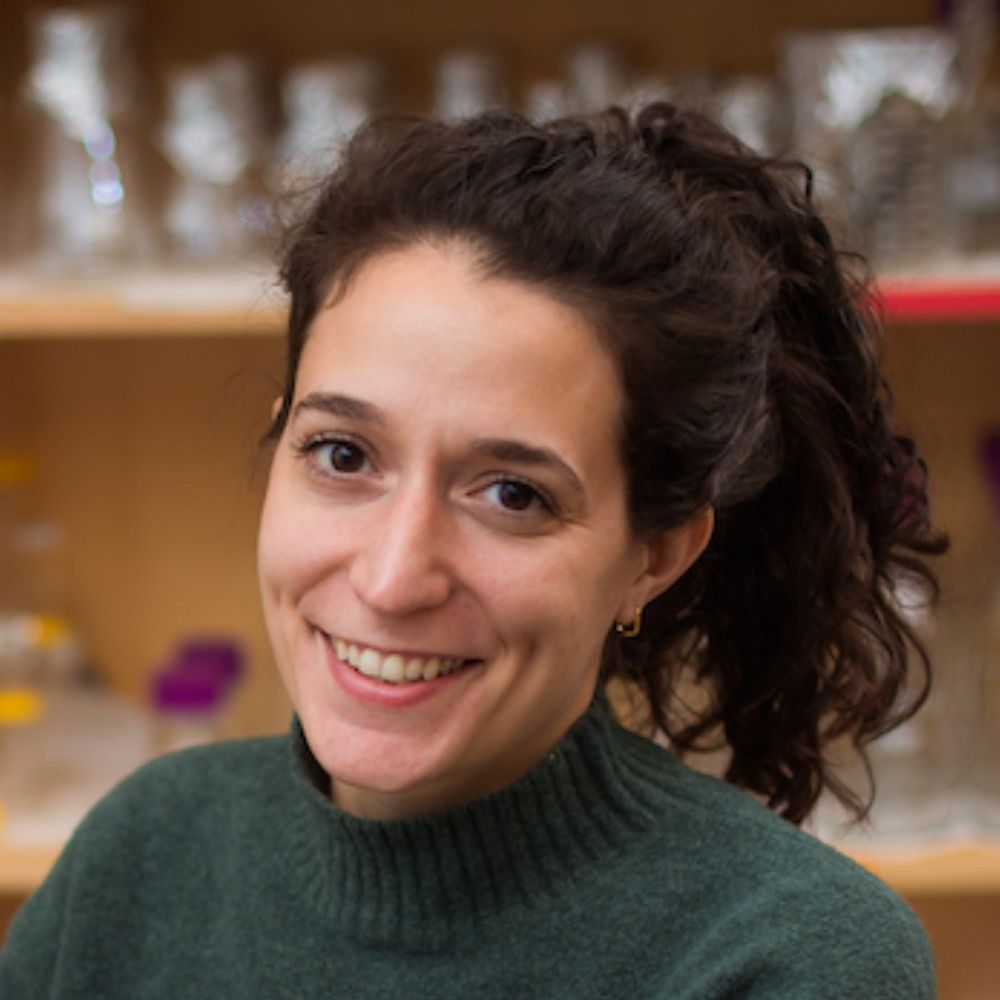
Tami Lieberman
@contaminatedsci.bsky.social
Associate Professor, MIT
Still thinking about the 10^9 mutations generated in your microbiome today.
Website: http://lieberman.science
Still thinking about the 10^9 mutations generated in your microbiome today.
Website: http://lieberman.science
Pinned
Our paper demonstrating that within-species warfare interactions are ecologically important on human skin is now published in Nature Micro! www.nature.com/articles/s41...
Reposted by Tami Lieberman

Co-occurrence is the most important predictor of HGT, followed by phylogenetic distance. Genomes from particle-associated fractions of the water columns tend to share more genes, as do genomes sampled at similar depths, temperatures, salinity, etc. (3/n)

February 9, 2026 at 8:42 PM
Co-occurrence is the most important predictor of HGT, followed by phylogenetic distance. Genomes from particle-associated fractions of the water columns tend to share more genes, as do genomes sampled at similar depths, temperatures, salinity, etc. (3/n)
Reposted by Tami Lieberman

Another Claude project: a static site that pulls in GWAS SNP data from ensemble, multiple public biobanks, open targets, gtex, eqtl catalog, and OMIM.
sashagusev.github.io/gwas_lookup/
sashagusev.github.io/gwas_lookup/

February 9, 2026 at 6:50 PM
Another Claude project: a static site that pulls in GWAS SNP data from ensemble, multiple public biobanks, open targets, gtex, eqtl catalog, and OMIM.
sashagusev.github.io/gwas_lookup/
sashagusev.github.io/gwas_lookup/
A paper about QC, precision phylogenetics, AND mutational reversion at scale???
Must read and teach to my class.
Must read and teach to my class.
A long time ago in a galaxy far away, there was a SARS-CoV-2 pandemic. Our paper, led by @martibartfast.bsky.social
a) correcting errors in 4.5 million genomes & their phylogeny
b) improving representation of the Global South in public data
www.nature.com/articles/s41...
(thread 1/n)
a) correcting errors in 4.5 million genomes & their phylogeny
b) improving representation of the Global South in public data
www.nature.com/articles/s41...
(thread 1/n)

Addressing pandemic-wide systematic errors in the SARS-CoV-2 phylogeny - Nature Methods
This Resource paper presents a global SARS-CoV-2 phylogenetic tree of 4,471,579 high-quality genomes consistently constructed by Viridian, an efficient amplicon-aware assembler.
www.nature.com
February 9, 2026 at 7:16 PM
A paper about QC, precision phylogenetics, AND mutational reversion at scale???
Must read and teach to my class.
Must read and teach to my class.
Reposted by Tami Lieberman

For those interested in phylogenetic uncertainty, we explored the use of SPRTA. The idea is to shift from assessing confidence of clades of taxa, to instead assess whether a lineage evolved from a specific other lineage or not.
www.nature.com/articles/s41...
www.nature.com/articles/s41...

Assessing phylogenetic confidence at pandemic scales - Nature
A method using subtree pruning and regrafting-based tree assessment (SPRTA), which considers evolutionary relationships between lineages, enhances interpretability of phylogenetic analyses such as tho...
www.nature.com
February 9, 2026 at 3:23 PM
For those interested in phylogenetic uncertainty, we explored the use of SPRTA. The idea is to shift from assessing confidence of clades of taxa, to instead assess whether a lineage evolved from a specific other lineage or not.
www.nature.com/articles/s41...
www.nature.com/articles/s41...
Reposted by Tami Lieberman

Data duplication reported in influential Nature paper on gut microbiome-brain axis
pubpeer.com/publications...
pubpeer.com/publications...
PubPeer - A gut-derived metabolite alters brain activity and anxiety b...
There are comments on PubPeer for publication: A gut-derived metabolite alters brain activity and anxiety behaviour in mice (2022)
pubpeer.com
February 8, 2026 at 9:44 AM
Data duplication reported in influential Nature paper on gut microbiome-brain axis
pubpeer.com/publications...
pubpeer.com/publications...
Reposted by Tami Lieberman

If I were on the postdoc market now I’d apply for an NSF to work with Tami
Samesies
February 6, 2026 at 1:21 AM
If I were on the postdoc market now I’d apply for an NSF to work with Tami
Reposted by Tami Lieberman
New Preprint 📢 from our team 🔎 Critical assessment of #intratumor and #low #biomass #microbiome using #longread sequencing
Some studies suggest bacteria 🦠 live inside tumors and influence cancer treatment. But there’s also been a major #debate: in these very low-microbe tissue samples, how much 1/
Some studies suggest bacteria 🦠 live inside tumors and influence cancer treatment. But there’s also been a major #debate: in these very low-microbe tissue samples, how much 1/

February 5, 2026 at 1:15 PM
New Preprint 📢 from our team 🔎 Critical assessment of #intratumor and #low #biomass #microbiome using #longread sequencing
Some studies suggest bacteria 🦠 live inside tumors and influence cancer treatment. But there’s also been a major #debate: in these very low-microbe tissue samples, how much 1/
Some studies suggest bacteria 🦠 live inside tumors and influence cancer treatment. But there’s also been a major #debate: in these very low-microbe tissue samples, how much 1/
Reposted by Tami Lieberman

Excited for this new preprint from former postdoc @caitlinkowa.bsky.social identifying unexpected functions for the bacterial stringent response in antimicrobial fatty acid susceptibility in S. aureus #microsky
www.biorxiv.org
February 5, 2026 at 9:52 PM
Excited for this new preprint from former postdoc @caitlinkowa.bsky.social identifying unexpected functions for the bacterial stringent response in antimicrobial fatty acid susceptibility in S. aureus #microsky
Reposted by Tami Lieberman

Please share: we're hiring a new tenure-track faculty member to our Department of Genetics at Albert Einstein College of Medicine.
faculty-einstein.icims.com/jobs/17847/a...
faculty-einstein.icims.com/jobs/17847/a...
Albert Einstein College of Medicine | Medical Education | Biomedical Research
faculty-einstein.icims.com
February 5, 2026 at 10:14 PM
Please share: we're hiring a new tenure-track faculty member to our Department of Genetics at Albert Einstein College of Medicine.
faculty-einstein.icims.com/jobs/17847/a...
faculty-einstein.icims.com/jobs/17847/a...
Reposted by Tami Lieberman

Holy shit: it's an RFP for the NSF Postdoctoral Research Fellowship in Biology (PRFB). Hello old friend www.nsf.gov/funding/oppo...

Postdoctoral Research Fellowships in Biology (PRFB)
www.nsf.gov
February 5, 2026 at 11:41 PM
Holy shit: it's an RFP for the NSF Postdoctoral Research Fellowship in Biology (PRFB). Hello old friend www.nsf.gov/funding/oppo...
Reposted by Tami Lieberman
Super excited to announce the release of gene and intergenic region annotation from the largest bacterial genome and MAG datasets available, including AllTheBacteria, GTDB, SPIRE, HRGM, mOTUs and MGnify - dereplicated and available from HuggingFace huggingface.co/AllTheBacteria

Hugging Face – The AI community building the future.
We’re on a journey to advance and democratize artificial intelligence through open source and open science.
huggingface.co
February 5, 2026 at 1:27 PM
Super excited to announce the release of gene and intergenic region annotation from the largest bacterial genome and MAG datasets available, including AllTheBacteria, GTDB, SPIRE, HRGM, mOTUs and MGnify - dereplicated and available from HuggingFace huggingface.co/AllTheBacteria
Reposted by Tami Lieberman

Two independent super-elegant studies from Maxwell & Laub labs find immune proteins that sense infection by binding to oligomeric phage protein rings (i.e phage portal), using them as a scaffold to assemble into their active immune effector form 🤯
Highly recommend read! 🤓📖l
Highly recommend read! 🤓📖l
BackToBack #PhageSky in @nature.com
A pore-forming antiphage defence is activated by oligomeric phage proteins
-from Maxwell & Norris
www.nature.com/articles/s41...
Bacterial immune activation via supramolecular assembly with phage triggers
-from Laub & Ghanbarpour
www.nature.com/articles/s41...
A pore-forming antiphage defence is activated by oligomeric phage proteins
-from Maxwell & Norris
www.nature.com/articles/s41...
Bacterial immune activation via supramolecular assembly with phage triggers
-from Laub & Ghanbarpour
www.nature.com/articles/s41...
February 5, 2026 at 9:15 AM
Two independent super-elegant studies from Maxwell & Laub labs find immune proteins that sense infection by binding to oligomeric phage protein rings (i.e phage portal), using them as a scaffold to assemble into their active immune effector form 🤯
Highly recommend read! 🤓📖l
Highly recommend read! 🤓📖l
I asked Gemini to make a slide to add to my opening lecture of "Genomics and Evolution of Infectious Disease" about the Lenski lines to illustrate how bacteria's fast generation time can teach us about evolution generally.
The result is funny for many reasons.
The result is funny for many reasons.

February 2, 2026 at 7:47 PM
I asked Gemini to make a slide to add to my opening lecture of "Genomics and Evolution of Infectious Disease" about the Lenski lines to illustrate how bacteria's fast generation time can teach us about evolution generally.
The result is funny for many reasons.
The result is funny for many reasons.
Reposted by Tami Lieberman
It is widely accepted that #T6SS -mediated intoxication occurs only on solid surfaces, where prolonged cell-cell interactions are forced, and not in liquid environments. But is this generalization true? Our new preprint says it isn't. A 🧵 ...
biorxiv.org/content/10.6...
🦠
biorxiv.org/content/10.6...
🦠
Aeromonas adhesins facilitate kin and non-kin attachment to enable T6SS-mediated antagonism in liquid
Bacterial ability to deploy the type VI secretion system (T6SS) against rivals requires prolonged cell-cell interactions. Such interactions are facilitated on solid surfaces but are assumed to be absent in liquid, leading to the conventional dismissal of T6SS-mediated competition in liquid environments. Here, we find that Aeromonas jandaei employs its T6SS to eliminate diverse bacterial competitors in liquid media. Using a workflow that monitors interbacterial competition via prey luminescence, we demonstrate that auto-aggregation and co-aggregation, facilitated by distinct adhesins, enable kin and non-kin recognition and intoxication in a T6SS-dependent manner. Furthermore, we show that another marine bacterium, Vibrio coralliilyticus , employs T6SS to intoxicate rivals in liquid media. Collectively, our results indicate that T6SS-mediated competition in liquid is more common in marine bacteria than previously anticipated, and can be facilitated by diverse molecular mechanisms that govern cell aggregation. ### Competing Interest Statement The authors have declared no competing interest. Israel Science Foundation, https://ror.org/04sazxf24, 1362/21, 2174/22 Swiss National Science Foundation, 51NF40_180541
biorxiv.org
January 28, 2026 at 12:37 PM
It is widely accepted that #T6SS -mediated intoxication occurs only on solid surfaces, where prolonged cell-cell interactions are forced, and not in liquid environments. But is this generalization true? Our new preprint says it isn't. A 🧵 ...
biorxiv.org/content/10.6...
🦠
biorxiv.org/content/10.6...
🦠
Reposted by Tami Lieberman

A widespread extended arbitrium system controls lysis/lysogeny through antirepression
@cp-cellhostmicrobe.bsky.social from Avigdor Eldar
www.sciencedirect.com/science/arti...
@cp-cellhostmicrobe.bsky.social from Avigdor Eldar
www.sciencedirect.com/science/arti...

A widespread extended arbitrium system controls lysis/lysogeny through antirepression
Many temperate Bacillus phages use the arbitrium peptide-based signaling system to regulate lysis-lysogeny decisions. In this system, the secreted Aim…
www.sciencedirect.com
February 1, 2026 at 11:21 AM
A widespread extended arbitrium system controls lysis/lysogeny through antirepression
@cp-cellhostmicrobe.bsky.social from Avigdor Eldar
www.sciencedirect.com/science/arti...
@cp-cellhostmicrobe.bsky.social from Avigdor Eldar
www.sciencedirect.com/science/arti...
When writing proposals/applications, don't worry about the page limit (p) unless your first draft p x 2+1 pages. Anything less than that can likely be fixed with formatting and dropping words and clauses that are no longer needed on second read.
January 30, 2026 at 12:02 AM
When writing proposals/applications, don't worry about the page limit (p) unless your first draft p x 2+1 pages. Anything less than that can likely be fixed with formatting and dropping words and clauses that are no longer needed on second read.
Reposted by Tami Lieberman

For those not familiar with "destructive scanning", this means Anthropic would buy up millions of physical books, use “hydraulic powered cutting machines” to chop them up, scan the pages on “high speed, high quality, production level scanners,” then send the pages to recycling companies!!!

Absolutely damning from @aaronschaffer.com, @willoremus.com, & @nitasha.bsky.social.
To get more data, Anthropic:
* "destructively scanned" millions of books
* downloaded the shadow library LibGen
* hailed another shadow library's arrival as "just in time!!!"
www.washingtonpost.com/technology/2...
To get more data, Anthropic:
* "destructively scanned" millions of books
* downloaded the shadow library LibGen
* hailed another shadow library's arrival as "just in time!!!"
www.washingtonpost.com/technology/2...

Inside an AI start-up’s plan to scan and dispose of millions of books
Court filings reveal how AI companies raced to obtain more books to feed chatbots, including by buying, scanning and disposing of millions of titles.
www.washingtonpost.com
January 28, 2026 at 9:26 PM
For those not familiar with "destructive scanning", this means Anthropic would buy up millions of physical books, use “hydraulic powered cutting machines” to chop them up, scan the pages on “high speed, high quality, production level scanners,” then send the pages to recycling companies!!!
Reposted by Tami Lieberman

Join us at the Evolutionary Biology Centre at Uppsala University. We’re searching for an Assistant Professor in Biology. www.uu.se/en/about-uu/...

January 28, 2026 at 8:28 PM
Join us at the Evolutionary Biology Centre at Uppsala University. We’re searching for an Assistant Professor in Biology. www.uu.se/en/about-uu/...
Reposted by Tami Lieberman

Friends! I am so happy to share our new preprint!
Hydrogen peroxide has been the most common reactive chemical threat to life forms since the Great Oxygenation Event 2.5 billion years ago.
How do animals like C. elegans sense it fast and escape?
www.biorxiv.org/content/10.6...
Thread 1/
Hydrogen peroxide has been the most common reactive chemical threat to life forms since the Great Oxygenation Event 2.5 billion years ago.
How do animals like C. elegans sense it fast and escape?
www.biorxiv.org/content/10.6...
Thread 1/
January 28, 2026 at 3:13 PM
Friends! I am so happy to share our new preprint!
Hydrogen peroxide has been the most common reactive chemical threat to life forms since the Great Oxygenation Event 2.5 billion years ago.
How do animals like C. elegans sense it fast and escape?
www.biorxiv.org/content/10.6...
Thread 1/
Hydrogen peroxide has been the most common reactive chemical threat to life forms since the Great Oxygenation Event 2.5 billion years ago.
How do animals like C. elegans sense it fast and escape?
www.biorxiv.org/content/10.6...
Thread 1/
Reposted by Tami Lieberman

Looking for a tool to estimate abundances of aerobes versus anaerobes directly from metagenomes? Here you go: www.biorxiv.org/content/10.6...
www.biorxiv.org
January 26, 2026 at 10:05 PM
Looking for a tool to estimate abundances of aerobes versus anaerobes directly from metagenomes? Here you go: www.biorxiv.org/content/10.6...
Reposted by Tami Lieberman
In reviewing grants and papers lately, as an exp., I have been using LLMs *after* my reviews to see how they stack up.
And let me tell you - they're (all) *completely* off the mark. That makes sense if you understand the fundamentals of LLMs, but I'm worried many don't.
But, please, don't do this.
And let me tell you - they're (all) *completely* off the mark. That makes sense if you understand the fundamentals of LLMs, but I'm worried many don't.
But, please, don't do this.
January 23, 2026 at 9:13 PM
In reviewing grants and papers lately, as an exp., I have been using LLMs *after* my reviews to see how they stack up.
And let me tell you - they're (all) *completely* off the mark. That makes sense if you understand the fundamentals of LLMs, but I'm worried many don't.
But, please, don't do this.
And let me tell you - they're (all) *completely* off the mark. That makes sense if you understand the fundamentals of LLMs, but I'm worried many don't.
But, please, don't do this.
Reposted by Tami Lieberman

Remix timeline: mix your timelines with a custom distribution. Another awesome feature in the custom client. Exactly what I was looking for. Thanks @mariaa.bsky.social 😄👍

January 23, 2026 at 3:34 AM
Remix timeline: mix your timelines with a custom distribution. Another awesome feature in the custom client. Exactly what I was looking for. Thanks @mariaa.bsky.social 😄👍
Reposted by Tami Lieberman

Here are the success rates of de novo pipelines based on which designs I could actually identify the methods for.


January 22, 2026 at 3:48 PM
Here are the success rates of de novo pipelines based on which designs I could actually identify the methods for.
Reposted by Tami Lieberman

🥁 NEW
Our study on infant gut microbiome and #straintransmission is now published in @nature.com:
doi.org/10.1038/s415...
1/10
Our study on infant gut microbiome and #straintransmission is now published in @nature.com:
doi.org/10.1038/s415...
1/10

Baby-to-baby strain transmission shapes the developing gut microbiome - Nature
A metagenomic survey of babies attending the first year of nursery detected extensive baby-to-baby microbial strain transmission, pointing to social interactions in infancy as crucial drivers of infan...
doi.org
January 21, 2026 at 6:24 PM
🥁 NEW
Our study on infant gut microbiome and #straintransmission is now published in @nature.com:
doi.org/10.1038/s415...
1/10
Our study on infant gut microbiome and #straintransmission is now published in @nature.com:
doi.org/10.1038/s415...
1/10
Reposted by Tami Lieberman

Pregnancy loss is common in humans, and chromosomal abnormalities are the leading cause. Using genetic data from ~140,000 IVF embryos, we show that maternal variation in meiosis genes influences recombination and aneuploidy risk.
First authors: @saracarioscia.bsky.social & @aabiddanda.github.io
First authors: @saracarioscia.bsky.social & @aabiddanda.github.io

Common variation in meiosis genes shapes human recombination and aneuploidy - Nature
Analysis of data from pre-implantation genetic testing sheds light on the genetic basis of meiotic-origin aneuploidy, the leading cause of human pregnancy loss, identifying common genetic variants ass...
www.nature.com
January 21, 2026 at 9:14 PM
Pregnancy loss is common in humans, and chromosomal abnormalities are the leading cause. Using genetic data from ~140,000 IVF embryos, we show that maternal variation in meiosis genes influences recombination and aneuploidy risk.
First authors: @saracarioscia.bsky.social & @aabiddanda.github.io
First authors: @saracarioscia.bsky.social & @aabiddanda.github.io