


Chara
@astrochara.bsky.social
A past, present, and future student of astronomy, a fan of exoplanetary and planetary sciences, and an artist, I am an embodiment of Terra’s expressions, writing their own story and chasing their own aspiration for a moment.
#ACelestialJournal
#ACelestialJournal
Pinned
Chara
@astrochara.bsky.social
· Dec 27

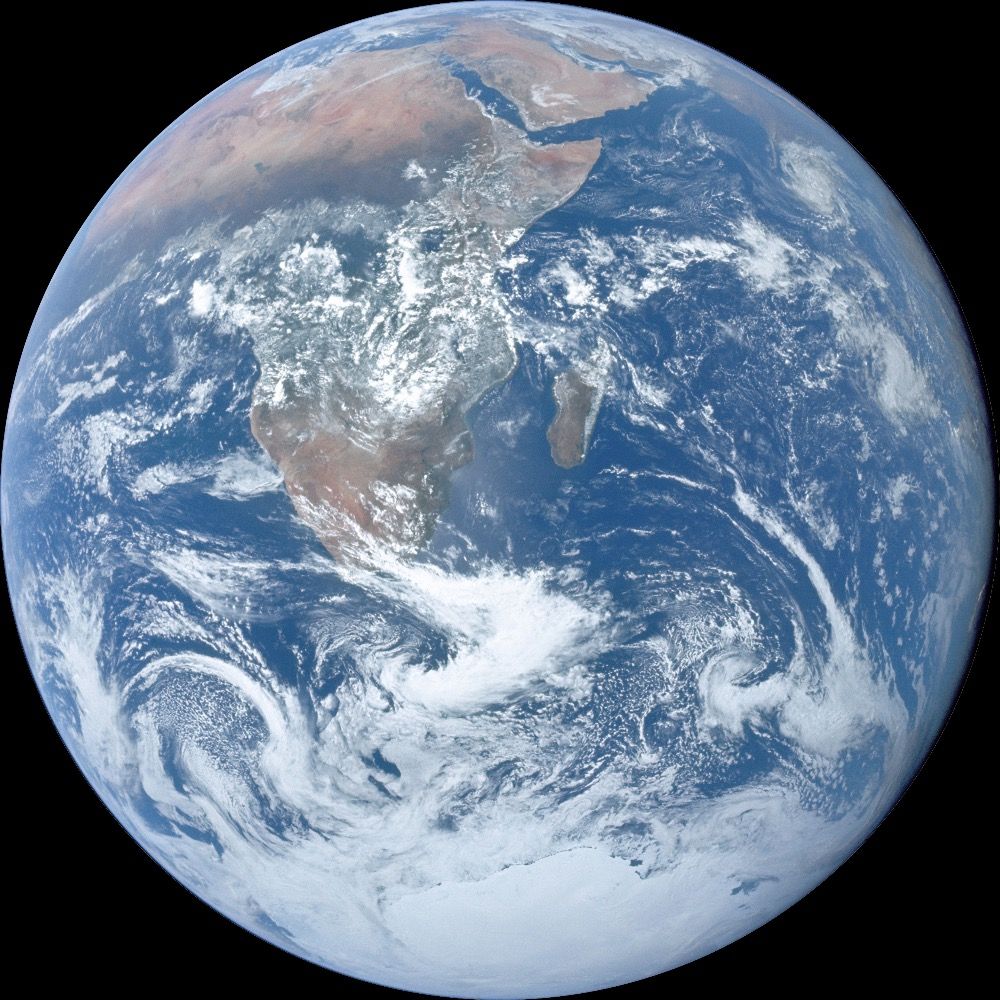
The Blue Marble
#ACelestialJournal #art #gijinka #astronomy #space #SolarSystem #planet #Terra #Earth
#ACelestialJournal #art #gijinka #astronomy #space #SolarSystem #planet #Terra #Earth
A future where it turns out humans cannot live long term on Mars because its gravity is too low, and medical intervention doesn't seem to be working out, so Venus turns into the planet with the second highest population following Earth
February 9, 2026 at 9:13 AM
A future where it turns out humans cannot live long term on Mars because its gravity is too low, and medical intervention doesn't seem to be working out, so Venus turns into the planet with the second highest population following Earth
I want a poke bonnet that looks like a space telescope's sunshade
February 8, 2026 at 5:02 PM
I want a poke bonnet that looks like a space telescope's sunshade
Reposted by Chara
The money does not go into space. The money does not go into space.
The money does not go into space.
Sure, the money helps us in exploring and understanding the universe, but the money actually goes to people, to local economies, to universities, it provides jobs, and gets young people into STEM.
The money does not go into space.
Sure, the money helps us in exploring and understanding the universe, but the money actually goes to people, to local economies, to universities, it provides jobs, and gets young people into STEM.
Listeners to Radio 4’s Inside Science today get an essay from me in defence of astronomy as pure research. Please listen in and let me know what you think.
Show starts 4.30pm GMT here: www.bbc.co.uk/programmes/b...
Show starts 4.30pm GMT here: www.bbc.co.uk/programmes/b...

BBC Radio 4 - BBC Inside Science
A weekly programme looking at the science that's changing our world.
www.bbc.co.uk
February 8, 2026 at 11:37 AM
The money does not go into space. The money does not go into space.
The money does not go into space.
Sure, the money helps us in exploring and understanding the universe, but the money actually goes to people, to local economies, to universities, it provides jobs, and gets young people into STEM.
The money does not go into space.
Sure, the money helps us in exploring and understanding the universe, but the money actually goes to people, to local economies, to universities, it provides jobs, and gets young people into STEM.
Reposted by Chara

So, if the dark sector has interactions that lets some of the dark matter form stars, planets, and astrophysicists, their cosmology is pretty interesting!
What they call "dark matter" is 10% of the universe, dissipative, and creates dynamical friction for supermassive black holes. 🔭🧪
What they call "dark matter" is 10% of the universe, dissipative, and creates dynamical friction for supermassive black holes. 🔭🧪
February 7, 2026 at 8:24 PM
So, if the dark sector has interactions that lets some of the dark matter form stars, planets, and astrophysicists, their cosmology is pretty interesting!
What they call "dark matter" is 10% of the universe, dissipative, and creates dynamical friction for supermassive black holes. 🔭🧪
What they call "dark matter" is 10% of the universe, dissipative, and creates dynamical friction for supermassive black holes. 🔭🧪
Reposted by Chara
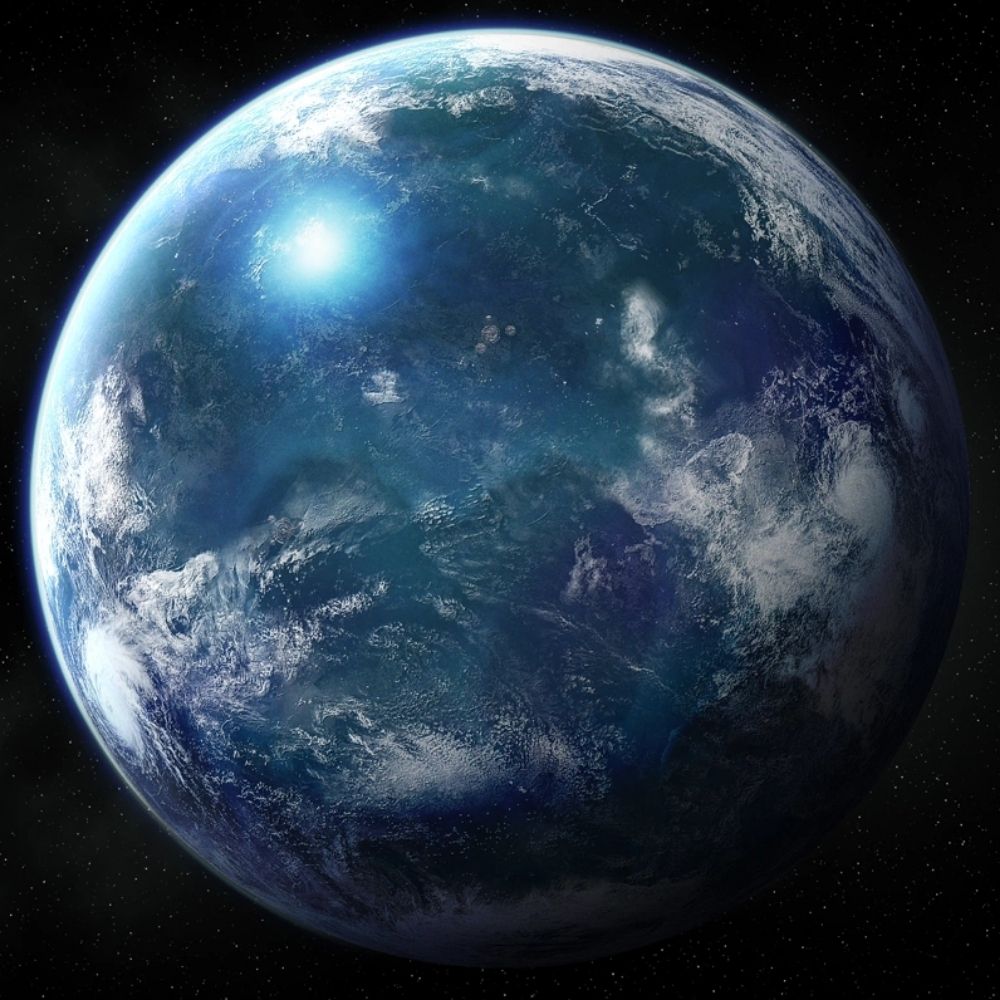
Fair play to the organisers of the Winter Olympics 2026 for accurately depicting Mars in the Opening Ceremony.

February 7, 2026 at 5:52 AM
Fair play to the organisers of the Winter Olympics 2026 for accurately depicting Mars in the Opening Ceremony.
Reposted by Chara

A Venus-inspired planet I added to my game. The upper layers of its atmosphere scatter all colours, creating the white outer shell, whereas the lower layers absorb blue light, causing this yellow-ish environment. #ScreenshotSaturday #GameDev
February 7, 2026 at 5:29 PM
A Venus-inspired planet I added to my game. The upper layers of its atmosphere scatter all colours, creating the white outer shell, whereas the lower layers absorb blue light, causing this yellow-ish environment. #ScreenshotSaturday #GameDev
Reposted by Chara
Proplyds in NGC 1977. Protoplanetary disks around stars are being evaporated by the strong radiation of the massive star 42 Orionis. (disks are too small to see)
Images by three space telescopes: Spitzer, Hubble and JWST
more information and individual credit: commons.wikimedia.org/wiki/File:NG...
Images by three space telescopes: Spitzer, Hubble and JWST
more information and individual credit: commons.wikimedia.org/wiki/File:NG...

February 7, 2026 at 8:25 AM
Proplyds in NGC 1977. Protoplanetary disks around stars are being evaporated by the strong radiation of the massive star 42 Orionis. (disks are too small to see)
Images by three space telescopes: Spitzer, Hubble and JWST
more information and individual credit: commons.wikimedia.org/wiki/File:NG...
Images by three space telescopes: Spitzer, Hubble and JWST
more information and individual credit: commons.wikimedia.org/wiki/File:NG...
Hey I've seen and pondered about this one before. Dating extrasolar system ages using these objects would be really interesting.
A recent study looks to the nearest rubble-ridden systems for the potential origins of interstellar objects that have visited our solar system. 🔭🧪 aasnova.org/2026/02/06/w...

We Have Visitors: Interstellar Material from Nearby Debris Disks
A recent study looks to the nearest rubble-ridden systems for the potential origins of interstellar objects that have visited our solar system.
aasnova.org
February 6, 2026 at 5:11 PM
Hey I've seen and pondered about this one before. Dating extrasolar system ages using these objects would be really interesting.
Reposted by Chara
Super proud of all the early career folks busting their butts on Pandora!!!
The Pandora satellite provides career training grounds while observing exoplanets
www.nature.com/articles/d41...
www.nature.com/articles/d41...

NASA’s latest telescope is a feat of early-career leadership
The Pandora satellite provides career training grounds while observing exoplanets.
www.nature.com
February 6, 2026 at 5:04 PM
Super proud of all the early career folks busting their butts on Pandora!!!
Reposted by Chara
This is the first time someone has written a song inspired by one of the planets I’ve given out!!
(I think Bluesky might have gotten too big for another round of me handing out planets, but next time I have some downtime (haha) I can try, if there’s interest!)
(I think Bluesky might have gotten too big for another round of me handing out planets, but next time I have some downtime (haha) I can try, if there’s interest!)

Happy @bandcamp.com Friday! I have a massive new song inspired by a planet @aussiastronomer.bsky.social "gave" me a while back. Free/pay what you want.
ALL of today's sales will go to buying/donating cookies from trans Girl Scouts! h/t @erininthemorning.com
I am calling this: "Drone for deLites" 🧵
ALL of today's sales will go to buying/donating cookies from trans Girl Scouts! h/t @erininthemorning.com
I am calling this: "Drone for deLites" 🧵

The Glass Winds of Planet HD 189733 b, by Dirty Knobs
1 track album
zacbentz.bandcamp.com
February 6, 2026 at 2:43 PM
This is the first time someone has written a song inspired by one of the planets I’ve given out!!
(I think Bluesky might have gotten too big for another round of me handing out planets, but next time I have some downtime (haha) I can try, if there’s interest!)
(I think Bluesky might have gotten too big for another round of me handing out planets, but next time I have some downtime (haha) I can try, if there’s interest!)
Reposted by Chara

Hi friendzos! Anyone out there an expert in the formation of star systems, particularly hot/warm Jupiter systems and/or planetary migration models? Looking for someone to talk to for an article. 🧪🔭
February 5, 2026 at 10:39 PM
Hi friendzos! Anyone out there an expert in the formation of star systems, particularly hot/warm Jupiter systems and/or planetary migration models? Looking for someone to talk to for an article. 🧪🔭
@triplchii.bsky.social there are lots about what we take for granted in our society that bear a second look. This, too, looks relevant to your story.
To define unilluminated darkness as valuable -- a domain of life on this planet in which we have always been sensorily disabled and mostly incapable of economic productivity – would be pretty profound. But given our society's worldview, an uphill struggle.
February 6, 2026 at 5:24 AM
@triplchii.bsky.social there are lots about what we take for granted in our society that bear a second look. This, too, looks relevant to your story.
Reposted by Chara

More conceptually, it’s interesting because I think it does point to how our whole society’s discourse of value, including in the environment, including what counts as a “natural resource,” is so tilted toward transactional uses, toward consumption, away from ideas of intrinsic value.
February 5, 2026 at 4:40 PM
More conceptually, it’s interesting because I think it does point to how our whole society’s discourse of value, including in the environment, including what counts as a “natural resource,” is so tilted toward transactional uses, toward consumption, away from ideas of intrinsic value.
Reposted by Chara

Intriguing question: is "darkness" a natural resource that could or should be protected? The trend of modern life has been to treat darkness as a threat to be eliminated, but a lot of people are pushing back to preserve dark skies & natural ecosystems. 🧪
There’s an interesting lawsuit out of Connecticut I’ve been following that rests on the question of whether darkness — yes, darkness, the primordial Erebus himself— is a natural resource. Here’s why that’s potentially a big deal.
February 5, 2026 at 4:59 PM
Intriguing question: is "darkness" a natural resource that could or should be protected? The trend of modern life has been to treat darkness as a threat to be eliminated, but a lot of people are pushing back to preserve dark skies & natural ecosystems. 🧪
Reposted by Chara
Interesting paper on requirements for undergraduate astronomy degrees and how non-uniform they are, and how this impacts students with these degrees: arxiv.org/abs/2602.03959

The Landscape of Undergraduate Astronomy and Astrophysics Degree Requirements
In this document we summarize the results of a survey of undergraduate degree-granting programs conducted by the 2024-2025 American Astronomical Society Education Committee's Subcommittee on UndeRgrad...
arxiv.org
February 5, 2026 at 5:01 PM
Interesting paper on requirements for undergraduate astronomy degrees and how non-uniform they are, and how this impacts students with these degrees: arxiv.org/abs/2602.03959
Reposted by Chara

Another comic I never bothered posting
This one from 2023. Topical galileo humour apropos of precisely nothing at all
This one from 2023. Topical galileo humour apropos of precisely nothing at all
![1. [Title Panel]: Is Your 17th Century Astronomer Spending Too Much Time on His Telescope?
2. [Text -only panel] These days, more and more 17th Century Astronomers have access to telescopes. Here are some warning signs that they are on the slippery slope to Godless heliocentrism!
3. STAYING UP LATE WITH THEIR TELESCOPE
[GALILEO is looking through his telescope out the window at a starry sky].
GALILEO'S WIFE:
Go to bed, Galileo!
GALILEO: In a minute...
4. ‘FOMO’ (FEAR OF MISSING OBSERVATIONS)
GALILEO'S WIFE:
Dinner, Galileo!
GALILEO [Looking through telescope]:
Just need to check my orbits
5. WITHDRAWING FROM REAL-WORLD ACTIVITIES
[Galileo's friend the POPE is now standing next to Galileo, who is still looking through his telescope]
THE POPE: Come to church, Galileo!
GALILEO: Not now...
6. FALLING OUT WITH FRIENDS
GALILEO: [Showing The Pope the book he's working on) I'm just working on my book challenging the Bible's view of the Universe
7. BEING ARRESTED BY THE INQUISITION
[GALILEO is being dragged out of the room, hands outstretched to his telescope. He is calling to it]:
GALILEO: Telescooope
9. GETTING SENTENCED TO HOUSE ARREST UNTIL DEATH FOR HERESY
[GALILEO sitting in front of his telescope, now with bars over the windows]
GALILEO: Ah, crap.
10. CONTINUED TELESCOPE USE DESPITE NEGATIVE CONSEQUENCES
[GALILEO in same position but now with long white beard, he is looking through his telescope through a barred jail window at the sky]
GALILEO'S WIFE:
Go to bed, Galileo!
GALILEO: In a minute...
[Ends]](https://cdn.bsky.app/img/feed_thumbnail/plain/did:plc:4m3we4apbjayclzcnhwe3pfp/bafkreibook423m77cuwcpoahuocnd5dmylnlfi7jdhgaladuzytsynr7q4@jpeg)
February 5, 2026 at 10:07 AM
Another comic I never bothered posting
This one from 2023. Topical galileo humour apropos of precisely nothing at all
This one from 2023. Topical galileo humour apropos of precisely nothing at all
Reposted by Chara
In a world where we’re seen as fully equal and fully human by the greater normative society at large, those labels wouldn’t have as much meaning because we wouldn’t be kept separate to our own communities, we’d be part of the greater community. Chiitan is proposing egalitarian queernormativity
October 9, 2025 at 8:34 PM
In a world where we’re seen as fully equal and fully human by the greater normative society at large, those labels wouldn’t have as much meaning because we wouldn’t be kept separate to our own communities, we’d be part of the greater community. Chiitan is proposing egalitarian queernormativity
Why is it that nobody has managed to measure the rotation period of Sirius, our next-door neighbour?? It even has magnetic field! Has there really been no attempt at measuring its rotational modulation???
#astronomy #space #star #Sirius #Siriusly???
#astronomy #space #star #Sirius #Siriusly???
February 5, 2026 at 6:55 AM
Why is it that nobody has managed to measure the rotation period of Sirius, our next-door neighbour?? It even has magnetic field! Has there really been no attempt at measuring its rotational modulation???
#astronomy #space #star #Sirius #Siriusly???
#astronomy #space #star #Sirius #Siriusly???
“If you can get into low Earth orbit, you are halfway to anywhere.”
This is wrong. My Proxima Centauri mission requires an additional 100000 km/s of delta-v.
This is wrong. My Proxima Centauri mission requires an additional 100000 km/s of delta-v.
February 5, 2026 at 6:29 AM
“If you can get into low Earth orbit, you are halfway to anywhere.”
This is wrong. My Proxima Centauri mission requires an additional 100000 km/s of delta-v.
This is wrong. My Proxima Centauri mission requires an additional 100000 km/s of delta-v.
Reposted by Chara

A tidally-locked rocky #exoplanet orbiting close to its host star could have tidal waves of lava sweeping around the planet. Simulations show this effect would complicate the search for an atmosphere. 🔭☄️
News report by @elisecutts.bsky.social from the @rockyworlds.bsky.social meeting #RockyWorlds4
News report by @elisecutts.bsky.social from the @rockyworlds.bsky.social meeting #RockyWorlds4

*taps mic* ahem
May I interrupt the nonstop tidal wave of doom with a tidal wave of LAVA?
They're as high as a skyscraper, ooze at the speed of a human sprinter, and are really, really hot.
By me for @science.org, reported from the #RockyWorlds4 conference: 🔭🧪
May I interrupt the nonstop tidal wave of doom with a tidal wave of LAVA?
They're as high as a skyscraper, ooze at the speed of a human sprinter, and are really, really hot.
By me for @science.org, reported from the #RockyWorlds4 conference: 🔭🧪

Tidal waves of lava may slosh around alien worlds
Waves of molten rock could be confounding observations of atmospheres on distant planets
www.science.org
February 2, 2026 at 2:29 PM
A tidally-locked rocky #exoplanet orbiting close to its host star could have tidal waves of lava sweeping around the planet. Simulations show this effect would complicate the search for an atmosphere. 🔭☄️
News report by @elisecutts.bsky.social from the @rockyworlds.bsky.social meeting #RockyWorlds4
News report by @elisecutts.bsky.social from the @rockyworlds.bsky.social meeting #RockyWorlds4
Been doing research on surface patterns on A-type stars. Looks like they may have bright spots that are hotter by…10s of Kelvin.
If these are the most temperature variations A-type stars have, then it seems their surfaces are remarkably uniform, visually.
#astronomy
scixplorer.org/abs/2019ApJ....
If these are the most temperature variations A-type stars have, then it seems their surfaces are remarkably uniform, visually.
#astronomy
scixplorer.org/abs/2019ApJ....
Envelope Convection, Surface Magnetism, and Spots in A and Late B-type Stars
Weak magnetic fields have recently been detected in a number of A-type stars, including Vega and Sirius. At the same time, space photometry observations of A and late B-type stars from Kepler and TESS...
scixplorer.org
February 4, 2026 at 5:45 AM
Been doing research on surface patterns on A-type stars. Looks like they may have bright spots that are hotter by…10s of Kelvin.
If these are the most temperature variations A-type stars have, then it seems their surfaces are remarkably uniform, visually.
#astronomy
scixplorer.org/abs/2019ApJ....
If these are the most temperature variations A-type stars have, then it seems their surfaces are remarkably uniform, visually.
#astronomy
scixplorer.org/abs/2019ApJ....
Reposted by Chara
I know it's called the "Habitable Worlds Observatory", but what about uninhabitable worlds? Check out the below paper to learn what HWO can teach us about our sister planet and its analogs that are scattered among the stars!
arxiv.org/abs/2602.02728
arxiv.org/abs/2602.02728

Imaging Venus-like Worlds: Spectral, Polarimetric, and UV Diagnostics for the Habitable Worlds Observatory
Understanding planetary habitability requires a comparative approach that explores the divergent evolutionary outcomes of Earth and Venus. The Habitable Worlds Observatory (HWO) will be uniquely posit...
arxiv.org
February 4, 2026 at 3:56 AM
I know it's called the "Habitable Worlds Observatory", but what about uninhabitable worlds? Check out the below paper to learn what HWO can teach us about our sister planet and its analogs that are scattered among the stars!
arxiv.org/abs/2602.02728
arxiv.org/abs/2602.02728
Reposted by Chara

Rather like the fact that the department randomly found a photo of my in front of a dinosaur for this. #DinosaursDidntHaveASpaceProgram
Prof Chris Lintott (@chrislintott.bsky.social) warns: drastic cuts to fundamental research threaten the UK's world-leading status in astronomy and more. Read in full on the @ox.ac.uk https://www.ox.ac.uk/news/2026-02-02-expert-comment-cuts-fundamental-research-will-hurt-uk-s-leadership-astronomy

February 3, 2026 at 4:39 PM
Rather like the fact that the department randomly found a photo of my in front of a dinosaur for this. #DinosaursDidntHaveASpaceProgram
Reposted by Chara
New ApJ paper: Can inner planets survive when a giant becomes a hot/warm Jupiter via high-eccentricity tidal migration? Usually no. Survival requires the giant’s periastron to stay >14 mutual Hill radii away. Observed systems with hot Jupiters + inner planets are inconsistent...

Warm Jupiter Tidal Migration Can Spare Inner Planets; Hot Jupiter Tidal Migration May Not
Warm Jupiter Tidal Migration Can Spare Inner Planets; Hot Jupiter Tidal Migration May Not, Becker, Juliette
iopscience.iop.org
February 3, 2026 at 11:37 AM
New ApJ paper: Can inner planets survive when a giant becomes a hot/warm Jupiter via high-eccentricity tidal migration? Usually no. Survival requires the giant’s periastron to stay >14 mutual Hill radii away. Observed systems with hot Jupiters + inner planets are inconsistent...
Reposted by Chara
The 1st planet candidate w/Earth-like radius & orbit transiting a Sun-like star bright enough for serious follow-up. Congrats to citizen scientists Alexander Venner, Hans Martin Schwengeler, Martti H. Kristiansen, Mark Omohundro & Ivan A. Terentev! iopscience.iop.org/article/10.3... #news #astronomy
iopscience.iop.org
February 3, 2026 at 12:33 AM
The 1st planet candidate w/Earth-like radius & orbit transiting a Sun-like star bright enough for serious follow-up. Congrats to citizen scientists Alexander Venner, Hans Martin Schwengeler, Martti H. Kristiansen, Mark Omohundro & Ivan A. Terentev! iopscience.iop.org/article/10.3... #news #astronomy