



Stephen Kane
@exocytherean.bsky.social
Planetary Astrophysicist at the University of California, Riverside. I like Venus. A lot. Exoplanets are also kinda cool.
Did you know that the Soviet Venera 4 lander was designed to float in case of a water landing, and reorient itself to transmit from the surface? It was decisively crushed by Venus atmosphere during descent, precipitating a massive redesign of future Venera landers.

February 12, 2026 at 7:18 PM
Did you know that the Soviet Venera 4 lander was designed to float in case of a water landing, and reorient itself to transmit from the surface? It was decisively crushed by Venus atmosphere during descent, precipitating a massive redesign of future Venera landers.
This week in my "Planets in Science Fiction" class, I will be discussing the amazing short story "Nightfall" by Isaac Asimov and its insights into the nature of scientific bias. Also be sure to check out the incredible work of @planetplanet.bsky.social at planetplanet.net.

February 9, 2026 at 6:48 PM
This week in my "Planets in Science Fiction" class, I will be discussing the amazing short story "Nightfall" by Isaac Asimov and its insights into the nature of scientific bias. Also be sure to check out the incredible work of @planetplanet.bsky.social at planetplanet.net.
I know it's called the "Habitable Worlds Observatory", but what about uninhabitable worlds? Check out the below paper to learn what HWO can teach us about our sister planet and its analogs that are scattered among the stars!
arxiv.org/abs/2602.02728
arxiv.org/abs/2602.02728

Imaging Venus-like Worlds: Spectral, Polarimetric, and UV Diagnostics for the Habitable Worlds Observatory
Understanding planetary habitability requires a comparative approach that explores the divergent evolutionary outcomes of Earth and Venus. The Habitable Worlds Observatory (HWO) will be uniquely posit...
arxiv.org
February 4, 2026 at 3:56 AM
I know it's called the "Habitable Worlds Observatory", but what about uninhabitable worlds? Check out the below paper to learn what HWO can teach us about our sister planet and its analogs that are scattered among the stars!
arxiv.org/abs/2602.02728
arxiv.org/abs/2602.02728
Reposted by Stephen Kane

Ok since I apparently have a little slice of Bluesky's attention regarding planets right now, allow me to rant a little.
This week's newsletter post is all about talking about exoplanets and why we might not want to call any of them "Earth-like" for a few decades 🧪🔭
This week's newsletter post is all about talking about exoplanets and why we might not want to call any of them "Earth-like" for a few decades 🧪🔭

Maybe don't call exoplanets "Earth-like" until the 2040s
A plea and a note on science communication
www.reviewertoo.com
January 29, 2026 at 8:49 PM
Ok since I apparently have a little slice of Bluesky's attention regarding planets right now, allow me to rant a little.
This week's newsletter post is all about talking about exoplanets and why we might not want to call any of them "Earth-like" for a few decades 🧪🔭
This week's newsletter post is all about talking about exoplanets and why we might not want to call any of them "Earth-like" for a few decades 🧪🔭

This is an amazing book by an incredible author! Jason put a monumental amount research into this tome, and it really shows. I highly recommend it!

My textbook on SETI is published!
I hope you like it!
Please see if your libraries offer a free download—mine does!
iopscience.iop.org/book/mono/97...
🧪🔭
I hope you like it!
Please see if your libraries offer a free download—mine does!
iopscience.iop.org/book/mono/97...
🧪🔭

The Search for Extraterrestrial Intelligence: Theory and practice
The Search for Extraterrestrial Intelligence: Theory and practice, Wright, Jason T
iopscience.iop.org
January 21, 2026 at 4:41 AM
This is an amazing book by an incredible author! Jason put a monumental amount research into this tome, and it really shows. I highly recommend it!
One week ago, an asteroid was named after me by the IAU. Today, I discovered that this song exists. I am in awe!! 🤣
www.youtube.com/watch?v=ahdA...
www.youtube.com/watch?v=ahdA...

An Asteroid Called Kane
YouTube video by Asteroid Kane - Topic
www.youtube.com
January 19, 2026 at 9:59 PM
One week ago, an asteroid was named after me by the IAU. Today, I discovered that this song exists. I am in awe!! 🤣
www.youtube.com/watch?v=ahdA...
www.youtube.com/watch?v=ahdA...
My research group watched the movie "Contact" together last Friday night, including two people seeing it for the first time. It's such a wonderful experience to share.

Poet Jodie Foster GIF
ALT: Poet Jodie Foster GIF
media.tenor.com
January 18, 2026 at 9:12 PM
My research group watched the movie "Contact" together last Friday night, including two people seeing it for the first time. It's such a wonderful experience to share.
The Senate has voted in favor of the spending bill, and so the Congressional hurdle has been passed. After a long year of advocating for NASA science, this brought tears to my eyes.
www.nbcnews.com/politics/pol...
www.nbcnews.com/politics/pol...

Congress passes bill to fund U.S. science agencies, rebuffing Trump's requested cuts
The Senate voted to provide billions more to NASA, NOAA and the National Science Foundation than the president had asked for.
www.nbcnews.com
January 16, 2026 at 6:39 AM
The Senate has voted in favor of the spending bill, and so the Congressional hurdle has been passed. After a long year of advocating for NASA science, this brought tears to my eyes.
www.nbcnews.com/politics/pol...
www.nbcnews.com/politics/pol...
Reposted by Stephen Kane
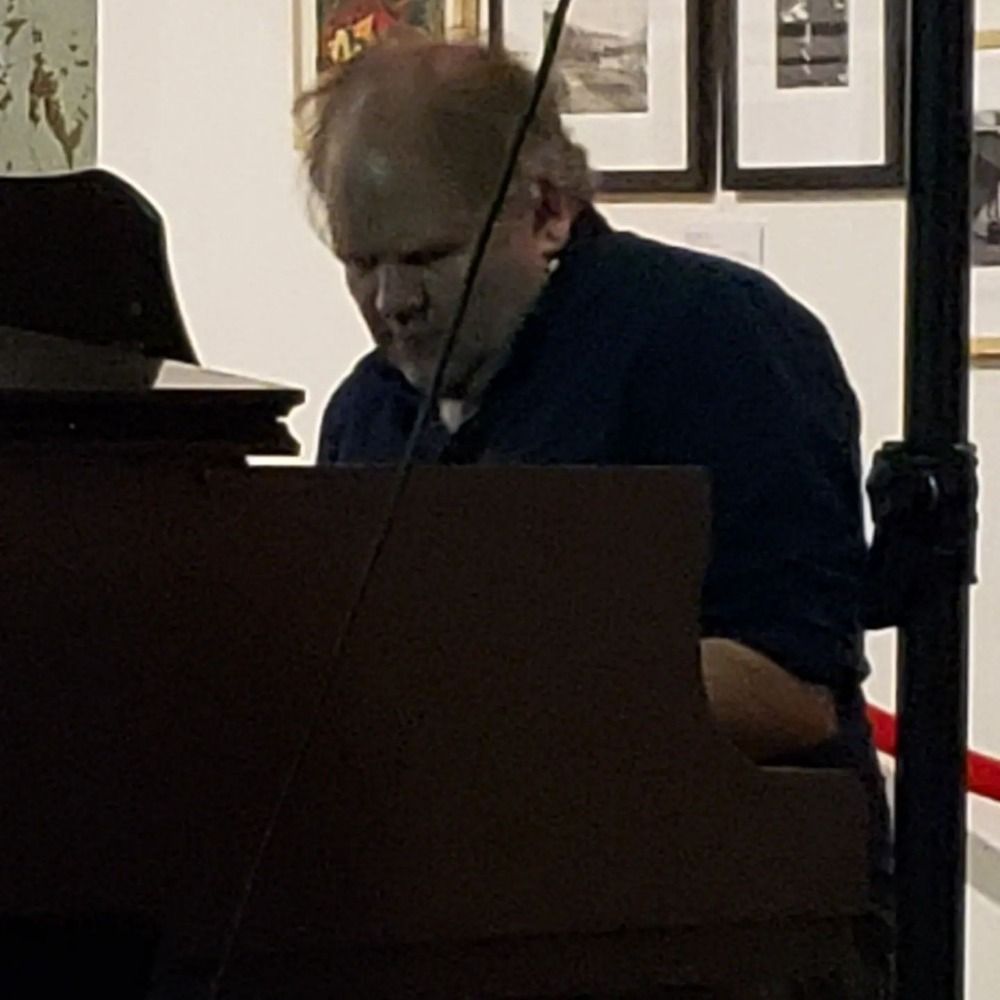
Congrats to @exocytherean.bsky.social who now has his own (minor) planet!


January 12, 2026 at 11:01 PM
Congrats to @exocytherean.bsky.social who now has his own (minor) planet!
Reposted by Stephen Kane
Planetary friends!
Don't want to go to Houston in March, or support an institute that's bending the knee?
Then join us for the very first Planetary Science Community Workshop in Louisville, KY on April 14–16, 2026.
It's our community. Fight for it!
Details at the link:
planetaryworkshop.org
Don't want to go to Houston in March, or support an institute that's bending the knee?
Then join us for the very first Planetary Science Community Workshop in Louisville, KY on April 14–16, 2026.
It's our community. Fight for it!
Details at the link:
planetaryworkshop.org

PSCW 2026
planetaryworkshop.org
January 9, 2026 at 1:27 AM
Planetary friends!
Don't want to go to Houston in March, or support an institute that's bending the knee?
Then join us for the very first Planetary Science Community Workshop in Louisville, KY on April 14–16, 2026.
It's our community. Fight for it!
Details at the link:
planetaryworkshop.org
Don't want to go to Houston in March, or support an institute that's bending the knee?
Then join us for the very first Planetary Science Community Workshop in Louisville, KY on April 14–16, 2026.
It's our community. Fight for it!
Details at the link:
planetaryworkshop.org
Reposted by Stephen Kane
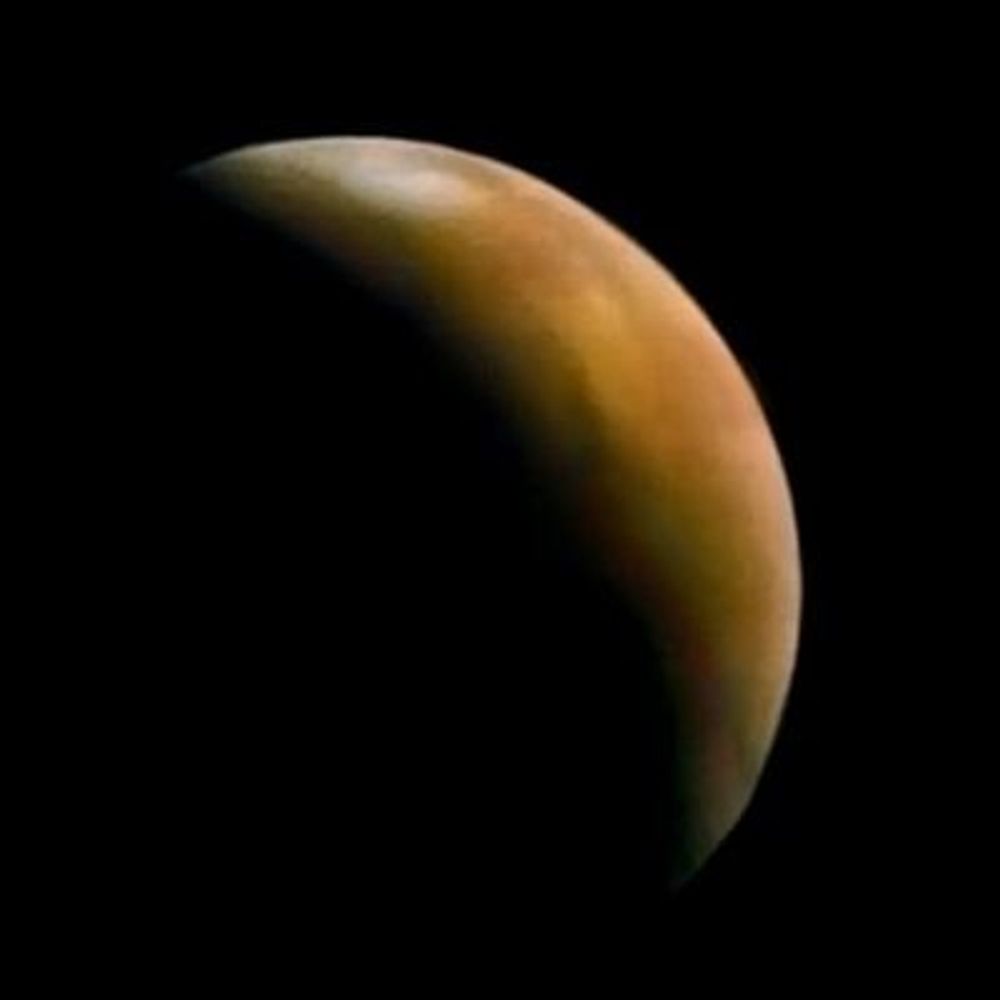
The members of the Pluto system, to scale at 1 km per pixel in the original version, from New Horizons in 2015.

January 7, 2026 at 3:19 PM
The members of the Pluto system, to scale at 1 km per pixel in the original version, from New Horizons in 2015.
Reposted by Stephen Kane
🔵 In 2025, the NASA/ESA/CSA #Webb Space Telescope found a new moon orbiting Uranus! Called S/2025 U1, it joined the 28 other known moons around the ice giant. Webb’s infrared view also revealed the planet’s rings and atmospheric details in stunning clarity 🧪🔭
www.esa.int/ESA_Multimed... @stsci.edu
www.esa.int/ESA_Multimed... @stsci.edu

January 3, 2026 at 11:27 AM
🔵 In 2025, the NASA/ESA/CSA #Webb Space Telescope found a new moon orbiting Uranus! Called S/2025 U1, it joined the 28 other known moons around the ice giant. Webb’s infrared view also revealed the planet’s rings and atmospheric details in stunning clarity 🧪🔭
www.esa.int/ESA_Multimed... @stsci.edu
www.esa.int/ESA_Multimed... @stsci.edu
Happy New Year from our sister planet!

January 1, 2026 at 6:38 PM
Happy New Year from our sister planet!
The suggestion that Mariah Carey is a Necron makes sense on multiple axes.

December 27, 2025 at 2:40 AM
The suggestion that Mariah Carey is a Necron makes sense on multiple axes.
Reposted by Stephen Kane
AGU petition to save NCAR. Please share widely! agu.quorum.us/campaign/151...

Save NCAR from being dismantled today!
The Trump Administration has vowed to dissolve the center that provides critical extreme weather and climate data for our nation.
agu.quorum.us
December 18, 2025 at 12:23 AM
AGU petition to save NCAR. Please share widely! agu.quorum.us/campaign/151...
Reposted by Stephen Kane
🚨 SAVE THE DATE 🚨
We're putting together a Planetary Science Community Meeting at the Kentucky Science Center in Louisville, KY on April 14–16 2026.
This is a grass-roots meeting for planetary scientists to gather, discuss, and organize to address pressing issues our community faces.
(1/2)
We're putting together a Planetary Science Community Meeting at the Kentucky Science Center in Louisville, KY on April 14–16 2026.
This is a grass-roots meeting for planetary scientists to gather, discuss, and organize to address pressing issues our community faces.
(1/2)

December 17, 2025 at 10:50 PM
🚨 SAVE THE DATE 🚨
We're putting together a Planetary Science Community Meeting at the Kentucky Science Center in Louisville, KY on April 14–16 2026.
This is a grass-roots meeting for planetary scientists to gather, discuss, and organize to address pressing issues our community faces.
(1/2)
We're putting together a Planetary Science Community Meeting at the Kentucky Science Center in Louisville, KY on April 14–16 2026.
This is a grass-roots meeting for planetary scientists to gather, discuss, and organize to address pressing issues our community faces.
(1/2)
The Archean Earth textbook is now available!
www.sciencedirect.com/book/edited-...
You can directly access the solar system review chapter written by myself and my co-authors here: www.sciencedirect.com/science/chap...
www.sciencedirect.com/book/edited-...
You can directly access the solar system review chapter written by myself and my co-authors here: www.sciencedirect.com/science/chap...

The Archean Earth
The Archean Earth: Tempos and Events, Second Edition is a process-based reference book that focuses on the most important events in early Earth,...
www.sciencedirect.com
December 10, 2025 at 4:43 PM
The Archean Earth textbook is now available!
www.sciencedirect.com/book/edited-...
You can directly access the solar system review chapter written by myself and my co-authors here: www.sciencedirect.com/science/chap...
www.sciencedirect.com/book/edited-...
You can directly access the solar system review chapter written by myself and my co-authors here: www.sciencedirect.com/science/chap...
One of the primary joys in being a professor is witnessing the success of the folks in your lab. I feel very inspired and blessed to have such brilliant people working in my group.
December 8, 2025 at 10:47 PM
One of the primary joys in being a professor is witnessing the success of the folks in your lab. I feel very inspired and blessed to have such brilliant people working in my group.
Reposted by Stephen Kane
Happy 14 orbits to the NASA #Exoplanet Archive!
Launched on December 5, 2011, the archive has become THE destination for published exoplanet parameters. I've been using it since its inception, and now I'm lucky enough to get to help maintain it and make it better for all astronomers!
Launched on December 5, 2011, the archive has become THE destination for published exoplanet parameters. I've been using it since its inception, and now I'm lucky enough to get to help maintain it and make it better for all astronomers!

December 5, 2025 at 9:08 PM
Happy 14 orbits to the NASA #Exoplanet Archive!
Launched on December 5, 2011, the archive has become THE destination for published exoplanet parameters. I've been using it since its inception, and now I'm lucky enough to get to help maintain it and make it better for all astronomers!
Launched on December 5, 2011, the archive has become THE destination for published exoplanet parameters. I've been using it since its inception, and now I'm lucky enough to get to help maintain it and make it better for all astronomers!
I'm excited to share my new paper regarding the effect of Mars on the Milankovitch cycles of Earth, and how sensitive those cycles are to the Martian mass. The paper is accepted for publication in PASP and is available here: arxiv.org/abs/2512.02108
The Dependence of Earth Milankovitch Cycles on Martian Mass
The Milankovitch cycles of Earth result from gravitational interactions with other bodies in the Solar System. These interactions lead to slow changes in the orbit and angular momentum vector of Earth...
arxiv.org
December 5, 2025 at 5:43 PM
I'm excited to share my new paper regarding the effect of Mars on the Milankovitch cycles of Earth, and how sensitive those cycles are to the Martian mass. The paper is accepted for publication in PASP and is available here: arxiv.org/abs/2512.02108
Guillermo del Toro's Frankenstein is a breathtakingly beautiful film, proving once again that some classic tales are worth revisiting.
November 11, 2025 at 5:11 AM
Guillermo del Toro's Frankenstein is a breathtakingly beautiful film, proving once again that some classic tales are worth revisiting.
I'm excited to present my analysis of the Gaia-4 and Gaia-5 planetary systems, contained planets that I refer to as "wrecking balls". Unlike most other similar planets I have worked on, these have true mass measurements from RV+astrometry. arxiv.org/abs/2510.23792
The Dynamical Environment within the Habitable Zone of the Gaia-4 and Gaia-5 Planetary Systems
Exoplanetary systems exhibit a broad range of architectures which, in turn, enable a variety of dynamical environments. Many of the known planetary systems do not transit the host star, and so we meas...
arxiv.org
October 29, 2025 at 4:06 AM
I'm excited to present my analysis of the Gaia-4 and Gaia-5 planetary systems, contained planets that I refer to as "wrecking balls". Unlike most other similar planets I have worked on, these have true mass measurements from RV+astrometry. arxiv.org/abs/2510.23792
Reposted by Stephen Kane

Together with Kristina Kislyakova, Louis Müller, Anuja Raorane, and @exocytherean.bsky.social we are organising the session "Early Solar system: crucial timings for habitability" at @egu.eu 2026. Please consider submitting an abstract if you work on these issues. :)
Session PS5.2
meetingorganizer.copernicus.org
October 26, 2025 at 2:50 PM
Together with Kristina Kislyakova, Louis Müller, Anuja Raorane, and @exocytherean.bsky.social we are organising the session "Early Solar system: crucial timings for habitability" at @egu.eu 2026. Please consider submitting an abstract if you work on these issues. :)