




Paul Byrne
@theplanetaryguy.bsky.social
Associate Professor of Earth, Environmental, and Planetary Science at Washington University in St. Louis • Planetary Data System Geosciences Node Director • Planetary Bastard • he/him/Sir
Pinned
Paul Byrne
@theplanetaryguy.bsky.social
· Nov 24
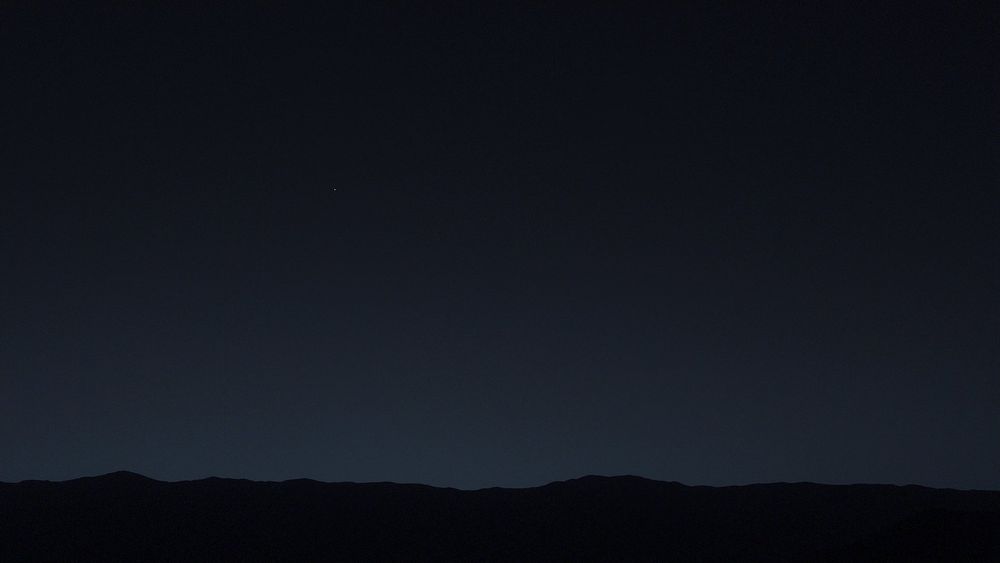
Open this photo up and look for the small, white dot just left of centre.
It looks like Venus, shining brightly in the twilight sky.
But it's us.
It's Earth.
From Mars.
It looks like Venus, shining brightly in the twilight sky.
But it's us.
It's Earth.
From Mars.
Cool, wind-shaped rocks on Mars photographed yesterday.

February 9, 2026 at 5:01 PM
Cool, wind-shaped rocks on Mars photographed yesterday.
Reposted by Paul Byrne
Reposted by Paul Byrne

SpaceX shifts focus from something that it will never do on Mars to something it will never do on the Moon.

February 9, 2026 at 3:32 AM
SpaceX shifts focus from something that it will never do on Mars to something it will never do on the Moon.
Reposted by Paul Byrne

I'm hardly the first person to note this, but it's enormously instructive that our President and his followers saw the message "THE ONLY THING MORE POWERFUL THAN HATE IS LOVE" and understood it, correctly, as an attack on them


February 9, 2026 at 2:11 AM
I'm hardly the first person to note this, but it's enormously instructive that our President and his followers saw the message "THE ONLY THING MORE POWERFUL THAN HATE IS LOVE" and understood it, correctly, as an attack on them
If you ever wanted to see what Jurassic Park would look like with dead-eyed, uncanny-valley actors, that ad was for you.

February 9, 2026 at 2:14 AM
If you ever wanted to see what Jurassic Park would look like with dead-eyed, uncanny-valley actors, that ad was for you.
Reposted by Paul Byrne

Bad Bunny “together we are America”

February 9, 2026 at 1:35 AM
Bad Bunny “together we are America”
Reposted by Paul Byrne

That was an absolute celebration of joy. Damn
February 9, 2026 at 1:33 AM
That was an absolute celebration of joy. Damn
YOU'VE SWITCHED OFF YOUR TARGETING COMPUTER!

February 8, 2026 at 6:44 PM
YOU'VE SWITCHED OFF YOUR TARGETING COMPUTER!
Reposted by Paul Byrne
This is Earth and the Moon, photographed by a spacecraft in Mars orbit.

February 8, 2026 at 2:21 AM
This is Earth and the Moon, photographed by a spacecraft in Mars orbit.
This is Earth and the Moon, photographed by a spacecraft in Mars orbit.
February 8, 2026 at 2:21 AM
This is Earth and the Moon, photographed by a spacecraft in Mars orbit.
Reposted by Paul Byrne
Fair play to the organisers of the Winter Olympics 2026 for accurately depicting Mars in the Opening Ceremony.

February 7, 2026 at 5:52 AM
Fair play to the organisers of the Winter Olympics 2026 for accurately depicting Mars in the Opening Ceremony.
Reposted by Paul Byrne


Reposted by Paul Byrne

In which Jeffrey Epstein, who laundered money for the Russians, explains how Donald Trump was doing exactly the same thing, and how this accounts for most of his wealth.

February 7, 2026 at 4:34 PM
In which Jeffrey Epstein, who laundered money for the Russians, explains how Donald Trump was doing exactly the same thing, and how this accounts for most of his wealth.
Reposted by Paul Byrne
Saturn. By Cassini.

February 7, 2026 at 3:18 AM
Saturn. By Cassini.
Fair play to the organisers of the Winter Olympics 2026 for accurately depicting Mars in the Opening Ceremony.
February 7, 2026 at 5:52 AM
Fair play to the organisers of the Winter Olympics 2026 for accurately depicting Mars in the Opening Ceremony.
Saturn. By Cassini.
February 7, 2026 at 3:18 AM
Saturn. By Cassini.
Reposted by Paul Byrne

No joke: I got angry hate mail today for writing an obituary of a Black woman scientist—because the person felt she did didn’t deserve the recognition.
Which just makes me want to share it again: www.nature.com/articles/d41...
Which just makes me want to share it again: www.nature.com/articles/d41...

Gladys Mae West obituary: mathematician who pioneered GPS technology
She made key contributions to US cold-war science despite facing huge barriers as a Black woman.
www.nature.com
February 6, 2026 at 9:09 AM
No joke: I got angry hate mail today for writing an obituary of a Black woman scientist—because the person felt she did didn’t deserve the recognition.
Which just makes me want to share it again: www.nature.com/articles/d41...
Which just makes me want to share it again: www.nature.com/articles/d41...
Reposted by Paul Byrne
This is a cool photo of crescent Venus.
And the Moon, too.
Image credit: Iván Éder
And the Moon, too.
Image credit: Iván Éder

February 5, 2026 at 4:05 AM
This is a cool photo of crescent Venus.
And the Moon, too.
Image credit: Iván Éder
And the Moon, too.
Image credit: Iván Éder
Reposted by Paul Byrne
I had a fun conversation last week with @planetarysociety.bsky.social's Planetary Radio host Sarah Al-Ahmed about our recent Europa seafloor paper!
Check it out:
www.planetary.org/planetary-ra...
Check it out:
www.planetary.org/planetary-ra...

Europa’s quiet seafloor
New research suggests the seafloor beneath Europa’s vast ocean may be geologically quiet today, reshaping how scientists think about habitability on one…
www.planetary.org
February 5, 2026 at 6:57 PM
I had a fun conversation last week with @planetarysociety.bsky.social's Planetary Radio host Sarah Al-Ahmed about our recent Europa seafloor paper!
Check it out:
www.planetary.org/planetary-ra...
Check it out:
www.planetary.org/planetary-ra...
I had a fun conversation last week with @planetarysociety.bsky.social's Planetary Radio host Sarah Al-Ahmed about our recent Europa seafloor paper!
Check it out:
www.planetary.org/planetary-ra...
Check it out:
www.planetary.org/planetary-ra...
Europa’s quiet seafloor
New research suggests the seafloor beneath Europa’s vast ocean may be geologically quiet today, reshaping how scientists think about habitability on one…
www.planetary.org
February 5, 2026 at 6:57 PM
I had a fun conversation last week with @planetarysociety.bsky.social's Planetary Radio host Sarah Al-Ahmed about our recent Europa seafloor paper!
Check it out:
www.planetary.org/planetary-ra...
Check it out:
www.planetary.org/planetary-ra...
This is a cool photo of crescent Venus.
And the Moon, too.
Image credit: Iván Éder
And the Moon, too.
Image credit: Iván Éder
February 5, 2026 at 4:05 AM
This is a cool photo of crescent Venus.
And the Moon, too.
Image credit: Iván Éder
And the Moon, too.
Image credit: Iván Éder
Reposted by Paul Byrne

Here's who the Washington Post just laid off.
February 4, 2026 at 9:10 PM
Here's who the Washington Post just laid off.
Reposted by Paul Byrne

A staggering statement from former Washington Post editor Marty Baron: "This ranks among the darkest days in the history of one of the world's greatest news organizations."


February 4, 2026 at 2:34 PM
A staggering statement from former Washington Post editor Marty Baron: "This ranks among the darkest days in the history of one of the world's greatest news organizations."
Reposted by Paul Byrne

“.. Not a single Republican member of Congress showed up to the public forum .. on the violence inflicted by federal immigration agents, featuring testimony from the brothers of Renee Good ..”
@newrepublic.com
newrepublic.com/post/206100/...
@newrepublic.com
newrepublic.com/post/206100/...

February 3, 2026 at 11:09 PM
“.. Not a single Republican member of Congress showed up to the public forum .. on the violence inflicted by federal immigration agents, featuring testimony from the brothers of Renee Good ..”
@newrepublic.com
newrepublic.com/post/206100/...
@newrepublic.com
newrepublic.com/post/206100/...