



Javier Alegre-Cortés
@alegrecortes.bsky.social
Postdoc at @karalis-lab.bsky.social - @institutducerveau.bsky.social
Neuroscientist using computational methods to explain physiological mechanisms.
Philosophy of science aficionado
Neuroscientist using computational methods to explain physiological mechanisms.
Philosophy of science aficionado
Pinned
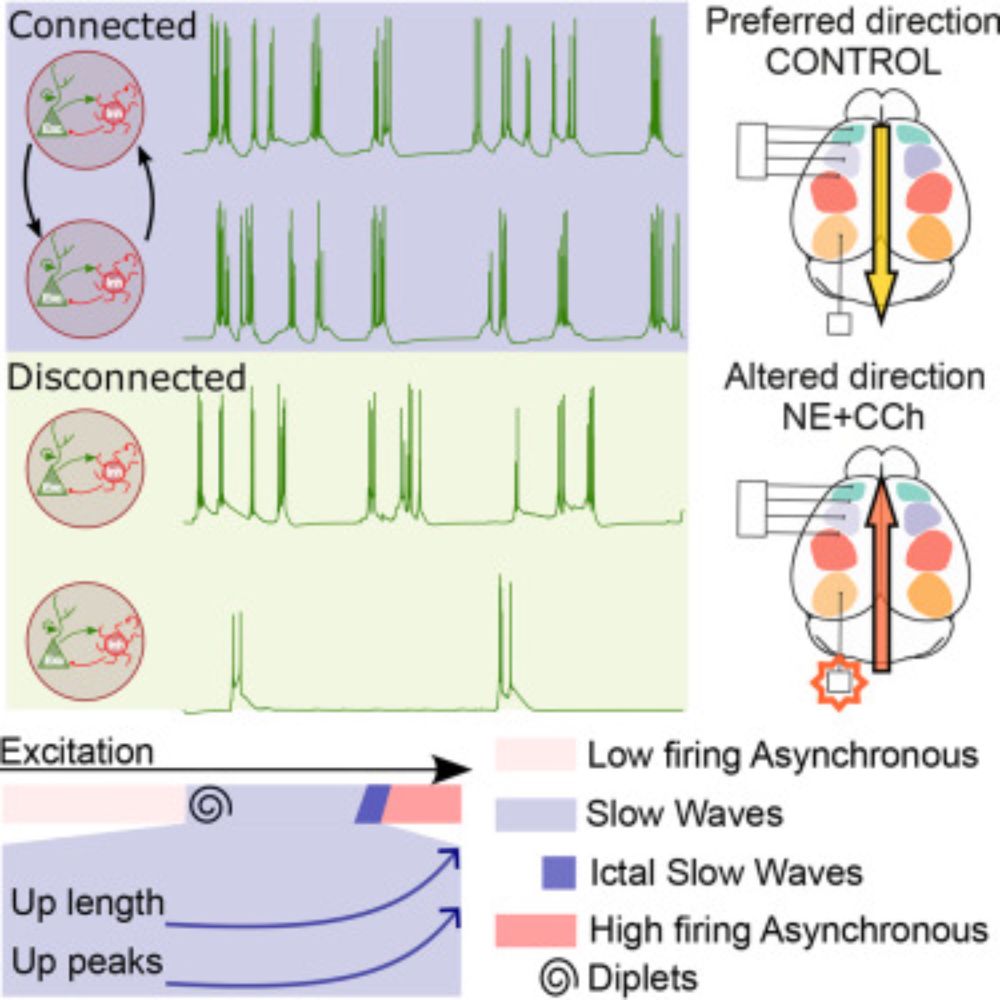
Global and local nature of cortical slow waves
Explaining the macroscopic activity of a neuronal population from its microscopic
properties poses a great challenge, not just because of the many local agents that
play a role, but due to the impact ...
www.cell.com
I'm excited to share my latest publication! 🚨
Global and local nature of cortical slow waves:
www.cell.com/iscience/ful...
In brief, we explored in silico how cortical slow waves are shaped by both external inputs and intrinsic properties of neuronal populations.
Global and local nature of cortical slow waves:
www.cell.com/iscience/ful...
In brief, we explored in silico how cortical slow waves are shaped by both external inputs and intrinsic properties of neuronal populations.
Reposted by Javier Alegre-Cortés

Please share: I am recruiting a PhD student to join my lab in Oslo!
For this project, we will investigate the role of striatal interneurons during action selection, using a combination of behavior, in vivo voltage imaging, and slice ephys.
www.jobbnorge.no/en/available...
#NeuroJobs #NeuroSkyence
For this project, we will investigate the role of striatal interneurons during action selection, using a combination of behavior, in vivo voltage imaging, and slice ephys.
www.jobbnorge.no/en/available...
#NeuroJobs #NeuroSkyence
February 13, 2026 at 2:34 PM
Please share: I am recruiting a PhD student to join my lab in Oslo!
For this project, we will investigate the role of striatal interneurons during action selection, using a combination of behavior, in vivo voltage imaging, and slice ephys.
www.jobbnorge.no/en/available...
#NeuroJobs #NeuroSkyence
For this project, we will investigate the role of striatal interneurons during action selection, using a combination of behavior, in vivo voltage imaging, and slice ephys.
www.jobbnorge.no/en/available...
#NeuroJobs #NeuroSkyence
Reposted by Javier Alegre-Cortés

Our paper is out in @natneuro.nature.com!
www.nature.com/articles/s41...
We develop a geometric theory of how neural populations support generalization across many tasks.
@zuckermanbrain.bsky.social
@flatironinstitute.org
@kempnerinstitute.bsky.social
1/14
www.nature.com/articles/s41...
We develop a geometric theory of how neural populations support generalization across many tasks.
@zuckermanbrain.bsky.social
@flatironinstitute.org
@kempnerinstitute.bsky.social
1/14

February 10, 2026 at 3:56 PM
Our paper is out in @natneuro.nature.com!
www.nature.com/articles/s41...
We develop a geometric theory of how neural populations support generalization across many tasks.
@zuckermanbrain.bsky.social
@flatironinstitute.org
@kempnerinstitute.bsky.social
1/14
www.nature.com/articles/s41...
We develop a geometric theory of how neural populations support generalization across many tasks.
@zuckermanbrain.bsky.social
@flatironinstitute.org
@kempnerinstitute.bsky.social
1/14
Reposted by Javier Alegre-Cortés

I think that, like with art, papers offer an opportunity for you to tell the story your own way. Could another person research the same question? Yes. However, each person has the opportunity to do it and communicate it in their own way, and we must protect that 🧪
February 10, 2026 at 3:13 PM
I think that, like with art, papers offer an opportunity for you to tell the story your own way. Could another person research the same question? Yes. However, each person has the opportunity to do it and communicate it in their own way, and we must protect that 🧪
Reposted by Javier Alegre-Cortés
the cutoff scores for #MSCA postdoc fellowships are very high this year. has the score distribution shifted compared to previous years? I made a plot with scores from past years.
if scores are at ceiling level, the process becomes essentially a lottery, because minor issues can lead to deductions.
if scores are at ceiling level, the process becomes essentially a lottery, because minor issues can lead to deductions.

February 10, 2026 at 9:54 AM
the cutoff scores for #MSCA postdoc fellowships are very high this year. has the score distribution shifted compared to previous years? I made a plot with scores from past years.
if scores are at ceiling level, the process becomes essentially a lottery, because minor issues can lead to deductions.
if scores are at ceiling level, the process becomes essentially a lottery, because minor issues can lead to deductions.
Join us!
If you are interested in the mechanisms through which neuromodulators shape neural dynamics, take a look at the open positions!
If you are interested in the mechanisms through which neuromodulators shape neural dynamics, take a look at the open positions!

Exciting news!
@alegrecortes.bsky.social received the MSCA postdoc fellowship from @ec.europa.eu and @ireneserrahu.bsky.social has received the EMBO and FRM fellowships (@embo.org, @frm-officiel.bsky.social) to support their ambitious projects!
Multiple open positions to join this super team!
@alegrecortes.bsky.social received the MSCA postdoc fellowship from @ec.europa.eu and @ireneserrahu.bsky.social has received the EMBO and FRM fellowships (@embo.org, @frm-officiel.bsky.social) to support their ambitious projects!
Multiple open positions to join this super team!
February 10, 2026 at 8:12 AM
Join us!
If you are interested in the mechanisms through which neuromodulators shape neural dynamics, take a look at the open positions!
If you are interested in the mechanisms through which neuromodulators shape neural dynamics, take a look at the open positions!
I'm excited to share good news!
I've been awarded an #MSCA fellowship to explore the mechanisms of interaction of multiple neuromodulators upon neural circuits in the group of @nikolaskaralis.bsky.social
marie-sklodowska-curie-actions.ec.europa.eu/news/msca-aw...
I've been awarded an #MSCA fellowship to explore the mechanisms of interaction of multiple neuromodulators upon neural circuits in the group of @nikolaskaralis.bsky.social
marie-sklodowska-curie-actions.ec.europa.eu/news/msca-aw...

MSCA awards €404.3 million to postdoctoral researchers
1610 outstanding postdoctoral researchers were selected for funding among 17,066 applicants.
marie-sklodowska-curie-actions.ec.europa.eu
February 10, 2026 at 8:07 AM
I'm excited to share good news!
I've been awarded an #MSCA fellowship to explore the mechanisms of interaction of multiple neuromodulators upon neural circuits in the group of @nikolaskaralis.bsky.social
marie-sklodowska-curie-actions.ec.europa.eu/news/msca-aw...
I've been awarded an #MSCA fellowship to explore the mechanisms of interaction of multiple neuromodulators upon neural circuits in the group of @nikolaskaralis.bsky.social
marie-sklodowska-curie-actions.ec.europa.eu/news/msca-aw...
Reposted by Javier Alegre-Cortés

"data available upon reasonable request"

February 7, 2026 at 12:16 PM
"data available upon reasonable request"
Reposted by Javier Alegre-Cortés

EEG requires many neurons aligned so that their electric fields can positively sum to spread up to the scalp. I made a browser-based simulator for my EEG class to visualize how "open fields" contribute to EEG recordings.
dbrang.github.io/Open-Closed-...
Github: github.com/dbrang/Open-...
dbrang.github.io/Open-Closed-...
Github: github.com/dbrang/Open-...


January 26, 2026 at 2:11 PM
EEG requires many neurons aligned so that their electric fields can positively sum to spread up to the scalp. I made a browser-based simulator for my EEG class to visualize how "open fields" contribute to EEG recordings.
dbrang.github.io/Open-Closed-...
Github: github.com/dbrang/Open-...
dbrang.github.io/Open-Closed-...
Github: github.com/dbrang/Open-...
Reposted by Javier Alegre-Cortés

I'm increasingly of the opinion that we shouldn't give credence to any published result unless it has been subject to a good faith attempt to explain the results by a null model, ideally by an independent group that doesn't believe the result is true, and shown to be robust.

But (shocker) with realistic amounts of noise you recover something that looks exactly like their plot. It even has roughly the same level of discordance, about 40% in total!

January 5, 2026 at 7:51 PM
I'm increasingly of the opinion that we shouldn't give credence to any published result unless it has been subject to a good faith attempt to explain the results by a null model, ideally by an independent group that doesn't believe the result is true, and shown to be robust.
Reposted by Javier Alegre-Cortés
⚠️ New paper alert and what a way to end 2025! 🎉
Happy to share our story “Sleep-dependent infraslow rhythms are evolutionarily conserved across reptiles and mammals.” published today in Nature Neuroscience.
Sleeping dragons 🦎 and functional ultrasound!
Read the full paper here: rdcu.be/eWJHb 1/8
Happy to share our story “Sleep-dependent infraslow rhythms are evolutionarily conserved across reptiles and mammals.” published today in Nature Neuroscience.
Sleeping dragons 🦎 and functional ultrasound!
Read the full paper here: rdcu.be/eWJHb 1/8

Sleep-dependent infraslow rhythms are evolutionarily conserved across reptiles and mammals
Nature Neuroscience - Bergel et al. show that an infraslow rhythm connecting the brain and body during sleep is shared by lizards, mammals and birds, revealing an ancestral process and reshaping...
rdcu.be
December 29, 2025 at 4:17 PM
⚠️ New paper alert and what a way to end 2025! 🎉
Happy to share our story “Sleep-dependent infraslow rhythms are evolutionarily conserved across reptiles and mammals.” published today in Nature Neuroscience.
Sleeping dragons 🦎 and functional ultrasound!
Read the full paper here: rdcu.be/eWJHb 1/8
Happy to share our story “Sleep-dependent infraslow rhythms are evolutionarily conserved across reptiles and mammals.” published today in Nature Neuroscience.
Sleeping dragons 🦎 and functional ultrasound!
Read the full paper here: rdcu.be/eWJHb 1/8
Reposted by Javier Alegre-Cortés
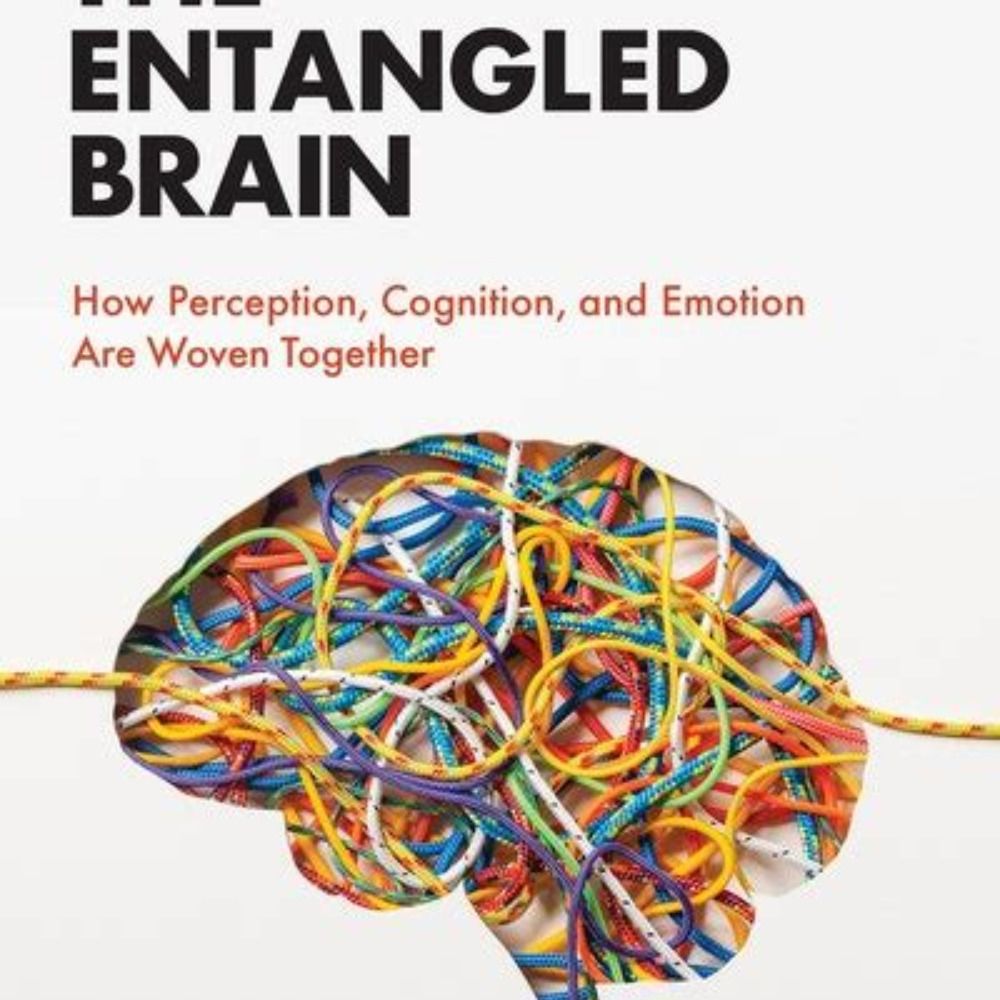
**Rethinking the centrality of brain areas in understanding functional organization**
New paper I anticipate will become a classic in neuroscience and a must-read for students at all levels.
Understanding brain function beyond brain areas.
#neuroskyence
www.nature.com/articles/s41...
New paper I anticipate will become a classic in neuroscience and a must-read for students at all levels.
Understanding brain function beyond brain areas.
#neuroskyence
www.nature.com/articles/s41...

December 23, 2025 at 3:30 PM
**Rethinking the centrality of brain areas in understanding functional organization**
New paper I anticipate will become a classic in neuroscience and a must-read for students at all levels.
Understanding brain function beyond brain areas.
#neuroskyence
www.nature.com/articles/s41...
New paper I anticipate will become a classic in neuroscience and a must-read for students at all levels.
Understanding brain function beyond brain areas.
#neuroskyence
www.nature.com/articles/s41...
Reposted by Javier Alegre-Cortés

⚡️Mitochondria make ATP, the energy that powers life. But in neurons, with axons up to a meter long, how do these tiny power plants stay functional in the right places? We went looking. 1/n www.biorxiv.org/content/10.6...

Self-renewal of neuronal mitochondria through asymmetric division
Mitochondrial ATP production is essential for life. Mitochondrial function depends on the spatio-temporal coordination of nuclear and mitochondrial genome expression, yet how this coordination occurs ...
www.biorxiv.org
December 18, 2025 at 8:36 PM
⚡️Mitochondria make ATP, the energy that powers life. But in neurons, with axons up to a meter long, how do these tiny power plants stay functional in the right places? We went looking. 1/n www.biorxiv.org/content/10.6...
If you are interested in providing mechanistic explanations to how neuromodulators shape neuronal dynamics and communication among brain regions, don't miss this chance to join us!
We invite applications for postdoctoral researchers with strong expertise in in vivo electrophysiology and circuit neuroscience to join our team at the Paris Brain Institute (ICM).


December 17, 2025 at 2:50 PM
If you are interested in providing mechanistic explanations to how neuromodulators shape neuronal dynamics and communication among brain regions, don't miss this chance to join us!
Reposted by Javier Alegre-Cortés
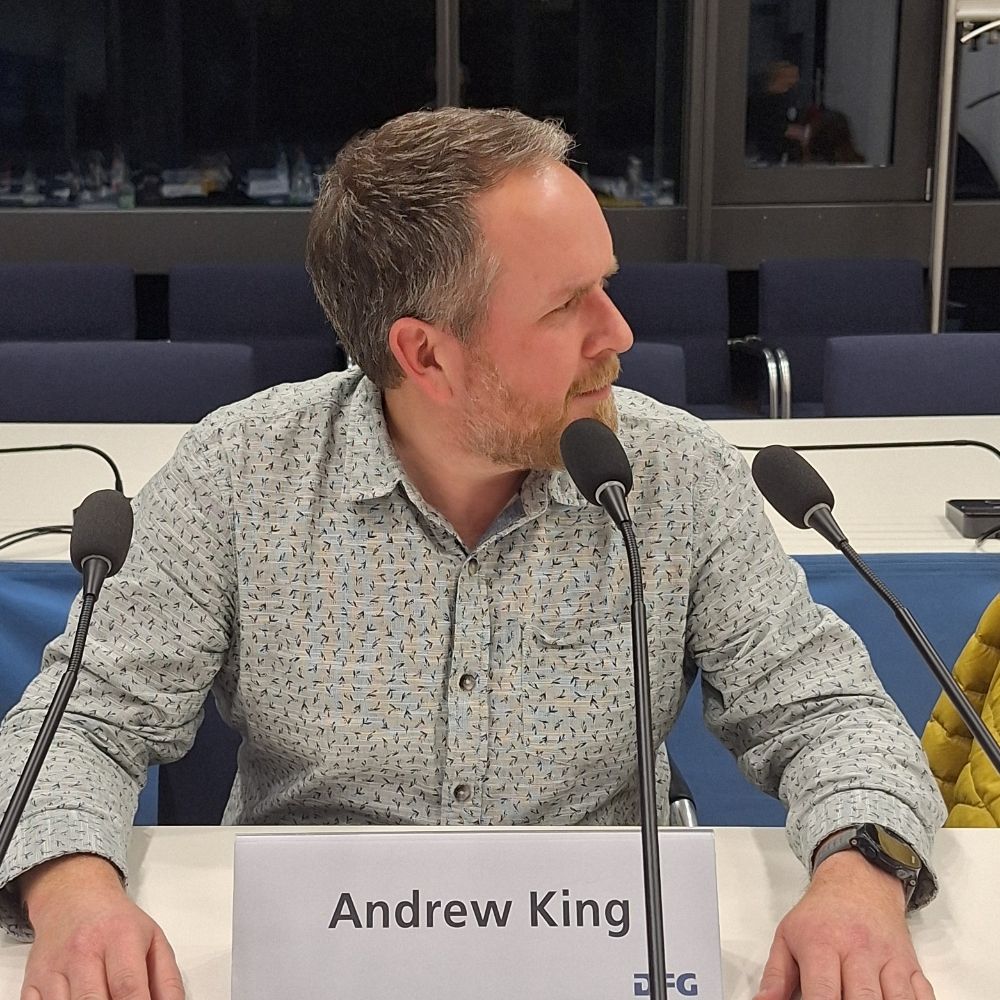
Our newest research in @currentbiology.bsky.social:
www.cell.com/current-biol...
We find dominant baboons have more interrupted and less rest at night.
Author list and story in comments below :-)
www.cell.com/current-biol...
We find dominant baboons have more interrupted and less rest at night.
Author list and story in comments below :-)

December 14, 2025 at 6:53 PM
Our newest research in @currentbiology.bsky.social:
www.cell.com/current-biol...
We find dominant baboons have more interrupted and less rest at night.
Author list and story in comments below :-)
www.cell.com/current-biol...
We find dominant baboons have more interrupted and less rest at night.
Author list and story in comments below :-)
Reposted by Javier Alegre-Cortés

Dissecting GPCR Selectivity: A complex interplay of various intracellular motifs determines G-protein binding and activation https://www.biorxiv.org/content/10.64898/2025.12.12.693856v1
December 15, 2025 at 6:00 PM
Dissecting GPCR Selectivity: A complex interplay of various intracellular motifs determines G-protein binding and activation https://www.biorxiv.org/content/10.64898/2025.12.12.693856v1
Reposted by Javier Alegre-Cortés

🥳Excited to share our latest human multipatch paper, now out in @natneuro.nature.com
🧠 We studied the cellular and synaptic physiology of human L2–3 pyramidal neurons and identified subtype-specific local connectivity rules across individuals.
www.nature.com/articles/s41...
Join us: penglab.de
🧠 We studied the cellular and synaptic physiology of human L2–3 pyramidal neurons and identified subtype-specific local connectivity rules across individuals.
www.nature.com/articles/s41...
Join us: penglab.de

December 13, 2025 at 7:59 AM
🥳Excited to share our latest human multipatch paper, now out in @natneuro.nature.com
🧠 We studied the cellular and synaptic physiology of human L2–3 pyramidal neurons and identified subtype-specific local connectivity rules across individuals.
www.nature.com/articles/s41...
Join us: penglab.de
🧠 We studied the cellular and synaptic physiology of human L2–3 pyramidal neurons and identified subtype-specific local connectivity rules across individuals.
www.nature.com/articles/s41...
Join us: penglab.de
Reposted by Javier Alegre-Cortés

🧠📢 New preprint alert
Large-scale ephys is exploding but spike sorting remains the computational bottleneck. A 2-hr, 6-probe Neuropixels 2.0 Quad Base session can take over a week to sort on a single machine. Here's a better solution. 🧵
#neuroskyence #compneurosky
Large-scale ephys is exploding but spike sorting remains the computational bottleneck. A 2-hr, 6-probe Neuropixels 2.0 Quad Base session can take over a week to sort on a single machine. Here's a better solution. 🧵
#neuroskyence #compneurosky

December 5, 2025 at 8:42 PM
🧠📢 New preprint alert
Large-scale ephys is exploding but spike sorting remains the computational bottleneck. A 2-hr, 6-probe Neuropixels 2.0 Quad Base session can take over a week to sort on a single machine. Here's a better solution. 🧵
#neuroskyence #compneurosky
Large-scale ephys is exploding but spike sorting remains the computational bottleneck. A 2-hr, 6-probe Neuropixels 2.0 Quad Base session can take over a week to sort on a single machine. Here's a better solution. 🧵
#neuroskyence #compneurosky
Bassins des Lumières, Bordeaux

December 8, 2025 at 7:23 AM
Bassins des Lumières, Bordeaux
Reposted by Javier Alegre-Cortés

Finally got the job ad—looking for 2 PhD students to start spring next year:
www.gao-unit.com/join-us/
If comp neuro, ML, and AI4Neuro is your thing, or you just nerd out over brain recordings, apply!
I'm at neurips. DM me here / on the conference app or email if you want to meet 🏖️🌮
www.gao-unit.com/join-us/
If comp neuro, ML, and AI4Neuro is your thing, or you just nerd out over brain recordings, apply!
I'm at neurips. DM me here / on the conference app or email if you want to meet 🏖️🌮

December 3, 2025 at 9:37 AM
Finally got the job ad—looking for 2 PhD students to start spring next year:
www.gao-unit.com/join-us/
If comp neuro, ML, and AI4Neuro is your thing, or you just nerd out over brain recordings, apply!
I'm at neurips. DM me here / on the conference app or email if you want to meet 🏖️🌮
www.gao-unit.com/join-us/
If comp neuro, ML, and AI4Neuro is your thing, or you just nerd out over brain recordings, apply!
I'm at neurips. DM me here / on the conference app or email if you want to meet 🏖️🌮
Reposted by Javier Alegre-Cortés
Great read. Too many people assume that the role of theory papers in neuro is to "explain neural data". I'm not even sure we can explain anything yet. Data is more like a muse for theory.

How I contributed to rejecting one of my favorite papers of all times, Yes, I teach it to students daily, and refer to it in lots of papers. Sorry. open.substack.com/pub/kording/...

How I contributed to rejecting one of my favorite papers of all time
I believe we should talk about the mistakes we make.
open.substack.com
December 2, 2025 at 1:52 AM
Great read. Too many people assume that the role of theory papers in neuro is to "explain neural data". I'm not even sure we can explain anything yet. Data is more like a muse for theory.
Reposted by Javier Alegre-Cortés

🚨 Registration open for the 1st Systems-IN-Action neuroscience meeting on Circuits, Systems, Behaviour, and Computation at the @neuroalc.bsky.social in Alicante (Spain)
Deadline: Jan 15 or until 120 participants!
Orgs: @kardamakis.bsky.social, Ramón Reig & Isabel Pérez Otaño
systems-in-action.umh.es
Deadline: Jan 15 or until 120 participants!
Orgs: @kardamakis.bsky.social, Ramón Reig & Isabel Pérez Otaño
systems-in-action.umh.es

November 25, 2025 at 10:02 PM
🚨 Registration open for the 1st Systems-IN-Action neuroscience meeting on Circuits, Systems, Behaviour, and Computation at the @neuroalc.bsky.social in Alicante (Spain)
Deadline: Jan 15 or until 120 participants!
Orgs: @kardamakis.bsky.social, Ramón Reig & Isabel Pérez Otaño
systems-in-action.umh.es
Deadline: Jan 15 or until 120 participants!
Orgs: @kardamakis.bsky.social, Ramón Reig & Isabel Pérez Otaño
systems-in-action.umh.es
This is an amazing initiative
🗣️ With the support of the @danafoundation.bsky.social, we are very excited to announce the Philosophy & Neuroscience Collaborative Mentorship Program! 🧠
For more details & submission requirements, visit: philandneuro.com/mentorship
(This is 1/2 announcements we will make over the next 1-2 weeks.)
For more details & submission requirements, visit: philandneuro.com/mentorship
(This is 1/2 announcements we will make over the next 1-2 weeks.)

November 24, 2025 at 8:25 AM
This is an amazing initiative
Reposted by Javier Alegre-Cortés

My collaborator @aditijh.bsky.social has some cool work on cell-type LDS :)
www.biorxiv.org/content/10.1...
www.biorxiv.org/content/10.1...

Disentangling the Roles of Distinct Cell Classes with Cell-Type Dynamical Systems
Latent dynamical systems have been widely used to characterize the dynamics of neural population activity in the brain. However, these models typically ignore the fact that the brain contains multiple...
www.biorxiv.org
November 23, 2025 at 6:30 PM
My collaborator @aditijh.bsky.social has some cool work on cell-type LDS :)
www.biorxiv.org/content/10.1...
www.biorxiv.org/content/10.1...
Reposted by Javier Alegre-Cortés

“Our findings challenge the conventional focus on low-dimensional coding subspaces as a sufficient framework for understanding neural computations, demonstrating that dimensions previously considered task-irrelevant and accounting for little variance can have a critical role in driving behavior.”

Neural dynamics outside task-coding dimensions drive decision trajectories through transient amplification
Most behaviors involve neural dynamics in high-dimensional activity spaces. A common approach is to extract dimensions that capture task-related variability, such as those separating stimuli or choice...
www.biorxiv.org
November 23, 2025 at 1:38 PM
“Our findings challenge the conventional focus on low-dimensional coding subspaces as a sufficient framework for understanding neural computations, demonstrating that dimensions previously considered task-irrelevant and accounting for little variance can have a critical role in driving behavior.”
Reposted by Javier Alegre-Cortés

Like most animals, fish move less at night. Underwater, stable posture requires movement. Find out how fish don't fall down at night in: Lighting and circadian cues shape locomotor strategies for balance and navigation in larval zebrafish from @yunluzhu.bsky.social
doi.org/10.1101/2025...
doi.org/10.1101/2025...

Lighting and circadian cues shape locomotor strategies for balance and navigation in larval zebrafish
Most fish are inherently unstable and must swim to stabilize posture. How diurnal fish reduce activity at night while maintaining postural control remains unclear. We defined distinct locomotor strate...
doi.org
November 19, 2025 at 3:24 AM
Like most animals, fish move less at night. Underwater, stable posture requires movement. Find out how fish don't fall down at night in: Lighting and circadian cues shape locomotor strategies for balance and navigation in larval zebrafish from @yunluzhu.bsky.social
doi.org/10.1101/2025...
doi.org/10.1101/2025...