



Jerome Beetz
@beetzjerome.bsky.social
Neuroethologist studying spatial navigation in diverse species 🐝🦇🦋. For more infos visit my lab homepage:
https://www.spatial-navigation.com/
https://www.spatial-navigation.com/
Pinned
Jerome Beetz
@beetzjerome.bsky.social
· Mar 24
Beetz Lab
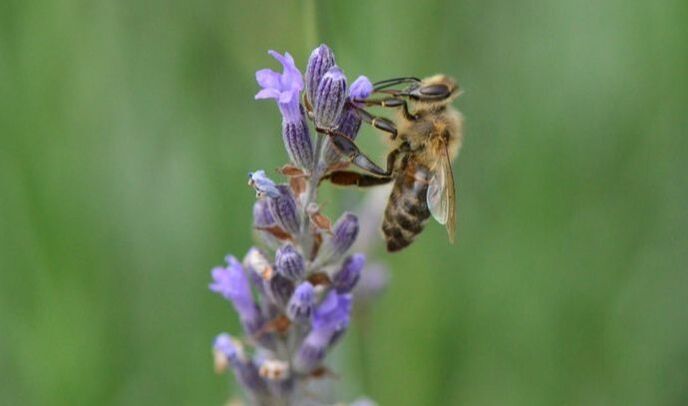
Our group studies the neural mechanisms underlying spatial memory in insects. As central place foragers, honeybees begin their foraging trip at a fixed location, i.e., their nest. This site fidelity.....
www.spatial-navigation.com
Let me introduce our new lab homepage.
www.spatial-navigation.com
We are looking for PhD students and one Postdoc that can start in November 2025.
Contact me if you are in to studying spatial memory of honeybees. @uni-wuerzburg.de
@neuroethology.org
www.spatial-navigation.com
We are looking for PhD students and one Postdoc that can start in November 2025.
Contact me if you are in to studying spatial memory of honeybees. @uni-wuerzburg.de
@neuroethology.org
Reposted by Jerome Beetz

Shedding light on the neural correlate of electrosensitivity in insects. Neural recordings from sensory pits on the cuticle of planthopper nymphs revealed electrosensitvity to electric fields less than 1kV/m. link.springer.com/article/10.1...

Electrosensitivity in planthoppers (Insecta: Hemiptera: Auchenorrhyncha: Fulgoromorpha) - Journal of Comparative Physiology A
Extracellular recordings from the sensory pits, conspicuous sensory organs on the cuticle of planthopper nymphs (suborder Fulgoromorpha), were performed. No responses to sound, ultrasound, direct mech...
link.springer.com
February 5, 2026 at 8:09 PM
Shedding light on the neural correlate of electrosensitivity in insects. Neural recordings from sensory pits on the cuticle of planthopper nymphs revealed electrosensitvity to electric fields less than 1kV/m. link.springer.com/article/10.1...
Reposted by Jerome Beetz

Excited to share my first PhD preprint! w/ Sören Kannegieser and @anna-stoeckl.bsky.social @insect-vision.bsky.social
We investigated how hawkmoths coordinate lateralized sensory and motor control for appendage guidance, revealing similar control principles to vertebrates doi.org/10.64898/202...
We investigated how hawkmoths coordinate lateralized sensory and motor control for appendage guidance, revealing similar control principles to vertebrates doi.org/10.64898/202...
February 2, 2026 at 10:27 AM
Excited to share my first PhD preprint! w/ Sören Kannegieser and @anna-stoeckl.bsky.social @insect-vision.bsky.social
We investigated how hawkmoths coordinate lateralized sensory and motor control for appendage guidance, revealing similar control principles to vertebrates doi.org/10.64898/202...
We investigated how hawkmoths coordinate lateralized sensory and motor control for appendage guidance, revealing similar control principles to vertebrates doi.org/10.64898/202...
Reposted by Jerome Beetz

New #RSOS paper: The effect of temperature and tropical milkweed on monarch #butterfly migration disruption. Read more: doi.org/10.1098/rsos...

January 31, 2026 at 2:00 PM
New #RSOS paper: The effect of temperature and tropical milkweed on monarch #butterfly migration disruption. Read more: doi.org/10.1098/rsos...
Reposted by Jerome Beetz

Baculoviruses cause infected insects to climb, which helps the virus spread on the wind. A study finds that the virus activates tachykinin receptors, stimulating visual signaling pathways, which increases locomotion and phototaxis. In PNAS: https://ow.ly/37cV50Y6zaE

January 30, 2026 at 11:00 PM
Baculoviruses cause infected insects to climb, which helps the virus spread on the wind. A study finds that the virus activates tachykinin receptors, stimulating visual signaling pathways, which increases locomotion and phototaxis. In PNAS: https://ow.ly/37cV50Y6zaE
Reposted by Jerome Beetz
I can't overrecommend this incredible paper about water skaters (genus Halobates). No one knows how they evolved. No one knows what they eat. They are superhydrophobic, which means water LITERALLY CANNOT WET THEM. Perhaps we should call them anti-water skaters? 🌊🧪
journals.plos.org/plosbiology/...
journals.plos.org/plosbiology/...

Why did only one genus of insects, Halobates, take to the high seas?
Oceans cover over 70% of the earth’s surface and house a dizzying array of organisms, including five species of the peppercorn-sized ocean-skater Halobates, which live exclusively at the ocean surface...
journals.plos.org
January 30, 2026 at 10:17 PM
I can't overrecommend this incredible paper about water skaters (genus Halobates). No one knows how they evolved. No one knows what they eat. They are superhydrophobic, which means water LITERALLY CANNOT WET THEM. Perhaps we should call them anti-water skaters? 🌊🧪
journals.plos.org/plosbiology/...
journals.plos.org/plosbiology/...
Reposted by Jerome Beetz
#ProcB in @sciam.bsky.social | Acoustic flow velocity manipulations affect the flight velocity of free-ranging pipistrelle bats: doi.org/10.1098/rspb...

‘Bat accelerator’ unlocks new clues to how these animals navigate
Bats use echolocation to get around, but it wasn’t clear how these creatures managed to navigate dense environments—until now
www.scientificamerican.com
January 30, 2026 at 6:01 PM
#ProcB in @sciam.bsky.social | Acoustic flow velocity manipulations affect the flight velocity of free-ranging pipistrelle bats: doi.org/10.1098/rspb...
Reposted by Jerome Beetz

New from Jessie Foley!
#Heliconius have elongated lives and excellent memory, but do they have excellent memory across their elongated lives? Find out now!*
Featuring learning and memory assays in 330 butterflies, and an absolute pig of an experiment to do.
*the title is a spoiler 🧪
#Heliconius have elongated lives and excellent memory, but do they have excellent memory across their elongated lives? Find out now!*
Featuring learning and memory assays in 330 butterflies, and an absolute pig of an experiment to do.
*the title is a spoiler 🧪

Cognitive robustness in a new insect model of extended longevity https://www.biorxiv.org/content/10.64898/2026.01.25.701637v1
January 28, 2026 at 7:33 AM
New from Jessie Foley!
#Heliconius have elongated lives and excellent memory, but do they have excellent memory across their elongated lives? Find out now!*
Featuring learning and memory assays in 330 butterflies, and an absolute pig of an experiment to do.
*the title is a spoiler 🧪
#Heliconius have elongated lives and excellent memory, but do they have excellent memory across their elongated lives? Find out now!*
Featuring learning and memory assays in 330 butterflies, and an absolute pig of an experiment to do.
*the title is a spoiler 🧪
Reposted by Jerome Beetz

We are excited to announce that registration is open for the 2026 Neural Mechanisms of Acoustic Communication Gordon Research Conference. The preliminary program is now live: www.grc.org/neural-mecha...
We invite everyone to apply! See you @ Sunday River, Maine, May 31-June 5, 2026.
We invite everyone to apply! See you @ Sunday River, Maine, May 31-June 5, 2026.

January 27, 2026 at 5:45 PM
We are excited to announce that registration is open for the 2026 Neural Mechanisms of Acoustic Communication Gordon Research Conference. The preliminary program is now live: www.grc.org/neural-mecha...
We invite everyone to apply! See you @ Sunday River, Maine, May 31-June 5, 2026.
We invite everyone to apply! See you @ Sunday River, Maine, May 31-June 5, 2026.
Reposted by Jerome Beetz

How does a predator sense its prey?
🪱The nematode Pristionchus pacificus preys on other nematodes, but how it detects them in its environment? That is what we have been exploring :
www.pnas.org/doi/10.1073/...
🪱The nematode Pristionchus pacificus preys on other nematodes, but how it detects them in its environment? That is what we have been exploring :
www.pnas.org/doi/10.1073/...
PNAS
Proceedings of the National Academy of Sciences (PNAS), a peer reviewed journal of the National Academy of Sciences (NAS) - an authoritative source of high-impact, original research that broadly spans...
www.pnas.org
January 28, 2026 at 6:35 PM
How does a predator sense its prey?
🪱The nematode Pristionchus pacificus preys on other nematodes, but how it detects them in its environment? That is what we have been exploring :
www.pnas.org/doi/10.1073/...
🪱The nematode Pristionchus pacificus preys on other nematodes, but how it detects them in its environment? That is what we have been exploring :
www.pnas.org/doi/10.1073/...
Reposted by Jerome Beetz

The hippocampal map has its own attentional control signal!
Our new study reveals that theta #sweeps can be instantly biased towards behaviourally relevant locations. See 📹 in post 4/6 and preprint here 👉
www.biorxiv.org/content/10.6...
🧵(1/6)
Our new study reveals that theta #sweeps can be instantly biased towards behaviourally relevant locations. See 📹 in post 4/6 and preprint here 👉
www.biorxiv.org/content/10.6...
🧵(1/6)
Attention-like regulation of theta sweeps in the brain's spatial navigation circuit
Spatial attention supports navigation by prioritizing information from selected locations. A candidate neural mechanism is provided by theta-paced sweeps in grid- and place-cell population activity, which sample nearby space in a left-right-alternating pattern coordinated by parasubicular direction signals. During exploration, this alternation promotes uniform spatial coverage, but whether sweeps can be flexibly tuned to locations of particular interest remains unclear. Using large-scale Neuropixels recordings in freely-behaving rats, we show that sweeps and direction signals are rapidly and dynamically modulated: they track moving targets during pursuit, precede orienting responses during immobility, and reverse during backward locomotion — without prior spatial learning. Similar modulation occurs during REM sleep. Canonical head-direction signals remain head-aligned. These findings identify sweeps as a flexible, attention-like mechanism for selectively sampling allocentric cognitive maps. ### Competing Interest Statement The authors have declared no competing interest. European Research Council, Synergy Grant 951319 (EIM) The Research Council of Norway, Centre of Neural Computation 223262 (EIM, MBM), Centre for Algorithms in the Cortex 332640 (EIM, MBM), National Infrastructure grant (NORBRAIN, 295721 and 350201) The Kavli Foundation, https://ror.org/00kztt736 Ministry of Science and Education, Norway (EIM, MBM) Faculty of Medicine and Health Sciences; NTNU, Norway (AZV)
www.biorxiv.org
January 28, 2026 at 10:03 AM
The hippocampal map has its own attentional control signal!
Our new study reveals that theta #sweeps can be instantly biased towards behaviourally relevant locations. See 📹 in post 4/6 and preprint here 👉
www.biorxiv.org/content/10.6...
🧵(1/6)
Our new study reveals that theta #sweeps can be instantly biased towards behaviourally relevant locations. See 📹 in post 4/6 and preprint here 👉
www.biorxiv.org/content/10.6...
🧵(1/6)
Reposted by Jerome Beetz

Excited that my 2nd MSc paper is out in @journal-evo.bsky.social 🦋🎉 doi.org/10.1093/evol...
We find Heliconius’ impressive visual memory is not due to increased visual-structure investment over that of their outgroup relatives, but instead consistent with specialisation of the central circuitry.
We find Heliconius’ impressive visual memory is not due to increased visual-structure investment over that of their outgroup relatives, but instead consistent with specialisation of the central circuitry.

January 23, 2026 at 7:36 PM
Excited that my 2nd MSc paper is out in @journal-evo.bsky.social 🦋🎉 doi.org/10.1093/evol...
We find Heliconius’ impressive visual memory is not due to increased visual-structure investment over that of their outgroup relatives, but instead consistent with specialisation of the central circuitry.
We find Heliconius’ impressive visual memory is not due to increased visual-structure investment over that of their outgroup relatives, but instead consistent with specialisation of the central circuitry.
Reposted by Jerome Beetz

Mushroom bodies! Butterflies!
What’s not to like?
New paper by Naomi Takahashi and Michiyo Kinoshita, involving an illustrious round of anatomists (…and me): Parallel Pathways for Visual and Olfactory Information in
the Mushroom Bodies of the Swallowtail Butterfly Brain
doi.org/10.1002/cne....
What’s not to like?
New paper by Naomi Takahashi and Michiyo Kinoshita, involving an illustrious round of anatomists (…and me): Parallel Pathways for Visual and Olfactory Information in
the Mushroom Bodies of the Swallowtail Butterfly Brain
doi.org/10.1002/cne....

Parallel Pathways for Visual and Olfactory Information in the Mushroom Bodies of the Swallowtail Butterfly Brain
Papilio xuthus is a flower-foraging butterfly with sophisticated color vision. In the Papilio brain, the mushroom bodies (MBs) receive prominent visual input that is spatially segregated from olfacto...
doi.org
January 23, 2026 at 11:43 PM
Mushroom bodies! Butterflies!
What’s not to like?
New paper by Naomi Takahashi and Michiyo Kinoshita, involving an illustrious round of anatomists (…and me): Parallel Pathways for Visual and Olfactory Information in
the Mushroom Bodies of the Swallowtail Butterfly Brain
doi.org/10.1002/cne....
What’s not to like?
New paper by Naomi Takahashi and Michiyo Kinoshita, involving an illustrious round of anatomists (…and me): Parallel Pathways for Visual and Olfactory Information in
the Mushroom Bodies of the Swallowtail Butterfly Brain
doi.org/10.1002/cne....
Reposted by Jerome Beetz
How do bats tell insects from the leaves they sit on? Dieter Vanderelst & co built a robot based on the idea that leaves reflect echoes away from an incoming bat, but the echoes from the insect remain strong during a bat approach. That's how bats do it
journals.biologists.com/jeb/article/...
journals.biologists.com/jeb/article/...

January 20, 2026 at 5:02 PM
How do bats tell insects from the leaves they sit on? Dieter Vanderelst & co built a robot based on the idea that leaves reflect echoes away from an incoming bat, but the echoes from the insect remain strong during a bat approach. That's how bats do it
journals.biologists.com/jeb/article/...
journals.biologists.com/jeb/article/...
Reposted by Jerome Beetz
New paper from the lab, led by @ronjabigge.bsky.social, in collaboration with Kentaro Arikawa. We reconcile contrast and spatial processing functions of lamina monopolar cells by integrating 3D morphology, connectivity and neurophysiology in the hummingbird hawkmoth. tinyurl.com/mvnh3325
For more 👇
For more 👇
ScienceDirect.com | Science, health and medical journals, full text articles and books.
authors.elsevier.com
January 19, 2026 at 2:19 PM
New paper from the lab, led by @ronjabigge.bsky.social, in collaboration with Kentaro Arikawa. We reconcile contrast and spatial processing functions of lamina monopolar cells by integrating 3D morphology, connectivity and neurophysiology in the hummingbird hawkmoth. tinyurl.com/mvnh3325
For more 👇
For more 👇
Reposted by Jerome Beetz

🧠The NeuroDoWo is coming to Würzburg
The NeuroDoWo is a conference where neuroscience and phd students are brought together!
📍Würzrburg, Germany
🗓️ 8th to 12th June 2026
Stay tuned for speaker announcements, workshops, and registration info
#phdlife #neuroscience #wuerzburg #conference #neurodowo
The NeuroDoWo is a conference where neuroscience and phd students are brought together!
📍Würzrburg, Germany
🗓️ 8th to 12th June 2026
Stay tuned for speaker announcements, workshops, and registration info
#phdlife #neuroscience #wuerzburg #conference #neurodowo

December 19, 2025 at 6:24 PM
🧠The NeuroDoWo is coming to Würzburg
The NeuroDoWo is a conference where neuroscience and phd students are brought together!
📍Würzrburg, Germany
🗓️ 8th to 12th June 2026
Stay tuned for speaker announcements, workshops, and registration info
#phdlife #neuroscience #wuerzburg #conference #neurodowo
The NeuroDoWo is a conference where neuroscience and phd students are brought together!
📍Würzrburg, Germany
🗓️ 8th to 12th June 2026
Stay tuned for speaker announcements, workshops, and registration info
#phdlife #neuroscience #wuerzburg #conference #neurodowo
Reposted by Jerome Beetz

So Long 2025, hello 2026!
It was a year of bold science and meaningful progress at MBL. Take a look at our 2025 highlights: go.mbl.edu/2025
It was a year of bold science and meaningful progress at MBL. Take a look at our 2025 highlights: go.mbl.edu/2025

January 19, 2026 at 7:56 PM
So Long 2025, hello 2026!
It was a year of bold science and meaningful progress at MBL. Take a look at our 2025 highlights: go.mbl.edu/2025
It was a year of bold science and meaningful progress at MBL. Take a look at our 2025 highlights: go.mbl.edu/2025
Reposted by Jerome Beetz

Learn about new neuroscience labs that opened in 2024 and 2025, plus several slated to launch this year, in @thetransmitter.bsky.social’s “New Lab Directory.
#neuroskyence
www.thetransmitter.org/community/th...
#neuroskyence
www.thetransmitter.org/community/th...

The Transmitter’s New Lab Directory
Learn about neuroscience labs launched in the past two years, plus a few opening their doors in 2026.
www.thetransmitter.org
January 19, 2026 at 7:21 PM
Learn about new neuroscience labs that opened in 2024 and 2025, plus several slated to launch this year, in @thetransmitter.bsky.social’s “New Lab Directory.
#neuroskyence
www.thetransmitter.org/community/th...
#neuroskyence
www.thetransmitter.org/community/th...
Reposted by Jerome Beetz

Can also recommend, and there was a nice chapter-by-chapter reading club of it with Georg and lots of other great speakers - videos still up here:
sites.google.com/view/bbtread...
sites.google.com/view/bbtread...
January 17, 2026 at 12:04 PM
Can also recommend, and there was a nice chapter-by-chapter reading club of it with Georg and lots of other great speakers - videos still up here:
sites.google.com/view/bbtread...
sites.google.com/view/bbtread...
Reposted by Jerome Beetz

So cool to see this one out! Congrats @markbrandonlab.bsky.social and the gang!!!!


January 15, 2026 at 1:53 PM
So cool to see this one out! Congrats @markbrandonlab.bsky.social and the gang!!!!
A new study from the Yovel lab @elife.bsky.social reveals that acoustic signals emitted by plants affect the moths oviposition decision. An effect gone in deafened moths. "We reveal evidence for a first acoustic interaction between moths and plants, [...]".
elifesciences.org/articles/104...
elifesciences.org/articles/104...

Female moths incorporate plant acoustic emissions into their oviposition decision-making process
Acoustic ecology introduces an additional dimension in plant-insect communication, revealing that female moths use ultrasonic emissions from dehydrated plants to guide oviposition decisions.
elifesciences.org
January 9, 2026 at 9:37 AM
A new study from the Yovel lab @elife.bsky.social reveals that acoustic signals emitted by plants affect the moths oviposition decision. An effect gone in deafened moths. "We reveal evidence for a first acoustic interaction between moths and plants, [...]".
elifesciences.org/articles/104...
elifesciences.org/articles/104...
Reposted by Jerome Beetz

1/6: New publication from the lab: “Plastic landmark anchoring in zebrafish compass neurons” by Ryosuke Tanaka (@ryosuketanaka.bsky.social) and Ruben is available here:
rdcu.be/eX1L4
rdcu.be/eX1L4

Plastic landmark anchoring in zebrafish compass neurons
Nature - Using two-photon microscopy with a panoramic virtual reality setup, how head direction cells in larval zebrafish integrate visual landmarks and optic flow to track orientation is revealed.
rdcu.be
January 7, 2026 at 8:53 PM
1/6: New publication from the lab: “Plastic landmark anchoring in zebrafish compass neurons” by Ryosuke Tanaka (@ryosuketanaka.bsky.social) and Ruben is available here:
rdcu.be/eX1L4
rdcu.be/eX1L4
Reposted by Jerome Beetz

The sleep patterns of jellyfish and sea anemones share similarities with those of humans, according to research published in Nature Communications. The findings support the hypothesis that sleep evolved across a range of species to protect against DNA damage.🧪

DNA damage modulates sleep drive in basal cnidarians with divergent chronotypes - Nature Communications
Here, the authors use the diurnal upside-down jellyfish and the crepuscular starlet sea anemone as simple nerve net models to examine the potential evolutionary origins of sleep. They describe and define sleep patterns in these species, finding that sleep deprivation increases neuronal DNA damage and that sleep facilitates genome stability.
go.nature.com
January 7, 2026 at 3:04 PM
The sleep patterns of jellyfish and sea anemones share similarities with those of humans, according to research published in Nature Communications. The findings support the hypothesis that sleep evolved across a range of species to protect against DNA damage.🧪
Reposted by Jerome Beetz

On this day in 1930, WHOI was founded, on recommendation of the National Academy of Sciences, "to consider the share of the United States of America in a world-wide program of Oceanographic Research.”
🎉Here's to 96 years of exploration, innovation, and education for our ocean planet!
🎉Here's to 96 years of exploration, innovation, and education for our ocean planet!


January 6, 2026 at 6:59 PM
On this day in 1930, WHOI was founded, on recommendation of the National Academy of Sciences, "to consider the share of the United States of America in a world-wide program of Oceanographic Research.”
🎉Here's to 96 years of exploration, innovation, and education for our ocean planet!
🎉Here's to 96 years of exploration, innovation, and education for our ocean planet!
Reposted by Jerome Beetz

Less than two weeks left to apply for the Cephalopod Neuroscience Gordon Conference! An exciting lineup of speakers and posters, and financial aid is available upon request. 🐙🦑
www.grc.org/cephalopod-n...
www.grc.org/cephalopod-n...

January 6, 2026 at 4:41 PM
Less than two weeks left to apply for the Cephalopod Neuroscience Gordon Conference! An exciting lineup of speakers and posters, and financial aid is available upon request. 🐙🦑
www.grc.org/cephalopod-n...
www.grc.org/cephalopod-n...
Reposted by Jerome Beetz
1/n: A new collaborative preprint from the lab to start the year: "A multi-ring shifter network computes head direction in zebrafish" together with Siyuan Mei, Martin Stemmler and Andreas Herz from the LMU, Munich.

January 2, 2026 at 5:52 PM
1/n: A new collaborative preprint from the lab to start the year: "A multi-ring shifter network computes head direction in zebrafish" together with Siyuan Mei, Martin Stemmler and Andreas Herz from the LMU, Munich.