
Olivier Honnay
banner
olivierhonnay.bsky.social
Olivier Honnay
@olivierhonnay.bsky.social

Conservation biology | Agronomic ecology | Trade-offs | Professor KU Leuven | KU Leuven Plant Institute | Non-utopian

https://bio.kuleuven.be/faculty/00012061

Environmental science 37%
Agriculture 27%

Reposted by Olivier Honnay

As the EU’s deforestation-free regulation takes effect in 2026, companies will lean on satellite maps to prove their supply chains are compliant.

But a new review warns most maps can’t meet EUDR standards, risking misclassification in places where agroforestry and forests look alike.
Researchers find concerning gaps in global maps used for EUDR compliance
A recent scientific review of forest maps used to ensure compliance with the European Union’s Regulation on Deforestation-free products, known as the EUDR, suggests that most may over- or…
news.mongabay.com

But that wasn’t REAL organic.

Reposted by Olivier Honnay

“We are eating the Earth…Carbohydrates will be an even tougher problem to solve than hydrocarbons.”
- @mikegrunwald.bsky.social
The Race to Grow More Food on Less Land | Atmos
Food has been left out of the climate conversation for far too long despite its oversized impact, argues author Michael Grunwald.
atmos.earth
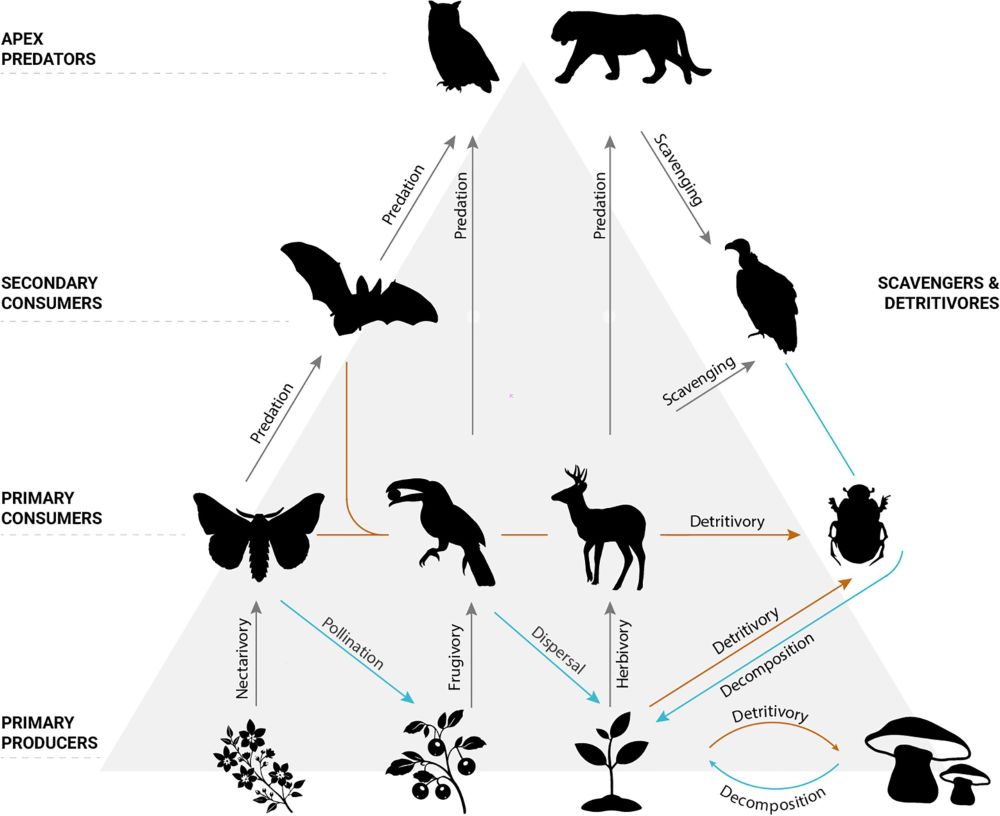
By focussing on charismatic large fauna rather than restoring ecosystem functions, there is the danger that some rewilding projects

are less about radical processed-based conservation

and instead are a reinvention of species-centric approaches
www.pnas.org/doi/10.1073/...
Biodiversity conservation requires integration of species-centric and process-based strategies | PNAS
Conservation science and policy are geared primarily toward the preservation of species and habitats, with priority often given to the rarest, most...
www.pnas.org

Reposted by Olivier Honnay

New paper out in Ecology Letters! Led by Ennia Bosshard and Chris Kaiser-Bunbury, we show that proximity to natural habitat doesn’t consistently support pollination in tropical smallholder farms. Landscape complexity matters more than distance.

onlinelibrary.wiley.com/doi/10.1111/...
Proximity to Natural Habitat Is Not Consistently Associated With Pollination Services in Tropical Smallholder Farms: A Systematic Review and Meta‐Analysis
We conducted a systematic review and meta-analysis of 35 studies to examine the relationship between distance to natural habitat and pollinator abundance, species richness and crop fruit set in tropi....
onlinelibrary.wiley.com

Reposted by Olivier Honnay

The obvious economics of preserving the Amazon
www.economist.com/the-americas...
From The Economist
The obvious economics of preserving the Amazon
It provides Brazil’s world-beating farmers with water, and keeps carbon locked up for the rest of us
www.economist.com

Ik ben alvast niet de enige zo blijkt.
archive.is

NEW: Biofuels globally emit more than the fossil fuels they replace, our latest study shows.

The first-of-a-kind study looks at global biofuels production today and the potential impacts of government biofuel targets.
🧵⤵️

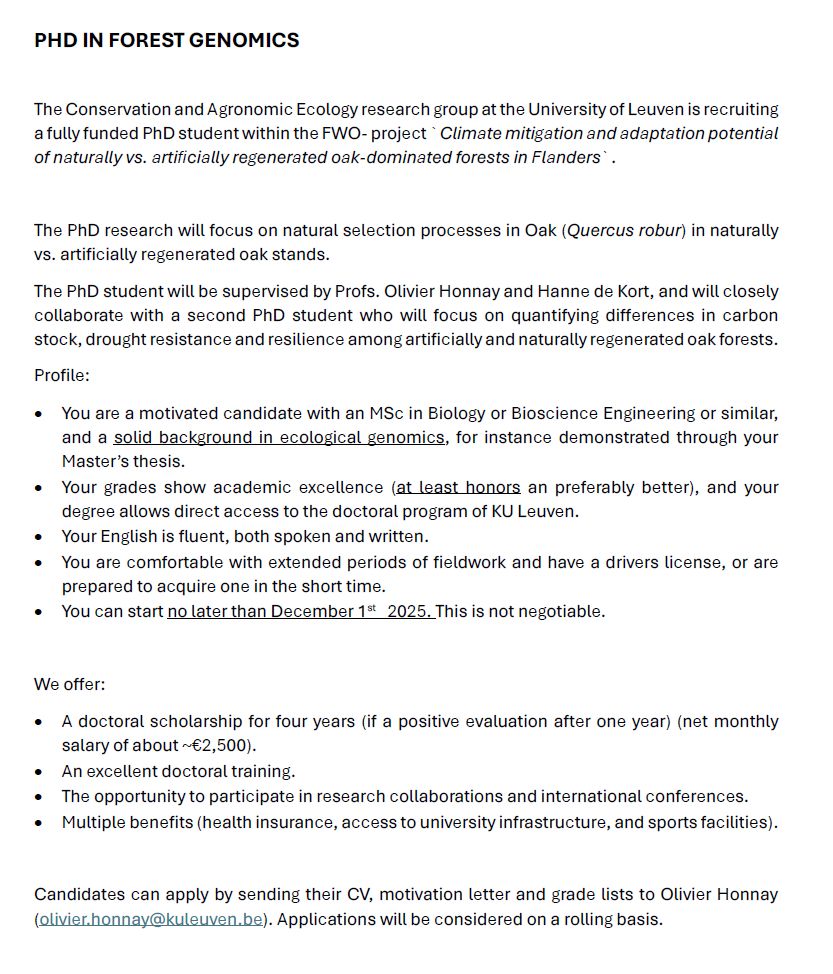
📢 Vacancy: I am urgently recruiting a PhD candidate to join a project on selection processes in pedunculate oak.
📅 Start date: no later than December 1st.

Reposted by Olivier Honnay

7/ The previous studies were observational studies, which can detect patterns, but they can’t prove causation. Confounding factors—why someone took Tylenol in the first place, genetics, other exposures—can explain apparent links. This is why the sibling study was so important.

Reposted by Olivier Honnay

Fertilizer DOES NOT burn up soil organic matter.
Long-term study finds "NP fertilization substantially augments both the quantity and stability of soil organic carbon stocks."
scienmag.com/long-term-n...
Long-Term N and P Boost Soil Carbon Storage
In the unrelenting battle against climate change, soil organic carbon (SOC) stands as a pivotal ally, intimately linking terrestrial ecosystems to global carbon cycles. Despite its vital role in climate mitigation and agroecosystem productivity, the persistent decline of SOC
scienmag.com

Reposted by Olivier Honnay

Waarom moeten we zo nodig wolven hebben in de Lage Landen? Opinie in De Standaard 3/9/25

The author must have lost his mind on this.

Just found out that ChatGPT effortlessly converts every thinkable old Flemish measure into English ones and the metric system 🙂.
1 Bruges hoet of wheat = 172 l ≈ 4.88 Winchester bushels.

Reposted by Olivier Honnay

Reposted by Olivier Honnay

Fascinating list of the scientists who have saved the most lives, via @maxroser.bsky.social at @ourworldindata.org ,

2 of the top 3 are food related:

#1 - Haber & Bosch, for synthetic nitrogen (2.3 billion)
#3 - Norman Borlaug, for high-yield crops (245 million)

Data source:
www.scienceheroes.com

Doe ik.

Reposted by Olivier Honnay

Gezocht: lector #natuurbeheer #ecologie #wetenschappen bij @odiseehogeschool.bsky.social Agro- en biotechnologie in Sint-Niklaas.
www.odisee.be/lector-agro-...

Start: het nieuwe academiejaar
Solliciteren: asap!

Diverse opdracht, 50-100% ifv invulling.

Reposted by Olivier Honnay

“We’re clear-cutting and broiling the planet to stuff our faces.” @theguardian.com did a deep dive into WE ARE EATING THE EARTH!

www.theguardian.com/environment/...
Why our broken food system remains a climate disaster: ‘broiling the planet to stuff our faces’
Author Michael Grunwald reckons with the challenge of food-based climate emissions in his new book We Are Eating the Earth
www.theguardian.com

Reposted by Olivier Honnay

@hannahritchie.bsky.social explains why increasing agricultural productivity across Sub-Saharan Africa is one of the world’s most pressing problems: ourworldindata.org/africa-yield...
Increasing agricultural productivity across Sub-Saharan Africa is one of the most important problems this century
Agricultural productivity across Sub-Saharan Africa needs to improve to reduce hunger, poverty, and the destruction of biodiversity.
ourworldindata.org

Reposted by Olivier Honnay

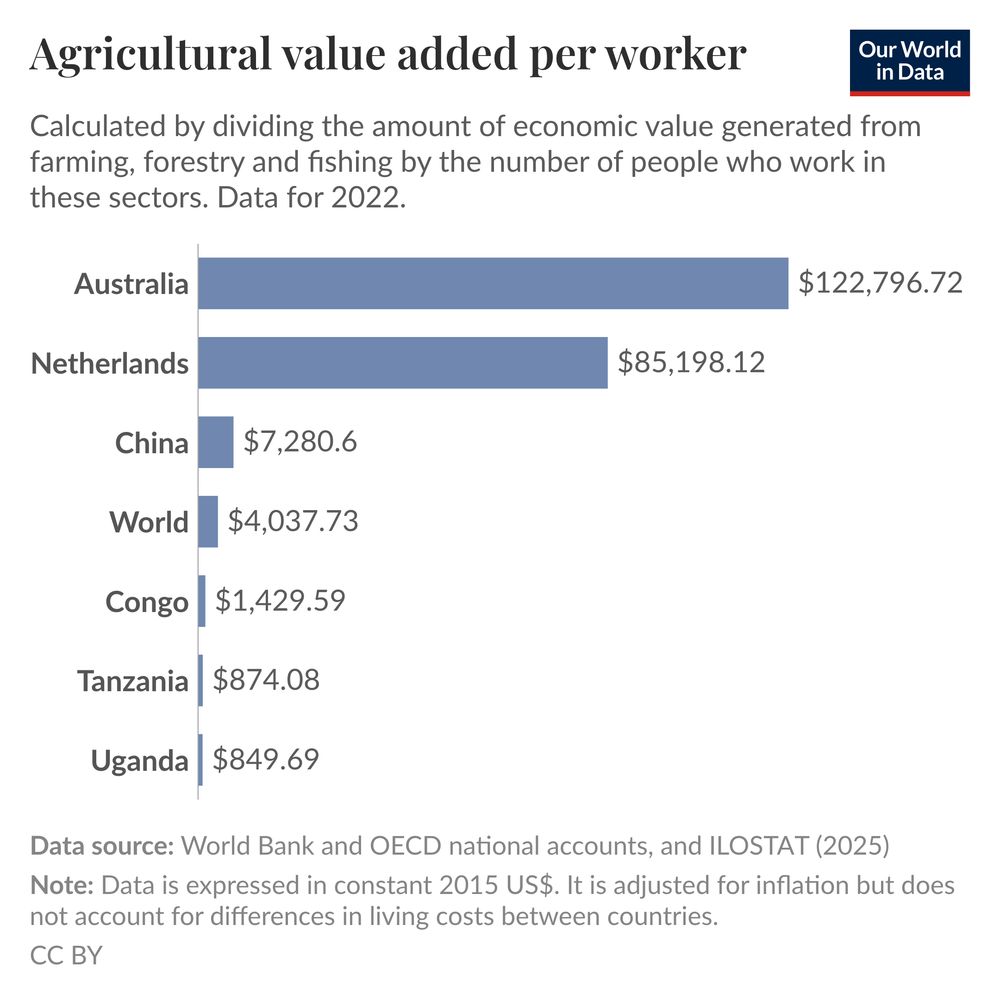
To grow food you need two things: some land and some of your time.

Land and labor are two of agriculture’s primary inputs. To build a food system that works for people and the planet, humanity needs to achieve high productivity in both of them.

Reposted by Olivier Honnay

“Probing how and why the atomic bombs were deployed against Japan has become a cottage industry all of its own.” The War Room, our defence newsletter, recommends seven of the best books about the country’s defeat in the second world war
The War Room newsletter: Seven of the best books on the Pacific war
Richard Cockett, a news editor, recommends seven books about the defeat of Japan in the second world war
econ.st
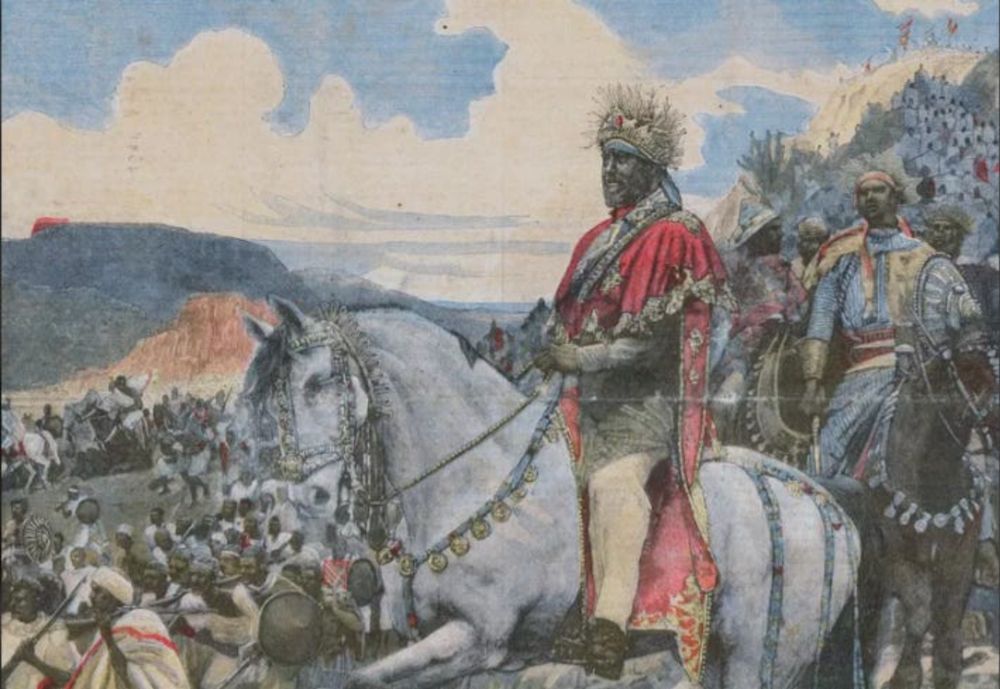
How Ethiopia avoided colonization in the late 19th century but then lagged behind in the 20th century: www.africanistperspective.com/p/how-ethiop...
How Ethiopia avoided colonization in the late 19th century but then lagged behind in the 20th century
Lessons in stateness, (failed) modernization, and economic (under)development
www.africanistperspective.com
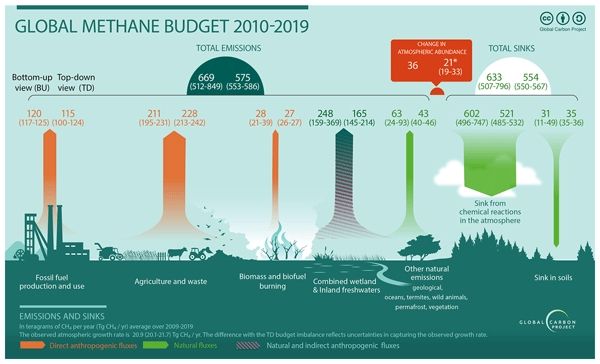
'Cows just replaced the methane from wild bison'

Not even close.

At their peak, wild ruminants incl. bison emitted ~15 Tg CH₄/yr

Today’s 4+ billion farmed ruminants emit over 100 Tg CH₄/yr

That’s nearly 7x more methane.

essd.copernicus.org/articles/17/...
Global Methane Budget 2000–2020
Abstract. Understanding and quantifying the global methane (CH4) budget is important for assessing realistic pathways to mitigate climate change. CH4 is the second most important human-influenced gree...
essd.copernicus.org