Lawrence Katz
lkatz42.bsky.social
Lawrence Katz
@lkatz42.bsky.social

Economist studying labor markets, inequality, and economics of social problems

Economics 50%
Sociology 12%

Reposted by Lawrence F. Katz

NBER @nber.org · 7d
Studying whether low-economic-mobility neighborhoods can be transformed into high-mobility areas through the HOPE VI program, which invested billions to distressed public housing developments, from Chetty, Diamond, Foster, @lkatz42.bsky.social, Porter, Staiger, and Tach www.nber.org/papers/w34720
Here's some good news for a change. One of America's most intractable problems is intergenerational poverty. Now a major new study from @harvard and @OppInsights shows one path to break these cycles of poverty: harness kids to influence kids. www.nytimes.com/2026/01/28/o...
Opinion | How to Bring Back the American Dream
www.nytimes.com

Reposted by Lawrence F. Katz

Recently accepted by #QJE: “(Not) Thinking About the Future: Financial Information and Maternal Labor Supply,” by Costa-Ramón (@anacostaramon), Slotwinski, Schaede (@ursina), and Brenøe: doi.org/10.1093/qje/...
(Not) Thinking About the Future: Financial Information and Maternal Labor Supply*
Abstract. Does information about the long-run financial costs of reduced labor supply increase mothers’ working hours? We document descriptively that long-
doi.org
Recently accepted by #QJE: “How Do You Identify a Good Manager?” by Weidmann, Vecci, Said, Bhalotra, Adhvaryu, Nyshadham, Tamayo, and Deming: doi.org/10.1093/qje/...
How Do You Identify a Good Manager?
Abstract. We introduce and validate a novel approach to identifying good managers. In a pre-registered lab experiment, we causally identify managerial cont
doi.org
Congratulations to Natalia Emanuel and Emma Harrington who were recognized for the AEJ Best Paper Award for Applied Economics at #ASSA2026 for the paper “Working Remotely? Selection, Treatment, and the Market for Remote Work.” #econsky www.aeaweb.org/articles?id=...

Reposted by Lawrence F. Katz

Recently accepted by #QJE, “Changing Opportunity: Sociological Mechanisms Underlying Growing Class Gaps and Shrinking Race Gaps in Economic Mobility,” by Chetty (@Oppinsights), Dobbie, Goldman, Porter, and Yang: doi.org/10.1093/qje/...
Changing Opportunity: Sociological Mechanisms Underlying Growing Class Gaps and Shrinking Race Gaps in Economic Mobility*
Abstract. We show that intergenerational mobility changed rapidly by race and class in recent decades in the U.S. and study the causal mechanisms underlyin
doi.org

Reposted by Lawrence F. Katz

#QJE Feb 2026, #10, “The Price of Housing in the United States, 1890–2006,” by Lyons (@ronanlyons), Shertzer (@econhist-allday), Gray (@econhistoryorbust), and Agorastos: doi.org/10.1093/qje/...
The Price of Housing in the United States, 1890–2006*
Abstract. We construct the first annual market rent and home sales price series for American cities over the twentieth century using 2.7 million newspaper
doi.org

Reposted by Lawrence F. Katz

#QJE Feb 2026, #9, “Republican Support and Economic Hardship: The Enduring Effects of the Opioid Epidemic,” by Arteaga (@caroartc.bsky.social) and Barone (@vickybarone.bsky.social): doi.org/10.1093/qje/...
Republican Support and Economic Hardship: The Enduring Effects of the Opioid Epidemic*
Abstract. In this article, we establish a causal connection between two of the most salient social developments in the United States over the past decades:
doi.org
#QJE Feb 2026, #8, “Marginal Returns to Public Universities,” by Jack Mountjoy: doi.org/10.1093/qje/...
Marginal Returns to Public Universities*
Abstract. This article studies the returns to enrolling in U.S. public universities by comparing the long-term outcomes of barely admitted versus barely re
doi.org

Reposted by Lawrence F. Katz

#QJE Feb 2026, #7, “Who’s Afraid of the Minimum Wage? Measuring the Impacts on Independent Businesses Using Matched U.S. Tax Returns,” by Rao (@nirupama.bsky.social) and Risch: doi.org/10.1093/qje/...
Who’s Afraid of the Minimum Wage? Measuring the Impacts on Independent Businesses Using Matched U.S. Tax Returns*
Abstract. A common concern surrounding minimum wage policies is their impact on independent businesses, which are often feared to be less able to bear or p
doi.org

Reposted by Lawrence F. Katz

#QJE Feb 2026, #6, “Bargaining and Inequality in the Labor Market,” by Caldwell (@sydneecaldwell.bsky.social), Haegele, and Heining: doi.org/10.1093/qje/...
Bargaining and Inequality in the Labor Market*
Abstract. We use novel surveys of firms and workers, linked to administrative employer-employee data, to study the prevalence and importance of individual
doi.org

Reposted by Lawrence F. Katz

#QJE Feb 2026, #4, “Traditional Institutions in Modern Times: Dowries as Pensions When Sons Migrate,” by Bau, Khanna, Low, and Voena: doi.org/10.1093/qje/...
Traditional Institutions in Modern Times: Dowries as Pensions When Sons Migrate*
Abstract. This paper uses newly collected data on the allocation of dowry to examine its role in resolving intergenerational frictions around migration in
doi.org
#QJE Feb 2026, #2, “Diversifying Society’s Leaders? The Determinants and Causal Effects of Admission to Highly Selective Private Colleges,” by Chetty (@Oppinsights), Deming, and Friedman: doi.org/10.1093/qje/...
Diversifying Society’s Leaders? The Determinants and Causal Effects of Admission to Highly Selective Private Colleges*
Abstract. We use anonymized admissions data from several colleges linked to income tax records and SAT and ACT test scores to study the determinants and ca
doi.org
#QJE Feb 2026, #1, “Digital Distractions with Peer Influence: The Impact of Mobile App Usage on Academic and Labor Market Outcomes,” by Barwick, Chen, Fu, and Li: doi.org/10.1093/qje/...
Digital Distractions with Peer Influence: The Impact of Mobile App Usage on Academic and Labor Market Outcomes*
Abstract. Concerns about excessive mobile phone use among youth are mounting. We present estimates of behavioral and contextual peer effects, along with co
doi.org

Reposted by Lawrence F. Katz

Recently accepted by #QJE, “Republican Support and Economic Hardship: The Enduring Effects of the Opioid Epidemic,” by Arteaga (@caroartc.bsky.social) and Barone (@vickybarone.bsky.social): doi.org/10.1093/qje/...
Republican Support and Economic Hardship: The Enduring Effects Of the Opioid Epidemic
Abstract. In this paper, we establish a causal connection between two of the most salient social developments in the United States over the past decades: t
doi.org

Reposted by Lawrence F. Katz

Recently accepted by #QJE, “Bargaining and Inequality in the Labor Market,” by Caldwell (@sydneecaldwell.bsky.social), Haegele, and Heining: doi.org/10.1093/qje/...
Bargaining and Inequality in The Labor Market*
Abstract. We use novel surveys of firms and workers, linked to administrative employer-employee data, to study the prevalence and importance of individual
doi.org
Recently accepted by #QJE, “Diversifying Society’s Leaders? The Determinants and Causal Effects of Admission to Highly Selective Private Colleges,” by Chetty (@Oppinsights), Deming, and Friedman: doi.org/10.1093/qje/...
Diversifying Society’s Leaders? The Determinants and Causal Effects of Admission to Highly Selective Private Colleges*
Abstract. We use anonymized admissions data from several colleges linked to income tax records and SAT and ACT test scores to study the determinants and ca
doi.org
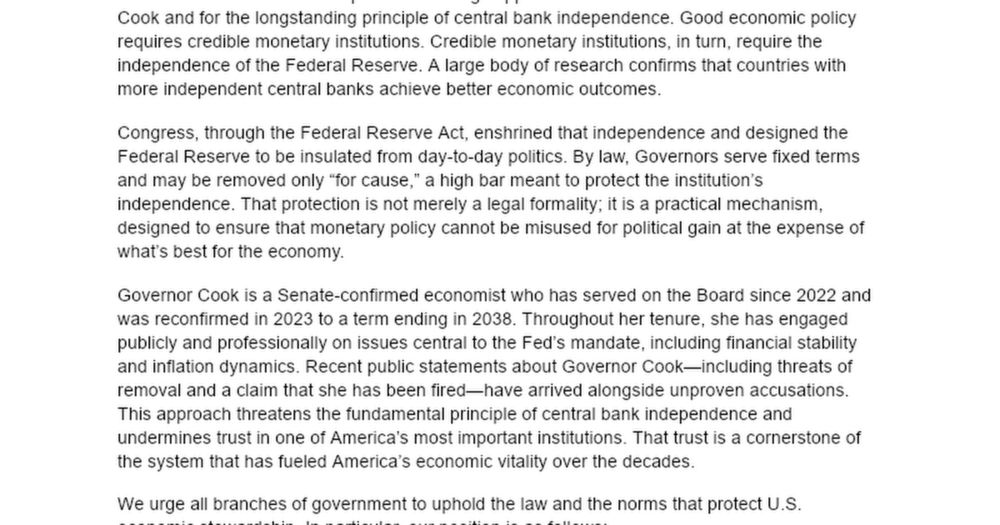
Over 125 economists signed the open letter calling on the President, Congress, and the American public to uphold the principles of Federal Reserve independence and not remove Lisa Cook without due process.

There's still time to sign! And please share.

#EconSky

docs.google.com/document/d/1...
Open letter
Click here to add your signature. An Open Letter from Economists in Support of Governor Lisa Cook and Federal Reserve Independence To the President, Members of Congress, and the American public: We wr...
docs.google.com
Insightful and important analysis of the returns and costs of tax audits across the income distribution by Boning, Hendren, and Sprung-Keyser (@bsprungkeyser.bsky.social) now in the QJE (@qjeharvard.bsky.social)

Reposted by Lawrence F. Katz

Recently accepted by #QJE, “The Effects of Medical Debt Relief: Evidence from Two Randomized Experiments,” by Kluender, Mahoney (@nealemahoney.bsky.social), Wong (@francisawong.bsky.social), and Yin: doi.org/10.1093/qje/...
The Effects of Medical Debt Relief: Evidence from Two Randomized Experiments*
Abstract. Two in five Americans have medical debt, nearly half of whom owe at least $2,500. Concerned by this burden, governments and private donors have u
doi.org
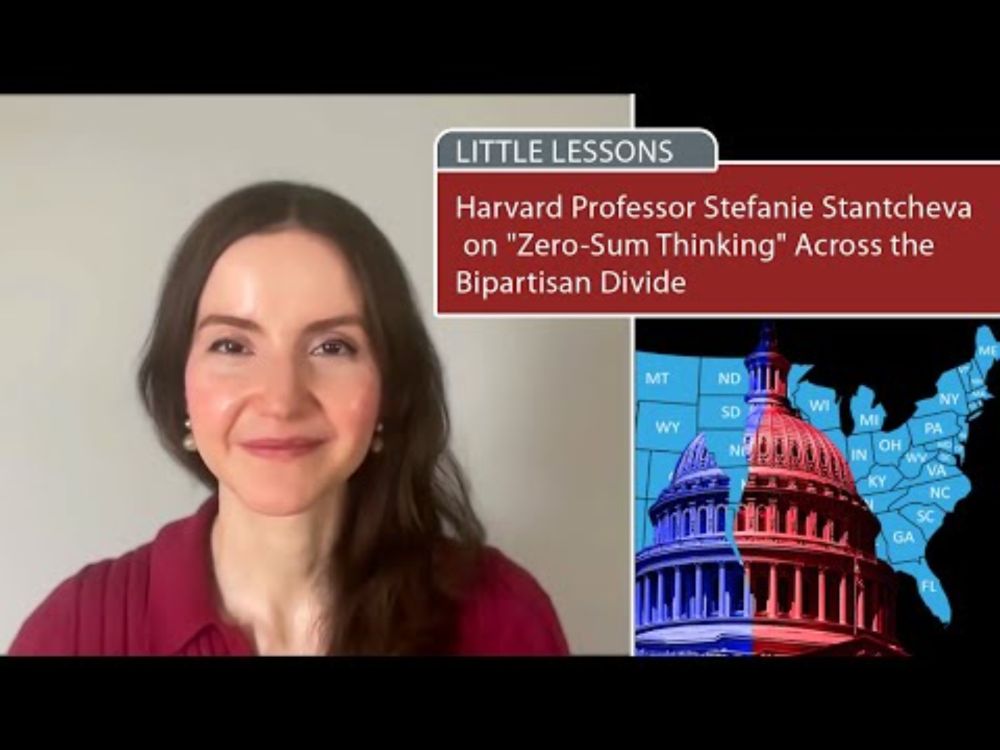
The zero-sum mindset seems more and more relevant in the current environment. Thank you @harvardmagazine.bsky.social
for the video where I explain our research on why zero-sum thinking is so important and where it comes from.
www.youtube.com/watch?v=e16o...
Harvard Professor Stefanie Stantcheva on Zero-Sum Political Thinking
YouTube video by Harvard Magazine
www.youtube.com

Reposted by Lawrence F. Katz

Recently accepted by #QJE, “‘Descended from Immigrants and Revolutionists:’ How Family History Shapes Immigration Policymaking,” by Feigenbaum (@jamesfeigenbaum.bsky.social), Palmer (@maxwellpalmer.com), and Schneer: doi.org/10.1093/qje/...
“Descended from Immigrants and Revolutionists:” How Family History Shapes Immigration Policymaking*
Abstract. Does family history matter for policymaking in democracies? Linking members of Congress to the census, we observe countries of birth for members,
doi.org

Reposted by Lawrence F. Katz

I had a lot of fun talking to @jenniferdoleac.bsky.social on her Probable Causation podcast about the IGNITE program: an innovative jail-based rehabilitative program in Flint, Michigan

www.probablecausation.com/podcasts/epi...
Episode 113: Peter Hull — Probable Causation
Date: March 11, 2025
www.probablecausation.com

Reposted by Lawrence F. Katz

Recently accepted by #QJE, “Voluntary Minimum Wages: The Local Labor Market Effects of National Retailer Policies,” by Derenoncourt and Weil: doi.org/10.1093/qje/...
Voluntary Minimum Wages: The Local Labor Market Effects of National Retailer Policies*
Abstract. Low unionization rates, a falling real federal minimum wage, and outsourcing have hampered wage growth in the low-wage sector in the US for sever
doi.org

Reposted by Lawrence F. Katz

Recently accepted by #QJE, “Micro MPCs and Macro Counterfactuals: The Case of the 2008 Rebates,” by Orchard (@jakeorchard.bsky.social), Ramey, and Wieland: doi.org/10.1093/qje/...
Micro MPCs and Macro Counterfactuals: The Case of the 2008 Rebates*
Abstract. We present evidence that the high estimated MPCs from the leading household studies result in implausible macroeconomic counterfactuals. Using th
doi.org
I wrote a short blog post about the tragedy currently unfolding in the evaluation industry. Trump is destroying vital research capacity and decades of instructional knowledge for pocket change. 1/x

rooseveltinstitute.org/blog/the-irr...
The Irreparable Damage Being Done to Federal Policy Research and Evaluation - Roosevelt Institute
Though their goals obviously differed, Republican and Democratic administrations have for decades relied on the work of social scientists both within and outside the government to conduct research on ...
rooseveltinstitute.org

Reposted by Lawrence F. Katz

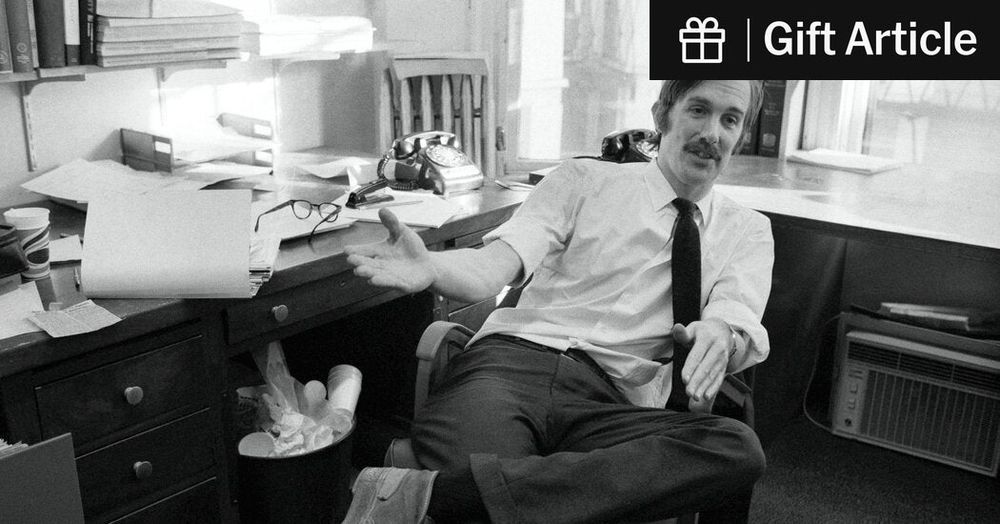
Sandy Jencks shaped my career. His writing drew me into the Social Sciences as an undergrad. I then had the privilege to learn from him as a PhD student, and he served on my committee. A true scholar and role model I still aspire to. www.nytimes.com/2025/02/12/b...
Christopher Jencks, a Shaper of Views on Economic Inequality, Dies at 88 (Gift Article)
His clear prose, illuminating data and novel arguments helped transform debates around issues like public education and welfare reform.
www.nytimes.com
Truly one of the greats. He gave us the words and the permission to study inequality in a way that has shifted so many careers and in turn impacted so many lives.

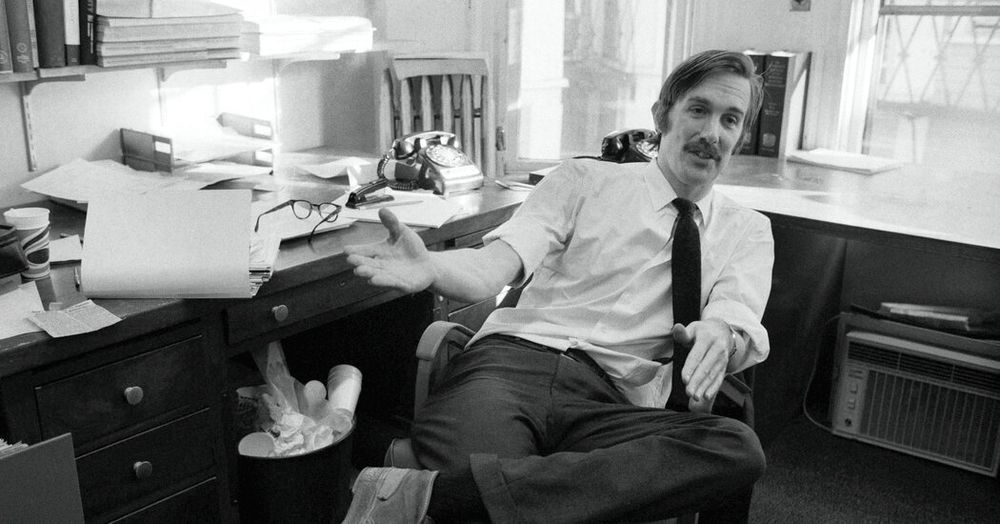
Christopher Jencks, a Shaper of Views on Economic Inequality, Dies at 88 www.nytimes.com/2025/02/12/b...
Christopher Jencks, a Shaper of Views on Economic Inequality, Dies at 88
His clear prose, illuminating data and novel arguments helped transform debates around issues like public education and welfare reform.
www.nytimes.com

Reposted by Lawrence F. Katz

On the loss of a model of intellectual integrity and courage—Christopher Jencks. He showed us how to wade into troubled waters and come out the stronger for it.
@theprospect.bsky.social prospect.org/health/2025-...
The Exemplary Radical Skeptic
Christopher Jencks, one of the Prospect’s founding group, has died.
prospect.org