


CBX7 positively regulates cytokine expression by recruiting transcriptional activators and enhancing ERK1/2 activation in T cells
www.science.org/doi/10.1126/...
www.science.org/doi/10.1126/...

February 13, 2026 at 11:47 PM
CBX7 positively regulates cytokine expression by recruiting transcriptional activators and enhancing ERK1/2 activation in T cells
www.science.org/doi/10.1126/...
www.science.org/doi/10.1126/...
Ever notice that when one gene is disrupted, its orthologs get upregulated? This phenomenon, known as transcriptional adaptation, has been controversial and mysterious - glad to see that we are starting to learn how it works.

Mechanisms linking cytoplasmic decay of translation-defective mRNA to transcriptional adaptation
Transcriptional adaptation (TA) is a genetic robustness mechanism through which mutant messenger RNA (mRNA) decay induces sequence-dependent up-regulation of so-called adapting genes. How cytoplasmica...
www.science.org
February 13, 2026 at 9:42 PM
Ever notice that when one gene is disrupted, its orthologs get upregulated? This phenomenon, known as transcriptional adaptation, has been controversial and mysterious - glad to see that we are starting to learn how it works.

Distinct transcriptional and epigenomic programs define Hofbauer cells in term placenta

February 13, 2026 at 9:01 PM
Distinct transcriptional and epigenomic programs define Hofbauer cells in term placenta
Check out my new paper on how cohesin loading shapes long-range transcriptional regulation!
Interested in transcriptional regulation, enhancers and 3D genome folding?
In this new study we wondered about the role of cohesin loading at enhancers for long-range transcriptional control
www.biorxiv.org/content/10.6...
detailed 🧵👇
In this new study we wondered about the role of cohesin loading at enhancers for long-range transcriptional control
www.biorxiv.org/content/10.6...
detailed 🧵👇
www.biorxiv.org
February 13, 2026 at 7:10 PM
Check out my new paper on how cohesin loading shapes long-range transcriptional regulation!

Mucormycosis
Review in @nejm.org by Dimitrios Kontoyiannis and Tom Walsh
www.nejm.org/doi/10.1056/...
#IDSky #TxID #MedMycoSky @msgerc.bsky.social
Review in @nejm.org by Dimitrios Kontoyiannis and Tom Walsh
www.nejm.org/doi/10.1056/...
#IDSky #TxID #MedMycoSky @msgerc.bsky.social


February 13, 2026 at 6:40 PM
Mucormycosis
Review in @nejm.org by Dimitrios Kontoyiannis and Tom Walsh
www.nejm.org/doi/10.1056/...
#IDSky #TxID #MedMycoSky @msgerc.bsky.social
Review in @nejm.org by Dimitrios Kontoyiannis and Tom Walsh
www.nejm.org/doi/10.1056/...
#IDSky #TxID #MedMycoSky @msgerc.bsky.social
Screen of 300 chromatin regulator proteins from the Nuñez lab at UC-Berkeley @jamesknunez.bsky.social www.nunezlab.org enables universal programmable transcriptional engineering in nearly any eukaryotic cell!
www.biorxiv.org/content/10.6...
www.biorxiv.org/content/10.6...

February 13, 2026 at 4:19 PM
Screen of 300 chromatin regulator proteins from the Nuñez lab at UC-Berkeley @jamesknunez.bsky.social www.nunezlab.org enables universal programmable transcriptional engineering in nearly any eukaryotic cell!
www.biorxiv.org/content/10.6...
www.biorxiv.org/content/10.6...

Online now: Decode and rewire: programming Komagataella phaffii for bioproduction with synthetic transcriptional tools

Decode and rewire: programming Komagataella phaffii for bioproduction with synthetic transcriptional tools
The yeast Komagataella phaffii is a leading producer of secreted therapeutic and industrial proteins. Its excellent traits make it a primary host for the production of value-added carbon compounds, including native metabolites, heterologous biomolecules, and synthetic chemicals. Recent breakthrough discoveries in engineering synthetic promoters have set the stage for novel bioprocesses that utilize sustainable carbon sources through directed evolution methods, ushering in a new era in bioindustry. This review discusses how engineering-directed transcriptional machinery element (TME) interaction-driven methodologies can unlock latent potential to rewire expression for the directed evolution of metabolic functions. We highlight discoveries in the design of transcriptional switches and metabolic switches, the reverse-engineering TME interaction via synthetic transcription factors, forcing K. phaffii for directed evolution.
dlvr.it
February 13, 2026 at 4:14 PM
Online now: Decode and rewire: programming Komagataella phaffii for bioproduction with synthetic transcriptional tools

🧪 Very happy to have our story out in Journal of Biological Rhythms! In collaboration with Lab of Kevin Koronowski (UTHSA), we show that the liver clock regulates 24h transcriptional rhythms in skeletal muscle via serum-based signalling. pubmed.ncbi.nlm.nih.gov/41486525/. Thanks to all authors! 🙏

February 13, 2026 at 1:20 PM
🧪 Very happy to have our story out in Journal of Biological Rhythms! In collaboration with Lab of Kevin Koronowski (UTHSA), we show that the liver clock regulates 24h transcriptional rhythms in skeletal muscle via serum-based signalling. pubmed.ncbi.nlm.nih.gov/41486525/. Thanks to all authors! 🙏
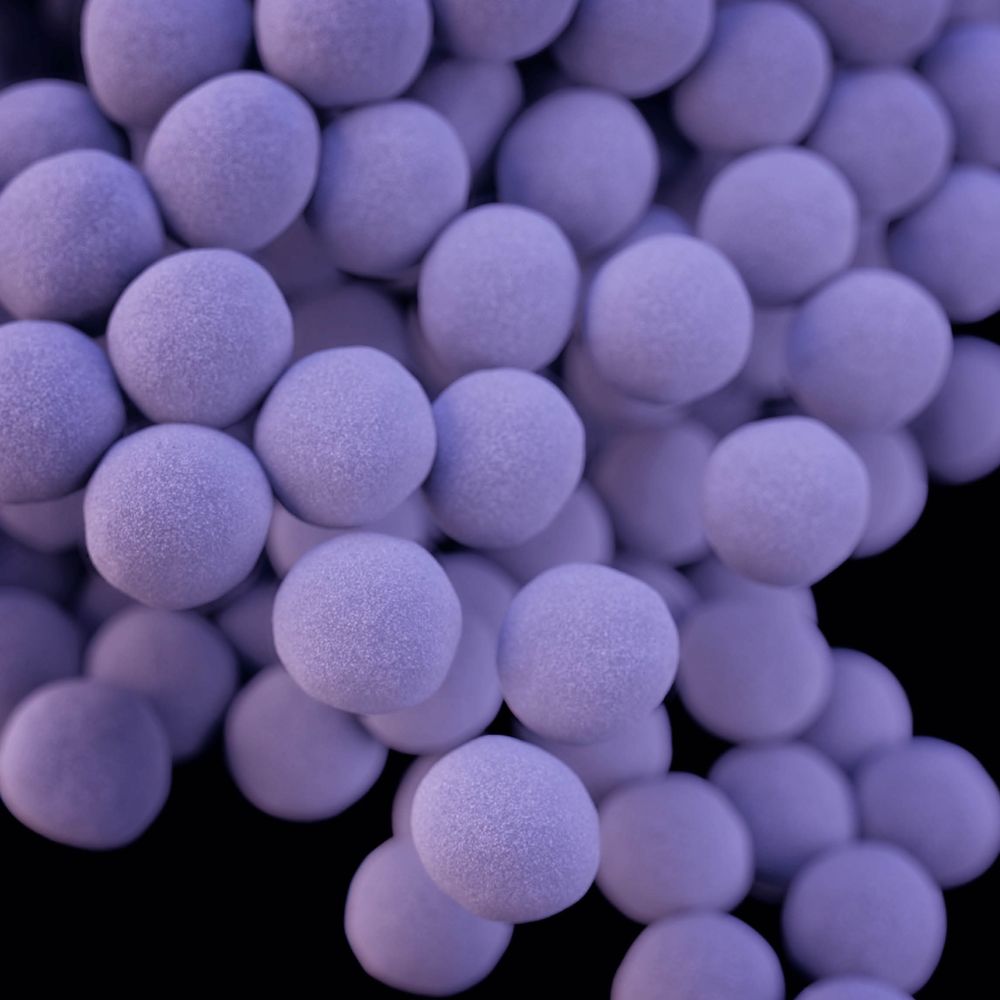
Transcriptional Reprogramming of Staphylococcus aureus in Chronic Rhinosinusitis Reveals a Persistence-Associated Phenotype

Transcriptional Reprogramming of Staphylococcus aureus in Chronic Rhinosinusitis Reveals a Persistence-Associated Phenotype - PubMed
Chronic rhinosinusitis (CRS) is a persistent inflammatory condition frequently associated with <i>Staphylococcus aureus</i>. The bacterium's ability to evade immune clearance and establish long-term infection...
t.co
February 13, 2026 at 12:34 PM
Transcriptional Reprogramming of Staphylococcus aureus in Chronic Rhinosinusitis Reveals a Persistence-Associated Phenotype

STRAND predicts single-cell transcriptional responses
to genetic perturbations by conditioning on
regulatory DNA sequences. This expands genomic
coverage from 1.5% to 95% and reveals distinct
effects from perturbations within the same gene. https://arxiv.org/abs/2602.10156
to genetic perturbations by conditioning on
regulatory DNA sequences. This expands genomic
coverage from 1.5% to 95% and reveals distinct
effects from perturbations within the same gene. https://arxiv.org/abs/2602.10156

STRAND: Sequence-Conditioned Transport for Single-Cell Perturbations
ArXiv link for STRAND: Sequence-Conditioned Transport for Single-Cell Perturbations
arxiv.org
February 13, 2026 at 4:41 AM
STRAND predicts single-cell transcriptional responses
to genetic perturbations by conditioning on
regulatory DNA sequences. This expands genomic
coverage from 1.5% to 95% and reveals distinct
effects from perturbations within the same gene. https://arxiv.org/abs/2602.10156
to genetic perturbations by conditioning on
regulatory DNA sequences. This expands genomic
coverage from 1.5% to 95% and reveals distinct
effects from perturbations within the same gene. https://arxiv.org/abs/2602.10156

Our genetic interaction analyses further suggest a link between lol and chromatin-mediated transcriptional regulation.(Sachi Inagaki)
February 13, 2026 at 1:48 AM
Our genetic interaction analyses further suggest a link between lol and chromatin-mediated transcriptional regulation.(Sachi Inagaki)

Our findings highlight how transcriptional repression, chromatin remodeling, and histone methylation reprogramming synergize to prevent somatic tissues from adopting germline-like transcriptional states.
February 12, 2026 at 11:31 PM
Our findings highlight how transcriptional repression, chromatin remodeling, and histone methylation reprogramming synergize to prevent somatic tissues from adopting germline-like transcriptional states.
In this study....drum roll🥁! 🔹 We found that compromising either the DREAM transcriptional repressor complex or the MEC NuRD chromatin remodeling/HDAC complex exacerbates the developmental delay and ectopic germline gene expression observed in spr 5; met 2 mutants.
February 12, 2026 at 11:31 PM
In this study....drum roll🥁! 🔹 We found that compromising either the DREAM transcriptional repressor complex or the MEC NuRD chromatin remodeling/HDAC complex exacerbates the developmental delay and ectopic germline gene expression observed in spr 5; met 2 mutants.

Our observations are in agreement with recent studies from the @drummondlab.bsky.social and Karsten Weis's labs , where they showed that stress-induced transcripts escape translation repression and condensate association, largely due to transcriptional timing. www.cell.com/molecular-ce...

Transcriptome-wide mRNP condensation precedes stress granule formation and excludes new mRNAs
Glauninger, Bard, Wong Hickernell, et al. reveal that stress causes transcriptome-wide
mRNP condensation, largely independent of length and often without stress granule
formation, but newly synthesize...
www.cell.com
February 12, 2026 at 10:33 PM
Our observations are in agreement with recent studies from the @drummondlab.bsky.social and Karsten Weis's labs , where they showed that stress-induced transcripts escape translation repression and condensate association, largely due to transcriptional timing. www.cell.com/molecular-ce...
By deleting the RNA Pol II CTD Ser2 kinase, Ctk1/, we show an almost-complete rescue of heat-induced mRNA condensation and translation, suggesting that co-transcriptional mRNP regulation could be driving abnormal nuclear condensation in the absence of Nup42.

February 12, 2026 at 10:33 PM
By deleting the RNA Pol II CTD Ser2 kinase, Ctk1/, we show an almost-complete rescue of heat-induced mRNA condensation and translation, suggesting that co-transcriptional mRNP regulation could be driving abnormal nuclear condensation in the absence of Nup42.
What drives the abnormal heat-induced mRNP condensation in the absence of Nup42? To investigate that, we conducted FRep-Seq in NUP42 knockout cells to identify genetic interactions that could alleviate this phenotype. Surprisingly, we found factors involved in co-transcriptional mRNP compaction.

February 12, 2026 at 10:33 PM
What drives the abnormal heat-induced mRNP condensation in the absence of Nup42? To investigate that, we conducted FRep-Seq in NUP42 knockout cells to identify genetic interactions that could alleviate this phenotype. Surprisingly, we found factors involved in co-transcriptional mRNP compaction.
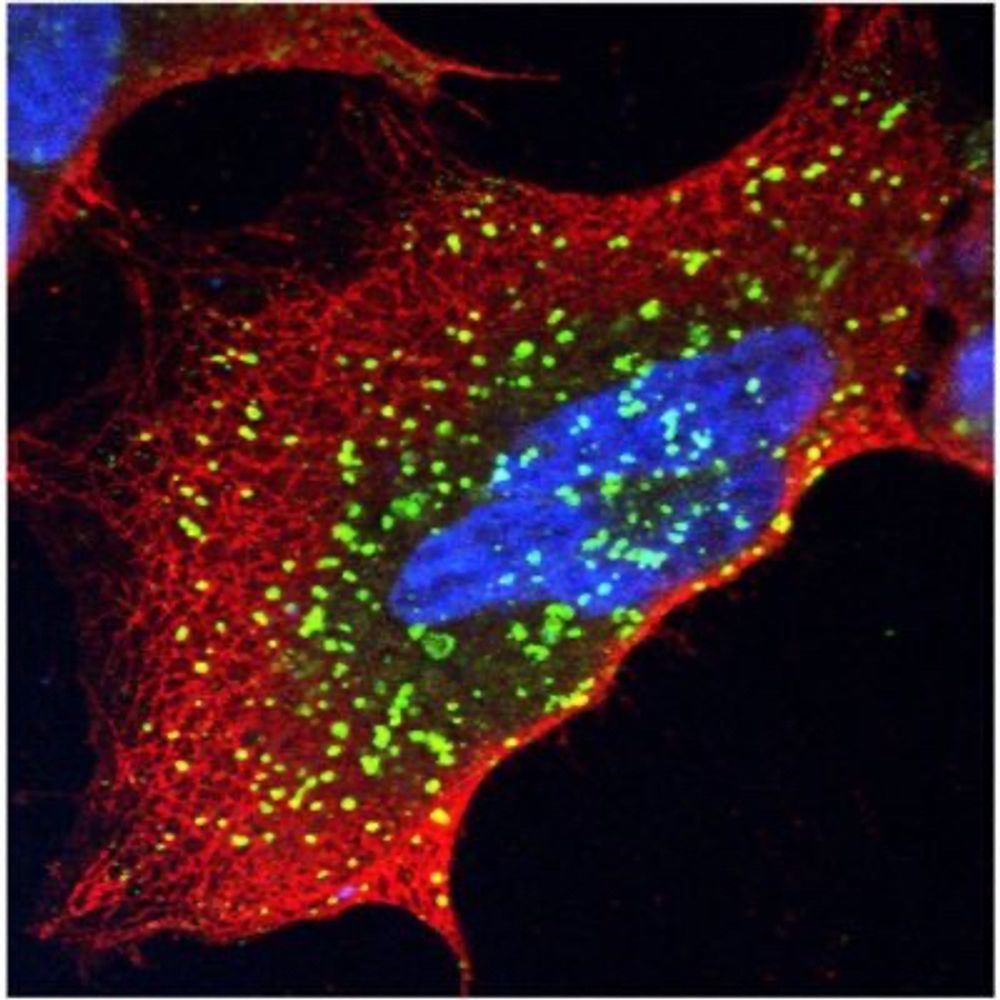
Mechanisms linking cytoplasmic decay of translation-defective mRNA to transcriptional adaptation | Science www.science.org/doi/10.1126/...

Mechanisms linking cytoplasmic decay of translation-defective mRNA to transcriptional adaptation
Transcriptional adaptation (TA) is a genetic robustness mechanism through which mutant messenger RNA (mRNA) decay induces sequence-dependent up-regulation of so-called adapting genes. How cytoplasmica...
www.science.org
February 12, 2026 at 10:08 PM
Mechanisms linking cytoplasmic decay of translation-defective mRNA to transcriptional adaptation | Science www.science.org/doi/10.1126/...
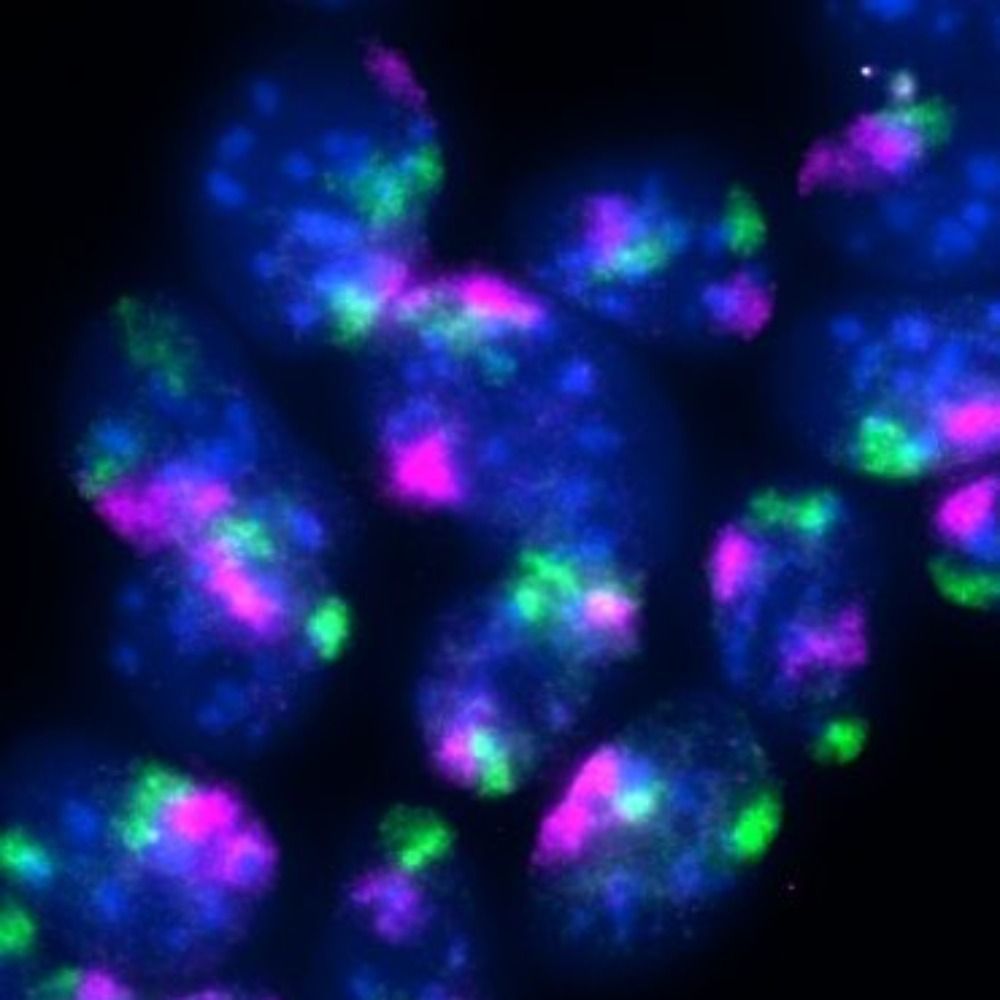
5/ Targeted vs. uniform loading models have VERY different implications for how we think about transcriptional regulation and enhancer functions.
So, what is happening in cells?
So, what is happening in cells?
February 12, 2026 at 9:41 PM
5/ Targeted vs. uniform loading models have VERY different implications for how we think about transcriptional regulation and enhancer functions.
So, what is happening in cells?
So, what is happening in cells?
3/ This would mean that enhancers have some autonomy in setting up the DNA loops that support their role in long-range transcriptional regulation 💪

February 12, 2026 at 9:39 PM
3/ This would mean that enhancers have some autonomy in setting up the DNA loops that support their role in long-range transcriptional regulation 💪
Interested in transcriptional regulation, enhancers and 3D genome folding?
In this new study we wondered about the role of cohesin loading at enhancers for long-range transcriptional control
www.biorxiv.org/content/10.6...
detailed 🧵👇
In this new study we wondered about the role of cohesin loading at enhancers for long-range transcriptional control
www.biorxiv.org/content/10.6...
detailed 🧵👇
www.biorxiv.org
February 12, 2026 at 9:39 PM
Interested in transcriptional regulation, enhancers and 3D genome folding?
In this new study we wondered about the role of cohesin loading at enhancers for long-range transcriptional control
www.biorxiv.org/content/10.6...
detailed 🧵👇
In this new study we wondered about the role of cohesin loading at enhancers for long-range transcriptional control
www.biorxiv.org/content/10.6...
detailed 🧵👇

Mechanisms linking cytoplasmic decay of translation-defective mRNA to transcriptional adaptation
Mechanisms linking cytoplasmic decay of translation-defective mRNA to transcriptional adaptation
Science, Volume 391, Issue 6786 , February 2026.
www.science.org
February 12, 2026 at 9:33 PM
Mechanisms linking cytoplasmic decay of translation-defective mRNA to transcriptional adaptation

New from IGI's @jamesknunez.bsky.social and Patrick Shih -- a preprint showing that many transcriptional regulators from plants are active if put in human cells and vice versa, with exciting implications for biotech. Read here: www.biorxiv.org/content/10.6...
www.biorxiv.org
February 12, 2026 at 8:33 PM
New from IGI's @jamesknunez.bsky.social and Patrick Shih -- a preprint showing that many transcriptional regulators from plants are active if put in human cells and vice versa, with exciting implications for biotech. Read here: www.biorxiv.org/content/10.6...
Mechanisms linking cytoplasmic decay of translation-defective mRNA to transcriptional adaptation | Science

Mechanisms linking cytoplasmic decay of translation-defective mRNA to transcriptional adaptation | Science
Transcriptional adaptation (TA) is a genetic robustness mechanism through which mutant messenger RNA (mRNA) decay induces sequence-dependent up-regulation of so-called adapting genes. How cytoplasmically generated mRNA fragments affect nuclear ...
www.science.org
February 12, 2026 at 7:51 PM
Mechanisms linking cytoplasmic decay of translation-defective mRNA to transcriptional adaptation | Science

Mechanisms linking cytoplasmic decay of translation-defective mRNA to transcriptional adaptation | Science www.science.org/doi/10.1126/...

Mechanisms linking cytoplasmic decay of translation-defective mRNA to transcriptional adaptation
Transcriptional adaptation (TA) is a genetic robustness mechanism through which mutant messenger RNA (mRNA) decay induces sequence-dependent up-regulation of so-called adapting genes. How cytoplasmica...
www.science.org
February 12, 2026 at 7:18 PM
Mechanisms linking cytoplasmic decay of translation-defective mRNA to transcriptional adaptation | Science www.science.org/doi/10.1126/...