


Sourav Ghosh
@souravsgw.bsky.social
Ph.D. Student at the Department of Bioscience and Bioengineering
@BsbeIitb, IIT-Bombay. Working on Host-pathogen interaction, Cell autonomous immunity and ubiquitin biology.
@BsbeIitb, IIT-Bombay. Working on Host-pathogen interaction, Cell autonomous immunity and ubiquitin biology.
Pinned
Sourav Ghosh
@souravsgw.bsky.social
· Apr 12
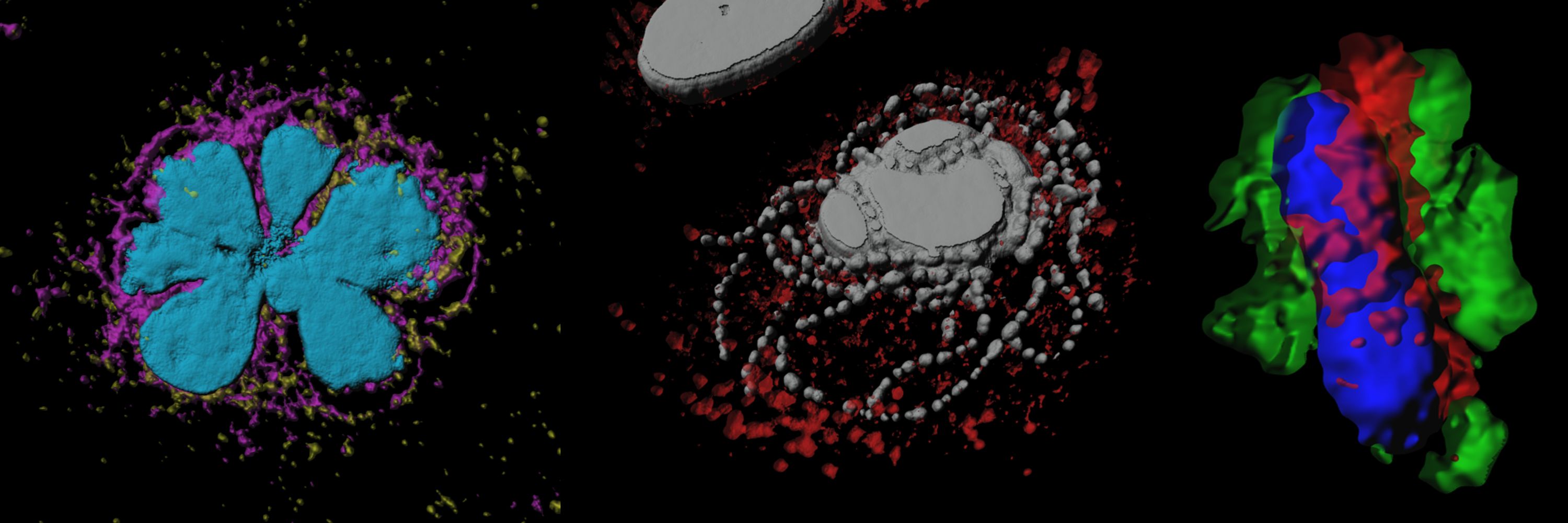
🚨“Ripping bacteria to shreds” 🚨 VCP/p97, a cellular AAA-ATPase, targets and then using its tweezer like action rips apart bacteria, protecting us from infections. A thread 🦠💥#MolecularMachines #HostDefense #cellularimmunity #microbiology
@natmicrobiol.nature.com
www.nature.com/articles/s41...
@natmicrobiol.nature.com
www.nature.com/articles/s41...

Happy to share my Ph.D work!!
Our latest paper shows VCP/p97 uses its tweezer-like action to tear invading bacteria apart — a powerful cellular defense! 🦠
@natmicrobiol.nature.com
@BsbeIitb @iitbombay @CSIR
This was years of hard work! Thanks all🙌
#microbiology #cellautonomous #immunity #ubiquitin
Our latest paper shows VCP/p97 uses its tweezer-like action to tear invading bacteria apart — a powerful cellular defense! 🦠
@natmicrobiol.nature.com
@BsbeIitb @iitbombay @CSIR
This was years of hard work! Thanks all🙌
#microbiology #cellautonomous #immunity #ubiquitin
Reposted by Sourav Ghosh

Thanks to all who attended the 2025 Angelika Amon Young Scientist Award ceremony. The award honors exceptional graduate work done outside the US & brings winners to the KI to share their science. Congrats to Sourav Ghosh & Kotaro Tomuro on engaging talks. mit-ki.org/46zzJB5


November 7, 2025 at 8:10 PM
Thanks to all who attended the 2025 Angelika Amon Young Scientist Award ceremony. The award honors exceptional graduate work done outside the US & brings winners to the KI to share their science. Congrats to Sourav Ghosh & Kotaro Tomuro on engaging talks. mit-ki.org/46zzJB5
Reposted by Sourav Ghosh

📢A new effector-triggered immunity role for GBP1! No place for pathogens to hide now that GBP1 can detect extracellular pathogens that hijack the actin cytoskeleton. Surprise*suprise* GBP1 does this independently of LPS! 🧵
biorxiv.org/content/10.1...
biorxiv.org/content/10.1...

September 28, 2025 at 10:36 AM
📢A new effector-triggered immunity role for GBP1! No place for pathogens to hide now that GBP1 can detect extracellular pathogens that hijack the actin cytoskeleton. Surprise*suprise* GBP1 does this independently of LPS! 🧵
biorxiv.org/content/10.1...
biorxiv.org/content/10.1...
So grateful to the AIC team at Janelia! Three surreal weeks packed with months of learning, cutting-edge technology, and inspiring science. Huge thanks to Bob’s for the amazing food—it made everything even sweeter. Truly an experience of a lifetime that I’ll always cherish! 💛
#microscopy #IPALM #ExM
#microscopy #IPALM #ExM

Today we're wrapping up an iPALM visit with @anirban-banerjee.bsky.social, @souravsgw.bsky.social, and team. Wishing them safe travels home!

September 8, 2025 at 6:46 PM
So grateful to the AIC team at Janelia! Three surreal weeks packed with months of learning, cutting-edge technology, and inspiring science. Huge thanks to Bob’s for the amazing food—it made everything even sweeter. Truly an experience of a lifetime that I’ll always cherish! 💛
#microscopy #IPALM #ExM
#microscopy #IPALM #ExM
Incredibly honoured and grateful to receive the 2025 Angelika Amon Young Scientist Award! Deep thanks to my supervisor @anirban-banerjee.bsky.social, friends, lab colleagues, Department of Biosciences and Bioengineering, and @iitbombay.bsky.social for their unwavering support. Simply Lovely.
Congrats to Sourav Ghosh (@souravsgw.bsky.social) of IIT Bombay
& Kotaro Tomuro of RIKEN and The University of Tokyo - our 2025 Amon Young Scientist Award winners! They present Nov 6, 10 a.m. at the Koch Institute. MIT community & Amon Lab alumni welcome. buff.ly/nzhbwPp
& Kotaro Tomuro of RIKEN and The University of Tokyo - our 2025 Amon Young Scientist Award winners! They present Nov 6, 10 a.m. at the Koch Institute. MIT community & Amon Lab alumni welcome. buff.ly/nzhbwPp

August 30, 2025 at 4:38 PM
Incredibly honoured and grateful to receive the 2025 Angelika Amon Young Scientist Award! Deep thanks to my supervisor @anirban-banerjee.bsky.social, friends, lab colleagues, Department of Biosciences and Bioengineering, and @iitbombay.bsky.social for their unwavering support. Simply Lovely.
Reposted by Sourav Ghosh
NLRP3 inflammasomes can assemble on most organelles. A beautiful study by Hafner et al demonstrate the flexibility of organelles that can support inflammasome activation. Kudos to the authors on an intriguing study.
www.nature.com/articles/s41...
@ivahb.bsky.social @elvirab.bsky.social
www.nature.com/articles/s41...
@ivahb.bsky.social @elvirab.bsky.social
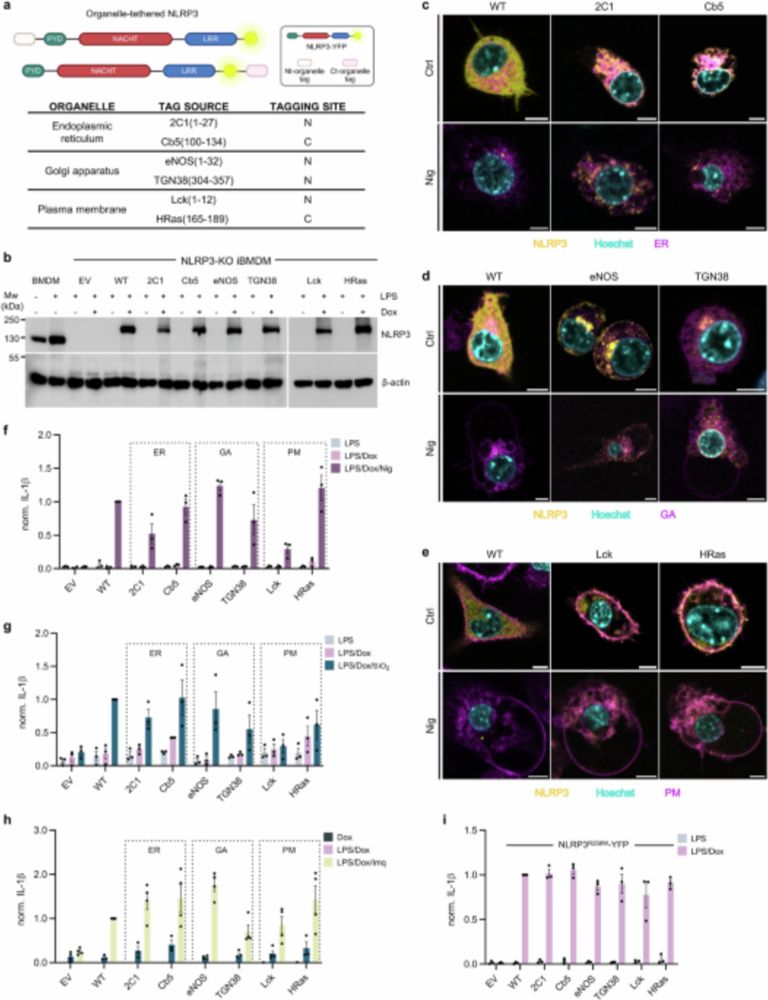
Clustering of NLRP3 induced by membrane or protein scaffolds promotes inflammasome assembly - Nature Communications
NLRP3 inflammasome activation is critical for the induction of protective immunity, but molecular insights are still lacking. Here, the authors express NLRP3 variants targeted to different cellular lo...
www.nature.com
May 27, 2025 at 1:31 PM
NLRP3 inflammasomes can assemble on most organelles. A beautiful study by Hafner et al demonstrate the flexibility of organelles that can support inflammasome activation. Kudos to the authors on an intriguing study.
www.nature.com/articles/s41...
@ivahb.bsky.social @elvirab.bsky.social
www.nature.com/articles/s41...
@ivahb.bsky.social @elvirab.bsky.social
Reposted by Sourav Ghosh
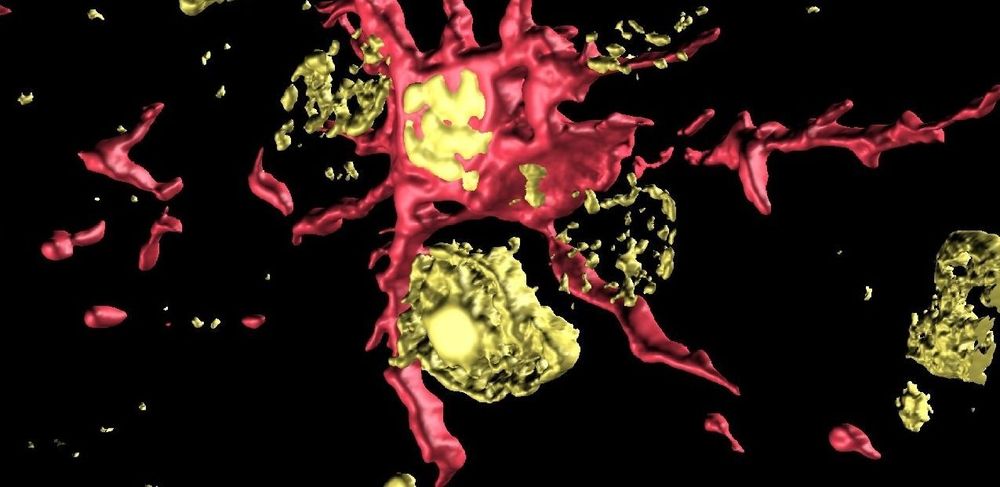
Tick Tock Neutrophil Clock
Hall Lab (Auckland) with zebrafish model find light boosts the circadian protein Per2, which enhances ROS and hmgb1a expression via a BMAL1–NF-κB enhancer
End result: Better bacterial clearance and survival—a circadian clock-gated boost for daytime innate immune function
Hall Lab (Auckland) with zebrafish model find light boosts the circadian protein Per2, which enhances ROS and hmgb1a expression via a BMAL1–NF-κB enhancer
End result: Better bacterial clearance and survival—a circadian clock-gated boost for daytime innate immune function

A light-regulated circadian timer optimizes neutrophil bactericidal activity to boost daytime immunity
The neutrophil clockwork boosts daytime immunity against bacterial infection.
www.science.org
May 24, 2025 at 5:58 AM
Tick Tock Neutrophil Clock
Hall Lab (Auckland) with zebrafish model find light boosts the circadian protein Per2, which enhances ROS and hmgb1a expression via a BMAL1–NF-κB enhancer
End result: Better bacterial clearance and survival—a circadian clock-gated boost for daytime innate immune function
Hall Lab (Auckland) with zebrafish model find light boosts the circadian protein Per2, which enhances ROS and hmgb1a expression via a BMAL1–NF-κB enhancer
End result: Better bacterial clearance and survival—a circadian clock-gated boost for daytime innate immune function
Cool insights.

Read our latest News and Views on how p97 extracts ubiquitinated proteins from bacterial membranes which ruptures and kills cytosolic intracellular bacteria
#MicroSky 🦠
www.nature.com/articles/s41...
#MicroSky 🦠
www.nature.com/articles/s41...
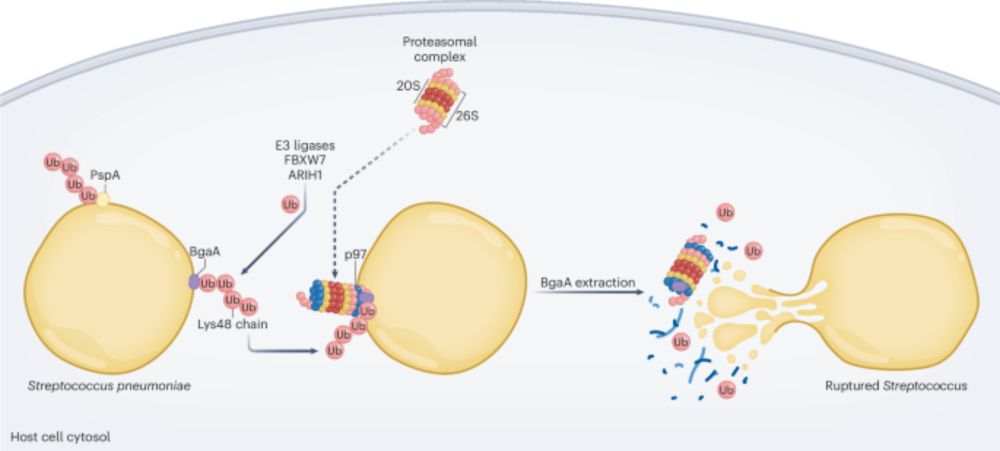
Extract to lyse bacterial pathogens - Nature Microbiology
The AAA-ATPase, p97, binds ubiquitinated bacterial surface proteins, extracting them with a mechanical force that disrupts and lyses the bacterial cell envelope. Thus, ubiquitination and proteasomal t...
www.nature.com
May 24, 2025 at 4:56 AM
Cool insights.
If you're into host-pathogen interactions and cell-autonomous immunity, this is a must-attend! Stellar speaker lineup and exciting science all around. Also, catch work from our lab being presented!"
#immunity #conference #india #embo
#immunity #conference #india #embo

Explore the latest developments, challenges and breakthroughs in the fields of #InnateImmunity, #autophagy and #CellDeath at India | EMBO Lecture Course "Cell-autonomous defense and innate immunity" in Hyderabad, India, 3–5 Dec
Deadline: 1 Aug
buff.ly/vK6Zea2
#immunity #EMBOimmunity #EMBOevents 🧪
Deadline: 1 Aug
buff.ly/vK6Zea2
#immunity #EMBOimmunity #EMBOevents 🧪
Cell-autonomous defense and innate immunity
Cell-autonomous defense encompasses the inherent mechanisms of the cell that allow individual cells to protect themselves from infectious and inflammatory dangers. Recent advancements in the field in…
buff.ly
May 20, 2025 at 10:21 AM
If you're into host-pathogen interactions and cell-autonomous immunity, this is a must-attend! Stellar speaker lineup and exciting science all around. Also, catch work from our lab being presented!"
#immunity #conference #india #embo
#immunity #conference #india #embo
Reposted by Sourav Ghosh

Haven’t shared this in a while. But the #ubiquitin and #ubl Starter Pack now includes 116 profiles to follow if you’re interested in the field: signalling, structure and biochemistry, biology, mechanisms, proteostasis, TPD, chemical biology… Check out the list and let me know if you are missing.
May 13, 2025 at 10:04 AM
Haven’t shared this in a while. But the #ubiquitin and #ubl Starter Pack now includes 116 profiles to follow if you’re interested in the field: signalling, structure and biochemistry, biology, mechanisms, proteostasis, TPD, chemical biology… Check out the list and let me know if you are missing.
Reposted by Sourav Ghosh
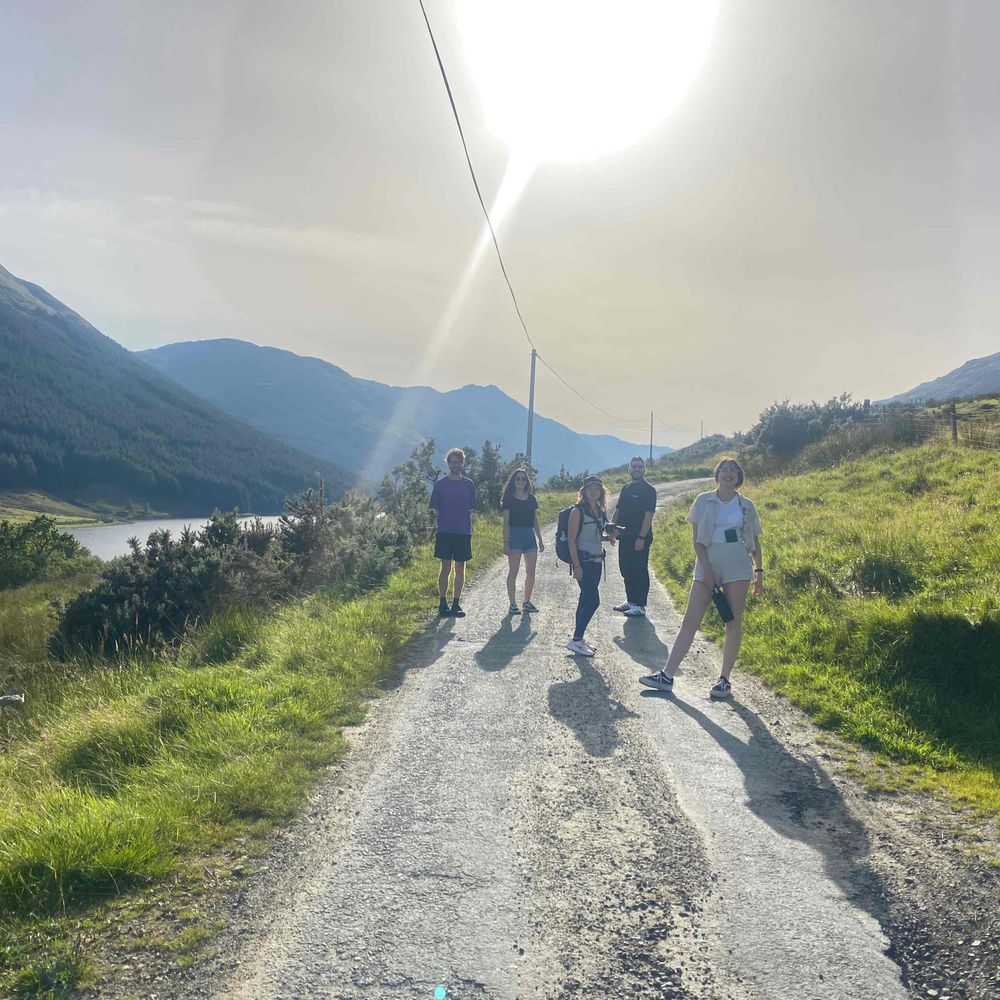
Great to see this out. A story that spanned continents, cities and budget codes…
www.nature.com/articles/s41...
Big thanks to all the teams involved!
@clausenlab.bsky.social @e3chembio.bsky.social
www.nature.com/articles/s41...
Big thanks to all the teams involved!
@clausenlab.bsky.social @e3chembio.bsky.social
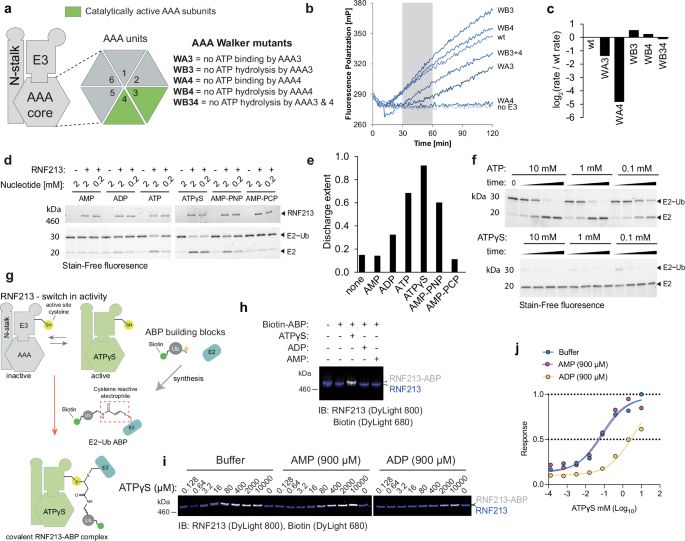
ATP functions as a pathogen-associated molecular pattern to activate the E3 ubiquitin ligase RNF213 - Nature Communications
RNF213 is an E3 ligase with ATPase activity. Here, the authors show that RNF213 is activated by ATP binding and senses cellular energy states, and reveal a transthiolation mechanism induced by immune ...
www.nature.com
May 13, 2025 at 9:51 AM
Great to see this out. A story that spanned continents, cities and budget codes…
www.nature.com/articles/s41...
Big thanks to all the teams involved!
@clausenlab.bsky.social @e3chembio.bsky.social
www.nature.com/articles/s41...
Big thanks to all the teams involved!
@clausenlab.bsky.social @e3chembio.bsky.social
Reposted by Sourav Ghosh

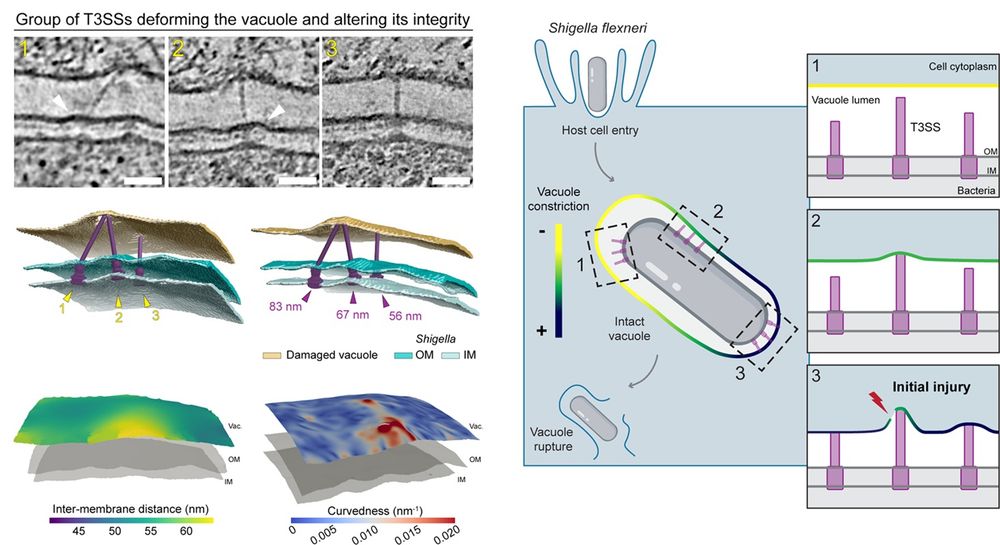
How do intracellular #bacteria breach vacuoles to enter the host cytosol? @leaswistak.bsky.social @matthijnvos.bsky.social @enningalab.bsky.social &co show that #Shigella uses its T3SS system to damage endomembranes via mechanoporation to initiate cytosolic access @plosbiology.org 🧪 plos.io/4jXrr9Z
May 6, 2025 at 12:46 PM
How do intracellular #bacteria breach vacuoles to enter the host cytosol? @leaswistak.bsky.social @matthijnvos.bsky.social @enningalab.bsky.social &co show that #Shigella uses its T3SS system to damage endomembranes via mechanoporation to initiate cytosolic access @plosbiology.org 🧪 plos.io/4jXrr9Z
Reposted by Sourav Ghosh
Super happy to share that our work on the specific inhibition of USP30 - a clinical stage Parkinson's drug target - is now online at NSMB www.nature.com/articles/s41... Have a read if you fancy chimeric protein engineering or a framework for DUB ligandability. Huge congratulations to Nafizul & team!
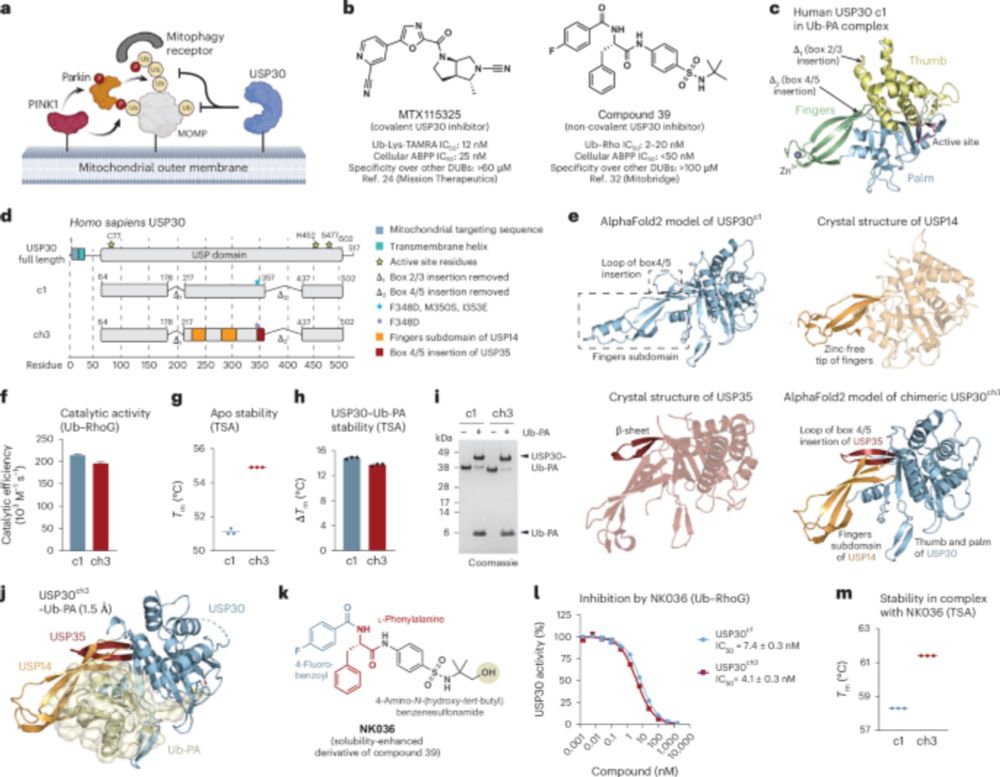
Chimeric deubiquitinase engineering reveals structural basis for specific inhibition of the mitophagy regulator USP30 - Nature Structural & Molecular Biology
Kazi et al. report the crystal structure of the mitochondrial deubiquitinase USP, a clinical stage Parkinson’s disease drug target, in complex with a specific inhibitor. The authors delineate a framew...
www.nature.com
May 5, 2025 at 11:02 AM
Super happy to share that our work on the specific inhibition of USP30 - a clinical stage Parkinson's drug target - is now online at NSMB www.nature.com/articles/s41... Have a read if you fancy chimeric protein engineering or a framework for DUB ligandability. Huge congratulations to Nafizul & team!
Reposted by Sourav Ghosh

We can see our ECR-focused LINE symposium already on the horizon (9th of June) @crick.ac.uk. shorturl.at/MyWNl 🥳
You can submit your abstracts (talk or poster) until the EXTENDED DEADLINE on the 12th of May here: shorturl.at/7KuXL
Free registration shorturl.at/wLyWY
We're excited to see you there!
You can submit your abstracts (talk or poster) until the EXTENDED DEADLINE on the 12th of May here: shorturl.at/7KuXL
Free registration shorturl.at/wLyWY
We're excited to see you there!

April 28, 2025 at 2:07 PM
We can see our ECR-focused LINE symposium already on the horizon (9th of June) @crick.ac.uk. shorturl.at/MyWNl 🥳
You can submit your abstracts (talk or poster) until the EXTENDED DEADLINE on the 12th of May here: shorturl.at/7KuXL
Free registration shorturl.at/wLyWY
We're excited to see you there!
You can submit your abstracts (talk or poster) until the EXTENDED DEADLINE on the 12th of May here: shorturl.at/7KuXL
Free registration shorturl.at/wLyWY
We're excited to see you there!
Reposted by Sourav Ghosh
RNF213, a host E3 ligase, ubiquitylates LPS to mark cytosol-invading bacteria for autophagy. But how do cytosol-adapted bacteria escape? We found that Shigella's E3 ligase IpaH1.4 blocks LPS ubiquitylation by degrading RNF213 via the proteasome.
www.nature.com/articles/s41...
www.nature.com/articles/s41...
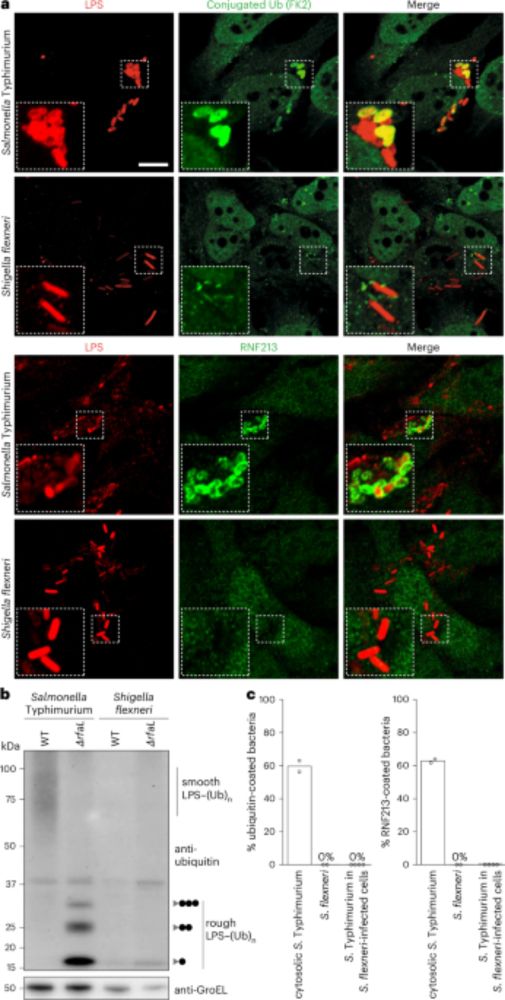
Shigella flexneri evades LPS ubiquitylation through IpaH1.4-mediated degradation of RNF213 - Nature Structural & Molecular Biology
Naydenova, Boyle and Pathe et al. report that Shigella uses the ubiquitin E3 ligase IpaH1.4 to evade lipopolysaccharide ubiquitylation in infected cells by degrading the host E3 ligase RNF213. Using c...
www.nature.com
April 9, 2025 at 9:44 PM
RNF213, a host E3 ligase, ubiquitylates LPS to mark cytosol-invading bacteria for autophagy. But how do cytosol-adapted bacteria escape? We found that Shigella's E3 ligase IpaH1.4 blocks LPS ubiquitylation by degrading RNF213 via the proteasome.
www.nature.com/articles/s41...
www.nature.com/articles/s41...
Amazing analogy. Thank you for sharing.
INNOVATIVE CONCEPT
Your cells defend themselves with a MOLECULAR CROWBAR
AAA-ATPase p97 rips surface proteins off invading bacteria, collapsing their membranes to kill them
Cell-autonomous immunity—you break in, we break you
Anirban Banerjee Lab (Bombay) Nat Micro
www.nature.com/articles/s41...
Your cells defend themselves with a MOLECULAR CROWBAR
AAA-ATPase p97 rips surface proteins off invading bacteria, collapsing their membranes to kill them
Cell-autonomous immunity—you break in, we break you
Anirban Banerjee Lab (Bombay) Nat Micro
www.nature.com/articles/s41...

April 13, 2025 at 7:23 AM
Amazing analogy. Thank you for sharing.
🚨Got a few minutes over breakfast? 🥣
Here’s a quick peek at what we’ve been up to.
If you don’t have time for the full paper, this summary’s got the essence.
Hope you find it as exciting! 🦠🔬 @natmicrobiol.nature.com @springernature.com
#sciencecom
communities.springernature.com/posts/rippin...
Here’s a quick peek at what we’ve been up to.
If you don’t have time for the full paper, this summary’s got the essence.
Hope you find it as exciting! 🦠🔬 @natmicrobiol.nature.com @springernature.com
#sciencecom
communities.springernature.com/posts/rippin...

Ripping Pathogens to Shreds: How a Cellular Nanomachine Punches a Lethal Blow to Bugs
Bacterial pathogens invade our cells in search of nutrients, but cells fight back by tagging these microbes with ubiquitin "death labels", followed by deploying a nanomachine called VCP/p97 that tears...
communities.springernature.com
April 12, 2025 at 2:08 PM
🚨Got a few minutes over breakfast? 🥣
Here’s a quick peek at what we’ve been up to.
If you don’t have time for the full paper, this summary’s got the essence.
Hope you find it as exciting! 🦠🔬 @natmicrobiol.nature.com @springernature.com
#sciencecom
communities.springernature.com/posts/rippin...
Here’s a quick peek at what we’ve been up to.
If you don’t have time for the full paper, this summary’s got the essence.
Hope you find it as exciting! 🦠🔬 @natmicrobiol.nature.com @springernature.com
#sciencecom
communities.springernature.com/posts/rippin...
Happy to share my Ph.D work!!
Our latest paper shows VCP/p97 uses its tweezer-like action to tear invading bacteria apart — a powerful cellular defense! 🦠
@natmicrobiol.nature.com
@BsbeIitb @iitbombay @CSIR
This was years of hard work! Thanks all🙌
#microbiology #cellautonomous #immunity #ubiquitin
Our latest paper shows VCP/p97 uses its tweezer-like action to tear invading bacteria apart — a powerful cellular defense! 🦠
@natmicrobiol.nature.com
@BsbeIitb @iitbombay @CSIR
This was years of hard work! Thanks all🙌
#microbiology #cellautonomous #immunity #ubiquitin
🚨“Ripping bacteria to shreds” 🚨 VCP/p97, a cellular AAA-ATPase, targets and then using its tweezer like action rips apart bacteria, protecting us from infections. A thread 🦠💥#MolecularMachines #HostDefense #cellularimmunity #microbiology
@natmicrobiol.nature.com
www.nature.com/articles/s41...
@natmicrobiol.nature.com
www.nature.com/articles/s41...
April 12, 2025 at 1:45 PM
Happy to share my Ph.D work!!
Our latest paper shows VCP/p97 uses its tweezer-like action to tear invading bacteria apart — a powerful cellular defense! 🦠
@natmicrobiol.nature.com
@BsbeIitb @iitbombay @CSIR
This was years of hard work! Thanks all🙌
#microbiology #cellautonomous #immunity #ubiquitin
Our latest paper shows VCP/p97 uses its tweezer-like action to tear invading bacteria apart — a powerful cellular defense! 🦠
@natmicrobiol.nature.com
@BsbeIitb @iitbombay @CSIR
This was years of hard work! Thanks all🙌
#microbiology #cellautonomous #immunity #ubiquitin