


Elliot Dine
@elliotdine.bsky.social
Post-Doc in the Youle Lab studying organelle stress responses in eukaryotic cells.
Reposted by Elliot Dine
Thrilled to share our work using live imaging to understand how Epiblast (future embryo proper) and Primitive Endoderm (future extraembryonic tissues) cell fates segregate in the preimplantation mouse embryo. Gargantuan effort led by amazing @rpkimyip.bsky.social, David Denberg and Denis Faerberg!
August 2, 2025 at 7:31 PM
Thrilled to share our work using live imaging to understand how Epiblast (future embryo proper) and Primitive Endoderm (future extraembryonic tissues) cell fates segregate in the preimplantation mouse embryo. Gargantuan effort led by amazing @rpkimyip.bsky.social, David Denberg and Denis Faerberg!
Reposted by Elliot Dine
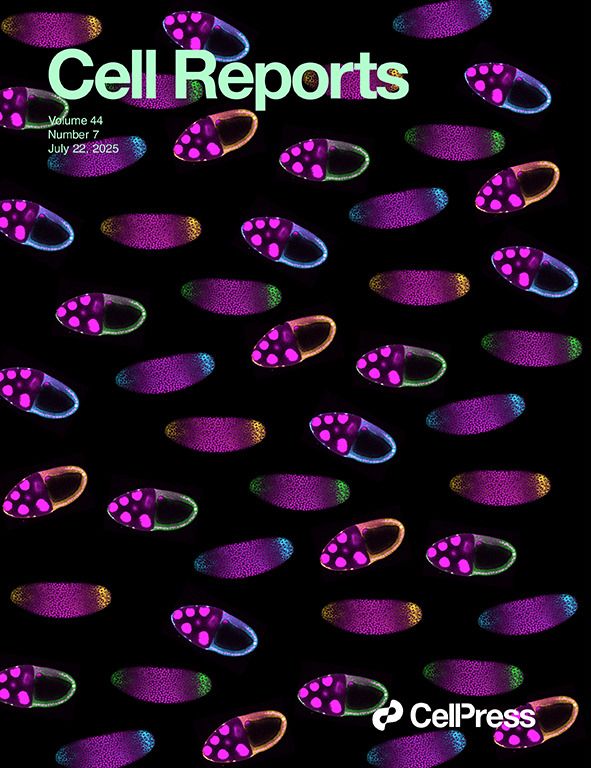
pYtags - our in vivo biosensors for receptor tyrosine kinases - in all their beauty on the cover of Cell Reports! Read more here: www.cell.com/cell-reports...
July 22, 2025 at 8:52 PM
pYtags - our in vivo biosensors for receptor tyrosine kinases - in all their beauty on the cover of Cell Reports! Read more here: www.cell.com/cell-reports...
Reposted by Elliot Dine
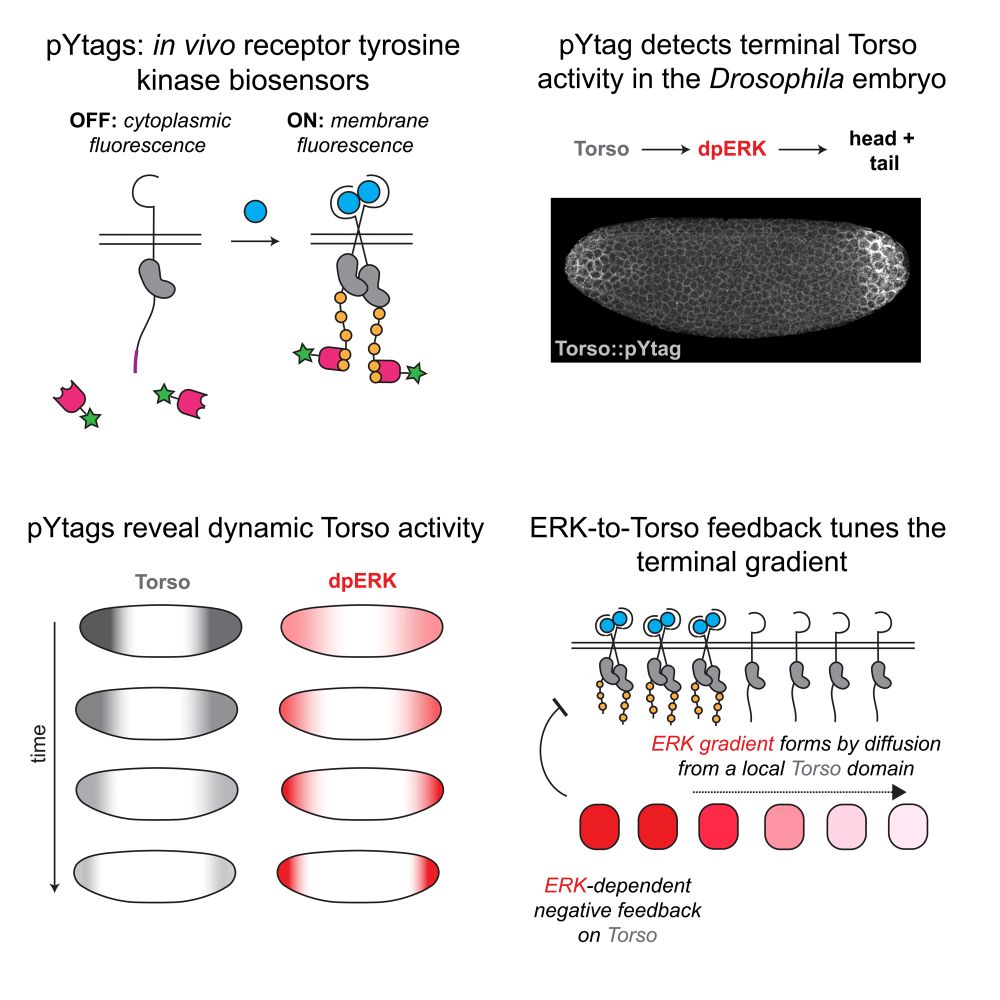
Excited to share that our work building in vivo biosensors for receptor tyrosine kinases (pYtags!) is now out www.cell.com/cell-reports...
July 1, 2025 at 1:58 PM
Excited to share that our work building in vivo biosensors for receptor tyrosine kinases (pYtags!) is now out www.cell.com/cell-reports...
Reposted by Elliot Dine
Some of NIH's top brain researchers got layoff notices last month
While they were asked to keep working in labs for now, their layoffs were never rescinded
"As far as I know, we have not fired any working scientists," Secy Kennedy had told Congress
www.cbsnews.com/news/rfk-jr-...
While they were asked to keep working in labs for now, their layoffs were never rescinded
"As far as I know, we have not fired any working scientists," Secy Kennedy had told Congress
www.cbsnews.com/news/rfk-jr-...

RFK Jr. told Congress no working scientists were fired, but these top NIH brain scientists are still facing job cuts
"As far as I know, we have not fired any working scientists," RFK Jr. had told Congress.
www.cbsnews.com
May 19, 2025 at 11:22 AM
Some of NIH's top brain researchers got layoff notices last month
While they were asked to keep working in labs for now, their layoffs were never rescinded
"As far as I know, we have not fired any working scientists," Secy Kennedy had told Congress
www.cbsnews.com/news/rfk-jr-...
While they were asked to keep working in labs for now, their layoffs were never rescinded
"As far as I know, we have not fired any working scientists," Secy Kennedy had told Congress
www.cbsnews.com/news/rfk-jr-...
Reposted by Elliot Dine

Excited that our work revealing the structure and function of the monster stress response silencing factor, the E3 ligase SIFI, is now out! Congratulations to the most amazing team of Zhi Yang, Diane Haakonsen, Michael Heider and Sam Witus!
www.nature.com/articles/s41...
www.nature.com/articles/s41...
Molecular basis of SIFI activity in the integrated stress response - Nature
Nature - Molecular basis of SIFI activity in the integrated stress response
www.nature.com
May 7, 2025 at 10:27 AM
Excited that our work revealing the structure and function of the monster stress response silencing factor, the E3 ligase SIFI, is now out! Congratulations to the most amazing team of Zhi Yang, Diane Haakonsen, Michael Heider and Sam Witus!
www.nature.com/articles/s41...
www.nature.com/articles/s41...
Reposted by Elliot Dine
I'd like to share a little bit of happy lab news in these chaotic times: a new preprint, driven by the brilliant Qinhao Cao!
www.biorxiv.org/content/10.1...
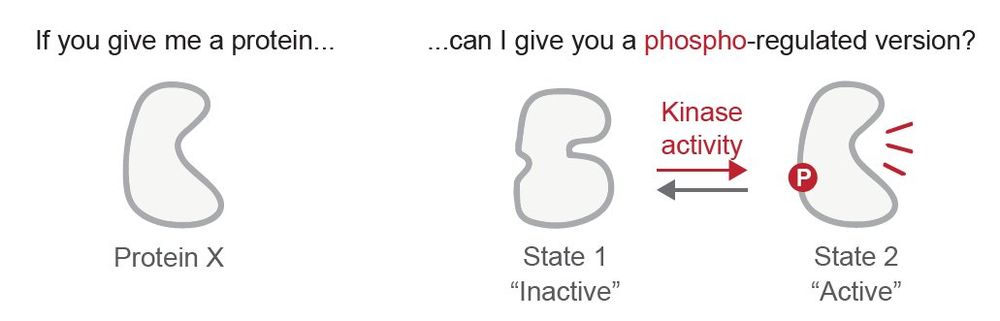
We address a big challenge in synbio: If you give me a protein "X", how can I give you a version of X whose activity is controlled by a kinase?
www.biorxiv.org/content/10.1...
We address a big challenge in synbio: If you give me a protein "X", how can I give you a version of X whose activity is controlled by a kinase?
April 21, 2025 at 4:07 PM
I'd like to share a little bit of happy lab news in these chaotic times: a new preprint, driven by the brilliant Qinhao Cao!
www.biorxiv.org/content/10.1...
We address a big challenge in synbio: If you give me a protein "X", how can I give you a version of X whose activity is controlled by a kinase?
www.biorxiv.org/content/10.1...
We address a big challenge in synbio: If you give me a protein "X", how can I give you a version of X whose activity is controlled by a kinase?
Reposted by Elliot Dine
I'm so happy to report that our preprint on light-induced collective cell migration has now been published in Cell Systems! This project was a lot of fun and will be the basis for a lot of our ongoing & future work.
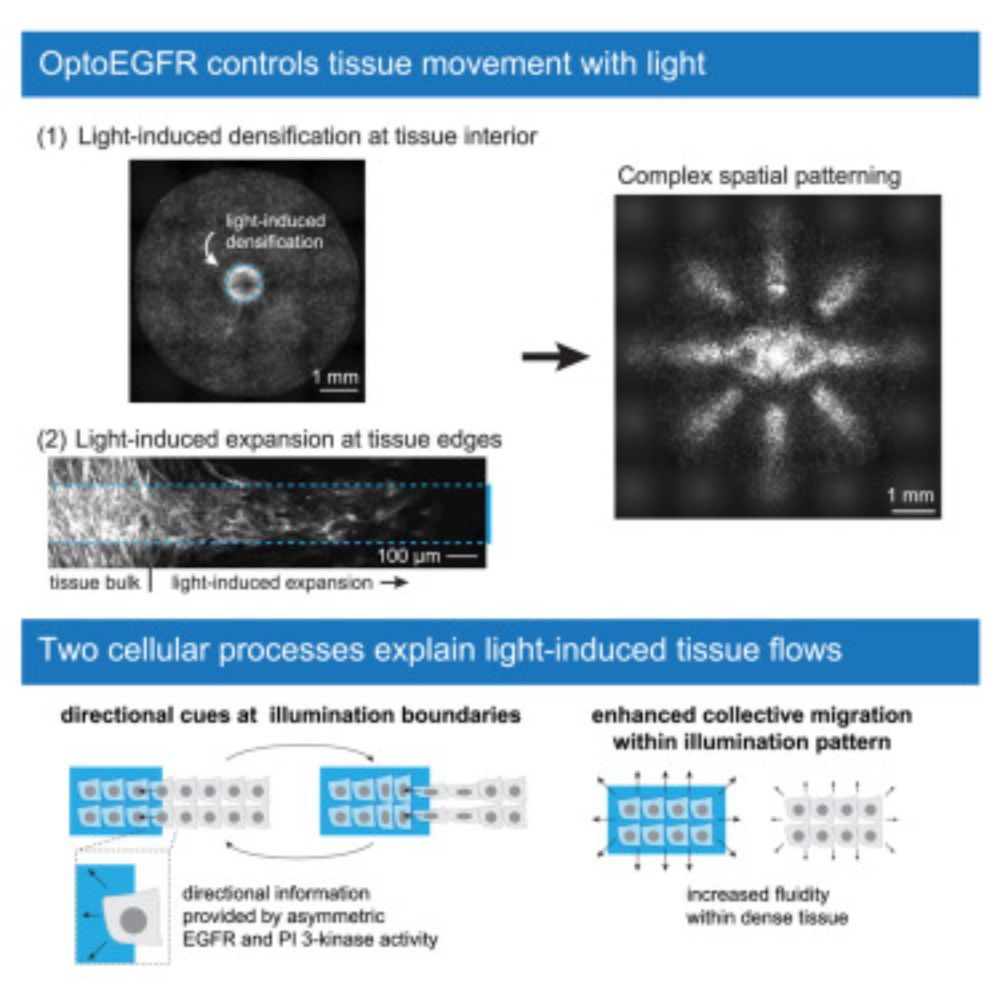
Large-scale control over collective cell migration using light-activated epidermal growth factor receptors
Programmable control over tissue movement is a fundamental challenge for tissue engineering
and wound healing. Suh, Thornton, et al. discovered that a light-controlled EGF receptor
controls long-range...
www.cell.com
March 25, 2025 at 6:29 PM
I'm so happy to report that our preprint on light-induced collective cell migration has now been published in Cell Systems! This project was a lot of fun and will be the basis for a lot of our ongoing & future work.
Reposted by Elliot Dine
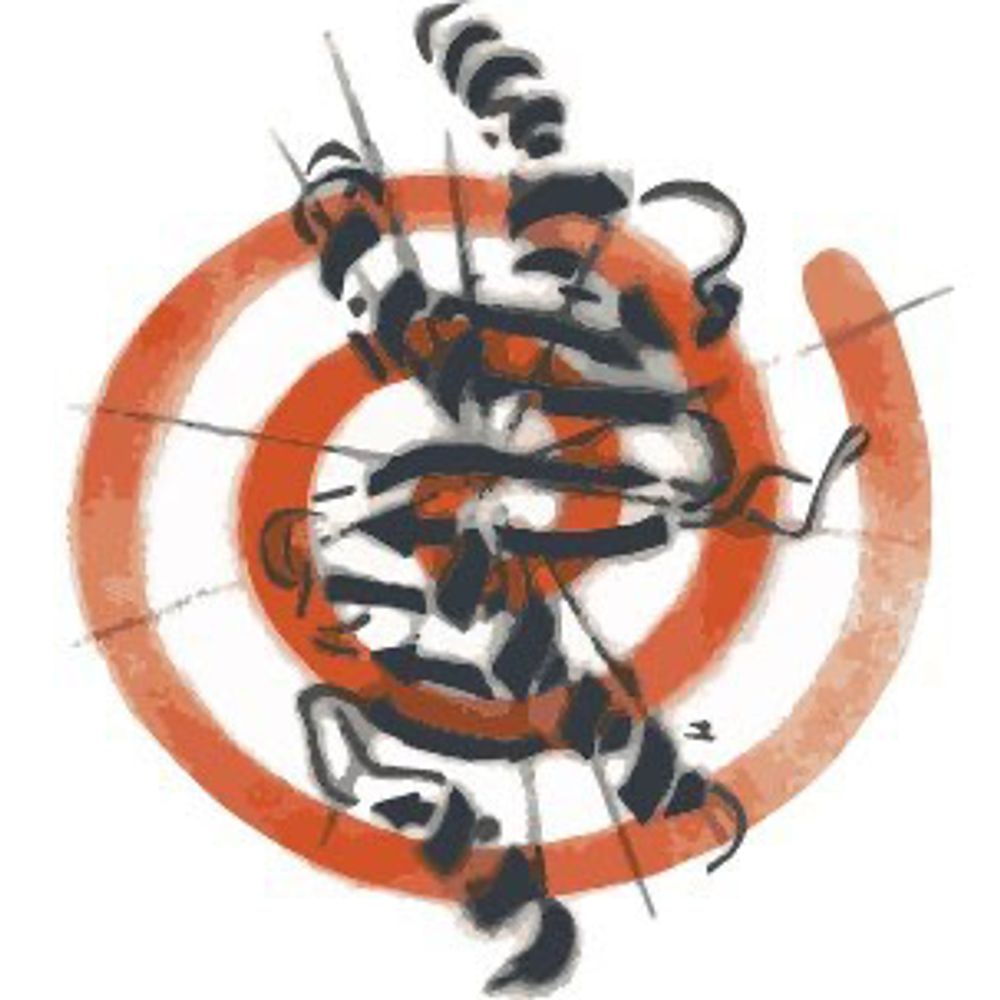
scary but fascinating - cells have a degradation pathway that hunts down C-terminal scars (amides!) on damaged proteins. just wow. chemical biology plus CRISPR at its best. big congrats to all authors!
www.nature.com/articles/s41...
www.nature.com/articles/s41...
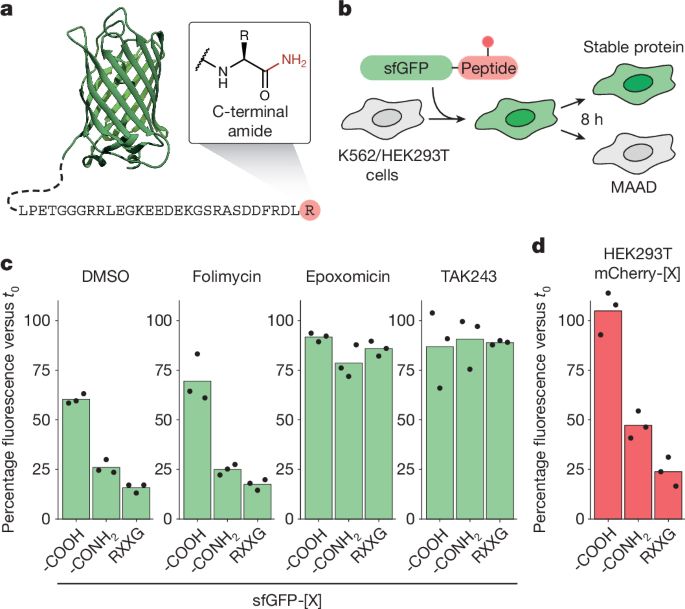
C-terminal amides mark proteins for degradation via SCF–FBXO31 - Nature
SCF–FBXO31 scans proteins for C-terminal amidation and marks them for subsequent proteasomal degradation.
www.nature.com
January 29, 2025 at 5:57 PM
scary but fascinating - cells have a degradation pathway that hunts down C-terminal scars (amides!) on damaged proteins. just wow. chemical biology plus CRISPR at its best. big congrats to all authors!
www.nature.com/articles/s41...
www.nature.com/articles/s41...
Reposted by Elliot Dine

Reposted by Elliot Dine
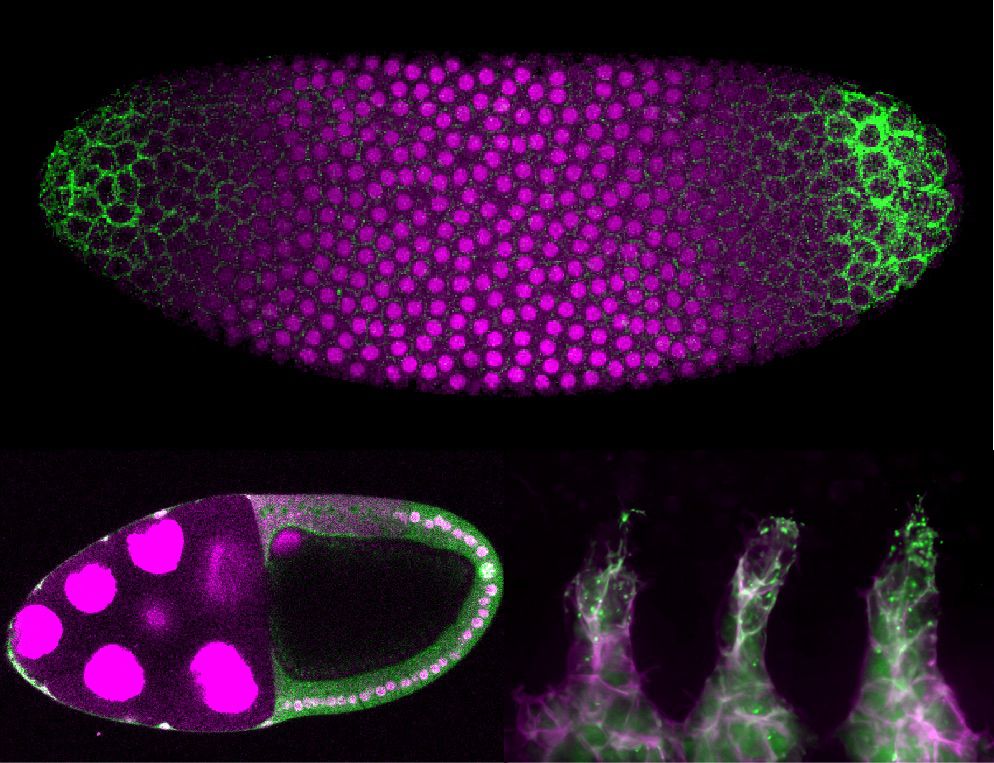
Read below for the latest from Emily Ho in my lab on in vivo receptor tyrosine kinase biosensors. This has been a *dream* project, seeing endogenous RTK activity in live embryos for the first time. Surprise: they don't always match those of downstream signaling pathways!
Have you ever wanted to *see* receptor activity in embryos? If so, our new preprint is for you! In it, we showcase a new live-cell biosensor for visualizing receptor tyrosine kinase activity in living embryos – pYtags!
www.biorxiv.org/content/10.1...
www.biorxiv.org/content/10.1...
January 7, 2025 at 8:09 PM
Read below for the latest from Emily Ho in my lab on in vivo receptor tyrosine kinase biosensors. This has been a *dream* project, seeing endogenous RTK activity in live embryos for the first time. Surprise: they don't always match those of downstream signaling pathways!
Reposted by Elliot Dine
Have you ever wondered whether pyroptotic corpses have functions beyond the grave? We made the surprising discovery that pyroptotic corpses are flagged by #filopodia to alert #DendriticCells they need autopsy. A short Bluetorial (1/13)👇with movies!
Link: rdcu.be/d2mjm
Link: rdcu.be/d2mjm
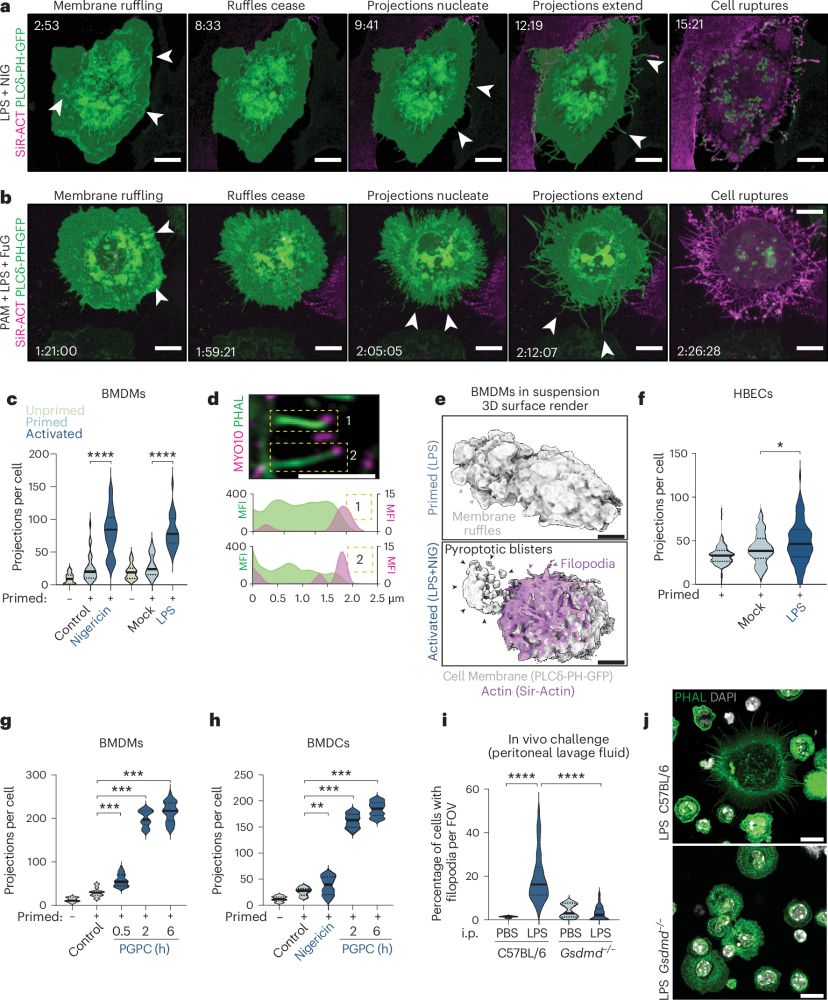
Pyroptotic cell corpses are crowned with F-actin-rich filopodia that engage CLEC9A signaling in incoming dendritic cells
Nature Immunology - Pyroptotic cell death results in inflammation. Here the authors find that F-actin-rich structures formed during macrophage pyroptosis persist after cell death to activate...
rdcu.be
December 9, 2024 at 1:39 AM
Have you ever wondered whether pyroptotic corpses have functions beyond the grave? We made the surprising discovery that pyroptotic corpses are flagged by #filopodia to alert #DendriticCells they need autopsy. A short Bluetorial (1/13)👇with movies!
Link: rdcu.be/d2mjm
Link: rdcu.be/d2mjm
Reposted by Elliot Dine

The cell is the building block of life. How do they work, how do they interact with each other, and what goes wrong in disease?
Meet the newest cohort of Allen Distinguished Investigators and their bold #FrontierScience projects. 🧵
Meet the newest cohort of Allen Distinguished Investigators and their bold #FrontierScience projects. 🧵

December 3, 2024 at 5:01 PM
The cell is the building block of life. How do they work, how do they interact with each other, and what goes wrong in disease?
Meet the newest cohort of Allen Distinguished Investigators and their bold #FrontierScience projects. 🧵
Meet the newest cohort of Allen Distinguished Investigators and their bold #FrontierScience projects. 🧵
Reposted by Elliot Dine
Apropos *first* post! We’ve discovered a central mechanism for how activation of STING induces NFkB related immune signaling - M1-linked/linear ubiquitin chains! I’m so excited to share it with you all, out now in t.co/zCIf2E4h2z a thread 1/X:
https://www.embopress.org/doi/full/10.1038/s44318-024-00291-2
t.co
December 1, 2024 at 2:29 PM
Apropos *first* post! We’ve discovered a central mechanism for how activation of STING induces NFkB related immune signaling - M1-linked/linear ubiquitin chains! I’m so excited to share it with you all, out now in t.co/zCIf2E4h2z a thread 1/X:
Reposted by Elliot Dine
Messages loud & clear: Chris & Alex designed destabilized MS2 and PP7 coat proteins, which are degraded in cells except when bound to their cognate RNA hairpins. We used these probes to image distinct single mRNAs simultaneously in live cells, 'background-free.' AddGene soon! tinyurl.com/27p7hyt9


November 22, 2024 at 3:39 AM
Messages loud & clear: Chris & Alex designed destabilized MS2 and PP7 coat proteins, which are degraded in cells except when bound to their cognate RNA hairpins. We used these probes to image distinct single mRNAs simultaneously in live cells, 'background-free.' AddGene soon! tinyurl.com/27p7hyt9