



Manuel Ares-Arroyo
@aresarroyom.bsky.social
Postdoctoral researcher at Intistut Pasteur | MSCActions | Vet | Plasmid Biology, Bacterial Evolution & Antimicrobial Resistance
Reposted by Manuel Ares-Arroyo

Born #OnThisDay in 1922, Esther Lederberg was the first to isolate the lambda phage in 1951. She characterised the lysogenic phase, whereby the phage are able to integrate into the bacterial genome, staying dormant. This discovery made them a model tool of study, leading to many more breakthroughs.

December 18, 2025 at 10:21 AM
Born #OnThisDay in 1922, Esther Lederberg was the first to isolate the lambda phage in 1951. She characterised the lysogenic phase, whereby the phage are able to integrate into the bacterial genome, staying dormant. This discovery made them a model tool of study, leading to many more breakthroughs.
Reposted by Manuel Ares-Arroyo

Preprint alert📢!
Ever wondered how much bacterial parasites influence evolutionary outcomes of their host?
➡️ We co-evolved two bacterial strains in conditions in which the costs and benefits of prophage carriage varied
Here is what we found. www.biorxiv.org/content/10.6...
#MicroSky #PhageSky
🧵
➡️ We co-evolved two bacterial strains in conditions in which the costs and benefits of prophage carriage varied
Here is what we found. www.biorxiv.org/content/10.6...
#MicroSky #PhageSky
🧵

Environment-dependent evolution drives divergent adaptive strategies and parasite dynamics in a minimal community
Prophages, phage genomes integrated into bacterial chromosomes, are widespread, yet, the extent to which these resident parasites contribute to host fitness and shape evolutionary trajectories, partic...
www.biorxiv.org
December 18, 2025 at 2:11 PM
Preprint alert📢!
Ever wondered how much bacterial parasites influence evolutionary outcomes of their host?
➡️ We co-evolved two bacterial strains in conditions in which the costs and benefits of prophage carriage varied
Here is what we found. www.biorxiv.org/content/10.6...
#MicroSky #PhageSky
🧵
➡️ We co-evolved two bacterial strains in conditions in which the costs and benefits of prophage carriage varied
Here is what we found. www.biorxiv.org/content/10.6...
#MicroSky #PhageSky
🧵
Reposted by Manuel Ares-Arroyo

What drives the K. pneumoniae species complex (KpSC) to thrive from hospitals to soils? In this study, we investigate how pangenome structure and functional diversity shape KpSC adaptability across phylogenetic and ecological contexts. (Thread)
www.biorxiv.org/content/10.6...
www.biorxiv.org/content/10.6...

December 16, 2025 at 12:00 PM
What drives the K. pneumoniae species complex (KpSC) to thrive from hospitals to soils? In this study, we investigate how pangenome structure and functional diversity shape KpSC adaptability across phylogenetic and ecological contexts. (Thread)
www.biorxiv.org/content/10.6...
www.biorxiv.org/content/10.6...
Reposted by Manuel Ares-Arroyo

Bacterial genomes encode a rich repertoire of antiphage systems, but we still know surprisingly little about when these systems are actually expressed.
In this preprint, Lucas Paoli et al, ask what shapes antiphage systems expression in native contexts.
www.biorxiv.org/content/10.6...
In this preprint, Lucas Paoli et al, ask what shapes antiphage systems expression in native contexts.
www.biorxiv.org/content/10.6...

Environment and physiology shape antiphage system expression
Bacteria and archaea encode on average ten antiphage systems. Quorum sensing, cellular, or transcription factors can regulate specific systems (CRISPR-Cas, CBASS). Yet, a systematic assessment of anti...
www.biorxiv.org
December 15, 2025 at 9:49 PM
Bacterial genomes encode a rich repertoire of antiphage systems, but we still know surprisingly little about when these systems are actually expressed.
In this preprint, Lucas Paoli et al, ask what shapes antiphage systems expression in native contexts.
www.biorxiv.org/content/10.6...
In this preprint, Lucas Paoli et al, ask what shapes antiphage systems expression in native contexts.
www.biorxiv.org/content/10.6...
Reposted by Manuel Ares-Arroyo

🔬 Call to create junior research groups at the Institut Pasteur
Focus: Infectious diseases, host-microbe interactions, vaccines
Special interest: AI methodologies
📅 Deadline: Feb 9, 2026
👥 2-12 years post-PhD
Apply now 📝 research.pasteur.fr/en/call/crea...
#JobOpportunity #Research
Focus: Infectious diseases, host-microbe interactions, vaccines
Special interest: AI methodologies
📅 Deadline: Feb 9, 2026
👥 2-12 years post-PhD
Apply now 📝 research.pasteur.fr/en/call/crea...
#JobOpportunity #Research

Creation of new junior research groups at the Institut Pasteur - Call for applications 2026 - Research
The Institut Pasteur is launching an international call to recruit new junior research group leaders leveraging cutting-edge transdisciplinary approaches to exploring infectious diseases, host-microbe...
research.pasteur.fr
December 8, 2025 at 8:53 AM
🔬 Call to create junior research groups at the Institut Pasteur
Focus: Infectious diseases, host-microbe interactions, vaccines
Special interest: AI methodologies
📅 Deadline: Feb 9, 2026
👥 2-12 years post-PhD
Apply now 📝 research.pasteur.fr/en/call/crea...
#JobOpportunity #Research
Focus: Infectious diseases, host-microbe interactions, vaccines
Special interest: AI methodologies
📅 Deadline: Feb 9, 2026
👥 2-12 years post-PhD
Apply now 📝 research.pasteur.fr/en/call/crea...
#JobOpportunity #Research
Reposted by Manuel Ares-Arroyo

We've come full circle! I began my postdoctoral career by identifying the peptidyl deformylase gene. Today, we show that half of bacterial species harbor multiple PDF genes (up to 7, for always a single Met-tRNA transformylase), and while the role of these PDFs ... academic.oup.com/mbe/article/...

Unraveling the Prevalence and Multifaceted Roles of Accessory Peptide Deformylases in Bacterial Adaptation and Resistance
Abstract. Peptide deformylases (PDFs) are enzymes that are essential for bacterial viability and attractive targets for antibiotic development. Yet, despit
academic.oup.com
December 12, 2025 at 8:57 AM
We've come full circle! I began my postdoctoral career by identifying the peptidyl deformylase gene. Today, we show that half of bacterial species harbor multiple PDF genes (up to 7, for always a single Met-tRNA transformylase), and while the role of these PDFs ... academic.oup.com/mbe/article/...
Reposted by Manuel Ares-Arroyo

Our story on plasmid streamlining is now published in PLoS Biology! With @andrewmatthews.bsky.social and @sonjalehtinen.bsky.social
#MicroSky #Mevosky
journals.plos.org/plosbiology/...
#MicroSky #Mevosky
journals.plos.org/plosbiology/...

Plasmid streamlining drives the extinction of antibiotic resistance plasmids under selection for horizontal transmission
Conjugative plasmids play an important role in the spread of antimicrobial resistance (AMR) genes among pathogenic bacteria. This study shows that AMR loss in evolving populations is associated with t...
journals.plos.org
December 12, 2025 at 12:09 PM
Our story on plasmid streamlining is now published in PLoS Biology! With @andrewmatthews.bsky.social and @sonjalehtinen.bsky.social
#MicroSky #Mevosky
journals.plos.org/plosbiology/...
#MicroSky #Mevosky
journals.plos.org/plosbiology/...
Reposted by Manuel Ares-Arroyo
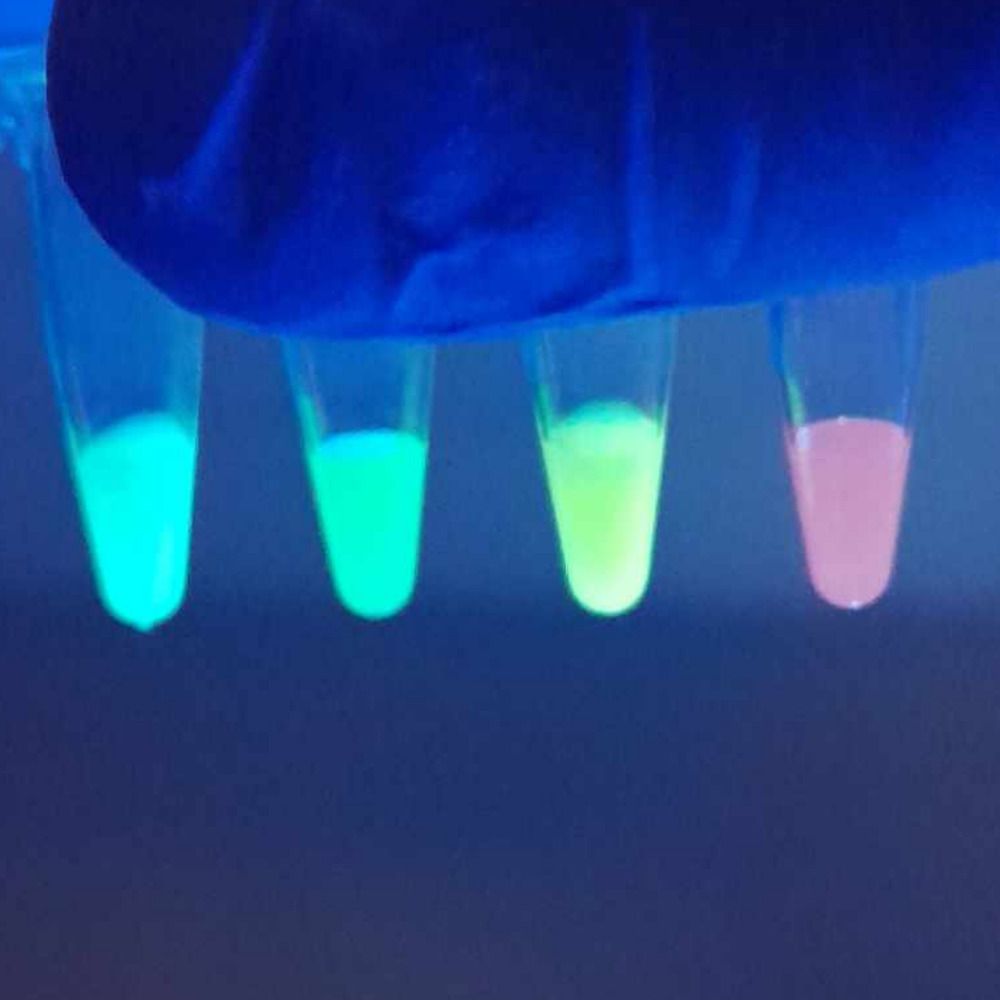
academic.oup.com/nar/article/... Collaboration with Y. Yamaichi. Killing donor bacteria in conjugation mixes using water enables transcriptomic profiling of early plasmid genes ! Superb tool for studying zygotic induction of these early genes, which include anti-SOS and anti-RM factors. #microsky

Selective elimination of donor bacteria enables global profiling of plasmid gene expression at early stages of conjugation
Abstract. Conjugative plasmids are a major driving force for the dissemination of antimicrobial resistance. During conjugation, plasmid DNA is transferred
academic.oup.com
December 10, 2025 at 6:06 PM
academic.oup.com/nar/article/... Collaboration with Y. Yamaichi. Killing donor bacteria in conjugation mixes using water enables transcriptomic profiling of early plasmid genes ! Superb tool for studying zygotic induction of these early genes, which include anti-SOS and anti-RM factors. #microsky
Reposted by Manuel Ares-Arroyo

🧬 How do we evaluate structural variations in plasmids?
Find out in the final ESGMAP webinar in 2025.
💥Dr. Daria Frolova presents "Studying plasmid relatedness and evolution through structural variation"
📅15 December, 12:00 CET
🔗Registration required (link in comments)
#ESCMID #ESGMAP #plasmids
Find out in the final ESGMAP webinar in 2025.
💥Dr. Daria Frolova presents "Studying plasmid relatedness and evolution through structural variation"
📅15 December, 12:00 CET
🔗Registration required (link in comments)
#ESCMID #ESGMAP #plasmids
December 9, 2025 at 2:26 PM
Reposted by Manuel Ares-Arroyo
Taming wild replicons: evolution and domestication of large extrachromosomal replicons
#MicroSky
www.sciencedirect.com/science/arti...
#MicroSky
www.sciencedirect.com/science/arti...

Taming wild replicons: evolution and domestication of large extrachromosomal replicons
Bacterial genomes often contain extrachromosomal replicons (ERs), ranging from small, mobile plasmids to large, stably inherited elements, such as meg…
www.sciencedirect.com
December 2, 2025 at 2:25 PM
Taming wild replicons: evolution and domestication of large extrachromosomal replicons
#MicroSky
www.sciencedirect.com/science/arti...
#MicroSky
www.sciencedirect.com/science/arti...
Reposted by Manuel Ares-Arroyo
Huge preprint if you are interested in bacterial strain taxonomy! The why and how of cgMLST LIN codes: An extensively revised and expanded version doi.org/10.1101/2024... I will summarize it for you in this thread 👇

Life Identification Numbers: A bacterial strain nomenclature approach
Unified strain taxonomies are needed for the epidemiological surveillance of bacterial pathogens and international communication in microbiological research. Core genome multilocus sequence typing (cg...
doi.org
November 30, 2025 at 7:51 PM
Huge preprint if you are interested in bacterial strain taxonomy! The why and how of cgMLST LIN codes: An extensively revised and expanded version doi.org/10.1101/2024... I will summarize it for you in this thread 👇
Reposted by Manuel Ares-Arroyo
🧬Are we getting closer to understanding plasmid evolution?
Join this exciting talk, as the @escmid.bsky.social ESGMAP web symposium series continues.
💥 Dr. William Matlock presents "Models of plasmid evolution"
📅 Dec 3, 12:00-13:00 CET
🔗 Registration required (link in comments)
#ESGMAP #Plasmid
Join this exciting talk, as the @escmid.bsky.social ESGMAP web symposium series continues.
💥 Dr. William Matlock presents "Models of plasmid evolution"
📅 Dec 3, 12:00-13:00 CET
🔗 Registration required (link in comments)
#ESGMAP #Plasmid

November 26, 2025 at 10:07 AM
🧬Are we getting closer to understanding plasmid evolution?
Join this exciting talk, as the @escmid.bsky.social ESGMAP web symposium series continues.
💥 Dr. William Matlock presents "Models of plasmid evolution"
📅 Dec 3, 12:00-13:00 CET
🔗 Registration required (link in comments)
#ESGMAP #Plasmid
Join this exciting talk, as the @escmid.bsky.social ESGMAP web symposium series continues.
💥 Dr. William Matlock presents "Models of plasmid evolution"
📅 Dec 3, 12:00-13:00 CET
🔗 Registration required (link in comments)
#ESGMAP #Plasmid
Reposted by Manuel Ares-Arroyo
🧬🛡️How are new immune mechanisms created?
We show how Lamassu antiphage system, originated from a DNA-repair complex and evolved into a compact and modular immune machine, wt Dinshaw Patel lab in @pnas.org.
👏 @matthieu-haudiquet.bsky.social, Arpita Chakravarti & all authors!
doi.org/10.1073/pnas...
We show how Lamassu antiphage system, originated from a DNA-repair complex and evolved into a compact and modular immune machine, wt Dinshaw Patel lab in @pnas.org.
👏 @matthieu-haudiquet.bsky.social, Arpita Chakravarti & all authors!
doi.org/10.1073/pnas...


November 27, 2025 at 9:35 AM
🧬🛡️How are new immune mechanisms created?
We show how Lamassu antiphage system, originated from a DNA-repair complex and evolved into a compact and modular immune machine, wt Dinshaw Patel lab in @pnas.org.
👏 @matthieu-haudiquet.bsky.social, Arpita Chakravarti & all authors!
doi.org/10.1073/pnas...
We show how Lamassu antiphage system, originated from a DNA-repair complex and evolved into a compact and modular immune machine, wt Dinshaw Patel lab in @pnas.org.
👏 @matthieu-haudiquet.bsky.social, Arpita Chakravarti & all authors!
doi.org/10.1073/pnas...
Reposted by Manuel Ares-Arroyo
Cumulative cgMLST : Our novel preprint is out @biorxiv doi.org/10.1101/2025...

Cumulative cgMLST provides increased discrimination of nested phylogenetic groups
Background Core genome multilocus sequence typing (cgMLST) is a powerful method for bacterial strain genotyping. However, the size of the core genome decreases as the phylogenetic breadth of the targe...
doi.org
November 26, 2025 at 2:27 PM
Cumulative cgMLST : Our novel preprint is out @biorxiv doi.org/10.1101/2025...
Reposted by Manuel Ares-Arroyo
#microsky #phagesky #phage
Anyone who’s tried deleting prophages in the lab by HR knows the difficulties of the task. Here we have an example of how HR-mediated natural transformation might hit the same hurdle in a more native context.
academic.oup.com/mbe/article/...
Anyone who’s tried deleting prophages in the lab by HR knows the difficulties of the task. Here we have an example of how HR-mediated natural transformation might hit the same hurdle in a more native context.
academic.oup.com/mbe/article/...

Chromosomal Curing Drives an Arms Race Between Bacterial Transformation and Prophage
Abstract. Transformation occurs when bacteria import exogenous DNA via the competence machinery and integrate it into their genome through homologous recom
academic.oup.com
November 23, 2025 at 4:39 PM
#microsky #phagesky #phage
Anyone who’s tried deleting prophages in the lab by HR knows the difficulties of the task. Here we have an example of how HR-mediated natural transformation might hit the same hurdle in a more native context.
academic.oup.com/mbe/article/...
Anyone who’s tried deleting prophages in the lab by HR knows the difficulties of the task. Here we have an example of how HR-mediated natural transformation might hit the same hurdle in a more native context.
academic.oup.com/mbe/article/...
Reposted by Manuel Ares-Arroyo

What is the best strategy to win any contest?
Eliminate your opponents of course.
Recently, my friend @fernpizza.bsky.social showed how plasmids compete intracellularly (check out his paper published in Science today!). With @baym.lol, we now know they can fight.
www.biorxiv.org/content/10.1...
Eliminate your opponents of course.
Recently, my friend @fernpizza.bsky.social showed how plasmids compete intracellularly (check out his paper published in Science today!). With @baym.lol, we now know they can fight.
www.biorxiv.org/content/10.1...

November 20, 2025 at 10:12 PM
What is the best strategy to win any contest?
Eliminate your opponents of course.
Recently, my friend @fernpizza.bsky.social showed how plasmids compete intracellularly (check out his paper published in Science today!). With @baym.lol, we now know they can fight.
www.biorxiv.org/content/10.1...
Eliminate your opponents of course.
Recently, my friend @fernpizza.bsky.social showed how plasmids compete intracellularly (check out his paper published in Science today!). With @baym.lol, we now know they can fight.
www.biorxiv.org/content/10.1...
Reposted by Manuel Ares-Arroyo

🚀New preprint from our lab!
I am very excited to finally share what has been the main focus of my PhD for the past almost 3 years! It is about viral dark matter and a powerful tool we built to shed light on it. 🧬💡
Continue reading (🧵)
I am very excited to finally share what has been the main focus of my PhD for the past almost 3 years! It is about viral dark matter and a powerful tool we built to shed light on it. 🧬💡
Continue reading (🧵)

November 20, 2025 at 6:52 PM
🚀New preprint from our lab!
I am very excited to finally share what has been the main focus of my PhD for the past almost 3 years! It is about viral dark matter and a powerful tool we built to shed light on it. 🧬💡
Continue reading (🧵)
I am very excited to finally share what has been the main focus of my PhD for the past almost 3 years! It is about viral dark matter and a powerful tool we built to shed light on it. 🧬💡
Continue reading (🧵)
Reposted by Manuel Ares-Arroyo

Hot off the press! Our latest paper led by @fernpizza.bsky.social, understanding how plasmids evolve inside cells. These small, self-replicating DNA circles live inside bacteria and carry antibiotic resistance genes, but also compete with one another to replicate. 1/
www.science.org/doi/10.1126/...
www.science.org/doi/10.1126/...

Intracellular competition shapes plasmid population dynamics
From populations of multicellular organisms to selfish genetic elements, conflicts between levels of biological organization are central to evolution. Plasmids are extrachromosomal, self-replicating g...
www.science.org
November 20, 2025 at 9:42 PM
Hot off the press! Our latest paper led by @fernpizza.bsky.social, understanding how plasmids evolve inside cells. These small, self-replicating DNA circles live inside bacteria and carry antibiotic resistance genes, but also compete with one another to replicate. 1/
www.science.org/doi/10.1126/...
www.science.org/doi/10.1126/...
Reposted by Manuel Ares-Arroyo

Happy to share our new AMR resource which has phenotypic AMR (usually MIC data) collected from publications and databases. This is paired with assemblies and annotations
We're excited for users who might train new models, find phenotype/genotype mismatches, or any other use
We're excited for users who might train new models, find phenotype/genotype mismatches, or any other use

Antimicrobial resistance (AMR) is a growing health threat, making infections harder to treat and complicating routine medical care.
EMBL-EBI’s new AMR portal brings together laboratory resistance data and bacterial genomes in one open platform.
#WAAW2025 #ActOnAMR
www.ebi.ac.uk/about/news/t...
🧬💻
EMBL-EBI’s new AMR portal brings together laboratory resistance data and bacterial genomes in one open platform.
#WAAW2025 #ActOnAMR
www.ebi.ac.uk/about/news/t...
🧬💻

A new gateway to global antimicrobial resistance data
New online portal connects bacterial genomes with experimental resistance data to support antimicrobial resistance research.
www.ebi.ac.uk
November 19, 2025 at 12:27 PM
Happy to share our new AMR resource which has phenotypic AMR (usually MIC data) collected from publications and databases. This is paired with assemblies and annotations
We're excited for users who might train new models, find phenotype/genotype mismatches, or any other use
We're excited for users who might train new models, find phenotype/genotype mismatches, or any other use
Reposted by Manuel Ares-Arroyo

🚨#PhD studentship opportunity! Plasmids provide bacteria with antimicrobial resistance, but do they have more fundamental effects on behaviour? 🧫🦠💫🧟♂️
Apply for a 4y funded MRC DiMeN position with me and Jamie Wheeler @livuni-ives.bsky.social www.findaphd.com/phds/project...
Apply for a 4y funded MRC DiMeN position with me and Jamie Wheeler @livuni-ives.bsky.social www.findaphd.com/phds/project...

MRC DiMeN Doctoral Training Partnership: Resistant zombies: how drug-resistance plasmids manipulate the behaviour of the opportunistic pathogen Pseudomonas aeruginosa at University of Liverpool on Fin...
PhD Project - MRC DiMeN Doctoral Training Partnership: Resistant zombies: how drug-resistance plasmids manipulate the behaviour of the opportunistic pathogen Pseudomonas aeruginosa at University of Li...
www.findaphd.com
November 18, 2025 at 9:38 AM
🚨#PhD studentship opportunity! Plasmids provide bacteria with antimicrobial resistance, but do they have more fundamental effects on behaviour? 🧫🦠💫🧟♂️
Apply for a 4y funded MRC DiMeN position with me and Jamie Wheeler @livuni-ives.bsky.social www.findaphd.com/phds/project...
Apply for a 4y funded MRC DiMeN position with me and Jamie Wheeler @livuni-ives.bsky.social www.findaphd.com/phds/project...
Reposted by Manuel Ares-Arroyo

#Review
Bacteria can “remember” past environments through genetic & biochemical imprints helping them adapt and thrive! 🦠🧠
#MicroSky
www.nature.com/articles/s41...
Bacteria can “remember” past environments through genetic & biochemical imprints helping them adapt and thrive! 🦠🧠
#MicroSky
www.nature.com/articles/s41...

Exploring the concept of bacterial memory - Nature Microbiology
This Perspective discusses the concept, mechanisms and evidence for memory in bacteria at individual and community levels.
www.nature.com
November 18, 2025 at 8:51 AM
#Review
Bacteria can “remember” past environments through genetic & biochemical imprints helping them adapt and thrive! 🦠🧠
#MicroSky
www.nature.com/articles/s41...
Bacteria can “remember” past environments through genetic & biochemical imprints helping them adapt and thrive! 🦠🧠
#MicroSky
www.nature.com/articles/s41...
Reposted by Manuel Ares-Arroyo
Our new paper is out in @narjournal.bsky.social We show that natural transformation enables bacteria to shuffle integron cassettes, boosting their phenotypic diversity.
academic.oup.com/nar/article/... 1/5
academic.oup.com/nar/article/... 1/5

Bacterial natural transformation drives cassette shuffling and simplifies recombination in chromosomal integrons
Abstract. Integrons act as biobanks of gene cassettes conferring functions crucial for bacterial defense, including protection against phages and antibioti
academic.oup.com
November 17, 2025 at 3:44 PM
Our new paper is out in @narjournal.bsky.social We show that natural transformation enables bacteria to shuffle integron cassettes, boosting their phenotypic diversity.
academic.oup.com/nar/article/... 1/5
academic.oup.com/nar/article/... 1/5
Reposted by Manuel Ares-Arroyo

A phage-encoded anti-CRISPR protein co-opts host enolase to prevent type III CRISPR immunity | Nature Microbiology https://www.nature.com/articles/s41564-025-02178-2

A phage-encoded anti-CRISPR protein co-opts host enolase to prevent type III CRISPR immunity - Nature Microbiology
Streptococcus thermophilus phages circumvent host CRISPR defences via AcrIIIA2, which complexes with enolase, a highly abundant glycolysis enzyme, to block phage RNA binding.
www.nature.com
November 12, 2025 at 2:37 AM
A phage-encoded anti-CRISPR protein co-opts host enolase to prevent type III CRISPR immunity | Nature Microbiology https://www.nature.com/articles/s41564-025-02178-2
Reposted by Manuel Ares-Arroyo

The hitchhiker’s guide to cross-species DNA delivery
@cp-trendsmicrobiol.bsky.social Spotlight by Kotaro Kiga and Rodrigo Ibarra-Chávez
www.cell.com/trends/micro...
@cp-trendsmicrobiol.bsky.social Spotlight by Kotaro Kiga and Rodrigo Ibarra-Chávez
www.cell.com/trends/micro...

The hitchhiker’s guide to cross-species DNA delivery
Microbial hitchhikers are rewriting the rules of horizontal gene transfer. He, Patkowski,
et al. reveal how phage satellites assemble chimeric infective particles that deliver
DNA across species bound...
www.cell.com
November 9, 2025 at 9:39 AM
The hitchhiker’s guide to cross-species DNA delivery
@cp-trendsmicrobiol.bsky.social Spotlight by Kotaro Kiga and Rodrigo Ibarra-Chávez
www.cell.com/trends/micro...
@cp-trendsmicrobiol.bsky.social Spotlight by Kotaro Kiga and Rodrigo Ibarra-Chávez
www.cell.com/trends/micro...
Reposted by Manuel Ares-Arroyo
🧬 New ESGMAP webinar series: “Plasmid comparison and typing in the long read era”
Join our upcoming webinar series exploring long-read sequencing and modern bioinformatics in plasmid research and surveillance.
📅 24 Nov • 3 Dec • 15 Dec 2025
🔗 Register: escmid.org/esgmap
#ESCMID #ESGMAP
Join our upcoming webinar series exploring long-read sequencing and modern bioinformatics in plasmid research and surveillance.
📅 24 Nov • 3 Dec • 15 Dec 2025
🔗 Register: escmid.org/esgmap
#ESCMID #ESGMAP

November 7, 2025 at 7:11 PM
🧬 New ESGMAP webinar series: “Plasmid comparison and typing in the long read era”
Join our upcoming webinar series exploring long-read sequencing and modern bioinformatics in plasmid research and surveillance.
📅 24 Nov • 3 Dec • 15 Dec 2025
🔗 Register: escmid.org/esgmap
#ESCMID #ESGMAP
Join our upcoming webinar series exploring long-read sequencing and modern bioinformatics in plasmid research and surveillance.
📅 24 Nov • 3 Dec • 15 Dec 2025
🔗 Register: escmid.org/esgmap
#ESCMID #ESGMAP