



Nathan Fraikin
@nfrk92.bsky.social
Post-doc at TacC team / CNRS / Lyon 1- Catching bacteria on tape right in the act !
Reposted by Nathan Fraikin

#microsky
Massive update of preprint with @polardlab.bsky.social!
Bacteria have evolved two systems to recombine extracellular DNA
www.biorxiv.org/content/10.1...
Kudos to lead authors Léo Hardy, Violette Morales and Clothilde Rousseau, and to outstanding Dalia's lab and @epcrocha.bsky.social
🧵⬇️
Massive update of preprint with @polardlab.bsky.social!
Bacteria have evolved two systems to recombine extracellular DNA
www.biorxiv.org/content/10.1...
Kudos to lead authors Léo Hardy, Violette Morales and Clothilde Rousseau, and to outstanding Dalia's lab and @epcrocha.bsky.social
🧵⬇️
Two D-loop resolution systems enable natural genetic transformation in bacteria
Natural transformation is a widespread mechanism driving genetic exchanges in bacteria. It proceeds by the capture and internalization of exogenous DNA in linear single strands, ultimately integrated in the genome by homologous recombination. It is unknown how the RecA-directed D-loop intermediate of this dedicated recombination pathway is processed. We report that resolution of the transformation D-loop depends on two endonucleases of opposing phylogenetic distribution in bacteria. One is YraN, which has co-evolved and interacts with the ComM helicase, known to extend DNA recombination at the transformation D-loop. The other is CoiA, which is restricted to the Bacillota. CoiA is shown to be a resolvase of the transformation D-loop, extended by the RadA helicase in these species. We demonstrate that both YraN and CoiA act synergistically with their cognate helicases. These findings reveal that bacteria have evolved two helicase/nuclease pairs for the maturation and recombination extension of the transformation D-loop. ### Competing Interest Statement The authors have declared no competing interest. Agence Nationale de la Recherche, https://ror.org/00rbzpz17, ANR-20-CE12-0004, ANR-10-BLAN-1331, ANR-17-CE13-0031, ANR-22-CE44-0044, ANR-10-LABX-62-IBEID, PIA/ANR-16-CONV-0005 Fondation pour la Recherche Médicale, https://ror.org/04w6kn183, FDT202001010890 European Union's Horizon research and innovation programme. Marie Skłodowska-Curie Postdoctoral Fellowships, 101208987 National Institute of Health, USA, R35GM128674
www.biorxiv.org
January 16, 2026 at 4:24 PM
#microsky
Massive update of preprint with @polardlab.bsky.social!
Bacteria have evolved two systems to recombine extracellular DNA
www.biorxiv.org/content/10.1...
Kudos to lead authors Léo Hardy, Violette Morales and Clothilde Rousseau, and to outstanding Dalia's lab and @epcrocha.bsky.social
🧵⬇️
Massive update of preprint with @polardlab.bsky.social!
Bacteria have evolved two systems to recombine extracellular DNA
www.biorxiv.org/content/10.1...
Kudos to lead authors Léo Hardy, Violette Morales and Clothilde Rousseau, and to outstanding Dalia's lab and @epcrocha.bsky.social
🧵⬇️
Reposted by Nathan Fraikin

New bioRxiv preprint from our Lesterlin lab
How early gene expression coupled to DNA processing boosts resistance plasmid spread.
With @nfrk92.bsky.social in collab with Y. Yamaichi lab
👉 doi.org/10.64898/202...
How early gene expression coupled to DNA processing boosts resistance plasmid spread.
With @nfrk92.bsky.social in collab with Y. Yamaichi lab
👉 doi.org/10.64898/202...

Coupling DNA processing to early gene expression drives antibiotic resistance plasmid dissemination
The rapid global spread of antibiotic resistance is mediated by conjugative plasmids, yet how these elements establish immediately after entering new bacterial hosts remains poorly understood. Here we...
doi.org
January 12, 2026 at 8:56 AM
New bioRxiv preprint from our Lesterlin lab
How early gene expression coupled to DNA processing boosts resistance plasmid spread.
With @nfrk92.bsky.social in collab with Y. Yamaichi lab
👉 doi.org/10.64898/202...
How early gene expression coupled to DNA processing boosts resistance plasmid spread.
With @nfrk92.bsky.social in collab with Y. Yamaichi lab
👉 doi.org/10.64898/202...
Reposted by Nathan Fraikin

New pub. from the lab !
We discovered that potato tubers exert intense selective pressure during Dickeya solani infection, driving the rapid emergence of mutations in the sRNA ArcZ. These mutations lead to the appearance of "social cheaters" that sweep through the pop. in as few as 30 generations.
We discovered that potato tubers exert intense selective pressure during Dickeya solani infection, driving the rapid emergence of mutations in the sRNA ArcZ. These mutations lead to the appearance of "social cheaters" that sweep through the pop. in as few as 30 generations.

Host infection selects for sRNA variants that drive bacterial social cheating https://www.biorxiv.org/content/10.64898/2025.12.19.695336v1
December 22, 2025 at 5:24 PM
New pub. from the lab !
We discovered that potato tubers exert intense selective pressure during Dickeya solani infection, driving the rapid emergence of mutations in the sRNA ArcZ. These mutations lead to the appearance of "social cheaters" that sweep through the pop. in as few as 30 generations.
We discovered that potato tubers exert intense selective pressure during Dickeya solani infection, driving the rapid emergence of mutations in the sRNA ArcZ. These mutations lead to the appearance of "social cheaters" that sweep through the pop. in as few as 30 generations.
Reposted by Nathan Fraikin

We propose immuno-centric view of secreted polymorphic toxin diversification and involvement of novel XPC systems in this process! Fantastic work of @jmartinkus.bsky.social with lab of @cascaleslab.bsky.social !
www.cell.com/current-biol...
www.cell.com/current-biol...

Poly-immunity arrays associated with Rhs toxins confer wide protection against competitors
Martinkus et al. show that Photorhabdus and Xenorhabdus species encode arrays of immunity
genes whose protein products neutralize toxins secreted by competitors. These arrays,
often linked to Xer pass...
www.cell.com
December 15, 2025 at 5:45 PM
We propose immuno-centric view of secreted polymorphic toxin diversification and involvement of novel XPC systems in this process! Fantastic work of @jmartinkus.bsky.social with lab of @cascaleslab.bsky.social !
www.cell.com/current-biol...
www.cell.com/current-biol...
academic.oup.com/nar/article/... Collaboration with Y. Yamaichi. Killing donor bacteria in conjugation mixes using water enables transcriptomic profiling of early plasmid genes ! Superb tool for studying zygotic induction of these early genes, which include anti-SOS and anti-RM factors. #microsky

Selective elimination of donor bacteria enables global profiling of plasmid gene expression at early stages of conjugation
Abstract. Conjugative plasmids are a major driving force for the dissemination of antimicrobial resistance. During conjugation, plasmid DNA is transferred
academic.oup.com
December 10, 2025 at 6:06 PM
academic.oup.com/nar/article/... Collaboration with Y. Yamaichi. Killing donor bacteria in conjugation mixes using water enables transcriptomic profiling of early plasmid genes ! Superb tool for studying zygotic induction of these early genes, which include anti-SOS and anti-RM factors. #microsky
Reposted by Nathan Fraikin

🚨New paper out! #MicroSky
Studying obligate predators like Bdellovibrio bacteriovorus is tricky—essential genes for predation are also essential for survival.
We expanded its genetic toolbox:
🧬promoters to fine-tune expression
🧬IPTG-inducible system
🧬CRISPRi for rapid knockdown
bit.ly/46GUn2c
1/4
Studying obligate predators like Bdellovibrio bacteriovorus is tricky—essential genes for predation are also essential for survival.
We expanded its genetic toolbox:
🧬promoters to fine-tune expression
🧬IPTG-inducible system
🧬CRISPRi for rapid knockdown
bit.ly/46GUn2c
1/4

Expanding the genetic toolbox of the obligate predatory bacterium Bdellovibrio bacteriovorus with inducible gene expression and CRISPR interference
Inducible gene expression and CRISPR interference-mediated depletion in the predatory bacterium Bdellovibrio bacteriovorus.
academic.oup.com
September 17, 2025 at 7:27 AM
🚨New paper out! #MicroSky
Studying obligate predators like Bdellovibrio bacteriovorus is tricky—essential genes for predation are also essential for survival.
We expanded its genetic toolbox:
🧬promoters to fine-tune expression
🧬IPTG-inducible system
🧬CRISPRi for rapid knockdown
bit.ly/46GUn2c
1/4
Studying obligate predators like Bdellovibrio bacteriovorus is tricky—essential genes for predation are also essential for survival.
We expanded its genetic toolbox:
🧬promoters to fine-tune expression
🧬IPTG-inducible system
🧬CRISPRi for rapid knockdown
bit.ly/46GUn2c
1/4
Reposted by Nathan Fraikin

Exclusion systems, far from slowing down plasmid spread, are in fact essential to preserve host cell viability and thereby ensure the successful dissemination of conjugative plasmids and antibiotic resistance genes.
@nfrk92.bsky.social
@narjournal.bsky.social
academic.oup.com/nar/article/...
@nfrk92.bsky.social
@narjournal.bsky.social
academic.oup.com/nar/article/...

Exclusion systems preserve host cell homeostasis and fitness, ensuring successful dissemination of conjugative plasmids and associated resistance genes
Abstract. Plasmid conjugation is a major driver of antibiotic resistance dissemination in bacteria. In addition to genes required for transfer and maintena
academic.oup.com
September 17, 2025 at 10:17 AM
Exclusion systems, far from slowing down plasmid spread, are in fact essential to preserve host cell viability and thereby ensure the successful dissemination of conjugative plasmids and antibiotic resistance genes.
@nfrk92.bsky.social
@narjournal.bsky.social
academic.oup.com/nar/article/...
@nfrk92.bsky.social
@narjournal.bsky.social
academic.oup.com/nar/article/...
Reposted by Nathan Fraikin

Biofilm architecture determines the dissemination of conjugative plasmids: We measured the spatiotemporal spread of plasmids in biofilms and found that plasmids only spread in some biofilm regions!
Collab with lab of @sbigot.bsky.social & Christian Lesterlin
www.pnas.org/doi/10.1073/...
Collab with lab of @sbigot.bsky.social & Christian Lesterlin
www.pnas.org/doi/10.1073/...
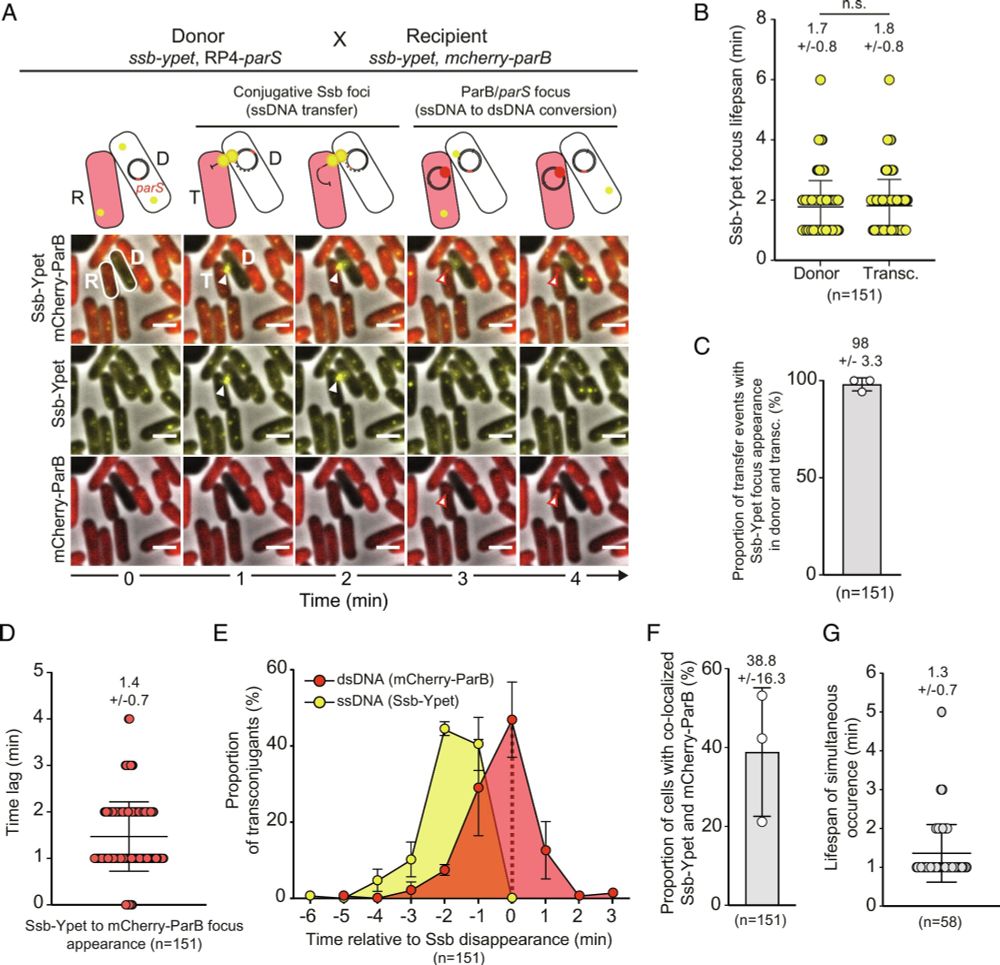
Biofilm architecture determines the dissemination of conjugative plasmids | PNAS
Plasmid conjugation is a contact-dependent horizontal gene transfer mechanism that
significantly contributes to the dissemination of antibiotic res...
www.pnas.org
April 28, 2025 at 7:03 AM
Biofilm architecture determines the dissemination of conjugative plasmids: We measured the spatiotemporal spread of plasmids in biofilms and found that plasmids only spread in some biofilm regions!
Collab with lab of @sbigot.bsky.social & Christian Lesterlin
www.pnas.org/doi/10.1073/...
Collab with lab of @sbigot.bsky.social & Christian Lesterlin
www.pnas.org/doi/10.1073/...
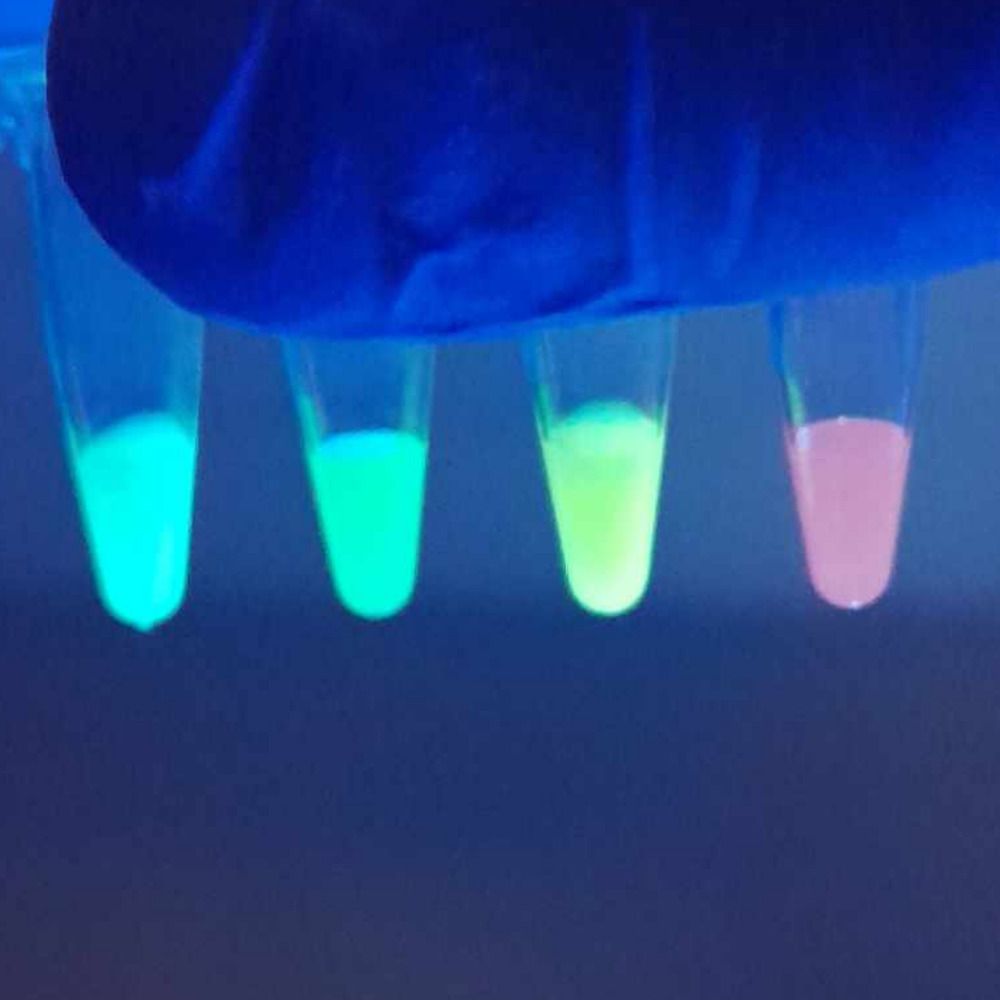
Our set of new prokaryote-optimized fluorescent proteins is now published ! #microbiology #microsky #microscopy 🧫🦠🔬
www.science.org/doi/10.1126/...
www.science.org/doi/10.1126/...
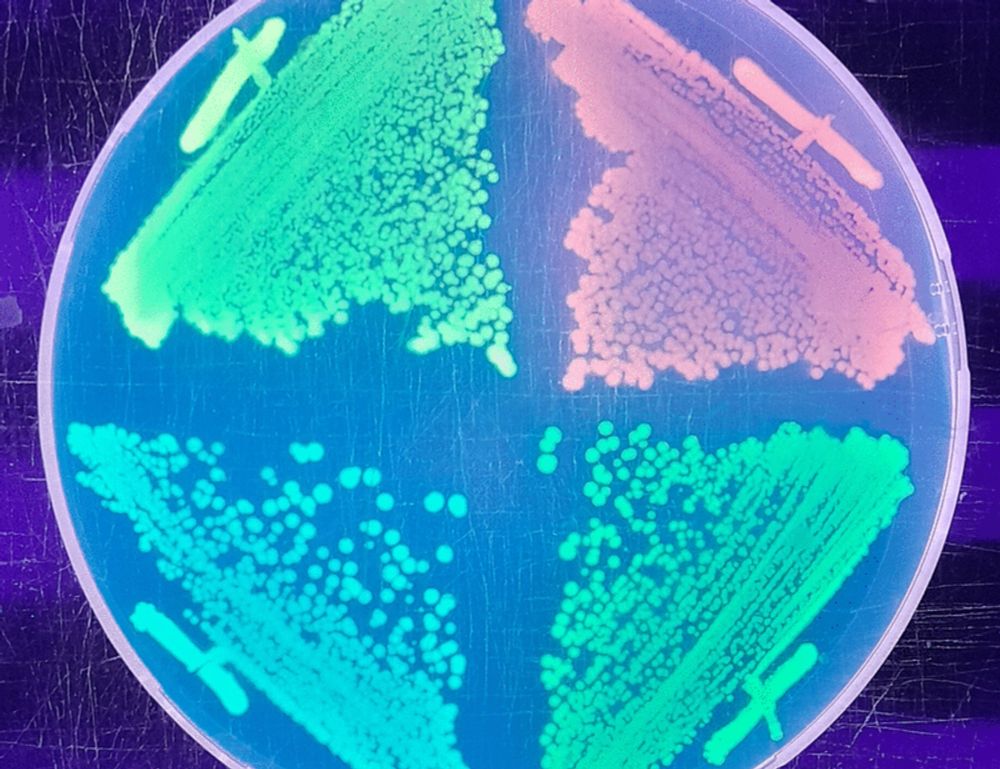
A palette of bright and photostable monomeric fluorescent proteins for bacterial time-lapse imaging
Bright and photostable monomeric fluorescent proteins enable long-term time-lapse imaging in E. coli.
www.science.org
April 23, 2025 at 3:02 PM
Our set of new prokaryote-optimized fluorescent proteins is now published ! #microbiology #microsky #microscopy 🧫🦠🔬
www.science.org/doi/10.1126/...
www.science.org/doi/10.1126/...
Reposted by Nathan Fraikin

MMSB - Molecular Microbiology and Structural Biochemistry @mmsb-lyon.bsky.social is now on Bluesky!
👉 Follow us to know about our last publications, prizes, job offers, seminars, events,...
👉 Follow us to know about our last publications, prizes, job offers, seminars, events,...
April 23, 2025 at 2:28 PM
MMSB - Molecular Microbiology and Structural Biochemistry @mmsb-lyon.bsky.social is now on Bluesky!
👉 Follow us to know about our last publications, prizes, job offers, seminars, events,...
👉 Follow us to know about our last publications, prizes, job offers, seminars, events,...
Reposted by Nathan Fraikin

New preprint from the lab!! Check it out!

🚨 New preprint! We know that plasmids are associated with very variable fitness costs in their different bacterial hosts. But, what is the contribution of each of the plasmid-genes in these host-specific effects? Study led by @jorgesastred.bsky.social, @sanmillan.bsky.social and myself! 1/14

Dissecting pOXA-48 fitness effects in clinical enterobacteria using plasmid-wide CRISPRi screens
Conjugative plasmids are the main vehicle for the spread of antimicrobial resistance (AMR) genes in clinical bacteria. AMR plasmids allow bacteria to survive antibiotic treatments, but they also produ...
www.biorxiv.org
January 24, 2025 at 12:49 PM
New preprint from the lab!! Check it out!
Reposted by Nathan Fraikin
New preprint from our Lesterlin Lab! Yannick Baffert and @nfrk92.bsky.social, in collaboration with @macerwan.bsky.social and @val-meve.bsky.social, shed light on the molecular mechanisms driving pOXA-48 plasmid maintenance and transfer. We reveal novel TA system, regulators, and T4SS components!
Genetic Determinants of pOXA-48 Plasmid Maintenance and Propagation in Escherichia coli
Conjugative plasmids are the main drivers of antibiotic resistance dissemination contributing to the emergence and extensive spread of multidrug resistance clinical bacterial pathogens. pOXA-48 plasmi...
www.biorxiv.org
January 25, 2025 at 9:20 AM
New preprint from our Lesterlin Lab! Yannick Baffert and @nfrk92.bsky.social, in collaboration with @macerwan.bsky.social and @val-meve.bsky.social, shed light on the molecular mechanisms driving pOXA-48 plasmid maintenance and transfer. We reveal novel TA system, regulators, and T4SS components!
Reposted by Nathan Fraikin

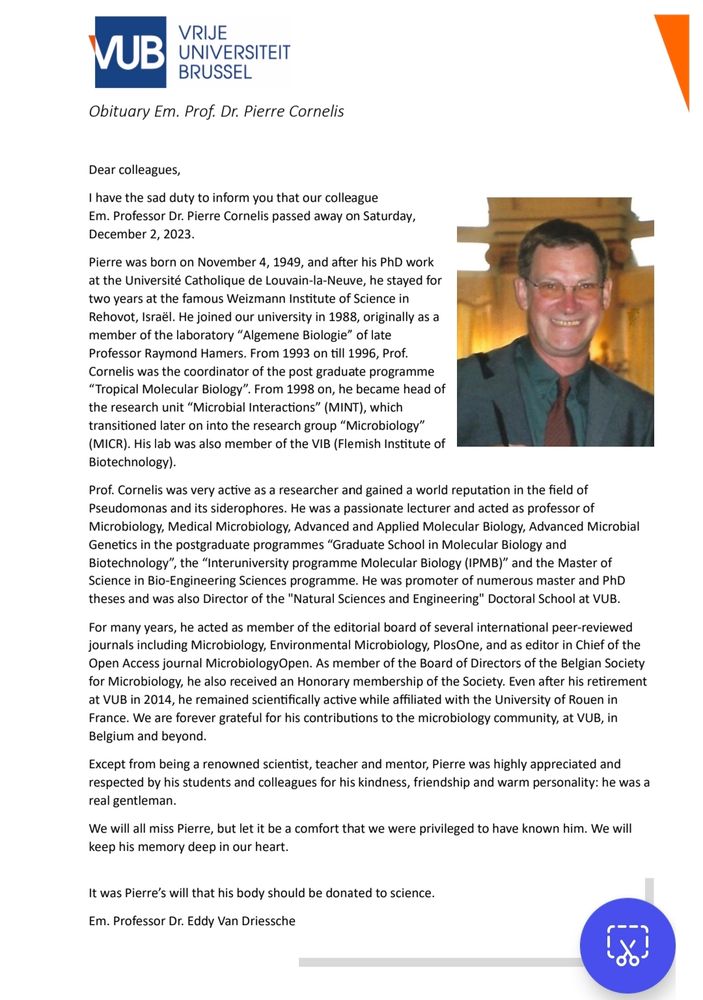
RIP Pierre. You were one of the best. Thank you for all you did for our field but more importantly, for me and all the people you helped. I will miss you. ❤️
December 8, 2023 at 12:09 AM
RIP Pierre. You were one of the best. Thank you for all you did for our field but more importantly, for me and all the people you helped. I will miss you. ❤️