



Sarah Bigot
@sbigot.bsky.social
Director of research CNRS at MMSB (C. Lesterlin/tacc team) interested in cellular and molecular mechanism of horizontal gene transfer
https://mmsb.cnrs.fr/equipe/transfert-d-adn-entre-cellules-bacteriennes/
https://mmsb.cnrs.fr/equipe/transfert-d-adn-entre-cellules-bacteriennes/
Reposted by Sarah Bigot

📢 Recrutement d’un(e) Maître(sses) de conférence en Biochimie générale, spécialité bactériologie moléculaire à MMSB
🔬Recherche
*Immunité anti-phages
*Réponse au stress, modulation de la croissance bactérienne
✉️ christophe.grangeasse@cnrs.fr
📚Enseignement : Université Lyon I
✉️ patrice.gouet@ibcp.fr
🔬Recherche
*Immunité anti-phages
*Réponse au stress, modulation de la croissance bactérienne
✉️ christophe.grangeasse@cnrs.fr
📚Enseignement : Université Lyon I
✉️ patrice.gouet@ibcp.fr
January 29, 2026 at 10:15 AM
📢 Recrutement d’un(e) Maître(sses) de conférence en Biochimie générale, spécialité bactériologie moléculaire à MMSB
🔬Recherche
*Immunité anti-phages
*Réponse au stress, modulation de la croissance bactérienne
✉️ christophe.grangeasse@cnrs.fr
📚Enseignement : Université Lyon I
✉️ patrice.gouet@ibcp.fr
🔬Recherche
*Immunité anti-phages
*Réponse au stress, modulation de la croissance bactérienne
✉️ christophe.grangeasse@cnrs.fr
📚Enseignement : Université Lyon I
✉️ patrice.gouet@ibcp.fr
Reposted by Sarah Bigot

Un poste de Maître de Conférence est ouvert pour rejoindre notre unité à Lyon !
Possibilité de rejoindre mon équipe pour travailler sur:
- caractérisation des mécanismes de défense anti-phage
- transfert horizontal et interactions entre éléments génétiques mobiles
N'hésitez pas à me contacter
Possibilité de rejoindre mon équipe pour travailler sur:
- caractérisation des mécanismes de défense anti-phage
- transfert horizontal et interactions entre éléments génétiques mobiles
N'hésitez pas à me contacter
📢 Recrutement d’un(e) Maître(sses) de conférence en Biochimie générale, spécialité bactériologie moléculaire à MMSB
🔬Recherche
*Immunité anti-phages
*Réponse au stress, modulation de la croissance bactérienne
✉️ christophe.grangeasse@cnrs.fr
📚Enseignement : Université Lyon I
✉️ patrice.gouet@ibcp.fr
🔬Recherche
*Immunité anti-phages
*Réponse au stress, modulation de la croissance bactérienne
✉️ christophe.grangeasse@cnrs.fr
📚Enseignement : Université Lyon I
✉️ patrice.gouet@ibcp.fr
January 29, 2026 at 8:39 PM
Un poste de Maître de Conférence est ouvert pour rejoindre notre unité à Lyon !
Possibilité de rejoindre mon équipe pour travailler sur:
- caractérisation des mécanismes de défense anti-phage
- transfert horizontal et interactions entre éléments génétiques mobiles
N'hésitez pas à me contacter
Possibilité de rejoindre mon équipe pour travailler sur:
- caractérisation des mécanismes de défense anti-phage
- transfert horizontal et interactions entre éléments génétiques mobiles
N'hésitez pas à me contacter
Reposted by Sarah Bigot


A prophage-encoded abortive infection protein preserves host and prophage spread www.nature.com/articles/s41...

A prophage-encoded abortive infection protein preserves host and prophage spread - Nature
A Gifsy-1 prophage–encoded higher eukaryotes and prokaryotes nucleotide-binding protein, HepS, senses Siphoviridae infection, activates abortive defence by cleaving host transfer RNAs, blocks rival ph...
www.nature.com
January 28, 2026 at 11:01 PM
Reposted by Sarah Bigot

Big week: welcomed a new baby boy Harris Lopatkin, AND our PlasAnn paper is finally out: academic.oup.com/nar/article/... (obviously the first more important than the second 🥰). Currently on leave but if anyone has the need to annotate large plasmids, go check it out!

PlasAnn: a curated plasmid-specific database and annotation pipeline for standardized gene and function analysis
Abstract. Conjugative plasmids are key drivers of bacterial adaptation, enabling the horizontal transfer of accessory genes within and across diverse micro
academic.oup.com
January 27, 2026 at 4:59 PM
Big week: welcomed a new baby boy Harris Lopatkin, AND our PlasAnn paper is finally out: academic.oup.com/nar/article/... (obviously the first more important than the second 🥰). Currently on leave but if anyone has the need to annotate large plasmids, go check it out!
Reposted by Sarah Bigot

New paper out in @pnas.org, and it made the cover! 👁️
We represent plasmids as circles and mutations as dots, resembling an eye, because in this paper we literally 𝑤𝑎𝑡𝑐ℎ plasmids evolve.
‼️Check Paula’s 🧵 and the paper👇
𝗣𝗹𝗮𝘀𝗺𝗶𝗱 𝗺𝘂𝘁𝗮𝘁𝗶𝗼𝗻 𝗿𝗮𝘁𝗲𝘀 𝘀𝗰𝗮𝗹𝗲 𝘄𝗶𝘁𝗵 𝗰𝗼𝗽𝘆 𝗻𝘂𝗺𝗯𝗲𝗿
www.pnas.org/doi/10.1073/...
We represent plasmids as circles and mutations as dots, resembling an eye, because in this paper we literally 𝑤𝑎𝑡𝑐ℎ plasmids evolve.
‼️Check Paula’s 🧵 and the paper👇
𝗣𝗹𝗮𝘀𝗺𝗶𝗱 𝗺𝘂𝘁𝗮𝘁𝗶𝗼𝗻 𝗿𝗮𝘁𝗲𝘀 𝘀𝗰𝗮𝗹𝗲 𝘄𝗶𝘁𝗵 𝗰𝗼𝗽𝘆 𝗻𝘂𝗺𝗯𝗲𝗿
www.pnas.org/doi/10.1073/...

January 27, 2026 at 8:23 PM
New paper out in @pnas.org, and it made the cover! 👁️
We represent plasmids as circles and mutations as dots, resembling an eye, because in this paper we literally 𝑤𝑎𝑡𝑐ℎ plasmids evolve.
‼️Check Paula’s 🧵 and the paper👇
𝗣𝗹𝗮𝘀𝗺𝗶𝗱 𝗺𝘂𝘁𝗮𝘁𝗶𝗼𝗻 𝗿𝗮𝘁𝗲𝘀 𝘀𝗰𝗮𝗹𝗲 𝘄𝗶𝘁𝗵 𝗰𝗼𝗽𝘆 𝗻𝘂𝗺𝗯𝗲𝗿
www.pnas.org/doi/10.1073/...
We represent plasmids as circles and mutations as dots, resembling an eye, because in this paper we literally 𝑤𝑎𝑡𝑐ℎ plasmids evolve.
‼️Check Paula’s 🧵 and the paper👇
𝗣𝗹𝗮𝘀𝗺𝗶𝗱 𝗺𝘂𝘁𝗮𝘁𝗶𝗼𝗻 𝗿𝗮𝘁𝗲𝘀 𝘀𝗰𝗮𝗹𝗲 𝘄𝗶𝘁𝗵 𝗰𝗼𝗽𝘆 𝗻𝘂𝗺𝗯𝗲𝗿
www.pnas.org/doi/10.1073/...
Reposted by Sarah Bigot
New publication from the Lesterlin (TacC) team at MMSB! Congratulations to all authors. In collaboration with Pierre Bogaerts (UCL Belgium) and J. Villa (UB Barcelona)
doi.org/10.1093/nar/...
doi.org/10.1093/nar/...
January 26, 2026 at 9:37 AM
New publication from the Lesterlin (TacC) team at MMSB! Congratulations to all authors. In collaboration with Pierre Bogaerts (UCL Belgium) and J. Villa (UB Barcelona)
doi.org/10.1093/nar/...
doi.org/10.1093/nar/...
Reposted by Sarah Bigot

#microsky
Massive update of preprint with @polardlab.bsky.social!
Bacteria have evolved two systems to recombine extracellular DNA
www.biorxiv.org/content/10.1...
Kudos to lead authors Léo Hardy, Violette Morales and Clothilde Rousseau, and to outstanding Dalia's lab and @epcrocha.bsky.social
🧵⬇️
Massive update of preprint with @polardlab.bsky.social!
Bacteria have evolved two systems to recombine extracellular DNA
www.biorxiv.org/content/10.1...
Kudos to lead authors Léo Hardy, Violette Morales and Clothilde Rousseau, and to outstanding Dalia's lab and @epcrocha.bsky.social
🧵⬇️
Two D-loop resolution systems enable natural genetic transformation in bacteria
Natural transformation is a widespread mechanism driving genetic exchanges in bacteria. It proceeds by the capture and internalization of exogenous DNA in linear single strands, ultimately integrated in the genome by homologous recombination. It is unknown how the RecA-directed D-loop intermediate of this dedicated recombination pathway is processed. We report that resolution of the transformation D-loop depends on two endonucleases of opposing phylogenetic distribution in bacteria. One is YraN, which has co-evolved and interacts with the ComM helicase, known to extend DNA recombination at the transformation D-loop. The other is CoiA, which is restricted to the Bacillota. CoiA is shown to be a resolvase of the transformation D-loop, extended by the RadA helicase in these species. We demonstrate that both YraN and CoiA act synergistically with their cognate helicases. These findings reveal that bacteria have evolved two helicase/nuclease pairs for the maturation and recombination extension of the transformation D-loop. ### Competing Interest Statement The authors have declared no competing interest. Agence Nationale de la Recherche, https://ror.org/00rbzpz17, ANR-20-CE12-0004, ANR-10-BLAN-1331, ANR-17-CE13-0031, ANR-22-CE44-0044, ANR-10-LABX-62-IBEID, PIA/ANR-16-CONV-0005 Fondation pour la Recherche Médicale, https://ror.org/04w6kn183, FDT202001010890 European Union's Horizon research and innovation programme. Marie Skłodowska-Curie Postdoctoral Fellowships, 101208987 National Institute of Health, USA, R35GM128674
www.biorxiv.org
January 16, 2026 at 4:24 PM
#microsky
Massive update of preprint with @polardlab.bsky.social!
Bacteria have evolved two systems to recombine extracellular DNA
www.biorxiv.org/content/10.1...
Kudos to lead authors Léo Hardy, Violette Morales and Clothilde Rousseau, and to outstanding Dalia's lab and @epcrocha.bsky.social
🧵⬇️
Massive update of preprint with @polardlab.bsky.social!
Bacteria have evolved two systems to recombine extracellular DNA
www.biorxiv.org/content/10.1...
Kudos to lead authors Léo Hardy, Violette Morales and Clothilde Rousseau, and to outstanding Dalia's lab and @epcrocha.bsky.social
🧵⬇️
Reposted by Sarah Bigot
🚨L'ENS de Lyon recrute un.e maître de conférence qui rejoindra le CIRI pour développer ses recherches sur l'immunité bactérienne, les transferts horizontaux et les MGE.
📖 Une très belle opportunité d'enseigner à des étudiants brillants tout en menant des recherches excitantes !
📖 Une très belle opportunité d'enseigner à des étudiants brillants tout en menant des recherches excitantes !
📢 Recruitment of an Associate Professor (Maître de conférences) in Bacteriology at CIRI and ENS de Lyon.
Research at @ciri-lyon.bsky.social @francoisrousset.bsky.social
@labxc.bsky.social
Anti-phage Immunity, Horizontal gene/ MGE transfer
📚 Teaching at ENS de Lyon within the Department of Biology.
Research at @ciri-lyon.bsky.social @francoisrousset.bsky.social
@labxc.bsky.social
Anti-phage Immunity, Horizontal gene/ MGE transfer
📚 Teaching at ENS de Lyon within the Department of Biology.
January 14, 2026 at 5:02 PM
🚨L'ENS de Lyon recrute un.e maître de conférence qui rejoindra le CIRI pour développer ses recherches sur l'immunité bactérienne, les transferts horizontaux et les MGE.
📖 Une très belle opportunité d'enseigner à des étudiants brillants tout en menant des recherches excitantes !
📖 Une très belle opportunité d'enseigner à des étudiants brillants tout en menant des recherches excitantes !
Reposted by Sarah Bigot

Bacteria chromosomes contain Genomic Islands that provide virulence, antibiotic resistance, MGE-defence,... They transfer between cells, but the mechanism of most remains elusive.
Here we explore the conjugative capacity of these mysterious Genomic Islands.
www.biorxiv.org/content/10.6...
Here we explore the conjugative capacity of these mysterious Genomic Islands.
www.biorxiv.org/content/10.6...
www.biorxiv.org
January 14, 2026 at 10:14 AM
Bacteria chromosomes contain Genomic Islands that provide virulence, antibiotic resistance, MGE-defence,... They transfer between cells, but the mechanism of most remains elusive.
Here we explore the conjugative capacity of these mysterious Genomic Islands.
www.biorxiv.org/content/10.6...
Here we explore the conjugative capacity of these mysterious Genomic Islands.
www.biorxiv.org/content/10.6...
Reposted by Sarah Bigot

My team at @cbitoulouse.bsky.social is recruiting a postdoc #bioinformatics with solid experience in metagenomic analyses.
Interest in evolution, ecology & MGEs is important.
The offer stands until the perfect candidate is found, and it could be you 🫵
🔁 🙏
#microSky #phagesky #UTIsky
@cnrs.fr
Interest in evolution, ecology & MGEs is important.
The offer stands until the perfect candidate is found, and it could be you 🫵
🔁 🙏
#microSky #phagesky #UTIsky
@cnrs.fr

January 15, 2026 at 11:19 AM
My team at @cbitoulouse.bsky.social is recruiting a postdoc #bioinformatics with solid experience in metagenomic analyses.
Interest in evolution, ecology & MGEs is important.
The offer stands until the perfect candidate is found, and it could be you 🫵
🔁 🙏
#microSky #phagesky #UTIsky
@cnrs.fr
Interest in evolution, ecology & MGEs is important.
The offer stands until the perfect candidate is found, and it could be you 🫵
🔁 🙏
#microSky #phagesky #UTIsky
@cnrs.fr
Reposted by Sarah Bigot
Neisseria gonorrhoeae carries an unusually large number of restriction–modification systems (up to 16!), many of which are phase-variable. How does this affect plasmid transmission in gonococci? doi.org/10.64898/202...
doi.org
January 13, 2026 at 1:40 PM
Neisseria gonorrhoeae carries an unusually large number of restriction–modification systems (up to 16!), many of which are phase-variable. How does this affect plasmid transmission in gonococci? doi.org/10.64898/202...
Reposted by Sarah Bigot
Une opportunité unique de former des étudiants talentueux à la biologie des bactéries à l'ENS Lyon et mener des recherches sur les phages, l'immunité bactérienne, le transfert génétique horizontal (HGT) et/ou les éléments génétiques mobiles au sein du département de bactériologie du CIRI.
📢 Recruitment of an Associate Professor (Maître de conférences) in Bacteriology at CIRI and ENS de Lyon.
Research at @ciri-lyon.bsky.social @francoisrousset.bsky.social
@labxc.bsky.social
Anti-phage Immunity, Horizontal gene/ MGE transfer
📚 Teaching at ENS de Lyon within the Department of Biology.
Research at @ciri-lyon.bsky.social @francoisrousset.bsky.social
@labxc.bsky.social
Anti-phage Immunity, Horizontal gene/ MGE transfer
📚 Teaching at ENS de Lyon within the Department of Biology.
January 13, 2026 at 2:01 PM
Une opportunité unique de former des étudiants talentueux à la biologie des bactéries à l'ENS Lyon et mener des recherches sur les phages, l'immunité bactérienne, le transfert génétique horizontal (HGT) et/ou les éléments génétiques mobiles au sein du département de bactériologie du CIRI.
Reposted by Sarah Bigot
📢 Recruitment of an Associate Professor (Maître de conférences) in Bacteriology at CIRI and ENS de Lyon.
Research at @ciri-lyon.bsky.social @francoisrousset.bsky.social
@labxc.bsky.social
Anti-phage Immunity, Horizontal gene/ MGE transfer
📚 Teaching at ENS de Lyon within the Department of Biology.
Research at @ciri-lyon.bsky.social @francoisrousset.bsky.social
@labxc.bsky.social
Anti-phage Immunity, Horizontal gene/ MGE transfer
📚 Teaching at ENS de Lyon within the Department of Biology.
January 13, 2026 at 8:47 AM
📢 Recruitment of an Associate Professor (Maître de conférences) in Bacteriology at CIRI and ENS de Lyon.
Research at @ciri-lyon.bsky.social @francoisrousset.bsky.social
@labxc.bsky.social
Anti-phage Immunity, Horizontal gene/ MGE transfer
📚 Teaching at ENS de Lyon within the Department of Biology.
Research at @ciri-lyon.bsky.social @francoisrousset.bsky.social
@labxc.bsky.social
Anti-phage Immunity, Horizontal gene/ MGE transfer
📚 Teaching at ENS de Lyon within the Department of Biology.
New bioRxiv preprint from our Lesterlin lab
How early gene expression coupled to DNA processing boosts resistance plasmid spread.
With @nfrk92.bsky.social in collab with Y. Yamaichi lab
👉 doi.org/10.64898/202...
How early gene expression coupled to DNA processing boosts resistance plasmid spread.
With @nfrk92.bsky.social in collab with Y. Yamaichi lab
👉 doi.org/10.64898/202...

Coupling DNA processing to early gene expression drives antibiotic resistance plasmid dissemination
The rapid global spread of antibiotic resistance is mediated by conjugative plasmids, yet how these elements establish immediately after entering new bacterial hosts remains poorly understood. Here we...
doi.org
January 12, 2026 at 8:56 AM
New bioRxiv preprint from our Lesterlin lab
How early gene expression coupled to DNA processing boosts resistance plasmid spread.
With @nfrk92.bsky.social in collab with Y. Yamaichi lab
👉 doi.org/10.64898/202...
How early gene expression coupled to DNA processing boosts resistance plasmid spread.
With @nfrk92.bsky.social in collab with Y. Yamaichi lab
👉 doi.org/10.64898/202...
Reposted by Sarah Bigot
Beautiful work from Jay Winans in the Nadell Lab @dartmouthartsci.bsky.social showing IncF plasmid pED208 spreading like wildfire through E. coli biofilms www.cell.com/current-biol...

Bacterial conjugation can restructure biofilms and increase their resilience while constraining host cell dispersal
Winans et al. show how plasmid transfer can reorganize bacterial communities into
dense aggregates, conferring antibiotic and phage tolerance to otherwise sensitive
host cells. Conjugation-dependent a...
www.cell.com
December 16, 2025 at 11:02 PM
Beautiful work from Jay Winans in the Nadell Lab @dartmouthartsci.bsky.social showing IncF plasmid pED208 spreading like wildfire through E. coli biofilms www.cell.com/current-biol...
Reposted by Sarah Bigot
New publication from the Grangeasse's team at MMSB! Congratulations to all authors. In collaboration with Cecile Morlot (IBS, Grenoble) and David Rooper (Warwick university).
To know more : rdcu.be/eVsin
To know more : rdcu.be/eVsin

Streptococcus pneumoniae S protein activates PBP1a to regulate peptidoglycan remodelling and cell division
Nature Microbiology - S protein interacts with and activates PBP1a during cell division, as part of a larger GpsB-associated multiprotein complex that coordinates peptidoglycan remodelling in...
rdcu.be
December 20, 2025 at 2:01 PM
New publication from the Grangeasse's team at MMSB! Congratulations to all authors. In collaboration with Cecile Morlot (IBS, Grenoble) and David Rooper (Warwick university).
To know more : rdcu.be/eVsin
To know more : rdcu.be/eVsin
Reposted by Sarah Bigot
📣New preprint with @rberntsson.bsky.social👇We overturn the long-standing view that Gram-positive bacteria lack conjugative pili! We identify pili-forming proteins in a wide range of bacteria and show they're essential for the spread of #antibioticresistance #AMR 🧵1/6
www.biorxiv.org/content/10.6...
www.biorxiv.org/content/10.6...

Pili are essential for conjugation also in many Gram-positive bacteria
Type IV secretion systems (T4SS) enable the spread of antibiotic resistance and other virulence factors. In Gram-positive bacteria, T4SSs have long been thought to lack VirB2-like proteins that form c...
www.biorxiv.org
December 30, 2025 at 6:03 PM
📣New preprint with @rberntsson.bsky.social👇We overturn the long-standing view that Gram-positive bacteria lack conjugative pili! We identify pili-forming proteins in a wide range of bacteria and show they're essential for the spread of #antibioticresistance #AMR 🧵1/6
www.biorxiv.org/content/10.6...
www.biorxiv.org/content/10.6...
Reposted by Sarah Bigot
We propose immuno-centric view of secreted polymorphic toxin diversification and involvement of novel XPC systems in this process! Fantastic work of @jmartinkus.bsky.social with lab of @cascaleslab.bsky.social !
www.cell.com/current-biol...
www.cell.com/current-biol...

Poly-immunity arrays associated with Rhs toxins confer wide protection against competitors
Martinkus et al. show that Photorhabdus and Xenorhabdus species encode arrays of immunity
genes whose protein products neutralize toxins secreted by competitors. These arrays,
often linked to Xer pass...
www.cell.com
December 15, 2025 at 5:45 PM
We propose immuno-centric view of secreted polymorphic toxin diversification and involvement of novel XPC systems in this process! Fantastic work of @jmartinkus.bsky.social with lab of @cascaleslab.bsky.social !
www.cell.com/current-biol...
www.cell.com/current-biol...
Reposted by Sarah Bigot
Our story on plasmid streamlining is now published in PLoS Biology! With @andrewmatthews.bsky.social and @sonjalehtinen.bsky.social
#MicroSky #Mevosky
journals.plos.org/plosbiology/...
#MicroSky #Mevosky
journals.plos.org/plosbiology/...

Plasmid streamlining drives the extinction of antibiotic resistance plasmids under selection for horizontal transmission
Conjugative plasmids play an important role in the spread of antimicrobial resistance (AMR) genes among pathogenic bacteria. This study shows that AMR loss in evolving populations is associated with t...
journals.plos.org
December 12, 2025 at 12:09 PM
Our story on plasmid streamlining is now published in PLoS Biology! With @andrewmatthews.bsky.social and @sonjalehtinen.bsky.social
#MicroSky #Mevosky
journals.plos.org/plosbiology/...
#MicroSky #Mevosky
journals.plos.org/plosbiology/...
Reposted by Sarah Bigot

Our new paper on DusB’s role in redox metabolism in V. cholerae is now out in @narjournal.bsky.social linking tRNAmodif enzymes and metabolic adaptation.
Beyond RNA modification: a tRNA-modifying enzyme shaping oxidative stress resilience and metabolism in V. cholerae #rnasky #rnabiology
😊🦠💫
Beyond RNA modification: a tRNA-modifying enzyme shaping oxidative stress resilience and metabolism in V. cholerae #rnasky #rnabiology
😊🦠💫

Beyond RNA modification: a novel role for tRNA modifying enzyme in oxidative stress response and metabolism
Abstract. RNA modifications play a fundamental role in regulating essential cellular processes, including translation fidelity and stress adaptation. While
academic.oup.com
December 13, 2025 at 8:57 PM
Our new paper on DusB’s role in redox metabolism in V. cholerae is now out in @narjournal.bsky.social linking tRNAmodif enzymes and metabolic adaptation.
Beyond RNA modification: a tRNA-modifying enzyme shaping oxidative stress resilience and metabolism in V. cholerae #rnasky #rnabiology
😊🦠💫
Beyond RNA modification: a tRNA-modifying enzyme shaping oxidative stress resilience and metabolism in V. cholerae #rnasky #rnabiology
😊🦠💫
Reposted by Sarah Bigot
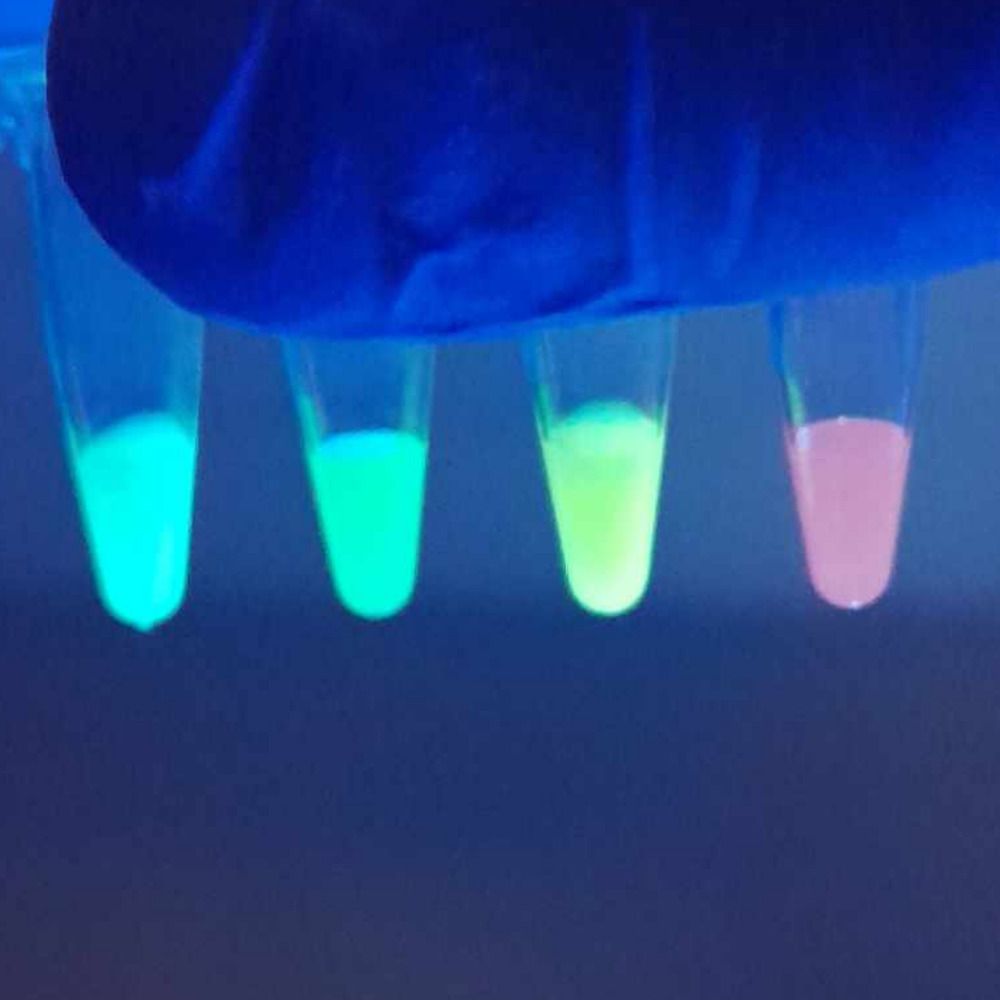
academic.oup.com/nar/article/... Collaboration with Y. Yamaichi. Killing donor bacteria in conjugation mixes using water enables transcriptomic profiling of early plasmid genes ! Superb tool for studying zygotic induction of these early genes, which include anti-SOS and anti-RM factors. #microsky

Selective elimination of donor bacteria enables global profiling of plasmid gene expression at early stages of conjugation
Abstract. Conjugative plasmids are a major driving force for the dissemination of antimicrobial resistance. During conjugation, plasmid DNA is transferred
academic.oup.com
December 10, 2025 at 6:06 PM
academic.oup.com/nar/article/... Collaboration with Y. Yamaichi. Killing donor bacteria in conjugation mixes using water enables transcriptomic profiling of early plasmid genes ! Superb tool for studying zygotic induction of these early genes, which include anti-SOS and anti-RM factors. #microsky
Reposted by Sarah Bigot
Our new paper maps the tRNA modification landscape in Vibrio cholerae! 💫
We describe differences from E. coli and discuss links to decoding of stress-related codons 🦠
Huge thanks to amazing co-authors and collaborators!
@plos.org #rnasky #microsky #tRNAmodifications
We describe differences from E. coli and discuss links to decoding of stress-related codons 🦠
Huge thanks to amazing co-authors and collaborators!
@plos.org #rnasky #microsky #tRNAmodifications

The tRNA epitranscriptomic landscape and RNA modification enzymes in Vibrio cholerae
Author summary This study charts the first genome-wide map of transfer RNA (tRNA) modifications in the cholera pathogen, Vibrio cholerae, revealing how chemical marks on tRNAs shape translation and st...
journals.plos.org
November 3, 2025 at 11:58 PM
Our new paper maps the tRNA modification landscape in Vibrio cholerae! 💫
We describe differences from E. coli and discuss links to decoding of stress-related codons 🦠
Huge thanks to amazing co-authors and collaborators!
@plos.org #rnasky #microsky #tRNAmodifications
We describe differences from E. coli and discuss links to decoding of stress-related codons 🦠
Huge thanks to amazing co-authors and collaborators!
@plos.org #rnasky #microsky #tRNAmodifications
Reposted by Sarah Bigot

Pleased to share our recent article in PNAS - a collaboration with @jessicaandreani.bsky.social & Pablo Radicella, with important roles played by many members of each team.
A tripartite protein complex promotes DNA transport during natural transformation in Firmicutes www.pnas.org/doi/10.1073/...
A tripartite protein complex promotes DNA transport during natural transformation in Firmicutes www.pnas.org/doi/10.1073/...

A tripartite protein complex promotes DNA transport during natural transformation in Firmicutes | PNAS
Natural genetic transformation is a conserved mechanism of bacterial horizontal gene
transfer, which is directed entirely by the recipient cell and...
www.pnas.org
November 26, 2025 at 7:44 AM
Pleased to share our recent article in PNAS - a collaboration with @jessicaandreani.bsky.social & Pablo Radicella, with important roles played by many members of each team.
A tripartite protein complex promotes DNA transport during natural transformation in Firmicutes www.pnas.org/doi/10.1073/...
A tripartite protein complex promotes DNA transport during natural transformation in Firmicutes www.pnas.org/doi/10.1073/...
Reposted by Sarah Bigot

What is the best strategy to win any contest?
Eliminate your opponents of course.
Recently, my friend @fernpizza.bsky.social showed how plasmids compete intracellularly (check out his paper published in Science today!). With @baym.lol, we now know they can fight.
www.biorxiv.org/content/10.1...
Eliminate your opponents of course.
Recently, my friend @fernpizza.bsky.social showed how plasmids compete intracellularly (check out his paper published in Science today!). With @baym.lol, we now know they can fight.
www.biorxiv.org/content/10.1...

November 20, 2025 at 10:12 PM
What is the best strategy to win any contest?
Eliminate your opponents of course.
Recently, my friend @fernpizza.bsky.social showed how plasmids compete intracellularly (check out his paper published in Science today!). With @baym.lol, we now know they can fight.
www.biorxiv.org/content/10.1...
Eliminate your opponents of course.
Recently, my friend @fernpizza.bsky.social showed how plasmids compete intracellularly (check out his paper published in Science today!). With @baym.lol, we now know they can fight.
www.biorxiv.org/content/10.1...
Reposted by Sarah Bigot

Hot off the press! Our latest paper led by @fernpizza.bsky.social, understanding how plasmids evolve inside cells. These small, self-replicating DNA circles live inside bacteria and carry antibiotic resistance genes, but also compete with one another to replicate. 1/
www.science.org/doi/10.1126/...
www.science.org/doi/10.1126/...

Intracellular competition shapes plasmid population dynamics
From populations of multicellular organisms to selfish genetic elements, conflicts between levels of biological organization are central to evolution. Plasmids are extrachromosomal, self-replicating g...
www.science.org
November 20, 2025 at 9:42 PM
Hot off the press! Our latest paper led by @fernpizza.bsky.social, understanding how plasmids evolve inside cells. These small, self-replicating DNA circles live inside bacteria and carry antibiotic resistance genes, but also compete with one another to replicate. 1/
www.science.org/doi/10.1126/...
www.science.org/doi/10.1126/...