



Yanrui Ye
@yanruiye.bsky.social
Associate professor @ South China University of Technology. Interested in synthetic biology, genome editing, and directed evolution.
Reposted by Yanrui Ye

Overflow metabolism in bacterial, yeast, and mammalian cells: different names, same game
doi.org/10.1038/s443...
doi.org/10.1038/s443...

September 14, 2025 at 7:13 AM
Overflow metabolism in bacterial, yeast, and mammalian cells: different names, same game
doi.org/10.1038/s443...
doi.org/10.1038/s443...
Reposted by Yanrui Ye

Glad to contribute to this collaborative community platform.
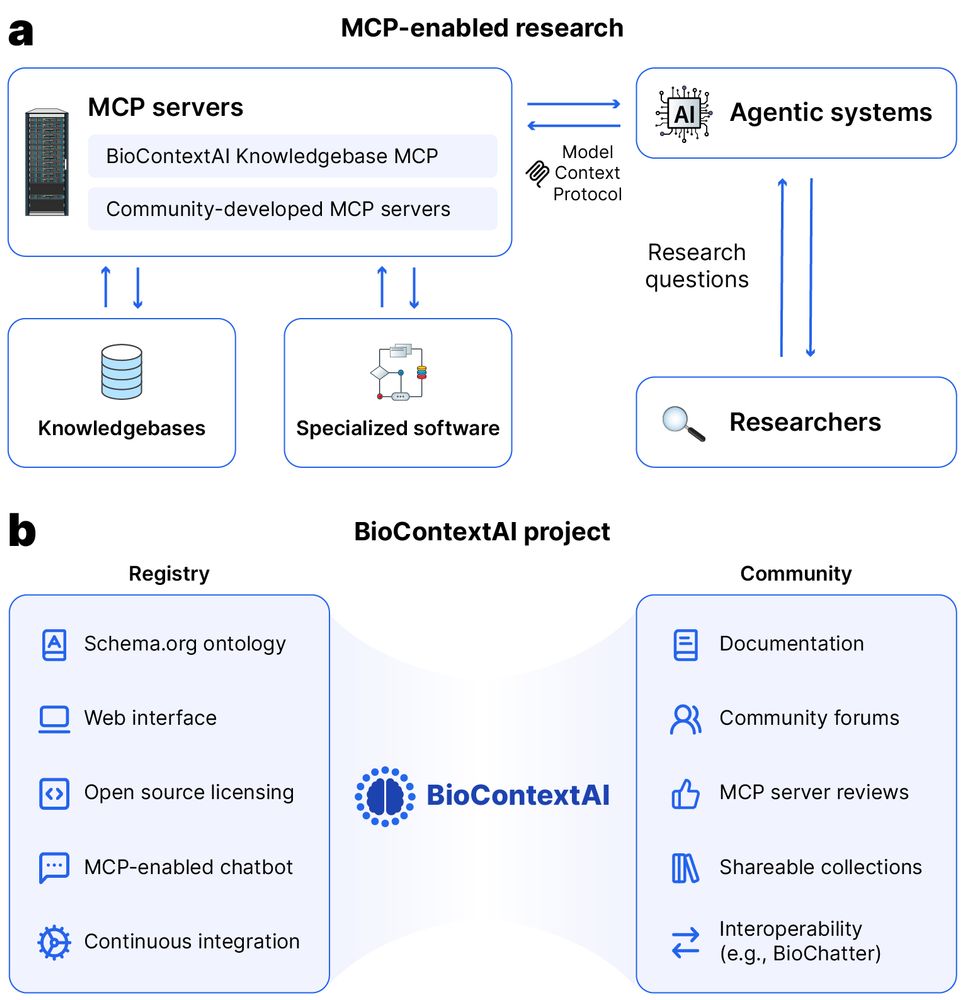
A case study shows MCP servers working together - combining BioContextAI Knowledgebase with our omnipath omnipathdb.org MCP (work in progress) to showcase interoperability. Looking forward to see how the ecosystem evolves!
A case study shows MCP servers working together - combining BioContextAI Knowledgebase with our omnipath omnipathdb.org MCP (work in progress) to showcase interoperability. Looking forward to see how the ecosystem evolves!

Preprint alert 🚨 Do you use chatbots in your work or even build MCP servers and agentic systems yourself?
Or would you like to find a way to use biomedical tools using natural language?
Then check out biocontext.ai, now out on bioRxiv: www.biorxiv.org/content/10.1...
Or would you like to find a way to use biomedical tools using natural language?
Then check out biocontext.ai, now out on bioRxiv: www.biorxiv.org/content/10.1...
July 31, 2025 at 7:37 AM
Glad to contribute to this collaborative community platform.
A case study shows MCP servers working together - combining BioContextAI Knowledgebase with our omnipath omnipathdb.org MCP (work in progress) to showcase interoperability. Looking forward to see how the ecosystem evolves!
A case study shows MCP servers working together - combining BioContextAI Knowledgebase with our omnipath omnipathdb.org MCP (work in progress) to showcase interoperability. Looking forward to see how the ecosystem evolves!
Reposted by Yanrui Ye

No paywall:
www.cell.com/action/show...
www.cell.com/action/show...
September 1, 2025 at 6:54 PM
No paywall:
www.cell.com/action/show...
www.cell.com/action/show...
Reposted by Yanrui Ye

Happy to share the peer-reviewed and updated version of our work on OrthoRep-driven evolution of aaRSs for genetic code expansion with unnatural amino acids. Congrats to Yuichi Furuhata, a true master bioengineer, on leading this excellent work! www.nature.com/articles/s41...
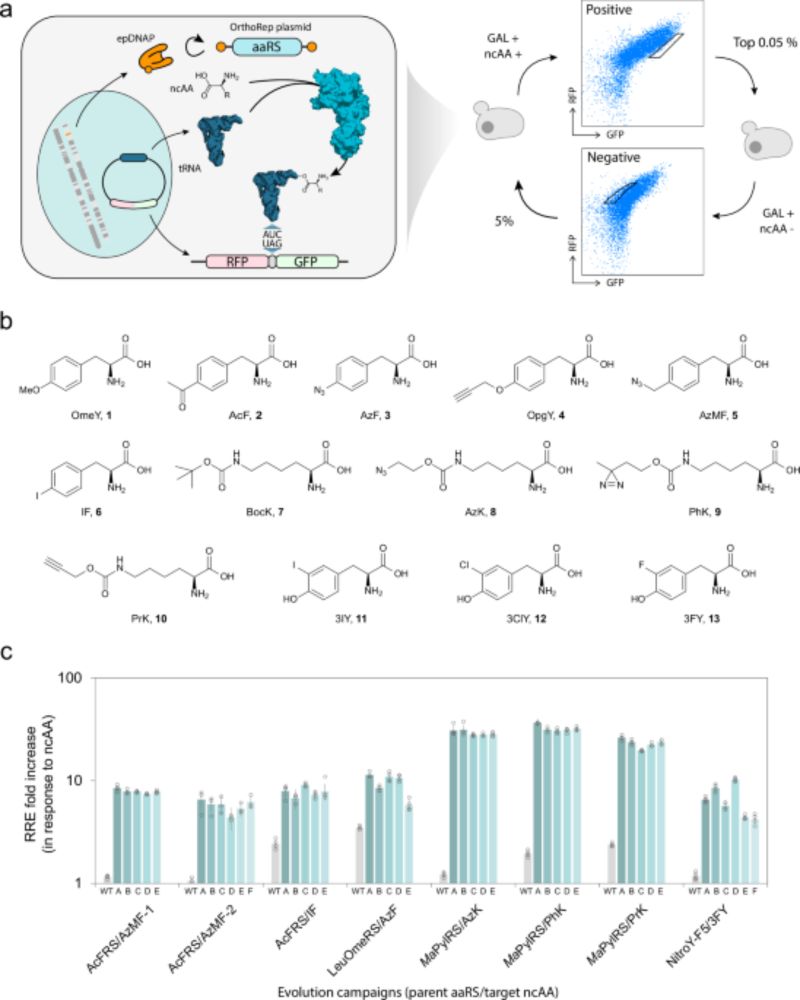
Directed evolution of aminoacyl-tRNA synthetases through in vivo hypermutation - Nature Communications
Genetic code expansion (GCE) enables the incorporation of new amino acids into proteins. Here, authors demonstrate the rapid OrthoRep-driven evolution of aminoacyl-tRNA synthetases for GCE, increasing...
www.nature.com
May 24, 2025 at 3:02 PM
Happy to share the peer-reviewed and updated version of our work on OrthoRep-driven evolution of aaRSs for genetic code expansion with unnatural amino acids. Congrats to Yuichi Furuhata, a true master bioengineer, on leading this excellent work! www.nature.com/articles/s41...
Reposted by Yanrui Ye

Online now: An in vivo target mutagenesis system for multiple hosts

An in vivo target mutagenesis system for multiple hosts
This study developed an in vivo targeted mutagenesis system for multiple hosts based on replication elements of broad host-range plasmids. This system is designed to accelerate the rapid evolution of proteins and metabolic pathways, further leveraging the performance advantages of unconventional hosts.
dlvr.it
May 11, 2025 at 3:15 PM
Online now: An in vivo target mutagenesis system for multiple hosts
Reposted by Yanrui Ye

Innovation takes time
US scientists who received renewals from the NIH over the past four decades produced more novel research than those who didn’t
https://go.nature.com/44s6cc5
US scientists who received renewals from the NIH over the past four decades produced more novel research than those who didn’t
https://go.nature.com/44s6cc5
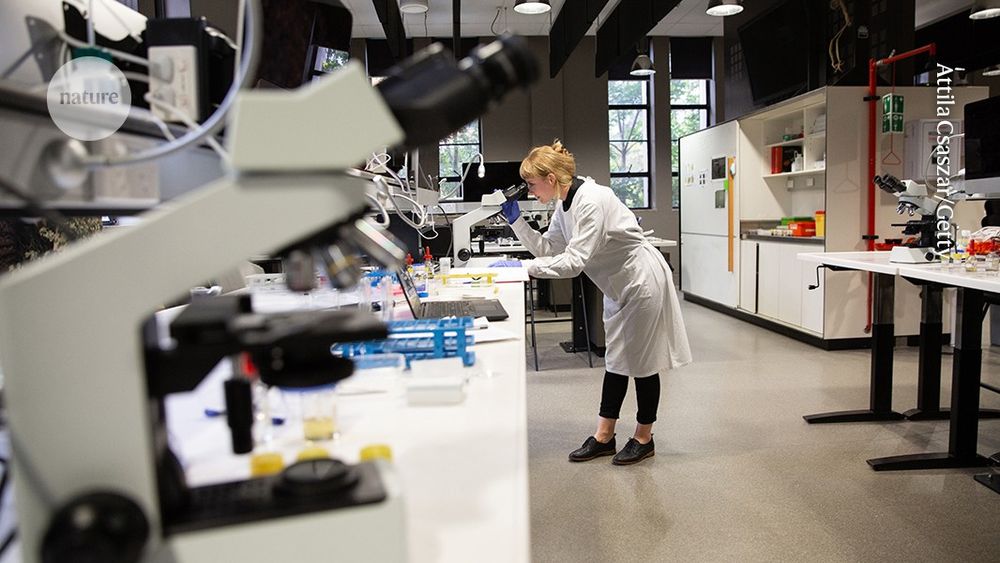
Renewal of NIH grants linked to more innovative results, study finds
Nature - Survey of hundreds of scientists’ work suggests that cutting off funding disrupts focus and reduces the novelty of research.
go.nature.com
May 10, 2025 at 1:49 PM
Innovation takes time
US scientists who received renewals from the NIH over the past four decades produced more novel research than those who didn’t
https://go.nature.com/44s6cc5
US scientists who received renewals from the NIH over the past four decades produced more novel research than those who didn’t
https://go.nature.com/44s6cc5
Reposted by Yanrui Ye
A strain of bacterium that often causes infections in hospital can break down plastic
https://go.nature.com/3SvsiTC
https://go.nature.com/3SvsiTC
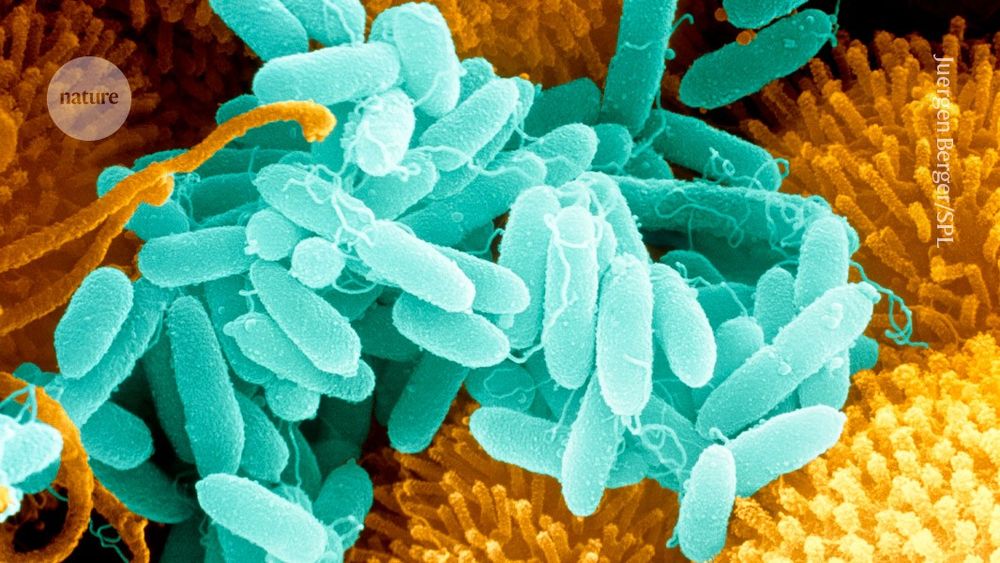
Microbe that infests hospitals can digest medical-grade plastic ― a first
Nature - The bacterium Pseudomonas aeruginosa produces an enzyme that breaks down biodegradable plastics.
go.nature.com
May 10, 2025 at 10:47 AM
A strain of bacterium that often causes infections in hospital can break down plastic
https://go.nature.com/3SvsiTC
https://go.nature.com/3SvsiTC
Reposted by Yanrui Ye
Molecular process control for industrial biotechnology
www.cell.com/trends/biote...
www.cell.com/trends/biote...

Molecular process control for industrial biotechnology
The development of sustainable and economically competitive biotechnological processes
is a central challenge of modern industrial biotechnology. Conventional strategies
such as macroscopic and molecu...
www.cell.com
May 9, 2025 at 7:06 AM
Molecular process control for industrial biotechnology
www.cell.com/trends/biote...
www.cell.com/trends/biote...
Reposted by Yanrui Ye

Reposted by Yanrui Ye

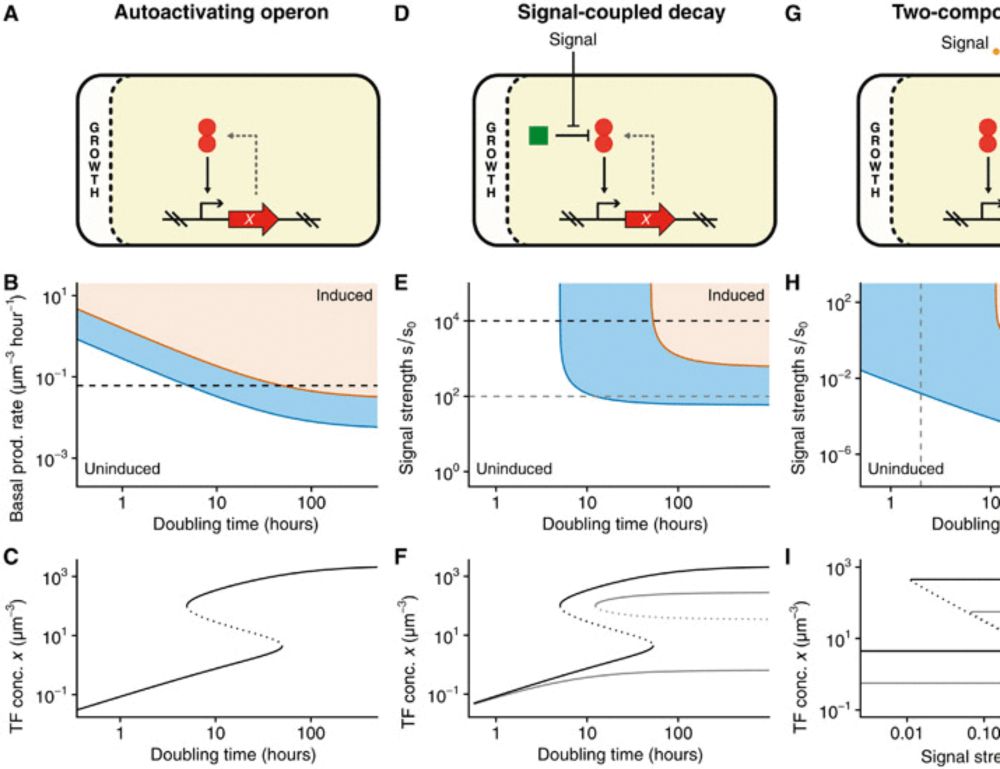
New publication! We identify growth coupled sensitivity: a deceivingly simple mechanism that makes E. coli switch to the best sugar. We combined neat theory (due to @erikvannimwegen.bsky.social, and to which I contributed) with clean experiments (due to @thomasjulou.bsky.social and Theo Gervais).
The most profound insights are often also the most simple:
growth-rate, by setting the dilution rate of intra-cellular molecules, controls the sensitivity of gene regulatory circuits. In retrospect it seems crazy that this effect seems to have been overlooked so far.
www.science.org/doi/10.1126/...
growth-rate, by setting the dilution rate of intra-cellular molecules, controls the sensitivity of gene regulatory circuits. In retrospect it seems crazy that this effect seems to have been overlooked so far.
www.science.org/doi/10.1126/...
Growth rate controls the sensitivity of gene regulatory circuits
Through the simple effect of dilution rate, regulatory circuits systematically change their sensitivity with growth rate.
www.science.org
May 4, 2025 at 7:48 AM
New publication! We identify growth coupled sensitivity: a deceivingly simple mechanism that makes E. coli switch to the best sugar. We combined neat theory (due to @erikvannimwegen.bsky.social, and to which I contributed) with clean experiments (due to @thomasjulou.bsky.social and Theo Gervais).
Reposted by Yanrui Ye

Check out the pre-print of my main PhD work, Syn57! Together with my incredible co-first authors and a big team we‘ve built a full E. coli genome operating on a 57-codon genetic code!
So much hard work, and so much love for everyone who was involved!
www.biorxiv.org/content/10.1...
So much hard work, and so much love for everyone who was involved!
www.biorxiv.org/content/10.1...

Escherichia coli with a 57-codon genetic code
The near-universal genetic code of living organisms uses 64 codons to encode the 20 canonical amino acids in protein synthesis. Here we design and generate a variant of Escherichia coli with a 4 Mb sy...
www.biorxiv.org
May 3, 2025 at 12:30 AM
Check out the pre-print of my main PhD work, Syn57! Together with my incredible co-first authors and a big team we‘ve built a full E. coli genome operating on a 57-codon genetic code!
So much hard work, and so much love for everyone who was involved!
www.biorxiv.org/content/10.1...
So much hard work, and so much love for everyone who was involved!
www.biorxiv.org/content/10.1...
Reposted by Yanrui Ye

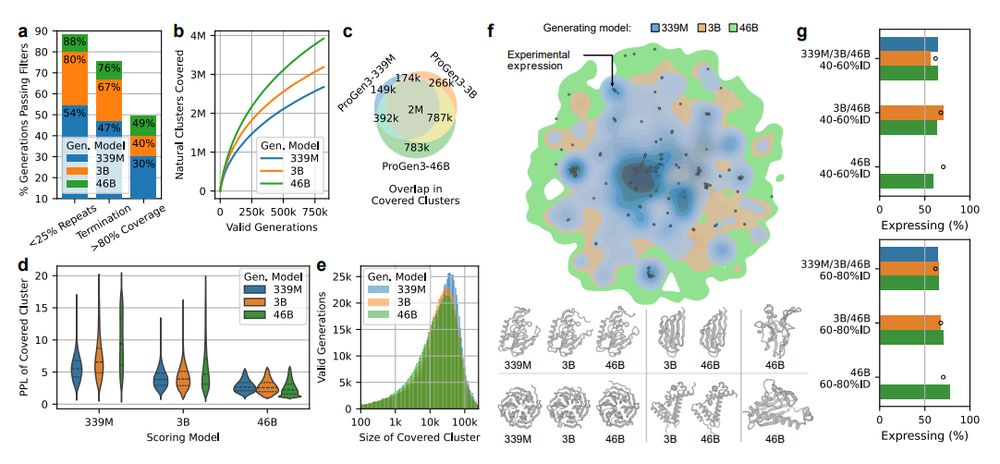
ProGen3: scaling protein language model data and parameters improves the quality of generations, especially further away from natural sequences.
@jeffruffolo.bsky.social @thisismadani.bsky.social
www.biorxiv.org/content/10.1...
@jeffruffolo.bsky.social @thisismadani.bsky.social
www.biorxiv.org/content/10.1...


April 24, 2025 at 9:26 AM
ProGen3: scaling protein language model data and parameters improves the quality of generations, especially further away from natural sequences.
@jeffruffolo.bsky.social @thisismadani.bsky.social
www.biorxiv.org/content/10.1...
@jeffruffolo.bsky.social @thisismadani.bsky.social
www.biorxiv.org/content/10.1...
Reposted by Yanrui Ye

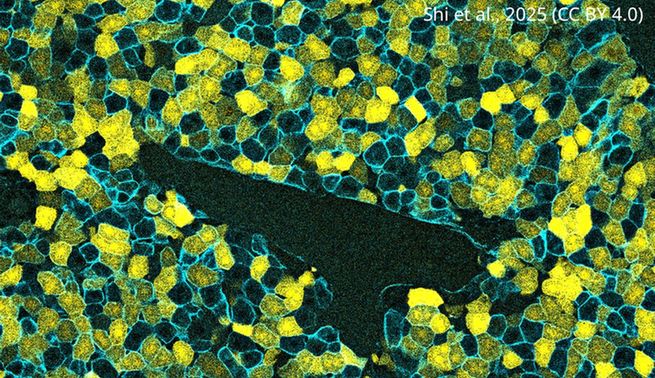
Enhancing the Cre-loxP system: Two new genetic tools – roxCre and loxCre – can improve the performance of the Cre-loxP system for making genetic modifications in vivo.
elifesciences.org/reviewed-pre...
elifesciences.org/reviewed-pre...
April 9, 2025 at 3:21 AM
Enhancing the Cre-loxP system: Two new genetic tools – roxCre and loxCre – can improve the performance of the Cre-loxP system for making genetic modifications in vivo.
elifesciences.org/reviewed-pre...
elifesciences.org/reviewed-pre...
Reposted by Yanrui Ye

#midweekmicro🔬
Sequential membrane- and protein-bound organelles compartmentalize genomes during phage infection🧬
@cp-cellhostmicrobe.bsky.social #microsky
www.cell.com/cell-host-mi...
Sequential membrane- and protein-bound organelles compartmentalize genomes during phage infection🧬
@cp-cellhostmicrobe.bsky.social #microsky
www.cell.com/cell-host-mi...

Sequential membrane- and protein-bound organelles compartmentalize genomes during phage infection
The pre-nuclear stage of Chimalliviridae infection and whether the phage nucleus is
essential have remained mysterious. Armbruster and Rani et al. demonstrate that the
phage nucleus is required for ph...
www.cell.com
April 2, 2025 at 8:44 AM
#midweekmicro🔬
Sequential membrane- and protein-bound organelles compartmentalize genomes during phage infection🧬
@cp-cellhostmicrobe.bsky.social #microsky
www.cell.com/cell-host-mi...
Sequential membrane- and protein-bound organelles compartmentalize genomes during phage infection🧬
@cp-cellhostmicrobe.bsky.social #microsky
www.cell.com/cell-host-mi...
Our latest work has been published in Trends in Biotechnology.
A huge thanks to my co-authors for their invaluable contributions!
bsky.app/profile/cp-t...
A huge thanks to my co-authors for their invaluable contributions!
bsky.app/profile/cp-t...
Online now: Expediting genome synthesis of Corynebacterium glutamicum with an artificial chromosome vector

Expediting genome synthesis of Corynebacterium glutamicum with an artificial chromosome vector
We developed an artificial chromosome plasmid (CAC) for large-scale genome replacement of Corynebacterium glutamicum, accelerating the genome synthesis for this organism. This work offers design principles for advancing de novo genome design and synthesis for industrially relevant Gram-positive microbes.
dlvr.it
April 1, 2025 at 9:29 AM
Our latest work has been published in Trends in Biotechnology.
A huge thanks to my co-authors for their invaluable contributions!
bsky.app/profile/cp-t...
A huge thanks to my co-authors for their invaluable contributions!
bsky.app/profile/cp-t...
Reposted by Yanrui Ye
Online now: Expediting genome synthesis of Corynebacterium glutamicum with an artificial chromosome vector
Expediting genome synthesis of Corynebacterium glutamicum with an artificial chromosome vector
We developed an artificial chromosome plasmid (CAC) for large-scale genome replacement of Corynebacterium glutamicum, accelerating the genome synthesis for this organism. This work offers design principles for advancing de novo genome design and synthesis for industrially relevant Gram-positive microbes.
dlvr.it
March 29, 2025 at 3:14 PM
Online now: Expediting genome synthesis of Corynebacterium glutamicum with an artificial chromosome vector
Reposted by Yanrui Ye

Jason Chin is coming to #SynBioBeta2025!
A pioneer in genome writing and genetic code expansion, his breakthroughs - from virus-resistant organisms to sustainable biomanufacturing - are reshaping biology. Don’t miss his vision for the future! Watch a clip from his TED Talk.
A pioneer in genome writing and genetic code expansion, his breakthroughs - from virus-resistant organisms to sustainable biomanufacturing - are reshaping biology. Don’t miss his vision for the future! Watch a clip from his TED Talk.
March 31, 2025 at 12:10 AM
Jason Chin is coming to #SynBioBeta2025!
A pioneer in genome writing and genetic code expansion, his breakthroughs - from virus-resistant organisms to sustainable biomanufacturing - are reshaping biology. Don’t miss his vision for the future! Watch a clip from his TED Talk.
A pioneer in genome writing and genetic code expansion, his breakthroughs - from virus-resistant organisms to sustainable biomanufacturing - are reshaping biology. Don’t miss his vision for the future! Watch a clip from his TED Talk.
Reposted by Yanrui Ye
New online! Interactions and evolutionary relationships among bacterial mobile genetic elements

Interactions and evolutionary relationships among bacterial mobile genetic elements
Nature Reviews Microbiology, Published online: 11 March 2025; doi:10.1038/s41579-025-01157-yIn this Review, Lang and colleagues present an overview of the current knowledge landscape regarding mobile genetic elements in bacteria, with a focus on their…
www.nature.com
March 11, 2025 at 1:14 PM
New online! Interactions and evolutionary relationships among bacterial mobile genetic elements
Reposted by Yanrui Ye
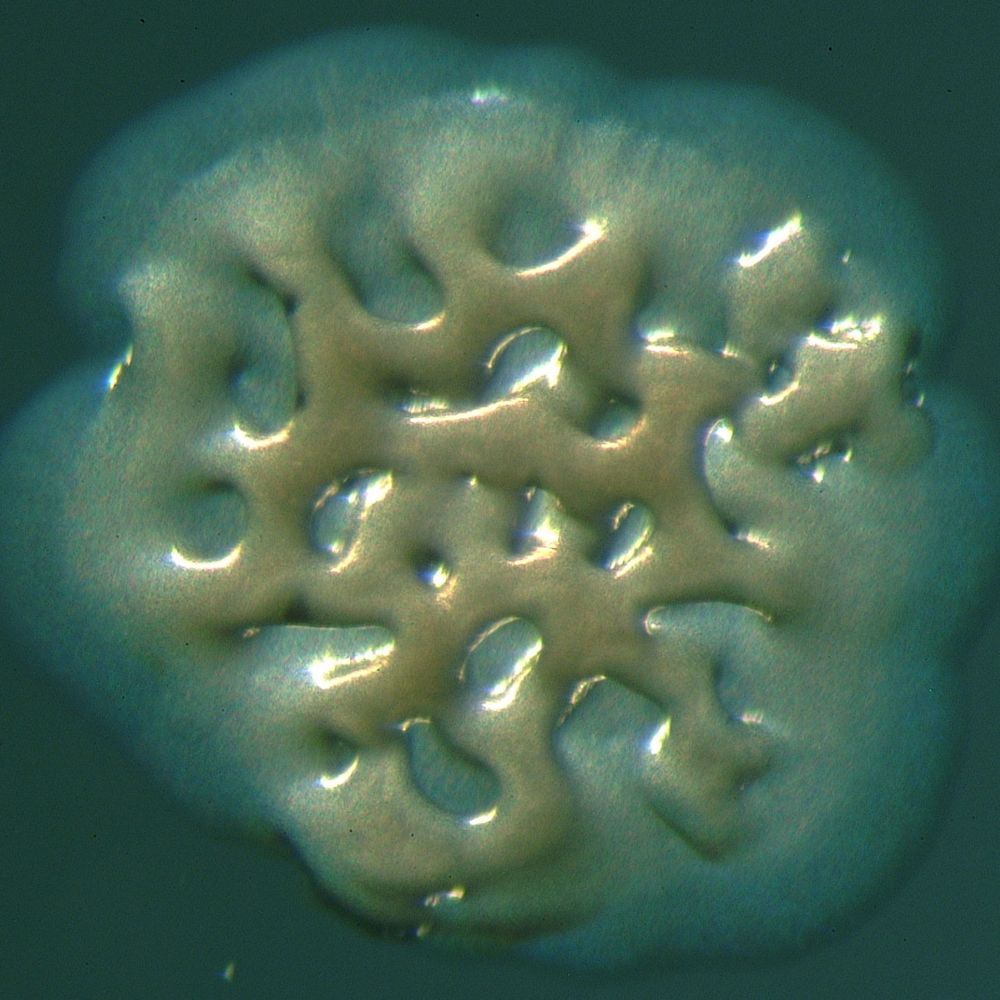
Keeping your symbiosis genes on a plasmid is a smart move if you have multiple potential hosts. Here a gut bacterial symbiont, but same is true for N-fixing Rhizobia.
www.science.org/doi/10.1126/...
www.science.org/doi/10.1126/...
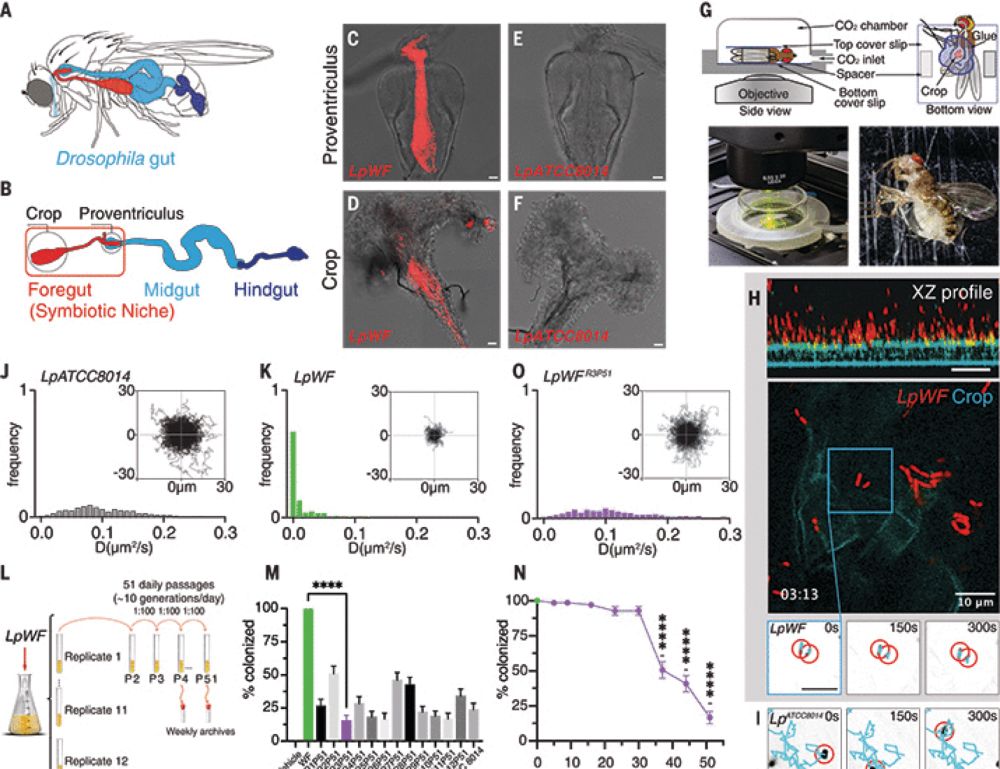
A conserved bacterial genetic basis for commensal-host specificity
Animals selectively acquire specific symbiotic gut bacteria from their environments that aid host fitness. To colonize, a symbiont must locate its niche and sustain growth within the gut. Adhesins are...
www.science.org
December 7, 2024 at 1:17 PM
Keeping your symbiosis genes on a plasmid is a smart move if you have multiple potential hosts. Here a gut bacterial symbiont, but same is true for N-fixing Rhizobia.
www.science.org/doi/10.1126/...
www.science.org/doi/10.1126/...
Reposted by Yanrui Ye

Heterodimerization of Endolysin Isoforms During Bacterial Infection by Staphylococcal Phage {varphi}2638A https://www.biorxiv.org/content/10.1101/2024.01.16.575832v1
Heterodimerization of Endolysin Isoforms During Bacterial Infection by Staphylococcal Phage {varphi}2638A https://www.biorxiv.org/content/10.1101/2024.01.16.575832v1
Bacteriophage endolysins targeting Gram-positive bacteria typically feature a modular architecture o
www.biorxiv.org
January 17, 2024 at 2:29 AM
Heterodimerization of Endolysin Isoforms During Bacterial Infection by Staphylococcal Phage {varphi}2638A https://www.biorxiv.org/content/10.1101/2024.01.16.575832v1
Reposted by Yanrui Ye

And see this related preprint www.biorxiv.org/content/10.1...
Conserved jumbo phage factors required for protein import into a phage nucleus
Yup. That does say "phage nucleus" and it really is a nucleus-like compartment.
Conserved jumbo phage factors required for protein import into a phage nucleus
Yup. That does say "phage nucleus" and it really is a nucleus-like compartment.

Conserved jumbo phage factors required for protein import into a phage nucleus
Bacteriophages use diverse mechanisms to evade anti-phage defenses systems. ΦKZ-like jumbo phages assemble a proteinaceous nucleus-like compartment that excludes antagonistic host nucleases, while int...
www.biorxiv.org
December 4, 2024 at 11:16 PM
And see this related preprint www.biorxiv.org/content/10.1...
Conserved jumbo phage factors required for protein import into a phage nucleus
Yup. That does say "phage nucleus" and it really is a nucleus-like compartment.
Conserved jumbo phage factors required for protein import into a phage nucleus
Yup. That does say "phage nucleus" and it really is a nucleus-like compartment.
Reposted by Yanrui Ye

Optimized directed evolution of E. coli leucyl-tRNA synthetase adds many noncanonical amino acids into the eukaryotic genetic code including ornithine and Nepsilon-acetyl-methyllysine https://www.biorxiv.org/content/10.1101/2024.11.27.625662v1
Optimized directed evolution of E. coli leucyl-tRNA synthetase adds many noncanonical amino acids into the eukaryotic genetic code including ornithine and Nepsilon-acetyl-methyllysine https://www.biorxiv.org/content/10.1101/2024.11.27.625662v1
Site-specific incorporation of noncanonical amino acids (ncAAs) into proteins in eukaryotes has pred
www.biorxiv.org
November 28, 2024 at 2:05 AM
Optimized directed evolution of E. coli leucyl-tRNA synthetase adds many noncanonical amino acids into the eukaryotic genetic code including ornithine and Nepsilon-acetyl-methyllysine https://www.biorxiv.org/content/10.1101/2024.11.27.625662v1
Reposted by Yanrui Ye

This is incredible
www.science.org/doi/10.1126/...
www.science.org/doi/10.1126/...

Continuous evolution of user-defined genes at 1 million times the genomic mutation rate
When nature evolves a gene over eons at scale, it produces a diversity of homologous sequences with patterns of conservation and change that contain rich structural, functional, and historical informa...
www.science.org
November 26, 2024 at 4:33 AM
This is incredible
www.science.org/doi/10.1126/...
www.science.org/doi/10.1126/...
Reposted by Yanrui Ye

🌐 We just joined Bluesky! SEVA is a free, open-access plasmid repository and an international standard supporting the synthetic biology community. Catch us here! #SynBio ⬇️ seva-plasmids.com

Home - SEVA plasmids - Standard European Vector Architecture
Standard European
Vector Architecture 4.0
Welcome to the CNB-hosted database and material repository of standard and modular plasmid vectors for (de/re) constructing complex bacterial phenotypes ...
seva-plasmids.com
November 22, 2024 at 1:19 PM
🌐 We just joined Bluesky! SEVA is a free, open-access plasmid repository and an international standard supporting the synthetic biology community. Catch us here! #SynBio ⬇️ seva-plasmids.com