



Walter Andriuzzi
@walterandriuzzi.bsky.social
Former child who wanted to study nature. Senior Editor at Nature Ecology & Evolution (formerly at Nature Communications). Postdoc Colorado State University (2015-2018). PhD University College Dublin & Wageningen University. Needs writing, hiking, espresso.
Reposted by Walter Andriuzzi

An analysis in Nature Ecology & Evolution surveys community palaeontological databases, documenting their contributions to science as well as their vulnerabilities, and provide recommendations for the future of open science databases. go.nature.com/3ZwTeGl #Paleosky 🧪

February 15, 2026 at 8:21 PM
An analysis in Nature Ecology & Evolution surveys community palaeontological databases, documenting their contributions to science as well as their vulnerabilities, and provide recommendations for the future of open science databases. go.nature.com/3ZwTeGl #Paleosky 🧪
Reposted by Walter Andriuzzi

It is unclear whether harsh abiotic conditions in drylands hinder biological invasions. This global analysis shows that drylands are vulnerable to non-native plants and are likely to become more so as native plant diversity declines and grazing pressure intensifies 🧪 www.nature.com/articles/s41...

Abiotic and biotic controls of non-native perennial plant success in drylands - Nature Ecology & Evolution
It is unclear whether the harsh abiotic conditions of drylands hinder biological invasions. This global analysis shows that drylands are vulnerable to non-native plants and are likely to become more s...
www.nature.com
February 12, 2026 at 9:30 AM
It is unclear whether harsh abiotic conditions in drylands hinder biological invasions. This global analysis shows that drylands are vulnerable to non-native plants and are likely to become more so as native plant diversity declines and grazing pressure intensifies 🧪 www.nature.com/articles/s41...
Reposted by Walter Andriuzzi
A global analysis of marine fish populations involving 243 recruitment and 266 spawner time series across 143 species finds that nonlinear dynamics are widespread and that the degree of nonlinearity is amplified by temperature variation and in fast-lived species 🧪 www.nature.com/articles/s41...

Temperature variation and life history mediate nonlinearity in fluctuations of marine fish populations worldwide - Nature Ecology & Evolution
A global analysis of marine fish populations involving 243 recruitment and 266 spawner time series across 143 species finds that nonlinear dynamics are widespread and that the degree of nonlinearity i...
www.nature.com
February 13, 2026 at 9:33 AM
A global analysis of marine fish populations involving 243 recruitment and 266 spawner time series across 143 species finds that nonlinear dynamics are widespread and that the degree of nonlinearity is amplified by temperature variation and in fast-lived species 🧪 www.nature.com/articles/s41...
Reposted by Walter Andriuzzi
Commodity frontiers expand more slowly into tropical forests where forest smallholders are present – new paper out in PNAS led by Marie Pratzer
www.pnas.org/doi/10.1073/...
@tkuemmerle.bsky.social
@humboldtuni.bsky.social
@pnas.org
www.pnas.org/doi/10.1073/...
@tkuemmerle.bsky.social
@humboldtuni.bsky.social
@pnas.org

February 12, 2026 at 4:43 PM
Commodity frontiers expand more slowly into tropical forests where forest smallholders are present – new paper out in PNAS led by Marie Pratzer
www.pnas.org/doi/10.1073/...
@tkuemmerle.bsky.social
@humboldtuni.bsky.social
@pnas.org
www.pnas.org/doi/10.1073/...
@tkuemmerle.bsky.social
@humboldtuni.bsky.social
@pnas.org
Reposted by Walter Andriuzzi
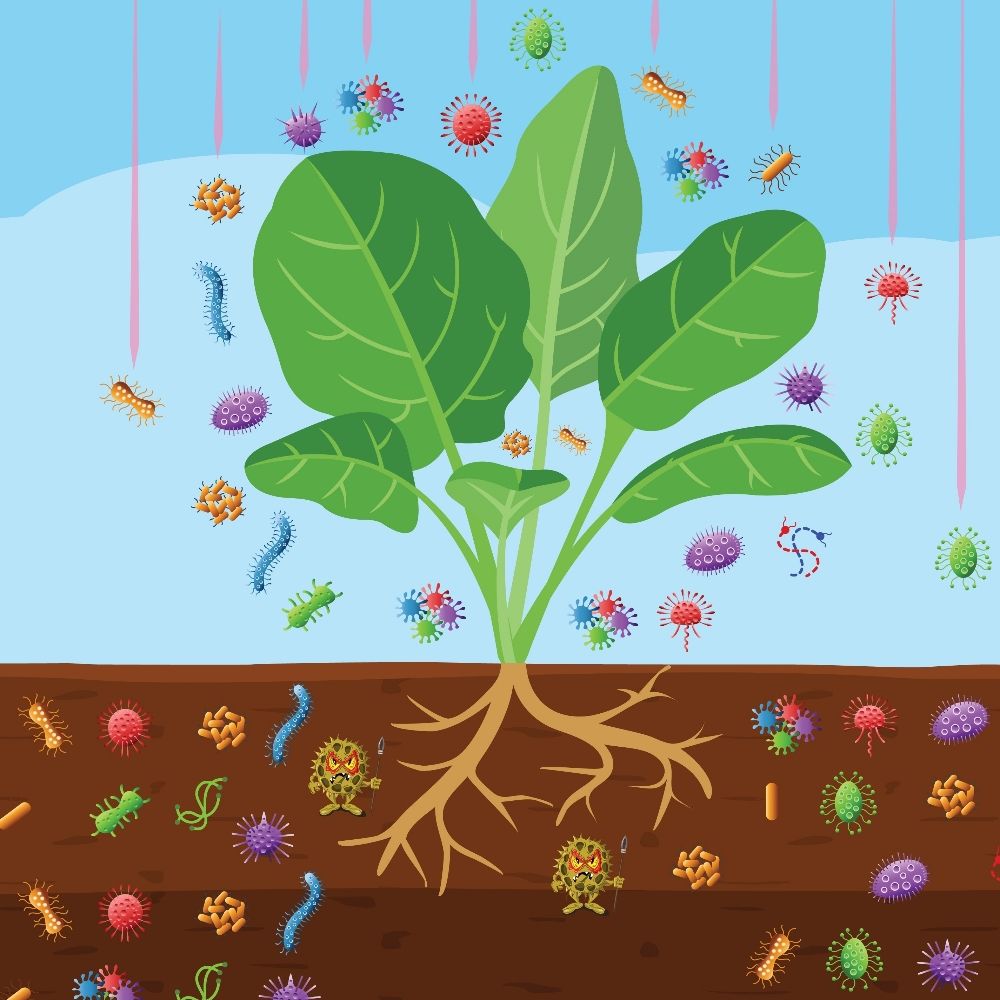
📢 Open PhD opportunity with us at Teagasc Johnstown Castle and University of Limerick on forestry soils #SoilCarbon #SoilMicrobiome #GreenHouseGases. Further details and application form teagasc.ie/about/resear... Closing date 18th March. Join our team 🤗

February 12, 2026 at 10:57 AM
📢 Open PhD opportunity with us at Teagasc Johnstown Castle and University of Limerick on forestry soils #SoilCarbon #SoilMicrobiome #GreenHouseGases. Further details and application form teagasc.ie/about/resear... Closing date 18th March. Join our team 🤗
Reposted by Walter Andriuzzi

Also in the 'Old Dead Things' section of @natecoevo.nature.com this week, we've got a spiky baby iguanodontian www.nature.com/articles/s41... rdcu.be/e3CZH ...

Cellular-level preservation of cutaneous spikes in an Early Cretaceous iguanodontian dinosaur - Nature Ecology & Evolution
A juvenile iguanodontian from the Lower Cretaceous of China preserves both spikes and scales in its skin that are different from integumentary structures in either non-avian dinosaurs or extant squama...
www.nature.com
February 12, 2026 at 9:38 AM
Also in the 'Old Dead Things' section of @natecoevo.nature.com this week, we've got a spiky baby iguanodontian www.nature.com/articles/s41... rdcu.be/e3CZH ...
Reposted by Walter Andriuzzi

What do we want?
Fossil databases! 🐚🦕
When do we want them?
Forever! 🗓️
Nice new paper highlighting how academic funding systems and digital architecture need to change, to ensure we can protect and sustain our precious fossil data 📚
www.nature.com/articles/s41...
Fossil databases! 🐚🦕
When do we want them?
Forever! 🗓️
Nice new paper highlighting how academic funding systems and digital architecture need to change, to ensure we can protect and sustain our precious fossil data 📚
www.nature.com/articles/s41...

The billion-dollar case for sustaining palaeontology’s digital databases - Nature Ecology & Evolution
The authors survey community palaeontological databases, documenting their contributions to science as well as their vulnerabilities, and provide recommendations for the future of open science databas...
www.nature.com
February 11, 2026 at 9:47 AM
What do we want?
Fossil databases! 🐚🦕
When do we want them?
Forever! 🗓️
Nice new paper highlighting how academic funding systems and digital architecture need to change, to ensure we can protect and sustain our precious fossil data 📚
www.nature.com/articles/s41...
Fossil databases! 🐚🦕
When do we want them?
Forever! 🗓️
Nice new paper highlighting how academic funding systems and digital architecture need to change, to ensure we can protect and sustain our precious fossil data 📚
www.nature.com/articles/s41...
Reposted by Walter Andriuzzi
Our February issue is now live! www.nature.com/natecolevol/...
Featuring research on 🧪
🐙 Deep-sea mining impacts
🦖 Dinosaur skin spikes
🐒 Same-sex sexual behaviour in non-human primates
Cover image shows a Darwin's frog, from Valenzuela-Sánchez et al. www.nature.com/articles/s41...
Featuring research on 🧪
🐙 Deep-sea mining impacts
🦖 Dinosaur skin spikes
🐒 Same-sex sexual behaviour in non-human primates
Cover image shows a Darwin's frog, from Valenzuela-Sánchez et al. www.nature.com/articles/s41...

February 10, 2026 at 8:50 PM
Our February issue is now live! www.nature.com/natecolevol/...
Featuring research on 🧪
🐙 Deep-sea mining impacts
🦖 Dinosaur skin spikes
🐒 Same-sex sexual behaviour in non-human primates
Cover image shows a Darwin's frog, from Valenzuela-Sánchez et al. www.nature.com/articles/s41...
Featuring research on 🧪
🐙 Deep-sea mining impacts
🦖 Dinosaur skin spikes
🐒 Same-sex sexual behaviour in non-human primates
Cover image shows a Darwin's frog, from Valenzuela-Sánchez et al. www.nature.com/articles/s41...
Reposted by Walter Andriuzzi

I invite you to check our paper entitled “Rebuilding Ukraine’s capacity for fundamental research in evolutionary biology” doi.org/10.1038/s415... in @natecoevo.nature.com about the Ukrainian School in Evolutionary Biology #USEB we organized in 2025.
#biology #evolution #school #science #Ukraine
#biology #evolution #school #science #Ukraine

February 9, 2026 at 3:23 PM
I invite you to check our paper entitled “Rebuilding Ukraine’s capacity for fundamental research in evolutionary biology” doi.org/10.1038/s415... in @natecoevo.nature.com about the Ukrainian School in Evolutionary Biology #USEB we organized in 2025.
#biology #evolution #school #science #Ukraine
#biology #evolution #school #science #Ukraine
Reposted by Walter Andriuzzi

📢 Postdoc opening in avian biogeography & macroecology (Olomouc, CZ)
Vladimír Remeš (excellent scientist and mentor) is hiring a postdoc to study bird diversity across biomes, linking species pools, traits, climate & history using big data, fieldwork, and modelling.
🔗 pracuj.upol.cz/nc/zprava/cl...
Vladimír Remeš (excellent scientist and mentor) is hiring a postdoc to study bird diversity across biomes, linking species pools, traits, climate & history using big data, fieldwork, and modelling.
🔗 pracuj.upol.cz/nc/zprava/cl...

February 9, 2026 at 9:27 AM
📢 Postdoc opening in avian biogeography & macroecology (Olomouc, CZ)
Vladimír Remeš (excellent scientist and mentor) is hiring a postdoc to study bird diversity across biomes, linking species pools, traits, climate & history using big data, fieldwork, and modelling.
🔗 pracuj.upol.cz/nc/zprava/cl...
Vladimír Remeš (excellent scientist and mentor) is hiring a postdoc to study bird diversity across biomes, linking species pools, traits, climate & history using big data, fieldwork, and modelling.
🔗 pracuj.upol.cz/nc/zprava/cl...
This is crazy. Maybe there should be a hybrid system with a lottery for projects scoring >90% or whatever.
NB this is in addition, not as an alternative, to increasing funds and cover more projects...
NB this is in addition, not as an alternative, to increasing funds and cover more projects...

Look where we are, EU. 💀
We constantly talk about promoting science, increasing the investment in science, having a technology-driven economy, surpassing the US and China with modern tools. The image below is the evaluation report from a friend, who did not get a #MSCA grant despite scoring 94.4%.
We constantly talk about promoting science, increasing the investment in science, having a technology-driven economy, surpassing the US and China with modern tools. The image below is the evaluation report from a friend, who did not get a #MSCA grant despite scoring 94.4%.

February 9, 2026 at 11:09 AM
This is crazy. Maybe there should be a hybrid system with a lottery for projects scoring >90% or whatever.
NB this is in addition, not as an alternative, to increasing funds and cover more projects...
NB this is in addition, not as an alternative, to increasing funds and cover more projects...
Reposted by Walter Andriuzzi

New Nature Ecology & Evolution paper out today @natecoevo.nature.com!
We find that models deviate from observations in the weighting of important soil processes. This mismatch has important implications for developing soil carbon models and improving predictions of soil carbon fate in the future 🌍
We find that models deviate from observations in the weighting of important soil processes. This mismatch has important implications for developing soil carbon models and improving predictions of soil carbon fate in the future 🌍

Soil microbes grow, respire, die. Because their biomass eventually becomes necromass, and necromass can be stabilized in soil, growth rate emerges as a powerful predictor of soil carbon: www.nature.com/articles/s41...

Microbial growth rate is a stronger predictor of soil organic carbon than carbon use efficiency - Nature Ecology & Evolution
Microbial carbon use efficiency is a strong predictor of soil organic carbon stocks. Here the authors reveal that the microbial growth rate is a more reliable and informative predictor, and that model...
www.nature.com
February 6, 2026 at 3:23 PM
New Nature Ecology & Evolution paper out today @natecoevo.nature.com!
We find that models deviate from observations in the weighting of important soil processes. This mismatch has important implications for developing soil carbon models and improving predictions of soil carbon fate in the future 🌍
We find that models deviate from observations in the weighting of important soil processes. This mismatch has important implications for developing soil carbon models and improving predictions of soil carbon fate in the future 🌍
Reposted by Walter Andriuzzi

New online! Biodiversity science and policy need more model intercomparisons

Biodiversity science and policy need more model intercomparisons
Nature Reviews Biodiversity, Published online: 06 February 2026; doi:10.1038/s44358-026-00134-4Climate model intercomparison projects have been essential in identifying mechanisms of human-caused climate change, but similar efforts in biodiversity science have lagged behind. This Perspective discusses existing biodiversity model intercomparison projects and identifies opportunities for their advancement in the future.
dlvr.it
February 6, 2026 at 12:31 PM
New online! Biodiversity science and policy need more model intercomparisons
Folks interested in soil carbon and microbes, you may want to check these two papers recently published in @natecoevo.nature.com: Xianjin He et al., Microbial growth rate is a stronger predictor of soil organic carbon than carbon use efficiency... (1/4) www.nature.com/articles/s41...

Microbial growth rate is a stronger predictor of soil organic carbon than carbon use efficiency - Nature Ecology & Evolution
Microbial carbon use efficiency is a strong predictor of soil organic carbon stocks. Here the authors reveal that the microbial growth rate is a more reliable and informative predictor, and that model...
www.nature.com
February 6, 2026 at 3:08 PM
Folks interested in soil carbon and microbes, you may want to check these two papers recently published in @natecoevo.nature.com: Xianjin He et al., Microbial growth rate is a stronger predictor of soil organic carbon than carbon use efficiency... (1/4) www.nature.com/articles/s41...
Reposted by Walter Andriuzzi

Payment‐based open access is biasing ecology against participation from the Global South
nsojournals.onlinelibrary.wiley.com/doi/10.1002/...
nsojournals.onlinelibrary.wiley.com/doi/10.1002/...

February 6, 2026 at 1:05 PM
Payment‐based open access is biasing ecology against participation from the Global South
nsojournals.onlinelibrary.wiley.com/doi/10.1002/...
nsojournals.onlinelibrary.wiley.com/doi/10.1002/...
Reposted by Walter Andriuzzi

New paper from lab-@natecoevo.nature.com
Abiotic and biotic controls of non-native perennial plant success in drylands
Non-native plant success in drylands is facilitated by high grazing pressure & resource availability.
Led by Rahmanian and @ftmaestre.bsky.social
www.nature.com/articles/s41...
Abiotic and biotic controls of non-native perennial plant success in drylands
Non-native plant success in drylands is facilitated by high grazing pressure & resource availability.
Led by Rahmanian and @ftmaestre.bsky.social
www.nature.com/articles/s41...


February 6, 2026 at 11:46 AM
New paper from lab-@natecoevo.nature.com
Abiotic and biotic controls of non-native perennial plant success in drylands
Non-native plant success in drylands is facilitated by high grazing pressure & resource availability.
Led by Rahmanian and @ftmaestre.bsky.social
www.nature.com/articles/s41...
Abiotic and biotic controls of non-native perennial plant success in drylands
Non-native plant success in drylands is facilitated by high grazing pressure & resource availability.
Led by Rahmanian and @ftmaestre.bsky.social
www.nature.com/articles/s41...
Reposted by Walter Andriuzzi

No joke: I got angry hate mail today for writing an obituary of a Black woman scientist—because the person felt she did didn’t deserve the recognition.
Which just makes me want to share it again: www.nature.com/articles/d41...
Which just makes me want to share it again: www.nature.com/articles/d41...

Gladys Mae West obituary: mathematician who pioneered GPS technology
She made key contributions to US cold-war science despite facing huge barriers as a Black woman.
www.nature.com
February 6, 2026 at 9:09 AM
No joke: I got angry hate mail today for writing an obituary of a Black woman scientist—because the person felt she did didn’t deserve the recognition.
Which just makes me want to share it again: www.nature.com/articles/d41...
Which just makes me want to share it again: www.nature.com/articles/d41...
Reposted by Walter Andriuzzi
Experiments involving 276 soil-derived microcosms reveals that the ecological process of necromass recycling promotes diversity maintenance in bacterial communities 🧪 www.nature.com/articles/s41...

Bacterial necromass recycling promotes diversity maintenance in bacterial communities via resource partitioning - Nature Ecology & Evolution
In this study, the authors conduct experiments involving 276 soil-derived microcosms to reveal that the ecological process of necromass recycling promotes diversity maintenance in bacterial communitie...
www.nature.com
February 2, 2026 at 11:08 AM
Experiments involving 276 soil-derived microcosms reveals that the ecological process of necromass recycling promotes diversity maintenance in bacterial communities 🧪 www.nature.com/articles/s41...
Reposted by Walter Andriuzzi
A comparative analysis of trait data combined with a mathematical model suggests that dietary specialization drives selection towards the smallest and largest body sizes in terrestrial mammals, as generalists outcompete specialists at intermediate sizes🧪 www.nature.com/articles/s41...

Diverging selection on body size in specialist terrestrial mammals - Nature Ecology & Evolution
A comparative analysis of trait data combined with a mathematical model suggests that dietary specialization drives selection towards the smallest and largest body sizes in terrestrial mammals, as gen...
www.nature.com
February 2, 2026 at 3:57 PM
A comparative analysis of trait data combined with a mathematical model suggests that dietary specialization drives selection towards the smallest and largest body sizes in terrestrial mammals, as generalists outcompete specialists at intermediate sizes🧪 www.nature.com/articles/s41...
Reposted by Walter Andriuzzi
A study in Nature Ecology & Evolution shows the long-term changes in tree species diversity across tropical forests in the Andes and Amazon. go.nature.com/45FPc1M 🌍 🧪

January 31, 2026 at 11:08 PM
A study in Nature Ecology & Evolution shows the long-term changes in tree species diversity across tropical forests in the Andes and Amazon. go.nature.com/45FPc1M 🌍 🧪
Reposted by Walter Andriuzzi

Bhattacharya, a moment ago: "What you've been seeing in the press is that there have been funding cuts. There haven't been funding cuts. What there has been is a change in agency priorities."
Our year in numbers begs to differ
www.nature.com/immersive/d4...
Our year in numbers begs to differ
www.nature.com/immersive/d4...
January 30, 2026 at 5:29 PM
Bhattacharya, a moment ago: "What you've been seeing in the press is that there have been funding cuts. There haven't been funding cuts. What there has been is a change in agency priorities."
Our year in numbers begs to differ
www.nature.com/immersive/d4...
Our year in numbers begs to differ
www.nature.com/immersive/d4...
Reposted by Walter Andriuzzi

"AI tools are democratizing Coding"
My dude, R and Python are free and open-source
My dude, R and Python are free and open-source
January 30, 2026 at 7:41 AM
"AI tools are democratizing Coding"
My dude, R and Python are free and open-source
My dude, R and Python are free and open-source
Reposted by Walter Andriuzzi
Lecturer in Ecology and Evolution position available in Biology Department at Stanford University. Apply by April 1, 2026. (Photo by Rick Morris)
academicjobsonline.org/ajo/jobs/31606
academicjobsonline.org/ajo/jobs/31606

January 30, 2026 at 5:35 AM
Lecturer in Ecology and Evolution position available in Biology Department at Stanford University. Apply by April 1, 2026. (Photo by Rick Morris)
academicjobsonline.org/ajo/jobs/31606
academicjobsonline.org/ajo/jobs/31606
Reposted by Walter Andriuzzi

Bacterial necromass recycling promotes diversity maintenance in bacterial communities via resource partitioning www.nature.com/articles/s41... #jcampubs

Bacterial necromass recycling promotes diversity maintenance in bacterial communities via resource partitioning - Nature Ecology & Evolution
In this study, the authors conduct experiments involving 276 soil-derived microcosms to reveal that the ecological process of necromass recycling promotes diversity maintenance in bacterial communitie...
www.nature.com
January 29, 2026 at 6:01 PM
Bacterial necromass recycling promotes diversity maintenance in bacterial communities via resource partitioning www.nature.com/articles/s41... #jcampubs
Reposted by Walter Andriuzzi

Just the smell of predators, like lynx, is enough to limit sapling damage from deer overbrowsing, according to new research in @jappliedecology.bsky.social

The lynx effect: how the smell of predators could help forest restoration - BES
The lynx effect: how the smell of predators could help forest restoration - BES is the largest scientific society for ecologists in Europe. We're working towards a world in which nature and people thrive.
f.mtr.cool
January 29, 2026 at 10:05 AM
Just the smell of predators, like lynx, is enough to limit sapling damage from deer overbrowsing, according to new research in @jappliedecology.bsky.social