




Vlad Ayzenberg
@vayzenb.bsky.social
Director of the Vision Learning and Development Lab at Temple University.
Interested in cognition, computation, neuroscience, and development.
https://vlad-lab.com/
Interested in cognition, computation, neuroscience, and development.
https://vlad-lab.com/
Pinned
Vlad Ayzenberg
@vayzenb.bsky.social
· Jul 2
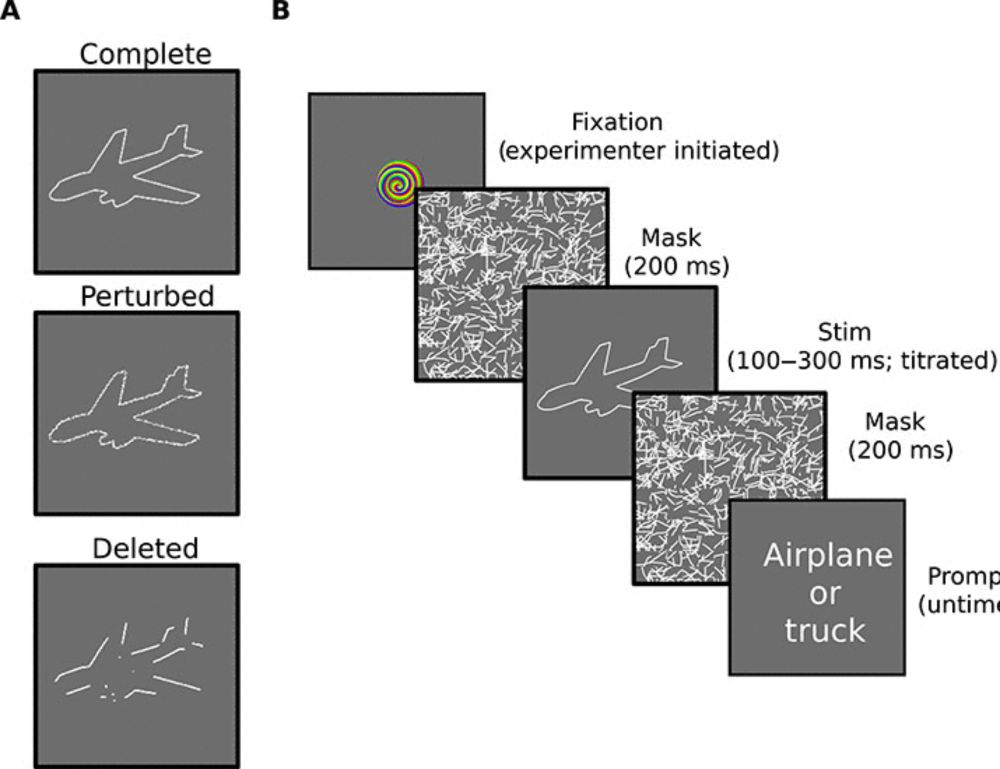
Fast and robust visual object recognition in young children
The visual recognition abilities of preschool children rival those of state-of-the-art artificial intelligence models.
doi.org
My paper with @stellalourenco.bsky.social is now out in Science Advances!
We found that children have robust object recognition abilities that surpass many ANNs. Models only outperformed kids when their training far exceeded what a child could experience in their lifetime
doi.org/10.1126/scia...
We found that children have robust object recognition abilities that surpass many ANNs. Models only outperformed kids when their training far exceeded what a child could experience in their lifetime
doi.org/10.1126/scia...
Reposted by Vlad Ayzenberg
There’s video floating around. You don’t want to watch it.
News feed will be updated continuously. No paywall.
www.startribune.com/ice-raids-mi...
News feed will be updated continuously. No paywall.
www.startribune.com/ice-raids-mi...

Live: Man shot by federal agent in south Minneapolis this morning, witnesses say
More than a hundred protesters and observers have gathered near E. 26th Street and Nicollet Avenue.
www.startribune.com
January 24, 2026 at 3:48 PM
There’s video floating around. You don’t want to watch it.
News feed will be updated continuously. No paywall.
www.startribune.com/ice-raids-mi...
News feed will be updated continuously. No paywall.
www.startribune.com/ice-raids-mi...
Reposted by Vlad Ayzenberg

Our experiences have countless details, and it can be hard to know which matter.
How can we behave effectively in the future when, right now, we don't know what we'll need?
Out today in @nathumbehav.nature.com , @marcelomattar.bsky.social and I find that people solve this by using episodic memory.
How can we behave effectively in the future when, right now, we don't know what we'll need?
Out today in @nathumbehav.nature.com , @marcelomattar.bsky.social and I find that people solve this by using episodic memory.

Episodic memory facilitates flexible decision-making via access to detailed events - Nature Human Behaviour
Nicholas and Mattar found that people use episodic memory to make decisions when it is unclear what will be needed in the future. These findings reveal how the rich representational capacity of episod...
www.nature.com
January 23, 2026 at 1:18 PM
Our experiences have countless details, and it can be hard to know which matter.
How can we behave effectively in the future when, right now, we don't know what we'll need?
Out today in @nathumbehav.nature.com , @marcelomattar.bsky.social and I find that people solve this by using episodic memory.
How can we behave effectively in the future when, right now, we don't know what we'll need?
Out today in @nathumbehav.nature.com , @marcelomattar.bsky.social and I find that people solve this by using episodic memory.
Reposted by Vlad Ayzenberg

With some trepidation, I'm putting this out into the world:
gershmanlab.com/textbook.html
It's a textbook called Computational Foundations of Cognitive Neuroscience, which I wrote for my class.
My hope is that this will be a living document, continuously improved as I get feedback.
gershmanlab.com/textbook.html
It's a textbook called Computational Foundations of Cognitive Neuroscience, which I wrote for my class.
My hope is that this will be a living document, continuously improved as I get feedback.
January 9, 2026 at 1:27 AM
With some trepidation, I'm putting this out into the world:
gershmanlab.com/textbook.html
It's a textbook called Computational Foundations of Cognitive Neuroscience, which I wrote for my class.
My hope is that this will be a living document, continuously improved as I get feedback.
gershmanlab.com/textbook.html
It's a textbook called Computational Foundations of Cognitive Neuroscience, which I wrote for my class.
My hope is that this will be a living document, continuously improved as I get feedback.
Reposted by Vlad Ayzenberg
Two days left to donate to Children Helping Science with 1-to-1 matches from an anonymous donor up to $100K!
giving.mit.edu/search/node/...
For fun: 1 repost = 1 citation to a paper with data from Children Helping Science/Lookit!
giving.mit.edu/search/node/...
For fun: 1 repost = 1 citation to a paper with data from Children Helping Science/Lookit!
This is a fundraising post!
An anonymous donor is matching contributions to Children Helping Science up to 100K through the end of the year - if it's in your giving budget, please consider supporting open science infrastructure!
giving.mit.edu/search/node/...
Details below...
An anonymous donor is matching contributions to Children Helping Science up to 100K through the end of the year - if it's in your giving budget, please consider supporting open science infrastructure!
giving.mit.edu/search/node/...
Details below...
Fund Search Results | Giving to MIT
giving.mit.edu
December 30, 2025 at 7:33 PM
Two days left to donate to Children Helping Science with 1-to-1 matches from an anonymous donor up to $100K!
giving.mit.edu/search/node/...
For fun: 1 repost = 1 citation to a paper with data from Children Helping Science/Lookit!
giving.mit.edu/search/node/...
For fun: 1 repost = 1 citation to a paper with data from Children Helping Science/Lookit!
Reposted by Vlad Ayzenberg
New Perspective from myself, Sarah Heilbronner and @myoo.bsky.social . “Rethinking the centrality of brain areas in understanding functional organization” in Nature Neuroscience. 🧵
rdcu.be/eVZ1A
rdcu.be/eVZ1A

Rethinking the centrality of brain areas in understanding functional organization
Nature Neuroscience - Parcellation of the cortex into functionally modular brain areas is foundational to neuroscience. Here, Hayden, Heilbronner and Yoo question the central status of brain areas...
rdcu.be
December 23, 2025 at 1:02 PM
New Perspective from myself, Sarah Heilbronner and @myoo.bsky.social . “Rethinking the centrality of brain areas in understanding functional organization” in Nature Neuroscience. 🧵
rdcu.be/eVZ1A
rdcu.be/eVZ1A
Reposted by Vlad Ayzenberg

Prediction: task-based optimization will ultimately prove to have a relatively minor role in DNN models of the ventral stream. Although tasks (including self-supervised ones) are currently crucial, there are signs that a simpler approach is possible. A thread:
December 15, 2025 at 6:45 PM
Prediction: task-based optimization will ultimately prove to have a relatively minor role in DNN models of the ventral stream. Although tasks (including self-supervised ones) are currently crucial, there are signs that a simpler approach is possible. A thread:
Reposted by Vlad Ayzenberg
This is a fundraising post!
An anonymous donor is matching contributions to Children Helping Science up to 100K through the end of the year - if it's in your giving budget, please consider supporting open science infrastructure!
giving.mit.edu/search/node/...
Details below...
An anonymous donor is matching contributions to Children Helping Science up to 100K through the end of the year - if it's in your giving budget, please consider supporting open science infrastructure!
giving.mit.edu/search/node/...
Details below...
Fund Search Results | Giving to MIT
giving.mit.edu
December 8, 2025 at 3:50 PM
This is a fundraising post!
An anonymous donor is matching contributions to Children Helping Science up to 100K through the end of the year - if it's in your giving budget, please consider supporting open science infrastructure!
giving.mit.edu/search/node/...
Details below...
An anonymous donor is matching contributions to Children Helping Science up to 100K through the end of the year - if it's in your giving budget, please consider supporting open science infrastructure!
giving.mit.edu/search/node/...
Details below...
Reposted by Vlad Ayzenberg

MOSAIC: A scalable framework for fMRI dataset aggregation and modeling of human vision https://www.biorxiv.org/content/10.64898/2025.11.28.690060v1
December 3, 2025 at 10:15 AM
MOSAIC: A scalable framework for fMRI dataset aggregation and modeling of human vision https://www.biorxiv.org/content/10.64898/2025.11.28.690060v1
Reposted by Vlad Ayzenberg

We are excited to announce that the Cognitive Computational Neuroscience meeting (CCN 2026) will be held at New York University from August 3–6, 2026.
2026.ccneuro.org
2026.ccneuro.org
December 3, 2025 at 10:01 AM
We are excited to announce that the Cognitive Computational Neuroscience meeting (CCN 2026) will be held at New York University from August 3–6, 2026.
2026.ccneuro.org
2026.ccneuro.org
Reposted by Vlad Ayzenberg

We are recruiting a lab manager/research assistant to start in early 2026! The successful candidate will conduct awake infant fMRI, meet cute babies, and join a fun team!
More details (e.g. responsibilities): soc.stanford.edu/people/#join...
Apply here: careersearch.stanford.edu/jobs/social-...
More details (e.g. responsibilities): soc.stanford.edu/people/#join...
Apply here: careersearch.stanford.edu/jobs/social-...
People – Scaffolding of Cognition Team
soc.stanford.edu
November 21, 2025 at 12:16 AM
We are recruiting a lab manager/research assistant to start in early 2026! The successful candidate will conduct awake infant fMRI, meet cute babies, and join a fun team!
More details (e.g. responsibilities): soc.stanford.edu/people/#join...
Apply here: careersearch.stanford.edu/jobs/social-...
More details (e.g. responsibilities): soc.stanford.edu/people/#join...
Apply here: careersearch.stanford.edu/jobs/social-...
Reposted by Vlad Ayzenberg
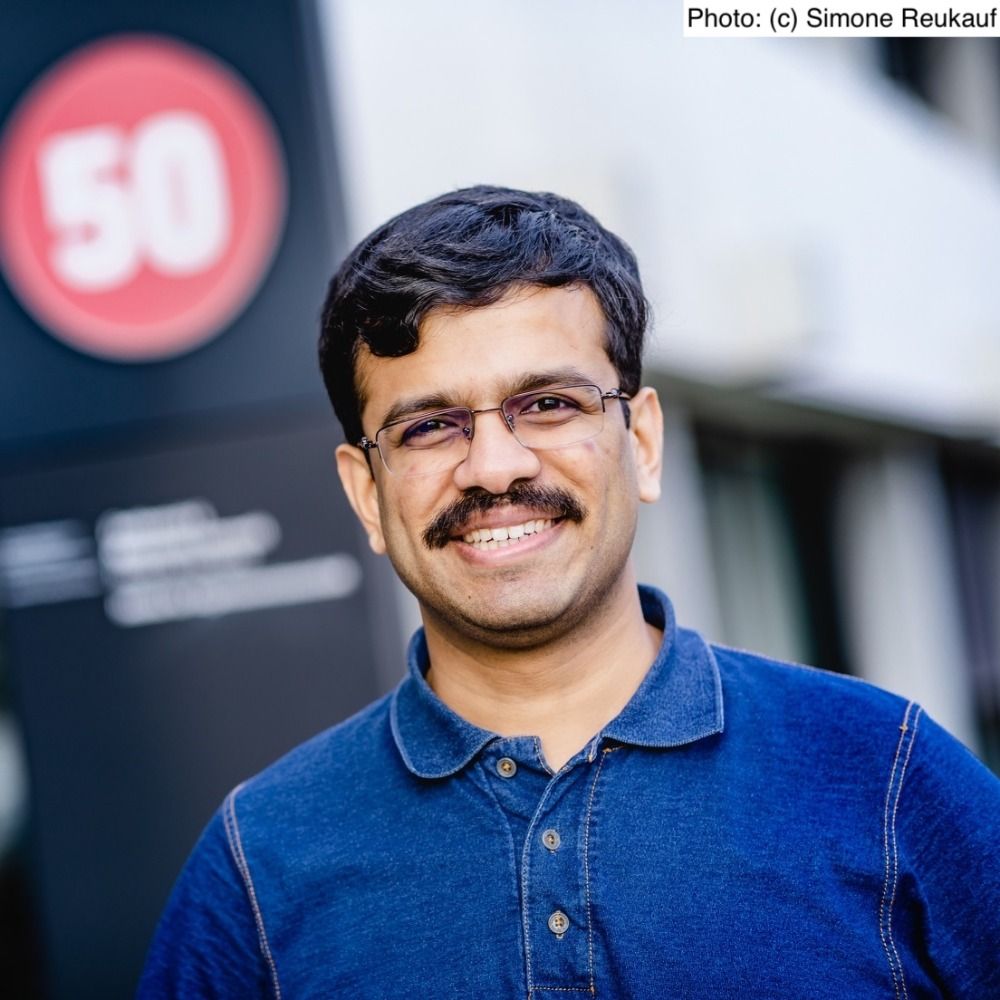
🚨New Preprint!
How can we model natural scene representations in visual cortex? A solution is in active vision: predict the features of the next glimpse! arxiv.org/abs/2511.12715
+ @adriendoerig.bsky.social , @alexanderkroner.bsky.social , @carmenamme.bsky.social , @timkietzmann.bsky.social
🧵 1/14
How can we model natural scene representations in visual cortex? A solution is in active vision: predict the features of the next glimpse! arxiv.org/abs/2511.12715
+ @adriendoerig.bsky.social , @alexanderkroner.bsky.social , @carmenamme.bsky.social , @timkietzmann.bsky.social
🧵 1/14

Predicting upcoming visual features during eye movements yields scene representations aligned with human visual cortex
Scenes are complex, yet structured collections of parts, including objects and surfaces, that exhibit spatial and semantic relations to one another. An effective visual system therefore needs unified ...
arxiv.org
November 18, 2025 at 12:37 PM
🚨New Preprint!
How can we model natural scene representations in visual cortex? A solution is in active vision: predict the features of the next glimpse! arxiv.org/abs/2511.12715
+ @adriendoerig.bsky.social , @alexanderkroner.bsky.social , @carmenamme.bsky.social , @timkietzmann.bsky.social
🧵 1/14
How can we model natural scene representations in visual cortex? A solution is in active vision: predict the features of the next glimpse! arxiv.org/abs/2511.12715
+ @adriendoerig.bsky.social , @alexanderkroner.bsky.social , @carmenamme.bsky.social , @timkietzmann.bsky.social
🧵 1/14
Reposted by Vlad Ayzenberg

Happy to share our review "Investigating hierarchical critical periods in human neurodevelopment” in @npp-journal.bsky.social! We examine neurobiological, environmental & behavioral evidence for human critical periods in sensory and association cortex +discuss new research directions rdcu.be/eMkVU 🧵

November 11, 2025 at 8:01 PM
Happy to share our review "Investigating hierarchical critical periods in human neurodevelopment” in @npp-journal.bsky.social! We examine neurobiological, environmental & behavioral evidence for human critical periods in sensory and association cortex +discuss new research directions rdcu.be/eMkVU 🧵
Reposted by Vlad Ayzenberg

It’s grad school application season, and I wanted to give some public advice.
Caveats:
-*-*-*-*
> These are my opinions, based on my experiences, they are not secret tricks or guarantees
> They are general guidelines, not meant to cover a host of idiosyncrasies and special cases
Caveats:
-*-*-*-*
> These are my opinions, based on my experiences, they are not secret tricks or guarantees
> They are general guidelines, not meant to cover a host of idiosyncrasies and special cases
November 6, 2025 at 2:55 PM
It’s grad school application season, and I wanted to give some public advice.
Caveats:
-*-*-*-*
> These are my opinions, based on my experiences, they are not secret tricks or guarantees
> They are general guidelines, not meant to cover a host of idiosyncrasies and special cases
Caveats:
-*-*-*-*
> These are my opinions, based on my experiences, they are not secret tricks or guarantees
> They are general guidelines, not meant to cover a host of idiosyncrasies and special cases
Reposted by Vlad Ayzenberg

Please repost! I am looking for a PhD candidate in the area of Computational Cognitive Neuroscience to start in early 2026.
The position is funded as part of the Excellence Cluster "The Adaptive Mind" at @jlugiessen.bsky.social.
Please apply here until Nov 25:
www.uni-giessen.de/de/ueber-uns...
The position is funded as part of the Excellence Cluster "The Adaptive Mind" at @jlugiessen.bsky.social.
Please apply here until Nov 25:
www.uni-giessen.de/de/ueber-uns...

November 4, 2025 at 1:57 PM
Please repost! I am looking for a PhD candidate in the area of Computational Cognitive Neuroscience to start in early 2026.
The position is funded as part of the Excellence Cluster "The Adaptive Mind" at @jlugiessen.bsky.social.
Please apply here until Nov 25:
www.uni-giessen.de/de/ueber-uns...
The position is funded as part of the Excellence Cluster "The Adaptive Mind" at @jlugiessen.bsky.social.
Please apply here until Nov 25:
www.uni-giessen.de/de/ueber-uns...
Reposted by Vlad Ayzenberg
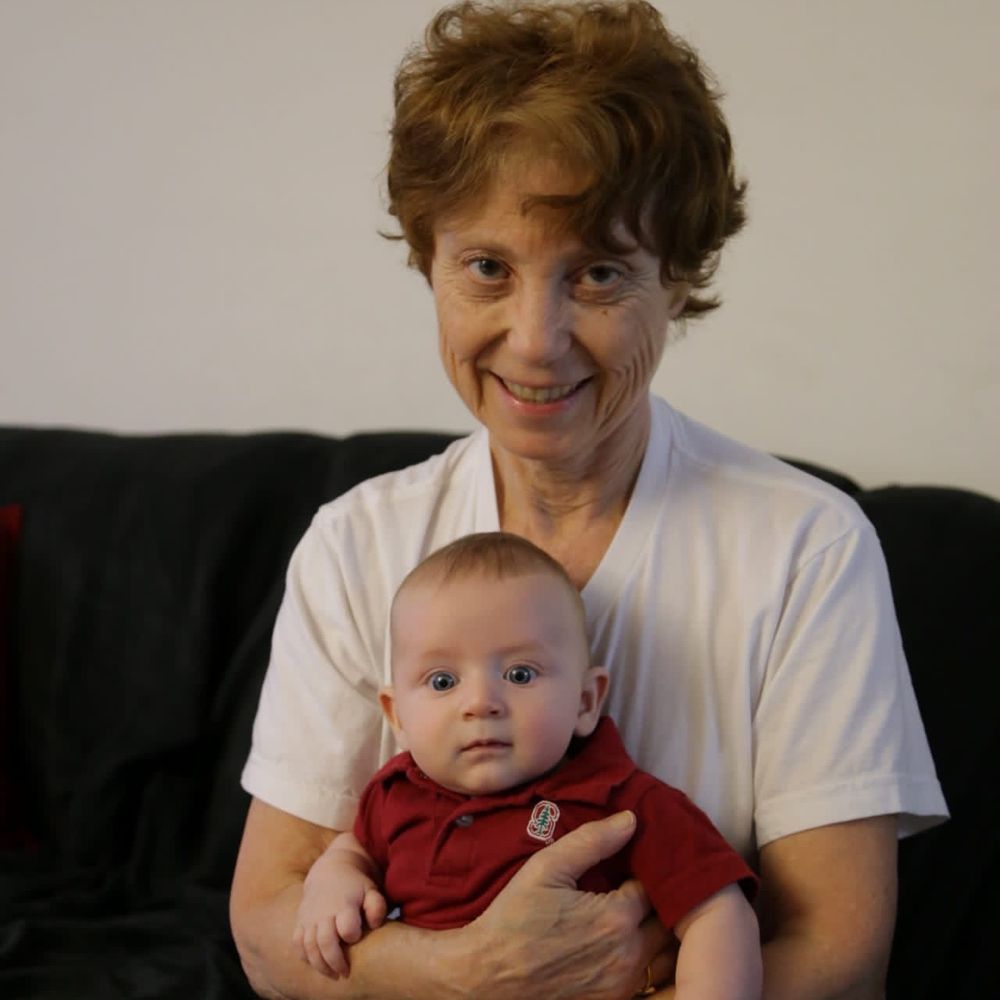
Lovely work by my colleagues, great illustration of what happens when cognitive science meets real world readoning cognitiveresearchjournal.springeropen.com/articles/10....

Recording and communicating uncertainty in science: how geologists manage variability in spatial data - Cognitive Research: Principles and Implications
All scientists must cope with variability in data to make inferences about the world. However, in observation-based geology, how scientists cope with variability is particularly consequential because ...
cognitiveresearchjournal.springeropen.com
November 1, 2025 at 10:35 AM
Lovely work by my colleagues, great illustration of what happens when cognitive science meets real world readoning cognitiveresearchjournal.springeropen.com/articles/10....
Reposted by Vlad Ayzenberg

Pennsylvania has an important Supreme Court race coming up on Tuesday, November 4. If you live in the Keystone State, or know someone who does, vote YES to retain three justices who will protect your fundamental rights and freedoms.
October 29, 2025 at 8:38 PM
Pennsylvania has an important Supreme Court race coming up on Tuesday, November 4. If you live in the Keystone State, or know someone who does, vote YES to retain three justices who will protect your fundamental rights and freedoms.
Reposted by Vlad Ayzenberg
It's FUNCTIONAL ANALYSIS FALL 🍁🎃🍂
Check out our free, upcoming talks and register here: fitng.org/fitng-togeth...
Check out our free, upcoming talks and register here: fitng.org/fitng-togeth...

October 28, 2025 at 1:41 PM
It's FUNCTIONAL ANALYSIS FALL 🍁🎃🍂
Check out our free, upcoming talks and register here: fitng.org/fitng-togeth...
Check out our free, upcoming talks and register here: fitng.org/fitng-togeth...
Reposted by Vlad Ayzenberg

We wrote an article explaining why you shouldn't put several variables into a regression model and report which are statistically significant - even as exploratory research. bmjmedicine.bmj.com/content/4/1/.... How did we do?

October 27, 2025 at 5:39 PM
We wrote an article explaining why you shouldn't put several variables into a regression model and report which are statistically significant - even as exploratory research. bmjmedicine.bmj.com/content/4/1/.... How did we do?
Reposted by Vlad Ayzenberg

🚨Preprint: Semantic Tuning of Single Neurons in the Human Medial Temporal Lobe
1/8: How do human neurons encode meaning?
In this work, led by Katharina Karkowski, we recorded hundreds of human MTL neurons to study semantic coding in the human brain:
doi.org/10.1101/2025...
1/8: How do human neurons encode meaning?
In this work, led by Katharina Karkowski, we recorded hundreds of human MTL neurons to study semantic coding in the human brain:
doi.org/10.1101/2025...

Semantic Tuning of Single Neurons in the Human Medial Temporal Lobe
The Medial Temporal Lobe (MTL) is key to human cognition, supporting memory, emotional processing, navigation, and semantic coding. Rare direct human MTL recordings revealed concept cells, which were ...
doi.org
October 27, 2025 at 3:32 PM
🚨Preprint: Semantic Tuning of Single Neurons in the Human Medial Temporal Lobe
1/8: How do human neurons encode meaning?
In this work, led by Katharina Karkowski, we recorded hundreds of human MTL neurons to study semantic coding in the human brain:
doi.org/10.1101/2025...
1/8: How do human neurons encode meaning?
In this work, led by Katharina Karkowski, we recorded hundreds of human MTL neurons to study semantic coding in the human brain:
doi.org/10.1101/2025...
Reposted by Vlad Ayzenberg
Seeking applications from recent PhDs in neuro, psych, ling, philo, comp sci, or other cog sci discipline, for our MindCORE Fellowship.
MindCORE is an interdisciplinary effort at Penn to understand human intelligence and behavior.
Apply by Dec 1: mindcore.sas.upenn.edu/post-doctora...
MindCORE is an interdisciplinary effort at Penn to understand human intelligence and behavior.
Apply by Dec 1: mindcore.sas.upenn.edu/post-doctora...

October 27, 2025 at 9:12 PM
Seeking applications from recent PhDs in neuro, psych, ling, philo, comp sci, or other cog sci discipline, for our MindCORE Fellowship.
MindCORE is an interdisciplinary effort at Penn to understand human intelligence and behavior.
Apply by Dec 1: mindcore.sas.upenn.edu/post-doctora...
MindCORE is an interdisciplinary effort at Penn to understand human intelligence and behavior.
Apply by Dec 1: mindcore.sas.upenn.edu/post-doctora...
Reposted by Vlad Ayzenberg
Expecting experience, not getting it, the brain adapts
www.science.org/doi/10.1126/...
www.science.org/doi/10.1126/...

Developmental alterations in brain network asymmetry in 3- to 9-month infants with congenital sensorineural hearing loss
Early sensorineural hearing loss disrupts lateralization development of the brain network.
www.science.org
October 24, 2025 at 8:49 AM
Expecting experience, not getting it, the brain adapts
www.science.org/doi/10.1126/...
www.science.org/doi/10.1126/...
Reposted by Vlad Ayzenberg

Delighted to share our new paper, now out in PNAS! www.pnas.org/doi/10.1073/...
"Hierarchical dynamic coding coordinates speech comprehension in the brain"
with dream team @alecmarantz.bsky.social, @davidpoeppel.bsky.social, @jeanremiking.bsky.social
Summary 👇
1/8
"Hierarchical dynamic coding coordinates speech comprehension in the brain"
with dream team @alecmarantz.bsky.social, @davidpoeppel.bsky.social, @jeanremiking.bsky.social
Summary 👇
1/8
PNAS
Proceedings of the National Academy of Sciences (PNAS), a peer reviewed journal of the National Academy of Sciences (NAS) - an authoritative source of high-impact, original research that broadly spans...
www.pnas.org
October 22, 2025 at 5:21 AM
Delighted to share our new paper, now out in PNAS! www.pnas.org/doi/10.1073/...
"Hierarchical dynamic coding coordinates speech comprehension in the brain"
with dream team @alecmarantz.bsky.social, @davidpoeppel.bsky.social, @jeanremiking.bsky.social
Summary 👇
1/8
"Hierarchical dynamic coding coordinates speech comprehension in the brain"
with dream team @alecmarantz.bsky.social, @davidpoeppel.bsky.social, @jeanremiking.bsky.social
Summary 👇
1/8
Reposted by Vlad Ayzenberg

So what explains the rest of the variance? If it's not genes, it must be environment, right?

a cat is laying down on a table with the words `` no '' written on its face .
ALT: a cat is laying down on a table with the words `` no '' written on its face .
media.tenor.com
October 16, 2025 at 6:16 PM
So what explains the rest of the variance? If it's not genes, it must be environment, right?
Reposted by Vlad Ayzenberg
Over the weekend ICE abducted an NIH contractor when he showed up to a courthouse for his green card hearing. He is documented. His wife is a citizen.
He is also member of the skeleton crew of animal care staff that works through a shutdown, to ensure the health and wellbeing of research animals.
He is also member of the skeleton crew of animal care staff that works through a shutdown, to ensure the health and wellbeing of research animals.
October 7, 2025 at 4:26 PM
Over the weekend ICE abducted an NIH contractor when he showed up to a courthouse for his green card hearing. He is documented. His wife is a citizen.
He is also member of the skeleton crew of animal care staff that works through a shutdown, to ensure the health and wellbeing of research animals.
He is also member of the skeleton crew of animal care staff that works through a shutdown, to ensure the health and wellbeing of research animals.
Reposted by Vlad Ayzenberg
Thrilled to see this paper out! It's the culmination of a project begun in the depths of the pandemic with Sabrina Karjack and @zoengo.bsky.social . We continue our exploration of how children generalize when their episodic memory is not yet mature.
www.nature.com/articles/s41...
www.nature.com/articles/s41...

The dependence of children’s generalization on episodic memory varies with age and level of abstraction - Nature Communications
Children’s ability to generalize from episodic memories varies by both age and the level of abstraction. Here, the authors show that lower level generalization increasingly depends on episodic memory with age, whereas higher level generalization shows no such relationship.
www.nature.com
October 7, 2025 at 1:47 PM
Thrilled to see this paper out! It's the culmination of a project begun in the depths of the pandemic with Sabrina Karjack and @zoengo.bsky.social . We continue our exploration of how children generalize when their episodic memory is not yet mature.
www.nature.com/articles/s41...
www.nature.com/articles/s41...