




Sibelle Vilaça
@sibellevilaca.bsky.social
Population genetics of endangered species 🇧🇷 I like #seaturtle hybrids.
Reposted by Sibelle Vilaça

📣 Join us - we’re hiring an engagement officer for the CAN BON 🍁 initiative!
An effort to transform Canada’s capacity to mobilize its knowledge about the changing state of nature.
See the job posting here👇
www.linkedin.com/posts/andrew...
An effort to transform Canada’s capacity to mobilize its knowledge about the changing state of nature.
See the job posting here👇
www.linkedin.com/posts/andrew...

📣 We are hiring! Please share far and wide...
I am seeking an Engagement Officer to support the emergence of a Canadian Biodiversity Observation Network (CAN BON). This position is a unique… | Andrew ...
📣 We are hiring! Please share far and wide...
I am seeking an Engagement Officer to support the emergence of a Canadian Biodiversity Observation Network (CAN BON). This position is a unique opportunit...
www.linkedin.com
January 23, 2026 at 8:19 PM
📣 Join us - we’re hiring an engagement officer for the CAN BON 🍁 initiative!
An effort to transform Canada’s capacity to mobilize its knowledge about the changing state of nature.
See the job posting here👇
www.linkedin.com/posts/andrew...
An effort to transform Canada’s capacity to mobilize its knowledge about the changing state of nature.
See the job posting here👇
www.linkedin.com/posts/andrew...
Reposted by Sibelle Vilaça
Do you think you understand effective population size (Ne)? This key concept for conservation is complex.. but a new Special Issue organized by @jmergeay.bsky.social et al. provides clarity with 19 papers help us understand more 🧬
doi.org/10.1111/eva.70196
doi.org/10.1111/eva.70196
doi.org
January 22, 2026 at 2:14 PM
Do you think you understand effective population size (Ne)? This key concept for conservation is complex.. but a new Special Issue organized by @jmergeay.bsky.social et al. provides clarity with 19 papers help us understand more 🧬
doi.org/10.1111/eva.70196
doi.org/10.1111/eva.70196
Reposted by Sibelle Vilaça

Latest issue of Cowrent Biology is up! www.cell.com/current-biol...
January 19, 2026 at 7:38 PM
Latest issue of Cowrent Biology is up! www.cell.com/current-biol...
Reposted by Sibelle Vilaça

Combined Annotation Dependent Depletion (CADD) is a #machinelearning approach used to predict the deleteriousness of genetic variants. In #G3journal, learn about the automated CADD pipeline offering a species-independent approach for generating CADD scores.https://buff.ly/B22F34W

January 12, 2026 at 5:05 PM
Combined Annotation Dependent Depletion (CADD) is a #machinelearning approach used to predict the deleteriousness of genetic variants. In #G3journal, learn about the automated CADD pipeline offering a species-independent approach for generating CADD scores.https://buff.ly/B22F34W
Reposted by Sibelle Vilaça

Excited to host our @nanoporetech.com Org.one workshop: #Genomes for the #Conservation of Endangered Species at #PAG33 on Fri Jan 9th 10:30am! Join us for a set of biodiverse talks 🌳🦜 🐸 🧬 @uconnresearch.bsky.social @ebpgenome.bsky.social @vertebrategenomes.bsky.social

January 8, 2026 at 6:50 AM
Excited to host our @nanoporetech.com Org.one workshop: #Genomes for the #Conservation of Endangered Species at #PAG33 on Fri Jan 9th 10:30am! Join us for a set of biodiverse talks 🌳🦜 🐸 🧬 @uconnresearch.bsky.social @ebpgenome.bsky.social @vertebrategenomes.bsky.social
Reposted by Sibelle Vilaça

A must read for conservation geneticists on the utility (or not??) of using molecular diversity to predict adaptive potential 👇🏻

I'm excited to share that our preprint is now available on bioRxiv! Our study challenges the widespread use of molecular genetic diversity as a predictor adaptive potential, with important implications for how genetic data is used to inform conservation decisions.
www.biorxiv.org/content/10.6...
www.biorxiv.org/content/10.6...

Nucleotide diversity is a poor predictor of short-term adaptive potential
A capacity to adapt is essential for a population to avoid extinction in a changing world and is recognised as a global conservation priority. Adaptation requires additive (heritable) genetic variatio...
www.biorxiv.org
January 6, 2026 at 9:14 AM
A must read for conservation geneticists on the utility (or not??) of using molecular diversity to predict adaptive potential 👇🏻
Your work is an act of resistance. Keep going.

After Bolsonaro came to power in 2019, more than 5,600 grants vanished under sweeping austerity measures that targeted research and higher education
go.nature.com/48ZV4DV
go.nature.com/48ZV4DV

Dear US researchers: break the outrage addiction. I survived the besieging of science. So can you.
As I watch US researchers respond to threats against science, I’m reminded of when scientists in Brazil navigated a similar storm.
go.nature.com
January 2, 2026 at 3:57 PM
Your work is an act of resistance. Keep going.
Reposted by Sibelle Vilaça

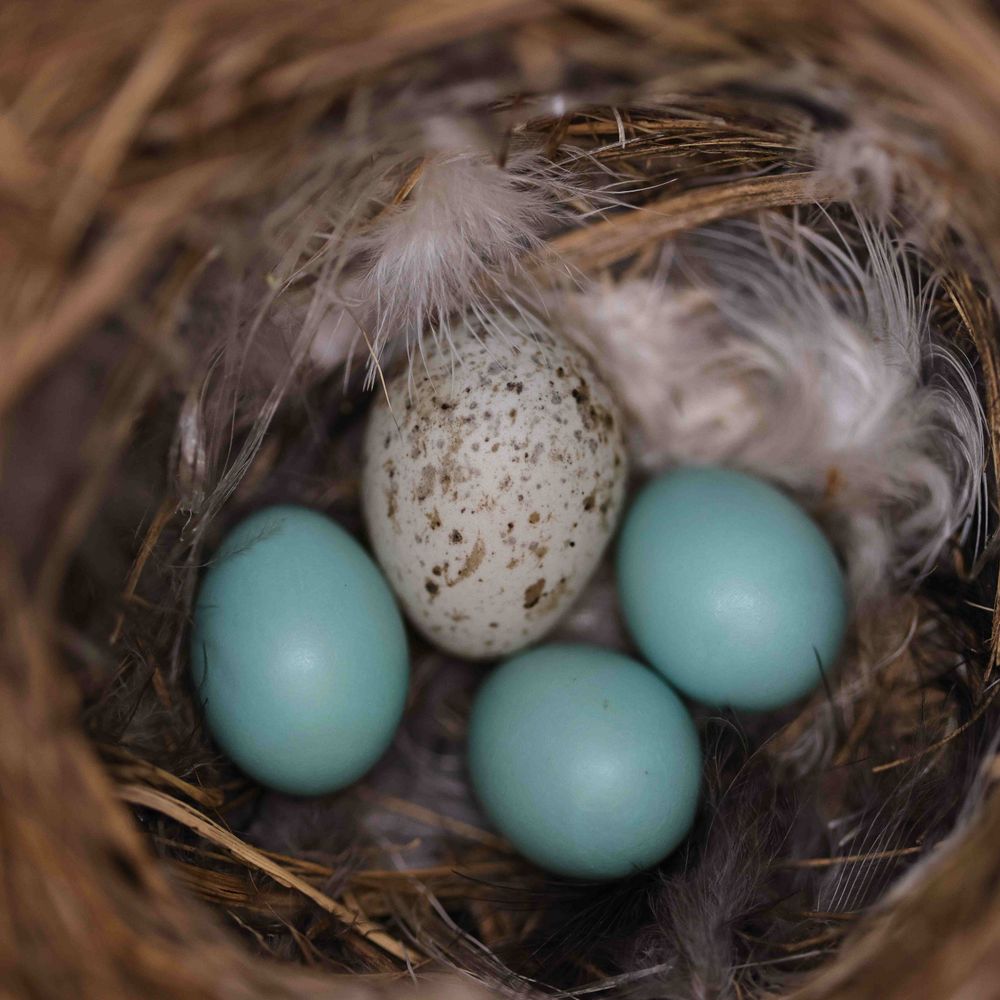
I'm excited to share memes that my students made this year in my undergraduate #Evolution class #popgen #consgen #evolbiol . "When a batesian mimicry species comes to the party: hello fellow harmful species" "I found on all-encompassing way to define species"


December 19, 2025 at 1:00 PM
I'm excited to share memes that my students made this year in my undergraduate #Evolution class #popgen #consgen #evolbiol . "When a batesian mimicry species comes to the party: hello fellow harmful species" "I found on all-encompassing way to define species"

Reposted by Sibelle Vilaça

I've slowly been reformatting notes from my population and conservation genetics course at Montana State University into a web book—a rough draft is now live here: elinck.org/popgen_conge...

December 22, 2025 at 9:32 PM
I've slowly been reformatting notes from my population and conservation genetics course at Montana State University into a web book—a rough draft is now live here: elinck.org/popgen_conge...
Reposted by Sibelle Vilaça

"Business as usual will commit biodiversity to genetic erosion: parallels from climate change for proactive conservation" - doi.org/10.32942/X20...

December 17, 2025 at 7:30 PM
"Business as usual will commit biodiversity to genetic erosion: parallels from climate change for proactive conservation" - doi.org/10.32942/X20...
Reposted by Sibelle Vilaça

Fabbri et al. studied the Apennine brown bear population, which has coexisted with humans in Central Italy for millennia, showing these bears have reduced genetic diversity and selective signatures at genes associated with reduced aggressiveness.
🔗 doi.org/10.1093/molbev/msaf292
#evobio #molbio
🔗 doi.org/10.1093/molbev/msaf292
#evobio #molbio

December 15, 2025 at 4:21 PM
Fabbri et al. studied the Apennine brown bear population, which has coexisted with humans in Central Italy for millennia, showing these bears have reduced genetic diversity and selective signatures at genes associated with reduced aggressiveness.
🔗 doi.org/10.1093/molbev/msaf292
#evobio #molbio
🔗 doi.org/10.1093/molbev/msaf292
#evobio #molbio
Reposted by Sibelle Vilaça

Apennine brown bear #genomic diversity - comparing whole #genome resequencing data from Apennine, Central European, and North American brown bears academic.oup.com/mbe/article/... #biodiversity #genomics

Coexisting With Humans: Genomic and Behavioral Consequences in a Small and Isolated Bear Population
Abstract. Climate and land use change have increased human–wildlife interactions, potentially reducing wild species density and prompting behavioral adapta
academic.oup.com
December 15, 2025 at 1:11 PM
Apennine brown bear #genomic diversity - comparing whole #genome resequencing data from Apennine, Central European, and North American brown bears academic.oup.com/mbe/article/... #biodiversity #genomics
Reposted by Sibelle Vilaça

Join our Tree of Life Programme as a Group Leader in Biodiversity Genomics at the Wellcome Sanger Institute. Lead ambitious, large-scale genomics research to understand life’s diversity on Earth.
🔗 Learn more and apply: sanger.wd103.myworkdayjobs.com/en-US/Wellco...
📅 Closing date: 8 February 2026
🔗 Learn more and apply: sanger.wd103.myworkdayjobs.com/en-US/Wellco...
📅 Closing date: 8 February 2026

December 15, 2025 at 1:51 PM
Join our Tree of Life Programme as a Group Leader in Biodiversity Genomics at the Wellcome Sanger Institute. Lead ambitious, large-scale genomics research to understand life’s diversity on Earth.
🔗 Learn more and apply: sanger.wd103.myworkdayjobs.com/en-US/Wellco...
📅 Closing date: 8 February 2026
🔗 Learn more and apply: sanger.wd103.myworkdayjobs.com/en-US/Wellco...
📅 Closing date: 8 February 2026

Reposted by Sibelle Vilaça
Reposted by Sibelle Vilaça
Learned today that “Galápagos” comes from a Spanish word for tortoise, meaning that “Galápagos Tortoise” is,
in fact,
a tortology
in fact,
a tortology
December 13, 2025 at 9:49 PM
Learned today that “Galápagos” comes from a Spanish word for tortoise, meaning that “Galápagos Tortoise” is,
in fact,
a tortology
in fact,
a tortology
Reposted by Sibelle Vilaça

The new Enabling Discovery through GEnomics (EDGE) Program page is posted. Please contact us at BIOEDGE@nsf.gov if you have questions. www.nsf.gov/funding/oppo...

Enabling Discovery Through Genomics (EDGE)
www.nsf.gov
December 8, 2025 at 9:00 PM
The new Enabling Discovery through GEnomics (EDGE) Program page is posted. Please contact us at BIOEDGE@nsf.gov if you have questions. www.nsf.gov/funding/oppo...
Reposted by Sibelle Vilaça

TIL about a memorial ceremony in Iceland in 2019 to mark the end of a glacier, changing the place name from Okjökull to Ok (jökull = glacier). Uncompromising wording on the bronze plaque:
"This is to acknowledge that we know what is happening and what needs to be done. Only you know if we did it".
"This is to acknowledge that we know what is happening and what needs to be done. Only you know if we did it".

December 7, 2025 at 5:17 PM
TIL about a memorial ceremony in Iceland in 2019 to mark the end of a glacier, changing the place name from Okjökull to Ok (jökull = glacier). Uncompromising wording on the bronze plaque:
"This is to acknowledge that we know what is happening and what needs to be done. Only you know if we did it".
"This is to acknowledge that we know what is happening and what needs to be done. Only you know if we did it".
Reposted by Sibelle Vilaça
Our Editorial for our upcoming special issue in Molecular Ecology: Conservation Genomics—Making a Difference onlinelibrary.wiley.com/doi/10.1111/...

Conservation Genomics—Making a Difference
Conservation genomics has increasingly transitioned from a promising concept to a science that integrates a range of advanced analytical approaches, providing new insights into inbreeding, genetic lo....
onlinelibrary.wiley.com
December 4, 2025 at 8:31 PM
Our Editorial for our upcoming special issue in Molecular Ecology: Conservation Genomics—Making a Difference onlinelibrary.wiley.com/doi/10.1111/...

Popgen folks, Jiseon, Nate, and Andy, along with Yuxin Ning and Franz Baumdicker, just released a really cool new method for simulation based inference (think ABC) using normalizing flows. It seems to work really well! full joint posteriors ftw!
www.biorxiv.org/content/10.6...
www.biorxiv.org/content/10.6...

Neural posterior estimation for population genetics
Simulation-based inference methods are increasingly being used in population genetics due to their flexibility and ability to be applied in settings where likelihood-based methods are intractable. Per...
www.biorxiv.org
December 3, 2025 at 8:28 PM
Folks, I'm looking for funding opportunities to organize a training schoool or workshop in Brazil. Does anyone know of any grants I can ask?
I have asked SMBE in the past, but I can't see open calls from EMBO or UK-Brazil... I would appreciate any suggestions!
#popgen #consgen #evolbiol
I have asked SMBE in the past, but I can't see open calls from EMBO or UK-Brazil... I would appreciate any suggestions!
#popgen #consgen #evolbiol
November 30, 2025 at 6:05 PM
The value of structural variants to conservation genomics in the pangenome era
academic.oup.com/jhered/advan...
academic.oup.com/jhered/advan...

The value of structural variants to conservation genomics in the pangenome era
Abstract. Structural variants (SVs) comprise an axis of genetic diversity with strong consequences for phenotype and fitness, making them a potentially imp
academic.oup.com
November 30, 2025 at 5:12 PM
Reposted by Sibelle Vilaça

In Committee II of #CITESCoP20, #FIJI stated that, in their country, “marine #turtles are not simply wildlife—they are ancestral symbols, clan totems, part of our sacred stories, & relatives. Illegal take is therefore not just an ecological harm, but a cultural violation.” @trafficintl.bsky.social

November 29, 2025 at 5:56 AM
In Committee II of #CITESCoP20, #FIJI stated that, in their country, “marine #turtles are not simply wildlife—they are ancestral symbols, clan totems, part of our sacred stories, & relatives. Illegal take is therefore not just an ecological harm, but a cultural violation.” @trafficintl.bsky.social
Reposted by Sibelle Vilaça

I very excited we finally made a new version of #smudgeplot: Skylight. Much faster, improved inference and interface and finally, we have a new experimental features that might be fun toying with.
github.com/KamilSJaron/...
github.com/KamilSJaron/...

Release Skylight · KamilSJaron/smudgeplot
What's Changed
Lots of bugfixes in the interface and documentation (@samebdon and @KamilSJaron )
Add JSON report and PNG default plot format to output by @jgrg in #215
Fix bug in estimation of err...
github.com
November 25, 2025 at 9:49 AM
I very excited we finally made a new version of #smudgeplot: Skylight. Much faster, improved inference and interface and finally, we have a new experimental features that might be fun toying with.
github.com/KamilSJaron/...
github.com/KamilSJaron/...