



Sabine Krabbe
@sabinekrabbe.bsky.social
Group Leader @DZNE, Bonn. Fond of neuroscience, football and cats.
Pinned
Sabine Krabbe
@sabinekrabbe.bsky.social
· Nov 12

Heterogeneous plasticity of amygdala interneurons in associative learning and extinction - Nature Communications
In this study, the authors uncover how diverse inhibitory interneurons in the amygdala flexibly contribute to fear and safety learning, revealing a key role for inhibition in emotional memory and adap...
www.nature.com
Out now: Favila, Capece Marsico et al. 2025, Nature Communications: Using longitudinal deep-brain imaging, we report that amygdala interneurons exhibit complex and heterogeneous plasticity during associative learning, at both the single-cell and population level.
👉 www.nature.com/articles/s41...
👉 www.nature.com/articles/s41...
Reposted by Sabine Krabbe
3rd pre-FENS Motor Symposium "The Dynamics of Motor Control: Circuit Interactions in Health and Disease" on July 5th 2026 at the Faculty of Medicine and Health Sciences, University of Barcelona. Registration and abstract submission are open NOW until March 1st motor-control-satellite-2026.umh.es
Motor Control Satellite FENS 2026 – Universidad Miguel Hernández de Elche
motor-control-satellite-2026.umh.es
February 13, 2026 at 2:58 PM
3rd pre-FENS Motor Symposium "The Dynamics of Motor Control: Circuit Interactions in Health and Disease" on July 5th 2026 at the Faculty of Medicine and Health Sciences, University of Barcelona. Registration and abstract submission are open NOW until March 1st motor-control-satellite-2026.umh.es
Reposted by Sabine Krabbe
Our new preprint is out!
A state-dependent neural circuit resolves approach–avoidance conflicts
www.biorxiv.org/content/10.6...
Fantastic work led by Devika Bodas, with key contributions from Marine Balcou, and a great collaboration with Lisa Scheunemann Lab, fearuting Şevval Demirci.
A state-dependent neural circuit resolves approach–avoidance conflicts
www.biorxiv.org/content/10.6...
Fantastic work led by Devika Bodas, with key contributions from Marine Balcou, and a great collaboration with Lisa Scheunemann Lab, fearuting Şevval Demirci.
www.biorxiv.org
February 13, 2026 at 2:29 PM
Our new preprint is out!
A state-dependent neural circuit resolves approach–avoidance conflicts
www.biorxiv.org/content/10.6...
Fantastic work led by Devika Bodas, with key contributions from Marine Balcou, and a great collaboration with Lisa Scheunemann Lab, fearuting Şevval Demirci.
A state-dependent neural circuit resolves approach–avoidance conflicts
www.biorxiv.org/content/10.6...
Fantastic work led by Devika Bodas, with key contributions from Marine Balcou, and a great collaboration with Lisa Scheunemann Lab, fearuting Şevval Demirci.
Reposted by Sabine Krabbe

Please share: I am recruiting a PhD student to join my lab in Oslo!
For this project, we will investigate the role of striatal interneurons during action selection, using a combination of behavior, in vivo voltage imaging, and slice ephys.
www.jobbnorge.no/en/available...
#NeuroJobs #NeuroSkyence
For this project, we will investigate the role of striatal interneurons during action selection, using a combination of behavior, in vivo voltage imaging, and slice ephys.
www.jobbnorge.no/en/available...
#NeuroJobs #NeuroSkyence
February 13, 2026 at 2:34 PM
Please share: I am recruiting a PhD student to join my lab in Oslo!
For this project, we will investigate the role of striatal interneurons during action selection, using a combination of behavior, in vivo voltage imaging, and slice ephys.
www.jobbnorge.no/en/available...
#NeuroJobs #NeuroSkyence
For this project, we will investigate the role of striatal interneurons during action selection, using a combination of behavior, in vivo voltage imaging, and slice ephys.
www.jobbnorge.no/en/available...
#NeuroJobs #NeuroSkyence
Reposted by Sabine Krabbe
Really nice work from the Holmes lab looking at amygdala astrocytes in fear memory and extinction!
www.nature.com/articles/s41...
www.nature.com/articles/s41...

Astrocytes enable amygdala neural representations supporting memory - Nature
Astrocytes in the basolateral amygdala dynamically track fear state and support fear memory retrieval and extinction.
www.nature.com
February 11, 2026 at 10:18 PM
Really nice work from the Holmes lab looking at amygdala astrocytes in fear memory and extinction!
www.nature.com/articles/s41...
www.nature.com/articles/s41...
Reposted by Sabine Krabbe
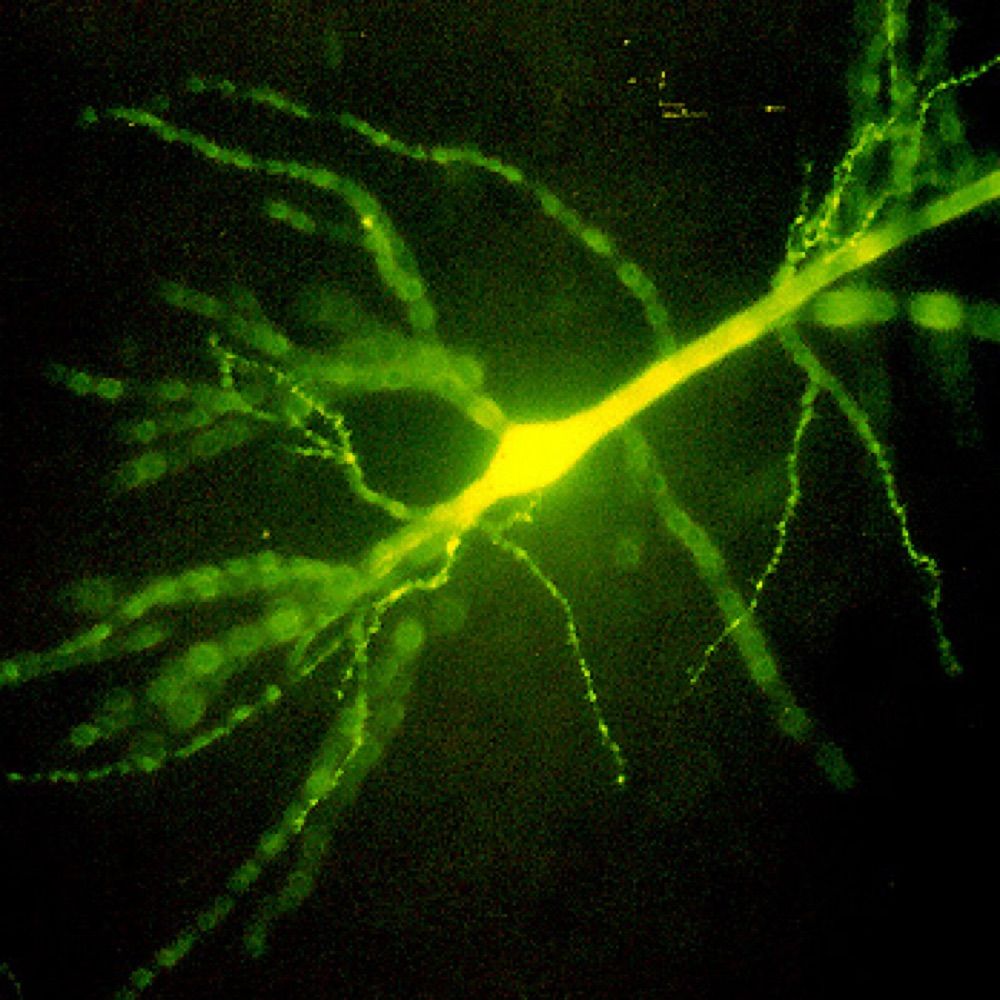
My take on the Defining Cell Types perspective at @thetransmitter.bsky.social

Defining brain cell types is no longer a matter of classification alone, but of embedding their genetic identities within the dynamical organization of population activity, writes @lmprida.bsky.social.
#neuroskyence
www.thetransmitter.org/defining-cel...
#neuroskyence
www.thetransmitter.org/defining-cel...

From genes to dynamics: Examining brain cell types in action may reveal the logic of brain function
Defining brain cell types is no longer a matter of classification alone, but of embedding their genetic identities within the dynamical organization of population activity.
www.thetransmitter.org
February 9, 2026 at 6:33 PM
My take on the Defining Cell Types perspective at @thetransmitter.bsky.social
Reposted by Sabine Krabbe
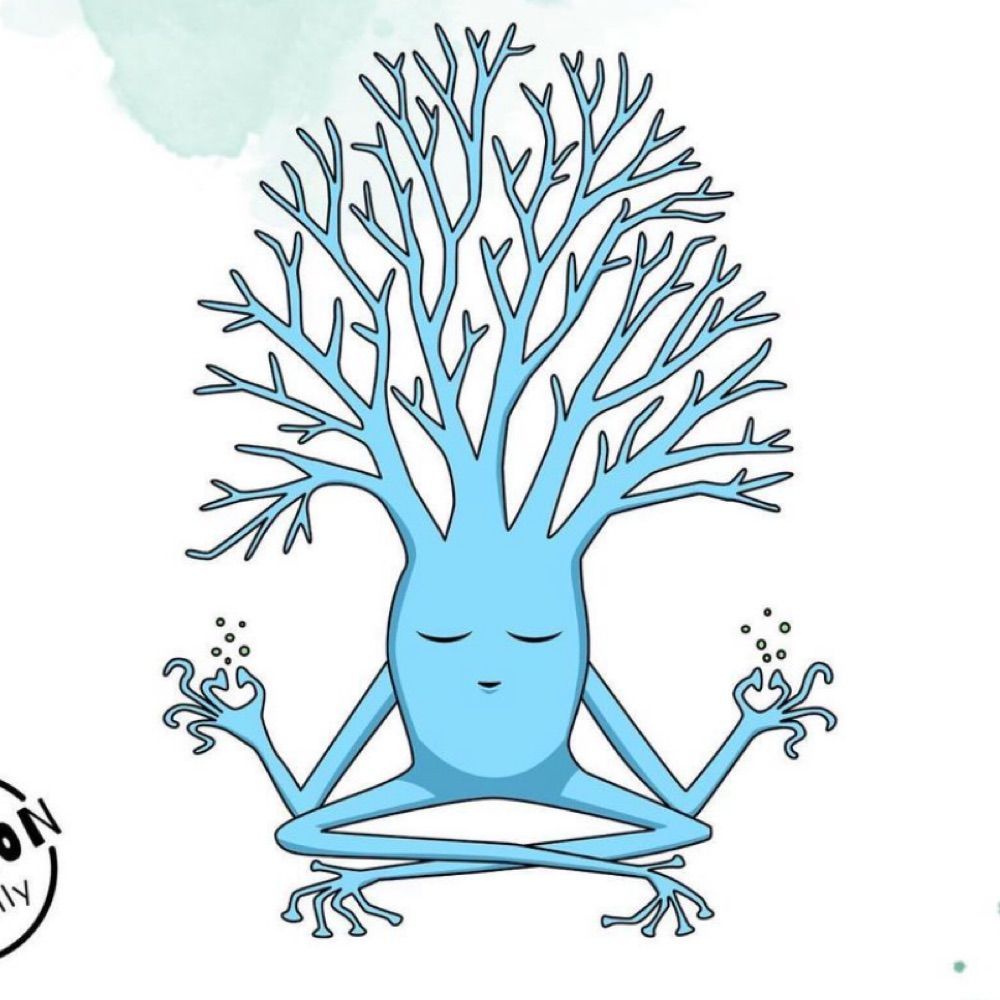
The International Day for Women and Girls in Science is coming up this week on Wednesday February 11th! 🧫 🔬
To celebrate we created a new colouring page! 🧪✍️🎨
Please share this post with any educators or teachers you know!
www.thebraincolouringbook.com/printables
To celebrate we created a new colouring page! 🧪✍️🎨
Please share this post with any educators or teachers you know!
www.thebraincolouringbook.com/printables

February 9, 2026 at 3:59 PM
The International Day for Women and Girls in Science is coming up this week on Wednesday February 11th! 🧫 🔬
To celebrate we created a new colouring page! 🧪✍️🎨
Please share this post with any educators or teachers you know!
www.thebraincolouringbook.com/printables
To celebrate we created a new colouring page! 🧪✍️🎨
Please share this post with any educators or teachers you know!
www.thebraincolouringbook.com/printables
On my way back to Germany after two wonderful weeks in Australia. Many thanks for the invitation to the #LMA2026 Team, and my hosts at QBI, UNSW and USYD. Definitely worth the long travel!


February 6, 2026 at 10:51 AM
On my way back to Germany after two wonderful weeks in Australia. Many thanks for the invitation to the #LMA2026 Team, and my hosts at QBI, UNSW and USYD. Definitely worth the long travel!
Reposted by Sabine Krabbe

Very thankful for this thoughtful dispatch by @shaisrael.bsky.social sky.social and Moshe Parnas about our work. Learning and memory: Forgetting to remember: Current Biology www.cell.com/current-biol...

February 5, 2026 at 1:24 PM
Very thankful for this thoughtful dispatch by @shaisrael.bsky.social sky.social and Moshe Parnas about our work. Learning and memory: Forgetting to remember: Current Biology www.cell.com/current-biol...
Reposted by Sabine Krabbe
Thrilled to share that our first study on the hippocampus’ role in helping behavior in mice is now published in @cp-cellreports.bsky.social! This work was driven by an amazing team in my lab, and marks an important milestone for more exciting studies to come!
www.cell.com/cell-reports...
www.cell.com/cell-reports...

Neuronal networks in the dorsal hippocampus causally regulate rescue behavior in mice
dos Santos Correa et al. show that exposure to a stressful context promotes the acquisition
of rescue behavior in mice and that the dorsal hippocampus is required for this learning.
Calcium imaging re...
www.cell.com
February 2, 2026 at 7:21 PM
Thrilled to share that our first study on the hippocampus’ role in helping behavior in mice is now published in @cp-cellreports.bsky.social! This work was driven by an amazing team in my lab, and marks an important milestone for more exciting studies to come!
www.cell.com/cell-reports...
www.cell.com/cell-reports...
Reposted by Sabine Krabbe
Postdoc position in systems neuroscience!
Excited to recruit a postdoc for my lab at the University of Bonn.
🔬 In vivo physiology (Neuropixels, 2P/miniscope)
🐭 Head-fixed & freely moving behaviour
💡 Optogenetics/chemogenetics
⏳ Start: ASAP | Application deadline: 28.02.2026
More info below ⬇️
Excited to recruit a postdoc for my lab at the University of Bonn.
🔬 In vivo physiology (Neuropixels, 2P/miniscope)
🐭 Head-fixed & freely moving behaviour
💡 Optogenetics/chemogenetics
⏳ Start: ASAP | Application deadline: 28.02.2026
More info below ⬇️

February 1, 2026 at 8:46 PM
Postdoc position in systems neuroscience!
Excited to recruit a postdoc for my lab at the University of Bonn.
🔬 In vivo physiology (Neuropixels, 2P/miniscope)
🐭 Head-fixed & freely moving behaviour
💡 Optogenetics/chemogenetics
⏳ Start: ASAP | Application deadline: 28.02.2026
More info below ⬇️
Excited to recruit a postdoc for my lab at the University of Bonn.
🔬 In vivo physiology (Neuropixels, 2P/miniscope)
🐭 Head-fixed & freely moving behaviour
💡 Optogenetics/chemogenetics
⏳ Start: ASAP | Application deadline: 28.02.2026
More info below ⬇️
Reposted by Sabine Krabbe
Another one with our next door colleagues! @marianneroca.bsky.social in @jameslightfoot.bsky.social's group found the IL2 neurons detecting prey (this study) are also sensing octopamine, which we recently found plays an important role in predatory aggression! www.nature.com/articles/s41...
January 29, 2026 at 1:41 PM
Another one with our next door colleagues! @marianneroca.bsky.social in @jameslightfoot.bsky.social's group found the IL2 neurons detecting prey (this study) are also sensing octopamine, which we recently found plays an important role in predatory aggression! www.nature.com/articles/s41...
Reposted by Sabine Krabbe

Junior scientists 👉 applications are open for our workshop on the mechanistic basis of #cognition. 🧠
🤝 Joint sessions with our #TheoreticalNeuroscience workshop
✈️ Hotel, meals + reasonable travel expenses covered
Apply by May 7 ➡️ janelia.news/CNW26
@michaelreiser.bsky.social @jvoigts.bsky.social
🤝 Joint sessions with our #TheoreticalNeuroscience workshop
✈️ Hotel, meals + reasonable travel expenses covered
Apply by May 7 ➡️ janelia.news/CNW26
@michaelreiser.bsky.social @jvoigts.bsky.social

January 28, 2026 at 3:32 PM
Junior scientists 👉 applications are open for our workshop on the mechanistic basis of #cognition. 🧠
🤝 Joint sessions with our #TheoreticalNeuroscience workshop
✈️ Hotel, meals + reasonable travel expenses covered
Apply by May 7 ➡️ janelia.news/CNW26
@michaelreiser.bsky.social @jvoigts.bsky.social
🤝 Joint sessions with our #TheoreticalNeuroscience workshop
✈️ Hotel, meals + reasonable travel expenses covered
Apply by May 7 ➡️ janelia.news/CNW26
@michaelreiser.bsky.social @jvoigts.bsky.social
Reposted by Sabine Krabbe

One more week to apply for this cool collaborative PhD project in Bonn and Göttingen!
Are you interested in peeking inside the brain with miniscopes while mice are navigating using olfactory or visuospatial cues to find out how the hippocampus encodes this information and behaviour?
Then apply now!
Are you interested in peeking inside the brain with miniscopes while mice are navigating using olfactory or visuospatial cues to find out how the hippocampus encodes this information and behaviour?
Then apply now!
PhD position in systems neuroscience!
Excited to start a new DFG-funded project together with @obarnstedt.bsky.social to study olfactory–spatial coding in CA1.
🔬 Dual-colour miniscope Ca2+ imaging
🐭 Freely moving behaviour & optogenetics
⏳ Start: April 2026 | Deadline: 31.01.2026
More info below ⬇️
Excited to start a new DFG-funded project together with @obarnstedt.bsky.social to study olfactory–spatial coding in CA1.
🔬 Dual-colour miniscope Ca2+ imaging
🐭 Freely moving behaviour & optogenetics
⏳ Start: April 2026 | Deadline: 31.01.2026
More info below ⬇️

January 21, 2026 at 2:22 PM
One more week to apply for this cool collaborative PhD project in Bonn and Göttingen!
Are you interested in peeking inside the brain with miniscopes while mice are navigating using olfactory or visuospatial cues to find out how the hippocampus encodes this information and behaviour?
Then apply now!
Are you interested in peeking inside the brain with miniscopes while mice are navigating using olfactory or visuospatial cues to find out how the hippocampus encodes this information and behaviour?
Then apply now!
Reposted by Sabine Krabbe
Excited to share our new preprint! We explore the link between the locus coeruleus (LC) and arousal for astrocytes, pyramidal cells, interneurons in the hippocampus. A fantastic collaboration with @sianduss.bsky.social @bohaceklab.bsky.social, and many others: www.biorxiv.org/content/10.6... 1/5
January 19, 2026 at 1:36 PM
Excited to share our new preprint! We explore the link between the locus coeruleus (LC) and arousal for astrocytes, pyramidal cells, interneurons in the hippocampus. A fantastic collaboration with @sianduss.bsky.social @bohaceklab.bsky.social, and many others: www.biorxiv.org/content/10.6... 1/5
Reposted by Sabine Krabbe
Please spread the word🔊My lab is looking to hire two international postdocs. If you want to do comp neuro, combine machine learning and awesome math to understand neural circuit activity, then come work with us! Bonn is such a cool place for neuroscience now, you don't want to miss out.
January 10, 2026 at 5:39 PM
Please spread the word🔊My lab is looking to hire two international postdocs. If you want to do comp neuro, combine machine learning and awesome math to understand neural circuit activity, then come work with us! Bonn is such a cool place for neuroscience now, you don't want to miss out.
Reposted by Sabine Krabbe
Delighted to share our first preprint of the year!
A project that we're all really proud of in the lab led by @ossamaghenissa.bsky.social with @mathiasgua.bsky.social in which we set out to test the role of basolateral amygdala astrocytes in anxiety behaviour.
www.biorxiv.org/content/10.6...
A project that we're all really proud of in the lab led by @ossamaghenissa.bsky.social with @mathiasgua.bsky.social in which we set out to test the role of basolateral amygdala astrocytes in anxiety behaviour.
www.biorxiv.org/content/10.6...

Astrocytic Encoding of Threat in the Basolateral Amygdala
The basolateral amygdala (BLA) has long been implicated in threat detection and the generation of anxiety states. While previous experiments have demonstrated the important role of BLA principal neuro...
www.biorxiv.org
January 8, 2026 at 7:58 PM
Delighted to share our first preprint of the year!
A project that we're all really proud of in the lab led by @ossamaghenissa.bsky.social with @mathiasgua.bsky.social in which we set out to test the role of basolateral amygdala astrocytes in anxiety behaviour.
www.biorxiv.org/content/10.6...
A project that we're all really proud of in the lab led by @ossamaghenissa.bsky.social with @mathiasgua.bsky.social in which we set out to test the role of basolateral amygdala astrocytes in anxiety behaviour.
www.biorxiv.org/content/10.6...
Reposted by Sabine Krabbe
🧠⚡️💊New @nature.com publication !
Mimicking opioid analgesia in cortical pain circuits
We built a brain-behavior framework to decode spontaneous chronic pain in mice—and to biologically mimic morphine with a synthetic opioid gene therapy
nature.com/articles/s41...
@pennmedicine.bsky.social
Mimicking opioid analgesia in cortical pain circuits
We built a brain-behavior framework to decode spontaneous chronic pain in mice—and to biologically mimic morphine with a synthetic opioid gene therapy
nature.com/articles/s41...
@pennmedicine.bsky.social

Researchers identify the neurons involved in the emotional distress associated with pain
go.nature.com/4qIKkB8
go.nature.com/4qIKkB8

Chronic pain could be eased by uncoupling the sensory and emotional experiences
Researchers identify the neurons involved in the emotional distress associated with pain, and design a genetic approach that could soothe suffering without opioid drugs.
go.nature.com
January 8, 2026 at 6:01 PM
🧠⚡️💊New @nature.com publication !
Mimicking opioid analgesia in cortical pain circuits
We built a brain-behavior framework to decode spontaneous chronic pain in mice—and to biologically mimic morphine with a synthetic opioid gene therapy
nature.com/articles/s41...
@pennmedicine.bsky.social
Mimicking opioid analgesia in cortical pain circuits
We built a brain-behavior framework to decode spontaneous chronic pain in mice—and to biologically mimic morphine with a synthetic opioid gene therapy
nature.com/articles/s41...
@pennmedicine.bsky.social
Reposted by Sabine Krabbe

New paper out: Axon initial segment dynamics during associative fear learning: Benoit, Chloé Maëlle; Ganea, Dan Alin; Paricio-Montesinos, Ricardo; et al.
Nature neuroscience | Thanks for sharing #dzne #papers
Nature neuroscience | Thanks for sharing #dzne #papers
Axon initial segment dynamics during associative fear learning
Benoit, Chloé Maëlle; Ganea, Dan Alin; Paricio-Montesinos, Ricardo; et al.
Nature neuroscience
dlvr.it
January 7, 2026 at 10:54 AM
Reposted by Sabine Krabbe

Call for Symposia: Göttingen Meeting 2027
Time to take the opportunity and help to shape the Scientific Program 2027 by submitting your proposal until:
17 February 2026
Further information can be found here: web.nwg-info.de/de/conferenc...
Time to take the opportunity and help to shape the Scientific Program 2027 by submitting your proposal until:
17 February 2026
Further information can be found here: web.nwg-info.de/de/conferenc...

October 8, 2025 at 7:57 AM
Call for Symposia: Göttingen Meeting 2027
Time to take the opportunity and help to shape the Scientific Program 2027 by submitting your proposal until:
17 February 2026
Further information can be found here: web.nwg-info.de/de/conferenc...
Time to take the opportunity and help to shape the Scientific Program 2027 by submitting your proposal until:
17 February 2026
Further information can be found here: web.nwg-info.de/de/conferenc...
Reposted by Sabine Krabbe

📢 Please help spread the word: We’re hiring a Head of Student & Postdoc Affairs to coordinate our international PhD program, provide guidance & career counseling, lead training programs, collaborate on EDI initiatives, and manage alumni relations. Apply at www.fmi.ch/education-ca...

December 4, 2025 at 7:23 AM
📢 Please help spread the word: We’re hiring a Head of Student & Postdoc Affairs to coordinate our international PhD program, provide guidance & career counseling, lead training programs, collaborate on EDI initiatives, and manage alumni relations. Apply at www.fmi.ch/education-ca...
Reposted by Sabine Krabbe
Carolin Warnecke together with Hanna, Dennis, Bene & Kerstin from my lab show that re-exposure to reward diminishes multiple associated olfactory memories.
We’re hiring 2 postdocs—DM/email me for details. #Postdoc #Hiring
www.sciencedirect.com/science/arti...
We’re hiring 2 postdocs—DM/email me for details. #Postdoc #Hiring
www.sciencedirect.com/science/arti...

Re-exposure to reward re-evaluates related memories
To adapt behavior in changing environments, animals must continuously re-evaluate previously learned associations. This flexibility of memory systems …
www.sciencedirect.com
December 20, 2025 at 6:49 PM
Carolin Warnecke together with Hanna, Dennis, Bene & Kerstin from my lab show that re-exposure to reward diminishes multiple associated olfactory memories.
We’re hiring 2 postdocs—DM/email me for details. #Postdoc #Hiring
www.sciencedirect.com/science/arti...
We’re hiring 2 postdocs—DM/email me for details. #Postdoc #Hiring
www.sciencedirect.com/science/arti...
Reposted by Sabine Krabbe
I am excited to share our new paper, where we developed and used a new approach that allows us to dynamically monitor autophagy in the intact mouse brain! biorxiv.org/cgi/content/...

Fluorescence lifetime-based biosensor for monitoring compartmentalized autophagy dynamics in the intact mammalian brain
Synaptic architecture underlies neuronal computation, with autophagy serving as a key regulator of synaptic plasticity, function and local metabolism. Yet, autophagy dynamics and regulation within int...
biorxiv.org
December 26, 2025 at 4:57 AM
I am excited to share our new paper, where we developed and used a new approach that allows us to dynamically monitor autophagy in the intact mouse brain! biorxiv.org/cgi/content/...
Reposted by Sabine Krabbe
Paper alert: How do learning and memory emerge in the brain? DZNE's @jangrundemann.bsky.social and colleagues have observed a key mechanism of neuronal adaptability in the living brain for the 1st time. Published in @natneuro.nature.com, the study reveals dynamic regulation of nerve cell signaling.

December 23, 2025 at 10:29 AM
Paper alert: How do learning and memory emerge in the brain? DZNE's @jangrundemann.bsky.social and colleagues have observed a key mechanism of neuronal adaptability in the living brain for the 1st time. Published in @natneuro.nature.com, the study reveals dynamic regulation of nerve cell signaling.
Reposted by Sabine Krabbe
New study on axon initial segment plasticity by Chloé Benoit and Dan Ganea. Using a deep brain imaging approach, we find that AIS length changes dynamically during associative learning. Thank you to the wonderful team and collaborators who made this work possible. www.nature.com/articles/s41...

Axon initial segment dynamics during associative fear learning - Nature Neuroscience
Benoit, Ganea et al. show that changes in axon initial segment (AIS) length in the prefrontal cortex of mice accompany fear learning and extinction, revealing AIS plasticity as a key feature of neuron...
www.nature.com
December 23, 2025 at 10:12 AM
New study on axon initial segment plasticity by Chloé Benoit and Dan Ganea. Using a deep brain imaging approach, we find that AIS length changes dynamically during associative learning. Thank you to the wonderful team and collaborators who made this work possible. www.nature.com/articles/s41...
Reposted by Sabine Krabbe

BonnBrain 2026 is officially sold out!
Last admission decisions will be sent soon. Thank you for the overwhelming interest! We are looking forward to a fantastic meeting in Bonn next March.
Last admission decisions will be sent soon. Thank you for the overwhelming interest! We are looking forward to a fantastic meeting in Bonn next March.
December 19, 2025 at 12:11 PM
BonnBrain 2026 is officially sold out!
Last admission decisions will be sent soon. Thank you for the overwhelming interest! We are looking forward to a fantastic meeting in Bonn next March.
Last admission decisions will be sent soon. Thank you for the overwhelming interest! We are looking forward to a fantastic meeting in Bonn next March.