


Jeremy Reiter
@reitergroup.bsky.social
Biologist especially interested in cilia, signaling and development!
Reposted by Jeremy Reiter
Registration is OPEN for the 2026 Santa Cruz Meeting on Developmental Biology!!! Please spread the word!
@mads100tist.bsky.social @socdevbio.bsky.social @bsdb.bsky.social @xenbase.bsky.social @isdb.bsky.social @devbiol.bsky.social @the-node.bsky.social
scdb2026.sites.ucsc.edu
@mads100tist.bsky.social @socdevbio.bsky.social @bsdb.bsky.social @xenbase.bsky.social @isdb.bsky.social @devbiol.bsky.social @the-node.bsky.social
scdb2026.sites.ucsc.edu
Santa Cruz Developmental Biology Meeting
scdb2026.sites.ucsc.edu
February 10, 2026 at 8:12 PM
Registration is OPEN for the 2026 Santa Cruz Meeting on Developmental Biology!!! Please spread the word!
@mads100tist.bsky.social @socdevbio.bsky.social @bsdb.bsky.social @xenbase.bsky.social @isdb.bsky.social @devbiol.bsky.social @the-node.bsky.social
scdb2026.sites.ucsc.edu
@mads100tist.bsky.social @socdevbio.bsky.social @bsdb.bsky.social @xenbase.bsky.social @isdb.bsky.social @devbiol.bsky.social @the-node.bsky.social
scdb2026.sites.ucsc.edu
Reposted by Jeremy Reiter
The once-in-a-lifetime comedic queen Catherine O'Hara had situs inversus
#cilia #ciliopathy
www.usatoday.com/story/entert...
#cilia #ciliopathy
www.usatoday.com/story/entert...

a woman in a long black dress is walking down a foggy street .
ALT: a woman in a long black dress is walking down a foggy street .
media.tenor.com
January 31, 2026 at 6:39 PM
The once-in-a-lifetime comedic queen Catherine O'Hara had situs inversus
#cilia #ciliopathy
www.usatoday.com/story/entert...
#cilia #ciliopathy
www.usatoday.com/story/entert...
Reposted by Jeremy Reiter
Cilia alert! Stoked to have the new paper from Juyeon Hong about a new domain at the extreme distal tip of motile cilia! (The EDT, y'all!) It's out now @natcomms.nature.com.
Check it out!
#cilia
www.nature.com/articles/s41...
Check it out!
#cilia
www.nature.com/articles/s41...

A protein complex in the extreme distal tip of vertebrate motile cilia controls their organization, length, and function - Nature Communications
Here they combine in vivo imaging with proteomics to characterize a protein complex comprised of Ccdc78 and Ccdc33 that acts at the extreme distal tip of 9 + 2 motile cilia to control tip architecture...
www.nature.com
January 29, 2026 at 1:23 AM
Cilia alert! Stoked to have the new paper from Juyeon Hong about a new domain at the extreme distal tip of motile cilia! (The EDT, y'all!) It's out now @natcomms.nature.com.
Check it out!
#cilia
www.nature.com/articles/s41...
Check it out!
#cilia
www.nature.com/articles/s41...
Reposted by Jeremy Reiter

Biochemist/molecular biologist Joan Steitz was born #OTD in 1941.
She (& team) figured out how our cells read/use genetic instructions to make proteins. A key person who helped crack the code on RNA—the molecule that acts like a messenger between DNA & and the proteins our bodies need. #WomenInSTEM
She (& team) figured out how our cells read/use genetic instructions to make proteins. A key person who helped crack the code on RNA—the molecule that acts like a messenger between DNA & and the proteins our bodies need. #WomenInSTEM

January 26, 2026 at 7:08 PM
Biochemist/molecular biologist Joan Steitz was born #OTD in 1941.
She (& team) figured out how our cells read/use genetic instructions to make proteins. A key person who helped crack the code on RNA—the molecule that acts like a messenger between DNA & and the proteins our bodies need. #WomenInSTEM
She (& team) figured out how our cells read/use genetic instructions to make proteins. A key person who helped crack the code on RNA—the molecule that acts like a messenger between DNA & and the proteins our bodies need. #WomenInSTEM
Reposted by Jeremy Reiter
Jane Richardson was born #OTD in 1941
+ Developed the Richardson (ribbon) diagram to represent proteins' 3D structure (becoming a standard representation for protein structures)
+ MacArthur Fellow, 1985
+ Elected, Nat'l Academy of Sciences, 1991
+ President, Biophysical Society, 2012
#WomenInSTEM
+ Developed the Richardson (ribbon) diagram to represent proteins' 3D structure (becoming a standard representation for protein structures)
+ MacArthur Fellow, 1985
+ Elected, Nat'l Academy of Sciences, 1991
+ President, Biophysical Society, 2012
#WomenInSTEM


January 26, 2026 at 12:06 AM
Jane Richardson was born #OTD in 1941
+ Developed the Richardson (ribbon) diagram to represent proteins' 3D structure (becoming a standard representation for protein structures)
+ MacArthur Fellow, 1985
+ Elected, Nat'l Academy of Sciences, 1991
+ President, Biophysical Society, 2012
#WomenInSTEM
+ Developed the Richardson (ribbon) diagram to represent proteins' 3D structure (becoming a standard representation for protein structures)
+ MacArthur Fellow, 1985
+ Elected, Nat'l Academy of Sciences, 1991
+ President, Biophysical Society, 2012
#WomenInSTEM
Reposted by Jeremy Reiter
#DBfeature
Centriolar defects underlie a primary ciliary dyskinesia phenotype in an adenylate kinase 7 deficient ciliated epithelium
By Jennifer Sheridan, Aline Grata, Julia Dorr, Eve E. Suva, Enzo Bresteau, Linus R. Mitchell, Osama Hassan, Brian Mitchell
tinyurl.com/c88cax5z
Centriolar defects underlie a primary ciliary dyskinesia phenotype in an adenylate kinase 7 deficient ciliated epithelium
By Jennifer Sheridan, Aline Grata, Julia Dorr, Eve E. Suva, Enzo Bresteau, Linus R. Mitchell, Osama Hassan, Brian Mitchell
tinyurl.com/c88cax5z

January 20, 2026 at 3:06 PM
#DBfeature
Centriolar defects underlie a primary ciliary dyskinesia phenotype in an adenylate kinase 7 deficient ciliated epithelium
By Jennifer Sheridan, Aline Grata, Julia Dorr, Eve E. Suva, Enzo Bresteau, Linus R. Mitchell, Osama Hassan, Brian Mitchell
tinyurl.com/c88cax5z
Centriolar defects underlie a primary ciliary dyskinesia phenotype in an adenylate kinase 7 deficient ciliated epithelium
By Jennifer Sheridan, Aline Grata, Julia Dorr, Eve E. Suva, Enzo Bresteau, Linus R. Mitchell, Osama Hassan, Brian Mitchell
tinyurl.com/c88cax5z
Reposted by Jeremy Reiter
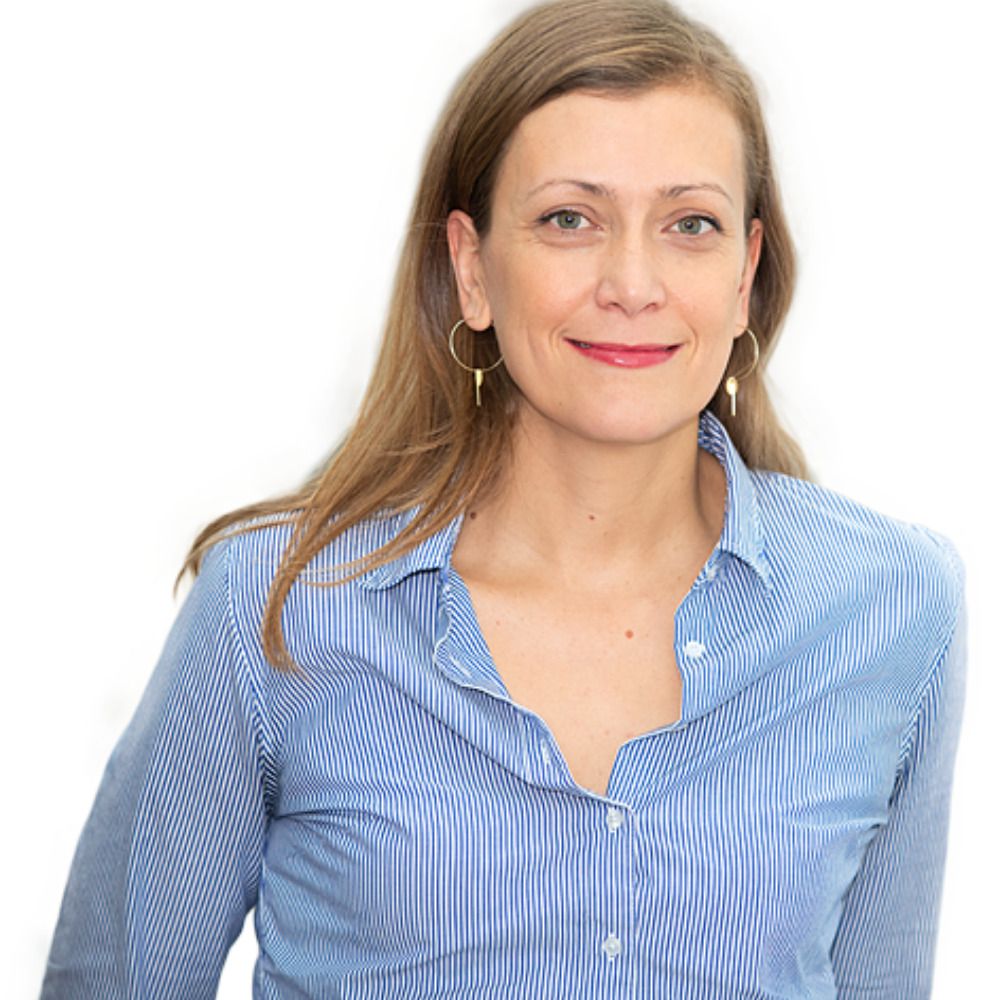
Amazing to hold @lottepedersen.bsky.social & my @jcellsci.bsky.social Special Issue on #Cilia and #Flagella in all its glossy glory & muscle-engaging brain-boosting weight! So much fabulous content from the community! Fab cover @centriolelab.bsky.social 🥰🥰 journals.biologists.com/jcs/pages/ci...


January 16, 2026 at 7:30 PM
Amazing to hold @lottepedersen.bsky.social & my @jcellsci.bsky.social Special Issue on #Cilia and #Flagella in all its glossy glory & muscle-engaging brain-boosting weight! So much fabulous content from the community! Fab cover @centriolelab.bsky.social 🥰🥰 journals.biologists.com/jcs/pages/ci...
Reposted by Jeremy Reiter
Excited to have my first senior author publication out in the world! An awesome collab between myself in @reitergroup.bsky.social's lab and the Berbari lab at IU. We found primary cilia are necessary for postnatal pituitary development. 1/n.
www.sciencedirect.com/science/arti...
www.sciencedirect.com/science/arti...

Primary cilia and BBS4 are required for postnatal pituitary development
Primary cilia orchestrate several signaling pathways, and their disruption results in pleiotropic disorders called ciliopathies. Bardet-Beidl syndrome…
www.sciencedirect.com
January 8, 2026 at 7:18 PM
Excited to have my first senior author publication out in the world! An awesome collab between myself in @reitergroup.bsky.social's lab and the Berbari lab at IU. We found primary cilia are necessary for postnatal pituitary development. 1/n.
www.sciencedirect.com/science/arti...
www.sciencedirect.com/science/arti...
Reposted by Jeremy Reiter

Today is a big day.
After many years of work, I’m excited to finally share a paper describing a novel approach to identifying potential breakthroughs in biomedical research, up to twelve years before the breakthrough itself occurs. 1/15
After many years of work, I’m excited to finally share a paper describing a novel approach to identifying potential breakthroughs in biomedical research, up to twelve years before the breakthrough itself occurs. 1/15
December 18, 2025 at 8:38 PM
Today is a big day.
After many years of work, I’m excited to finally share a paper describing a novel approach to identifying potential breakthroughs in biomedical research, up to twelve years before the breakthrough itself occurs. 1/15
After many years of work, I’m excited to finally share a paper describing a novel approach to identifying potential breakthroughs in biomedical research, up to twelve years before the breakthrough itself occurs. 1/15
Reposted by Jeremy Reiter
Just over a week to our FIRST event for 2️⃣0️⃣2️⃣6️⃣- 13/01/2026 15:00-17:30 GMT. What better way to fire up those neural circuits than dipping into the latest breaking #Cilia and #Centrosome science 🧪? Free and open to everyone- /1
We must have been #ExtraNice this year- our #cilia & #centrosome 🧪 community- 🎅 Santa just dropped the 1st session of 2026 line-up @bscb-official.bsky.social @gensocuk.bsky.social @ukcilianetwork.bsky.social e-symposia- www.eventbrite.co.uk/e/bscb-genso... See you on the other side! Happy Holidays!

BSCB GenSoc UK Cilia and Centrosome Network e-Symposia Series
BSCB GenSoc UK Cilia and Centrosome Network e-Symposia Series
www.eventbrite.co.uk
January 5, 2026 at 5:29 PM
Just over a week to our FIRST event for 2️⃣0️⃣2️⃣6️⃣- 13/01/2026 15:00-17:30 GMT. What better way to fire up those neural circuits than dipping into the latest breaking #Cilia and #Centrosome science 🧪? Free and open to everyone- /1
Modern biology research is biased towards investigating genes that are widely conserved and present in humans. What about genes that ARE widely conserved but NOT present in humans? Can genes missing from humans tell us something about what makes our biology different from that of other animals? 1/8
December 31, 2025 at 7:29 PM
Modern biology research is biased towards investigating genes that are widely conserved and present in humans. What about genes that ARE widely conserved but NOT present in humans? Can genes missing from humans tell us something about what makes our biology different from that of other animals? 1/8
Reposted by Jeremy Reiter

Helping this mood is our latest now out in its final form! @irfankathiriya.bsky.social leading the teams with me. Thanks to the editors and reviewers (incl. @wythelab.bsky.social)for a pleasant and productive journey. More to come when the full issue is out. www.nature.com/articles/s44...

A disrupted compartment boundary underlies abnormal cardiac patterning and congenital heart defects - Nature Cardiovascular Research
Kathiriya et al. identify a cardiac progenitor lineage with expression of Tbx5 and anterior heart field-specific expression of Mef2c that bisects the intraventricular septum during development and sho...
www.nature.com
December 29, 2025 at 4:03 PM
Helping this mood is our latest now out in its final form! @irfankathiriya.bsky.social leading the teams with me. Thanks to the editors and reviewers (incl. @wythelab.bsky.social)for a pleasant and productive journey. More to come when the full issue is out. www.nature.com/articles/s44...
Happy holidays! My mind remains boggled how, kinda like the ghost of Christmas past, scientists who may be long dead and I will never meet IRL can tell me their most cherished thoughts. All I have to do to activate this trans-generational telepathic ability is download and read their old papers. 1/4
December 24, 2025 at 11:57 PM
Happy holidays! My mind remains boggled how, kinda like the ghost of Christmas past, scientists who may be long dead and I will never meet IRL can tell me their most cherished thoughts. All I have to do to activate this trans-generational telepathic ability is download and read their old papers. 1/4
Reposted by Jeremy Reiter
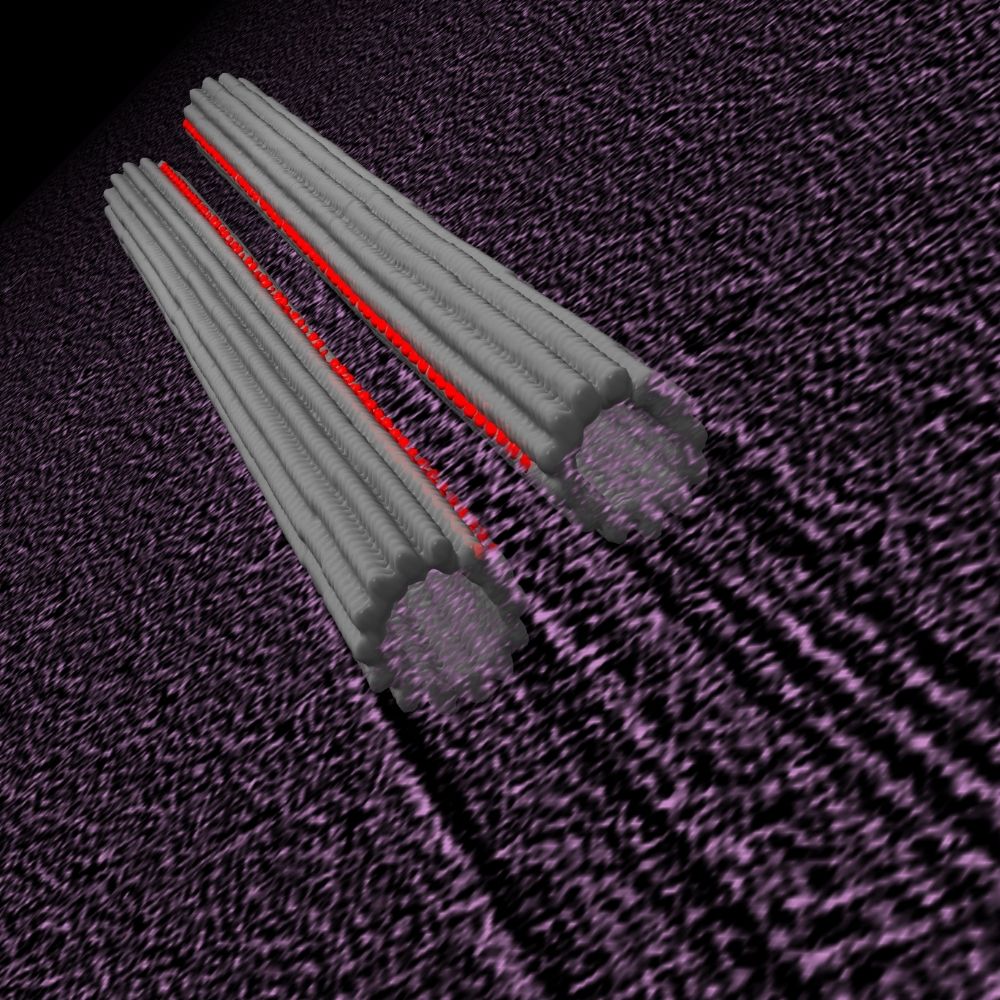
Tired of drawing cilia or centrioles for slides and papers? I feel you.
Check out CiliaBuilder for ChimeraX → cxtoolshed.rbvi.ucsf.edu/apps/chimera...
Build custom 3D cilia & centriole models (tips + primary cilia included).
Check out CiliaBuilder for ChimeraX → cxtoolshed.rbvi.ucsf.edu/apps/chimera...
Build custom 3D cilia & centriole models (tips + primary cilia included).


December 23, 2025 at 8:02 PM
Tired of drawing cilia or centrioles for slides and papers? I feel you.
Check out CiliaBuilder for ChimeraX → cxtoolshed.rbvi.ucsf.edu/apps/chimera...
Build custom 3D cilia & centriole models (tips + primary cilia included).
Check out CiliaBuilder for ChimeraX → cxtoolshed.rbvi.ucsf.edu/apps/chimera...
Build custom 3D cilia & centriole models (tips + primary cilia included).
Reposted by Jeremy Reiter
#WntA is a crucial marker of stripe elements early in development for the Nymphalidae butterfly family. @jasminealqassar.bsky.social & co explore if WntA has maintained its role in stripe elements over 95 million years of evolution in the Hesperiidae family of butterflies. doi.org/10.1242/bio....

December 17, 2025 at 8:09 PM
#WntA is a crucial marker of stripe elements early in development for the Nymphalidae butterfly family. @jasminealqassar.bsky.social & co explore if WntA has maintained its role in stripe elements over 95 million years of evolution in the Hesperiidae family of butterflies. doi.org/10.1242/bio....
I don’t always eat cake, but when I do, I prefer it to be ninefold symmetric. Cake credit: Thao Phan.

December 17, 2025 at 9:38 PM
I don’t always eat cake, but when I do, I prefer it to be ninefold symmetric. Cake credit: Thao Phan.
The vestibular system in your inner ear keeps you spatially oriented (problems cause vertigo). Comb jellies have similar statocysts, perhaps the first sensory organ. The cilia build the statocysts by transporting cells to their tips... like little escalators!
www.sciencedirect.com/science/arti...
www.sciencedirect.com/science/arti...

Lithocytes are transported along the ciliary surface to build the statolith of ctenophores
All organisms capable of locomotion possess equilibrium receptor systems that use the gravitational field as a reference. In aquatic invertebrates, gr…
www.sciencedirect.com
December 17, 2025 at 5:36 PM
The vestibular system in your inner ear keeps you spatially oriented (problems cause vertigo). Comb jellies have similar statocysts, perhaps the first sensory organ. The cilia build the statocysts by transporting cells to their tips... like little escalators!
www.sciencedirect.com/science/arti...
www.sciencedirect.com/science/arti...
Reposted by Jeremy Reiter
Submit your latest research to our upcoming special issue: Cell Biology of the Nucleus. This issue is being coordinated by Abby Buchwalter @abbybuch.bsky.social, working alongside Megan King @luskinglab.bsky.social.
Deadline: 5 January 2026
journals.biologists.com/jcs/pages/nu...
Deadline: 5 January 2026
journals.biologists.com/jcs/pages/nu...

December 10, 2025 at 3:02 PM
Submit your latest research to our upcoming special issue: Cell Biology of the Nucleus. This issue is being coordinated by Abby Buchwalter @abbybuch.bsky.social, working alongside Megan King @luskinglab.bsky.social.
Deadline: 5 January 2026
journals.biologists.com/jcs/pages/nu...
Deadline: 5 January 2026
journals.biologists.com/jcs/pages/nu...
Reposted by Jeremy Reiter

Good to see the peer reviewed version of this published
A chemo-optogenetic system for spatiotemporal control of gene expression
We use it to:
- Reconstruct SHH mediated neural tube patterning in vitro
- Measure extracellular half-life of Shh
www.cell.com/developmenta...
A chemo-optogenetic system for spatiotemporal control of gene expression
We use it to:
- Reconstruct SHH mediated neural tube patterning in vitro
- Measure extracellular half-life of Shh
www.cell.com/developmenta...

Investigating morphogen and patterning dynamics with optogenetic control of morphogen production
Benzinger et al. develop a chemo-optogenetic system for precise spatiotemporal control
of morphogen production in vitro. Using light-controlled Sonic hedgehog expression,
they recapitulate neural tube...
www.cell.com
December 16, 2025 at 1:45 AM
Good to see the peer reviewed version of this published
A chemo-optogenetic system for spatiotemporal control of gene expression
We use it to:
- Reconstruct SHH mediated neural tube patterning in vitro
- Measure extracellular half-life of Shh
www.cell.com/developmenta...
A chemo-optogenetic system for spatiotemporal control of gene expression
We use it to:
- Reconstruct SHH mediated neural tube patterning in vitro
- Measure extracellular half-life of Shh
www.cell.com/developmenta...
Reposted by Jeremy Reiter

How does C2CD3 contribute to distal appendage formation in centrioles? @centriolelab.bsky.social show that C2CD3 acts as a central architectural organizer of the distal #centriole, bridging the luminal distal ring complex & peripheral appendage sites @plosbiology.org 🧪 plos.io/496XZuH

December 10, 2025 at 9:10 AM
How does C2CD3 contribute to distal appendage formation in centrioles? @centriolelab.bsky.social show that C2CD3 acts as a central architectural organizer of the distal #centriole, bridging the luminal distal ring complex & peripheral appendage sites @plosbiology.org 🧪 plos.io/496XZuH
Reposted by Jeremy Reiter

We’re excited to announce the opening of the Geneva Expansion Microscopy Facility (GenExM)!
GenExM is a full-service U-ExM platform (U-ExM, Cryo-ExM, iU-ExM), delivering nanoscale imaging.
Led by Dr. Olivier Mercey, GenExM welcomes academic & industrial collaborations.
👉 www.unige.ch/genexm/
GenExM is a full-service U-ExM platform (U-ExM, Cryo-ExM, iU-ExM), delivering nanoscale imaging.
Led by Dr. Olivier Mercey, GenExM welcomes academic & industrial collaborations.
👉 www.unige.ch/genexm/

December 10, 2025 at 8:43 PM
We’re excited to announce the opening of the Geneva Expansion Microscopy Facility (GenExM)!
GenExM is a full-service U-ExM platform (U-ExM, Cryo-ExM, iU-ExM), delivering nanoscale imaging.
Led by Dr. Olivier Mercey, GenExM welcomes academic & industrial collaborations.
👉 www.unige.ch/genexm/
GenExM is a full-service U-ExM platform (U-ExM, Cryo-ExM, iU-ExM), delivering nanoscale imaging.
Led by Dr. Olivier Mercey, GenExM welcomes academic & industrial collaborations.
👉 www.unige.ch/genexm/
Reposted by Jeremy Reiter
Calling all postdocs! Applications are open for Dept. of Molecular Biosciences 3rd Trailblazers Postdoctoral Symposium @utaustin.bsky.social. Come to Austin, meet your peers, showcase your work. Application is easy and all expenses are paid! Spread the word!
tinyurl.com/yw7ffjn9
tinyurl.com/yw7ffjn9
Microsoft Forms
tinyurl.com
December 10, 2025 at 6:27 PM
Calling all postdocs! Applications are open for Dept. of Molecular Biosciences 3rd Trailblazers Postdoctoral Symposium @utaustin.bsky.social. Come to Austin, meet your peers, showcase your work. Application is easy and all expenses are paid! Spread the word!
tinyurl.com/yw7ffjn9
tinyurl.com/yw7ffjn9
Summary data from 2025 NIH and NSF funding: www.nytimes.com/interactive/...

The U.S. Is Funding Fewer Grants in Every Area of Science and Medicine
A quiet policy change means the government is making fewer bets on long-term science.
www.nytimes.com
December 2, 2025 at 5:21 PM
Summary data from 2025 NIH and NSF funding: www.nytimes.com/interactive/...
Reposted by Jeremy Reiter

Cells can form patterns within themselves just like embryos do. How? Connie Yan's new preprint shows how the anterior-posterior cytoskeleton pattern in Stentor is dictated by regionalized scaffolding proteins
www.biorxiv.org/content/10.1...
www.biorxiv.org/content/10.1...

August 19, 2025 at 8:42 AM
Cells can form patterns within themselves just like embryos do. How? Connie Yan's new preprint shows how the anterior-posterior cytoskeleton pattern in Stentor is dictated by regionalized scaffolding proteins
www.biorxiv.org/content/10.1...
www.biorxiv.org/content/10.1...
Reposted by Jeremy Reiter
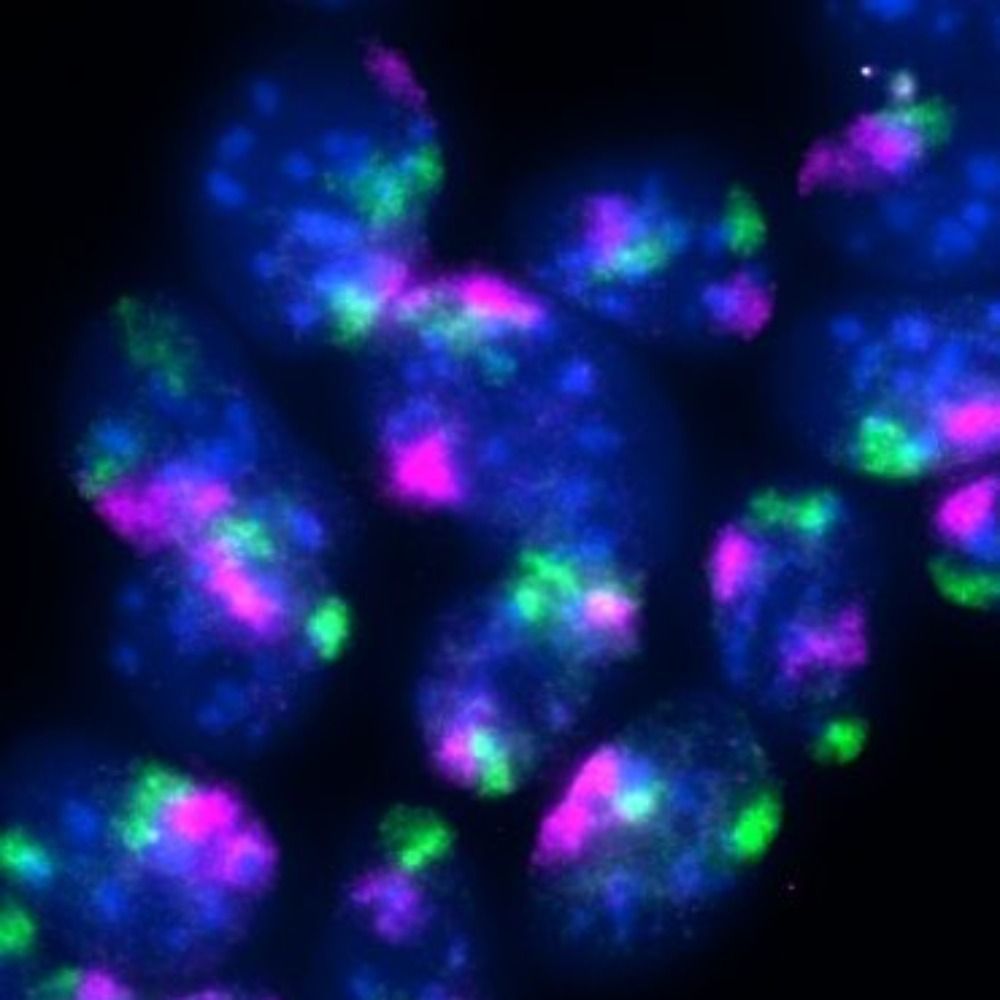
Here is a copy of last year's Twitter thread explaining our preprint - jump to (21) for the new stuff 👀
Synergy between cis-regulatory elements can render cohesin dispensable for distal enhancer function
now revised and journal accepted at www.science.org/doi/10.1126/...
🧵👇
Synergy between cis-regulatory elements can render cohesin dispensable for distal enhancer function
now revised and journal accepted at www.science.org/doi/10.1126/...
🧵👇
November 27, 2025 at 9:59 PM
Here is a copy of last year's Twitter thread explaining our preprint - jump to (21) for the new stuff 👀
Synergy between cis-regulatory elements can render cohesin dispensable for distal enhancer function
now revised and journal accepted at www.science.org/doi/10.1126/...
🧵👇
Synergy between cis-regulatory elements can render cohesin dispensable for distal enhancer function
now revised and journal accepted at www.science.org/doi/10.1126/...
🧵👇