




Peter Kirk
@peterakirk.bsky.social
Neuroscientist & Psychologist at the NIH | Anxiety & Emotional Disorders, Naturalistic Neuroimaging, Physiology, Development | Disclaimer: all views/posts are my own.
Pinned
Peter Kirk
@peterakirk.bsky.social
· Oct 20
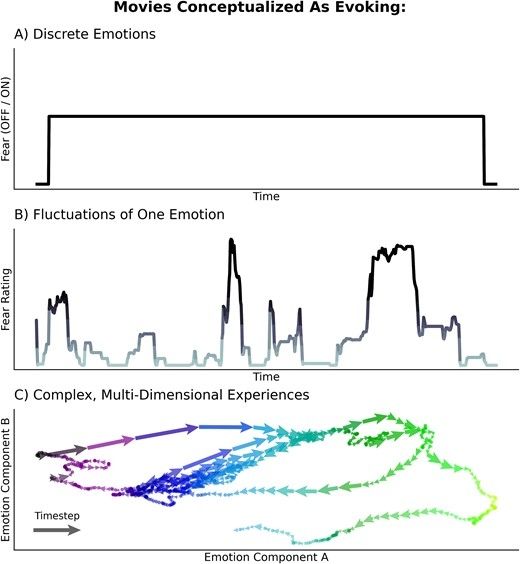
Extending insights from LeDoux: using movies to study subjective, clinically meaningful experiences in neuroscience
Abstract. Neuroscience research with public health relevance to emotional disorders examines brain–behavior relations. Joe LeDoux’s legacy advances these e
doi.org
Happy to share our latest paper on 'using movies to study subjective, clinically meaningful experiences in neuroscience' 🎞️🧠.
doi.org/10.1093/cerc...
doi.org/10.1093/cerc...
Reposted by Peter Kirk
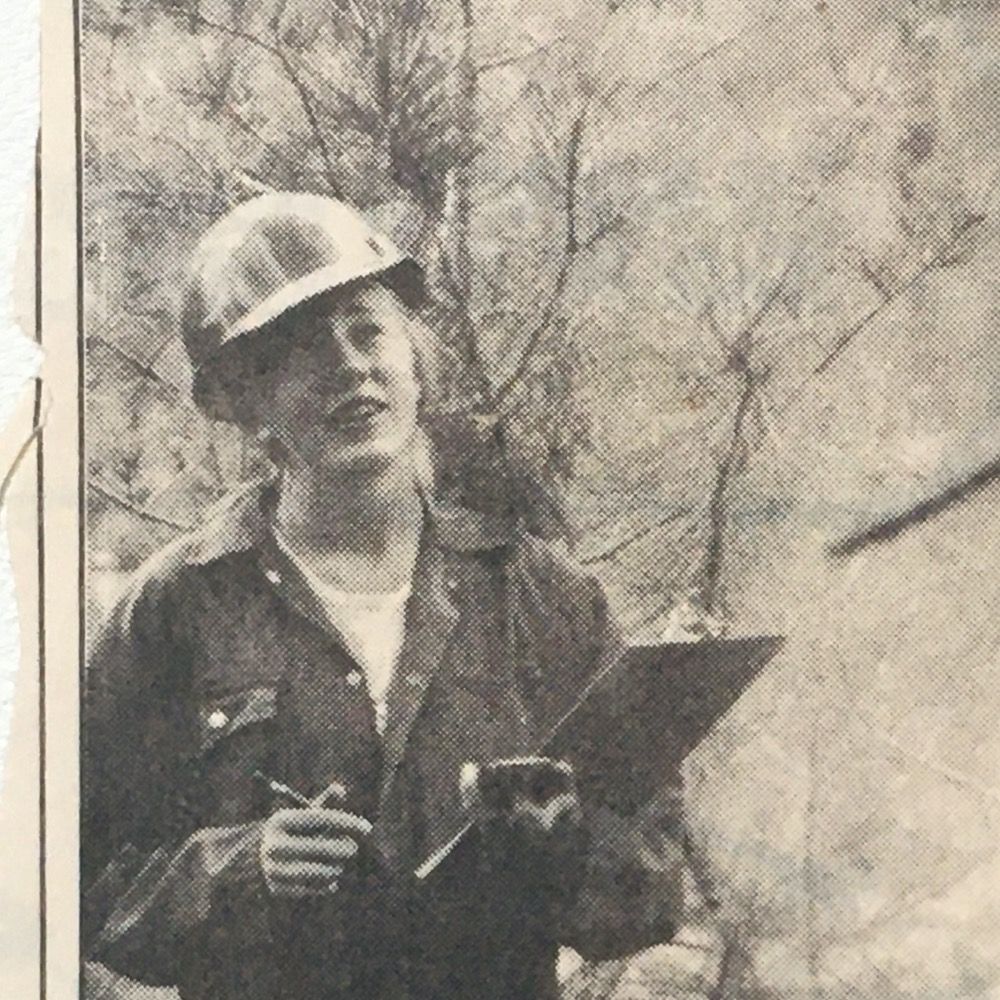
Controversial? Classic?
What if rest is not best? 🤔
Congrats to @halleeshearer.bsky.social for this thoughtful commentary, and thanks to @ninetlab.bsky.social for the 🎬 movie x rTMS 🧲 collaboration. doi.org/10.1162/IMAG...
What if rest is not best? 🤔
Congrats to @halleeshearer.bsky.social for this thoughtful commentary, and thanks to @ninetlab.bsky.social for the 🎬 movie x rTMS 🧲 collaboration. doi.org/10.1162/IMAG...

Considering brain state for individualized functional connectivity-based rTMS
Abstract. Recent endeavors to optimize the efficacy of repetitive Transcranial Magnetic Stimulation (rTMS) treatment have focused on locating individualized stimulation targets using functional connec...
doi.org
January 14, 2026 at 7:05 PM
Controversial? Classic?
What if rest is not best? 🤔
Congrats to @halleeshearer.bsky.social for this thoughtful commentary, and thanks to @ninetlab.bsky.social for the 🎬 movie x rTMS 🧲 collaboration. doi.org/10.1162/IMAG...
What if rest is not best? 🤔
Congrats to @halleeshearer.bsky.social for this thoughtful commentary, and thanks to @ninetlab.bsky.social for the 🎬 movie x rTMS 🧲 collaboration. doi.org/10.1162/IMAG...
Reposted by Peter Kirk
Want to learn about FMRI visualization, processing and group analysis? Join us for the next AFNI Bootcamp (Jan. 27-29, 2026) for a fun few days of theory and interactive practicals.
Details+registration for this virtual course:
afni.nimh.nih.gov/bootcamp
Details+registration for this virtual course:
afni.nimh.nih.gov/bootcamp

January 7, 2026 at 1:21 AM
Want to learn about FMRI visualization, processing and group analysis? Join us for the next AFNI Bootcamp (Jan. 27-29, 2026) for a fun few days of theory and interactive practicals.
Details+registration for this virtual course:
afni.nimh.nih.gov/bootcamp
Details+registration for this virtual course:
afni.nimh.nih.gov/bootcamp
Reposted by Peter Kirk

This paper had a pretty shocking headline result (40% of voxels!), so I dug into it, and I think it is wrong. Essentially: they compare two noisy measures and find that about 40% of voxels have different sign between the two. I think this is just noise!

Would love to hear expert views on this paper. It appears to show that the operationalization of brain activity the field has relied on for 3 decades—the BOLD response—is not actually a sensible measure of brain activity.
www.nature.com/articles/s41...
www.nature.com/articles/s41...

BOLD signal changes can oppose oxygen metabolism across the human cortex - Nature Neuroscience
Using quantitative brain imaging, the authors show opposite fMRI BOLD signal to metabolic activity due to variable oxygen extraction across the human cortex. This questions the canonical interpretatio...
www.nature.com
January 5, 2026 at 5:22 PM
This paper had a pretty shocking headline result (40% of voxels!), so I dug into it, and I think it is wrong. Essentially: they compare two noisy measures and find that about 40% of voxels have different sign between the two. I think this is just noise!
Outside my expertise, but I'm interested to know the SNR of the CMR02 measurement. Looks highly variable, even more so than BOLD.

December 22, 2025 at 6:30 PM
Outside my expertise, but I'm interested to know the SNR of the CMR02 measurement. Looks highly variable, even more so than BOLD.
Our latest study led by @purnimaqamar.bsky.social on avoidance in pediatric anxiety is out now in Mental Health Science 🎉 onlinelibrary.wiley.com/doi/full/10....

Assessing Behavioral Threat Avoidance in Pediatric Anxiety With Naturalistic Games
Behavioral avoidance exacerbates anxiety symptoms. Capturing and identifying maladaptive avoidance patterns holds clinical utility. However, effective assessment tools which provide unique informatio...
onlinelibrary.wiley.com
December 11, 2025 at 4:29 PM
Our latest study led by @purnimaqamar.bsky.social on avoidance in pediatric anxiety is out now in Mental Health Science 🎉 onlinelibrary.wiley.com/doi/full/10....
Reposted by Peter Kirk

** Recruiting a postdoc ** We are looking for a postdoc to work on emotion, mental health, and interoception, based in London at @ucl.ac.uk in my lab (Clinical and Affective Neuroscience). Part of a large Wellcome Grant (co-led with the brilliant @camillanord.bsky.social)
November 24, 2025 at 12:22 PM
** Recruiting a postdoc ** We are looking for a postdoc to work on emotion, mental health, and interoception, based in London at @ucl.ac.uk in my lab (Clinical and Affective Neuroscience). Part of a large Wellcome Grant (co-led with the brilliant @camillanord.bsky.social)
Reposted by Peter Kirk
Excited to share our manuscript about BrainEffeX, a tool for exploring fMRI effect sizes. Includes why we made it, how to use it + contribute, and how we made it.
@sneuroble.bsky.social @psychonetrics.bsky.social
@alexkfischbach.bsky.social
@nichols.bsky.social
@dscheinost.bsky.social & MINDS Lab
@sneuroble.bsky.social @psychonetrics.bsky.social
@alexkfischbach.bsky.social
@nichols.bsky.social
@dscheinost.bsky.social & MINDS Lab

Shearer et al. introduce an interactive web application for exploring fMRI effect maps:
doi.org/10.52294/001...
@halleeshearer.bsky.social @sneuroble.bsky.social @ohbmossig.bsky.social
#OpenDatasets #SpecialIssue
doi.org/10.52294/001...
@halleeshearer.bsky.social @sneuroble.bsky.social @ohbmossig.bsky.social
#OpenDatasets #SpecialIssue

November 12, 2025 at 7:46 PM
Excited to share our manuscript about BrainEffeX, a tool for exploring fMRI effect sizes. Includes why we made it, how to use it + contribute, and how we made it.
@sneuroble.bsky.social @psychonetrics.bsky.social
@alexkfischbach.bsky.social
@nichols.bsky.social
@dscheinost.bsky.social & MINDS Lab
@sneuroble.bsky.social @psychonetrics.bsky.social
@alexkfischbach.bsky.social
@nichols.bsky.social
@dscheinost.bsky.social & MINDS Lab
This may be relevant? www.nature.com/articles/s41...

Autonomic physiological coupling of the global fMRI signal - Nature Neuroscience
The brain and body are necessarily connected. Here the authors show that brain blood flow and electrical activity are coupled with systemic physiological changes in the body.
www.nature.com
October 2, 2025 at 7:00 PM
This may be relevant? www.nature.com/articles/s41...
Reposted by Peter Kirk

Data only shows associations. Turning those into claims about mechanism or causation? That requires a Rosetta Stone of prior knowledge + theory. Resting-state fMRI is purely observational; correlation is its currency. From this, plenty of "theoretical toys" about brain function can be built...

Resting-State fMRI and the Risk of Overinterpretation: Noise, Mechanisms, and a Missing Rosetta Stone https://www.biorxiv.org/content/10.1101/2025.09.16.676611v1
September 20, 2025 at 1:13 AM
Data only shows associations. Turning those into claims about mechanism or causation? That requires a Rosetta Stone of prior knowledge + theory. Resting-state fMRI is purely observational; correlation is its currency. From this, plenty of "theoretical toys" about brain function can be built...
This is amazing work Sarah, super interesting!
September 19, 2025 at 12:15 PM
This is amazing work Sarah, super interesting!
Reposted by Peter Kirk

Excited to share this new preprint on the Predictive Modelling of Depression Treatment Response using Individual Symptoms and Latent Factors with @clairegillan.bsky.social fresh up on @medrxivpreprint.bsky.social www.medrxiv.org/content/10.1...

Predictive Modelling of Depression Treatment Response using Individual Symptoms and Latent Factors
Machine learning models have increasingly been used to identify predictors of treatment response in depression, and it is hoped that they may eventually help with clinical decision making. However, th...
www.medrxiv.org
September 19, 2025 at 11:58 AM
Excited to share this new preprint on the Predictive Modelling of Depression Treatment Response using Individual Symptoms and Latent Factors with @clairegillan.bsky.social fresh up on @medrxivpreprint.bsky.social www.medrxiv.org/content/10.1...
Agreed! I'm often excited about cool, emerging fMRI methods which promise a lot. I've preregistered their use with high hopes and things fall flat. Post-hoc, the old methods turn out more sensitive. Obviously there are lots of factors, but it's made me quite hesitant without repeated validation.
September 16, 2025 at 7:09 PM
Agreed! I'm often excited about cool, emerging fMRI methods which promise a lot. I've preregistered their use with high hopes and things fall flat. Post-hoc, the old methods turn out more sensitive. Obviously there are lots of factors, but it's made me quite hesitant without repeated validation.
Reposted by Peter Kirk
Our latest work is now out in @natmentalhealth.nature.com! We examined the role of the basal forebrain and its influence on intrinsic brain networks in depressive and anxiety disorders.
🔗 www.nature.com/articles/s44...
@psychunimelb.bsky.social, @mbciu.bsky.social, #UnimelbMDHS
🔗 www.nature.com/articles/s44...
@psychunimelb.bsky.social, @mbciu.bsky.social, #UnimelbMDHS

Altered basal forebrain regulation of intrinsic brain networks in depressive and anxiety disorders - Nature Mental Health
Using 7T resting-state functional MRI data, the authors investigate the effective connectivity of basal forebrain areas in a transdiagnostic sample of patients with anxiety and depression and healthy ...
www.nature.com
September 9, 2025 at 12:03 AM
Our latest work is now out in @natmentalhealth.nature.com! We examined the role of the basal forebrain and its influence on intrinsic brain networks in depressive and anxiety disorders.
🔗 www.nature.com/articles/s44...
@psychunimelb.bsky.social, @mbciu.bsky.social, #UnimelbMDHS
🔗 www.nature.com/articles/s44...
@psychunimelb.bsky.social, @mbciu.bsky.social, #UnimelbMDHS
Reposted by Peter Kirk

The @cahbir.bsky.social and @rutgersbhi.bsky.social are hiring! Multiple open area and open rank faculty jobs, wonderful colleagues, amazing resources, and one of the largest communities of brain science research groups on the planet. Please apply and share widely.
jobs.rutgers.edu/postings/209...
jobs.rutgers.edu/postings/209...
Human Neuroimaging Faculty Positions in Rutgers Brain Health Institute
The Center for Advanced Human Brain Imaging Research (CAHBIR), a component of the Rutgers Brain Health Institute (BHI) on the Busch campus in Piscataway, NJ, is recruiting for two open rank (Assistant...
jobs.rutgers.edu
September 5, 2025 at 7:58 PM
The @cahbir.bsky.social and @rutgersbhi.bsky.social are hiring! Multiple open area and open rank faculty jobs, wonderful colleagues, amazing resources, and one of the largest communities of brain science research groups on the planet. Please apply and share widely.
jobs.rutgers.edu/postings/209...
jobs.rutgers.edu/postings/209...
Reposted by Peter Kirk

Launched in 2023, Imaging Neuroscience is now firmly established, with full indexing (PubMed, etc.) and 700 papers to date.
We're very happy to announce that we are able to reduce the APC to $1400.
Huge thanks to all authors, reviewers, editorial team+board, and MIT Press.
We're very happy to announce that we are able to reduce the APC to $1400.
Huge thanks to all authors, reviewers, editorial team+board, and MIT Press.
September 5, 2025 at 2:59 AM
Launched in 2023, Imaging Neuroscience is now firmly established, with full indexing (PubMed, etc.) and 700 papers to date.
We're very happy to announce that we are able to reduce the APC to $1400.
Huge thanks to all authors, reviewers, editorial team+board, and MIT Press.
We're very happy to announce that we are able to reduce the APC to $1400.
Huge thanks to all authors, reviewers, editorial team+board, and MIT Press.
We had two preprints approved in August (these were submitted in May & July). However, since approval, the web pages are no longer available (e.g., osf.io/byu7f_v1). Is this expected?
September 4, 2025 at 3:06 PM
We had two preprints approved in August (these were submitted in May & July). However, since approval, the web pages are no longer available (e.g., osf.io/byu7f_v1). Is this expected?
Kind of relevant www.biorxiv.org/content/10.1...

The entire brain, more or less, is at work: ‘Language regions’ are artefacts of averaging
Models of the neurobiology of language suggest that a small number of anatomically fixed brain regions are responsible for language functioning. This derives from centuries of aphasia studies and deca...
www.biorxiv.org
July 29, 2025 at 3:04 PM
Kind of relevant www.biorxiv.org/content/10.1...
Could be worse: my citation count went down by 2 the other day. Didn't realize that was possible -_-
July 6, 2025 at 2:11 AM
Could be worse: my citation count went down by 2 the other day. Didn't realize that was possible -_-
Reposted by Peter Kirk
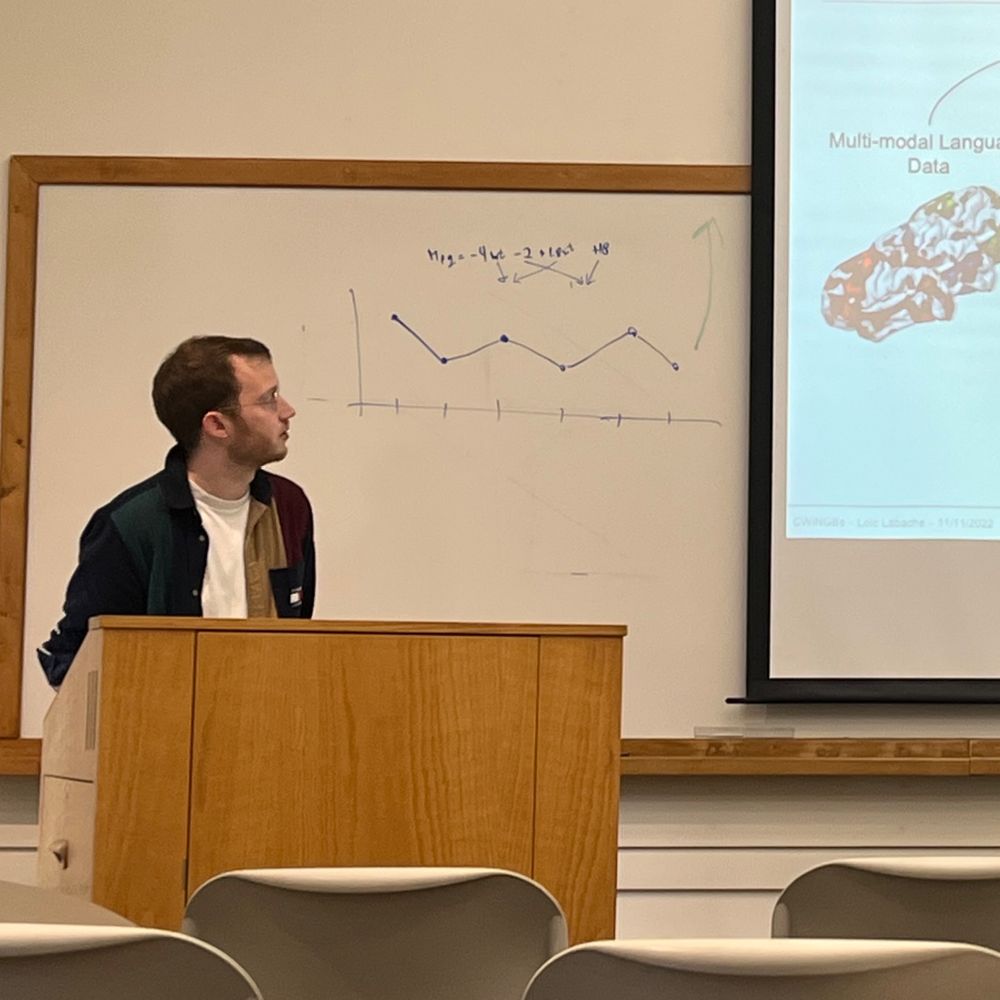
Excited to share that our work is now published in Imaging Neuroscience! 🧠🥳
We show how aging reshapes the brain’s language and memory networks, revealing striking shifts in hemispheric specialization across the lifespan.
Check it out @imagingneurosci.bsky.social
We show how aging reshapes the brain’s language and memory networks, revealing striking shifts in hemispheric specialization across the lifespan.
Check it out @imagingneurosci.bsky.social
New paper in Imaging Neuroscience by Elise Roger, Gaelle E. Doucet, et al:
When age tips the balance: A dual mechanism affecting hemispheric specialization for language
doi.org/10.1162/IMAG...
When age tips the balance: A dual mechanism affecting hemispheric specialization for language
doi.org/10.1162/IMAG...

July 3, 2025 at 11:46 AM
Excited to share that our work is now published in Imaging Neuroscience! 🧠🥳
We show how aging reshapes the brain’s language and memory networks, revealing striking shifts in hemispheric specialization across the lifespan.
Check it out @imagingneurosci.bsky.social
We show how aging reshapes the brain’s language and memory networks, revealing striking shifts in hemispheric specialization across the lifespan.
Check it out @imagingneurosci.bsky.social
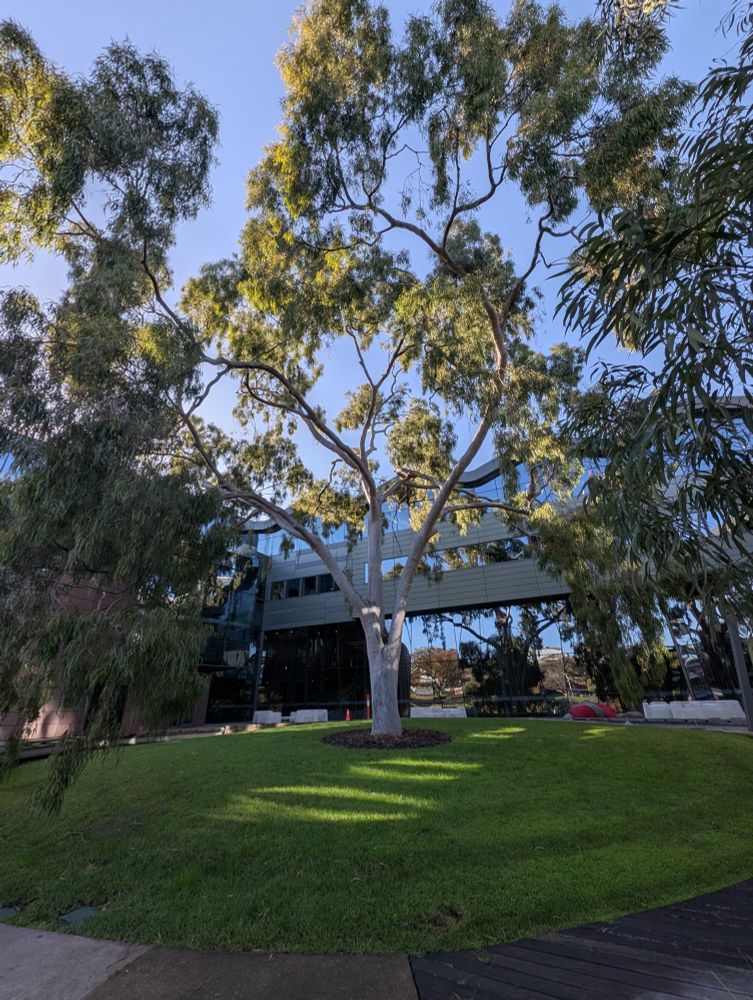
A great week of meetings and presenting in Melbourne, including a visit to @orygen.org.au hosted by @sidchop.bsky.social & Lianne Schmaal. Now off to Brisbane for #OHBM2025. I'll be presenting Tuesday and Wednesday, 9am in the Great Hall both days :)
June 23, 2025 at 2:46 AM
A great week of meetings and presenting in Melbourne, including a visit to @orygen.org.au hosted by @sidchop.bsky.social & Lianne Schmaal. Now off to Brisbane for #OHBM2025. I'll be presenting Tuesday and Wednesday, 9am in the Great Hall both days :)
Social anxiety may be related to physical avoidance of aversive stimuli in an interactive game. Our latest study, led by @purnimaqamar.bsky.social. osf.io/preprints/ps...

May 20, 2025 at 5:01 PM
Social anxiety may be related to physical avoidance of aversive stimuli in an interactive game. Our latest study, led by @purnimaqamar.bsky.social. osf.io/preprints/ps...
Reposted by Peter Kirk
Check our latest work ‘Linking Subjective Experience of Anxiety to Brain Function using Natural Language Processing’. Our analyses link movie-evoked brain activity and subsequent interview recordings in a pediatric sample with and without anxiety disorders (doi.org/10.31234/osf...).

May 2, 2025 at 5:29 PM
Check our latest work ‘Linking Subjective Experience of Anxiety to Brain Function using Natural Language Processing’. Our analyses link movie-evoked brain activity and subsequent interview recordings in a pediatric sample with and without anxiety disorders (doi.org/10.31234/osf...).
Check our latest work ‘Linking Subjective Experience of Anxiety to Brain Function using Natural Language Processing’. Our analyses link movie-evoked brain activity and subsequent interview recordings in a pediatric sample with and without anxiety disorders (doi.org/10.31234/osf...).
May 2, 2025 at 5:29 PM
Check our latest work ‘Linking Subjective Experience of Anxiety to Brain Function using Natural Language Processing’. Our analyses link movie-evoked brain activity and subsequent interview recordings in a pediatric sample with and without anxiety disorders (doi.org/10.31234/osf...).
Would advise against wrist-worn wearables for heart rate, they're VERY prone to noise. Ideally ECG, but even finger pulseox would be superior. Done this stuff a lot with movies and am happy to chat more.
May 1, 2025 at 4:42 PM
Would advise against wrist-worn wearables for heart rate, they're VERY prone to noise. Ideally ECG, but even finger pulseox would be superior. Done this stuff a lot with movies and am happy to chat more.
Reposted by Peter Kirk
🚨 New #preprint: The molecular and cellular underpinnings of human brain lateralization
🔗 doi.org/10.1101/2025...
🧠 We identify an acetylcholine-norepinephrine axis underlying functional lateralization, along with mitochondrial and cellular correlates. 🧵1/9👇
#neuroskyence
🔗 doi.org/10.1101/2025...
🧠 We identify an acetylcholine-norepinephrine axis underlying functional lateralization, along with mitochondrial and cellular correlates. 🧵1/9👇
#neuroskyence

The molecular and cellular underpinnings of human brain lateralization
Hemispheric specialization is a fundamental characteristic of human brain organization, where most individuals exhibit left-hemisphere dominance for language and right-hemisphere dominance for visuosp...
doi.org
April 12, 2025 at 10:28 AM
🚨 New #preprint: The molecular and cellular underpinnings of human brain lateralization
🔗 doi.org/10.1101/2025...
🧠 We identify an acetylcholine-norepinephrine axis underlying functional lateralization, along with mitochondrial and cellular correlates. 🧵1/9👇
#neuroskyence
🔗 doi.org/10.1101/2025...
🧠 We identify an acetylcholine-norepinephrine axis underlying functional lateralization, along with mitochondrial and cellular correlates. 🧵1/9👇
#neuroskyence