




Natalie Christie Peluso 🧠
@nataliepeluso.com
PhD candidate in social neuroscience & founder of @DaringVoices.org | Former internationally successful opera singer | Interested in multimodal communication (vocal/facial) & MSI, affective breathing, interoception. 🫁🫀
Pinned

Do Naturalistic Emotional Facial Expressions Catch Our Eye Like Posed Ones?
We know that people tend to notice emotional faces—like smiling or angry expressions—more quickly than neutral ones. But most research showing this uses “posed” faces: actors in a lab deliberately sho...
link.growkudos.com
Do naturalistic emotional facial expressions catch our eye like posed ones? 👀😀😠😐
This was my first, first author paper which was published in Emotion - Kudos have done a wonderful job of helping spread the world to a wider audience! #faces #affectsci 🧵1/ (Pls share!)
link.growkudos.com/1dybshxtam8
This was my first, first author paper which was published in Emotion - Kudos have done a wonderful job of helping spread the world to a wider audience! #faces #affectsci 🧵1/ (Pls share!)
link.growkudos.com/1dybshxtam8
Reposted by Natalie Christie Peluso 🧠

"The academic structure … makes planning for a family feel like an impossible luxury."
In this #ScienceWorkingLife, two postdocs share how, as women in academia, having children can feel impossible—and how talking about it makes them feel less alone. https://scim.ag/46uBWgD #WomenInScienceDay
In this #ScienceWorkingLife, two postdocs share how, as women in academia, having children can feel impossible—and how talking about it makes them feel less alone. https://scim.ag/46uBWgD #WomenInScienceDay

February 11, 2026 at 8:06 PM
"The academic structure … makes planning for a family feel like an impossible luxury."
In this #ScienceWorkingLife, two postdocs share how, as women in academia, having children can feel impossible—and how talking about it makes them feel less alone. https://scim.ag/46uBWgD #WomenInScienceDay
In this #ScienceWorkingLife, two postdocs share how, as women in academia, having children can feel impossible—and how talking about it makes them feel less alone. https://scim.ag/46uBWgD #WomenInScienceDay
Reposted by Natalie Christie Peluso 🧠

PhD opportunity in "The role of neural development in multimodal intelligence" with me, @marcusghosh.bsky.social and @flor-iacaruso.bsky.social. Read details below 👇.
Note there's a very short window for applying (deadline Feb 27).
🤖🧠🧪
www.imperial.ac.uk/school-of-co...
Note there's a very short window for applying (deadline Feb 27).
🤖🧠🧪
www.imperial.ac.uk/school-of-co...

PhD opportunities
The School of Convergence Science at Imperial College London is inviting applications for fully funded PhD studentships on research projects that sup...
www.imperial.ac.uk
February 11, 2026 at 6:41 PM
PhD opportunity in "The role of neural development in multimodal intelligence" with me, @marcusghosh.bsky.social and @flor-iacaruso.bsky.social. Read details below 👇.
Note there's a very short window for applying (deadline Feb 27).
🤖🧠🧪
www.imperial.ac.uk/school-of-co...
Note there's a very short window for applying (deadline Feb 27).
🤖🧠🧪
www.imperial.ac.uk/school-of-co...
Reposted by Natalie Christie Peluso 🧠

Mental health is shaping survival after heart disease—yet we rarely treat it that way. A new meta-analysis of 22 million people links PTSD, anxiety, depression & insomnia with higher risk of acute coronary syndrome. jamanetwork.com/journals/jam...

February 10, 2026 at 9:55 PM
Mental health is shaping survival after heart disease—yet we rarely treat it that way. A new meta-analysis of 22 million people links PTSD, anxiety, depression & insomnia with higher risk of acute coronary syndrome. jamanetwork.com/journals/jam...
Some people really need to get out more. Listen to unfamiliar music, taste something new, try a weird hobby, read that book. We're here on this planet to learn and the only way to learn is to experience the unknown! Scared people don't evolve
February 10, 2026 at 10:50 PM
Some people really need to get out more. Listen to unfamiliar music, taste something new, try a weird hobby, read that book. We're here on this planet to learn and the only way to learn is to experience the unknown! Scared people don't evolve
Fantastic PhD opportunity for domestic Australian students looking for a PhD supervisor - highly recommend the Sunshine Coast too! 👇🌞 Please share
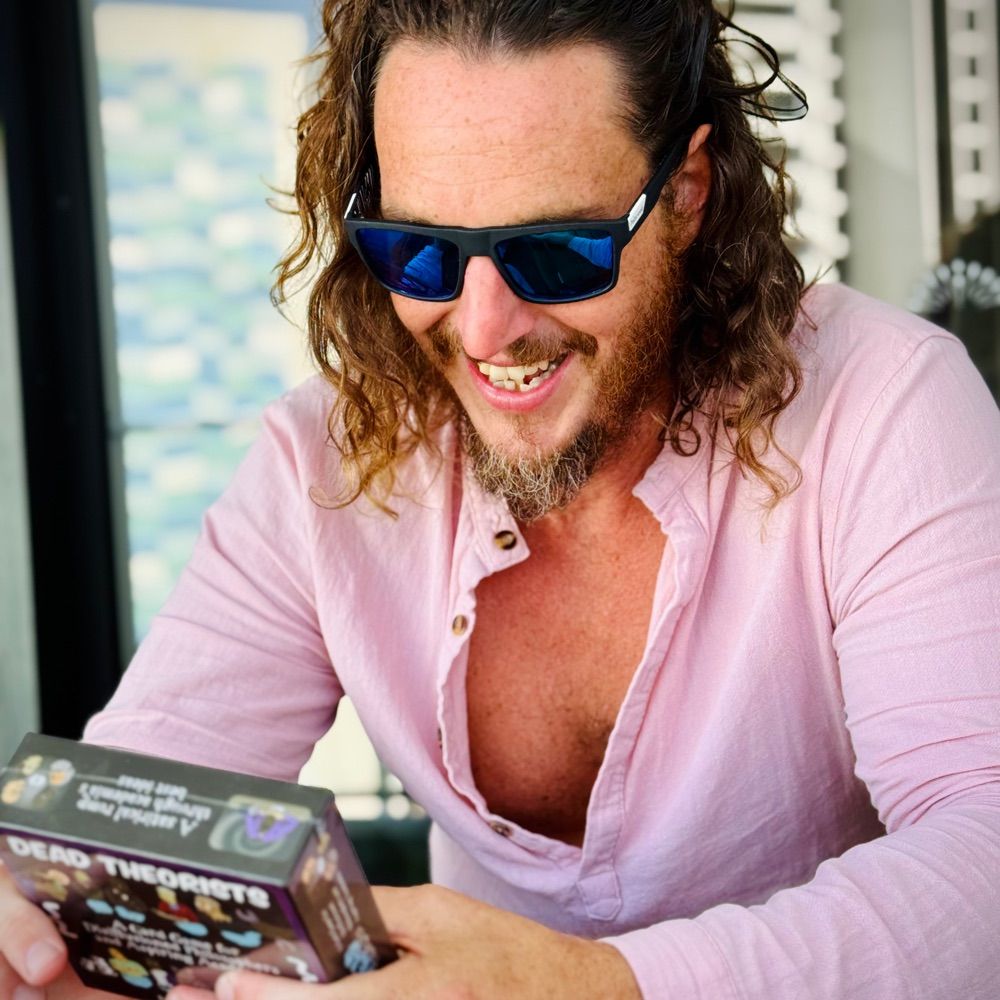
Anyone want to do a PhD with me at the Sunny Coast? I'm recruiting, and I wanna do some fun psychophysics (but the possibilities for the PhD are very broad). Domestic students only, sadly.
In case y'all happen to know someone:
@nataliepeluso.com
@reubenrideaux.bsky.social
@visnerd.bsky.social
In case y'all happen to know someone:
@nataliepeluso.com
@reubenrideaux.bsky.social
@visnerd.bsky.social
February 10, 2026 at 10:47 PM
Fantastic PhD opportunity for domestic Australian students looking for a PhD supervisor - highly recommend the Sunshine Coast too! 👇🌞 Please share
Reposted by Natalie Christie Peluso 🧠

"Babies can categorise objects better at two months than previously known." - Professor Rhodri Cusack from Trinity College Institute of Neuroscience and co-author of the research speaks to NewsTalk. Listen to the interview:
ow.ly/MqA650Y8ZbB
@rhodricusack.bsky.social @trinityneuro.bsky.social
ow.ly/MqA650Y8ZbB
@rhodricusack.bsky.social @trinityneuro.bsky.social

Babies can categorise objects better at two months than previously known | Newstalk
Babies as young as two-months-old can categorise objects in their brains, which is far younger th...
ow.ly
February 9, 2026 at 10:56 AM
"Babies can categorise objects better at two months than previously known." - Professor Rhodri Cusack from Trinity College Institute of Neuroscience and co-author of the research speaks to NewsTalk. Listen to the interview:
ow.ly/MqA650Y8ZbB
@rhodricusack.bsky.social @trinityneuro.bsky.social
ow.ly/MqA650Y8ZbB
@rhodricusack.bsky.social @trinityneuro.bsky.social
Toward a Fuller Integration of Respiratory Rhythms Into Research on Infant Vocal and Motor Development
From @susfuchs.bsky.social Elina Rubertus, Laura L. Koenig, Aude Noiray
nyaspubs.onlinelibrary.wiley.com/doi/10.1111/...
From @susfuchs.bsky.social Elina Rubertus, Laura L. Koenig, Aude Noiray
nyaspubs.onlinelibrary.wiley.com/doi/10.1111/...

NYAS Publications
From birth, respiration constitutes an intrinsic rhythm. We suggest that vocalizations and bodily movements are interactively coordinated with this respiratory rhythm, providing a temporal framework ...
nyaspubs.onlinelibrary.wiley.com
February 8, 2026 at 11:22 AM
Toward a Fuller Integration of Respiratory Rhythms Into Research on Infant Vocal and Motor Development
From @susfuchs.bsky.social Elina Rubertus, Laura L. Koenig, Aude Noiray
nyaspubs.onlinelibrary.wiley.com/doi/10.1111/...
From @susfuchs.bsky.social Elina Rubertus, Laura L. Koenig, Aude Noiray
nyaspubs.onlinelibrary.wiley.com/doi/10.1111/...
Data Collection In Multimodal Language And Communication Research: A Flexible Decision Framework
osf.io/preprints/ps...
osf.io/preprints/ps...
OSF
osf.io
February 8, 2026 at 11:19 AM
Data Collection In Multimodal Language And Communication Research: A Flexible Decision Framework
osf.io/preprints/ps...
osf.io/preprints/ps...
Fantastic new collection for anyone researching social contingencies and interaction - learning is relational 🙌

A new theme issue of #PhilTransB examines the mechanisms of learning from social interaction. Read articles for free: buff.ly/K8v43YM

February 7, 2026 at 9:26 PM
Fantastic new collection for anyone researching social contingencies and interaction - learning is relational 🙌
Some things you can't buy:
Creativity
Integrity
Courage
Don't let grifters erode what makes you gleam.
Creativity
Integrity
Courage
Don't let grifters erode what makes you gleam.
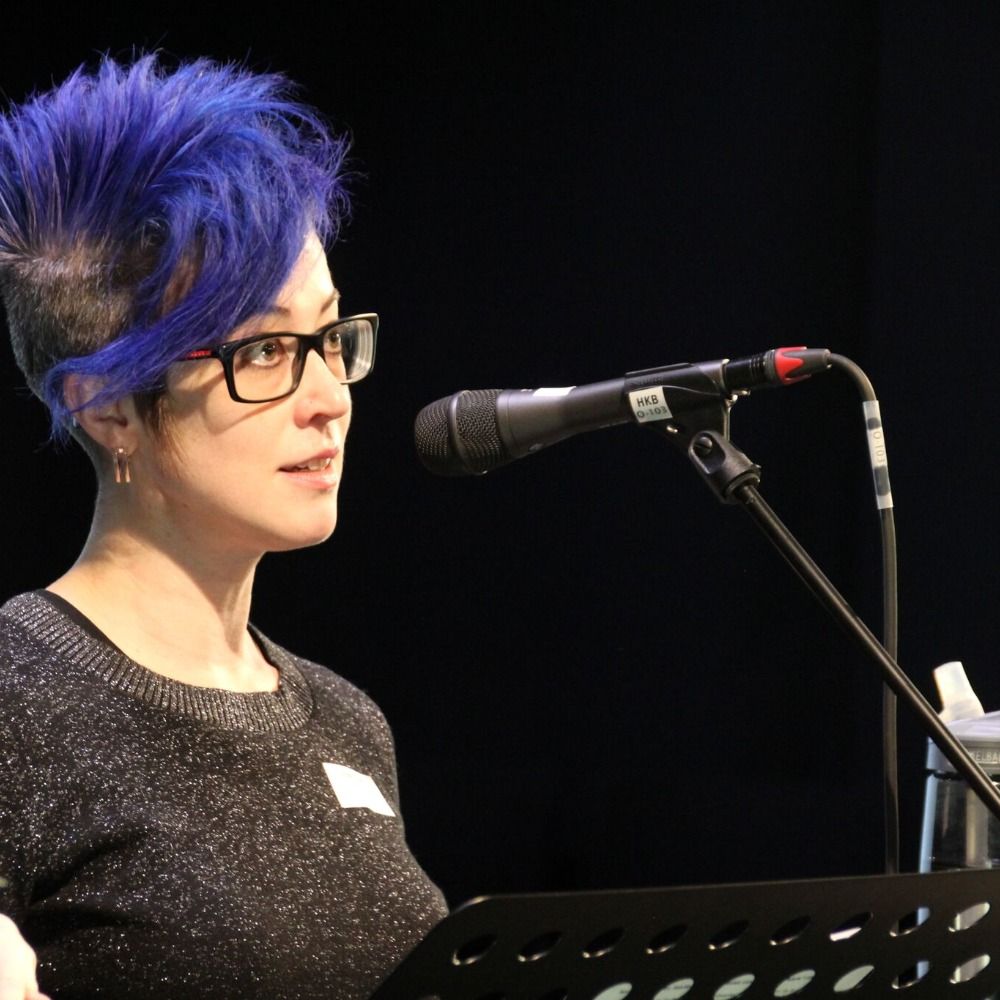
The 'poor people need AI to make art' line is about as opposite of this as you can get
nobody needs to rely on huge corporations to make art
nobody needs to rely on huge corporations to make art

February 7, 2026 at 9:21 PM
Some things you can't buy:
Creativity
Integrity
Courage
Don't let grifters erode what makes you gleam.
Creativity
Integrity
Courage
Don't let grifters erode what makes you gleam.
Reposted by Natalie Christie Peluso 🧠

Remembering Dr. Paul Ekman, a pioneer who transformed our understanding of human emotion and a founding member of ISRE.
Follow the link below for a tribute to his legacy in affective science, along with a comprehensive obituary by Robert Levenson.
emotionresearcher.com/2026/01/in-m...
Follow the link below for a tribute to his legacy in affective science, along with a comprehensive obituary by Robert Levenson.
emotionresearcher.com/2026/01/in-m...

February 7, 2026 at 10:00 AM
Remembering Dr. Paul Ekman, a pioneer who transformed our understanding of human emotion and a founding member of ISRE.
Follow the link below for a tribute to his legacy in affective science, along with a comprehensive obituary by Robert Levenson.
emotionresearcher.com/2026/01/in-m...
Follow the link below for a tribute to his legacy in affective science, along with a comprehensive obituary by Robert Levenson.
emotionresearcher.com/2026/01/in-m...
Reposted by Natalie Christie Peluso 🧠
Otters, but not apes, prepare for mutually exclusive possibilities. bioRxivpreprint

Otters, but not apes, prepare for mutually exclusive possibilities.
The ability to prepare for mutually exclusive outcomes is often considered uniquely human. Solving such problems requires anticipating alternative futures before acting. In the classic forked-tube task, the optimal strategy is to block both exits to secure a reward: children under four years and great apes typically fail, whereas older children succeed. Using this paradigm, we tested three Asian small-clawed otters (Aonyx cinereus) and one Eurasian otter (Lutra lutra) and compared their performance with chimpanzee data. Otters covered both exits significantly more often than chimpanzees, with all individuals succeeding within their first trials. Initial inconsistency in maintaining the strategy appeared linked to anatomical constraints that limited reward success. When retested two months later with an apparatus better suited to otter morphology, individuals adopted and maintained dual coverage as success increased, indicating that the behavior tracked the payoff structure of the task rather than reflecting low-level mechanisms such as trial-and-error learning. Together, these findings indicate that blocking both exits is an adaptive response to the task's causal structure, supporting the ecological intelligence hypothesis: cognition evolves in response to ecological demands, particularly foraging challenges that place recurrent pressures on memory, decision-making, and executive control, rather than being driven solely by social complexity.
dlvr.it
February 7, 2026 at 10:18 AM
Otters, but not apes, prepare for mutually exclusive possibilities. bioRxivpreprint
Reposted by Natalie Christie Peluso 🧠

For anyone teaching/studying/researching the evolution of language, we wrote a framework paper especially for you!
It lays out how bridging diverse fields can give new insights into this most mysterious of human traits.
There's a link for free access on MPI website here:
www.mpi.nl/publications...
🧪
It lays out how bridging diverse fields can give new insights into this most mysterious of human traits.
There's a link for free access on MPI website here:
www.mpi.nl/publications...
🧪

What enables human language? A biocultural framework
Explaining the origins of language is a key challenge in understanding ourselves as a species. We present an empirical framework that draws on synergies across fields to facilitate robust studies of l...
www.science.org
February 6, 2026 at 1:12 PM
For anyone teaching/studying/researching the evolution of language, we wrote a framework paper especially for you!
It lays out how bridging diverse fields can give new insights into this most mysterious of human traits.
There's a link for free access on MPI website here:
www.mpi.nl/publications...
🧪
It lays out how bridging diverse fields can give new insights into this most mysterious of human traits.
There's a link for free access on MPI website here:
www.mpi.nl/publications...
🧪
Reposted by Natalie Christie Peluso 🧠
GM: Charisma check.
Mamdani: [rolls natural 20]
GM: that’s a d6 how did you
Mamdani: [direct to camera] Did you know you can check out board games at your local public library? 😊
Mamdani: [rolls natural 20]
GM: that’s a d6 how did you
Mamdani: [direct to camera] Did you know you can check out board games at your local public library? 😊
February 7, 2026 at 5:01 AM
GM: Charisma check.
Mamdani: [rolls natural 20]
GM: that’s a d6 how did you
Mamdani: [direct to camera] Did you know you can check out board games at your local public library? 😊
Mamdani: [rolls natural 20]
GM: that’s a d6 how did you
Mamdani: [direct to camera] Did you know you can check out board games at your local public library? 😊
Please please protect this man
Reporter: Do any of you have a favorite animal?
Child: My favorite one is a gold snake that can move. It has gold eyes, and it has a super-duper tail…
Reporter: Mr. Mamdani, the second question for you.
Mamdani: Yes. It’s also the golden snake.
Child: My favorite one is a gold snake that can move. It has gold eyes, and it has a super-duper tail…
Reporter: Mr. Mamdani, the second question for you.
Mamdani: Yes. It’s also the golden snake.
February 7, 2026 at 2:15 AM
Please please protect this man
Australia, the size of your vegetables are out of control

February 7, 2026 at 12:32 AM
Australia, the size of your vegetables are out of control
Reposted by Natalie Christie Peluso 🧠

Mamdani: "I speak of Renee Good, whose final words to the man who murdered her were, 'I'm not mad at you.' I speak of Alex Pretti who died as he lived, caring for the stranger. ICE shot him bc he did something they could never fathom ... let us offer a new path: one of defiance through compassion."
February 6, 2026 at 4:01 PM
Mamdani: "I speak of Renee Good, whose final words to the man who murdered her were, 'I'm not mad at you.' I speak of Alex Pretti who died as he lived, caring for the stranger. ICE shot him bc he did something they could never fathom ... let us offer a new path: one of defiance through compassion."
Reposted by Natalie Christie Peluso 🧠


February 6, 2026 at 11:44 AM
Reposted by Natalie Christie Peluso 🧠

Sir Ian McKellen performing a monologue from Shakespeare’s Sir Thomas More on the Stephen Colbert show. Never have I heard this monologue performed with such a keen sense of prescience. Nor have I ever been in this exact historical moment.TY Sir Ian, for reaching us once again.
#Pinks #ProudBlue
#Pinks #ProudBlue
February 5, 2026 at 11:50 AM
Sir Ian McKellen performing a monologue from Shakespeare’s Sir Thomas More on the Stephen Colbert show. Never have I heard this monologue performed with such a keen sense of prescience. Nor have I ever been in this exact historical moment.TY Sir Ian, for reaching us once again.
#Pinks #ProudBlue
#Pinks #ProudBlue
Wow!! Kanzi ❤️
Imagination in bonobos!
I am thrilled to share a new paper w/ Amalia Bastos, out now in @science.org
We provide the first experimental evidence that a nonhuman animal can follow along a pretend scenario & track imaginary objects. Work w/ Kanzi, the bonobo, at Ape Initiative
youtu.be/NUSHcQQz2Ko
I am thrilled to share a new paper w/ Amalia Bastos, out now in @science.org
We provide the first experimental evidence that a nonhuman animal can follow along a pretend scenario & track imaginary objects. Work w/ Kanzi, the bonobo, at Ape Initiative
youtu.be/NUSHcQQz2Ko

Apes Share Human Ability to Imagine
YouTube video by Johns Hopkins University
youtu.be
February 6, 2026 at 11:39 AM
Wow!! Kanzi ❤️
Reposted by Natalie Christie Peluso 🧠

Think about your breakfast this morning. Can you imagine the pattern on your coffee mug? The sheen of the jam on your half-eaten toast?
go.nature.com/3ZiHLtN
go.nature.com/3ZiHLtN

Many people have no mental imagery. What’s going on in their brains?
People with aphantasia are offering a window into consciousness.
go.nature.com
February 3, 2026 at 6:16 PM
Think about your breakfast this morning. Can you imagine the pattern on your coffee mug? The sheen of the jam on your half-eaten toast?
go.nature.com/3ZiHLtN
go.nature.com/3ZiHLtN
Early face deprivation leads to long-lasting deficits in cortical face processing
Saloni Sharma, Margaret Livingstone
New bioRxiv preprint
www.biorxiv.org/content/10.6...
Saloni Sharma, Margaret Livingstone
New bioRxiv preprint
www.biorxiv.org/content/10.6...
www.biorxiv.org
February 6, 2026 at 11:12 AM
Early face deprivation leads to long-lasting deficits in cortical face processing
Saloni Sharma, Margaret Livingstone
New bioRxiv preprint
www.biorxiv.org/content/10.6...
Saloni Sharma, Margaret Livingstone
New bioRxiv preprint
www.biorxiv.org/content/10.6...
Reposted by Natalie Christie Peluso 🧠

New book with more Chomsky-bashing. The website says March 2026, but it is available now.
cup.columbia.edu/book/intertw...
cup.columbia.edu/book/intertw...
February 5, 2026 at 3:42 PM
New book with more Chomsky-bashing. The website says March 2026, but it is available now.
cup.columbia.edu/book/intertw...
cup.columbia.edu/book/intertw...
"Hannah Arendt spoke of “the banality of evil.” Evil is never banal; evil-doers often are... "

This is an excerpt from Peter Drucker’s autobiography that was featured in The Atlantic.
Frankfurt university’s faculty had been gathered, the Jews were forbidden to enter, and a lead scientist asked about funding.
Indeed, there was much for Nazi “science”.
cdn.theatlantic.com/media/archiv...
Frankfurt university’s faculty had been gathered, the Jews were forbidden to enter, and a lead scientist asked about funding.
Indeed, there was much for Nazi “science”.
cdn.theatlantic.com/media/archiv...

February 3, 2026 at 11:08 AM
"Hannah Arendt spoke of “the banality of evil.” Evil is never banal; evil-doers often are... "
Nope

A pretty bold comment in Nature written by linguists, computer scientists and philosophers declaring that AGI has been achieved.
"By reasonable standards, including Turing’s own, we have artificial systems that are generally intelligent. The long-standing problem of creating AGI has been solved."
"By reasonable standards, including Turing’s own, we have artificial systems that are generally intelligent. The long-standing problem of creating AGI has been solved."

February 3, 2026 at 9:19 AM
Nope