



Muriel Perron
@murielperron.bsky.social
CNRS researcher interested in neural stem cells, retina, and regeneration
Reposted by Muriel Perron
➡️ This study is complemented by a compagnon study focused on the conservation of Mexican tetra blind cave fish 🔽🔽🔽

Long-term genetic mark and recapture in Astyanax mexicanus cave populations: demographic inferences and conservation issues - Conservation Genetics
The cave populations of Astyanax mexicanus in northeastern Mexico are the subject of intensive study as a model for investigating evolutionary processes in subterranean environments. Investigating key...
doi.org
January 27, 2026 at 1:38 PM
➡️ This study is complemented by a compagnon study focused on the conservation of Mexican tetra blind cave fish 🔽🔽🔽
Reposted by Muriel Perron
➡️ In a new Ecology and Evolution paper, Sylvie Rétaux's team @neuropsi.bsky.social and collaborators report on more than 15 years of field studies on the water physicochemical parameters and hydrodynamic regimes in the Mexican tetra blind cave fish habitat 🐟💦.
➡️ Learn more 🔽🔽🔽
➡️ Learn more 🔽🔽🔽

Water Parameters and Hydrodynamics in Rivers and Caves Hosting Astyanax mexicanus Populations Reveal Macro‐, Meso‐ and Microhabitat Characteristics
From 2009 to 2025, we have recorded the physicochemical parameters of the water and the hydrological regimes at localities hosting Astyanax mexicanus cavefish and surface fish populations in Mexico. ...
onlinelibrary.wiley.com
January 27, 2026 at 1:22 PM
➡️ In a new Ecology and Evolution paper, Sylvie Rétaux's team @neuropsi.bsky.social and collaborators report on more than 15 years of field studies on the water physicochemical parameters and hydrodynamic regimes in the Mexican tetra blind cave fish habitat 🐟💦.
➡️ Learn more 🔽🔽🔽
➡️ Learn more 🔽🔽🔽
Reposted by Muriel Perron
🧠 👩🎓 University Paris-Saclay launches its all-new Master in Neuroscience!
One M1 in neuroscience, followed by three M2:
1️⃣ Cognition, Behavior and Mental disorders.
2️⃣ Systems Neuroscience: from cells to brain functions.
3️⃣ Computational Neurosciences and Neuroengineering.
🔽🔽 Learn more & apply:
One M1 in neuroscience, followed by three M2:
1️⃣ Cognition, Behavior and Mental disorders.
2️⃣ Systems Neuroscience: from cells to brain functions.
3️⃣ Computational Neurosciences and Neuroengineering.
🔽🔽 Learn more & apply:

Saclay_master_in_neuroscience
sDrive
sdrive.cnrs.fr
January 23, 2026 at 4:01 PM
🧠 👩🎓 University Paris-Saclay launches its all-new Master in Neuroscience!
One M1 in neuroscience, followed by three M2:
1️⃣ Cognition, Behavior and Mental disorders.
2️⃣ Systems Neuroscience: from cells to brain functions.
3️⃣ Computational Neurosciences and Neuroengineering.
🔽🔽 Learn more & apply:
One M1 in neuroscience, followed by three M2:
1️⃣ Cognition, Behavior and Mental disorders.
2️⃣ Systems Neuroscience: from cells to brain functions.
3️⃣ Computational Neurosciences and Neuroengineering.
🔽🔽 Learn more & apply:
Reposted by Muriel Perron
🦾/💪 Interested in the physiology of motor control? In robotics? In neuroprosthetics?
▶️ Join us in NeuroPSI for NeuroControl 2026, the conference on the physiology and engineering of limb and prosthesis closed-loop control!
▶️ Register and submit your abstract: neurocontrol.sciencesconf.org
▶️ Join us in NeuroPSI for NeuroControl 2026, the conference on the physiology and engineering of limb and prosthesis closed-loop control!
▶️ Register and submit your abstract: neurocontrol.sciencesconf.org

January 20, 2026 at 2:50 PM
🦾/💪 Interested in the physiology of motor control? In robotics? In neuroprosthetics?
▶️ Join us in NeuroPSI for NeuroControl 2026, the conference on the physiology and engineering of limb and prosthesis closed-loop control!
▶️ Register and submit your abstract: neurocontrol.sciencesconf.org
▶️ Join us in NeuroPSI for NeuroControl 2026, the conference on the physiology and engineering of limb and prosthesis closed-loop control!
▶️ Register and submit your abstract: neurocontrol.sciencesconf.org
Reposted by Muriel Perron
👏 Upcoming seminars at NeuroPSI in January (11:30am):
➡️ The 23rd, Marc Dhenain, Institut de Biologie François Jacob, "Pseudo-prions to treat neurodegenerative diseases."
Followed by two speakers on motor control:
➡️ The 27th, Maarten Zwart, from St Andrews.
➡️ The 30th, Graziana Gatto, from Cologne.
➡️ The 23rd, Marc Dhenain, Institut de Biologie François Jacob, "Pseudo-prions to treat neurodegenerative diseases."
Followed by two speakers on motor control:
➡️ The 27th, Maarten Zwart, from St Andrews.
➡️ The 30th, Graziana Gatto, from Cologne.

January 18, 2026 at 9:05 PM
👏 Upcoming seminars at NeuroPSI in January (11:30am):
➡️ The 23rd, Marc Dhenain, Institut de Biologie François Jacob, "Pseudo-prions to treat neurodegenerative diseases."
Followed by two speakers on motor control:
➡️ The 27th, Maarten Zwart, from St Andrews.
➡️ The 30th, Graziana Gatto, from Cologne.
➡️ The 23rd, Marc Dhenain, Institut de Biologie François Jacob, "Pseudo-prions to treat neurodegenerative diseases."
Followed by two speakers on motor control:
➡️ The 27th, Maarten Zwart, from St Andrews.
➡️ The 30th, Graziana Gatto, from Cologne.
Reposted by Muriel Perron
🎖️Toutes nos félicitations à Sylvie Rétaux, cheffe de l'équipe DECA à NeuroPSI, qui a été nommée au grade de Chevalier de la Légion d’Honneur !

January 18, 2026 at 8:18 PM
🎖️Toutes nos félicitations à Sylvie Rétaux, cheffe de l'équipe DECA à NeuroPSI, qui a été nommée au grade de Chevalier de la Légion d’Honneur !
Reposted by Muriel Perron
Second paper is a collaboration with Jim Handa's lab at Hopkins. Cigarette smoke exposure induces aging-related molecular changes in both mouse and human retinal pigment epithelium.
www.pnas.org/doi/10.1073/...
www.pnas.org/doi/10.1073/...
PNAS
Proceedings of the National Academy of Sciences (PNAS), a peer reviewed journal of the National Academy of Sciences (NAS) - an authoritative source of high-impact, original research that broadly spans...
www.pnas.org
January 16, 2026 at 9:11 PM
Second paper is a collaboration with Jim Handa's lab at Hopkins. Cigarette smoke exposure induces aging-related molecular changes in both mouse and human retinal pigment epithelium.
www.pnas.org/doi/10.1073/...
www.pnas.org/doi/10.1073/...
Reposted by Muriel Perron
The lab's first paper of the new year is out. In it, we investigate the role of the late stage retinal progenitor-enriched SoxE family factors Sox8 and Sox9 in controlling retinal development./1
www.biorxiv.org/content/10.6...
www.biorxiv.org/content/10.6...
Sox8 and Sox9 regulate differentiation and nuclear positioning of retinal Müller glia
Temporal patterning of retinal progenitor cells governs the sequential generation of retinal cell types, with gliogenesis occurring late in development. Sox8 and Sox9, members of the SoxE transcription factor family, are highly expressed in late-stage retinal progenitor cells and mature Müller glia, yet their functional roles remain incompletely defined. Here we employed gain- and loss-of-function approaches, single-cell multiomic profiling, and injury models to investigate Sox8/9 function. Overexpression of SOX8 and/or SOX9 in early-stage retinal progenitor cells suppressed early-born cell fates and promoted photoreceptor generation, consistent with a role in late-stage temporal identity. Conversely, conditional deletion of Sox8 and/or Sox9 in late-stage progenitors did not impair Müller glia specification, but caused radial displacement of Müller glia nuclei into the outer retina and modest changes in glial gene expression. Loss of Sox8/9 in mature Müller glia modestly increased proliferation post-injury without inducing neurogenic competence. These findings suggest that Sox8/9 are dispensable for gliogenesis and repression of neurogenic competence, but are essential for proper laminar positioning and maturation of retinal Müller glia. ### Competing Interest Statement S.B. is a cofounder, shareholder, and scientific advisory board member of CDI Labs LLC, and receives research support from Genentech. National Eye Institute, https://ror.org/03wkg3b53, R01EY036173
www.biorxiv.org
January 16, 2026 at 8:17 PM
The lab's first paper of the new year is out. In it, we investigate the role of the late stage retinal progenitor-enriched SoxE family factors Sox8 and Sox9 in controlling retinal development./1
www.biorxiv.org/content/10.6...
www.biorxiv.org/content/10.6...
Reposted by Muriel Perron
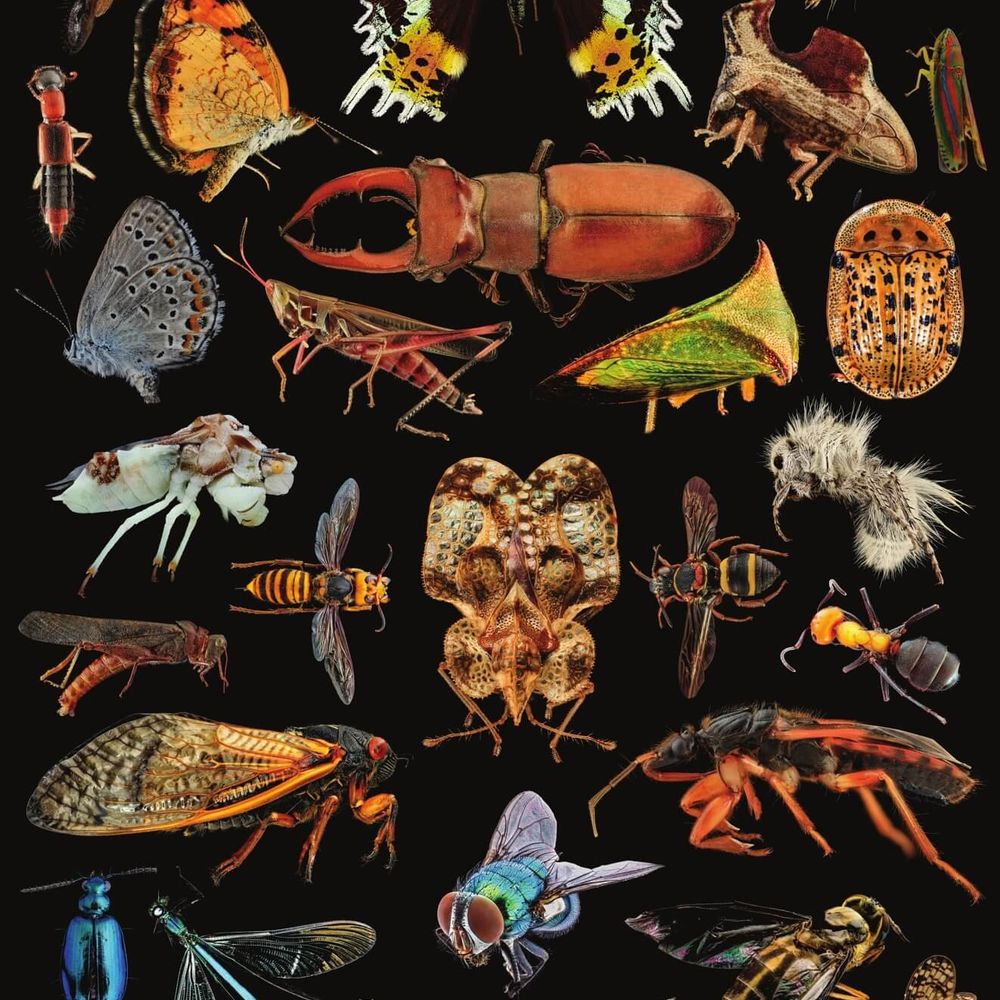
I am very happy (and a bit scared) to present to you what we have been working on over the last 4 years. This manuscript is exactly what I dreamt of when I started the lab and I could not be happier and prouder of the outcome!

Evolutionary dynamics of temporal transcription factor series in the insect optic lobe https://www.biorxiv.org/content/10.64898/2026.01.08.698497v1
January 10, 2026 at 9:43 AM
I am very happy (and a bit scared) to present to you what we have been working on over the last 4 years. This manuscript is exactly what I dreamt of when I started the lab and I could not be happier and prouder of the outcome!
Reposted by Muriel Perron
..and on the 9th, at 11:30am, we will hear Ariel Levine, from NIH Bethesda, talk about "Building the Spinal Cord". Join us for these two talks at @neuropsi.bsky.social !

January 5, 2026 at 3:17 PM
..and on the 9th, at 11:30am, we will hear Ariel Levine, from NIH Bethesda, talk about "Building the Spinal Cord". Join us for these two talks at @neuropsi.bsky.social !
Reposted by Muriel Perron
📅 NeuroPSI Seminar Series. On the 8th of January at 10:30am, we will be hosting Colline Poirier, Biosciences Institute of Newcastle University.
▶️ She will talk about: "Using spontaneous behaviour to assess primate welfare"
▶️ She will talk about: "Using spontaneous behaviour to assess primate welfare"

January 5, 2026 at 3:15 PM
📅 NeuroPSI Seminar Series. On the 8th of January at 10:30am, we will be hosting Colline Poirier, Biosciences Institute of Newcastle University.
▶️ She will talk about: "Using spontaneous behaviour to assess primate welfare"
▶️ She will talk about: "Using spontaneous behaviour to assess primate welfare"
Reposted by Muriel Perron
Join the development of the mouse forelimb prosthesis as a post-doc, apply!

January 5, 2026 at 1:00 PM
Join the development of the mouse forelimb prosthesis as a post-doc, apply!
Reposted by Muriel Perron

Really happy to join NeuroPSI at Paris Saclay to lead a research group funded by an ERC Consolidator grant #ERCCoG . We'll study the origins of the vertebrate brain using shark embryos. 🦈 🧠 Reach out if you are interested in joining the team 🤍
🙋♀️ We are welcoming Idoia Quintana Urzainqui to NeuroPSi as a junior Professor! In her new team, she will research the Mechanisms that shaped early vertebrate brains, thanks to funding from a 2025 ERC Consolidator grant.
➡️ Learn more here: neuropsi.cnrs.fr/en/idoia-qui...
➡️ Learn more here: neuropsi.cnrs.fr/en/idoia-qui...

December 22, 2025 at 7:47 AM
Really happy to join NeuroPSI at Paris Saclay to lead a research group funded by an ERC Consolidator grant #ERCCoG . We'll study the origins of the vertebrate brain using shark embryos. 🦈 🧠 Reach out if you are interested in joining the team 🤍
Reposted by Muriel Perron
Sylvie Granon, chercheuse à NeuroPSI, a participé à une émission de SynapseTV, la première webTV dédiée à la santé mentale, autours de la thématique des écrans et de leur impact sur le cerveau:
www.youtube.com/watch?v=d1v9...
www.youtube.com/watch?v=d1v9...

December 21, 2025 at 12:09 AM
Sylvie Granon, chercheuse à NeuroPSI, a participé à une émission de SynapseTV, la première webTV dédiée à la santé mentale, autours de la thématique des écrans et de leur impact sur le cerveau:
www.youtube.com/watch?v=d1v9...
www.youtube.com/watch?v=d1v9...
Reposted by Muriel Perron
Congratulations to our NeuroPSI team leader Carole Escartin for the 2025 Prize Marie-Paule Burrus from @frm-officiel.bsky.social !

December 21, 2025 at 12:10 AM
Congratulations to our NeuroPSI team leader Carole Escartin for the 2025 Prize Marie-Paule Burrus from @frm-officiel.bsky.social !
Reposted by Muriel Perron
💎 Valérie Lavallée, responsable de la plateforme de zootechnie de l’Institut des Neurosciences Paris-Saclay, a obtenu la Médaille de cristal du CNRS 2025: une récompense pour son parcours et sa contribution essentielle à la recherche dans notre institut !
Valérie Lavallée
Grâce à son parcours autodidacte remarquable, Valérie Lavallée a connu une progression de carrière constante jusqu’à être nommée responsable de la plateforme de zootechnie de l’Institut des Neurosciences Paris-Saclay (NeuroPSI - CNRS/Université Paris-Saclay), situé sur le campus du CEA Saclay. En 2021, elle a notamment relevé le défi de l’installation d’une plateforme de zootechnie multi-espèces lors du déménagement du laboratoire. En 2025, le CNRS décernera la médaille de cristal à Valérie Lavallée pour la qualité de son travail et pour son rôle majeur dans ce déménagement, qui a permis le regroupement des sites zootechniques de Gif-sur-Yvette et Orsay vers le nouveau bâtiment de NeuroPSI. Cette plateforme est désormais une vitrine de l’excellence en zootechnie scientifique.
www.iledefrance-gif.cnrs.fr
December 21, 2025 at 12:11 AM
💎 Valérie Lavallée, responsable de la plateforme de zootechnie de l’Institut des Neurosciences Paris-Saclay, a obtenu la Médaille de cristal du CNRS 2025: une récompense pour son parcours et sa contribution essentielle à la recherche dans notre institut !
Reposted by Muriel Perron
🙋♀️ Welcome to Marion Rivalan, who joins NeuroPSI as a CNRS Junior Professor!
➡️ Her project will leverage AI-based methods for the classification and prediction of individual profiles of model animals housed in a naturalistic environment.
➡️ Learn more: neuropsi.cnrs.fr/en/marion-ri...
➡️ Her project will leverage AI-based methods for the classification and prediction of individual profiles of model animals housed in a naturalistic environment.
➡️ Learn more: neuropsi.cnrs.fr/en/marion-ri...

December 21, 2025 at 12:13 AM
🙋♀️ Welcome to Marion Rivalan, who joins NeuroPSI as a CNRS Junior Professor!
➡️ Her project will leverage AI-based methods for the classification and prediction of individual profiles of model animals housed in a naturalistic environment.
➡️ Learn more: neuropsi.cnrs.fr/en/marion-ri...
➡️ Her project will leverage AI-based methods for the classification and prediction of individual profiles of model animals housed in a naturalistic environment.
➡️ Learn more: neuropsi.cnrs.fr/en/marion-ri...
Reposted by Muriel Perron
🙋♀️ We are welcoming Idoia Quintana Urzainqui to NeuroPSi as a junior Professor! In her new team, she will research the Mechanisms that shaped early vertebrate brains, thanks to funding from a 2025 ERC Consolidator grant.
➡️ Learn more here: neuropsi.cnrs.fr/en/idoia-qui...
➡️ Learn more here: neuropsi.cnrs.fr/en/idoia-qui...
December 21, 2025 at 12:14 AM
🙋♀️ We are welcoming Idoia Quintana Urzainqui to NeuroPSi as a junior Professor! In her new team, she will research the Mechanisms that shaped early vertebrate brains, thanks to funding from a 2025 ERC Consolidator grant.
➡️ Learn more here: neuropsi.cnrs.fr/en/idoia-qui...
➡️ Learn more here: neuropsi.cnrs.fr/en/idoia-qui...
Reposted by Muriel Perron
A bit late but a paper from our lab has been published!
Human fingertip regeneration is a fact, it happens in children and adults (not only in children as it has been long believed). We describe here the regenerative phases and analyse the proteome of wound exudates.
www.nature.com/articles/s41...
Human fingertip regeneration is a fact, it happens in children and adults (not only in children as it has been long believed). We describe here the regenerative phases and analyse the proteome of wound exudates.
www.nature.com/articles/s41...

December 18, 2025 at 2:11 PM
A bit late but a paper from our lab has been published!
Human fingertip regeneration is a fact, it happens in children and adults (not only in children as it has been long believed). We describe here the regenerative phases and analyse the proteome of wound exudates.
www.nature.com/articles/s41...
Human fingertip regeneration is a fact, it happens in children and adults (not only in children as it has been long believed). We describe here the regenerative phases and analyse the proteome of wound exudates.
www.nature.com/articles/s41...
Reposted by Muriel Perron
🚨We are recruiting two PhD students 🚨
1) Quantitative & dynamic analysis of limb-regenerative signaling centers w/ @osvaldo-chara.bsky.social 📶🧮💻
🔗https://www.phd.tuebingen.mpg.de/80704/Quantitative-and-dynamic-analysis-of-limb-regenerative-signaling-center-interactions
1) Quantitative & dynamic analysis of limb-regenerative signaling centers w/ @osvaldo-chara.bsky.social 📶🧮💻
🔗https://www.phd.tuebingen.mpg.de/80704/Quantitative-and-dynamic-analysis-of-limb-regenerative-signaling-center-interactions
December 17, 2025 at 7:53 AM
🚨We are recruiting two PhD students 🚨
1) Quantitative & dynamic analysis of limb-regenerative signaling centers w/ @osvaldo-chara.bsky.social 📶🧮💻
🔗https://www.phd.tuebingen.mpg.de/80704/Quantitative-and-dynamic-analysis-of-limb-regenerative-signaling-center-interactions
1) Quantitative & dynamic analysis of limb-regenerative signaling centers w/ @osvaldo-chara.bsky.social 📶🧮💻
🔗https://www.phd.tuebingen.mpg.de/80704/Quantitative-and-dynamic-analysis-of-limb-regenerative-signaling-center-interactions
Reposted by Muriel Perron
Recent Hopkins Hub article highlighting our work on optic nerve regeneration in axolotl. Congratulations to Ted!
hub.jhu.edu/2025/12/11/s...
hub.jhu.edu/2025/12/11/s...

Could axolotls hold the key to restoring human vision?
Axolotls can regenerate optic nerves, retinas, and parts of their brain. Provost's Undergraduate Research Award-winner Ted Chor wants to understand how.
hub.jhu.edu
December 12, 2025 at 1:53 PM
Recent Hopkins Hub article highlighting our work on optic nerve regeneration in axolotl. Congratulations to Ted!
hub.jhu.edu/2025/12/11/s...
hub.jhu.edu/2025/12/11/s...
Reposted by Muriel Perron
A couple of papers are finally out too. First, Meis factors are (unfortunately) not sufficient to respecify temporal identity in retinal progenitor cells.
www.nature.com/articles/s41...
www.nature.com/articles/s41...
Overexpression of Meis factors in late-stage retinal progenitors yields complex effects on temporal patterning and neurogenesis - Scientific Reports
The vertebrate retina serves as a model for studying neurogenesis and cell fate specification, with retinal progenitor cells following a tightly regulated temporal sequence to generate distinct cell t...
www.nature.com
December 12, 2025 at 1:57 PM
A couple of papers are finally out too. First, Meis factors are (unfortunately) not sufficient to respecify temporal identity in retinal progenitor cells.
www.nature.com/articles/s41...
www.nature.com/articles/s41...
Reposted by Muriel Perron
Second, not only does Ptpb1 not repress neurogenesis in adult glia, it doesn't do much in the developing CNS either. Scratch another master regulator off the list.
doi.org/10.7554/eLif...
doi.org/10.7554/eLif...

Ptbp1 is not required for retinal neurogenesis and cell fate specification
Loss of function of Ptbp1 in retinal progenitors leads to changes in RNA splicing but does not affect neurogenesis and cell fate specification.
doi.org
December 12, 2025 at 1:59 PM
Second, not only does Ptpb1 not repress neurogenesis in adult glia, it doesn't do much in the developing CNS either. Scratch another master regulator off the list.
doi.org/10.7554/eLif...
doi.org/10.7554/eLif...
Reposted by Muriel Perron

We have opened a call for a post-doctoral researcher !
Our team @touchmovelab.bsky.social researches strategies to provide direct cortical feedback during brain-machine interface control of an upper limb prosthesis in the mouse model.
Our team @touchmovelab.bsky.social researches strategies to provide direct cortical feedback during brain-machine interface control of an upper limb prosthesis in the mouse model.

December 10, 2025 at 12:44 PM
We have opened a call for a post-doctoral researcher !
Our team @touchmovelab.bsky.social researches strategies to provide direct cortical feedback during brain-machine interface control of an upper limb prosthesis in the mouse model.
Our team @touchmovelab.bsky.social researches strategies to provide direct cortical feedback during brain-machine interface control of an upper limb prosthesis in the mouse model.
Reposted by Muriel Perron
🎉 Our deconstructed, stem-cell–based approach to studying signaling centers and limb-development cell types is out! 🥳 So nice to see it in its final form after the preprint— and huge thanks to the community for all the enthusiasm and interest since then!
www.science.org/doi/10.1126/...
www.science.org/doi/10.1126/...

Specialized signaling centers direct cell fate and spatial organization in a mesodermal organoid model
Stem cell–derived mesodermal organoids reveal how signaling centers guide cell fate and tissue organization.
www.science.org
December 2, 2025 at 9:15 AM
🎉 Our deconstructed, stem-cell–based approach to studying signaling centers and limb-development cell types is out! 🥳 So nice to see it in its final form after the preprint— and huge thanks to the community for all the enthusiasm and interest since then!
www.science.org/doi/10.1126/...
www.science.org/doi/10.1126/...