



Pathogenic Mechanisms Research Group
@molecularpathogen.bsky.social
Pathogenic Mechanisms Research Group - University of Galway.
PI: Dr Aoife Boyd. Host-microbe interactions: pathogenic Vibrio bacteria. Marine aquaculture. Natural antimicrobial molecules. Microbes & venomous animals.
https://orcid.org/0000-0002-4631-9792
PI: Dr Aoife Boyd. Host-microbe interactions: pathogenic Vibrio bacteria. Marine aquaculture. Natural antimicrobial molecules. Microbes & venomous animals.
https://orcid.org/0000-0002-4631-9792
Reposted by Pathogenic Mechanisms Research Group
Deadline is approaching (Feb 9) to apply for a PI position at Institut Pasteur. Come join us and contribute to an amazing scientific environment!!!

January 19, 2026 at 4:55 PM
Deadline is approaching (Feb 9) to apply for a PI position at Institut Pasteur. Come join us and contribute to an amazing scientific environment!!!
Reposted by Pathogenic Mechanisms Research Group

Delighted to share the hard work of undergraduate student Ella Rellis and first publication from my group since relocating to TCD. Here we identify a new stress response regulator induced by D-serine. 🦠🔬🧫 @microbiologysociety.org #publishforthecommunity www.microbiologyresearch.org/content/jour...

The glucose uptake inhibitor SgrS is induced by D-serine yet does not contribute to growth arrest in enterohaemorrhagic Escherichia coli
Bacterial pathogens sense and respond to host-derived metabolites to regulate virulence and establish successful infections. d-Serine, an amino acid abundant in some extraintestinal environments but s...
www.microbiologyresearch.org
January 13, 2026 at 8:17 AM
Delighted to share the hard work of undergraduate student Ella Rellis and first publication from my group since relocating to TCD. Here we identify a new stress response regulator induced by D-serine. 🦠🔬🧫 @microbiologysociety.org #publishforthecommunity www.microbiologyresearch.org/content/jour...
Reposted by Pathogenic Mechanisms Research Group
🚨4-year fully funded PhD in the lab of @magicmicrobe.bsky.social (& collaborating with me!): How does iron availability shape the ability of pathogens to invade the gut microbiome?
Apply by Jan 26th
Advert: research.reading.ac.uk/foodbiosyste...
How to apply: research.reading.ac.uk/foodbiosyste...
Apply by Jan 26th
Advert: research.reading.ac.uk/foodbiosyste...
How to apply: research.reading.ac.uk/foodbiosyste...
research.reading.ac.uk
January 15, 2026 at 7:42 PM
🚨4-year fully funded PhD in the lab of @magicmicrobe.bsky.social (& collaborating with me!): How does iron availability shape the ability of pathogens to invade the gut microbiome?
Apply by Jan 26th
Advert: research.reading.ac.uk/foodbiosyste...
How to apply: research.reading.ac.uk/foodbiosyste...
Apply by Jan 26th
Advert: research.reading.ac.uk/foodbiosyste...
How to apply: research.reading.ac.uk/foodbiosyste...
Reposted by Pathogenic Mechanisms Research Group

#ScienceMonday 🧪 🦠 I've heard of picky eaters, but there's no reason to get your Type 6 Secretion System out over a meal,... but Vibrio will! Diet modulates Vibrio cholerae colonization and competitive outcomes with the gut microbiota: Cell Host & Microbe www.cell.com/cell-host-mi...

Diet modulates Vibrio cholerae colonization and competitive outcomes with the gut microbiota
Liu et al. show that dietary protein sources differentially restrict colonization
of the pathogen Vibrio cholerae. Specific diets downregulate V. cholerae type VI secretion
system (T6SS) expression, l...
www.cell.com
January 12, 2026 at 4:27 AM
#ScienceMonday 🧪 🦠 I've heard of picky eaters, but there's no reason to get your Type 6 Secretion System out over a meal,... but Vibrio will! Diet modulates Vibrio cholerae colonization and competitive outcomes with the gut microbiota: Cell Host & Microbe www.cell.com/cell-host-mi...
Reposted by Pathogenic Mechanisms Research Group

As 2025 wraps up, we’re looking back at some of the most intriguing microbes that made their scientific debut this year. This blog highlights standout bacterial species that caught our eye. Read the full #FEMSmicroBlog: buff.ly/2wz7k16
#NewMicrobes
#NewMicrobes

December 10, 2025 at 11:01 AM
As 2025 wraps up, we’re looking back at some of the most intriguing microbes that made their scientific debut this year. This blog highlights standout bacterial species that caught our eye. Read the full #FEMSmicroBlog: buff.ly/2wz7k16
#NewMicrobes
#NewMicrobes
Reposted by Pathogenic Mechanisms Research Group

Did you know the sound of popcorn popping isn't caused by the cracking of the corn kernel? For #NationalPopcornDay, here's a portion of popcorn science 🍿 www.compoundchem.com/2017/01/19/p...
#ChemSky 🧪
#ChemSky 🧪

January 19, 2026 at 12:45 PM
Did you know the sound of popcorn popping isn't caused by the cracking of the corn kernel? For #NationalPopcornDay, here's a portion of popcorn science 🍿 www.compoundchem.com/2017/01/19/p...
#ChemSky 🧪
#ChemSky 🧪
Reposted by Pathogenic Mechanisms Research Group

Bacteria sense the antibiotic rifampicin through a widespread dual-promoter based alarm system url: academic.oup.com/nar/article/...

Bacteria sense the antibiotic rifampicin through a widespread dual-promoter based alarm system
Abstract. Most antibiotics are natural compounds or their derivatives, and bacteria have evolved defensive mechanisms to resist them. Many of these mechani
academic.oup.com
January 19, 2026 at 11:44 AM
Bacteria sense the antibiotic rifampicin through a widespread dual-promoter based alarm system url: academic.oup.com/nar/article/...
Reposted by Pathogenic Mechanisms Research Group
Application deadline for this postdoc position in my group closing next week 🦠 thank you all who have shared so far!
🔊 Job Opportunity: Postdoctoral Research Fellow in Bacterial Evolution.
Looking to recruit a postdoc to join a UKRI FLF-funded project on antibiotic resistance evolution in the microbiome 🦠
3 years funding, deadline 26th Jan, please share!
hrwebapp.qub.ac.uk/tlive_webrec...
Looking to recruit a postdoc to join a UKRI FLF-funded project on antibiotic resistance evolution in the microbiome 🦠
3 years funding, deadline 26th Jan, please share!
hrwebapp.qub.ac.uk/tlive_webrec...
Job profile
hrwebapp.qub.ac.uk
January 19, 2026 at 11:32 AM
Application deadline for this postdoc position in my group closing next week 🦠 thank you all who have shared so far!
Reposted by Pathogenic Mechanisms Research Group

Nice review from @alexmsalmeida.bsky.social et al on gut microbiome & enteric infection susceptibility/severity, including focus on some recurring susceptibility associations: decrease of α-diversity+butyrate producers & Proteobacteria/Enterobacteriaceae blooms.
www.tandfonline.com/doi/full/10....
www.tandfonline.com/doi/full/10....

The human gut microbiome in enteric infections: from association to translation
Enteric infections remain a leading global cause of morbidity, mortality and economic loss, increasingly compounded by the rise of antimicrobial resistance. The gut microbiome — spanning bacteria, ...
www.tandfonline.com
January 19, 2026 at 4:03 PM
Nice review from @alexmsalmeida.bsky.social et al on gut microbiome & enteric infection susceptibility/severity, including focus on some recurring susceptibility associations: decrease of α-diversity+butyrate producers & Proteobacteria/Enterobacteriaceae blooms.
www.tandfonline.com/doi/full/10....
www.tandfonline.com/doi/full/10....
Reposted by Pathogenic Mechanisms Research Group

A happy memory from teaching microbiology students. I used to have an exercise where students would plate a dilution series of mixed E. coli expressing different pigments, pick one colony color out, and restreak to purity. A student made a labeling mistake, and turned it into this awesome meme.

January 19, 2026 at 4:09 PM
A happy memory from teaching microbiology students. I used to have an exercise where students would plate a dilution series of mixed E. coli expressing different pigments, pick one colony color out, and restreak to purity. A student made a labeling mistake, and turned it into this awesome meme.
Reposted by Pathogenic Mechanisms Research Group

🔬 Postdoc position – Infection Biology & Cryo-ET (Zurich) 🇨🇭
We are looking for a motivated Postdoc to join our interdisciplinary team.
📩 Interested? Check out the job advert:
www.imm.uzh.ch/dam/jcr:cb17...
👉 More info on the lab: www.weiss-laboratory.com
Please share with interested colleagues!
We are looking for a motivated Postdoc to join our interdisciplinary team.
📩 Interested? Check out the job advert:
www.imm.uzh.ch/dam/jcr:cb17...
👉 More info on the lab: www.weiss-laboratory.com
Please share with interested colleagues!
January 19, 2026 at 1:15 PM
🔬 Postdoc position – Infection Biology & Cryo-ET (Zurich) 🇨🇭
We are looking for a motivated Postdoc to join our interdisciplinary team.
📩 Interested? Check out the job advert:
www.imm.uzh.ch/dam/jcr:cb17...
👉 More info on the lab: www.weiss-laboratory.com
Please share with interested colleagues!
We are looking for a motivated Postdoc to join our interdisciplinary team.
📩 Interested? Check out the job advert:
www.imm.uzh.ch/dam/jcr:cb17...
👉 More info on the lab: www.weiss-laboratory.com
Please share with interested colleagues!
Reposted by Pathogenic Mechanisms Research Group

Responding to struggling students with empathy and flexibility can benefit the whole campus. Here’s how to create a culture of compassion: https://www.timeshighereducation.com/campus/why-traumainformed-education-could-be-universitys-smartest-investment #HigherEd #AcademicSky #EduSky

Why trauma-informed education could be a university’s smartest investment
Responding to struggling students with empathy and flexibility can benefit the whole campus. Here’s how to create a culture of compassion
www.timeshighereducation.com
January 19, 2026 at 4:47 PM
Responding to struggling students with empathy and flexibility can benefit the whole campus. Here’s how to create a culture of compassion: https://www.timeshighereducation.com/campus/why-traumainformed-education-could-be-universitys-smartest-investment #HigherEd #AcademicSky #EduSky
Reposted by Pathogenic Mechanisms Research Group

Nature Microbiology turns 10! 🎂
As a special treat, we take you back to the editorial team that started it all and then fast forward to take a peek into the future of microbiology through some brilliant microbiologists.
#MicroSky 🦠
www.nature.com/nmicrobiol/v...
As a special treat, we take you back to the editorial team that started it all and then fast forward to take a peek into the future of microbiology through some brilliant microbiologists.
#MicroSky 🦠
www.nature.com/nmicrobiol/v...

January 5, 2026 at 4:44 PM
Nature Microbiology turns 10! 🎂
As a special treat, we take you back to the editorial team that started it all and then fast forward to take a peek into the future of microbiology through some brilliant microbiologists.
#MicroSky 🦠
www.nature.com/nmicrobiol/v...
As a special treat, we take you back to the editorial team that started it all and then fast forward to take a peek into the future of microbiology through some brilliant microbiologists.
#MicroSky 🦠
www.nature.com/nmicrobiol/v...
Reposted by Pathogenic Mechanisms Research Group

Microbiologists are leading innovations against AMR. Are you one of them? Apply to take part in our cross-disciplinary Knocking Out AMR: Business Networking event in Belfast on 13 April 2026. Find out more: microb.io/KOAMRBusines... #KnockingOutAMR #AMR #Microbiology

December 3, 2025 at 9:01 AM
Microbiologists are leading innovations against AMR. Are you one of them? Apply to take part in our cross-disciplinary Knocking Out AMR: Business Networking event in Belfast on 13 April 2026. Find out more: microb.io/KOAMRBusines... #KnockingOutAMR #AMR #Microbiology
Reposted by Pathogenic Mechanisms Research Group

What do you do if your country has a serious problem with bullying and harassment in academic research?
go.nature.com/4rA0hdS
go.nature.com/4rA0hdS

Don’t downplay problems of bullying and harassment in academia
The United Kingdom, like all countries, must prioritize a supportive research culture as an essential ingredient in research excellence.
go.nature.com
December 3, 2025 at 9:55 AM
What do you do if your country has a serious problem with bullying and harassment in academic research?
go.nature.com/4rA0hdS
go.nature.com/4rA0hdS
Reposted by Pathogenic Mechanisms Research Group

The Vienna BioCenter Summer School 2026 call is open for talented undergrads, it's great for those interested in graduate study in the life sciences. Check out the groups from Institute of Molecular Biotechnology offering positions this time around!
https://training.vbc.ac.at/summer-school/
https://training.vbc.ac.at/summer-school/

December 3, 2025 at 10:40 AM
The Vienna BioCenter Summer School 2026 call is open for talented undergrads, it's great for those interested in graduate study in the life sciences. Check out the groups from Institute of Molecular Biotechnology offering positions this time around!
https://training.vbc.ac.at/summer-school/
https://training.vbc.ac.at/summer-school/
Reposted by Pathogenic Mechanisms Research Group

NUI Awards 2025 ✨
We were delighted to honour and recognise over 175 scholars yesterday from across the NUI federation, awarding more than €850,000 in grants, scholarships and prizes recognising excellence at every stage of academic life.
We were delighted to honour and recognise over 175 scholars yesterday from across the NUI federation, awarding more than €850,000 in grants, scholarships and prizes recognising excellence at every stage of academic life.

December 3, 2025 at 11:07 AM
NUI Awards 2025 ✨
We were delighted to honour and recognise over 175 scholars yesterday from across the NUI federation, awarding more than €850,000 in grants, scholarships and prizes recognising excellence at every stage of academic life.
We were delighted to honour and recognise over 175 scholars yesterday from across the NUI federation, awarding more than €850,000 in grants, scholarships and prizes recognising excellence at every stage of academic life.
Reposted by Pathogenic Mechanisms Research Group

Antimicrobial resistance (AMR) is a growing concern in global food systems – and aquaculture is an important part of that conversation.

November 20, 2025 at 10:03 AM
Antimicrobial resistance (AMR) is a growing concern in global food systems – and aquaculture is an important part of that conversation.
Reposted by Pathogenic Mechanisms Research Group

The role will use animal models, multiomics, immunoassays, imaging, & functional analyses to identify beneficial microbial agents which, in FMT studies, have been shown to delay or protect against age-related decline in the brain🧠
💷 £37,500 to £45,350
🗓️ Apply by 28 November 2025
➡️ buff.ly/hFGpGvP
💷 £37,500 to £45,350
🗓️ Apply by 28 November 2025
➡️ buff.ly/hFGpGvP

November 19, 2025 at 4:45 PM
The role will use animal models, multiomics, immunoassays, imaging, & functional analyses to identify beneficial microbial agents which, in FMT studies, have been shown to delay or protect against age-related decline in the brain🧠
💷 £37,500 to £45,350
🗓️ Apply by 28 November 2025
➡️ buff.ly/hFGpGvP
💷 £37,500 to £45,350
🗓️ Apply by 28 November 2025
➡️ buff.ly/hFGpGvP
Reposted by Pathogenic Mechanisms Research Group

The next CIIMAR Neptune Seminar will feature Sandra Pereira (FCUP/CIIMAR).
📅 November 26
📷 11:30
📍Boca da Baleia, CIIMAR
More details here: www.ciimar.up.pt/events/neptu...
#CIIMARevents #CIIMARseminars #CIIMARresearch
📅 November 26
📷 11:30
📍Boca da Baleia, CIIMAR
More details here: www.ciimar.up.pt/events/neptu...
#CIIMARevents #CIIMARseminars #CIIMARresearch

November 20, 2025 at 10:18 AM
The next CIIMAR Neptune Seminar will feature Sandra Pereira (FCUP/CIIMAR).
📅 November 26
📷 11:30
📍Boca da Baleia, CIIMAR
More details here: www.ciimar.up.pt/events/neptu...
#CIIMARevents #CIIMARseminars #CIIMARresearch
📅 November 26
📷 11:30
📍Boca da Baleia, CIIMAR
More details here: www.ciimar.up.pt/events/neptu...
#CIIMARevents #CIIMARseminars #CIIMARresearch
Reposted by Pathogenic Mechanisms Research Group

Apply now to attend the next EMBO Bacterial Networks meeting #EMBOBacNet
🗓️13-18 September 2026
📍Sant Feliu de Guixols, Spain
📝Program and registration info: meetings.embo.org/event/26-bac...
👩🔬Organised with co-chair @s-lab.bsky.social and ECR @coralietesseur.bsky.social
#MicroSky
🗓️13-18 September 2026
📍Sant Feliu de Guixols, Spain
📝Program and registration info: meetings.embo.org/event/26-bac...
👩🔬Organised with co-chair @s-lab.bsky.social and ECR @coralietesseur.bsky.social
#MicroSky

November 20, 2025 at 10:16 AM
Apply now to attend the next EMBO Bacterial Networks meeting #EMBOBacNet
🗓️13-18 September 2026
📍Sant Feliu de Guixols, Spain
📝Program and registration info: meetings.embo.org/event/26-bac...
👩🔬Organised with co-chair @s-lab.bsky.social and ECR @coralietesseur.bsky.social
#MicroSky
🗓️13-18 September 2026
📍Sant Feliu de Guixols, Spain
📝Program and registration info: meetings.embo.org/event/26-bac...
👩🔬Organised with co-chair @s-lab.bsky.social and ECR @coralietesseur.bsky.social
#MicroSky
Reposted by Pathogenic Mechanisms Research Group

Diving through the purple sulfur bacteria layer of Fayetteville Green Lake with our ROV last month. This is the most intense density of PSB that I've seen in many years!
November 8, 2025 at 6:30 PM
Diving through the purple sulfur bacteria layer of Fayetteville Green Lake with our ROV last month. This is the most intense density of PSB that I've seen in many years!
Reposted by Pathogenic Mechanisms Research Group

Intracellular Salmonella require T3SS effectors to cause infection. A study by the Hardt lab @ethz.ch ETH Zürich gives new insights into which bacterial factors are critical for infection in vivo, and provides new tools for researchers to further explore. More: biol.ethz.ch/en/news-and-...

November 17, 2025 at 11:30 AM
Intracellular Salmonella require T3SS effectors to cause infection. A study by the Hardt lab @ethz.ch ETH Zürich gives new insights into which bacterial factors are critical for infection in vivo, and provides new tools for researchers to further explore. More: biol.ethz.ch/en/news-and-...
Reposted by Pathogenic Mechanisms Research Group
The @crick.ac.uk is recruiting Early Career Group Leaders
- Lab set-up, research costs, salaries for up to 5 researchers
- Support for up to 12 years
- Access to our core facilities
- Competitive salary
- Fantastic colleagues
- All areas of biology
Deadline 27 Nov
www.crick.ac.uk/careers-stud...
- Lab set-up, research costs, salaries for up to 5 researchers
- Support for up to 12 years
- Access to our core facilities
- Competitive salary
- Fantastic colleagues
- All areas of biology
Deadline 27 Nov
www.crick.ac.uk/careers-stud...
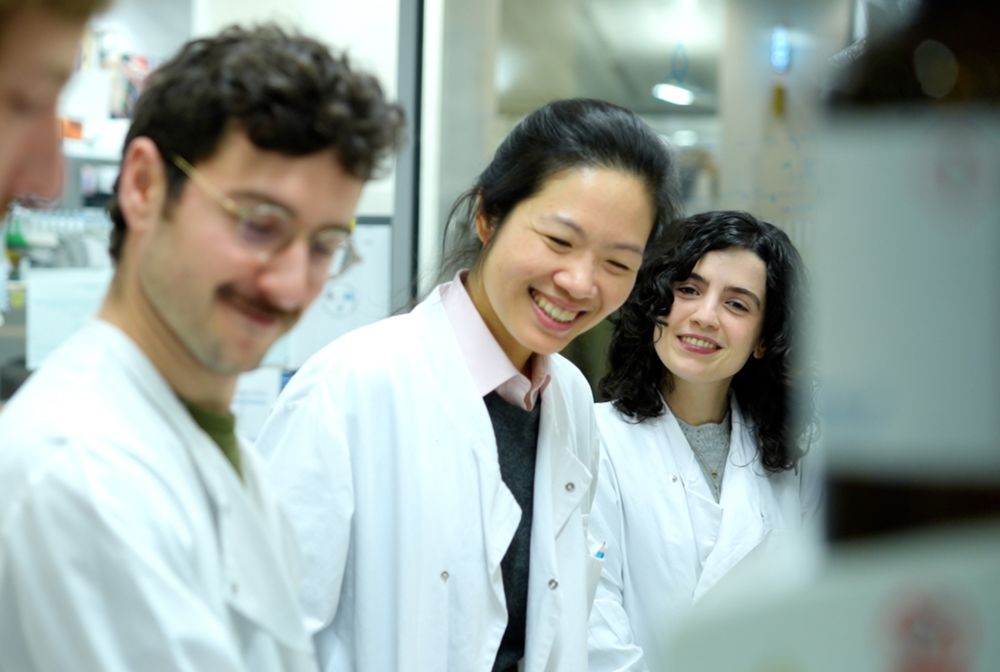
Early career group leaders
We appoint researchers from across biology and biomedicine to set up their first groups at the Crick.
www.crick.ac.uk
October 10, 2025 at 8:20 AM
The @crick.ac.uk is recruiting Early Career Group Leaders
- Lab set-up, research costs, salaries for up to 5 researchers
- Support for up to 12 years
- Access to our core facilities
- Competitive salary
- Fantastic colleagues
- All areas of biology
Deadline 27 Nov
www.crick.ac.uk/careers-stud...
- Lab set-up, research costs, salaries for up to 5 researchers
- Support for up to 12 years
- Access to our core facilities
- Competitive salary
- Fantastic colleagues
- All areas of biology
Deadline 27 Nov
www.crick.ac.uk/careers-stud...
Reposted by Pathogenic Mechanisms Research Group

🚨 Excited to share our new paper is out! 🎉
We show how interactions within gut microbiomes allow certain antibiotic-resistant E. coli strains to persist even without antibiotics, helping explain how resistance is maintained in the human gut.
Now published in @natcomms.nature.com rdcu.be/eOf63
We show how interactions within gut microbiomes allow certain antibiotic-resistant E. coli strains to persist even without antibiotics, helping explain how resistance is maintained in the human gut.
Now published in @natcomms.nature.com rdcu.be/eOf63

Multi-layered ecological interactions determine growth of clinical antibiotic-resistant strains within human microbiomes
Nature Communications - The role of ecological factors in modulating the spread of antibiotic-resistance bacteria in the gut remains unclear. Here, the authors use anaerobic microcosms to study the...
rdcu.be
November 7, 2025 at 9:15 AM
🚨 Excited to share our new paper is out! 🎉
We show how interactions within gut microbiomes allow certain antibiotic-resistant E. coli strains to persist even without antibiotics, helping explain how resistance is maintained in the human gut.
Now published in @natcomms.nature.com rdcu.be/eOf63
We show how interactions within gut microbiomes allow certain antibiotic-resistant E. coli strains to persist even without antibiotics, helping explain how resistance is maintained in the human gut.
Now published in @natcomms.nature.com rdcu.be/eOf63